Capacity Of Cross London Rail Routes
I shall start by looking at the current and future capacity of various rail routes across London.
Bakerloo
The Bakerloo Line has a frequency of twenty trains per hour (tph) between Queen’s Park and Elephant & Castle stations.
The current 1972 Stock trains have a capacity of 700 passengers.
This gives a capacity a 14,000 passengers per hour (pph) in each direction.
In the Wikipedia entry for the New Tube for London, this is said.
Bakerloo line capacity could be increased by 25% with 27 trains per hour at peak times by 2033.
This gives a future capacity of 17,500 pph in each direction.
Central
The Central Line has a frequency of thirty-five tph between White City and Leytonstone stations.
The current 1992 Stock trains have a capacity of 930 passengers.
This gives a capacity a 32,550 pph in each direction.
In the Wikipedia entry for the New Tube for London, this is said.
Central line capacity increased by 25% with 33 trains per hour at peak times by 2030.
This gives a future capacity of 40,687 pph in each direction.
Crossrail
Crossrail is planned at present to have twenty-four tph between Paddington and Whitechapel stations.
Each of Crossrail’s Class 345 trains can hold 1,500 passengers.
This gives a capacity a 36,000 pph in each direction.
It has been said in several places that Crossrail has a future frequency of thirty tph.
If this could be achieved this would increase capacity to 45,000 pph in each direction.
District
The District Line has a combined frequency with the Circle Line of twenty-four tph between Gloucester Road and Tower Hill stations.
The current S7 Stock trains have a capacity of 865 passengers.
This gives a combined capacity a 20,760 pph in each direction.
The Wikipedia entry for the District Line talks about a future frequency of thirty-two tph.
This could increase the future capacity to 27,680 pph in each direction.
East London
The East London Line has a frequency of sixteen tph between Dalston Junction and Surrey Quays stations.
The current Class 378 trains have a capacity of 840 passengers.
This gives a capacity of 13,440 pph in each direction.
London Overground are planning to increase the frequency to twenty tph in the next couple of years.
This would give an increased capacity if 16,800 pph in each direction.
Gospel Oak To Barking
The Gospel Oak To Barking Line has a frequency of four tph across North London,
The current Class 172 trains have a capacity of 120 seats, with perhaps a total capacity of 300.
This would give a capacity of 1,200 pph in each direction.
The new Class 710 trains have a capacity around 700, according to various reports.
This would give a future capacity if 2,800 pph in each direction.
Hammersmith & City
The Hammersmith & City Line has a combined frequency with the Circle Line of twelve tph between Paddington and Liverpool Street stations.
The current S7 Stock trains have a capacity of 865.
This gives a combined capacity of 10,380 pph in each direction.
Jubilee
The Jubilee Line has a frequency of thirty tph between North Greenwich and Willesden Green stations.
The current 1996 Stock trains have a capacity of 875 passengers.
This gives a capacity of 26,250 pph in each direction.
With Siemens new trains, I suspect that this value could be increased by perhaps fifteen percent to 30,187 pph in each direction.
Metropolitan
The Metropolitan Line has an Off Peak frequency of sixteen tph between Baker Street and Liverpool Street stations.
The current S8 Stock trains have a capacity of 1003.
This gives a combined capacity a 16.048 pph in each direction.
With the Metropolitan Line Upgrade, we can probably see some more capacity.
A not unreasonable twenty percent would raise the future capacity to 19,257 pph in each direction.
Northern
In the Peak both branches of the Northern Line have a frequency of twenty-four tph between Camden Town and Kennington stations.
This is reduced to twenty tph in the Off Peak.
With the addition of the Extension to Battersea, these figures are unlikely to get lower.
The current 1195 Stock trains have a capacity of 662 passengers.
This gives a capacity of 31,776 pph in each direction.
With Siemens new trains, I suspect that this value could be increased by perhaps fifteen percent to 36,542 pph in each direction.
North London
The North London Line has a frequency of eight tph between Willesden Junction and Stratford stations.
The current Class 378 trains have a capacity of 840 passengers.
This gives a capacity a 6,720 pph in each direction.
London Overground are possibly planning to increase the frequency to twelve tph in the next couple of years.
This would give an increased capacity if 10,080 pph in each direction.
Piccadilly
As we don’t know the capacity of the new Siemens trains, this is a best estimate, for when they are in service around 2023-2025.
Currently, the Piccadilly Line is running at a frequency of twenty-four tph between Barons Court and Arnos Grove stations.
The current 1973 Stock trains, each have a capacity of 684 passengers.
This gives a current capacity of 15,416 pph in each direction.
In the Wikipedia entry for the New Tube for London, this is said.
Piccadilly line capacity could be increased by 60% with 33 trains per hour at peak times by 2025.
This gives a 2025 capacity of 24,666 pph in each direction.
Dividing the 24,666 by 33 gives a train capacity of 750 passengers for a New Tube for London.
Thameslink
Thameslink will have a frequency of twenty-four tph between St. Pancras and Blackfriars stations.
Half of these will be twelve-car Class 700 trains with a capacity of 1754 and the other half will be eight-car trains with a capacity of 1146.
This gives a capacity of 34,800 pph in each direction.
It has been stated that Thameslink will be able to handle thirty tph in the future, which would raise the capacity to 43,500 pph in each direction.
Victoria
The Victoria Line is currently running at a frequency of thirty-six tph.
The current 2009 Stock trains, each have a capacity of 876 passengers.
This gives a capacity of 31,536 pph in each direction.
I think it is reasonable to assume that the Victoria Line is at capacity.
But I wouldn’t be surprised, that with station improvements, which would include a double-ended Walthamstow Central station, engineers on Dear Old Vicky managed to squeeze forty tph out of the old girl.
This would give a capacity of 35,040 pph in each direction.
I also wouldn’t rule out replacing the current trains with the New Tube for London, if the new trains have proved an outstanding success on all the other lines. But that probably wouldn’t be to well into the 2030s.
Current And Future Summary And Total Capacity
The current figures in passengers per hour can be summarised as follows.
- Bakerloo – 14,000
- Central – 32,550
- Crossrail – 36,000
- District – 20,760
- East London – 13,440
- Gospel Oak To Barking – 1,200
- Hammersmith & City – 10,380
- Jubilee – 26,250
- Metropolitan – 16,048
- Northern – 31,776
- North London – 6,720
- Piccadilly – 15,416
- Thameslink – 34,800
- Victoria – 31,536
This gives a total current capacity of 290,876
Reasonable projections for future figures can be summarised as follows.
- Bakerloo – 17,500 (25% Increase) – New Tube for London/New Signalling
- Central – 40,687 (25% Increase) – New Tube for London/New Signalling
- Crossrail – 45,000 (25% Increase) – 30 tph from 24 tph
- District – 27,680 (33% Increase) – New Signalling
- East London – 16,800 (25% Increase) – 20 tph from 16 tph
- Gospel Oak To Barking – 2,800 (133% Increase) – New larger trains
- Hammersmith & City – 10,380
- Jubilee – 30,187 (15% Increase) – New Tube for London
- Metropolitan – 19257 (20% Increase) – New Signalling
- Northern – 36,542 (15% Increase) – New Tube for London
- North London – 10,080 (50% Increase)
- Piccadilly – 24666 (60% Increase) – New Tube for London/New Signalling
- Thameslink – 43,500(25% Increase) – 30 tph from 24 tph
- Victoria – 31,536
This gives a total future capacity of 356615
Or a capacity increase of around twenty-three percent.
What Do These Figures Show?
My figures are very much rough estimates, based on what is proposed to happen.
New Tube for London
Five of the improvements in capacity require the replacement of the current trains with the New Tube for London. Three of these replacements will need new signalling and only the Piccadilly Line trains have actually been given the go-ahead.
If these train replacements and signalling are done sequentially, they would show these overall capacity improvements.
- Piccadilly – 3.2%
- Central – 2.6%
- Bakerloo – 1.1%
- Jubilee – 1.3%
- Northern – 1.5%
Overall, these five projects will increase capacity by 10.2%
Some of these figures may appear small, compared to the Piccadilly and Central, but then with the exception of the Bakerloo, the other lines already have Automatic Train Control and high-frequency services.
The great thing about the effects of the New Tube for London on capacity, is that it is a rolling program and as each line is converted, more capacity will continue to be added, benefiting many parts of London.
Digital Signalling
Increasingly, lines in London are digitally-signalled with a degree of Automatic Train Control.
In a few years time, these lines will be controlled this way in Central London.
- Central
- Circle
- Crossrail
- District
- Hamersmith & City
- Jubilee
- Metropolitan
- Northern
- Piccadilly
- Thameslink
- Victoria
All these lines are or will be carriers of high numbers of passengers.
In A North London Line With Digital Signalling, I looked at the benefits of installing digital signalling on the North London Line. This was my conclusion.
It looks to me, that they’ll come a time, when digital signalling to squeeze the required number of trains along the North London Line.
Digital signalling will have to be applied to all the other lines in my list to make the most of the train lines we have in London.
Bakerloo
These lines will be given new signalling
- Bakerloo – 17,500 (25% Increase)
- Central – 40,687 (25% Increase)
- District – 27,680 (33% Increase)
- Hammersmith & City – 10,380
- Metropolitan – 19257 (20% Increase)
- Piccadilly – 24666 (60% Increase)
Of the deep level Underground lines, the Bakerloo Line is well below the capacity in passengers per hour (pph) of the other lines, through Central London.
The easiest way to increase the capacity would be to increase the frequency of the trains, by the application of digital signalling.
Earlier in the section on the Piccadilly Line, I calculated the capacity of each New Tube for London on that line as 750.
So if the Bakerloo Line could handle the thirty-six tph currently running on the Victoria Line, this would give a capacity of 23,333 pph in each direction.
Like the Victoria Line, the Bakerloo is a simple double-track without junctions through Central London.
At the Southern end the line terminates in the two platforms at Elephant & Castle station. If Brixton and Walthamstow Central stations can handle thirty-six tph, then surely with modern trains and digital signalling, this number of trains can be handled at Elephant & Castle station.
But at Queen’s Park station, it’s more difficult.
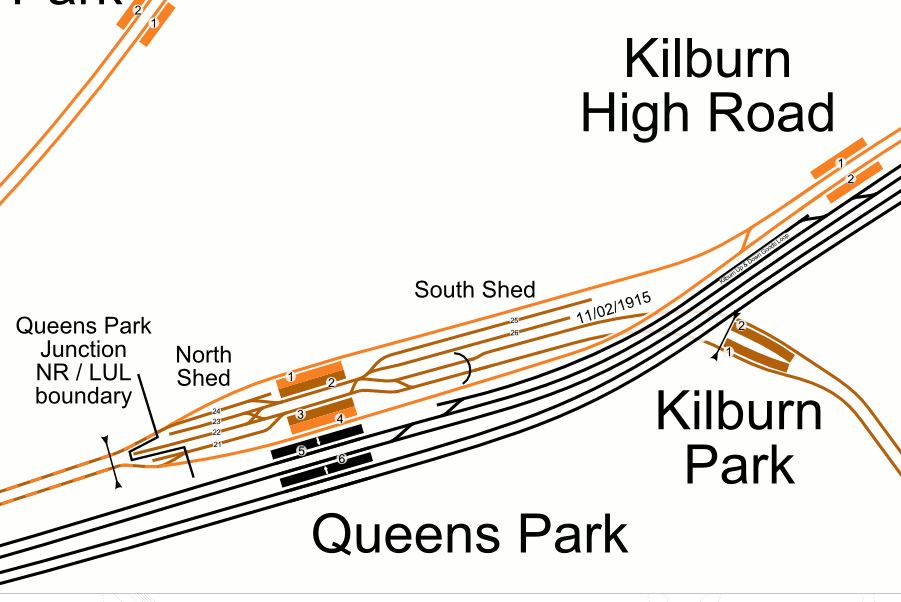
This map from carto.metro.free.fr shows the track layou at Queens Park station.
Note.
- The Watford DC Line of the Overground is shown in orange and runs through Kilburn High Road and Queens Park stations.
- The Bakerloo Line is shown in brown and runs through Kilburn Park and Queens Park stations.
- There are reversing sidings to the West of Queens Park station for the Bakerloo Line.
The following services go through or terminate at Queens Park station.
- Three tph between Euston and Watford Junction on the London Overground.
- Six tph between Harrow & Wealdstone and Elephant & Castle on the Bakerloo Line.
- Three tph between Stonebridge Park and Elephant & Castle on the Bakerloo Line.
- Eleven tph between qQueens Park and Elephant & Castle on the Bakerloo Line.
It is also likely that the Overground service will go to four tph.
So this means that services will be as follows.
- Four tph on the Watford DC Line run through Kilburn High Road station.
- Twenty tph on the Bakerloo Line run through Kilburn Park station.
- Nine tph on the Bakerloo Line run through Queens Park station.
- Four tph on the Watford DC Line run through Queens Park station.
- Eleven tph on the Bakerloo Line terminate at Queens Park station.
Thirteen tph will continue to various destinations towards Watford.
So how many trains could the double-track line between Queens Park and Wartford Junction stations handle?
Consider.
- All services on the line are london Overground or London Underground.
- There are no junctions, where services divide and join.
- There is a turnback facility at Harrow & Wealdstone station, that can handle six tph.
- The Overground trains are being replaced with Class 710 trains, which must be able to be made compatible with digital signalling.
- Watford Junction station has four platforms connected to the Watford DC Line.
- Good design should be able to make the stations step-free for both Class 710 trains and New Tube for London.
- The Watford DC Line service, always seems to terminate in platform 9 at Euston.
- London Underground have run thirty-six tph on the Victoria Line for about a year now.
I suspect that if the trains are digitally signalled, with a degree of Automatic Train Control, that there could be as many as thirty-six tph between Queens Park and Watford Junction stations.
I also think it is significant that the New Tube for London, specifies that the Bakerloo Line will run at twenty-seven tph. Why not more, if the theoretical capacity North of Queens Park is thirty-six tph?
But a single platform at Euston can probably handle six tph, so add 27 and 6 and you get 33 tph, which is the proposed core frequency of the Piccadilly Line.
Suppose too, that all Bakerloo services ran all the way to Watford Junction.
- This would simplify operation at Queens Park, Stonebridge Park and Harrow & Waldstone.
- Digital signalling would easily handle the frequency.
- The platform arrangement at Queens Park would be unchanged, with Euston services on the outside and Bakerloo services in the middle.
Suppose too, that the Watford DC Line service were to be run by New Tube for London trains.
- All platform heights could be the same.
- All services would be step-free between train and platform.
- Digital signalling could easily handle 33 tph along the route.
This last section has very much been speculation on my part, but it shows how it may be possible to create a service on the Bakerloo Line with the following characteristics.
- Twenty-seven tph between Watford Junction and Elephant & Castle stations.
- Six tph between Watford Junction and Euston stations.
- All stations would be step-free between platform and train.
- All trains would be identical New Tube for London trains.
- All trains would run under Automatic Train Control, as does the Victoria Line.
Note, that I have said nothing about the Bakerloo Extension to Lewisham.
In my view, that extension does what it says on the tin and creates a new twenty-seven tph service between Elephant & Castle and Lewisham, which brings new services to an area of South-East London, where they are much needed.
Effectively, the Bakerloo Line could become two twenty-seven tph lines, that happen to connect back-to-back at Elephant & Castle station to enable cross-London journeys.
If we look at the Victoria Line, where the frequency has increased over the last few years by the addition of various improvements, I would not be surprised to see the frequency of twenty-seven tph increased.
After all London Underground’s engineers have been squeezing Dear Old Vicky for half a century, so they must know more tricks, than Paul Daniels knew at the peak of his success.
Crossrail
Taking the figures in the current table, Crossrail will add 36,000 pph in both directions across London, to a current capacity of 254,876.
This is a increase of fourteen percent on the current total capacity.
Increasing the frequency from twenty-four to thirty tph, adds another 9,000 pph in each direction, which is an increase of seventeen percent on the current total capacity.
It is very likely, that Crossrail has been designed, so that the train length can be changed as required.
The initial trains have been supplied as seven-car trains and when the line opens nine-car trains will be used.
I have read somewhere that the trains could be extended to ten cars, but eleven might be a bit difficult.
So what would be the effect on capacity of ten-car trains.
I will assume each ten-car train has a capacity of 1500 *10 / 9 = 1667.
This means that Crossrail capacity is increased as follows with ten-car trains.
- 24 tph gives a capacity of 40,000 pph in each direction. Or sixteen percent on the total current capacity!
- 30 tph gives a capacity of 50,000 pph in each direction. Or twenty percent on the total current capacity!
It looks like Crossrail might have been built to be expanded.
East London Line
It is my view that the East London Line will eventually be digitally signalled and there could be an increase in frequency from the proposed twenty tph.
It has been stated in the past, that the East London Line will eventually have a service based on six-car trains, running at a frequency of twenty-four tph.
Six-car trains could be a problem, as some of the stations like Canada Water, Shadwell, Wapping and Rotherhithe are a bit short for five-car trains and use selective door opening.
The hopefully high-capacity connection to Crossrail at Whitechapel station will surely drive more passengers to use the East London Line.
So increasing the frequency to twenty-four tph using digital signalling would be an option to increase the capacity.
There are four separate services on the East London Line.
- Dalston Junction and New Cross
- Dalston Junction and Clapham Junction
- Highbury & Islington and Crystal Palace
- Highbury & Islington and West Croydon
Each currently has a srvice of four tph, but it is planned that six tph will run to Crystal Palace and Clapham Junction before 2020.
Note that all services terminate in a dedicated platform, that is not shared with other services.
With modern signalling and good driving, these platforms should be able to handle six tph.
If all services went to six tph, that would mean twenty-four tph, through the core of the East London Line.
This would mean that the capacity of the line would be 20,160 pph in each direction, which would be a fifty percent increase on current capacity.
There may even be space for more trains through the core, as thirty tph is certainly possible with digital signalling. But where would the trains terminate?
Extra tunnel-capable Class 378 trains to run the extra services shouldn’t be a problem, as new Class 710 trains, will displace the older units from the Watford DC and the North London Lines.
North London Line
It is my view that the North London Line will eventually be digitally signalled to allow a more intensive passenger service than eight tph, amongst all the freight trains.
I have said that twelve tph between Willesden Junction and Stratford will be possible, within a few years.
But this could be the limit for the following reasons.
- Terminating twelve tph in the two platforms at Stratford is probably possible but difficult.
- Clapham Junction with one platform can probably handle six tph but no more.
Only Richmond has enough capacity for extra trains.
Conclusion
It looks to me that digital signalling and well-designed new trains can improve the capacity across London. Or Liverpool, Newcastle or Berlin to name just three major cities.
Battery Train To Make Debut In Scotland
The title of this post is the same as this article in The Scotsman.
Vivarail are taking their demonstration battery-powered Class 230 train to the Bo’Ness and Kinneil Railway, from the 10th to the 12th of October, when members of the public have been invited to view the train.
It is an interesting marketing concept for a train.
The train will also be tested on gradients and under leaf fall conditions.
A New Country End Concourse At Paddington
Paddington is an annoying station. I’d come in to Paddington, on the Parliamentary service from South Ruislip station, that I wrote about in A Train Of My Own and I had to walk from platform 14 at the far end of the station to the front concourse and then go back again to get the Circle/Metropolitan Line trains to Moorgate for coming home.
There is a back stairs, but it is difficult to find and it would not be idea for passengers with heavy cases wanting the Circle/Metropolitan or a taxi.
When Crossrail opens, it will be easier, as I’ll just change at Reading and come straight through to Moorgate.
Or will it?
Reading will only have four trains per hour (tph) in the Peak and half that in the Off Peak.
It surely needs at least six tph all day and preferably all night as well!
This document on the Network Rail web site is entitled Open For Business and subtitled with this.
Opportunities for third parties to fund, finance or deliver improvements on Britain’s railways September 2018
One of the projects mentioned is entitled Paddington Station Country End Concourse. This is all that is said.
Provision of country-end concourse and platform extensions to reduce station congestion.
It should have these features.
- Escalators and lifts to each pair of platforms at the station, including Crossrail and the Circle and Metropolitan Lines.
- A short level walk to the taxis.
- It should be wider than the bridge across all platforms at Reading station.
- A massive Premier Inn or similar on top
And I want it now!
Not 2030, if I’m lucky.
The hotel will never happen, as high development will block the view of the Brunel’s station and the Nimbys will stop it.
But it should!
The Massive Taxi Queues At Paddington
I took this picture at Paddington in the late morning.
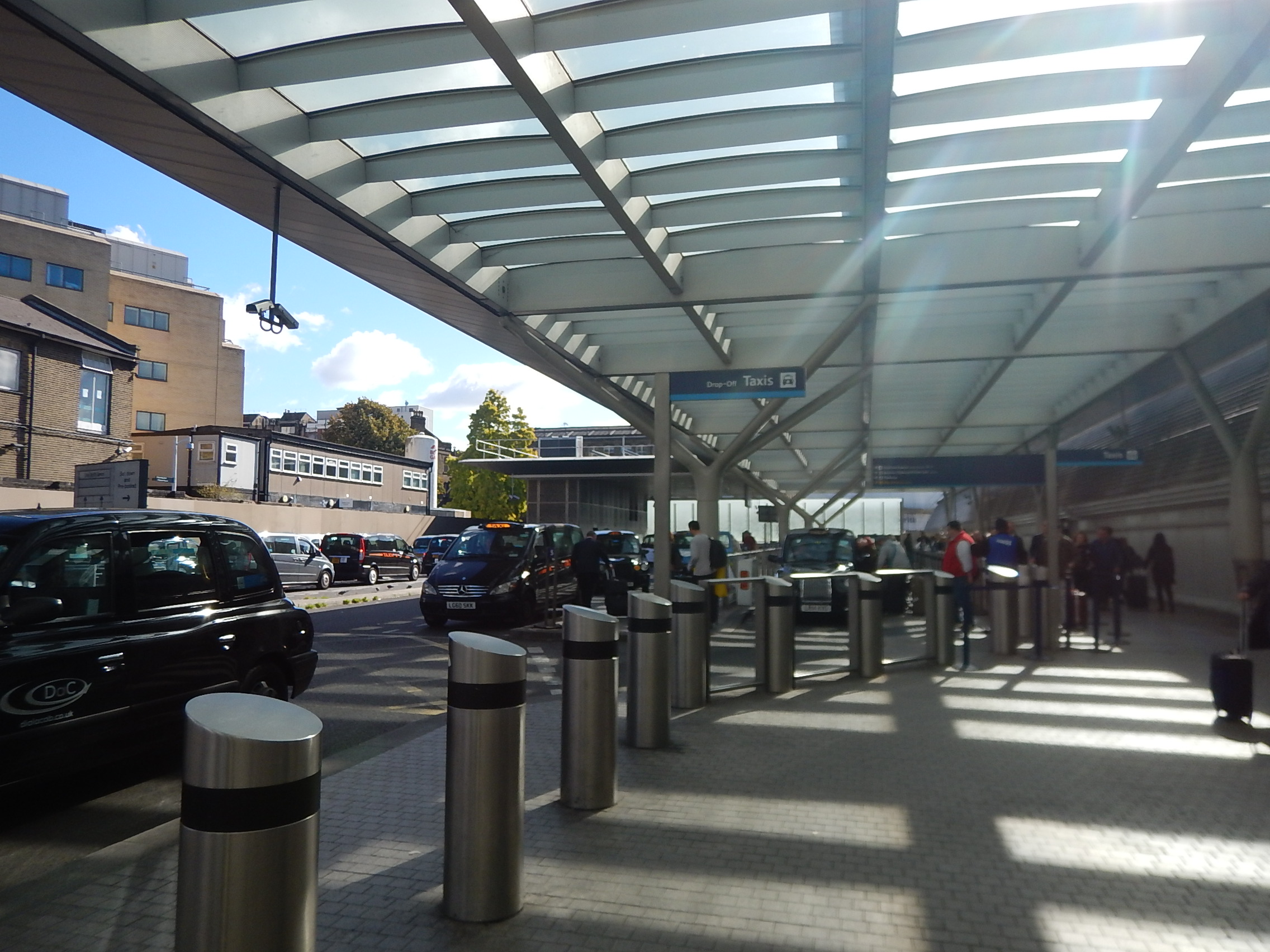
There were masses of passengers with heavy cases queuing for the taxis.
I suspect all had been conned into coming into London on the overpriced Heathrow Express.
Roll on, Crossrail!
Why I Don’t Use Stansted Airport
There are two reasons, why I don’t use Stansted Airport.
Ryanair
There are better ways to fly!
Train Ticketing
It’s not simple and I can’t buy an extension ticket to my Freedom Pass as I can for Gatwick, Luton and Southend.
This picture sums it all up.
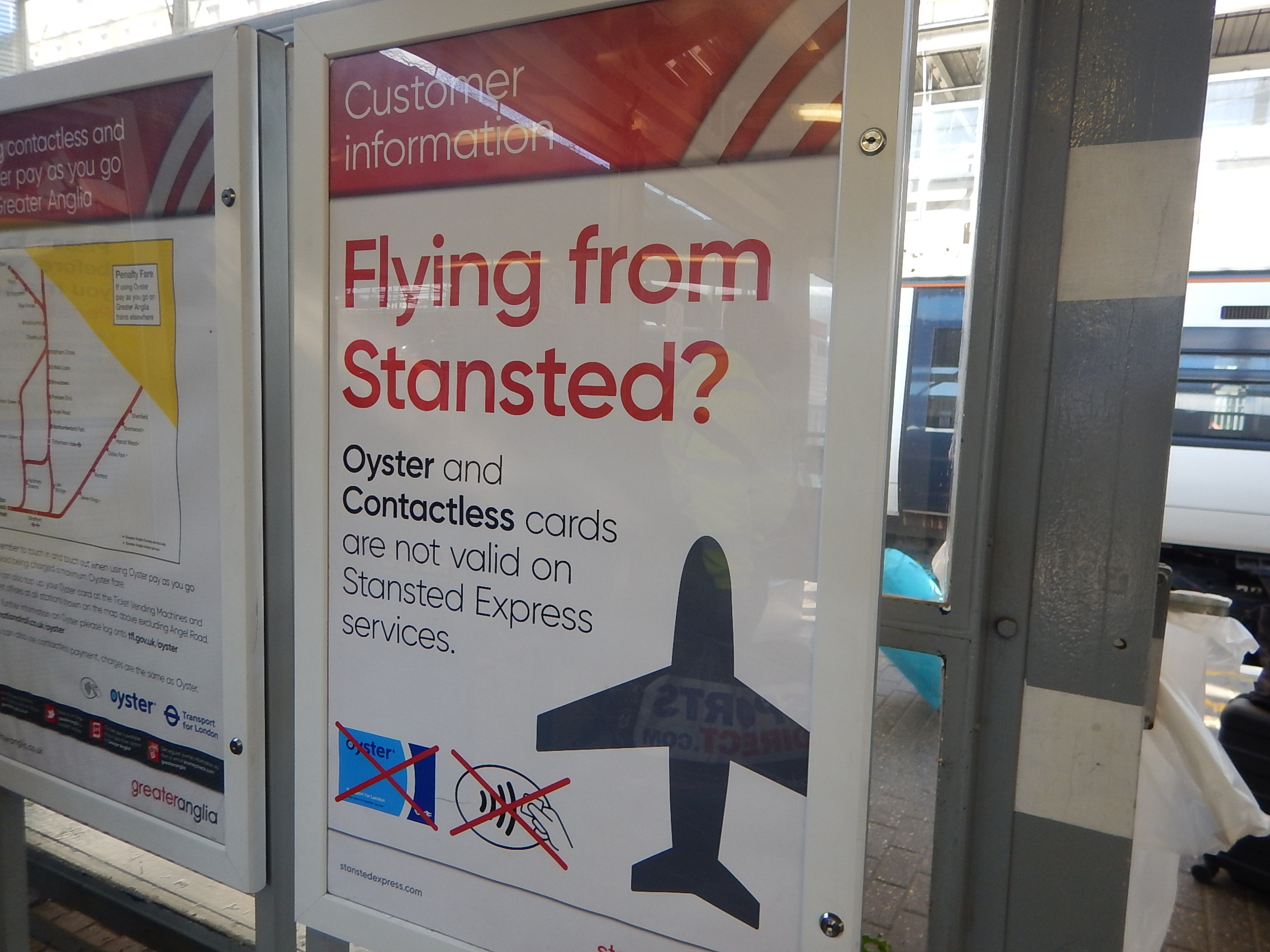
I’d use the Airport more if I could use a contactless card from Tottenham Hale station.
As an aside, I also think Cambridge should be in the contactless area.
Tottenham Hale Station – 1st October 2018
These pictures show the progress being made at Tottenham Hale station.



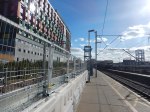

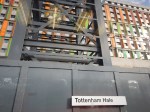




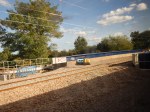
Note.
- The third platform at Tottenham Hale station is taking shape.
- The steelwork is up for the lift towers.
- A lot of the third track and the electrification is in place.
I am also coming to a couple of conclusions.
- There appears to be enough space alongside the third track to insert a fourth.
- The Ferry Lane road bridge though may need to be rebuilt to get the fourth track through.
Progess also appears to be in-line with completion of the station and the third track before the end of 2019.
A Greater Anglia Train In An Unexpected Place
I took these pictures from Drayton Park station of a Greater Anglia train, which consisted of a Class 90 locomotive, Mark 3 coaches and a DVT going South on the line above the station that leads to the Canonbury Curve.


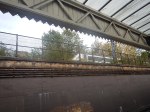
I wonder what it had been doing?
A North London Line With Digital Signalling
In Digital Signalling Implications For North London, I indicated that there may be benefits in equipping the North London Line with digital signalling.
- It would ease co-ordination of services between Gunnersbury and Richmond stations, where track, stations and signalling are shared with the District Line.
- All freight trains are being fitted with digital signalling capabilities.
Obviously, the other benefits of digital signalling like closer running of trains would apply.
Current Service Levels
The Service Levels section of the Wikipedia entry for the North London Line, gives the following details..
Services run seven days a week and since the December 2018 timetable change are the same all day.
- Four trains per hour (tph) – Richmond and Stratford
- Four tph – Clapham Junction and Stratford
Which gives eight tph between Willesden Junction and Stratford
Compared to the service I remember from the 1980s, it is a great improvement.
Possible Future Service Levels
London Reconnections is a web site, that usually gets things right.
In this article, which is entitled More Trains for London Overground: A Bargain Never to be Repeated, this is said.
London Overground have a long-held desire to increase the frequency on the WLL from 4tph to 6tph. They also aspire to another 2tph (at least) from Clapham Junction continuing to Stratford, to further increase the frequency on the North London Line (NLL). This would enable 10tph on eastern end of the North London line. This is due to be implemented with the main order of the new Class 710 stock.
What, it is suspected, London Overground would really like is to have 6tph from Richmond to Stratford and 6tph from Clapham Junction all the way to Stratford. Unfortunately, the additional trains to Stratford would appear to rely on freight, travelling between East London and the West Coast Main Line, using the route via Gospel Oak instead of via the NLL. Until that actually happens, sometime after the electrification of the GOBLIN, such an intensive service on the NLL can only be a dream.
Would this mean this service?
- Six tph – Richmond and Stratford
- Six tph – Clapham Junction and Stratford
Which gives twelve tph between Willesden Junction and Stratford
I can’t say I’d complain living equidistant from Dalston Kingsland and Canonbury stations.
Richmond Station
The current service between Richmond and Gunnersbury station is as follows.
- Four tph – London Overground to Stratford
- Six tph – District Line to Upminster
Digital signalling on the District Line is likely to add 33% capacity to Peak Hour services, so this would mean another two trains to Upminster.
So a future service could be as follows.
- Six tph – London Overground to Stratford
- Eight tph – District Line to Upminster
This level of service could be easily handled by conventional signalling and good driving or by digital signalling.
Piccadilly Line To Ealing Broadway Station
This article on Chiswick W4, is entitled Major Reorganisation Of Local Tube Services Planned.
This is said.
The decision appears to have been made by Transport for London (TfL) to press ahead with a major restructuring of local underground services. This would see the District line service to Ealing Broadway ended and services switched to the Piccadilly line. The rolling stock would transfer to the Richmond and Wimbledon branches of the District line allowing an increase in regularity for these services.
Currently, Ealing Broadway station has a six tph service to Upminster on the District Line.
This map from carto.metro.free.fr shows the lines at Ealing Broadway station.
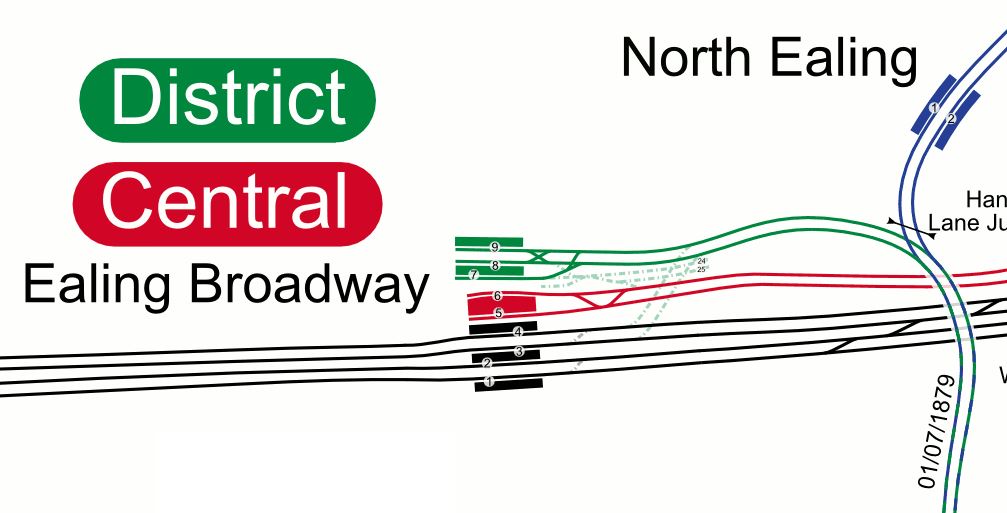
Note that after the changeover, the following would apply.
- The Piccadilly Line would have three platforms.
- In a few years time, the Central and Piccadilly Lines will have similar trains.
- Passengers for Turnham Green, Stamford Brook and Ravensbrook Park, would use the Piccadilly Line, which would probably have a higher frequency.
- Passengers for Victoria and other stations in the East on the District Line, would probably have a step-free cross-platform interchange at a number of stations.
But I think, that probably the main reason for the change, is that it will make the proposed frequency of well upwards of twenty tph of the Piccadilly Line easier to operate.
Consider.
- The platforms would help with service recovery,
- I suspect that TfL would like to see a Victoria Line frequency of thirty-six tph.
- Currently, twenty-four tph run between Arnos Grove and Acton Town in the Peak.
- Twenty-one tph run in the Off Peak.
If thirty-six tph is the intended frequency, then two terminal platforms in a rebuilt step-free Ealing Broadway station, could turn a lot of trains.
A Side Effect Of Changing The District Line Terminus
If the District Line service of six tph to Ealing Broadway, were to be reallocated between Richmond and Wimbledon, this would add three tph to the section between Gunnersbury and Richmond.
So now we could be looking at seventeen tph between Gunnersbury and Richmond stations.
Will that mean that North London Line trains to Richmond will need digital signalling and automatic train control?
The West London Orbital Railway
The proposed West London Orbital Railway will use the Dudding Hill Line to create the following services.
- West Hampstead to Hounslow
- Hendon to Kew Bridge
If both routes run at four tph, then it will add eight tph to the North London Line between Acton Wells and South Acton junctions.
Added to the six tph between Richmond and Stratford, this would be fourteen tph through Acton Central and South Acton stations.
Digital signalling on the North London Line and the West London Orbital Railway would probably ease the merging of trains for the joint section.
Freight
It appears that there are up to four freight trains per hour in both directions on the line.
The Level Crossing At Acton Central Station
I doubt the users of the level crossing at Acton Central would like the levels of traffic, that digital signalling would enable.
A Summary Of Passenger Services
I can summarise the passenger train frequencies as follows.
- Stratford to Willesden Junction – 12 tph
- Willesden Junction to Acton Wells Junction – 6 tph
- Acton Wells Junction to South Acton Junction – 14 tph
- South Acton Junction to Gunnersbury – 6 tph
- Gunnersbury to Richmond – 16 tph
I have assumed all developments mentioned earlier take place.
The Effect Of High Speed Two And Crossrail
When High Speed Two and Crossrail open at Old Oak Common station, this must surely increase the number of passengers using the North London Line, by a significant amount.
There will be two new stations.
- Old Oak Common Lane station will be between Willesden Junction and North Acton stations.
- Hythe Road station will be on the West London Line between Willesden Junction and Shepherds Bush stations.
Will the proposed six tph, each of five cars have sufficient capacity?
Conclusion
It looks to me, that they’ll come a time, when digital signalling will be needed to squeeze the required number of trains along the North London Line.
As I said in the previous section, traffic will continue to grow on the North and West London Lines because of High Speed 2 and Crossrail, as it has done since the route’s reopening with new trains in 2010.
I feel there will come a time, when trains will have to be lengthened from their current length of five cars.
Can all the stations on the route be extended if necessary?
Digital Signalling Implications For North London
As I write this post, two big digital signalling projects are ongoing.
Four Lines Modernisation
This project is described in this document on the TfL web site.
This video is from that document.
The TfL web site says this about the new signalling system.
Work to install a new signalling and control system began in summer 2016. This will eventually allow the trains to be driven automatically, with a train operator in the cab to open and close the doors. The train operator will be responsible for managing customer information and safety.
Similar technology introduced in recent years on the Jubilee and Northern lines improved performance. The new signalling system allows trains to be run closer together, meaning a more frequent service and shorter waiting times, allowing more people to be carried. This new technology will enable us to reduce delays and improve reliability.
The programme will allow us to operate 32 trains per hour, a 33% increase in peak-hour capacity. Installation work will require some line closures.
So it looks that by around 2023, there will be a lot more trains running on the Circle, District, Hammersmith & City and Metropolitan Lines.
The Four Lines Modernisation will have implications for other services.
North London Line
Between Gunnersbury and Richmond stations, the District Line and the North London Line share track, stations and signalling.
This map from carto.metro.free.fr shows the complexity of the tracks around Gunnersbury station.

Obviously, whatever signalling is installed, it must be capable of handling both District and North London Line trains at Gunnersbury Junction and to and from Richmond.
Metropolitan Line To Amersham
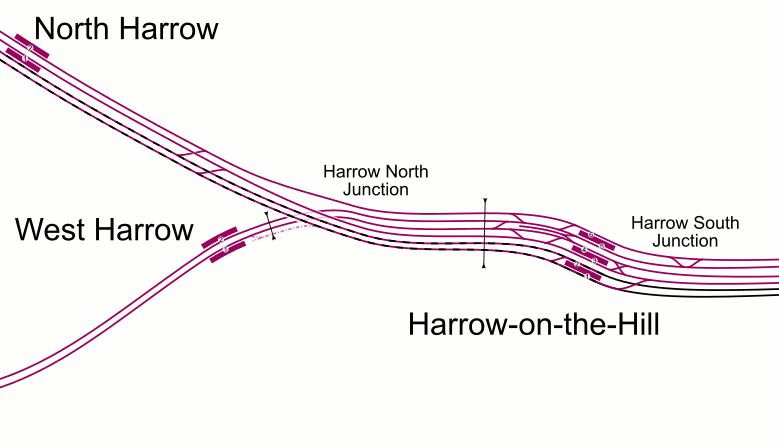
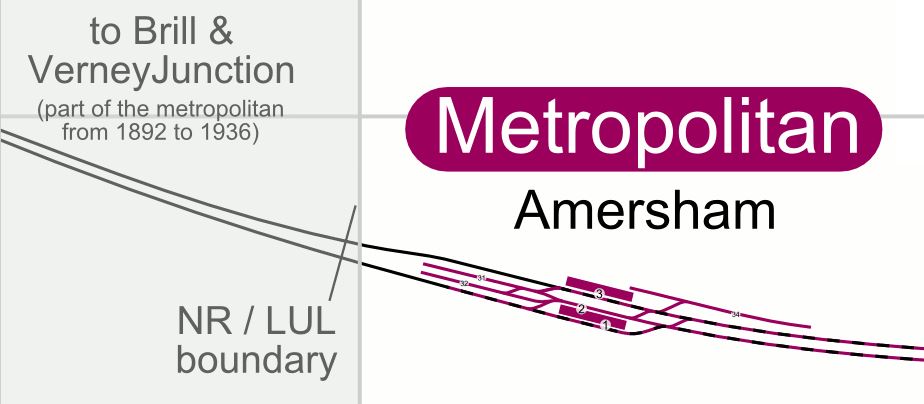
Between Harrow-on-the-Hill and Amersham stations, the Metropolitan Line and the London-Aylesbury Line, share track, stations and signalling.
This map from carto.metro.free.fr shows the lines at Harrow-on-the-Hill station.
and this one shows the layout at Amersham station.
The solution for this section of track is detailed in the Wikipedia entry for the Metropolitan Line, where this is said.
Trackside signals with automatic train protection (ATP) will remain on the line north of Harrow-on-the-Hill, shared with Chiltern Railways DMUs
It is a solution, but will it last for ever?
And what about the Croxley Rail Link, if that is ever built?
Freight Trains Are Going Digital
This page on the Network Rail web site is entitled Freight Trains In Britain To Be Upgraded With Delay-Busting Digital Technology In Multi-Million Pound Deal.
The article says that all 750 freight locomotives will be upgraded.
This project must have implications for the freight services that run across North London on the Gospel Oak to Barking Line and North London Line, especially if these lines were in the future to be digitally signalled.
A Digitally-Signalled Bakerloo Line
At some tie in the next few years a decision will be made about what to do with the Bakerloo Line.
- It will be extended to Lewisham.
- It will receive new trains.
- It will be left as it is.
Options one and two would probably involve new digital signalling.
Addition of digital signalling to the Bakerloo Line would mean implications for the Watford DC Line, with which the Bakerloo Line shares the track between Queens Park and Harrow & Wealdstone stations.
Conclusion
I am drawn to the conclusion, that digital signalling in North London could bring capacity benefits.
Zopa Supports Citizens Advice ‘Super-Complaint’
The title of this post is the same as that of this article on Peer2Peer Finance News.
This is the first paragraph.
Zopa is supporting a ‘super-complaint’ against the Competition and Markets Authority (CMA) which aims to stop loyal bank customers from being overcharged.
This may seem a bit cynical on Zopa’s part, but I’ve been with them for eleven years and have always got a better return after tax and any losses, than I would have got from say a cash ISA or one of the Big Banks’ Savings Accounts.
Read the article and see what you think!
Intriguingly, I’ve never heard a licenced Financial Adviser recommend Zopa.
 The Anonymous Widower