Will The Gospel Oak To Barking Line Have Long Term Capacity Problems?
There are certainly, short term capacity problems on the Gospel Oak to Barking Line, (GOBlin) due to the non-delivery of the new Class 710 trains.
Comparison With The North London Line
There are a lot of similarities between the Gospel Oak to Barking Line and the North London Line (NLL).
- Both run roughly East-West across North London.
- Both have interchanges with the Underground, Crossrail and National Rail.
- Both run electric trains.
- Both have several freight trains per day.
In addition, the Eastern end of the NLL and the GOBlin, run through areas of East London, where a lot of regeneration and housing development is ongoing.
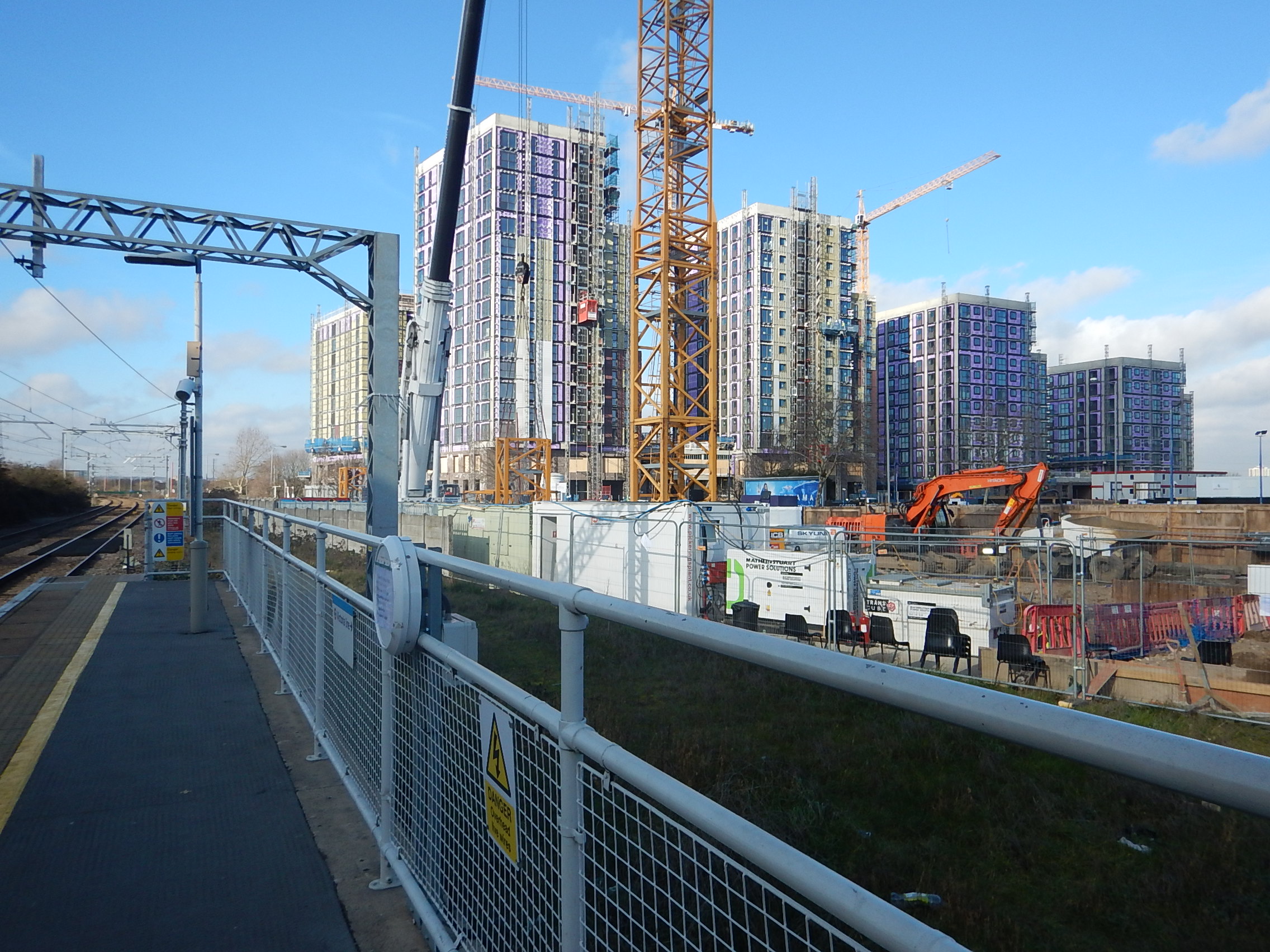
This picture was taken at Blackhorse Road station. The station is being surrounded, by a large amount of housing.
Capacity On The North London Line
When I moved to Dalston in 2010, the frequency of trains between Stratford and Willesden Junction stations was around six trains per hour (tph). The trains were three-car Class 378 trains, giving a capacity of 18 carriages per hour (cph).
Now in early 2019, the frequency on the same section of the NLL is eight tph and the trains are five-cars, giving a capacity of 40 cph.
This large increase of 120 percent, has not been enough to prevent trains on the NLL from being very full at times. But then there have been large housing and commercial developments at Stratford, Hackney Wick, Hackney Central, Dalston Junction and West Hampstead stations.
Future Capacity On The Gospel Oak to Barking Line
Until a few months ago, the GOBlin had a frequency of four tph. The trains were two-car Class 172 trains, giving a capacity of 8 cph.
The service from today is two four-car Class 378 and two two-car Class 172 trains per hour, giving a capacity of 12 cph.
Hopefully, when the Class 710 trains are working, we’ll be seeing four four-car Class 710 trains per hour, giving a capacity of 16 cph.
It is not the 120 percent increase that the NLL has already seen, but surely a 100 percent increase is better than nothing.
My Observations On The Gospel Oak To Goblin Line
For the last three of four years, Highbury & Islington station has been a station to avoid.
- There have been continuous roadworks in the area of the station.
- There have also been several water-main bursts.
- The bus service between the station and my house has been halved in frequency.
Consequently, if I’m coming East to my home, I find it a lot easier, but slightly slower to change to the GOBlin at Gospel Oak station and then get a bus home from Harringay Green Lanes station.
So if a GOBlin train is waiting at Gospel Oak station, I take that route.
Helpfully, Transport for London have improved the cross-platform interchange.
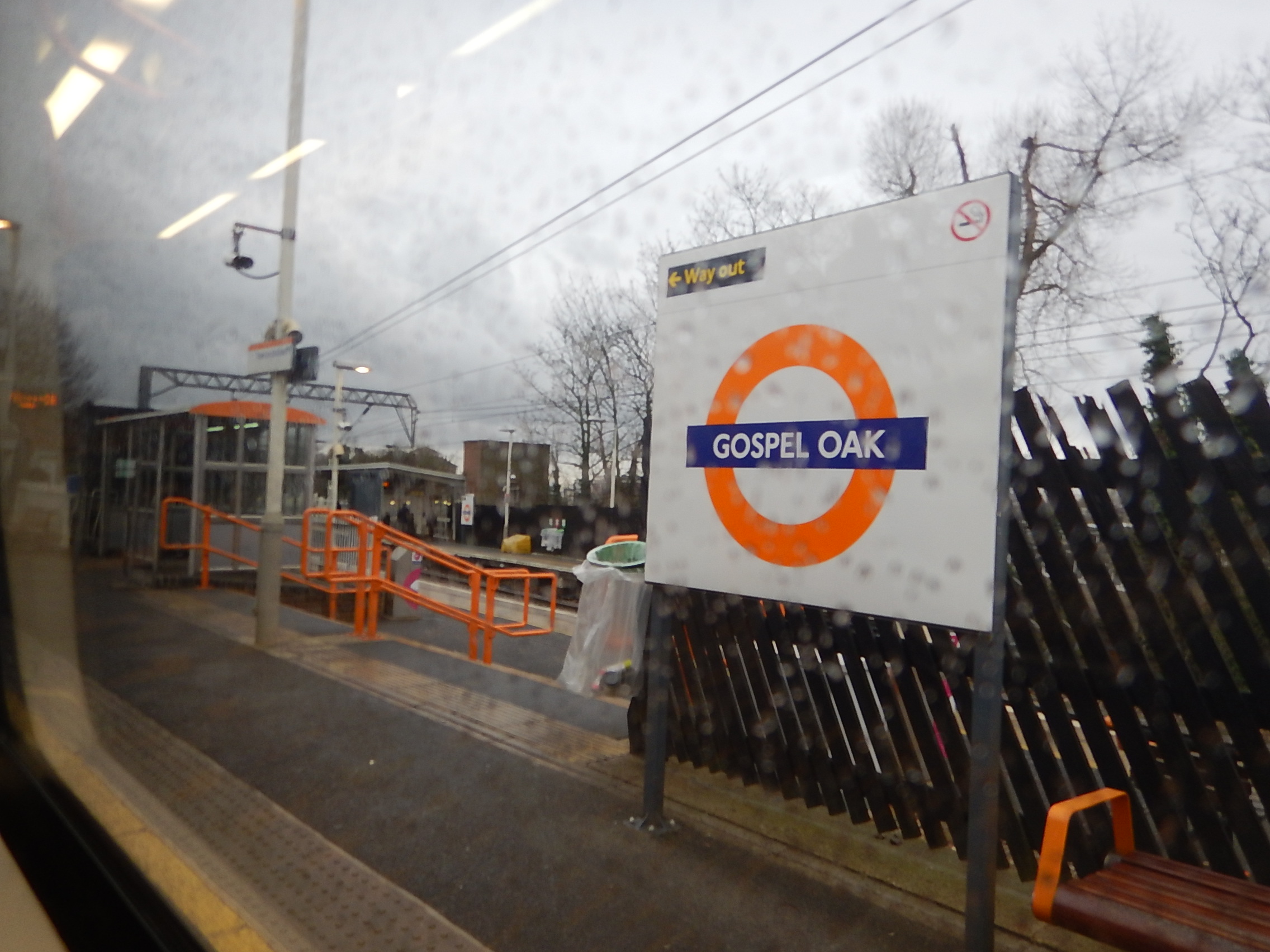
They’ve also added more stairs to the right of these.
I actually, think, that passengers wanting to go to areas between the two lines are starting to use the GOBlin, as often by Harringay Green Lanes station, a lot of passengers have left the train.
Londoners are just practising their ducking and diving!
I’ve also left Barking a couple of times in a very full train in the Off Peak.
- Passengers for whatever reason, seem to be using the GOBlin more!
- Do clean electric trains attract passengers more than less friendly diesels?
- Does the occasional four-car journey impress passengers with more space?
- Is it since the Class 378 trains took over some duties, that the service is more reliable?
Or perversely could it be, that all the bad publicity about the GOBlin has reminded people that it is still there and might be worth a second chance?
Will The Proposed Gospel Oak To Barking Line Be Enough In The Long Term?
I am rapidly coming to the conclusion, that although capacity on the GOBlin is going to be doubled, when the new Class 710 trains arrive, this may not be a large enough increase for the long-term.
What Measures Can Be Taken To Increase Capacity?
There are some simple measures that can be taken.
Higher Frequencies
Transport for London are planning to run five tph in the Peak this year.
If it happens, this will increase capacity by a small amount, where it is needed.
But it probably can’t be a general increase, as that would probably restrict the number of freight trains.
Trains With A Higher Performance
The electric Class 710 trains probably have a higher performance than the diesel Class 172 trains.
This will help with running higher frequencies and faster services, but on its own, it won’t increase capacity.
Longer Trains
The Class 710 trains are Aventras, and these trains have been ordered up to ten cars by other operators.
So five- or six-car trains would certainly be possible.
But the problem is that some platforms would need to be lengthened.
- Barking already handles longer trains.
- Upper Holloway, Crouch Hill, Harrigay Green Lanes, Walthamstow Queens Road, Leyton Midland Road, Leytonstone High Road, Wanstead Park and Woodgrange Park used to have longer platforms, which might be possible to reinstate.
- Blackhorse Road, South Tottenham and Gospel Oak would be major undertakings.
Five-car trains might be possible, if selective door opening was used at the last three stations.
Five-car trains would increase the capacity to 50 cph or an increase of twenty-five percent on the capacity after the Class 710 trains are successfully introduced.
Conclusion
I am very sure, that the only way to increase the capacity of the Gospel Oak to Barking Line, would be to run longer trains.
But they would need to use selective door opening at Blackhorse Road, South Tottenham and Gospel Oak stations.
After the problems of platform lengthening on the East and North London Lines, why weren’t platforms at least prepared for five- or even six-car trains, when the GOBlin was rebuilt and electrified?
No comments yet.
 The Anonymous Widower
Leave a comment