JERA Nex BP, EnBW Submit Morven Offshore Wind Farm Application
The title of this post, is the same as that of this article on offshoreWIND.biz.
This is the sub-heading.
A joint venture between JERA Nex BP and EnBW has submitted Section 36 consent applications for the Morven offshore wind farm to the Scottish government
These two paragraphs add a few details.
The developer secured the seabed rights for the Morven offshore wind farm as a single project in the ScotWind Leasing Round in 2022 and split it into two separate projects during the early development phase.
Located around 60 kilometres off the coast of Aberdeenshire at its closest point, the site is planned to house Morven North and Morven South, which would have a combined installed capacity of up to 3 GW and around 190 wind turbines in total.
Morven Offshore Wind Farm now has a comprehensive web site.
The web site says that the electricity will be brought ashore at Hawthorn Pit.
This Google Map shows the location of Hawthorn Pit.
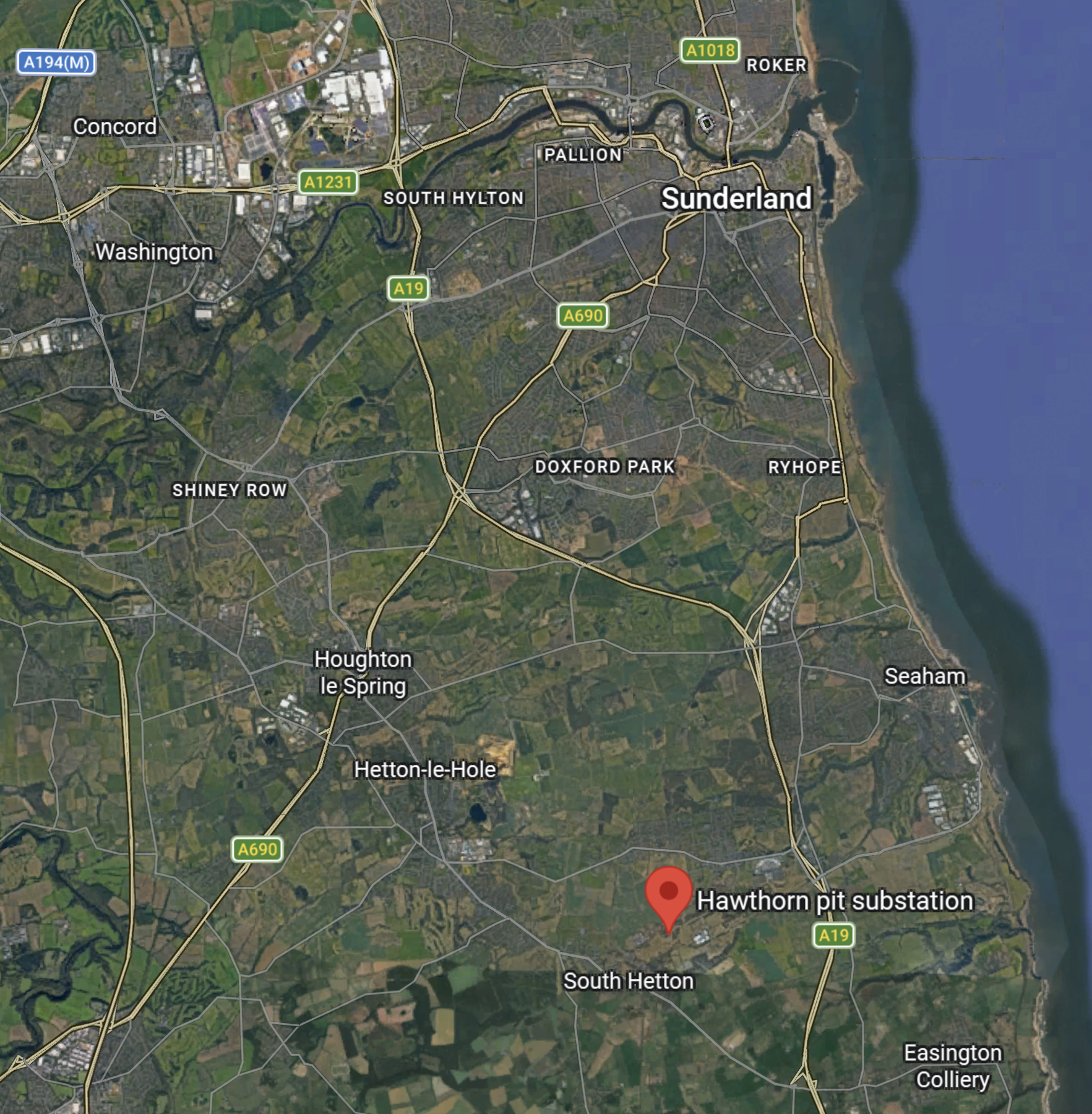
Note.
- Hawthorn Pit is indicated by the red arrow.
- Sunderland is at the top of the map on the coast.
- Aura Power has already obtained planning permission for Hawthorn Pit solar farm, which will be up to 49.9 MW.
- Zenobe are developing a battery-energy-storage-system(BESS) 1.5 km to the South-East of the new Hawthorn Pit substation, which will have an output of 300 MW. Sloppily, there is no detail on capacity, but Google AI indicates, it is a 300 MW/600 MWh.
- Hawthorn Pit substation is also the expected to be the Southern end of Eastern Green Link 1, which will help to bring Scottish wind power to England, which will be a 2 GW undersea interconnector to Torness.
In Murphy Starts Work On £2.5bn Eastern Green Link 1, I detail the start of building of Eastern Green Link 1 and say it should be operational by 2029.
When Is The Morven Offshore Wind Farm Expected To Be Commissioned?
I asked Google AI the question above and received this answer.
The 2.9 GW Morven offshore wind farm is expected to be fully commissioned and operational between 2031 and 2035, with initial grid connections and power export potentially starting as early as 2030.
The timeline for full deployment of the Morven Offshore Wind Farm remains somewhat flexible as it depends on final planning approvals and connection offers from the National Energy System Operator (NESO).
The Cables For The Morven Offshore Wind Farm And Eastern Green Link 1
This map clipped from the Morven Offshore Wind Farm web site, shows the locations of Aberdeen, Hawthorn Pit and the Morven Offshore Wind Farm.
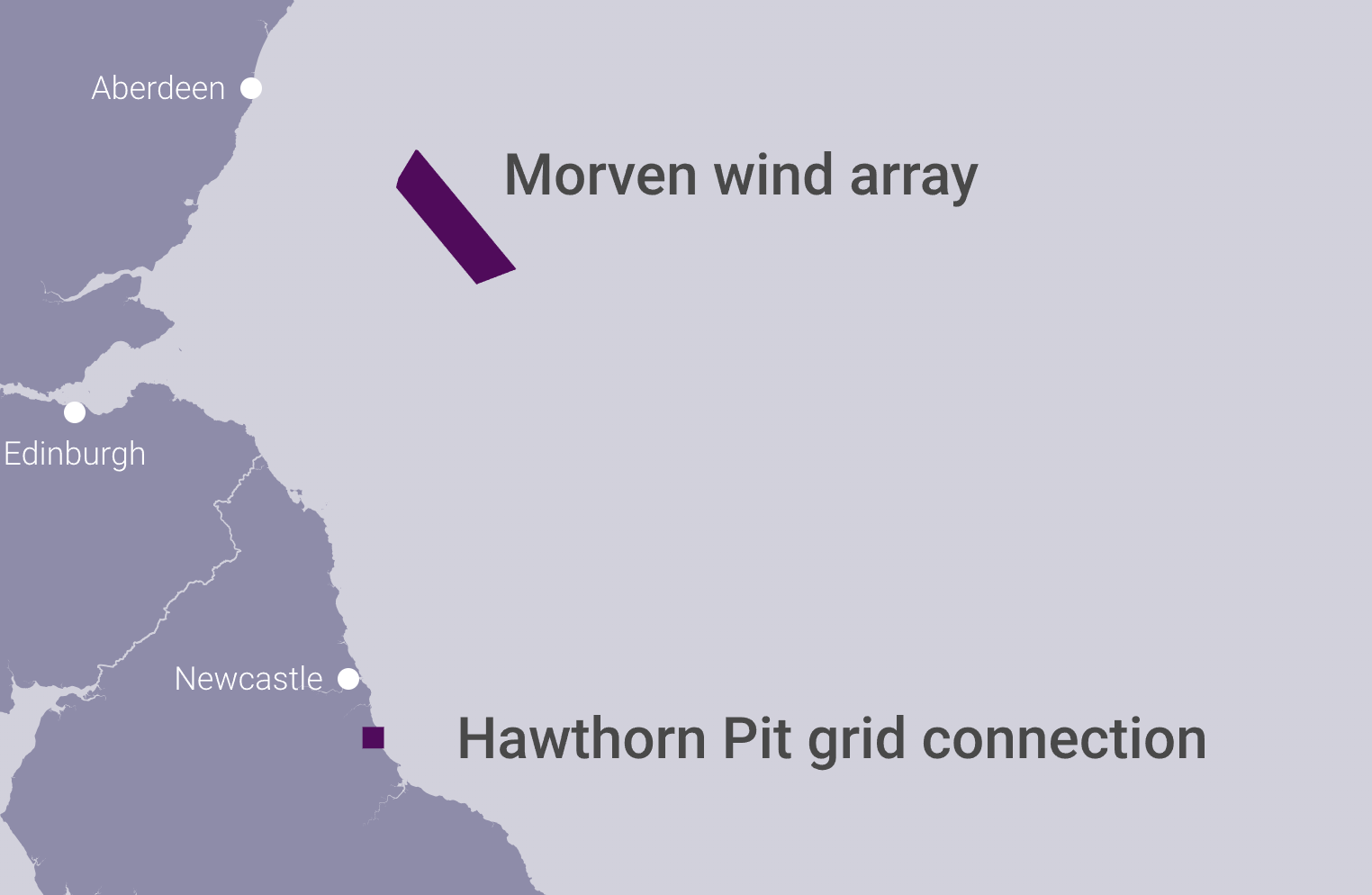
Note.
- The location of the Morven wind array was first mentioned in June 2020, as part of ScotWind by Crown Estate Scotland.
- The development of Eastern Green Link 1 was first mentioned in May 2021, by National Grid.
- Torness is to the East of Edinburgh.
- Eastern Green Link 1 connects Torness and Hawthorn Pit.
- the Morven wind array connects to England at Hawthorn Pit.
Over the last few years National Grid and other companies have been developing a technique called offshore hybrid assets, which I describe in What Are Offshore Hybrid Assets?.
An offshore hybrid asset typically connects two countries via a large offshore wind farm, which can then send electricity to both countries.
In a traditional design, there would need to be.
- A 2 GW cable between Torness and Hawthorn Pit.
- A 2.9 GW cable between Morven and Hawthorn Pit.
In the Offshore Hybrid Asset design, there would need to be.
- A 2 GW cable between Torness and Morven
- A 2.9 GW cable between Morven and Hawthorn Pit.
I suspect cable would be saved.
This map shows the position of each ScotWind wind farm.

Note.
- The numbers are Scotwind’s lease number in their documents.
- Morven is ScotWind lease number 1.
- Eastern Green Link 1 is one of four interconnectors down the East Coast of the UK.
- I have added up the ScotWind lease numbers 1-7 and they total 10.5 GW.
That would be a lot of power to capture just by converting the four interconnectors into offshore hybrid assets.
Murphy Starts Work On £2.5bn Eastern Green Link 1
The title of this post, is the same as that as this article on Construction Enquirer.
This is the sub-heading.
Murphy has started work on its first package on the vast £2.5bn Eastern Green Link 1
These two paragraphs add more detail.
The joint venture between SP Energy Networks and National Grid Electricity Transmission will see the installation of a 196km, high voltage, subsea electricity cable between Torness in East Lothian, Scotland, and Hawthorn Pit in County Durham.
Murphy is one of the main works contractors alongside Metlen, GE Vernova and Prysmian.
Murphy’s task seems to be to design and build the new substation, integrate it with the existing one and connect it all to Eastern Green Link 1 and other assets. Work is expected to complete in March 2028.
Google AI predicts that Eastern Green Link 1 will be commissioned by 2029, so it should be up and running before the expected election helping to balance and stabilise Scottish and English wind power at a rate of up to 2 GW day and night.
Train Journeys Increase 25% After Rail Upgrade
The title of this post, is the same as that of this article on the BBC.
This is the sub-heading.
Rail journeys have jumped in the first week of upgraded train services between Newquay and Par.
These three paragraphs add more details to the story.
Figures from Great Western Railway show journeys climbed by almost 25%, with 726 more journeys between 17 and 23 May than over the same period in 2025.
It follows the launch of the £57m Mid Cornwall Metro scheme, funded by the UK government and Cornwall Council.
The first phase focuses on the Newquay to Par line, where services have been boosted to up to 15 trains a day during the week. Further plans will extend services to Truro, Penryn and Falmouth next year. Direct summer services between London Paddington and Newquay have also been reinstated, said GWR.
It does appear, that when you improve these branch lines, then people use them.
In recent years, this has happened on the Borders Railway, the London Overground, the Dartmoor Line, the Levenmouth rail Link and the Northumberland Line, to name just five.
I feel we need to reinstate more lines like this.
Creating More Capacity At King’s Cross Station
I took these pictures as I walked through King’s Cross station today.








Note.
- Each of the eight platforms in the main train shed, has been formally divided into a and b sections.
- In the first picture, a sign to the right of the clock, showing 0a and 0b, indicates that Platform 0 has been similarly divided.
- I would assume, that any services run by 10-car trains would use both the a and b platforms.
- Services run by 5-car trains, can use any free ‘a’ or ‘b’ platform.
It would appear to me, that 18 x 5-car platforms must be able to handle more trains than 9 x 10-car platforms.
This information screen, which is one of several, explains what has been done.
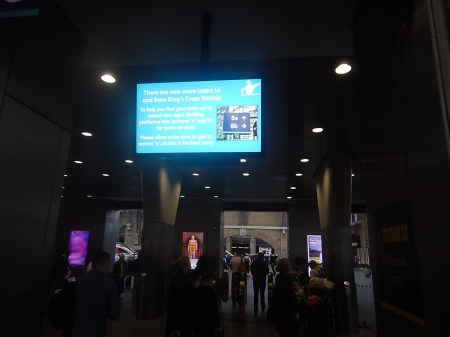
This is the message on the screen, which is only visible about once every ten minutes.
- There are now more trains to and from King’s Cross station.
- To help you find your train we’ve added new signs dividing platforms into sections ‘a’ and ‘b’ for some services.
- Please allow extra time to get to section ‘a’, as this is furthest away.
It’s not a good way to present information.
It is one of the worst examples of mushroom management, I’ve seen in a long time.
I suspect, that experienced travellers will understand it, but will the less experienced?
Will It Increase The Capacity?
I believe it is a well-known rule, that you get more bricks in a box, if they are all the same size and they are a fraction of the size of the box.
So by having five- and ten-car trains and platforms, Network Rail are minimising wasted space in the station, which is increasing the capacity.
The new digital signaling gives precise control of the trains and theoretically, would obtain the maximum number of trains in the station.
But all trains, that will use the station must follow these rules.
- Five- or ten-cars long.
- Trains must have a digital-signalling capability.
- Be able to cruise at 125 mph, so they can keep up with other trains.
Terminal stations on the East Coast Main Line, like Aberdeen, Bradford Forster Square, Edinburgh, Harrogate, Hull, Inverness, Leeds and others must also be capable of handling five- or ten-car trains.
Mushrooms Could Be Used In Rivers To Clear E coli And Filter Sewage
The title of this post, is the same as that of this article on The Times.
This is the sub-heading.
Ofwat has funded a nationwide trial after tests revealed that leaky dams of fungi can trap and consume dangerous pollutants
These paragraphs add some detail.
Mushrooms could be deployed in rivers to filter out toxic pollutants after a trial showed fungi can destroy bacteria that pose a risk to human health.
Ofwat, the industry regulator, has awarded Anglian Water £1.5 million to use fungi to clean up rivers after a trial showed that they could remove 80 per cent of E. coli from rivers.
It sounds promising to me, as after living in the countryside for many years, I’ve heard so many countrymen and women, with strange remedies for things like algae.
The Future Of Drax Power Station
This first paragraph from the Wikipedia entry for Drax power station gives a factual description of the power station.
Drax power station is a large biomass power station in Drax, North Yorkshire, England. It has a 2.6 GW capacity for biomass and had a 1.29 GW capacity for coal that was retired in 2021. Its name comes from the nearby village of Drax. It is situated on the River Ouse between Selby and Goole. Its generating capacity of 3,906 megawatts (MW), which includes the shut down coal units, is the highest of any power station in the United Kingdom, providing about 6% of the United Kingdom’s electricity supply.
This second extract from Wikipedia gives details of its current biomass contract and subsidy.
Drax’s subsidy scheme was scheduled to end in 2027, with Drax arguing for an extension to 2030. In February 2025, the UK government extended its operation from 2027 to 2031, but at a reduced 27% maximum load factor using 100% sustainable wood, so it would run “less than half as often as it currently does”, generally only at times of high electricity demand. Drax was given a contract for difference at £113/MWh in 2012 pounds, CPI inflation linked so about £155/MWh in 2025.
Note.
- Rishi Sunak’s Government extended the contract.
- It will now run on 100% sustainable wood, which includes sources like sawmill residues, forest thinnings and certain agricultural products.
- It has a similar type of contract to wind farms and energy storage.
I asked Google AI,”Does Drax Power Station Provide Grid Stability?, and received this answer.
Yes, Drax Power Station—along with its affiliated hydro assets—provides critical grid stability to the UK. As the UK’s power grid shifts toward intermittent renewables like wind and solar, Drax’s dispatchable generation and specialized system support services help maintain a secure electricity network.
The key stability services provided by the Drax portfolio include:
Inertia: Drax’s large spinning turbines and pumped hydro facilities provide vital inertia to the grid. This acts like a shock absorber, helping to control changes in frequency (maintaining 50Hz) and preventing power cuts.
Reactive Power: The facilities help manage voltage support and move power efficiently across different parts of the network.
Dispatchable Power: Unlike weather-dependent generation, Drax’s biomass and hydro plants can be ramped up or down on demand, providing firm capacity and flexible response to real-time grid needs.
Pumped Storage Support: Through its subsidiary Cruachan Power Station in Scotland, Drax operates a pumped hydro storage plant that actively balances supply and demand and holds specialized stability contracts with the National Grid Electricity System Operator (ESO).
So if you love or loathe the power station, it does a lot more than burn biomass to generate electricity.
Drax Power Station And Eastern Green Link Two
The Eastern Green Link Two web site is here.
This is the sub-heading
Eastern Green Link 2 (known as EGL2) is one of the most significant strategic energy infrastructure developments the UK has seen in recent years, connecting the north of Scotland to Yorkshire via the sea.
These two initial paragraphs gives more details.
EGL2 is a 505km electricity superhighway which will enable the transfer of power from Scotland to England (and vice versa) via a subsea cable. This two-gigawatt high voltage direct current (HVDC) cable is connecting Peterhead in Aberdeenshire and Drax in North Yorkshire and once operational, will carry enough electricity to power two million homes.
EGL2 will scale up the UK’s capacity to transport home-produced clean energy, predominantly from offshore wind, from where it is generated to where there is demand. By doing so it will increase the security, resilience, and stability of the UK’s transmission network.
EGL2 is the second of a planned seven interconnectors between Scotland and the South.
The first was the Western HVDC Link between Hunterston in Scotland and Flintshire Bridge in Wales, which became operational in 2013.
EGL2 will go between Peterhead in Scotland and Drax power station.
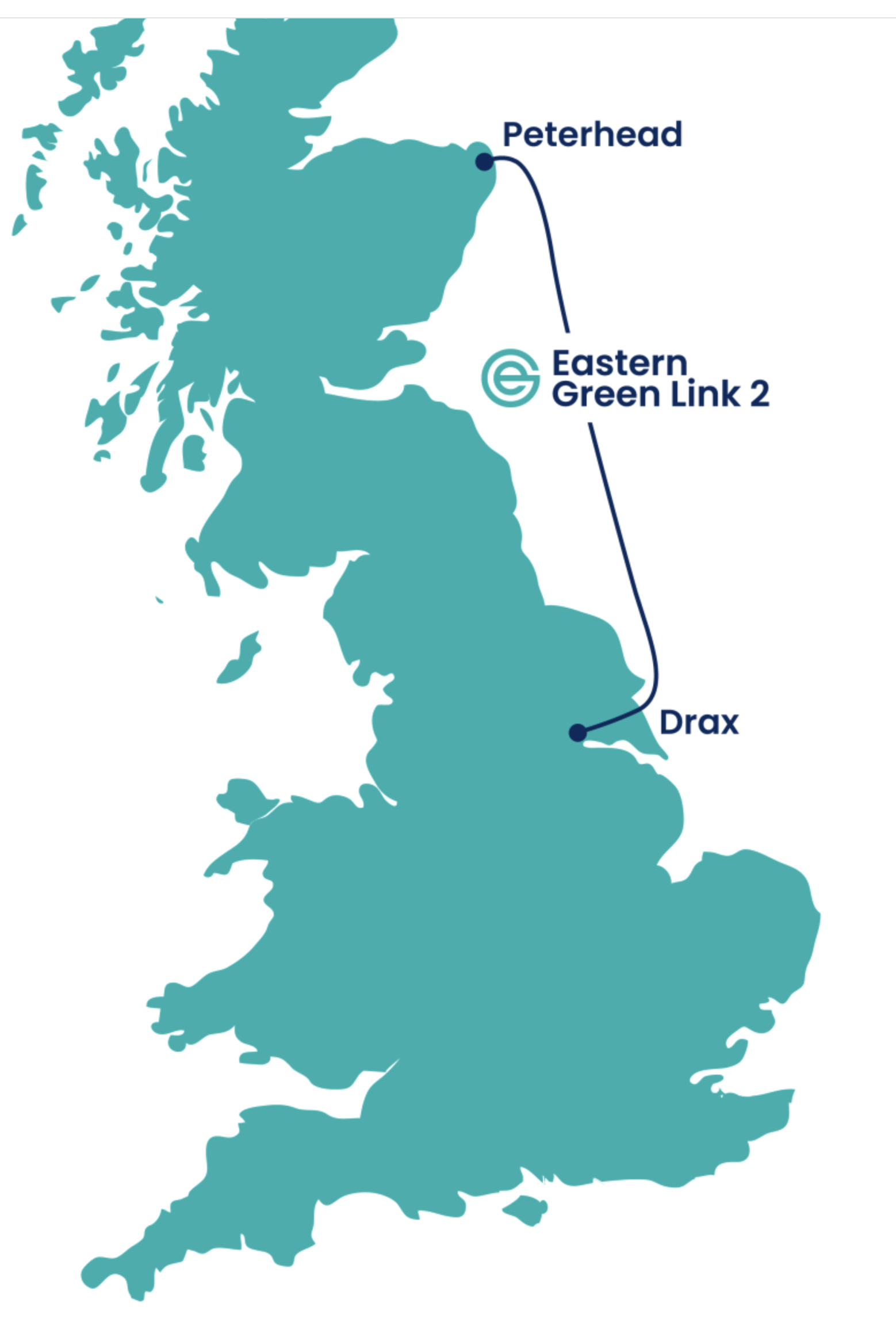
So electricity from Scotland will be able to replace up to two GW of the biomass, that Drax power station currently uses as fuel.
Drax And Solar Power
This Google Map shows Drax power station.

If Drax wanted to add solar power to the site, I’m sure it would be possible.
- There is plenty of space.
- There is a substantial connection to the electricity grid.
After the purchase of Bluefield Solar Income Fund, Drax probably are well-placed to develop as much solar-power as they need.
Italy Leads The World In Screening For Coeliac Disease
The title of this post is the same as that of this article on 360info.org.
This is the sub-heading.
Coeliac disease is common but often undetected. Researchers are looking at ways to make the disease both easier to diagnose and easier to treat.
This paragraph gives a few more details.
The land of pizza and pasta — Italy — has become the first country in the world to pass a law requiring all children under the age of 18 to be screened for coeliac disease and type 1 diabetes.
I feel the most interesting part of this law will be its secondary and long term ones.
Topics I will be following include.
- How will it increase the number of diabetics and coeliacs?
- Will it affect cancer rates?
- Will it affect obesity rates?
- Will it affect the rates of other diseases?
- Will it help to improve Italy’s chronically-low birth rate.
- Will it improve Italy’s performance in sports like swimming and athletics, that need a high degree of fitness.
How many other countries will follow Italy?
Bluefield Solar Income Agrees To PS548 Million Cash Offer From Drax
The title of this post is the same as this article from A J Bell.
These two paragraphs give more details of the deal.
Bluefield Solar Income Fund Ltd on Monday said it had agreed to a £548 million cash offer from Drax Group PLC, which implies an enterprise value of £1.08 billion.
The solar-power focused investment firm has received a bid from Drax Smart Generation Holdco Ltd, which is wholly-owned by Selby, North Yorkshire-based electricity generator Drax. Both firms are members of the FTSE250 index.
I see this deal, to be very much like Centrica’s purchase of the Grain LNG Terminal, which I wrote about in Investment in Grain LNG.
I asked Google AI,”How Do Drax And Centrica Compare Financially?”, and received this answer.
Centrica and Drax have contrasting financial profiles:
Centrica operates on a much larger scale as a diversified retail and energy supply giant, generating £22.4 billion in annual revenue, while Drax is primarily an electricity generator focused on biomass, generating £5.4 billion.
Both companies face challenges from lower global energy prices.
I asked Google AI,”How Do Drax And Centrica Compare On Engineering And Research?”, and received this answer.
Drax and Centrica approach engineering and research from opposite ends of the energy sector: Drax is a mega-scale renewable generator focused on heavy industrial decarbonization, while Centrica focuses on consumer technology, smart energy networks, and servicing.
In addition, now that Centrica has bought the Grain LNG Terminal, Centrica seems to do a lot of LNG trading and storage and they appear to be moving into the bunkering of low-carbon fuels for shipping and have added a second site to Grain, with the acquisition of Severn power station at Newport.
Drax haven’t laid out their plans in detail yet.
These to paragraphs from Drax give a few hints.
Drax sees the purchase supporting growth in the UK renewables market, complementing its existing assets and facilitating £2 billion in incremental investment which Drax has planned for ‘flexible’ energy between 2025 and 2031.
Bluefield generated earnings before interest, tax, depreciation and amortisation of about £130 million in financial 2025, Drax noted, and has the potential ‘to grow Drax’s Ebitda from renewables, offering greater predictability and visibility of cash flows from a large operational portfolio’. This will reduce Drax’s earnings risk from grid connection delays, Drax added.
The last sentence seems to hint, that the deal comes with good connections to the grid, which given what you read about the problems of connecting must be a good thing.
Why Are Drax Building Open Cycle Gas Turbine Power Stations?
I asked Google AI, this question and received this answer.
Drax is building Open Cycle Gas Turbine (OCGT) power stations to provide rapid-response, back-up electricity when weather-dependent renewables (like wind and solar) cannot meet grid demand. This flexible generation stabilizes the UK grid, secures energy supplies, and supports the transition to a lower-carbon energy system.
Drax’s strategic move into OCGT is driven by several key factors:
Fast Start Capabilities: OCGT plants act like giant jet engines. They can go from a cold start to full power output in less than 20 minutes, making them ideal for meeting sudden spikes in electricity demand.
Back-up for Intermittent Renewables: Because output from wind and solar fluctuates with the weather, OCGT stations fill the generation gaps, ensuring continuous energy security without relying on older, dirtier coal power.
System Stability (Synchronous Compensation): Drax has equipped its new OCGTs (such as the Hirwaun Power Station) with a special clutch mechanism.
This allows the turbines to disconnect from the generator so the plants can act as “synchronous compensators.” In this mode, they provide crucial grid stabilization services—like inertia and voltage control—without burning gas.
Meeting Capacity Market Needs: These facilities primarily operate only during times of peak stress or low renewable output (e.g., 500 to 1,500 hours a year), providing a cost-effective support mechanism for the wider electricity system.
This Google Map shows Hirwaun Power Station.
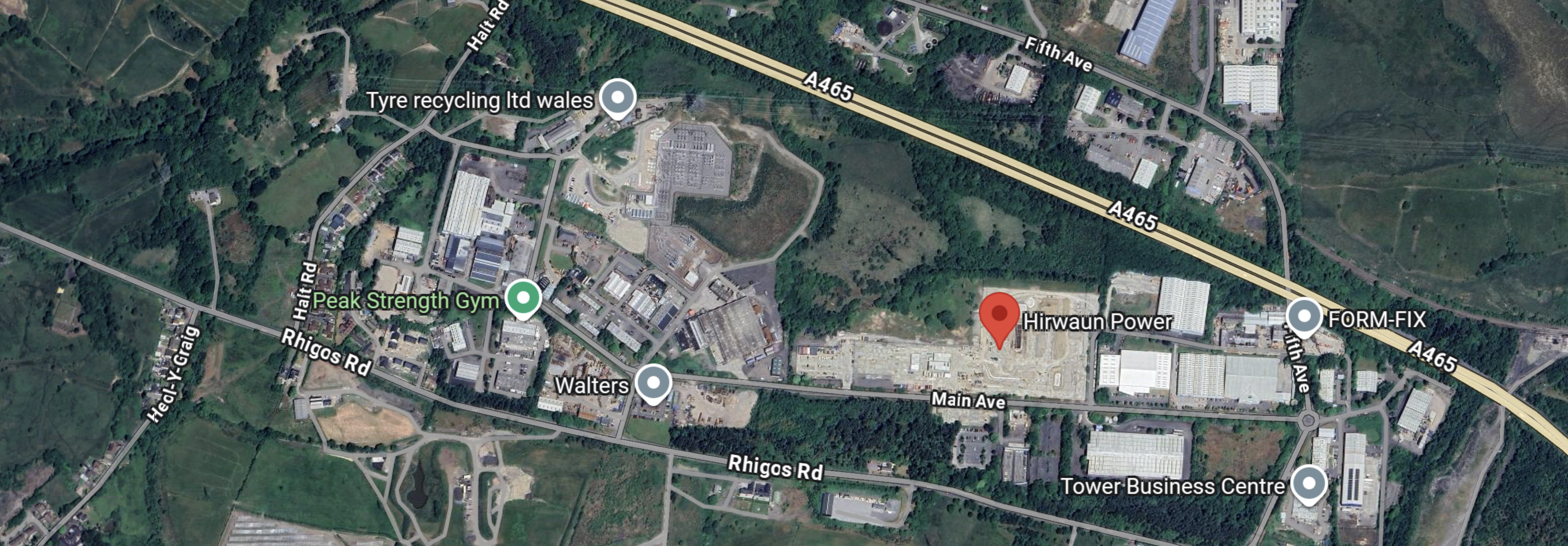
Note.
- Hirwaun Power Station is indicated by the red arrow.
- Hirwaun Power Station is a 399 MW Open Cycle Gas Turbine Power Station.
- The A 465 is the Heads of the Valleys Road.
- Solar farms can be seen between the buildings.
Could Drax see commercial advantages to put the two systems together?
Who Have Bought Wrightbus Ultroliners With Cummins Engines?
In their web page, which describes the Wrightbus Ultroliner EU6, this paragraph describes the powering options.
The StreetDeck Ultroliner EU6 is available with two ultra low emission efficient diesel engine choices: the new Cummins 6.7 litre 6 cylinder and the current Mercedes 5.1 litre 4 cylinder engine. Our StreetDeck EU6 Ultroliner and its engine choices remains the UK’s favourite. All these buses can be repowered at mid-life to zero-emission BEV technology with NewPower.
But I believe that there is another repowering option – The Cummins engine can be converted to hydrogen to create a zero-emission bus, with an internal combustion engine.
Cummins Accelerates Work On Hydrogen-Fueled Internal Combustion Engines
Cummins Fuel-Agnostic X Series Platform shows a Cummins video about their fuel agnostic technology.
In Do Cummins And Stadler Have a Cunning Plan? I point out how Stadler could be making Class 99 locomotives with Cummins engines, that could be designed for conversion to hydrogen.
These engines are also probably made in Darlington
What Did Google AI Reply To The Question In The Title Of This Post?
Several transport operators have purchased Wrightbus StreetDeck Ultroliners equipped with Cummins engines. This highly efficient, ultra-low-emission diesel combination has been specifically chosen by operators where battery-electric vehicles are not viable for certain long-distance or high-mileage routes.
The known buyers include:
Bus Vannin: The first operator to order the next-generation Ultroliners with six-cylinder Cummins B6.7 engines. They placed an order for six vehicles which entered service on the Isle of Man, including two carrying special heritage liveries.
Nottingham City Transport (NCT): Ordered six StreetDeck Ultroliners. They are powered by the Cummins B6.7 engine paired with Voith gearboxes, specifically for their long-distance Pathfinder 26 route.
Go North East: Listed as an early operator to order the Wright StreetDeck featuring the Cummins engine.
Metroline Manchester: Acquired a large batch of 135 facelift StreetDeck Ultroliners (ordered via Transport for Greater Manchester) for rollout on the Bee Network.
Out of fairness, I asked Google AI,”Who have bought Wrightbus Ultroliners with Mercedes engines” and received this reply.
The vast majority of Wrightbus “Ultroliner” double-deckers feature Cummins engines.
Nottingham City Transport To Upgrade Pathfinder Route with Order For Brand New Wrightbus Double Decks
I found this press release on Nottingham City Transport’s web site, which is an interesting read.
These are the first two paragraphs.
UK Bus Operator of the Year, Nottingham City Transport has partnered with pioneering manufacturer Wrightbus to upgrade its long distance Pathfinder bus service between Nottingham, Burton Joyce, Lowdham and Southwell.
Six brand new ultra-low emission diesel powered double decks will soon start to be built by Wrightbus at their factory in Northern Ireland and will start carrying passengers in late autumn this year.
David Astill of NCT and Jean-Marc Gales of Wrightbus, then explain the industry-leading technology behind the buses. It results in an 80 % emission reduction compared to the previous 2014 buses.
Jean-Marc Gales finished with this.
Our blended approach to responsible technology, which includes battery electric, hydrogen fuel cell and the cleanest technologies, ensures our customers can continue to decarbonise while maintaining financially viable operations.
It appears to me, that this is the sensible way to go, as the operator can always choose what is best for their network.
Nottingham City Transport’s Ultroliners
These are some pictures I took of the buses on my trip to Nottingham.








Unfortunately, I didn’t have enough time for a ride.
Hydrogen And The Isle Of Man
I asked Google AI, the title of this section and received this answer.
On the Isle of Man, hydrogen is viewed as an unviable option for domestic heating due to high production costs and economies of scale.
However, the island’s government and local energy providers see potential for the fuel in heavy transport, maritime shipping, and achieving long-term energy independence.
Policy and Energy Strategy
Heating and Homes: Extensive energy analysis by the Isle of Man Government has concluded that hydrogen is not economically feasible for home heating. High costs and infrastructure limitations favor alternatives like heat pumps, which boast much higher efficiencies for everyday domestic use.
Energy Independence: While domestic heating is a poor fit, producing green hydrogen using the island’s future offshore wind or tidal renewable resources is occasionally discussed as a way to achieve total energy security and independence.
Network Readiness: The existing high-pressure pipeline network that transports natural gas to the island is not compatible with 100% hydrogen, though some smaller localized parts of the distribution grid could potentially be adapted.
Proposed Applications & Industry
The Steam Railway: The Isle of Man Steam Railway has faced proposals from private inventors to convert historic heritage locomotives to run on green hydrogen.
Maritime Shipping: Because the Isle of Man is a prominent maritime hub, green hydrogen production could theoretically serve as a valuable refueling point for future hydrogen-powered commercial shipping fleets.
Utility Diversification: Isle of Man Energy (formerly Manx Gas) has highlighted green hydrogen and biogas as part of their long-term corporate diversification plans away from natural gas.
My further thoughts on hydrogen and the Isle of Man
- There may also be some difficult-to-decarbonise businesses on the Island.
- The Isle of Man is also a holiday island and getting rid of diesel commercial vehicles could be advantageous.
- Will Centrica setup an electrolyser on the island and do a bit of bunkering?
It appears to be an island with great potential for hydrogen.
Conclusion
My final thoughts.
- I believe that Wrightbus have designed a diesel bus, that can replace existing diesel buses, without changing the buses to either battery or hydrogen operation.
- But once the operator has made provision for the electricity or hydrogen for the buses, then the buses can be converted to zero carbon.
- My project management knowledge would say, that there is an optimum rate at which new technology buses can be introduced.
It looks a good plan.
Daily Pill Could Revolutionise Cancer Treatment
The title of this post, is the same as that of this article in the Sunday Times.
This is the sub-heading.
Doctors hail the ‘holy grail’ of research that provides hope to patients and families facing the disease.
These three paragraphs introduce the article.
A daily pill that doubles life expectancy for pancreatic cancer sufferers may revolutionise treatment for millions of people, experts believe.
Researchers found the drug significantly extended the lives of patients by targeting a specific mutation.
The pill, daraxonrasib, is the biggest breakthrough in decades for pancreatic cancer, which is notoriously difficult to treat.
 The Anonymous Widower