UK Offshore Wind In 2030 – Calculated September 2026
The next general election is likely to be held in 2029, so how much wind energy will be added before the next Parliament?
The Current Position
The Wikipedia entry for the list of operational wind farms in the UK, says this.
In July 2025, there were offshore wind farms consisting of 2,809 turbines with a combined capacity of 16,035 megawatts.
Due To Be Commissioned In 2026
It would appear these wind farms will come on-line in 2026.
- Dogger Bank A – 1235 MW – Fixed
- East Anglia 3 – 1372 MW – Fixed
- Sofia – 1400 MW – Fixed
This would add 3 wind farms and 4,007 MW to give a total of 20,042 MW.
Due To Be Commissioned In 2027
It would appear these wind farms will come on-line in 2027.
- Dogger Bank B – 1235 MW – Fixed
- Dogger Bank C – 1218 MW – Fixed
- Inch Cape – 1080 MW – Fixed
- Llŷr 1 – 100 MW – Floating
- Llŷr 2 – 100 MW – Floating
- Norfolk Boreas – 1380 MW – Fixed
This would add 6 wind farms and 5,113 MW to give a total of 25,155 MW.
Due To Be Commissioned In 2028
It would appear these wind farms will come on-line in 2028.
- East Anglia 2 – 963 MW – Fixed
- Hornsea 3 – 2852 MW – Fixed
This would add 2 wind farms and 3,815 MW to give a total of 28,970 MW.
Due To Be Commissioned In 2029
It would appear these wind farms will come on-line in 2029.
- Green Volt – 400 MW – Fixed
- Norfolk Vanguard East – 1545 MW – Fixed
- Norfolk Vanguard West – 1545 MW – Fixed
This would add 3 wind farms and 3,490 MW to give a total of 32,460 MW.
Due To Be Commissioned In 2030
It would appear these wind farms will come on-line in 2030.
- Caledonia – 2000 MW – Fixed
- Erebus – 100 MW – Floating
- Five Estuaries – 1080 MW – Fixed
- MarramWind – 3000 MW – Floating
- Mona – 1500 MW – Fixed
- Morecambe – 480 MW – Fixed
- N3 Project – 495 MW – Mixed
- North Falls – 504 MW – Fixed
- Outer Dowsing – 1500 MW – Fixed
- Pentland – 92.5 MW – Floating
- Ramplion 2 – 1200 – Fixed
This would add 11 wind farms and 11,951.5 MW to give a total of 44,411.5 MW.
Due To Be Commissioned In 2031
It would appear this wind farms will come on-line in 2031.
- Awel y Môr – 775 MW – Fixed
- Berwick Bank Phase B – 1380 MW – Fixed
- Dogger Bank SE – 1500 MW – Fixed
- Dogger Bank SW – 1500 MW – Fixed
- Spiorad na Mara – 840 MW – Fixed
This would add 5 wind farms and 5,995 MW to give a total of 50,406.5 MW.
UK Offshore Wind Summary 2026 And 2031
I can now summarise UK offshore wind for the next few years.
- 2025 – 16,035 MW
- 2026 – 3 – 4,007 MW – 20,042 MW
- 2027 – 6 – 5,113 MW – 25,155 MW
- 2028 – 2 – 3,815 MW – 28,970 MW
- 2029 – 3 – 3,490 MW – 32,460 MW
- 2030 – 11 – 11,951.5 MW – 44,411.5 MW
- 2031 – 5 – 5,995 MW – 50,406.5 MW
Note.
- The first figure after the year is the number of wind farms to be commissioned that year.
- The middle figure is the expected capacity of the wind farms to be commissioned that year.
- The last figure is the expected total offshore wind capacity at the end of that year.
- Typically, we need about 30 to 35 GW to power the UK.
- The next general election must be held by the 15th August 2029.
So whoever wins the election will inherit a windfall of just under 12 GW of offshore wind.
Chinese Offshore Wind Foundation Manufacturer Inks MoU With Scotland’s Ardersier Port
The title of this post, is the same as that of this article on offshoreWIND.biz.
This is the sub-heading.
Dajin Heavy Industry and Haventus, the owner and developer of Ardersier Port in Scotland, have signed a Memorandum of Understanding (MoU) to explore combining Dajin’s manufacturing and transport capability with Ardersier’s port infrastructure to support both fixed-bottom and floating wind projects in the UK and across Europe.
These two paragraphs add more details.
Dajin and Haventus will also work together to identify potential new commercial opportunities and how Ardersier Port could provide a site for storage, marshalling, assembly and transportation of offshore wind components to the offshore wind foundation manufacturer.
According to Haventus, Ardersier Port’s extensive quayside land, deep-water access and a high-voltage power connection can support the manufacturing, fabrication, assembly and storage of large-scale structures for offshore wind and other energy-related projects.
These are my thoughts.
Where Is Ardesier?
This Google Map shows the location of the Port of Ardesier in relation to Inverness, the Orkneys and Shetlands, and Norway.
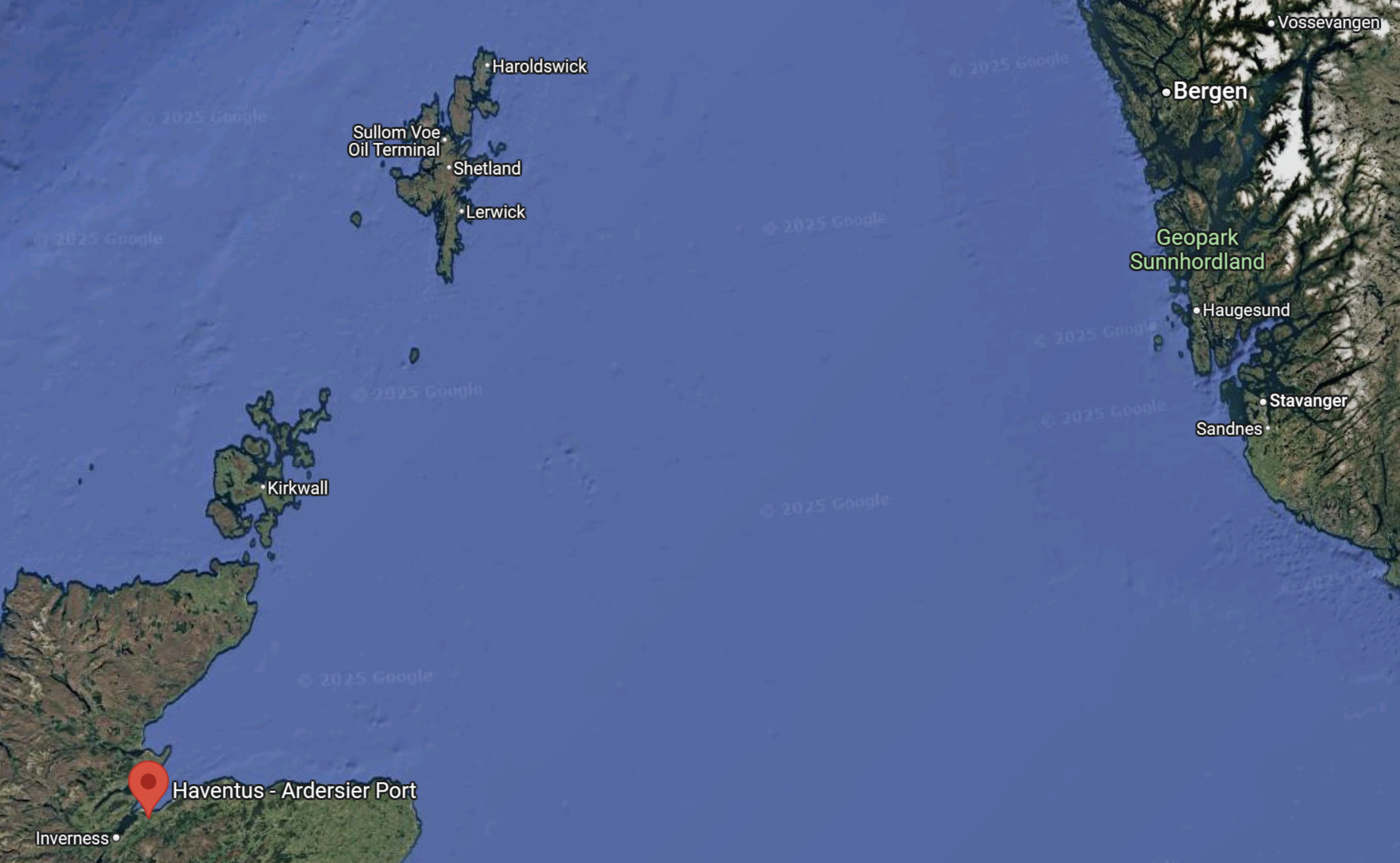
The Port of Ardesier would appear to be ideally placed to bring in business for the partnership.
This Google Map shows more detail around Haventus – Ardesier Port.
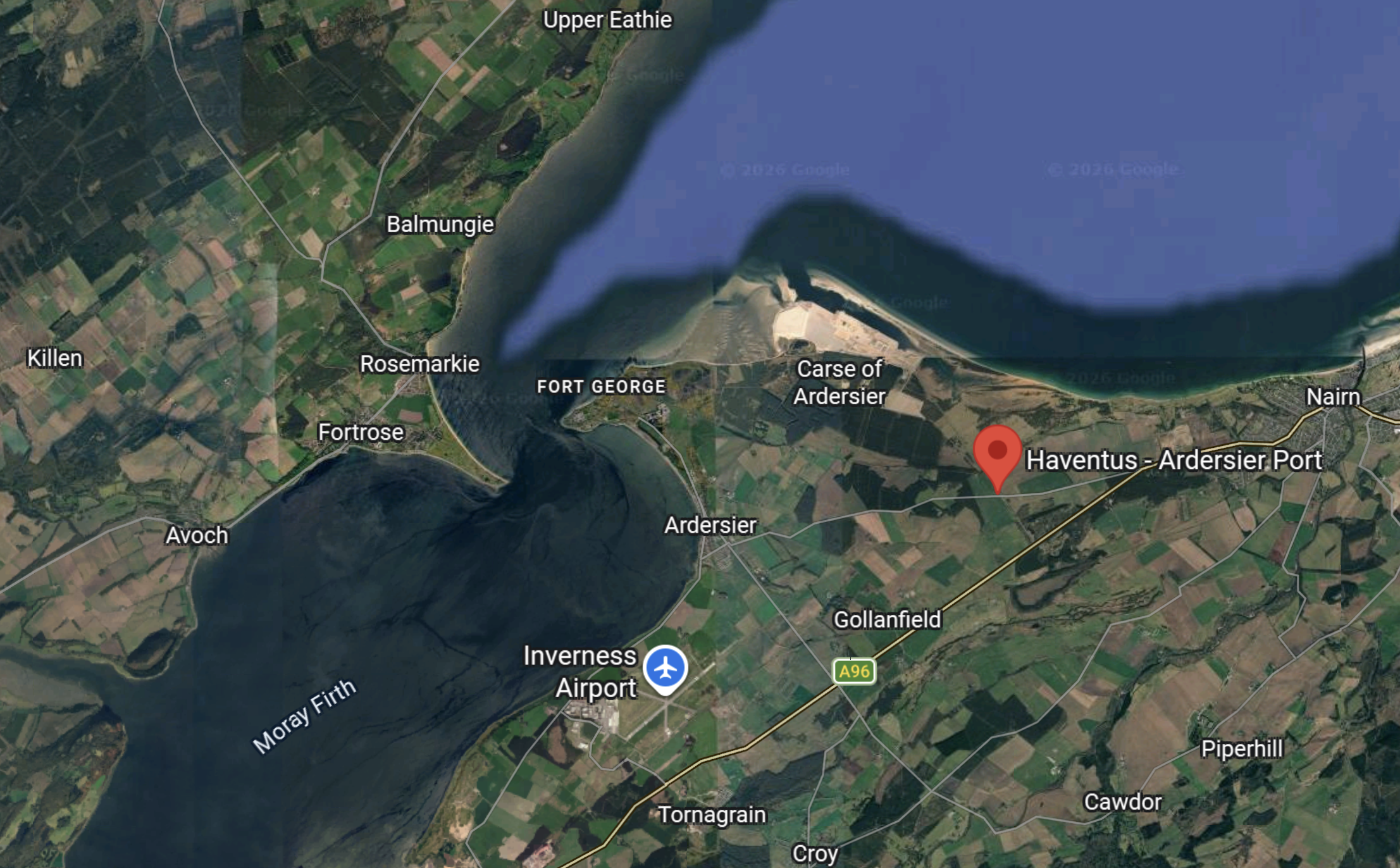
Note.
- Haventus appears to be located close to Inverness Airport, which has a railway station on the Inverness and Aberdeen Line.
- Inverness is on the Moray Firth.
Are Haventus A British Company?
I asked Google AI the question in the title of this section and received this answer.
Yes, Haventus is a British company.
It is registered in the UK with its corporate headquarters in London, and its primary operations focus on redeveloping the Ardersier Port in the Scottish Highlands to support offshore wind energy.
Company Details
Registration: Registered in England and Wales (Haventus Limited).Head Office: London, United Kingdom.
Project: Transforming the former fabrication yard at Ardersier Port near Inverness, Scotland, into an energy transition facility for offshore wind.
Key Backing: Funded by British institutions like the UK Infrastructure Bank and the Scottish National Investment Bank, alongside major private equity investment from US-based Quantum Capital Group.
Could The Port Of Ardersier Have A Rail Connection?
This OpenRailwayMap shows the Port of Ardersier, the Aberdeen and Inverness Line and Inverness Airport.
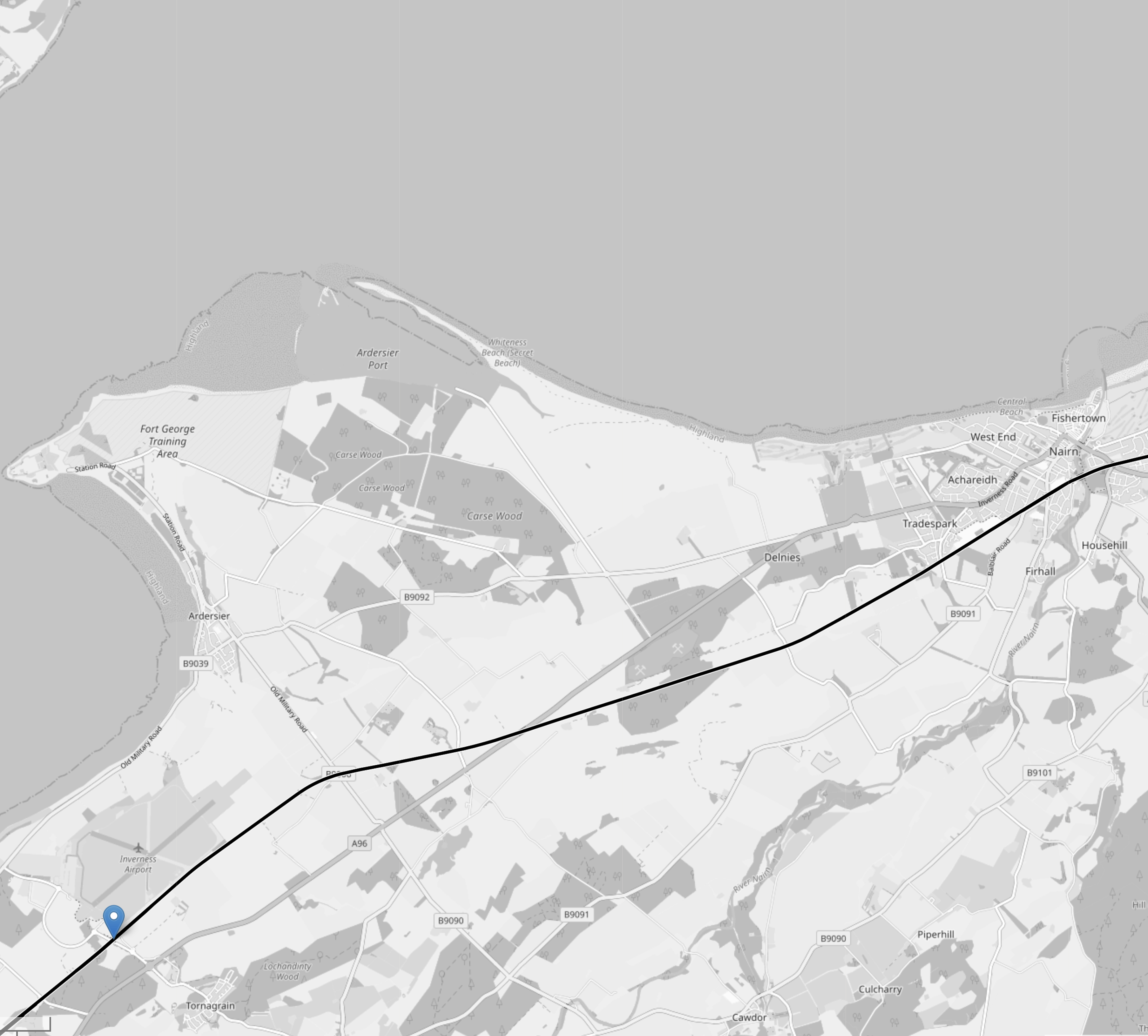
Note.
- The heavy black track is the Aberdeen and Inverness Line.
- The Port of Ardersier is above it in the middle of the map.
- Inverness Airport is marked by the blue arrow.
There seems to be a lot of space in the area.
Could A Steel Mini-Mill Be Built In The Area?
Consider.
- Dajin Heavy Industry could need a lot of steel.
- A steel mini-mill would need a lot of energy.
- The UK has a lot of scrap steel, that could be of good enough quality to make the steel gubbins needed for offshore wind components.
- Scrap could be brought in by sea or rail.
- That part of Scotland has lots of offshore wind power.
- Three pumped storage hydro systems are being built in the Scottish Highlands to store electricity.
- Workers could be brought in by train from as far as Aberdeen.
The Port of Ardersier could be an ideal place for a steel mini-mill.
How Many Acres Do You need for a Small Steel From Scrap Mill?
I asked Google AI the question in the title of this section and received this answer.
A small scrap-based steel mini-mill requires roughly 5 to 20 acres of land for basic production, casting, and rolling units.
If you include a dedicated on-site scrap yard and heavy inventory storage buffers, the requirement expands closer to 25 to 50+ acres.
Core Space Breakdown
Melt Shop & Electric Arc Furnace (EAF): 2 to 4 acres for the core melting furnace, ladle metallurgy furnace, and pollution control equipment.
Casting & Rolling Mill: 2 to 5 acres for continuous casting (billets or blooms) and the hot re-rolling lines.
Scrap Yard & Raw Materials: 5 to 20 acres depending on how much local scrap inventory you need to stockpile.
Finished Goods & Logistics: 3 to 10 acres for cooling beds, product staging, truck loading docks, and internal roadways.
From this crude analysis with Google AI, I believe that there is enough space to put a small steel mill in the area.
Ideas Borrowed From Failures During The Years Of North Sea Oil and Gas
I suspect there are a few of these, which might be possible to develop at Ardersier.
Conclusion
The Port of Ardersier has lots of possibilities,
Why Monopile Lowering Is Becoming A Critical Load Case For Jack-Ups
The title of this post, is the same as that of this article on offshoreWIND.biz.
This is the sub-heading.
As offshore wind monopiles continue to increase in size, the installation phase is emerging as a key structural design consideration for jack-up vessels. According to a recent GustoMSC study, loads generated during monopile lowering can approach — and in some cases exceed — those associated with extreme survival conditions.
This paragraph adds more detail.
With monopile diameters now exceeding 10 metres and weights surpassing 2,000 tonnes, installation dynamics are becoming increasingly complex. The challenge is no longer simply about crane capacity. Instead, the interaction between the suspended monopile and the supporting jack-up is becoming a governing factor.
In the 1970s, I worked on a similar problem as a consultant to a Cambridge company called Balaena Structures.
I described the Balaena in The Balaena Lives, but I believe the design could be applied to a large monopole foundation for a large wind turbine.
- The idea came from two Cambridge University engineering professors, who were much older than me, so they’ve probably passed on.
- The design was patented.
- None were built, as no-one ordered one.
- The computer, that I ran the simulation on doesn’t exist anymore.
- But, I’m fairly certain, I could create a design of XXL Monopile for the world’s largest wind turbine.
- The Balaena was designed to be reuseable.
- I did all the calculations and I believe that the Balaena could be turned into an easier-to-handle XXL Monopole.
None of the details of this project are written down, but they are locked safely in my head.
Hornsea 3 Battery Energy Storage To Start Operations Next Year, Ørsted Selects Arenko’s Platform to Operate BESS
The title of this post, is the same as that of this article on offshoreWIND.biz.
This is the sub-heading.
Arenko has been selected by Ørsted to deploy its Nimbus optimisation, asset management and trading platform at the 300 MW/600 MWh Iceni battery energy storage system (BESS) that will be part of the 2.9 GW Hornsea 3 offshore wind farm in the UK. The BESS project is scheduled to enter operations in the first quarter of 2027.
These are the first three paragraphs.
Named Iceni, the battery storage project is being developed as one of the UK’s first large-scale co-location projects under the Offshore Transmission Network Review (OTNR).
Iceni is designed to share transmission infrastructure and an onshore grid connection with Hornsea 3, rather than securing a separate grid connection. According to Arenko, this makes it the world’s first utility-scale battery to be directly integrated into offshore transmission infrastructure.
Under the agreement with Ørsted, Arenko’s Nimbus software will be used to forecast market and asset conditions, determine how battery capacity should be allocated in real time and automate trading across power markets. The platform will also support the technical, data and controls integration required to operate the battery alongside the offshore wind farm through their shared connection.
Note.
The Offshore Transmission Network Review (OTNR) has a web site.
The Hornsea 3 wind farm has a capacity of about ten times that of the battery.
Gwynt Glas Offshore Wind Project Strengthens Development And Welcomes New Partner, Sumitomo
The title of this post, is the same as that of this news item from Gwynt Glas.
These three initial paragraphs add some detail.
The Gwynt Glas offshore wind project has today announced a significant strengthening of its joint venture with Sumitomo Corporation joining as an equal partner alongside EDF power solutions UK and Ireland and ESB. Each partner now holds a 33.33% stake, while DP Energy continues to provide critical development support, leveraging its expertise in early stage project delivery and local engagement.
This strategic collaboration brings together three global leaders in renewable energy combining deep expertise in large scale development and delivery. The partnership positions Gwynt Glas to advance confidently through its next phases, reinforcing its role in delivering clean, homegrown energy for Wales and the UK while supporting energy security and economic growth.
Gwynt Glas is a proposed innovative floating offshore wind farm in the Celtic Sea. The up to 1.5 GW project continues to make strong progress and successfully submitted its Scoping Report to the Planning Inspectorate this summer.
Are Sumitomo Involved In Offshore Wind?
I asked Google AI, the question in the title of this section and received this answer.
Since making its first investment in a European offshore wind project in 2014, Sumitomo Corporation
has accumulated extensive expertise throughout the development, construction and operation phases of offshore wind projects.This marks Sumitomo Corporation’s first participation in a floating offshore wind project.
Are Sumitomo learning about floating offshore wind, by participating in a major project or are they up to something very innovative technically?
In Is Sumitomo Heavy Industries Highview Power Energy Storage System On Line At Hiroshima?, I talked about how Sumitomo’s engineers had taken Highview Power’s ideas for energy storage using liquid-air and downsized it to improve the efficiency of an LNG Terminal at Hiroshima, by adding a 4MW/20 MWh battery.
I just wonder, if some of the steel floats that will support the wind turbines, will also be used for liquid-air tanks as part of one of Highview Power’s batteries. As initially, there will be 66 turbines at Gwynt Glas, the battery could be a monster, but a very environmentally-friendly one!
1.5 GW Morgan Offshore Wind Site Up For Grabs Again As Crown Estate Launches Accelerated Tender
The title of this post, is the same as that of this article on offshoreWIND.biz.
This is the sub-heading.
The Crown Estate has launched an accelerated tender process to select a new developer for the up to 1.5 GW Morgan offshore wind project in the Irish Sea after the previous developer discontinued the project earlier this year.
These two paragraphs add more detail.
The Morgan site was originally awarded through Offshore Wind Leasing Round 4 in 2021 and was held by a joint venture between EnBW and JERA Nex BP. Its development was discontinued in January 2026 after EnBW decided to exit the Morgan and Mona offshore wind projects in the UK. JERA Nex BP then acquired EnBW’s stake in 1.5 GW Mona, while the joint venture discontinued the development of the Morgan project and returned the lease rights to the Crown Estate.
The Crown Estate announced in March 2026 that it would re-tender the site.
Given, that the article mentions an accelerated tender process, is the Crown Estate expecting the developer to put the hammer down.
Google AI says this about the original connection date.
Expected to be operational in 2028/2029 at the earliest, or by 2030 according to initial scheduling.
If it made 2030, that would mean a total offshore wind fleet of 55.15 GW and the Government’s 50 GW target of offshore wind power by 2030 would have been achieved.
That would do nicely.
UK’s Largest Onshore Wind Farm To Be Rebuilt With Fewer, Larger Turbines
The title of this post is the same as that of this article on the BBC.
This is the sub-heading.
One of Europe’s biggest onshore wind farms is to be flattened and rebuilt with fewer, taller turbines, its owner has announced.
These three paragraphs add more detail to the story.
Whitelee Windfarm has been producing electricity for about 20 years on a stretch of moorland near Eaglesham, south of Glasgow, but is reaching the end of its life.
Scottish Power Renewables says the existing 215 turbines will be replaced in three phases with around 124, each of which will be about 110m (361ft) taller.
The £1.5 billion “repowering” project will take 10 years to complete and will double the electricity output from 539 megawatts to 1 gigawatt, which is enough to power about 650,000 homes.
I asked Google AI,”Will there be any objectors to the repowering of Whitelee Wind Farm” and received this reply.
While there are no formal objectors on record yet, opposition to the repowering of Whitelee Wind Farm is highly anticipated. The developer, ScottishPower Renewables, officially filed their proposal with the Scottish Government in July 2026, but the formal planning application is not expected to be submitted until December 2027.
Anticipated objectors and their concerns typically include:
Campaign Groups & Environmentalists: Organisations like Scotland Against Spin generally challenge large-scale onshore wind projects over landscape dominance, ecological impacts, and the sheer scale of the new turbines.
Visual and Height Concerns: The repowering plan proposes replacing the existing 215 turbines with roughly 124 much larger machines. Each new turbine will stand roughly 110m taller than the current ones, which is expected to draw objections from those concerned about the visual alteration of the moorland.
Aviation and Radar Issues: Taller turbines and longer blades frequently raise fresh concerns and potential clearance objections from civil aviation and military radar stakeholders.
The BBC article finishes with this paragraph.
The work at Whitelee is expected to generate about £330m for the Scottish economy.
How many Scottish jobs will a third of a billion pounds sustain?
European Commission Greenlights France’s EUR 63 Billion Aid Scheme To Build 11 Offshore Wind Farms
The title of this post, is the same as that of this article on offshoreWIND.biz.
This is the sub-heading.
The European Commission has approved a EUR 63 billion French scheme to support the construction and operation of eleven offshore wind farms, in line with the objectives of the Clean Industrial Deal.
These three paragraphs add more detail.
The scheme was approved under the Clean Industrial Deal State Aid Framework (CISAF) adopted by the Commission on 25 June 2025.
France notified the Commission, under the CISAF, a scheme to support offshore wind energy to contribute to the objectives of the Clean Industrial Deal. The scheme will run for 25 years and has a maximum budget of EUR 63 billion.
The wind farms, located in the North Sea, the Atlantic and the Mediterranean, are expected to have a combined capacity of up to 11.1 GW and to generate up to 47.8 TWh of renewable electricity per year, or around 10.6 per cent of France’s annual electricity consumption.
I have highlighted this article, as it gives a lot of true figures about the cost of offshore wind farms in France.
The scheme costs in subsidy € 227027/GW/year.
Poland Receives Its First Electricity from Offshore Wind As Baltic Power Starts Delivering
The title of this post, is the same as that of this article on offshoreWIND.biz.
This is the sub-heading.
Electricity generated by the Baltic Power offshore wind farm has entered Poland’s national power grid, marking the first time the electricity generated by offshore wind turbines is added to the country’s energy mix.
This first paragraph gives more details of the project.
54 of 76 turbines have already been installed at Poland’s first offshore wind farm, with the first now generating electricity. Construction is scheduled for completion this autumn, ORLEN and Northland Power, the owners of the project, said.
When complete, the Baltic Power wind farm will generate up to 1.2 GW.
How Much Offshore Wind Does Poland Have Planned?
I asked Google AI, the question in the title of this section and received this reply.
Poland has massive offshore wind plans in the Baltic Sea.
The country targets 5.9 GW by 2030 and 18 GW by 2040. To meet these goals, the government is pursuing two primary development phases to transition the national grid away from coal.
A breakdown of Poland’s offshore wind rollout includes:
Phase I (Advanced Projects): Includes 5.9 GW of capacity.
Baltic Power: Poland’s first offshore wind farm (1.2 GW), developed by Orlen and Northland Power, officially connected to the national grid in July 2026.
Bałtyk 2 & 3: Equinor and Polenergia have finalized financing for an additional 1.4 GW, slated for commercial operation around 2028.
Phase II (Auction-Backed): Poland recently allocated over 3.4 GW in new capacity through competitive offshore wind auctions, pushing development well into the next decade.
Long-Term Outlook: Industry groups estimate the total technical potential in Poland’s portion of the Baltic Sea could reach up to 33 GW.
Will Poland Be Welcoming Any Invading Germany Wind Farms?
In New Study Shows How North Sea Offshore Wind Can Yield More While Costing Less, I talked about how Germany doesn’t have enough sea in which to place the wind farms it needs to generate the green electricity and hydrogen it needs.
This map from Wikipedia shows Exclusive Economic Zones in the North Sea, but it also shows who has control of the sea in the Baltic.
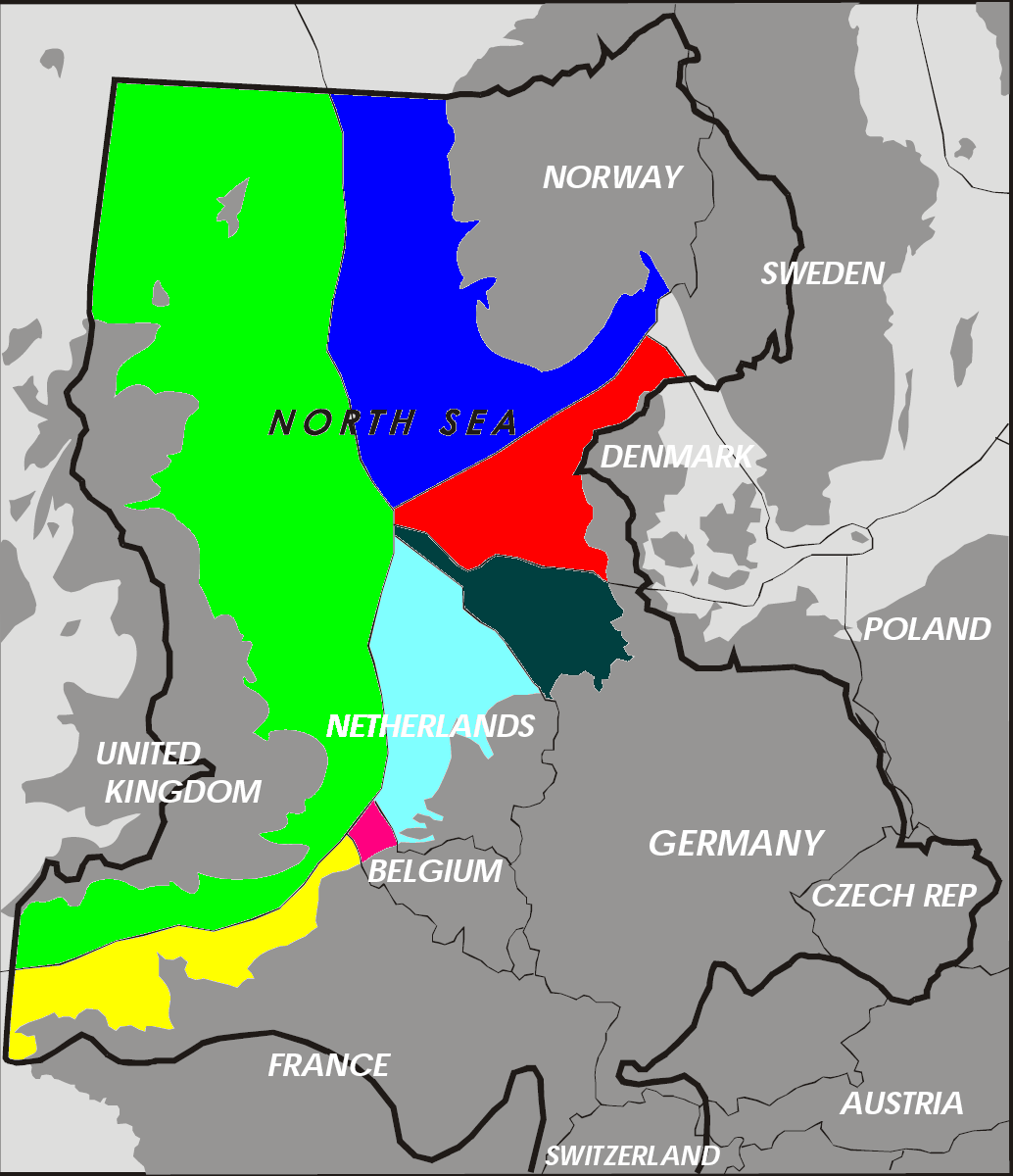
Note.
- Yellow is France.
- Mauve is Belgium, who drew the short straw.
- Light Blue is The Netherlands.
- Black is Germany, who despite their large land area, don’t have as much sea as the UK.
- Red is Denmark.
- Dark Blue is Norway.
- Green is The UK.
- Germany and Poland seen to share the Southern Baltic.
I wouldn’t be surprised to see Germany and Poland co-operating to maximize the wind power capacity of the Southern Baltic.
A Visit To Poland’s Coal Capital
On one of my trips to Poland, I went to Katowice, which is in Poland’s coal-mining region. I wrote about it in An Excursion In Katowice.
Google AI produced this snapshot of Katowice.
Katowice is historically known as the “Polish Coal Capital” and served as the absolute backbone of the region’s heavy industry. First transforming into an industrial powerhouse in the mid-19th century due to rich local coal and metal reserves, the city’s economy and rapid growth were entirely reliant on coal mining and steel.
While coal and heavy industry historically anchored its identity, the city of Katowice has aggressively transformed into a modern cultural, technological, and business hub. The wider Silesia region remains heavily tied to coal mining, but the municipality itself has shifted its focus to avoid reliance on it.
My visit to Katowice was an excellent pit-stop on a train ride between Krakow and Prague, when I did my Home Run From Krakow.
If you like your food and like me, you’re coeliac, I would certainly recommend Poland for a few days away.
Strangely, the language is not a problem, as if you get three Poles together, one will speak English better than what you do.
New Study Shows How North Sea Offshore Wind Can Yield More While Costing Less
The title of this post, is the same as that of this article on offshoreWIND.biz.
This is the sub-heading.
A less dense development of offshore wind in the German Exclusive Economic Zone (EEZ) of the North Sea, and a relocation of capacities to neighboring countries can both increase the yield from offshore wind and reduce costs, a new study by the Fraunhofer Institute for Wind Energy Systems (Fraunhofer IWES) has shown.
These two paragraphs add more detail.
With Germany’s current expansion target of 70 gigawatts (GW) by 2045 and the planned land use to date, the utilization of offshore wind power will fall far short of its technical potential, the study has shown.
While the North Sea is among the windiest regions worldwide, shading effects would significantly reduce the achievable yield of up to 5,000 full-load hours. Furthermore, the close proximity of wind farms reduces each other’s wind output.
It appears from the text in this must read report, that the Germans might develop as much as 20 GW in neighbouring countries.
In Will A Large Green German Elephant Get Involved In The Clacton By-Election?, I talked about a 2 GW cluster of wind farms being developed by RWE and their partners.
- 1.1 GW – Five Estuaries
- 504 MW – North Falls
- 353 MW – Galloper
Note:
- In total they are around 2 GW.
- The wind farms are around 30 km. offshore.
- RWE are a respected German company, who are one of the UK’s largest electricity generators.
I believe that RWE and their partners could receive a lot of opposition to an overhead power line across Essex to connect these wind farms to the National Grid, and 2 GW would not be a small set of pylons.
Would it be a better value project to bring this energy to Germany, either as green electricity or green hydrogen, than connect it to the UK’s National Grid?
Consider.
- A cable between the three wind farms and the nearest part of Germany would be about 300 miles.
- The longest undersea interconnect is the Viking Line between England and Denmark, which is 475 miles long.
- RWE have been building a big offshore electrolyser in The Netherlands called H2OpZee and I believe that similar technology could be used at Clacton.
- 2 GW of energy would be ten percent of the energy, that Germany needs.
- I’m sure Rachel from Accounts would be happy for any payments for the energy.
It looks to me that energy links between the UK and Germany will only get more numerous and stronger as the years roll by.
North Sea Exclusive Economic Zones
Out of curiosity, I searched for a map and found this on Wikipedia.
Note.
- Yellow is France.
- Mauve is Belgium, who drew the short straw.
- Light Blue is The Netherlands.
- Black is Germany, who despite their large land area, don’t have as much sea as the UK.
- Red is Denmark.
- Dark Blue is Norway.
- Green is The UK.
Didn’t we do well!
But Belgium and Germany miss out badly, when it comes for virgin sea to fill with wind farms.
Energy Links To Belgium
The UK has developed or is developing two grid links to Belgium.
- Nemo Link – a 1.0 GW interconnector.
- Nautilus – A 1.7 GW offshore hybrid asset.
National Grid is a partner with their Belgian equivalent ; Elia in both.
Energy Links To Germany
Germany is developing.
- NeuConnect – a 1.4 GW interconnector.
- GriffinLink – a hybrid offshore link.
- AquaVentus – In AquaVentus, I outlined this massive German project to bring Hydrogen to Germany from the North Sea.
I believe there will be more links.

