Is The Testing Of All Babies In Italy For Coeliac Disease And Type 1 Diabetes Having Any Effects?
I asked Google AI, the question in the title of this post and received this reply.
Italy’s law (Law 130/2023) targets children aged 1 to 17 rather than newborns. Pilot screening programs (like D1Ce Screen) show major positive effects: they successfully catch hidden cases early—finding coeliac antibodies in nearly 3% of children and type 1 diabetes markers in 0.8%—which dramatically cuts down dangerous emergency complications like severe diabetic ketoacidosis at diagnosis.
Key Findings and Effects
Early Detection: Finds silent or pre-symptomatic cases that standard symptom-based testing misses.
Reduced Complications: Lowers severe diabetic ketoacidosis rates by up to 50% when type 1 diabetes is caught early.
High Prevalence Insights: Pilot data show coeliac markers reach nearly 2.8–2.9% in children, higher than previous global estimates.
Healthcare Feasibility: Proves that capillary blood collection through primary care pediatricians is organized and practical on a national scale.
The testing appears to be successful in Italy.
Jesy Nelson ‘Outraged’ After MPs Debate Muscle Condition That Affects Her Twins
The title of this post, is the same as that of this article on the BBC.
This is the sub-heading.
Former Little Mix singer Jesy Nelson says she is “heartbroken” and “outraged” by MPs, following a debate about spinal muscular atrophy (SMA) testing in parliament.
These two paragraphs add some more details.
The singer has been campaigning for newborn babies to be screened for the muscle-wasting disease after her twins, Ocean Jade and Story Monroe Nelson, were diagnosed with it.
Caught early, the condition is treatable. Without diagnosis, it can cause death within two years.
I am coeliac and I believe my youngest son, also suffered from the disease.
- His late mother also believed he was coeliac.
- But he refused to get tested.
- He died at the age of 37 from pancreatic cancer, as his weakened immune system couldn’t protect him.
- Italy has recognised the problems that undiagnosed coeliac disease causes and now tests all babies for coeliac disease and type 1 diabetes.
I wrote about it in Italy Leads The World In Screening For Coeliac Disease.
How Is The Testing Of Babies In Italy For Coeliac Disease And Type 1 Diabetes Going?
I asked Google AI the question in the title of this post and received this reply.
Testing babies and children for coeliac disease and type 1 diabetes in Italy is progressing successfully, rooted in groundbreaking legislation. Italy is the first country to pass a national law (Law 130/2023) mandating mass screening for these conditions in children aged 1 to 17.
The pilot project, known as the D1Ce Screen, was rolled out in four key regions: Lombardia, Sardegna, Marche, and Campania. Testing is typically conducted at ages 2, 6, and 10.
Here is how the rollout is progressing based on interim data and reports:
Pilot Study Success: The screening involves a simple capillary (finger-prick) blood draw administered by primary care pediatricians. Participation in the initial phase was high, with over 75% of pediatricians and thousands of children successfully screened.
Higher-Than-Average Positivity Rates: Preliminary data revealed that approximately 2.8% to 2.9% of children tested positive for coeliac-specific antibodies—more than double the global average of 1% to 1.4%. Additionally, around 0.8% of children displayed markers for type 1 diabetes.
Early Detection: The pilot has proven highly effective at identifying asymptomatic or “silent” cases of both conditions early, which is vital for preventing acute complications like Diabetic Ketoacidosis (DKA) and avoiding the long-term impacts of undiagnosed coeliac disease.
High Public Acceptance: Surveys from the pilot regions indicate that more than 90% of parents are highly willing to have their children screened, though general public awareness of the national program is still being scaled up.
Following these successful pilot rollouts, the government continues to expand the screening program to ensure full, nationwide coverage to protect at-risk children before severe symptoms develop.
What Are The Benefits Of Being Coeliac?
When I was diagnosed as coeliac by Addenbrooke’s Hospital in the 1990s, Artificial Intelligence didn’t widely exist, so I thought I’d ask Google AI, the question in the title of this post.
I received this reply.
While coeliac disease is a serious lifelong autoimmune condition, receiving a formal diagnosis and adapting to the lifestyle brings several unexpected secondary health, lifestyle, and practical benefits.
Health Improvements
Restored gut health: Eliminating gluten stops autoimmune attacks, letting your small intestine heal completely.
Increased energy: Improved nutrient absorption reverses chronic fatigue and malnourishment.
Reduced long-term risks: Strict adherence lowers your chances of developing osteoporosis, anemia, or other autoimmune conditions.
No medication needed: The primary treatment relies entirely on dietary changes, avoiding pharmaceuticals or surgeries.
Lifestyle & Nutritional Perks
Whole-food nutrition: Avoiding processed gluten foods naturally steers you toward fresh meats, fish, fruit, and vegetables.
Culinary exploration: You are introduced to naturally gluten-free alternative grains like quinoa, teff, and buckwheat.
Diverse cuisines: Finding safe meals encourages trying diverse food traditions such as authentic Thai, Indian, or Persian cuisines.
Intentional eating: Reading ingredient labels raises your awareness of hidden sugars, fats, and additives.
Home cooking: Missing out on standard fast-food joints builds confidence in cooking high-quality meals from scratch.
Practical & Community Advantages
Financial assistance: Depending on your location, such as the UK, you may qualify for gluten-free staples like bread on prescription. In other regions, you might be eligible for medical tax deductions.
Family health awareness: Because it is a hereditary condition, your diagnosis helps first-degree relatives get tested and treated early.
Built-in community: Patient support organizations like Coeliac UK provide robust networks, meal apps, and peer guidance.
Decisive ordering: Minimal gluten-free choices at restaurants eliminates general decision fatigue when browsing large menus.
The only thing, I might add is that according to the University of Nottingham, has shown, that because of their enhanced immune system, coeliacs have a lower cancer rate than the general population.
Olympia Exhibition Centre – 18th June 2026
I went back to Olympia today and took these pictures.












I don’t think, I’ll be going again, as they don’t seem to have any gluten-free food.
An Extreme Day Out – Bedlington And Northumberland Park Stations
This OpenRailwayMap shows the Northumberland Line and the Eastern part of the Newcastle Metro.
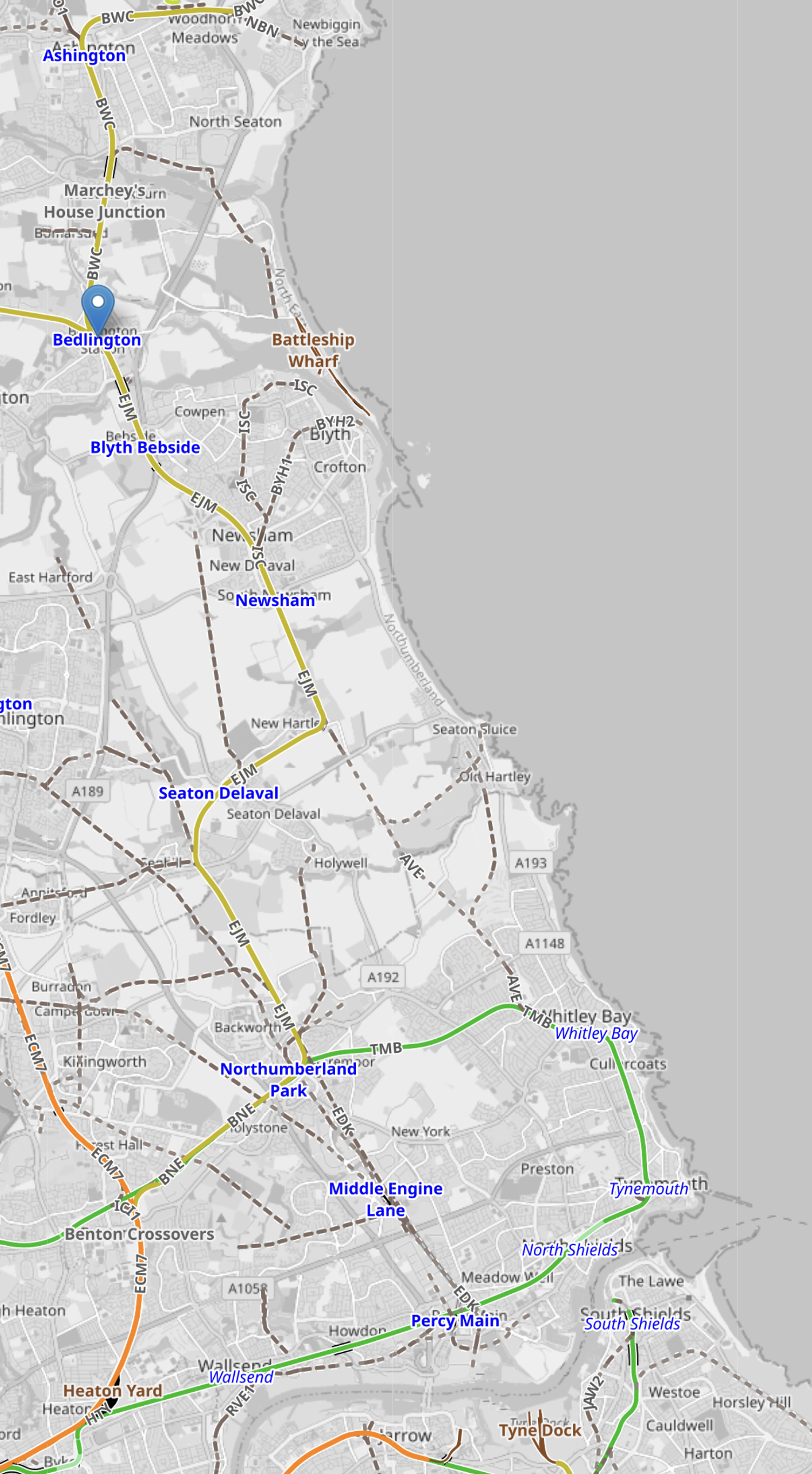
Note.
- The yellow track is the Northumberland Line.
- It terminates in the North at Ashington in the top-left corner of the map.
- Bebington station is indicated by the blue arrow.
- It terminates in the South at Newcastle station.
- The green track is the Newcastle Metro.
- There is now an interchange between the two lines at Northumberland Park station.
In the following sections, I’ll describe my trip.
King’s Cross And Newcastle Return For £66.35
I bought my two long distance tickets on a walk-up basis at King’s Cross and Newcastle stations from the machines.
- I traveled North on a Lumo service to Glasgow for £27.20.
- I did indulge myself with a tea for £2.60.
- I traveled South on an LNER service for £36.55.
- One of the reasons, I buy tickets on a walk-up basis, is that with my uncomplicated pancolonic diverticular disease, I might decide to cancel at the last minute, so it avoids the hassle of getting refunds.
Both services were within a few minutes of the timetable, although LNER had said they would be late, due to signalling problems.
My Route In Northumberland For £2.60
I bought a return ticket at Newcastle station for Ashington, which is the current terminus of the Northumberland Line.
- I actually didn’t go past Bedlington station, where I turned round and had a drink.
- As there are two trains per hour on the Northumberland Line, waits are not generally not too long.
- I only came back as far as Northumberland Park, where I swapped to the Metro for Newcastle station.
If I had had more time, I would have stopped at Seaton Delaval station to have a gluten-free dinner, which I wrote about in Seaton Delaval Station – 30th March 2025.
From Newcastle to Bedlington Station
I took these pictures going to Bedlington station.
















I would have taken more pictures, but the train was rather full.
Bedlington Station And Bedlington
I took these pictures at and around Bedlington station.










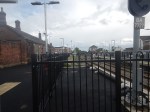





Note.
- Although it is a completely rebuilt station, it has a level crossing.
- But is the signal box keeping a watchful eye over trains and the road?
- Bedlington station appears to be step-free using ramps and the level crossing.
- Just to the North of the station, the tracks split to Ashington and Morpeth.
In my forty minutes or so in Bedlington, I didn’t see a terrier.
Are Any Bedlington Terriers Still Bred At Or Near Bedlington?
I had to ask Google AI, this question and I received this reply.
Yes, Bedlington Terriers are still bred in and around their namesake town in Northumberland, UK. While they are a relatively rare breed overall, the historic North East region remains one of the primary strongholds for these distinct “lamb-like” dogs.
Northumberland Park Station
I took these pictures at Northumberland Park station.





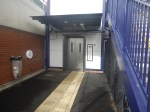

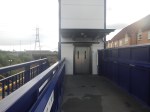



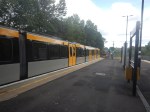
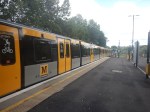



Note.
- The Northumberland Line uses a single bi-directional platform on the North side of the station.
- The Newcastle Metro uses an island platform on the South side of the station.
- Both platforms have steps and lifts.
- There are around 400 parking spaces and a Sainsbury’s Superstore at the station.
At 78, after a stroke, I didn’t find the change between the two lines difficult. But I did use the lifts!
What Are The Future Plans For The Northumberland Line?
I couldn’t resist asking Google AI this question and I received this answer.
With the Bedlington and Northumberland Park stations fully operational, the core phase of the Northumberland Line connecting Ashington to Newcastle is complete. Future plans now focus on route extensions, additional stops, and increasing capacity to handle high passenger demand.
Key Future Plans
Extension to the Coast: The North East Combined Authority is actively funding the development of an extension to Newbiggin-by-the-Sea, utilizing existing freight tracks. Planning submissions for this expansion are targeted for 2028.
New Station Proposals: Proposals are being explored to build an additional stop serving the Wansbeck General Hospital and to replace the long-closed Choppington station.
Increased Capacity: Operator Northern Rail is in ongoing discussions with transport partners to lengthen train services (which are currently constrained to two to four coaches) to help accommodate massive patronage on the line.
Integrated Ticketing: The Northumberland County Council is exploring integrated ticketing with the Tyne and Wear Metro to allow for seamless travel between the two networks at stations like Northumberland Park.
From my observations on the line over the last few years, I would go along with Google AI’s recommendations.
These are some specific thoughts.
Extension To Newbiggin-by-the-Sea
This OpenRailwayMap shows the tracks that used to exist between Ashington and Newbiggin-by-the-Sea.
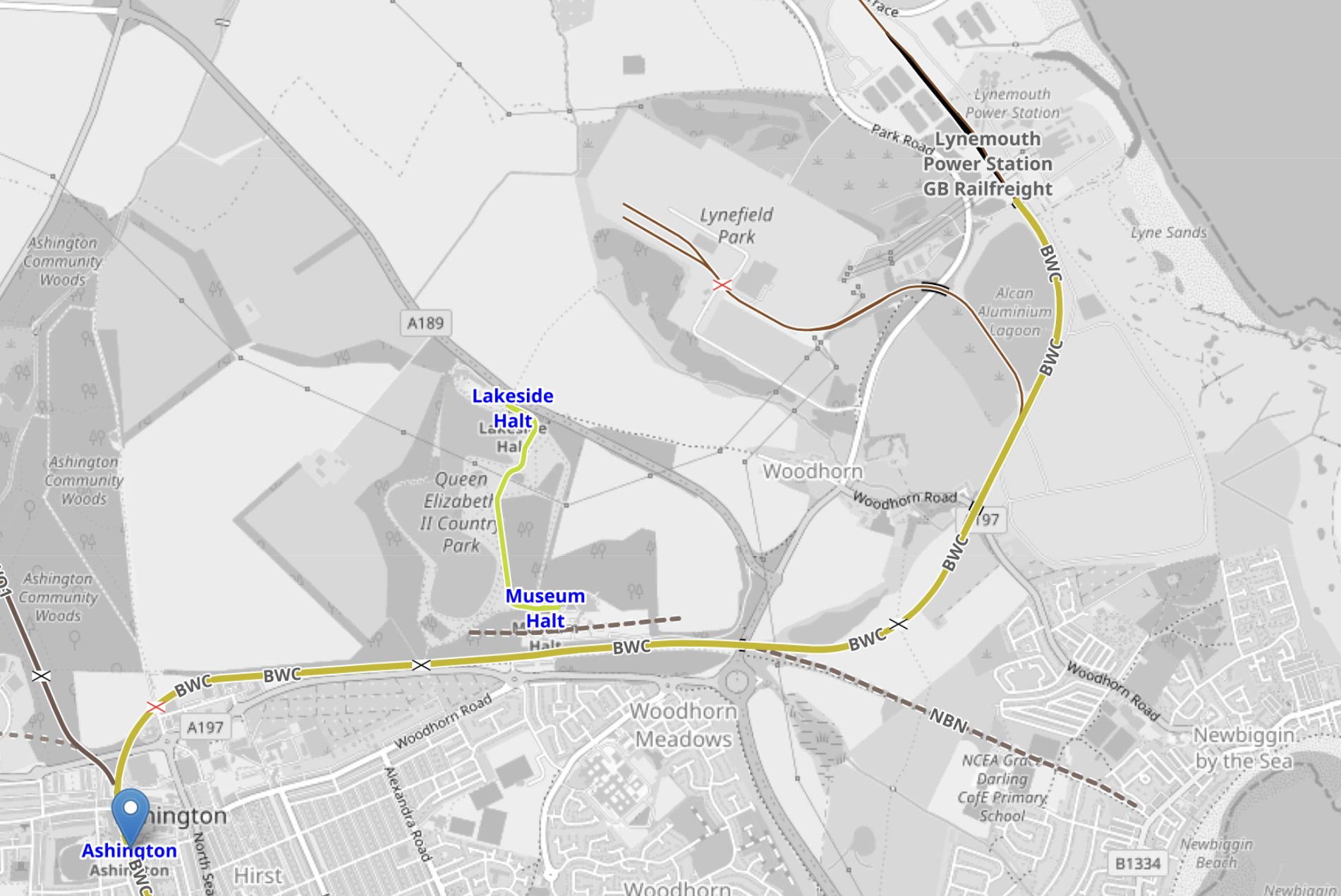
Note.
- Ashington station is in the South-West corner of the map.
- A freight line exists, which is shown in yellow, all the way to Lynemouth power station, which is a 420 MW biomass power station.
- Lynemouth powerstation was originally built to power an aluminium smelter.
- Running South-East from the Northumberland Line, is a disused railway alignment labelled NBN, which leads into Newbiggin-by-the-Sea.
This Wikipedia section describes the history of railway connection of the town.
Situated on the west side of Front Street (now the B1334), the station opened on 1 March 1872 as a terminus of the Blyth and Tyne Railway (now known as the Northumberland Line). The station had a long island platform onto which the station building faced. There were sidings on both sides of the station which handled goods traffic, controlled by a signal box. The station closed to both passengers and goods traffic on 2 November 1964. With the reopening of the Northumberland Line, Provisions have been made, especially at Ashington so that the line could be extended to Newbiggin. As of the end of 2025, there were calls to extend the railway by 1.6km (1 mile) into the centre of Newbiggin-by-the-Sea. This will require new track and is all subject to a feasibility study. A formal bid was launched in December 2025 for this.
In Formal Bid To Extend Railway Line, I wrote about the latest progress in January 2026, based on a BBC article.
The Northumberland Line Needs A Focus Other Than Commuting
Several of the stations have large car-parks, which is good for commuting, but the railway needs to serve more places for leisure and other activities.
- Seaton Delaval Hall is Grade 1 Listed and is just 10 minutes in a bus from the station with the same name.
- If the Northumberland Line is connected to Newbiggin-by-the-Sea, that could bring in those, wanting a day by the sea.
- The extended Northumberland Line would also connect to Woodhorn, which is a museum, described in this Wikipedia entry.
QTS are also developing an AI data centre at Cambois, which surely will generate commuter traffic from all over the North East.
This OpenRailwayMap shows the location of the QTS AI Data Centre.
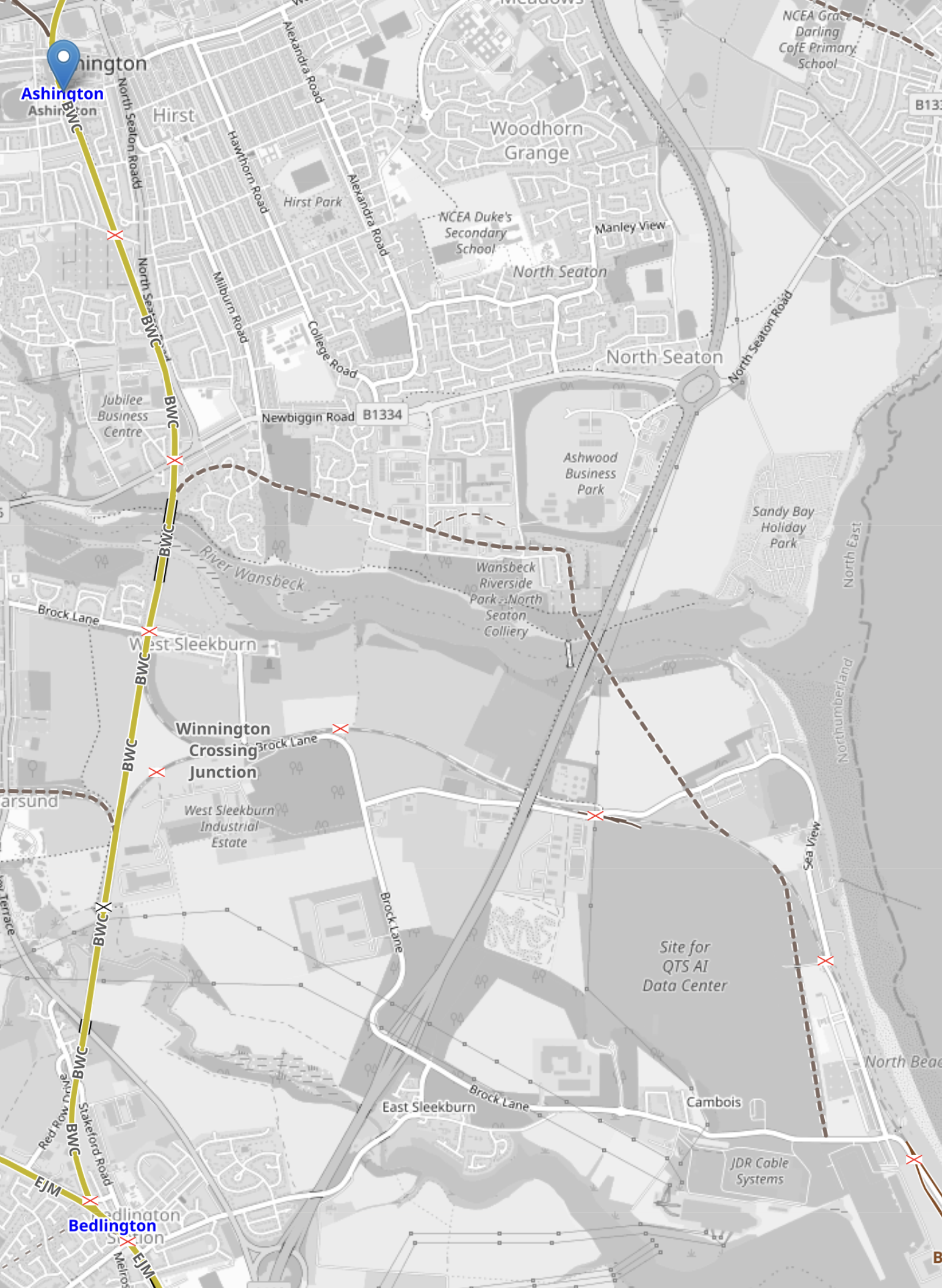
Note.
- Ashington station is indicated by a blue arrow.
- The yellow track is the Northumberland Line, which now terminates at Ashington station.
- Bedlington station is in the South-West corner of the map.
- The trapezoidal grey box to the East of Bedlington is labelled as Site for QTS AI Data Centre.
- As the site, was that of Blyth coal-fired power station, before QTS acquired it, there is a disused railway line that connects the site to the Northumberland Line.
I suspect there are powerful economic arguments about whether or not, the Northumberland Line is extended to the QTS AI Data Centre site.
How Much Power Will QTS Cambois Data Centre Need?
I couldn’t resist asking Google AI this question and I received this answer.
The proposed QTS Cambois data centre in Northumberland is expected to require between 620MW and 720MW of critical IT power capacity, with an initial proposal capacity of up to 1.1GW.
Details on the planned power infrastructure include:
Power Capacity: The facility will support up to 720MW of critical IT capacity across ten planned buildings, though some council estimates cite an expected total power capacity of 620MW.
Backup Power: To guarantee uptime and handle power outages, the campus will rely on nearly 600 diesel-powered generators, requiring up to 58 generators per data hall.
Site Details: Located on the former Blyth Power Station site in Cambois, the £10 billion development will span 540,000 square metres.
My views on this are.
- There is the 1.4 GW North Sea Link from Blyth to Norway, that I wrote about in UK To Norway Sub-Sea Green Power Cable Operational.
- The 4.1 GW Berwick Bank wind farm is planned to send 1.8 GW to Blyth.
- To help if QTS need more power, there is the 1.4 GW Sofia wind farm.
- So 1.1 GW should be manageable, as Blyth is blessed with more power than Niagra Falls.
I also believe that Centrica and Delta have a much better backup solution, that I described in Delta And Centrica Launch Scalable Off-Grid Fuel Cell Power Solution. Hydrogen could come by pipeline or rail.
How Would The Northumberland Line Connect To Wansbeck Hospital?
This Google Map, shows the location of Wansbeck General Hospital with respect to Ashington station.
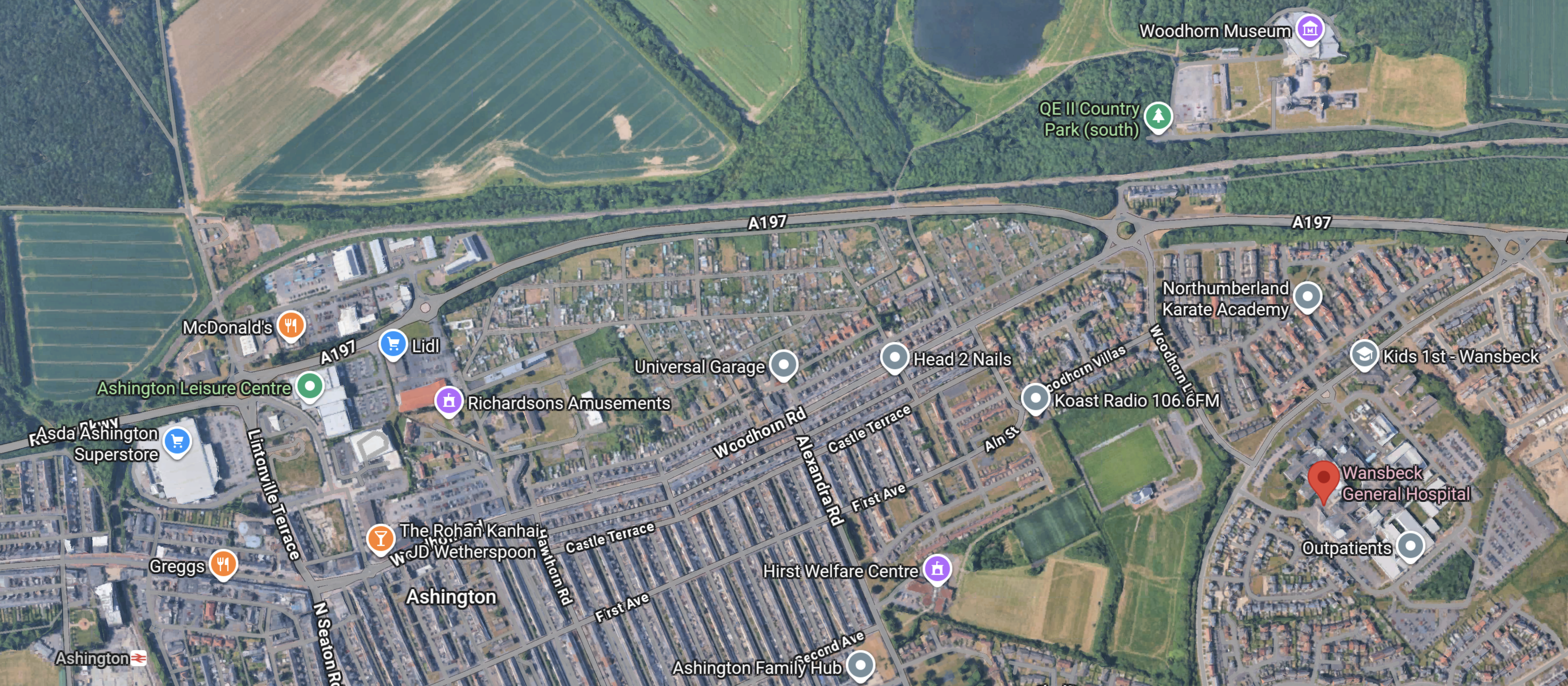
Note.
- Ashington station in the South-West corner.
- Woodhorn museum is in the North-East corner.
- Wansbeck General Hospital is indicated by a red arrow.
- The Northumberland Line runs East-West to the South of the museum and then curves round to reach the station.
Perhaps the station could go between the museum and the hospital and an innovative shuttle would connect all three locations.
How Would The Northumberland Line Connect To Choppington?
This Google Map, shows the location of Choppington, with respect to Morpeth and Bedlington stations.
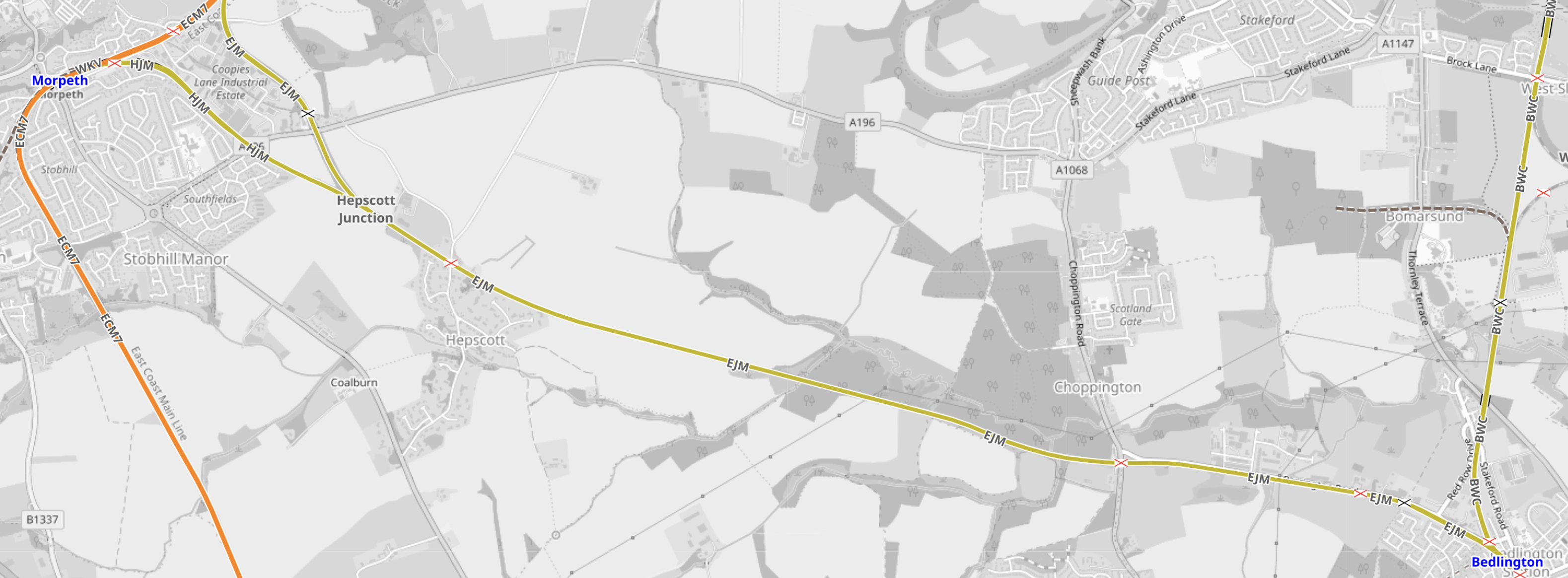
Note.
- The orange track on the West side of the map is the East Coast Main Line.
- Morpeth station is in the North-West corner of the map.
- Bedlington station is in the South-East corner of the map.
The Eastern end of the Bedlington and Morpeth Line can be seen in this picture to the left of Bedlington North signal box at the Northern ends of the the platforms.

Note.
- Bedlington North signal box has a communication mast behind it.
- The track to the left of the box goes to Morpeth.
- The track to the right of the box goes to Ashington.
This OpenRailwayMap shows Choppington Road, which crosses the Bedlington and Morpeth Line at the only level crossing between Bedlington station and Hepscott junction.
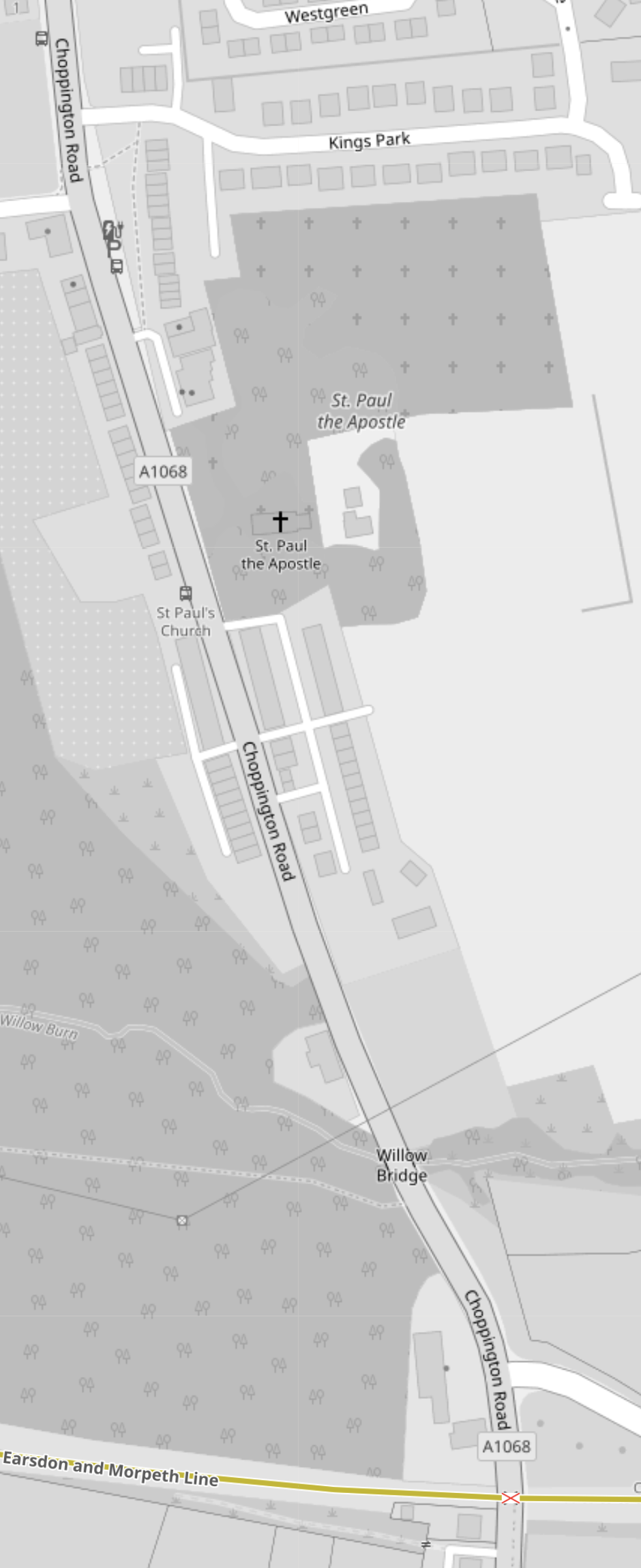
Note.
- Choppington Road, which runs North-South on the map.
- The yellow tracks are the Morpeth and Bedlington Line, which runs East-West across the map.
- Where they cross, a red cross indicates a level crossing.
- The Wikipedia entry of Choppington station shows a level crossing.
As the level crossing on the map is the only one shown, this must be the location of Choppington station.
Italy Leads The World In Screening For Coeliac Disease
The title of this post is the same as that of this article on 360info.org.
This is the sub-heading.
Coeliac disease is common but often undetected. Researchers are looking at ways to make the disease both easier to diagnose and easier to treat.
This paragraph gives a few more details.
The land of pizza and pasta — Italy — has become the first country in the world to pass a law requiring all children under the age of 18 to be screened for coeliac disease and type 1 diabetes.
I feel the most interesting part of this law will be its secondary and long term ones.
Topics I will be following include.
- How will it increase the number of diabetics and coeliacs?
- Will it affect cancer rates?
- Will it affect obesity rates?
- Will it affect the rates of other diseases?
- Will it help to improve Italy’s chronically-low birth rate.
- Will it improve Italy’s performance in sports like swimming and athletics, that need a high degree of fitness.
How many other countries will follow Italy?
Is There A Cure For Uncomplicated Pancolonic Diverticular Disease?
I asked Google AI this question and received this answer.
There is no definitive cure for uncomplicated pancolonic diverticular disease, as the structural pouches (diverticula) in the colon are permanent. However, the condition is highly manageable. The primary goal is symptom control and preventing flare-ups using diet and lifestyle modifications.
Management & Control Strategies
Once diverticular disease is present, the condition is managed conservatively rather than cured:
High-Fiber Diet: Consuming whole grains, fruits, and vegetables helps maintain regular bowel movements and reduces pressure on the colon.
Lifestyle Adjustments: Regular exercise, adequate hydration, and weight management are highly recommended to reduce the risk of the condition progressing.
No Food Restrictions: Contrary to outdated advice, you do not need to avoid nuts, seeds, popcorn, or fruit skins, as they do not increase the risk of complications.
Managing Flare-ups (Diverticulitis)
If uncomplicated diverticular disease flares up into uncomplicated diverticulitis, it is typically treated with:
Conservative Rest: For mild, uncomplicated flare-ups, symptoms often resolve on their own with a temporary liquid or low-residue diet and bowel rest.
Medication: Healthcare providers may prescribe oral antibiotics and pain relievers if needed.
Outpatient Care: Most uncomplicated episodes can be safely treated at home without the need for hospital admission.
I then asked Google AI, this supplementary question.
I Am coeliac. Is That A Hindrance Or A Help?
I received this answer.
Having coeliac disease is both a structural help and a practical hindrance when managing pancolonic diverticular disease.
While your mandatory gluten-free diet naturally protects your colon from a major source of gut irritation, it simultaneously makes getting the required amount of daily fibre significantly more challenging.
How Coeliac Disease Helps (The Benefits)
Reduced Inflammatory Load: Because you maintain a strict gluten-free diet to protect your small intestine, you are already avoiding the widespread gut inflammation, severe bloating, and irregular bowel habits that gluten triggers in coeliac patients.
This lack of abdominal bloating lowers the internal “pressure cooker” effect inside your colon, reducing the risk of your diverticular pouches becoming irritated.
The “Healthy Diet” Trap Avoided: Many individuals without coeliac disease are told to aggressively load up on wholewheat bread, bran cereals, and standard pasta to treat diverticulosis. If they have an underlying, undiagnosed gluten sensitivity, this advice backfires terribly, causing massive gas and straining. Your coeliac status safely keeps you far away from this trap.
How Coeliac Disease Hinders (The Challenges)The Fibre Deficit: The primary medical recommendation for pancolonic diverticular disease is a high-fibre diet.
Unfortunately, mainstream high-fibre staples in the UK are typically wheat-based. Standard gluten-free replacement products (like gluten-free breads or white flour blends) are notoriously low in fibre, often relying heavily on refined starches.
Symptom Confusion:
Coeliac accidental cross-contamination and diverticular flare-ups share highly overlapping symptoms, including severe abdominal cramps, bloating, and altered bowel habits. This can make it difficult to determine whether a sudden bout of gastric pain is an autoimmune reaction in your small intestine or a flare-up in your colon.
Balancing Both Conditions Successfully
To ensure your coeliac disease does not hinder your diverticular health, focus your diet entirely on naturally gluten-free, high-fibre foods rather than processed gluten-free substitutes.
One of my favourite foods, is to eat a whole punnet of Dyson’s year-round strawberries with a small pot of Marks and Spencer’s luxury heather honey and ginger logurt, around tea-time.
I asked Google AI a supplementary question, if this was good practice
I received this answer.
Eating a whole punnet of Dyson’s strawberries with a pot of M&S Heather Honey and Ginger yoghurt is a highly effective, delicious practice for your conditions, but with one important nutritional caveat regarding the sugar and fat content in that specific luxury yoghurt.
The Good: Why Your Timing and Ingredients Alignment is Excellent
The Perfect Tea-Time Window: Eating a heavy dose of fibre at tea-time (late afternoon) is excellent practice.
It ensures your digestive system stays active and hydrated into the evening, preventing nighttime constipation and reducing bowel pressure while you sleep.
Naturally Gluten-Free: Both components of this snack are 100% naturally gluten-free. Checking the official ingredients, the M&S Collection Heather Honey and Ginger Yogurt uses cornflour as its thickener rather than wheat starch, making it perfectly safe for your coeliac disease.
The Anti-Inflammatory Ginger Boost: Real diced and ground ginger in the yoghurt acts as a natural prokinetic (speeding up gastric emptying) and has mild anti-inflammatory properties, which can soothe a sensitive, diverticula-prone colon.
Hydration and Stool Bulk: A full Dyson Farming punnet (typically 250g to 400g) packs massive fluid volume and 5 to 8 grams of stool-softening dietary fibre, ticking a massive box for your pancolonic management.
The Caveat: The “Luxury” Trade-off
While the strawberries are an absolute nutritional green light, the M&S Luxury Collection yoghurt is explicitly designed as an indulgent treat rather than a health food.
High Added Sugars: This specific yoghurt contains added refined white sugar and muscovado sugar on top of the natural heather honey, resulting in roughly 14.8g of sugar per 100g. High sugar loads can occasionally ferment rapidly in the lower bowel, triggering gas and bloating that stretches the diverticular pouches.
High Saturated Fat: Made with 15% Devonshire whipping cream, a single 150g pot delivers a substantial dose of saturated fat. While this does not harm your coeliac disease, an overly rich tea-time snack can slow down stomach emptying for some individuals.
The Verdict & How to Optimise It
It is perfectly fine to keep enjoying this exact combination if it is currently making your gut feel great! Your personal symptom response is always the best guide.
However, if you want to make it an elite, everyday “best practice” for your long-term health, consider this simple tweak: use half the pot of the luxury M&S yoghurt mixed with an equal amount of plain, unsweetened Greek yoghurt.
This retains the live cultures, the fiery ginger punch, and the luxury honey flavour while cutting the sugar and saturated fat in half.
Would you like some recommendations for other gut-friendly, naturally gluten-free ways to sweeten plain probiotic yoghurt, or would you like to explore other high-fibre tea-time snacks?
I probably have the snack, three times a week.
Could A Gluten-Free Version Of The M & S Microwavable Full English Breakfast Be Created?
This link shows the product on the Ocado web site.
These are some details about the product.
- It costs £4
- It lasts two days including the delivery day.
- In How Much Vitamin B12 Is There In A Leon Full English Breakfast Egg Pot?, I got Google AI to analyse one of Leon’s very similar egg pots and these contain a good dose of B12.
These are the ingredients.
Baked Beans (50%) (Haricot Beans · Tomato Paste · Water · Sugar · Cornflour · Salt · Vinegar · Dried Onions · Natural Colour: Paprika Extract · Ground Paprika · Natural Flavouring · Garlic Extract · Onion Oil · Vegetable Oil (Sunflower/Rapeseed)) · British Pork Chipolata Sausages (20%) (Pork (73%) · Water · Wheatflour* · Pea Protein Isolate · Dextrose · Wheat Starch · Salt · Ground Spices (White Pepper · Black Pepper · Coriander · Mace · Nutmeg) · Dried Onions · Salt · Yeast Extract · Dried Sage · Raising Agent: E503) · Poached Egg (18%) · Chestnut Mushrooms (7%) · Smoked British Bacon (2.5%) (Pork Belly (made with 185g of Raw Pork per 100g of Cooked Bacon) · Curing Salt (Salt · Preservative: Sodium Nitrate, Sodium Nitrite) · Sugar · Natural Flavouring · Antioxidant: E301) · Rapeseed Oil · Salt · Coarse Black Pepper.
Sausages filled into natural pork collagen casings.
*Fortified with Calcium, Iron, Vitamins B3, B1 and Folic Acid.For allergens, including cereals containing Gluten, see ingredients in bold.
Note the added gluten, which can be swapped for a gluten-free flour.
How I Would Use These Meals
I was told by Addenbrooke ‘s Hospital, when I was first diagmosed as a coeliac to always start the day with a good meal, as if you are travelling the next meal might not be easy to find.
Given the rate at which coeliac-friendly restaurants are closing, no dietician ever made a better prediction.
So if say I was going to Liverpool for the day, I could put one of these in my fridge and have a good breakfast before I leave home. This also means I can leave home earlier and catch an earlier train.
Could Uncomplicated Pancolonic Diverticulitis Cause The Constant Pain In My Hip Joints?
It’s not chronic pain, but I must have had it for at least forty years.
So what does Google AI make of my question?
It gave me this answer.
Yes, it is possible for uncomplicated pancolonic diverticulitis (inflammation throughout the entire colon) to cause constant pain in your hip joints.
While diverticulitis is primarily a gastrointestinal issue, it can cause referred pain to the hips and legs or trigger systemic inflammation that affects joints.
Here is how your condition might be linked to your hip pain:
1. Referred Pain (Nerve Pathway Irritation)
The inflammation from a diverticulitis flare-up can irritate nearby nerves that connect to the hip, thigh, or groin area.
Location: While classic diverticulitis causes left-side abdominal pain, a severe or widespread (pancolonic) flare can cause “referred pain” in the lower back, hip, and thigh.
Constant nature: If the underlying inflammation remains active, this pain can feel constant rather than intermittent.
2. Systemic Inflammation and “Diverticulitis-Associated Arthritis”
Rarely, active diverticulitis can trigger a form of inflammatory arthritis, acting as an extra-intestinal manifestation of the disease.
Migrating Pain: This can cause joint pain and stiffness in larger joints, including the hips, knees, and ankles.
Connection: As the gut inflammation resolves with proper care (antibiotics/diet), the joint pain often improves.
3. Anatomical Proximity
The colon sits in close proximity to the musculoskeletal structures of the pelvis, including the iliopsoas muscles (hip flexors).Inflammation in the colon can cause swelling that affects these muscles, leading to pain in the hip region, particularly with movement.
That looks like a possibility to me!
But it needs more investigation.
 The Anonymous Widower