Could There Be Better Transport Connections Between Leeds/Bradford and Glasgow/Edinburgh?
I shall start this post with eleven questions, that I will ask Google AI.
How Many People Live In the Greater Leeds/Bradford Area?
I received this answer from Google AI.
The greater Leeds-Bradford urban and larger urban zone has an estimated population of about 1.65 million to 2.4 million people. The core combined Leeds-Bradford continuous built-up area holds roughly 1.66 million people, while the wider Leeds City Region and Larger Urban Zone reaches approximately 2.4 million.
How Many People Live In the Greater Glasgow Area?
I received this answer from Google AI.
The Greater Glasgow urban area has an estimated population of over 1 million people. Depending on how the boundaries are drawn, the wider NHS health board region contains about 1.2 million, and the broader Glasgow City Region counts roughly 1.8 million residents.
How Many People Live In the Greater Edinburgh Area?
I received this answer from Google AI.
The greater Edinburgh metropolitan or wider city region has an estimated population of approximately 912,000 to 1.35 million, depending on the regional boundary used. The City of Edinburgh council area itself holds 531,370 residents.
How Many Sheduled Air Services Are There Between Leeds/Bradford and Glasgow Airports?
I received this answer from Google AI.
There are currently zero direct, scheduled non-stop air services operating between Leeds Bradford Airport (LBA) and Glasgow Airport (GLA).
How Many Scheduled Air Services Are There Between Leeds/Bradford and Edinburgh Airports?
I received this answer from Google AI.
There are currently zero direct, scheduled non-stop air services operating between Leeds Bradford Airport (LBA) and Edinburgh Airport (EDI).
How Many Scheduled Direct Rail Services Are There Between Leeds or Bradford and Glasgow?
I received this answer from Google AI.
There is typically only 1 scheduled direct train service per day in each direction between Leeds and Glasgow (operated via CrossCountry), and n0 direct scheduled services between Bradford and Glasgow.
How Many Sheduled Direct Rail Services Are There Between Leeds or Bradford and Edinburgh?
I received this answer from Google AI.
There are typically only 1 to 2 scheduled direct train services per day running from Leeds to Edinburgh (usually operated by CrossCountry or via select extensions), taking roughly 3 hours. Bradford has zero regular scheduled direct rail services to Edinburgh; journeys from Bradford require at least one change (commonly transferring at Leeds).
How Long Does It Take To Drive Between Leeds And Glasgow?
I received this answer from Google AI.
Driving between Leeds and Glasgow takes about 3 hours and 50 minutes to 4 hours and 15 minutes under normal conditions, covering a distance of roughly 210 to 222 miles via the A1(M) and M74.
How Long Does It Take To Drive Between Leeds And Edinburgh?
I received this answer from Google AI.
Driving between Bradford and Glasgow takes about 3.5 to 4 hours under normal conditions. The total distance is roughly 200 miles (322 km), mostly following the A1(M) or M6 motorways depending on your chosen route.
How Long Does It Take To Drive Between Bradford And Glasgow?
I received this answer from Google AI.
Driving between Leeds and Glasgow takes about 3 hours and 50 minutes to 4 hours and 15 minutes under normal conditions, covering a distance of roughly 210 to 222 miles via the A1(M) and M74.
How Long Does It Take To Drive Between Bradford And Edinburgh?
I received this answer from Google AI.
Driving between Bradford and Edinburgh takes about 4 hours to 4.5 hours under normal traffic conditions. The total driving distance is roughly 196 to 202 miles, primarily heading north via the A1(M) or M1 and A69/M74 routes.
But I do think that Northern England and Scotland could be getting closer together in the next few years.
Consider.
- LNER stopped running between King’s Cross and Glasgow a couple of years ago.
- No airlines fly between Leeds/Bradford and Glasgow or Edinburgh Airports.
- TransPennine Express run direct rail services between both Liverpool and Manchester, and Glasgow.
- There are only occasional direct rail services between Leeds or Bradford, and Glasgow or Edinburgh.
- Driving is not an easy or quick option.
- Lumo run a few limited rail services between Glasgow and Stirling, and London.
There is a big gap in rail and air services between the 1.5 million people in Leeds/Bradford and nearly 2 million in Central Scotland.
But.
- Between Bradford and Carlisle is the Settle and Carlisle Line.
- The Settle and Carlisle is one of the most scenic lines in Europe, if not the world.
- The Settle and Carlisle is not electrified.
- Until 1974, it was used by the Thames-Clyde Express between London St. Pancras and Glasgow.
- Avanti have used the route for engineering diversions, using their new five-car Class 805 trains in pairs.
- Bradford Forster Square station has been updated so that ten-car trains on the route can call at both Leeds and Bradford Forster Square stations
- I believe that in a couple of years, LNER will have CAF tri-mode trains and Hitachi battery-electric trains, that will be able to bridge the gap in the electrification between Skipton and Carlisle.
Selected Kings Cross and Bradford Forster Square services could be extended to Skipton, Settle, Carlisle, Dumfries, Kilmarnock and Glasgow.
There will be three major benefits.
- Several towns and cities will gain a London service.
- The extra services will help to take on the airlines between London and Glasgow.
- Leeds and Bradford will be connected to Glasgow.
No major infrastructure would need to be created.
I have other thoughts.
Can Ten-Car Trains Use The Settle And Carlisle?
This article on the BBC is entitled Rail Operator Crosses Picturesque Line.
There is a picture in the article of two Avanti five-car Class 805 trains crossing the Ribblehead Viaduct on the Settle and Carlisle Line.
If they can do it, I suspect that a new 10-car CAF Class 897 train can also run on the line.
Could High-Class Food Be Served Between London And Glasgow?
Google AI gives this history of Pullman Dining on current GWR services.
Great Western Railway (GWR) has been running Pullman Dining on its Intercity Express Trains (Class 800 and sister Class 802 units) for about seven years, since the new Hitachi-built fleets rolled out fine-dining menus around 2017 to 2018 to replace the legacy High Speed Train (HST) sets.
In On The 10:45 From Paddington, I describe one of the best simple meals I’ve ever had.
I’m sure there are a few Scottish chefs, who could create a Scottish-themed menu for services to Scotland via the Settle and Carlisle.
Passengers Would Have A Choice Between London And Glasgow
These would be the options.
- Fast – Ryanair and lose a lot of brownie points.
- All-Electric Semi-Fast – Avanti or Lumo.
- Slower, but enjoying the scenery and why not a meal – LNER via Settle and Carlisle.
Five trains per day each way would add 3,000 seats per day, which would be around 15 of Ryanair’s 737s per day.
Will Leeds/Bradford Airport Have A Glasgow Or Edinburgh Flight Some Time Soon?
Consider.
- Between Leeds-Bradford and Glasgow airports is 177.4 miles.
- Between Leeds-Bradford and Edinburgh airports is 159.5 miles.
- The all-electric Eviation Alice has a range of 250 miles with 10 passengers.
- The all-electric Heart Aviation ES-30 has a range of 220 miles with 30 passengers.
Google AI gives this view on when the Heart Aviation ES-30 will enter service.
The Heart Aerospace ES-30 hybrid-electric airplane is scheduled to enter commercial service in 2028, though some industry analysis and program updates suggest development adjustments could stretch the timeline closer to 2029 or 2031.
The Eviation Alice doesn’t give a date at present.
Given the option, I suspect some travellers would prefer to fly.
UK’s Iconic Jodrell Bank Telescope Faces Axe In Science Cuts
The title of this post, is the same as that of this article on the BBC.
This is the sub-heading.
The Jodrell Bank Observatory, which has housed the UK’s largest telescope for nearly 70 years, has lost its funding and could now close, the BBC understands.
These two paragraphs add more details.
The observatory and its network of telescopes have been pivotal to the country’s study of distant galaxies and training future astronomers. Scientists have described the decision as “heartbreaking” and “scientifically misguided”.
All scientific observations at Jodrell are expected to cease on the 1 April 2028 unless alternative funding can be found.
I consider the government decision to be vandalism of the highest order.
This Google Map shows the Jodrell Bank site.
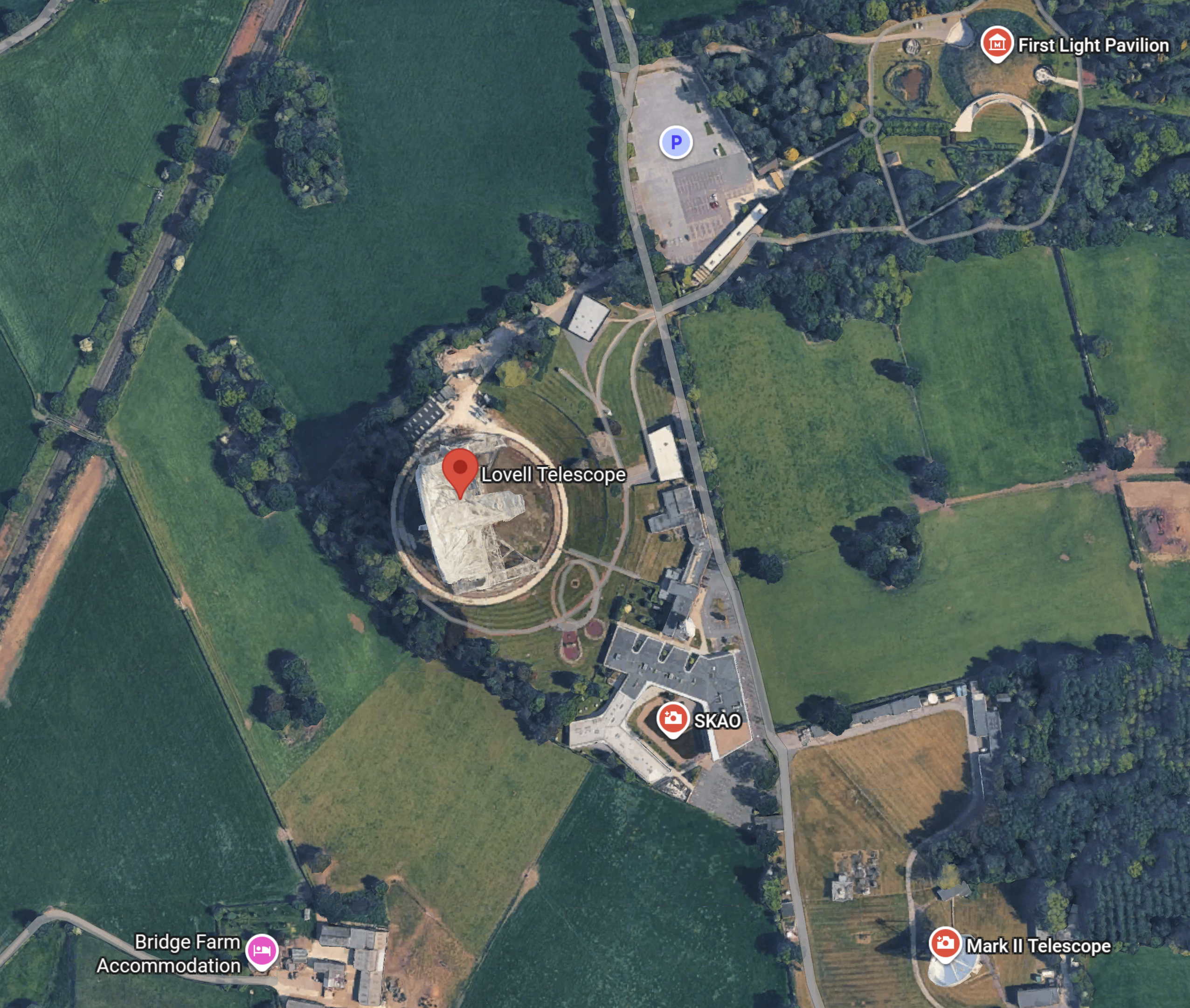
Note.
- The radio telescope is indicated by a red arrow.
- Going across the North-West corner of the map is the West Coast Main Line between London and Manchester Piccadilly.
- The red dot, which is labelled SKAO indicates the SKA Observatory, which has this web site.
This is on the home page.
Building the two largest telescope arrays in the world, located in South Africa and Australia, made possible through a global collaboration.
Jodrell Bank is a UNESCO World Heritage Site.
I have some thoughts.
I Was A Keen Amateur Astronomer At School
I went to Minchenden Grammar School in North London, where the school had Prince Albert’s six-inch refracting telescope for observations.
I can also remember a smaller reflecting telescope being setup outside the cricket pavilion to observe a partial eclipse of the sun.
Google AI lists three partial solar eclipses in London in the 1960s.
February 15, 1961: A deep partial dawn eclipse showing 92% to 95% coverage of the Sun in Southern England. It featured early television coverage and coincided with the exact day the movie Barabbas filmed its crucifixion scene during totality in Southern Europe.
September 22, 1968: A daytime partial eclipse where about one-third of the Sun was blocked. Skies over London cleared after 11:00 a.m., prompting the Junior Astronomical Society to set up projection telescopes in St. James’s Park.
May 20, 1966: Another visible partial solar event tracked across the UK, though with lighter public observation in the capital.
As the eclipse wasn’t 92 % to 95 % coverage and I would have been in Liverpool in 1968, I suspect it was the eclipse of May 20, 1966.
I Was Of The Generation That Grew Up With Jodrell Bank
The iconic Jodrell Bank Radio Telescope opened in 1957, which would be about the time, I started Minchenden Grammar School and was able to have access to their optical telescope.
So I grew up with Jodrell Bank Radio Telescope, although I’ve never visited.
I Feel Very Strongly That Jodrell Bank Needs A Convenient Rail Connection
This page on the Jodrell Bank web site, gives these instructions on how to get there by rail.
The most convenient station is at Macclesfield, which is on the West Coast Mainline from London Euston to Manchester. On arrival at Macclesfield you will then need to take a 20-minute taxi ride to the Jodrell Bank. The taxi rank is directly outside the main exit from Macclesfield station.
There is also a station in the nearby village of Goostrey, on the line between Manchester and Crewe. It is a 2.5 mile walk from there along narrow country lanes and so we advise booking a taxi for this part of the journey. Note, you’ll need to do this in advance as there is no taxi rank at the station.
The Wikipedia entry for Goostrey station says this about the train service at the station.
There is an hourly service between Manchester Piccadilly, Stockport and Crewe on Monday – Saturday, which is every two hours on Sunday.
I don’t know much about scheduling buses, but I don’t think it would be too difficult to have an electric shuttle bus, ferry visitors between Goostrey station and the telescope site.
If the rail route to the telescope proved popular, it might even be possible to arrange that the occasional express stopped at Goostrey station.
Could Jodrell Bank Be Developed Into An Astronomy Experience For The North?
Real Time Trains reveals that to and from Goostrey station, you can reach a range of stations including.
- Birmingham New Street
- Bournemouth
- Cardiff Central
- Crewe
- London Euston
- Manchester Airport
- Manchester Piccadilly
- Milford Haven
- Reading
- Shrewsbury
- Swansea
The hourly services to Manchester Piccadilly and Crewe add a lot more destinations with a single change.
I Suspect Jodrell Bank Creates Work For SMEs In The Area
It is my experience that universities, research organisations and scientific establishments create networks of SMEs around their location, to do specialist jobs, they feel are best done by specialist contractors.
Jodrell Bank is close to the three large cities of Liverpool, Manchester and Sheffield and I suspect, that most sub-contracts can be handled in the area.
Conclusion
I believe that with input from the Mayors and University Vice-Chancellors of the North, Jodrell Bank could be developed into an engine of growth for the North of England.
Will Andy Burnham Take The Highview Road To Lower Energy Bills?
Has Andy Burnham Ever Said He’d Like Energy Bills To Come Down?
I asked Google AI, the question in the title of this section of this post, and received this reply.
Yes, Andy Burnham has explicitly stated he wants to bring energy bills down, making it a central priority upon becoming UK Prime Minister in July 2026. He has pledged to give voters “breathing room” on the cost of living and is considering radical market overhauls to reduce household costs.
But has he looked at radical engineering solutions, that would also help to push energy bills down.
This morning, I wrote Molten Salt And Human Sweat: The Weird Batteries That Could Store Renewable Energy, which is based on a must-read article in today’s Guardian.
The Guardian article shows Andy Burnham with Highview Power’s engineers and managers at the ground breaking ceremony of Highview Power’s 50MW/300 MWh liquid-air grid battery at Carrington in Andy Burham’s feifdom of Greater Manchester, where he was mayor for nine years.
In Andy Burnham and Highview Power, I asked Google AI about their relationship and Andy Burnham came over as an enthusiastic supporter of Highview Power.
In UK Wind Risks ‘Exponentially Rising’ Curtailment Without Energy Storage, I discuss using Highview’s batteries to avoid shutting wind turbines down, when we have too much electricity.
I believe that if Andy Burnham, were to experdite up to 20 of Highview’s largest 300 MW/3.2 GWh batteries around the UK, this would have the right effect on energy bills.
I would hope that Andy Burnham is watching the progress of the Carrington battery closely.
Molten Salt And Human Sweat: The Weird Batteries That Could Store Renewable Energy
The title of this post is the same as that of this article in The Guardian.
This is the sub-heading.
From Nevada to Manchester, developers are trialling innovative solutions to clean energy’s biggest challenge
These first three paragraphs give a taste of what is to come.
In the deserts of the United Arab Emirates a sprawling clean energy project, stretching across an area roughly the size of 12,600 football fields, will play host to a breakthrough allowing solar energy to power the equivalent of half a million homes through the night.
The Gulf state has been steadily combining 5.2GW of solar power capacity with 19GWh of battery storage to create the largest battery scheme in the world.
Meanwhile, about 7,500 miles away, at the US’s National Renewable Energy Laboratory facility in Colorado, researchers and engineers are making some of the smallest batteries the world has ever seen. A fraction of the size of the grid-scale lithium-ion batteries used to store renewable energy, they have been designed to power electronic tags that will track the 3in-long (about 7.5cm) young from salmon and eel species.
And seeing, that they used to be the Manchester Guardian and that Andy Burnham is surely the man-of-the-day for other reasons, Highview Power’s 50 MW/300 MWh at Carrington in Manchester gets a big mention under a section heading of Liquid Air, with Burnham in hi-vis jacket and hard hat.
This picture, which is courtesy of The Guardian, shows the groundbreaking ceremony of the Carrington battery.
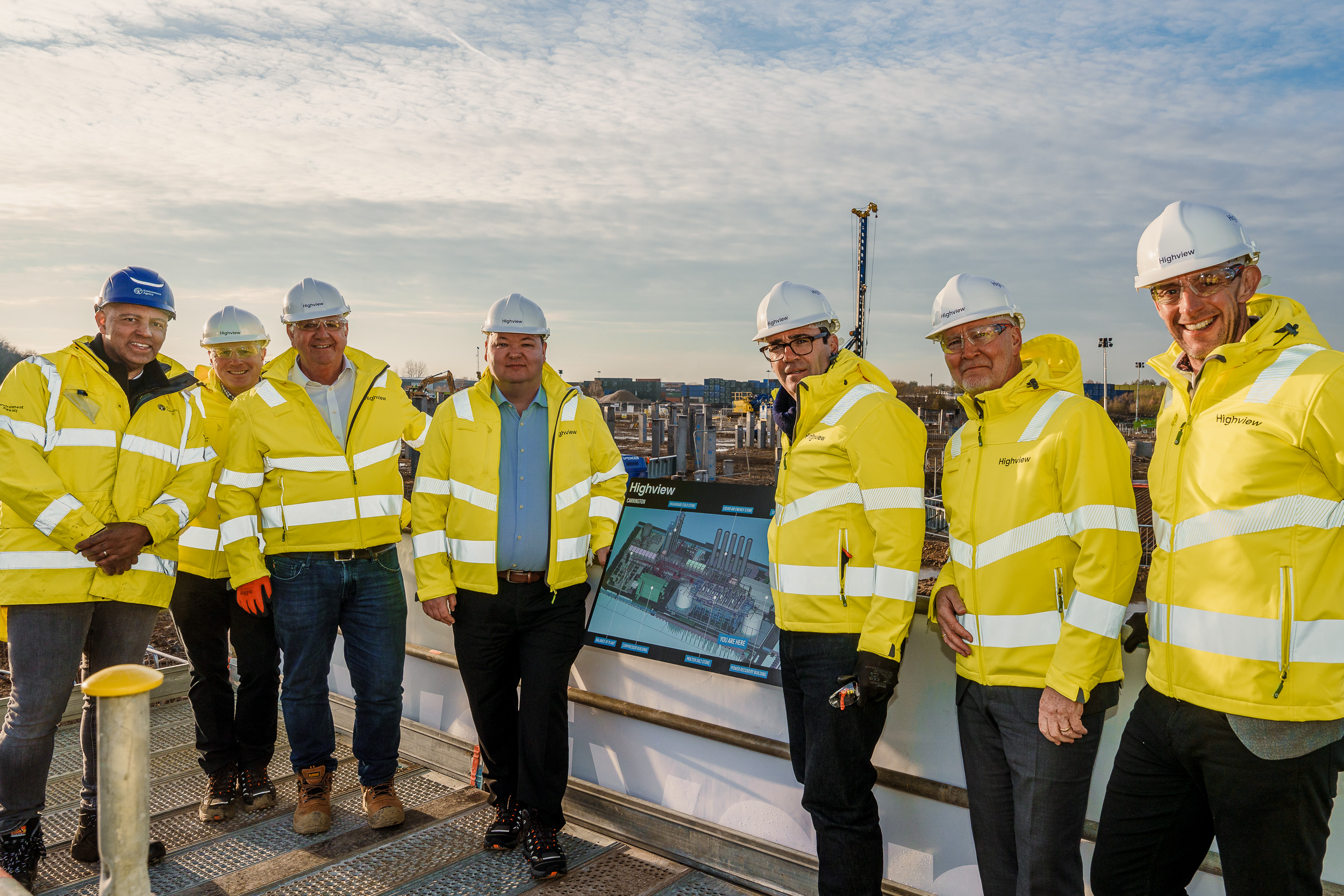
Andy Burnham is third from the right.
The Guardian article is very much a must read, that features projects from the United Arab Emirates, Colorado, Finland, Manchester, Nevada and Japan.
Andy Burnham Promised 10,000 Council Houses. Guess The Tally So Far
The title of this post, is the same as that, of this article in The Times.
This is the sub-heading.
Greater Manchester is a success story but that has little to do with the mayor, still less the economic model he is touting for the country
These are the first two paragraphs.
I don’t like being mean to Andy Burnham. With his soft, doe-eyed features, it feels rather like punching a lamb. But it’s quite an achievement when “We’ve got to get beyond this thing of being in hock to the bond markets” isn’t actually the stupidest thing a politician has said in any given week.
The other day Burnham kicked off his not-quite-a-leadership bid by urging Labour to embrace “Manchesterism”. This he defined as “business-friendly socialism”, in which the state “rolled back the 1980s” by seizing control of “the basics of life”: housing, energy, water, rail. This included borrowing £40 billion for new council housing.
This paragraph from Robert Colville gives the current progress on housing in Manchester.
Burnham did announce, in May 2024, that he was going to build 10,000 council houses by 2028. But over the following year the region started construction on just ten. No, that’s not a typo.
That is not a good start!
TerraLithium, BHE Renewables Announce Key Milestones For Geothermal Lithium Project In California
The title of this post, is the same as that of this article on ThinkGeoEnergy.
This is the sub-heading.
TerraLithium and BHE Renewables have announced key milestones towards advancing technology for lithium extraction from geothermal brines in Imperial Valley, California.
This is the important paragraph in the article.
The business model of coupling lithium and critical minerals extraction with geothermal energy production is gaining increasing attention, both in the United States and in countries like Germany, France, and the UK. As demonstrated in the United Downs geothermal power project in Cornwall, lithium extraction provides additional revenue generation that can significantly improve the economics of deep geothermal projects.
So here we have little Cornwall showing Big California how to get power and lithium out of hot rocks.
In Cornish Plant Produces Geothermal Power, I described the progress at the Cornish plant in March.
Has Andy Burnham Ever Said Anything On Geothermal Energy?
Given that there is an election or coronation under way, I just had to ask Google AI, the question in the title of this section.
This is the answer I received.
Yes, Andy Burnham has occasionally engaged with topics involving geothermal energy, particularly in the context of tapping natural underground heat and mine water for green energy
His notable references to the technology include:
Supporting Manchester’s Geothermal Potential: He has voiced support for localized renewable heat projects, such as exploratory borehole plans in Manchester city centre intended to tap into thermal springs for community heating.
I think we can put that down as a favourable view.
This excellent article on the BBC is entitled Plan To Heat Manchester Homes With A Geothermal Spring, is worth a full read.
Has Andy Burnham Made Any Comments About The Picc-Vic Tunnel?
This is the introductory paragraph for the Wikipedia entry for the Picc-Vic Tunnel.
Picc-Vic was a proposed, and later cancelled, underground railway designed in the early 1970s with the purpose of connecting two major mainline railway termini in Manchester city centre, England. The name Picc-Vic was a contraction of the two key station names, Manchester Piccadilly and Manchester Victoria. The proposal envisaged the construction of an underground rail tunnel across Manchester city centre. The scheme was abandoned in 1977 during its proposal stages. The view was that the scheme still retained two large and expensive-to-maintain terminal stations in Manchester while other similarly sized cities had reduced their terminals to one.
Note.
- British Rail had a plan to improve the rail system in the North of England, by building rail tunnels under Liverpool, Manchester and Newcastle.
- Liverpool’s and Newcastle’s tunnels were built and are used by Merseyrail and the Newcastle Metro.
- Harold Wilson cancelled the Picc-Vic Tunnel, the TSR2, the Channel Tunnel and Maplin Airport, as he’d run out of taxpayer’s money.
I asked Google-AI, the question in the title of this post, and received this answer.
Greater Manchester Mayor Andy Burnham has made extensive comments about the Picc-Vic tunnel, effectively resurrecting the concept of an underground railway for the city.
Key details of his statements include:
The Vision: Burnham has tasked Transport for Greater Manchester (TfGM) with designing a conceptual underground system—which has been likened to a “Crossrail for Manchester”. He envisions two lines (North-South and East-West) intersecting at a new subterranean station at Manchester Piccadilly.
Rebranding the Concept: Acknowledging the original 1970s Picc-Vic plan that was ultimately shelved, Burnham views the new tunnel as an absolute necessity to cope with the city’s growth, stating “it is essential to the future economic prosperity of the city-region”.
Piccadilly Station: He is adamant that Manchester Piccadilly Station should be the “Kings Cross of the North”. He has pushed heavily against “cut-price” infrastructure, demanding an entirely underground railway option rather than sprawling over-ground train lines.
Next Steps: He has instructed officials to prepare detailed plans and cost estimates for the multi-billion pound project, with initial discussions on funding mechanisms already underway with the government.
You can read more about his 10-year strategy announcement on the BBC News report or follow local discourse on the Reddit Manchester threads.
Conclusion
If Andy Burnham is going to do all this for his beloved Manchester, can the rest of the country, afford him to be Prime Minister?
The Former Unilever Site At Warrington – 6th May 2026
I went past this site twice yesterday on my way to and from Blackpool.
I took these pictures going Northwards.


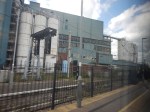
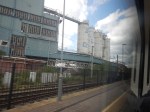
And I took these pictures going Southwards.



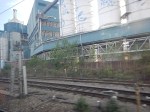





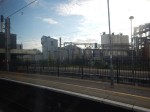
A quick search of the Internet on my phone revealed.
- It was a former soap works, that had previously been owned by Unilever.
- The site was now going to be developed as a data centre.
This OpenRailwayMap shows the railways through the area.
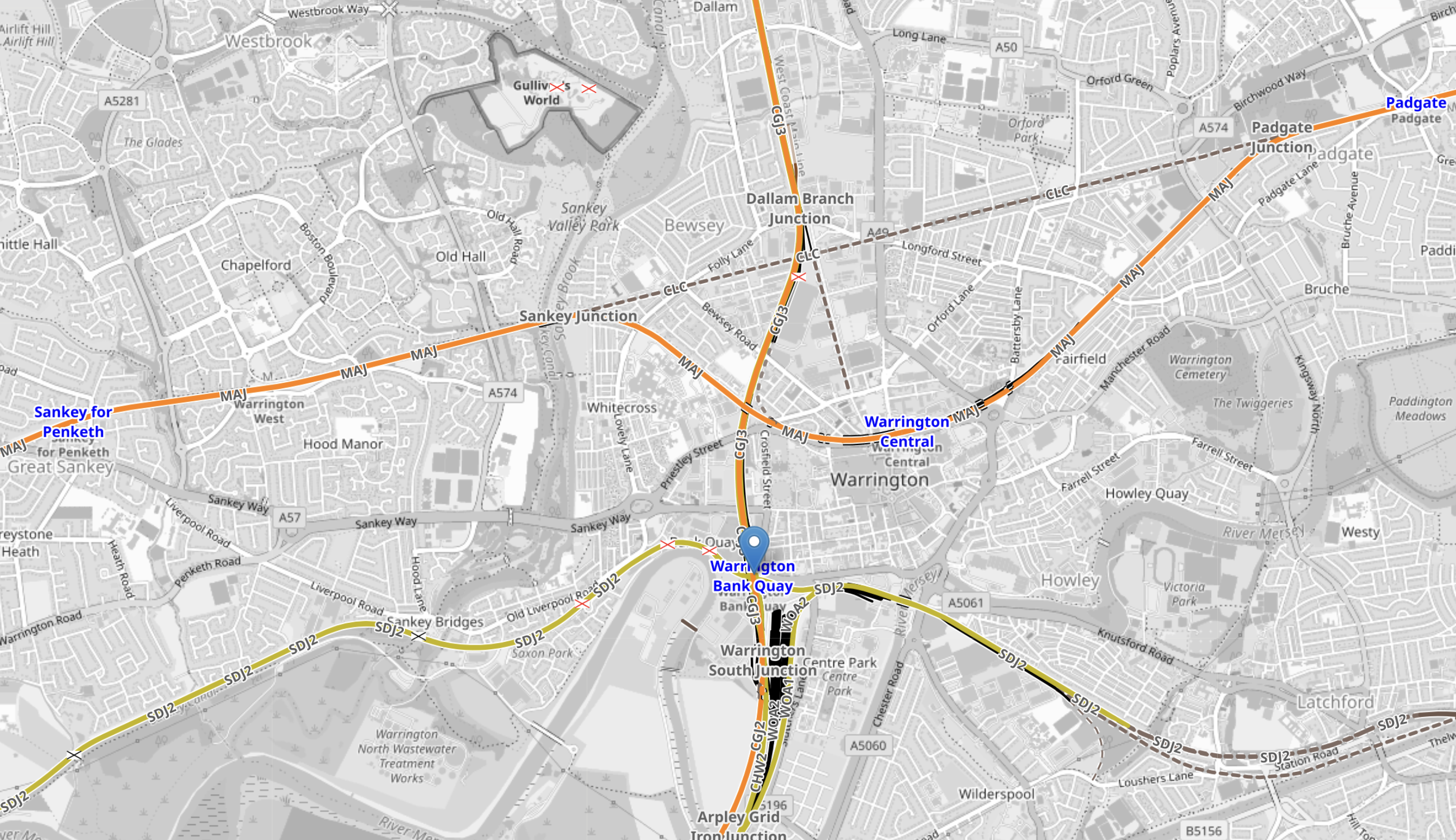
Note.
- Warrington Bank Quay station is indicated by the blue arrow in the middle of the map.
- The Unilever site is to its North-West.
- Warrington Bank Quay station is a major station on the West Coast Main Line and will probably be on High Speed Two, which will share tracks with the West Coast Main Line.
- The two East-West lines are not electrified.
- Warrington West is a relatively new station, that I wrote about in 2020, in The New Warrington West Station.
This OpenRailwayMap shows the railway lines between Liverpool and the coast in the West and the West Coast main Line in the East.
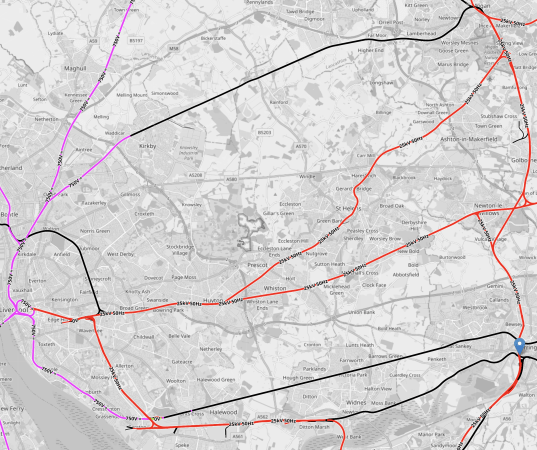
Note.
- The Merseyrail third rail network shown in lilac.
- Electrified tracks shown in red.
- Tracks without electrification shown in black.
- Warrington Bank Quay station indicated by the blue arrow.
- The West Coast Main Line (WCML) runs North-South at the Eastern edge of the map.
- Wigan North Western station is in the North East corner of the map.
- Wigan North Western and Warrington Bank Quay stations are both on the WCML.
Five lines connect the Liverpool local network to the WCML.
- The top unelectrified line connects the new Headbolt Lane station to Wigan Wallgate station.
- The most Northerly electrified line connects Liverpool Lime Street and Wigan North Western stations via Huyton station.
- The second electrified line connects Liverpool Lime Street and Manchester via Newton-le-Willows station.
- The most Northerly of the bottom pair of unelectrified lines connects Liverpool Lime Street and Manchester via Warrington Central station.
- The final line is a freight line between Liverpool and Manchester along the Mersey. This line runs under the WCML
The last line is likely to be upgraded to become Northern Powerhouse Rail between Liverpool Lime Street and Manchester via Manchester Airport.
This picture shows a freight train passing under Warrington Bank Quay station.

This OpenRailway Map shows how the lines cross to the South of Warrington Bank Quay station.
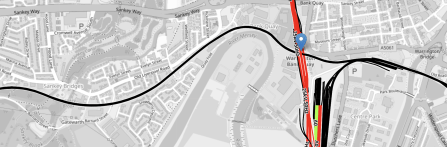
Note.
- The electrified North-South line is the West Coast Main Line (WCML).
- There is quite a good amount of space.
Could the junction be designed, so that HS2 trains could go between Manchester and London?
Treasures Found On HS2 Route Stored In Secret Warehouse
The title of this post is the same as that of this article on the BBC.
This is the sub-heading.
Treasures unearthed by hundreds of archaeologists during the ongoing construction of the controversial HS2 train line have been shown exclusively to the BBC.
These three paragraphs add detail to the story.
The 450,000 objects, which are being held in a secret warehouse, include a possible Roman gladiator’s tag, a hand axe that may be more than 40,000 years old and 19th Century gold dentures.
It is an “unprecedented” amount and array of items, which will yield new insights into Britain’s past, says the Centre for British Archaeology.
Major building developments in the UK need land to be assessed by archaeologists as part of the planning process, to protect heritage sites.
Crossrail also collected a lot of artefacts in an archaeology programme, that I wrote about in Bison to Bedlam or How To Make Friends.
Typing “TransPennine Route Archaeology” into Google AI gave this answer.
AI Overview
Archaeological investigations for the Trans-Pennine upgrades are split into two major, parallel projects: the A66 Northern Trans-Pennine road project and the Transpennine Route Upgrade (TRU) rail project. Both have revealed significant historical, archaeological, and industrial remains.
A66 Northern Trans-Pennine Upgrade (Road)
As part of the A66 upgrade between Penrith and Scotch Corner, Oxford Cotswold Archaeology (OCA) is conducting extensive excavations.
Key Finds: Archaeologists have identified prehistoric settlements, Neolithic stone axes, and evidence of a 60-meter-wide posthole structure.
Roman Discovery: A major Roman vicus (settlement) and the original Roman road have been uncovered, revealing a “grid of Roman field systems and ditches” near Brough.
Locations: Key sites include Brougham, Brough, Kirkby Thore, and Crackenthorpe.
Significance: These findings illustrate the area’s long-distance connection, trade, and culture from prehistoric through Roman times.
Transpennine Route Upgrade (Rail)
This project, involving Network Rail and ASWYAS (Archaeological Services WYAS), is upgrading the railway between Manchester, Huddersfield, Leeds, and York.
172-Year-Old Railway Siding: A mid-19th-century railway siding was uncovered at Hillhouse Sidings in Huddersfield, revealing two turntables and brick-built engine sheds.
Roman Settlement (Ravensthorpe): Excavations at Ravensthorpe (for a new station) uncovered a large, hexagonal-shaped feature thought to be an Iron Age or Roman-British enclosure, featuring ceramics, glass, and animal bones.
Mirfield Viaduct: An investigation of the Grade II-listed Mirfield Viaduct (built 1836-1839) was conducted to record its structure before upgrade works.It could be a very large exhibition in the North, if High Speed Two and the two Transpennine Route Upgrades were combined in a single exhibition.
I asked Google AI, what is the largest exhibition centre in Yorkshire and received this answer.
The largest exhibition sites in Yorkshire are concentrated in Harrogate, anchored by the Great Yorkshire Event Centre and the Harrogate Convention Centre. These venues offer a combined total of over 10,000 square meters of exhibition space, accommodating major national events, conferences, and large-scale outdoor exhibitions.
I suspect Leeds, Manchester and Sheffield could have other ideas.
FirstGroup Adds Leeds-based J&B Travel To Growing Coach Portfolio
The title of this post, is the same as that of this article on Route One.
These two paragraphs add more detail.
J&B Travel of Leeds is the latest coach business to be acquired by FirstGroup.
The operator, which has been established for more than 40 years, has a fleet of 15 vehicles, with work including home-to-school, private hire and FlixBus contracts.
But in some ways, the most significant thing not mentioned is that FirstGroup have now acquired seven coach firms.
- AndersonTravel in London
- EnsignBus in London
- J & B Travel in Leeds
- Matthews Coaches in County Monaghan, Ireland
- Tetley’s Coaches in Leeds
- York Pullman in Harrogate, Hull, Leeds and York
Note.
- MatthewsCoaches are about halfway between Dublin and Belfast.
- Three of the English acquisitions are in Yorkshire and two are in London.
- Leeds isn’t far off being halfway between London and Central Scotland.
This looks like the first part of a master plan.
- Leeds and County Monaghan could be ideal refuelling points for zero-carbon coaches.
- Ferrybridge, just South of Leeds is getting a hydrogen-fired power station.
- Ferrybridge is a big site with a motorway service station on the M1.
- Wrightbus are building an electrolyser at Ballymena, which is 81 miles from Matthews Coaches.
- Wrightbus have said that Dublin and Cork would be an ideal route for a hydrogen coach.
- Wrightbus have said that Heathrow and Gatwick would be an ideal route for a hydrogen coach.
This plan could be built-on with routes to various cities and attractions.
I have some further sorts and questions.
Could The First Obvious Routes Be Run By Hydrogen Coaches?
From what Wrightbus have indicated, I would rate the obvious routes as.
- Dublin and Belfast – 103 miles or 206 miles round trip
- Dublin and Cork – 107 miles or 340 miles round trip
- Leeds and Glasgow – 224 miles or 448 miles round trip
- Leeds and Edinburgh – 222 miles or 444 miles round trip
- Leeds and London – 197 miles or 396 miles round trip
- Heathrow and Gatwick – 40 miles or 80 miles round trip
Note.
The longest route is 714.5 km.
It would appear that, if the hydrogen-powered coach had a range of 1,000 km. all routes would be possible.
How Far Would A Hydrogen Coach Get On A Tankful From London?
A thousand kilometres is 621.4 miles.
These are the distances from Scottish cities to London.
- Aberdeen – 537 miles
- Dundee – 472 miles
- Dunfermline – 430 miles
- Edinburgh – 410 miles
- Glasgow – 404 miles
- Inverness – 561 miles
- John O ‘Groats – 678 miles
- Perth – 451 miles
- Stirling – 418 miles
I’ve added John O’Groats for completeness, but all cities would be reached.
How Far Would A Hydrogen Coach Get On A Tankful Going West From London?
These are the distances from Western towns and cities to London.
- Aberystwyth – 236 miles
- Fishguard – 255 miles
- Holyhead – 289 miles
- Lands End – 310 miles
- Penzance – 307 miles
I’ve added Lands End for completeness, but all towns and cities would be reached.
John O’Groats And Lands End In A Hydrogen Coach
I asked Google AI how far the journey was and received this answer.
The distance from Land’s End to John o’ Groats varies by transport: about 837-874 miles (1347-1407 km) by road, roughly 600 miles (970 km) as the crow flies, and around 1,200 miles (1900 km) for an off-road walking route, with cyclists typically taking 10-14 days and walkers 2-3 months.
So it looks, like there will be a need for a refuel, but that would give 2,000 kilometres, which is more than the 1,347-1,407 kilometres needed.
Ferrybridge Could Be An Ideal Refuelling Point
I suspect, even in fifty years you could name the places in the UK, where you will be certain of refuelling any hydrogen vehicle on the fingers of one hand.
The list would include.
- Ferrybridge in Yorkshire, where SSE are building a hydrogen-fired power station.
- Felixstowe Docks in Suffolk, where there will be a need to fuel hydrogen trucks.
- Keadby in Lincolnshire, where SSE are building a hydrogen-fired power station.
- Kintore in Aberdeenshire, where an electrolyser is being built.
- Runcorn in Cheshire, where there was an electrolyser in 1968, when I worked there.
This web site lists all the UK hydrogen projects.
This Google Map shows the location of the Ferrybridge hydrogen-powered power station site in relation to Barnsley, Doncaster, Leeds and other towns and cities of Yorkshire.

Note.
- The red arrow indicates the former coal-fired power station site.
- Leeds is in the North-West corner of the map.
- Barnsley and Stocksbridge are in the South-West corner of the map.
- The city of Sheffield is to the South-West of Stocksbridge.
- Doncaster is in the South-East corner of the map.
Last September I wrote Visiting The Consultation For Ferrybridge Next Generation Power Station At Knottingley.
In that post, I wrote about supplying both the power station and the motorway services with hydrogen and felt that it could use one of two methods.
- A pipeline from the hydrogen storage in East Yorkshire.
- Some form of train from a hydrogen production site.
Recently, Network Rail have been conducting tests on the movement of hydrogen by train, which I wrote about in Network Rail’s Test Track Take Centre Stage As Hydrogen Is Delivered By Rail For The First Time.
The Ferrybridge Site Has most things needed.
This map shows the site.
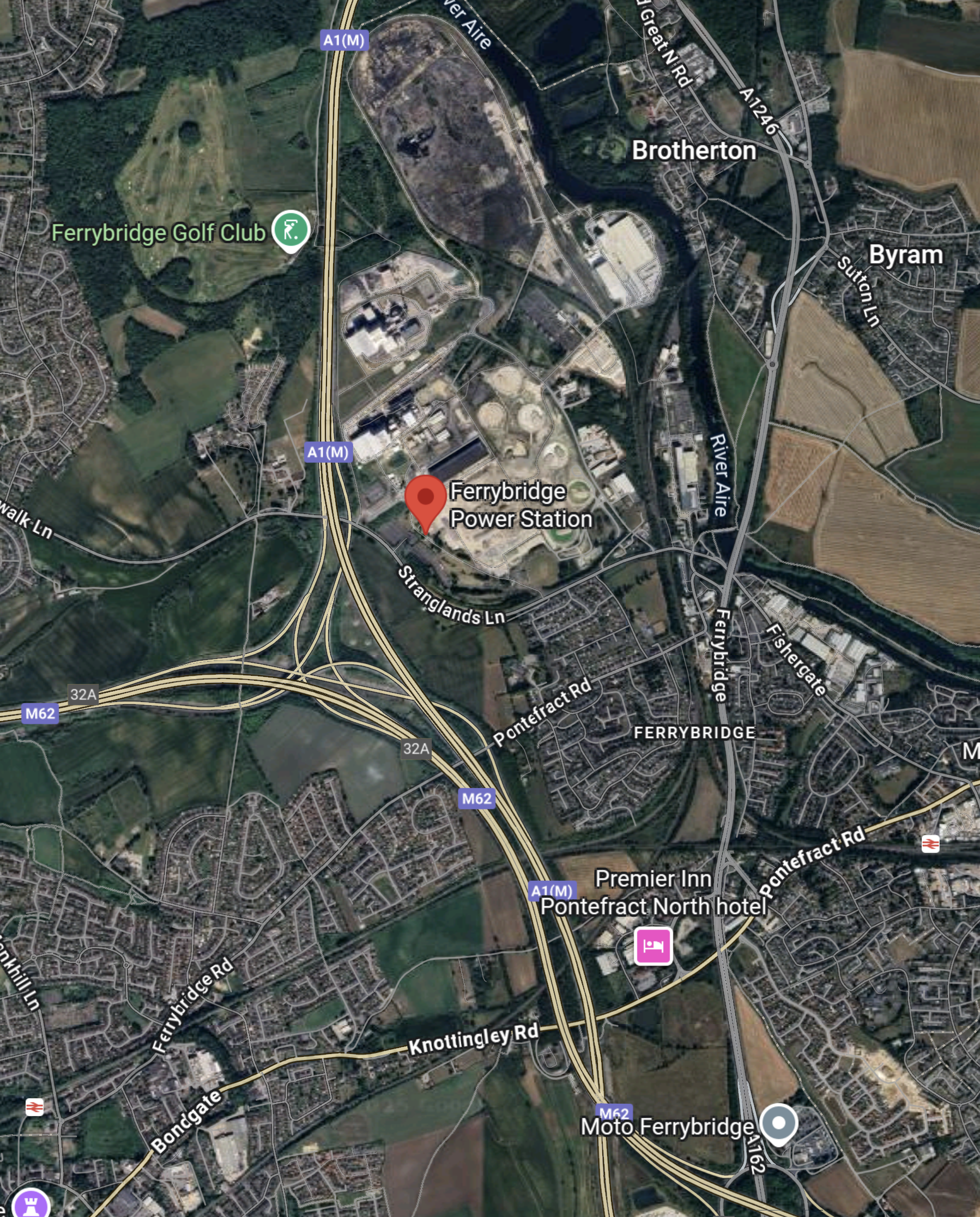
Note.
- The impressive motorway junction, where the North-South M1 crosses the East-West M62.
- Liverpool and Manchester are to the West.
- Leeds, Newcastle and Scotland is to the North.
- Hull is to the East.
- London is to the South.
- There is a Moto Services.
- There is a Premier Inn.
There is even two railway stations on the map.
This reply from Google AI gives the details of the distance between Ferrybridge and the South-West.
The driving distance from Ferrybridge, Yorkshire, to Land’s End is roughly 470 to 500 miles, taking about 8-9 hours, primarily via motorways like the M1, M5, and A30, though exact times and routes vary by real-time traffic and specific starting/ending points.
I am absolutely certain, that if you have a vehicle like a hydrogen coach and you want to go anywhere between A to B on the UK mainland, then if there is hydrogen-refuelling at Ferrybridge, you will be able too do the journey with a refuel at Ferrybridge.

