A Blue Plaque In Stepney
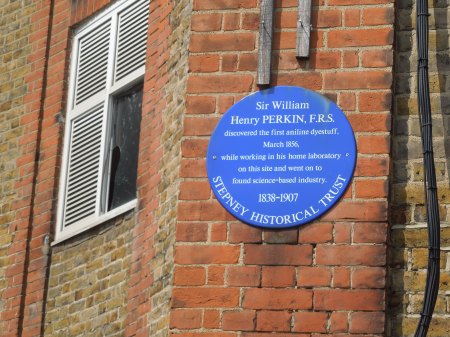
I found this blue plaque as I walked back to the Overground from the river.
A Blue Plaque In Stepney
Sir William Henry Perkin, FRS 4 July 1907) was an English chemist best known for his discovery, at the age of 18, of the first aniline dye, mauveine. So it is not just today, when people create something amazing before their twentieth birthday! But how many today do such work, when they were born into relatively humble circumstances?
He was certainly one of the world’s greatest chemists. He is even commemorated by the Americans with the Perkin Medal.
More CERN Photos
There are more CERN photos uploaded here to Flickr by other visitors from our Liverpool University Alumni Relations group.
CERN Humour
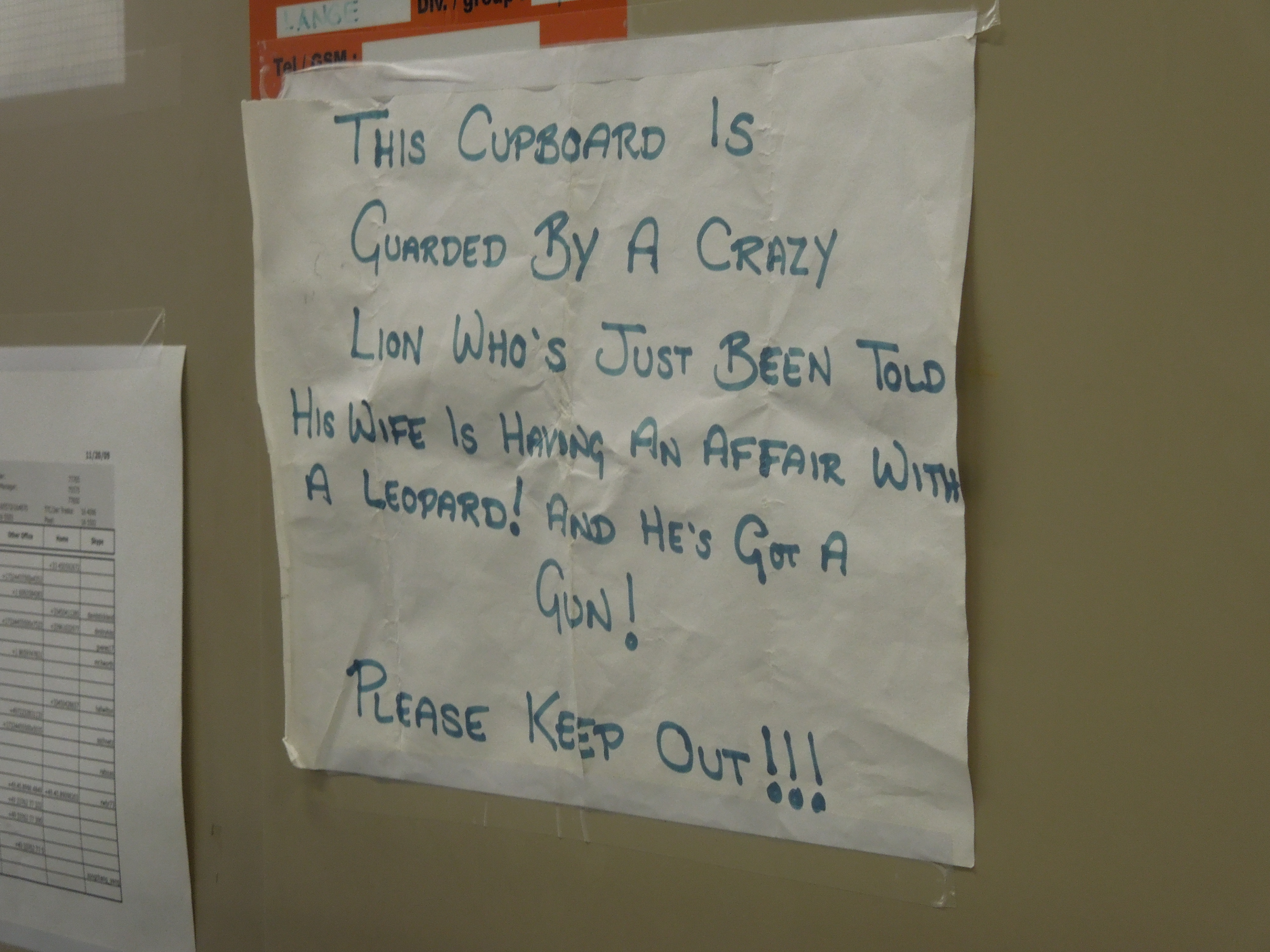
Research establishments are serious places, but it doesn’t mean they are humourless ones.
CERN Humour
When I worked at ICI’s Research Establishment on Runcorn Heath, the big joke was signs using the newly discovered Dymo machine in mock German.
When I was at Liverpool University in the mid-1960s, the old cyclotron that James Chadwick had built pointed towards the mound on which the Catholic Cathedral has now been built. One wag told me, that they weren’t going to floodlight the cathedral, as it would glow in the dark.
I heard a similar remark on Saturday.
Information Management: A Proposal
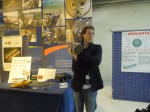
This T-shirt was worn by one of our guides to CERN.

Information Management: A Proposal
When it was first proposed, it got this reaction from the author’s superior/supervisor.

The Response
So who proposed the idea and what is it now called?
LHC Fabrication
These pictures show the plant, where the various sections of the LHC were assembled.


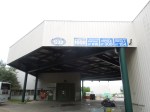
Although, the media portrays the LHC as a circle, it is in fact a series of straight sections.
CMS – Control Room Or Bar?
I just had to enquire about the bottles amongst this array of computer screens.

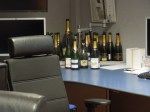
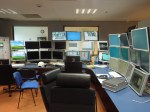
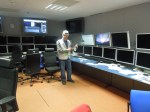

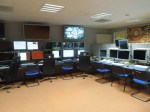
Each of the empty bottles is now identified with the event, they celebrate.
CMS – Back At The Surface
Back on the surface, we had another talk from a Liverpool University-educated Civil Engineer on the problems of building the CMS and other parts of CERN and the LHC.

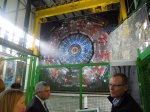


Civil Engineering is one of the major disciplines, that must be applied to a high level at CERN. The engineer had previously worked on tunnels under London.
CMS – Underground
The second experiment we visited at CERN was CMS. but this was no lecture, but a descent to around a hundred metres under the French countryside.
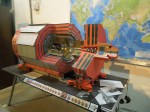
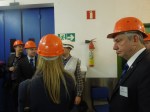

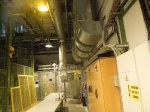


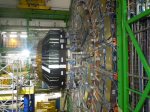


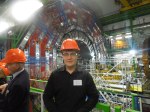
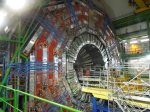
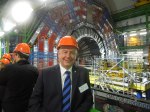


The only reasons we could do this, was because CMS was being rebuilt and the LHC was shut down.
If you have anything that could add to this post, just add comments.
Also if you would like a copy of any of the photographs, feel free to download them. I will be improving this gallery, when I sort out the editing problem between WordPress galleries and my computer.
The Higgs Boson
I have heard many commentators try to explain about the Higgs boson and the search for its existence.
All have failed to make head or tail of the complex subject. Admittedly, my physics stopped at A-level in 1965, but I have read extensively to extend my knowledge.
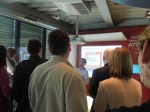
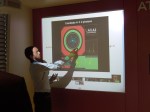
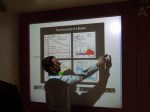
However, Phil Allport of Liverpool University, explained it all pretty well in words that I could understand. Or at least the detection process, even if the theory of the boson’s existence, is way beyond me.
But I should say, that if Professor Allport were to write a Brief History of the Higg’s Boson, I’d certainly buy it, as it is my type of holiday read. But then I read a book called something like, In search of the Quark, by a pool in the West Indies, only to find that one of the other guests was a Professor of Physics at a prestigious American university. it was this book, that got me looking for Lise Meitner. Sadly, it’s gone the way of a lot of my books.
Again, I wish I’d videoed his talk.


 The Anonymous Widower