Jim Ratcliffe Mothballs UK Plants Over ‘Ridiculously High Gas Price’
The title of this post, is the same as that of this article in The Times.
These three paragraphs give more details.
Sir Jim Ratcliffe’s Ineos is mothballing three chemical plants in Hull in response to Britain’s “ridiculously high gas price”.
The plants directly employ 245 people producing acetyls, which are used as raw materials for everything from pharmaceuticals to food and military explosives. Ineos said the sites support almost 4,000 jobs in the wider supply chain across Humberside.
Ineos’s Hull acetyls plants “just cannot compete” as gas prices are now 12 times higher in Britain than in the United States, Ratcliffe said. The plants use gas as a feedstock and also burn hydrogen derived from gas as an energy source to power chemical production.
I don’t think, that this story, is as simple as it seems.
Consider.
- Sir Jim Ratcliffe graduated from the University of Birmingham in 1974 with a degree in chemical engineering.
- The plants in Hull make acetyls.
- The acetyl group has a Wikipedia entry.
- From my own experience, the 1970s was an exciting time for chemical engineering.
- ICI were trying to use a process purchased from BASF to make acetylene, which failed miserably, as all the process did was coat Runcorn in soot.
- Did ICI use the acetylene to make acetyls?
- Google AI says you can make acetyl-containing compounds, such as acetic acid and vinyl acetate, starting from acetylene.
- For a time, I shared an office, with a fellow Liverpool University graduate, who was helping to get the ICI plant working.
In the end the ICI plant was dismantled.
Has Sir Jim Ratcliffe A Connection To HiiROC?
I asked Google AI this question and received this reply.
Yes, Sir Jim Ratcliffe has an indirect financial and strategic connection to HiiROC through his petrochemical company, INEOS.
The INEOS Connection: INEOS backed HydrogenOne Capital Growth—a hydrogen-focused investment fund—which made a £10 million equity investment in HiiROC to develop affordable “turquoise hydrogen” (clean hydrogen produced via thermal plasma electrolysis).
Shared Industrial Projects: HiiROC has collaborated on low-carbon hydrogen projects in the Humberside region close to major INEOS operational footprints, connecting clean-tech hydrogen initiatives with heavy UK industrial chemical hubs.
Note.
- The last paragraph, I clipped from The Times mentioned hydrogen.
- The HiiROC process can use any hydrocarbon gas as feedstock and is five times more energy efficient than traditional electrolysis.
- HiiROC is backed technically by the University of Hull.
- The ICI plant produced loads of soot and HiiROC produces carbon black, so I wonder, if the two processes are by any chance related?
It strikes me that some of the various interests have come up with a route to creating acetyls, that is more efficient.
I suspect Sir Jim Ratcliffe will disclose a clever plan at some time.
What Is The Connection Between The University Of Hull And HiiROC?
I asked Google AI this question and received this reply.
The University of Hull and HiiROC have a collaborative partnership focused on developing clean energy technology.
Nature of the ConnectionTechnology
Collaboration: HiiROC worked collaboratively with the University of Hull (leveraging regional programs like those from the university’s Aura Innovation Centre) to help develop and test Thermal Plasma Electrolysis (TPE).
Clean Energy Innovation: This proprietary TPE technology converts biomethane, flare gas, or natural gas into clean “emerald” hydrogen and valuable solid carbon black without greenhouse gas emissions.
By-Product Research: The partnership includes joint efforts to research potential commercial uses for carbon black, the solid carbon by-product created during HiiROC’s hydrogen-generation process.
Regional Growth: HiiROC established its development and testing facilities in Hull to advance this technology, working alongside local academic and business innovation networks tied to the university.
From my experience in the 1960s at ICI Mond Division in Cheshire, I believe that this could be one of the most important research projects in the UK.
Could INEOS Be Going To Collect All Their Flare Gas In Hull?
Consider.
- The HiiROC process can use any hydrocarbon gas as feedstock.
- This would include chemical plant flare gas, biomethane and natural gas.
- The HiiROC process extracts the hydrogen as hydrogen gas.
- The HiiROC process extracts the carbon as carbon black.
I have seven questions.
- Suppose INEOS collected all the flare gas from their chemical plants in Hull, could they use this as feedstock in a HiiROC process to create hydrogen efficiently?
- Could they collect biomethane from Humberside and mix this with the flare gas?
- Could they bring in extra flare gas from chemical plants elsewhere in the UK and Europe using coastal gas tankers or rail tankers?
- Could INEOS use natural gas, if they were short of flare gas and biomethane?
- Could any excess hydrogen be stored in Aldbrough or Rough gas storage?
- Could any excess hydrogen be sold on to other companies?
- Could hydrogen be used to make the acetyls?
I suspect that all questions have an answer in the affirmative.
Conclusion
I feel that Sir Jim Ratcliffe made a very shrewd investment in HiiROC.
British American Tobacco Sponsored Reform UK Conference
The title of this post, is the same as that of this article in The Times.
This is the sub-heading.
Nigel Farage has promised to scrap the law that will ban everyone born after 2008 from smoking
These are the first two paragraphs of the article.
The maker of Lucky Strike and Dunhill cigarettes was a prominent sponsor at the annual conference of Reform UK, which has vowed to scrap the incoming lifelong smoking ban.
British American Tobacco and its Omni brand, an initiative to further its nicotine products business, was the sponsor on lanyards worn by delegates at the party’s conference in Birmingham this month.
Let’s hope that a serious politician protects us from this dangerous individual.
I write as someone, who lost his wife, because her tutor at university, insisted on smoking Capstan Full Strength all through tutorials.
She used to smell of tobacco smoke, a lot of the time.
My wife died of a squamous cell carcinoma of the heart in 2007, which is not a nice way to go. Papworth said it was a delayed secondary cancer from all that smoke-filled atmosphere many years before.
Few years earlier, she had fully recovered from serious breast cancer, but then she got the totally unrelated secondary cancer.
Her sad death is one of several, that are highlighted in this post about a study at Cambridge University, which I wrote about in Study Highlights Increased Risk Of Second Cancers Among Breast Cancer Survivors.
Sadly, her selfish tutor is still with us.
S
Should Number 10 North Have Good Rail Connections To London?
The answer to this question must be Yes! But it must also have good rail connections to the rest of the UK.Heron House
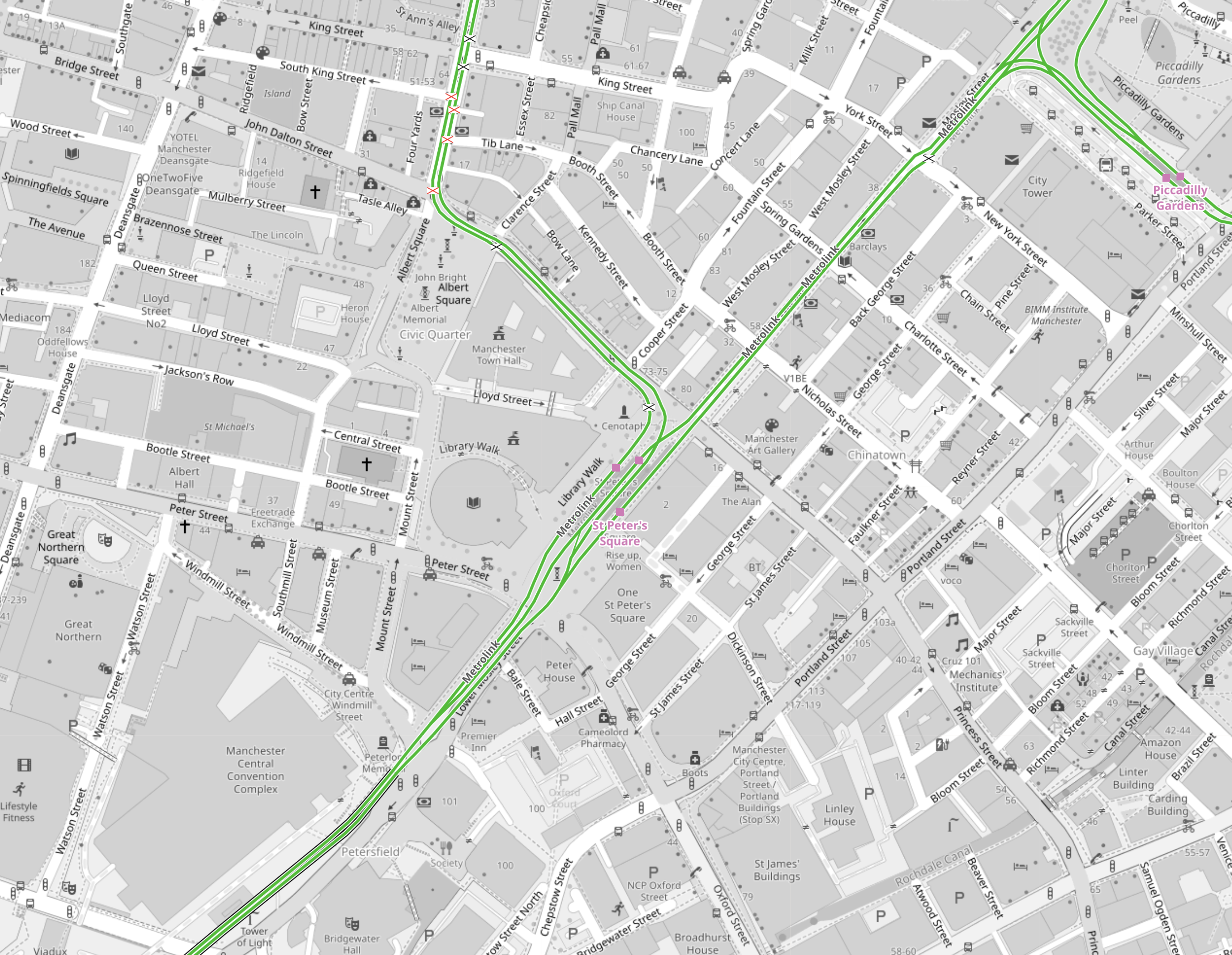
The current Number 10 North is at Heron House, which is shown on this OpenRailwayMap.
Note.
- The green lines are Manchester’s Metrolink.
- Piccadilly Gardens with its tram stop is in the North-East corner of the map.
- The tram lines going South-East from Piccadilly Gardens go to Manchester Piccadilly station.
- The tram lines going North-East from Piccadilly Gardens go to Manchester Victoria station.
- In the middle of the map, there is St. Peter’s Square tram stop, which are within a five-minute walk to the circular Manchester Central Library and the triangular Manchester Town Hall.
- Heron House is on the opposite side of Albert Square to Manchester Town Hall.
Andy Burnham has obviously chosen a location he knows well from his nine years as the Mayor of Greater Manchester.
Long-term there are plans to move Number 10 North to the Manchester Digital Campus in Great Ancoats Street, Ancoats, Manchester, when construction is completed around 2032.
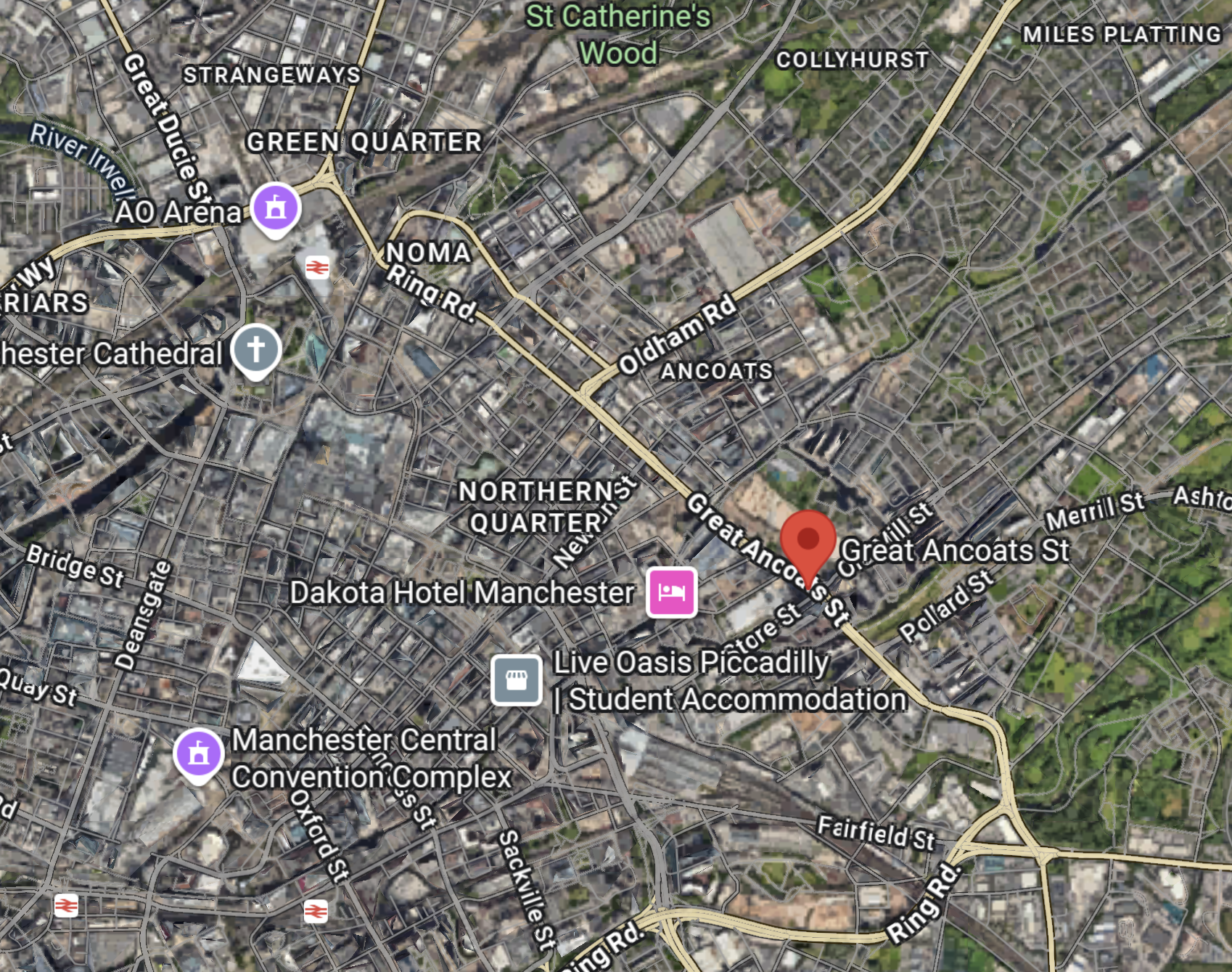
This Google Map shows the location of Great Ancoats Street with respect to Manchester City Centre.
Note.
- Great Ancoat’s Street appears to be part of Manchester’s Inner Ring Road.
- Google placed the red arrow, but I suspect Number 10 North could be somewhere near the arrow.
- Manchester Piccadilly station is not marked on the map, but is about a 0.8 mile South-West of the red arrow, at the end of the rail line going South-East from the map.
- Number 10 North should be about a 5 to 10 minute walk from Manchester Piccadilly station.
- Currently, there is no tram running in this direction.
- The two stations in the South-West corner of the map are Deansgate in the West and Manchester Oxford Road in the East.
- The fourth station in Manchester City Centre is Manchester Victoria in the North-West corner of the map, by the AO Arena and Manchester Cathedral.
- Located between Deansgate, Oxford Road and Victoria stations is a white triangle, which is Manchester Town Hall, with the current location of Number 10 North at Heron House to its West.
- There don’t appear to be any trams on Great Ancoat’s Street, but there are buses between Manchester Victoria and Great Ancoat’s Street, which take about 11-20 minutes.
- As an alternative between Manchester Victoria and Great Ancoat’s Street, you can take a tram to New Islington and walk.
This brief look seems to indicate, that to get to Great Ancoat’s Street, you either walk from Manchester Piccadilly or take trams or buses and a short walk from Manchester Victoria.
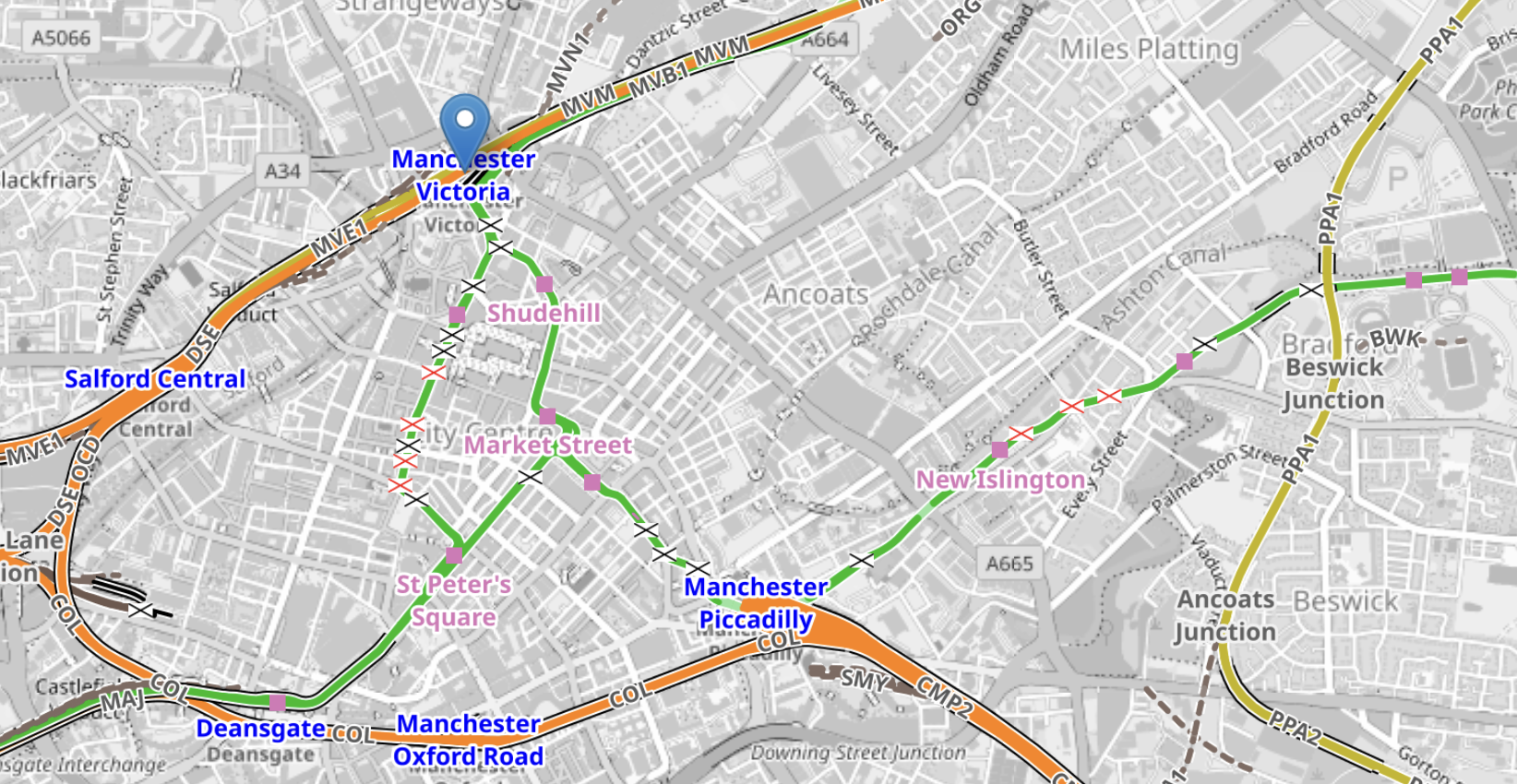
This OpenRailwayMap shows Manchester Piccadilly, Manchester Victoria and New Islington.
Note.
- Manchester Victoria station is indicated by a blue arrow.
- Manchester Piccadilly station is towards the bottom of the map.
- New Islington tram stop is North-West of Manchester Piccadilly on the green tram line to the Etihad Stadium and Ashton-Under-Lyme tram stops.
- The Etihad Stadium can be seen three tram stops on from New Islington at the Eastern edge of the map.
- Passengers going between Manchester Victoria and New Islington would change trams at Picadilly Gardens tram stop.
I believe that the Future Number 10 North will be within easy walking distance of the New Islington tram stop.
Current London And Manchester Services
Avanti West Cost currently run three hourly trains between Euston and Manchester Piccadilly.
- 1 train per hour (tph) stops at Milton Keynes Central, Rugby, Stoke-on-Trent, Macclesfield, Stockport
- 1 tph stops at Nuneaton, Stoke-on-Trent, Stockport
- 1 tph stops atStafford, Crewe, Wilmslow, Stockport
I don’t think this gives a wide enough coverage of stations.
Lumo’s Proposed London And Manchester Services
Lumo want to run six daily trains between between Euston and Rochdale.
These will stop at Warrington Bank Quay, Newton-le-Willows, Eccles and Manchester Victoria.
Note.
- This could be a fast service, as it is proposed to be non-stop between Euston and Warrington Bank Quay.
- It will probably be only five-cars, which would give no problems terminating at Euston and Rochdale stations.
- Eccles and Rochdale are in Greater Manchester.
- Currently, Warrington Bank Quay, Newton-le-Willows, Eccles and Manchester Victoria don’t have direct trains to London.
- I can see this service appealing to thrifty Yorkshire folk, as Rochdale has 3 tph to Hebden Bridge and Leeds, 2 tph to Halifax and Bradford Interchange, and 1 tph to Brighouse and Dewsbury.
- It could be a low-cost service.
I can see it being successful.
Trump Vows To Give Every Adult $5,000 If He Wins Midterms
The title of this post, is the same as that of this article on The Times.
This is the sub-heading.
At the first-ever Republican midterm convention, speakers called the Democrats ‘communists’ and championed the president’s policies of ‘common sense’
These are the first two paragraphs.
President Trump pledged to issue a “dividend” of $5,000 to every American adult if the Republicans hold the House and Senate in the midterm elections.
Speaking at the opening night of the first-ever Republican midterm convention in Dallas, Trump said the payout — which would amount to $1.35 trillion — had only one caveat: that it should be spent in the United States.
I first read this story, whilst I was recovering in Homerton Hospital, after a fall that appeared to knock me out in my bedroom. I suspect a rug slipped, while I was getting dressed.
Reports of the convention, sound more like that of a Mafia or drug-dealers convention, than that of a supposedly responsible political party.
How Will ‘The Worst El Niño On Record’ Affect The UK?
The title of this post is the same as that of this article on The Times.
This is the sub-heading.
The weather cycle is forecast to push up global temperatures, bring storms to Britain and raise food prices for everyone
These are the first three paragraphs, which outline some predictions.
The weather phenomenon El Niño is shaping up to be an unprecedented “super-event”.
The Met Office said on Friday that the natural cycle, which influences weather and food prices around the globe, is forecast to be the most powerful on record.
There have been other intense cycles recently, notably between 2014 and 2016, but the most extreme was in the 1870s, bringing droughts and famines.
I shall be following the article’s predictions throughout the winter.
My only worry is that the actions of the leaders of China, Iran, Israel, Russia and the United States will make it worse.
UK’s Iconic Jodrell Bank Telescope Faces Axe In Science Cuts
The title of this post, is the same as that of this article on the BBC.
This is the sub-heading.
The Jodrell Bank Observatory, which has housed the UK’s largest telescope for nearly 70 years, has lost its funding and could now close, the BBC understands.
These two paragraphs add more details.
The observatory and its network of telescopes have been pivotal to the country’s study of distant galaxies and training future astronomers. Scientists have described the decision as “heartbreaking” and “scientifically misguided”.
All scientific observations at Jodrell are expected to cease on the 1 April 2028 unless alternative funding can be found.
I consider the government decision to be vandalism of the highest order.
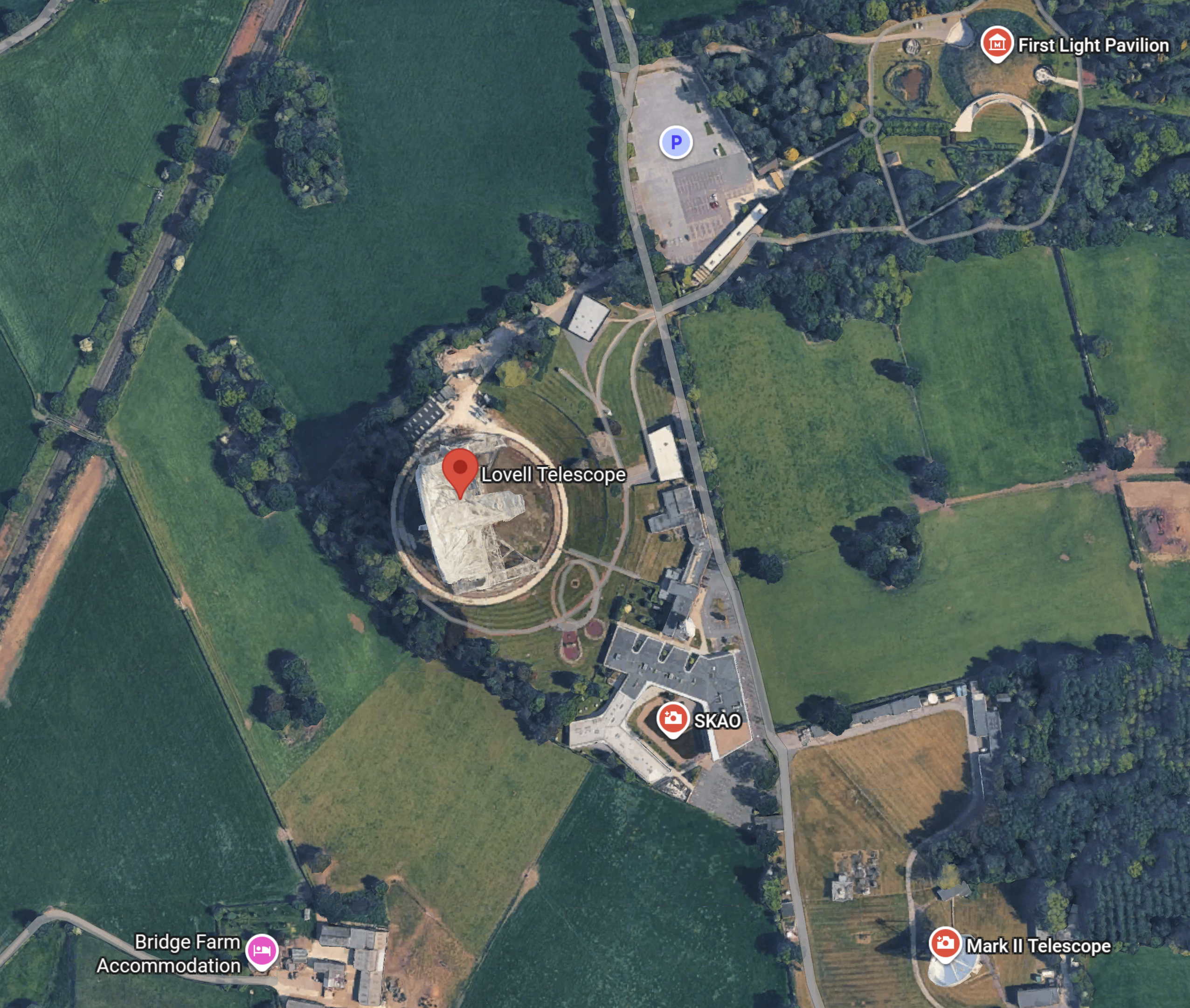
This Google Map shows the Jodrell Bank site.
Note.
- The radio telescope is indicated by a red arrow.
- Going across the North-West corner of the map is the West Coast Main Line between London and Manchester Piccadilly.
- The red dot, which is labelled SKAO indicates the SKA Observatory, which has this web site.
This is on the home page.
Building the two largest telescope arrays in the world, located in South Africa and Australia, made possible through a global collaboration.
Jodrell Bank is a UNESCO World Heritage Site.
I have some thoughts.
I Was A Keen Amateur Astronomer At School
I went to Minchenden Grammar School in North London, where the school had Prince Albert’s six-inch refracting telescope for observations.
I can also remember a smaller reflecting telescope being setup outside the cricket pavilion to observe a partial eclipse of the sun.
Google AI lists three partial solar eclipses in London in the 1960s.
February 15, 1961: A deep partial dawn eclipse showing 92% to 95% coverage of the Sun in Southern England. It featured early television coverage and coincided with the exact day the movie Barabbas filmed its crucifixion scene during totality in Southern Europe.
September 22, 1968: A daytime partial eclipse where about one-third of the Sun was blocked. Skies over London cleared after 11:00 a.m., prompting the Junior Astronomical Society to set up projection telescopes in St. James’s Park.
May 20, 1966: Another visible partial solar event tracked across the UK, though with lighter public observation in the capital.
As the eclipse wasn’t 92 % to 95 % coverage and I would have been in Liverpool in 1968, I suspect it was the eclipse of May 20, 1966.
I Was Of The Generation That Grew Up With Jodrell Bank
The iconic Jodrell Bank Radio Telescope opened in 1957, which would be about the time, I started Minchenden Grammar School and was able to have access to their optical telescope.
So I grew up with Jodrell Bank Radio Telescope, although I’ve never visited.
I Feel Very Strongly That Jodrell Bank Needs A Convenient Rail Connection
This page on the Jodrell Bank web site, gives these instructions on how to get there by rail.
The most convenient station is at Macclesfield, which is on the West Coast Mainline from London Euston to Manchester. On arrival at Macclesfield you will then need to take a 20-minute taxi ride to the Jodrell Bank. The taxi rank is directly outside the main exit from Macclesfield station.
There is also a station in the nearby village of Goostrey, on the line between Manchester and Crewe. It is a 2.5 mile walk from there along narrow country lanes and so we advise booking a taxi for this part of the journey. Note, you’ll need to do this in advance as there is no taxi rank at the station.
The Wikipedia entry for Goostrey station says this about the train service at the station.
There is an hourly service between Manchester Piccadilly, Stockport and Crewe on Monday – Saturday, which is every two hours on Sunday.
I don’t know much about scheduling buses, but I don’t think it would be too difficult to have an electric shuttle bus, ferry visitors between Goostrey station and the telescope site.
If the rail route to the telescope proved popular, it might even be possible to arrange that the occasional express stopped at Goostrey station.
Could Jodrell Bank Be Developed Into An Astronomy Experience For The North?
Real Time Trains reveals that to and from Goostrey station, you can reach a range of stations including.
- Birmingham New Street
- Bournemouth
- Cardiff Central
- Crewe
- London Euston
- Manchester Airport
- Manchester Piccadilly
- Milford Haven
- Reading
- Shrewsbury
- Swansea
The hourly services to Manchester Piccadilly and Crewe add a lot more destinations with a single change.
I Suspect Jodrell Bank Creates Work For SMEs In The Area
It is my experience that universities, research organisations and scientific establishments create networks of SMEs around their location, to do specialist jobs, they feel are best done by specialist contractors.
Jodrell Bank is close to the three large cities of Liverpool, Manchester and Sheffield and I suspect, that most sub-contracts can be handled in the area.
Conclusion
I believe that with input from the Mayors and University Vice-Chancellors of the North, Jodrell Bank could be developed into an engine of growth for the North of England.
INTERVIEW – Combining Geothermal Power With Minerals Key To Viability, says GEL CEO
The title of this post, is the same as that of this article on Renewables Now.
These three paragraphs introduce, this very much a must-read article.
Producing critical minerals such as lithium alongside geothermal electricity generation could make deep geothermal projects economically viable, according to Ryan Law, founder and chief executive of UK deep geothermal firm Geothermal Engineering Ltd (GEL).
Electricity generation on its own is quite challenging economically, but combining that baseload power with commodity pricing from the minerals seems to get these projects relatively easily funded, he told Renewables Now.
Law also pointed out that geothermal electricity generation began in Italy more than 100 years ago, but the geothermal wells there were initially used to extract boric acid. “It’s just interesting that the story started with geothermal power as a sort of mineral extraction process,” he noted
It certainly looks like we’ve gone round in a large virtuous circle.
These are some points from the article.
There Have Always Been Minerals In Geothermal Fluids
But because they were cheap and no-one bothered about them coming from China, nobody thought about mining them.
Oil And Gas Expertise Helps The Geothermal Sector
This is a sentence.
Law emphasised that the geothermal sector needs a lot of equipment and skills from the oil and gas industry, which currently in the UK are concentrated in Aberdeen. He said the UK will need a strong oil and gas industry until geothermal becomes large enough to absorb those jobs.
Law said we mustn’t disband that sector too quickly.
The US Appears To Be Backing The Sector
These are two paragraphs.
Law said he could see the sector scaling significantly within a decade, driven largely by developments in the US. He pointed to a number of big financial raises in the US recently.
“And also that the US government is very behind the mineral production,” Law remarked.
Conclusion
Geothermal energy paired with the mining of rare earth minerals could be a surprising winner in a decarbonising world.
The Ghostly Drone That Spins Almost Too Fast To See
The title of this post, is the same as this article on The Times.
This is the sub-heading.
The ‘Phantom Twist’ prototype rotates about 25 times a second while its body moves in the opposite direction — appearing as a faint haze
These two initial paragraphs add some more details.
Engineers have created a drone that almost vanishes in flight by spinning so quickly the human eye sees only a faint, translucent haze.
The body of the drone, called the Phantom Twist, rotates about 25 times a second, while its propeller spins in the opposite direction. Its inventors describe it as “morphing into a ghostly smudge that seamlessly blends into the background”.
This technology obviously works and was developed at North Western University in the United States.
This paragraph speculates on a few civilian uses.
It is, they say, intended for civilian uses. The researchers believe less conspicuous aircraft could be useful for monitoring nesting birds, surveying wilderness areas or inspecting bridges and other infrastructure without causing wildlife to scatter or prompting people to alter their behaviour.
The article then details how drones have transformed the war in Ukraine.
Spain v France – I’m Looking Forward To The Match, But Not The Inane Adverts!
I have just watched the most inane, irrelevant and time-wasting adverts on ITV before the 2026 World Cup semi-final between France and Spain.
They’ve even started up again.
I want to watch football not adverts.
- I do hope some clever geek is devising a TV, that automatically cuts out adverts, using Artificial Intelligence!
- I would even pay extra to watch an advert-free feed.
If the second option made more money for FIFA, we might see that.
UAE Building New Port To Bypass The Strait Of Hormuz
The title of this post, is the same as that of this article on The Times.
This is the sub-heading.
New facility on the Emirates’ east coast is past the tip of the strait but would still be vulnerable to Iranian drone and missile attacks.
These three paragraphs add more details.
The United Arab Emirates is building another port in an attempt to bypass the Strait of Hormuz, having already expedited the construction of a new oil pipeline.
The new port would join an existing facility in Fujairah along the country’s eastern coastline and past the tip of the strait that Iran closed to shipping during the war with the United States.
This Google Map shows the Eastern side of the Arabian Peninsular.
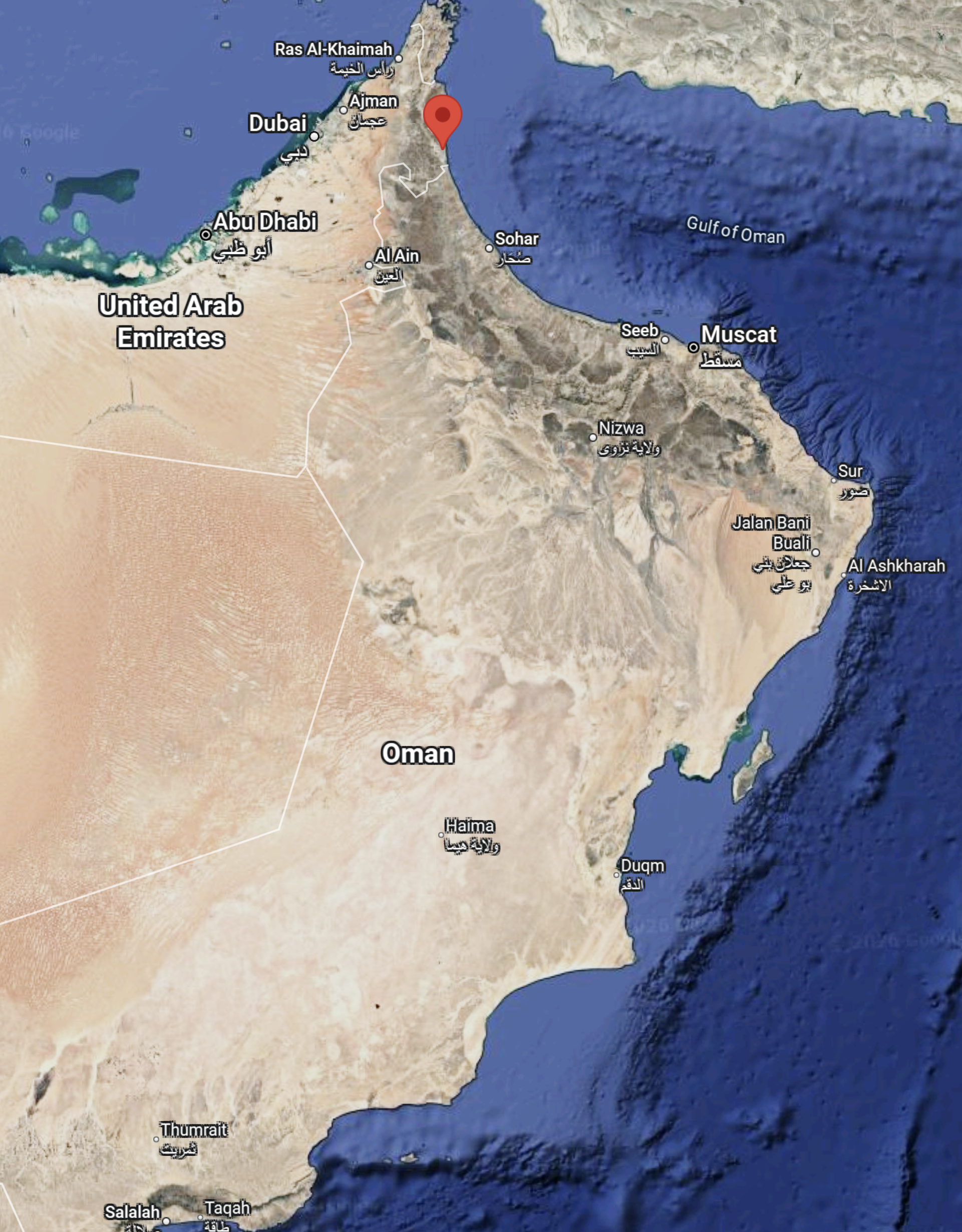
Note.
Fujairah is indicated by the red arrow.
Iran is the land mass in the North-East corner of the map.
The Strait of Hormuz is between the Arabian Peninsular and Iran.
As you come South from Fujairah, you pass through Muscat and then Iran.
Oman has two deep water ports at Duqm and Salalah.
This second Google Map shows the Port of Fujairah and the Strait of Hormuz.
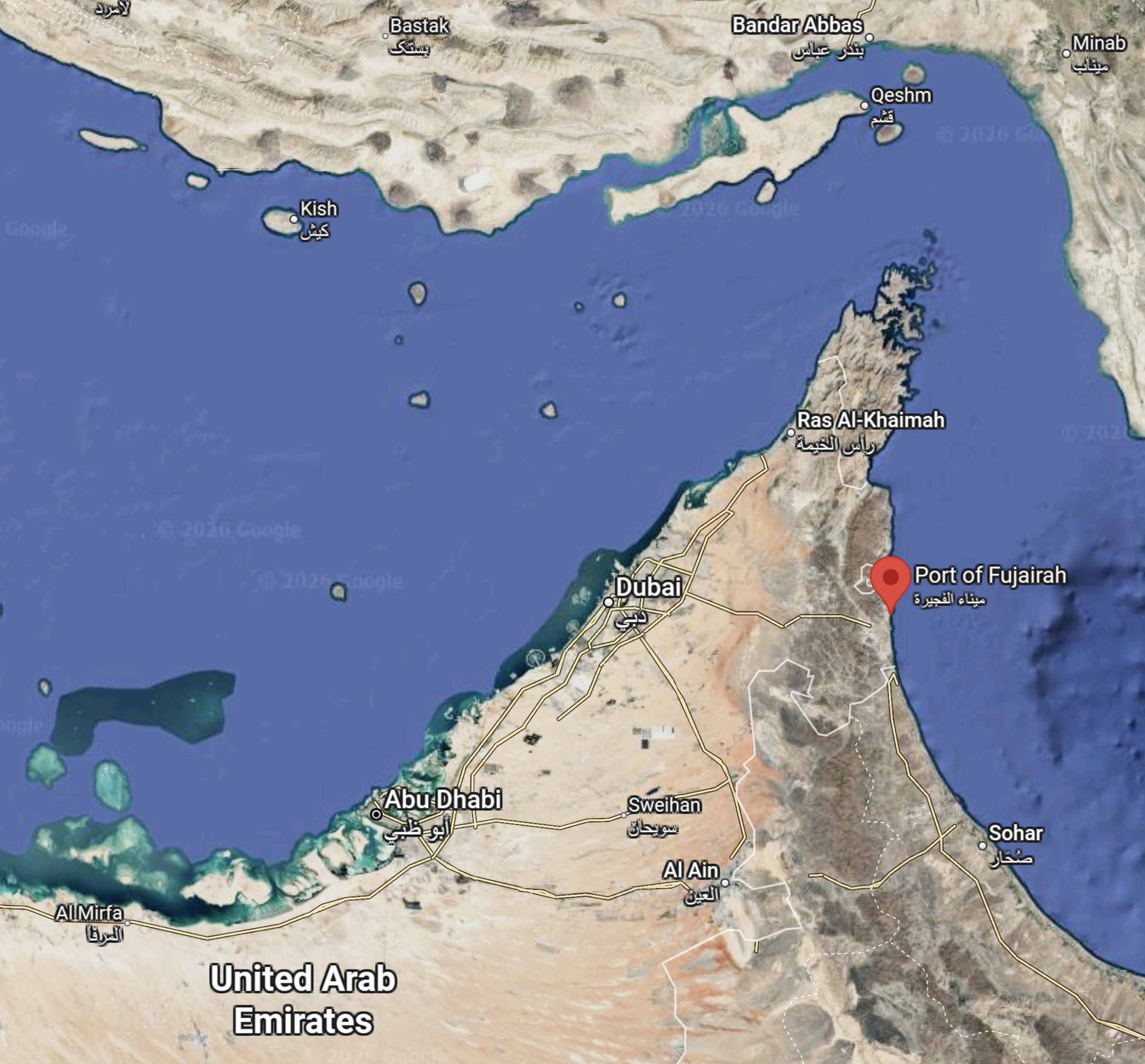
Note.
- The Port Of Fujairah is indicated by the red arrow.
- Dubai and Abu Dhabi are indicated on the map.
- The Strait of Hormuz is between the United Arab Emirates and Iran.
- There is a passenger train between Fujairah and Abu Dhabi that opened recently and takes an hour and 45 minutes.
This OpenRailwayMap shows the route of Etihad Rail.
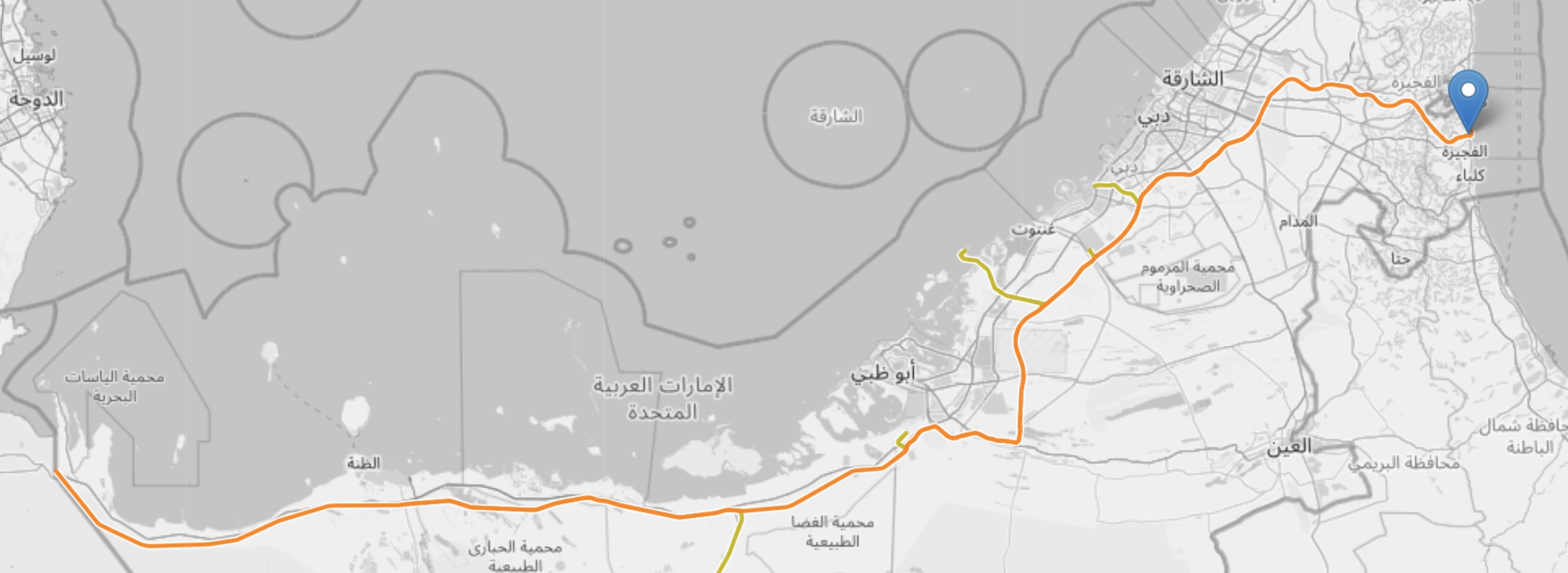
Note.
- The Port Of Fujairah is indicated by the blue arrow.
- Dubai and Abu Dhabi are on the Western coast.
- Etihad Rail has a Wikipedia entry.
- Etihad Rail has a web site.
- It is both a passenger and freight railway.
- It is 559 miles long.
It is planned to be extended to Saudi Arabia.
I can see Etihad Rail being very successful.
Could Duqm And/Or Salalah In Oman Be Developed As Oil And Gas Ports To Bypass Hormuz?
This REPEATED Google Map shows the Eastern side of the Arabian Peninsular.
The deep-water ports of Duqm and Salalah are shown on this map.
When I put the question in the title of this section to Google AI, I received this answer.
Yes, the Port of Duqm and the Port of Salalah are uniquely positioned to serve as critical oil and gas export hubs that bypass the Strait of Hormuz. Both deep-water ports are located on Oman’s open Arabian Sea coast, entirely avoiding the narrow maritime chokepoint.
Developing these ports into massive oil and gas export hubs is highly feasible but presents logistical and financial challenges:
Pipeline Corridors: Bypassing Hormuz would require constructing extensive, multi-billion dollar cross-border pipeline networks spanning over 1,800 kilometers from oil-producing hubs in Iraq, Kuwait, Saudi Arabia, and the UAE to the Omani coast.
Cost & Timeline: Estimates suggest a twin-pipeline project terminating in Duqm and Salalah—capable of moving 10 million barrels per day—would cost upwards of $50 billion and take up to seven years to complete.
Liquefied Natural Gas (LNG): Qatar and other nations could also route gas to the Omani coast, though doing so would require building multibillion-dollar liquefaction and export terminals on the Arabian Sea.
Regional Alliances: Projects at this scale require deep cross-border energy integration and substantial political consensus among the Gulf states.
Although, this route would be expensive, it would keep oil and gas for countries like China, India, Japan and Korea well away from Iran and their partners in crime the Houthis.
The Times article finished with this paragraph.
Plans now include pipelines that could run through Israel, Turkey and Syria to the Mediterranean and Europe, securing supplies to western countries but creating longer shipping times to China and India — both major consumers of Middle East oil.
Conclusion
The one common factor in all these plans is that Iran is sidelined.
And also alternative infrastructure must be better than the destructive US-Iran War.

