Holloway And Caledonian Road Stations
In some ways these two stations are a pair, but not in their step-free access.
Holloway Road is a classic two lift station, where you descend to just above the tracks and walk down to the platforms. But there is more to this station than meets the eye. Just look at this picture.
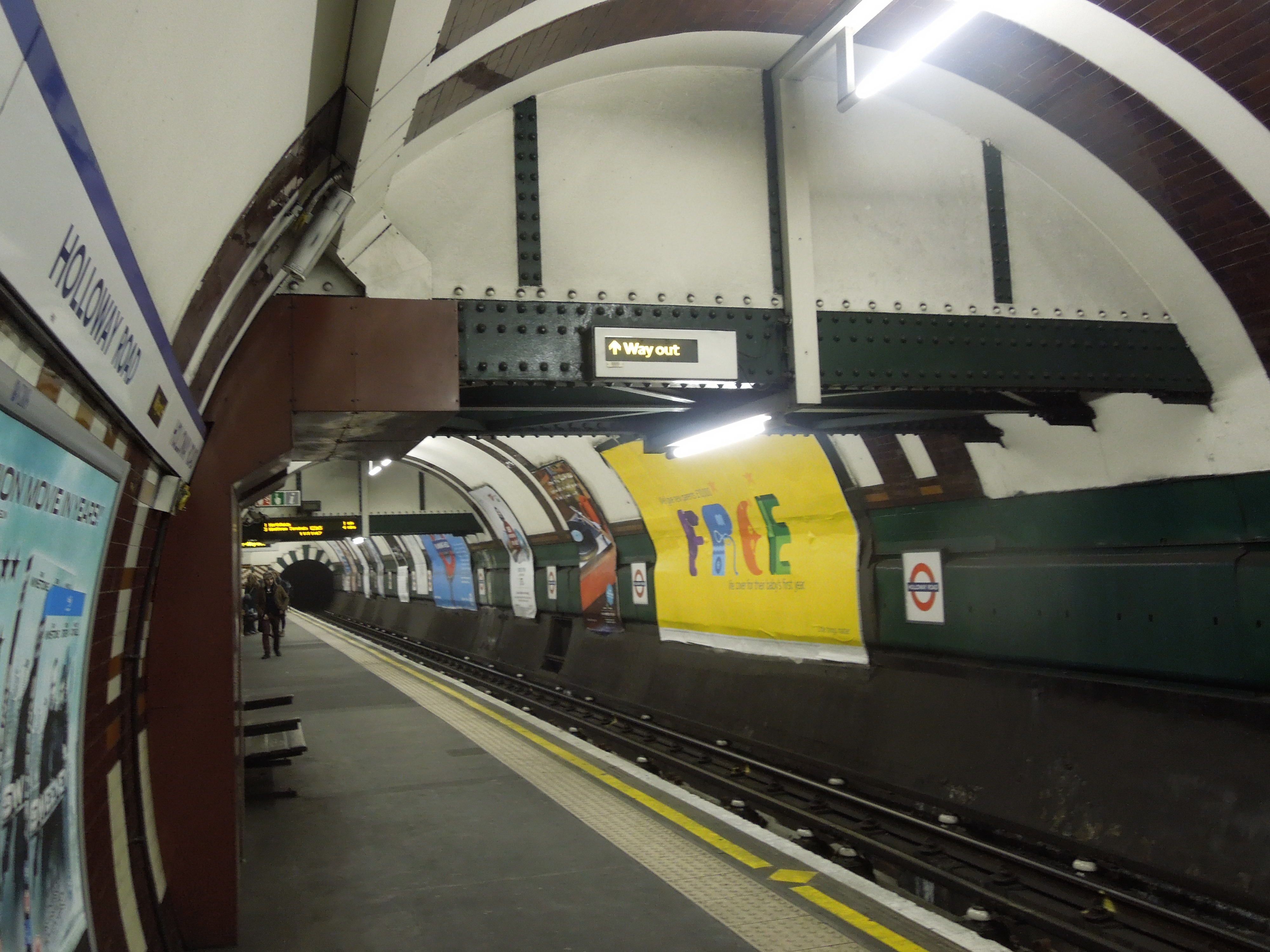
Holloway Road Station
It shows two passenger bridges over the westbound platform. according to Wikipedia, the station was built with two lift shafts and experiments were tried out with a spiral escalator. Perhaps the second one was for this device. The tiles certainly show a second entrance to the platforms. That spiral escalator would have been something if it worked.
If Transport for London could find a solution for step-free access here, they could probably solve the problems at other stations, like Covent Garden and Russell Square.
Caledonian Road shows what might have been. The lifts go down to platform level and you step outside, turn left or right and you’re on the platform. Perhaps they made a mistake somewhere and dug the lift shafts too far. But they did create a truly step-free station. But this is curious.
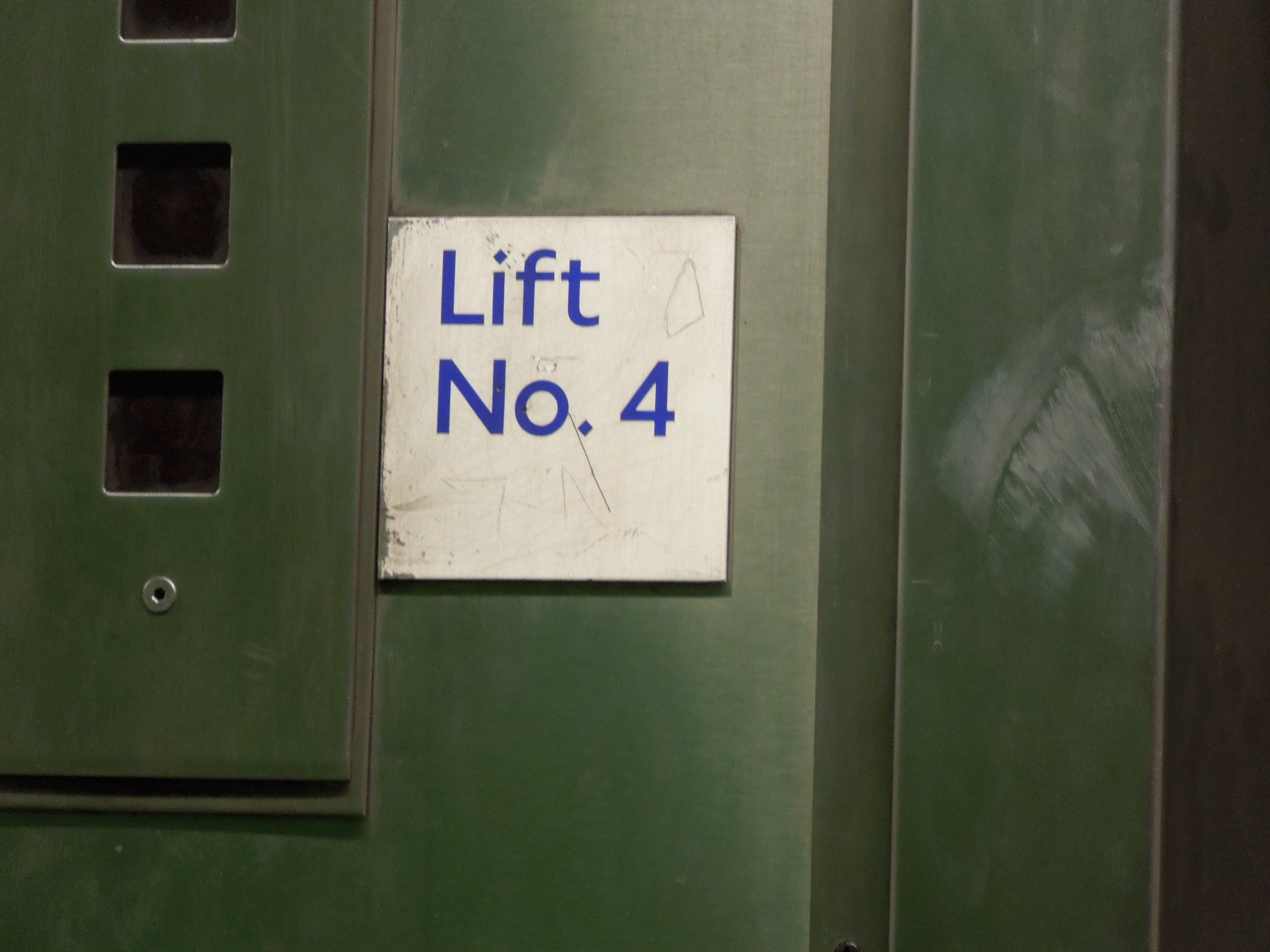
Where Are Lifts 1 and 2?
I found lifts 3 and 4, but where are 1 and 2?
 The Anonymous Widower
I’m curious as to why the default design seemed to be to have the lifts go part of rather than all the way down to platform level. Any engineering or historical reasons?
Comment by linyangchen | January 22, 2013 |
I think I read somewhere that it was to do with flooding. Remember those stations were built just after 1900 and they were very worried that the Underground might flood. If it had flooded and the lifts went right to the bottom, then you probably couldn’t have used them to get people out.
But then, London has always been paranoid about the Underground flooding and during the Second World War, they realised that a lucky strike by a German bomber could have let the Thames into the system. But now they have powerful pumps if they need them. But look what happened to New York recently.
Comment by AnonW | January 22, 2013 |
Great point about flooding, I never thought of it, thanks. Glad to hear they have the pumps, although it’s unlikely the Thames will come rushing in anytime soon.
Comment by linyangchen | January 22, 2013
Remember too, we now have the Thames Barrier. On the other hand though, the water table is higher, as we’ve less industry like brewing in London.
If you don’t mind me asking, why your interest?
Comment by AnonW | January 22, 2013 |
Thanks for your insights. The London Underground is a global icon celebrating its 150th year, and I’m fortunate to be at the right place at the right time to experience it first hand. In the course of taking photographs of it for my upcoming exhibition, I have come to admire many of the historical and engineering quirks of this vast and diverse system.
Comment by linyangchen | January 26, 2013 |
When and where is your exhibition? Best of luck with it! Of course!
Comment by AnonW | January 26, 2013 |
Many thanks for your wishes – it’s from 26 March to 6 April at The Strand Gallery, close to Trafalgar Square. There’s a website with details – linyangchen.com/tube150. Looking forward to reading more about the challenges of improving accessibility in such a convoluted transportation system.
Comment by linyangchen | January 27, 2013
I’ve put it in my diary. I shall be looking at a few more stations in the next week or so, but remember that in some ways the system was never built for full step-free access and only good engineering will sort it out. So many modern metros have been built with full step-free access, but retrofitting is the problem. In some ways though London has an alternative in that all of the buses have full step-free access and take wheel-chairs. So you might take an alternative route.
Comment by AnonW | January 27, 2013 |