Will The Canny Glaswegians Back Tram-Trains?
This article on Global Rail News is entitled Glasgow Planning Airport Tram-Train. This is said.
A tram-train, which would operate between Glasgow Central Station and Paisley Gilmour Street before moving onto a new light rail line to the airport, is the preferred option.
This Google Map shows the relationship between Paisley Gilmour Street station and the airport.
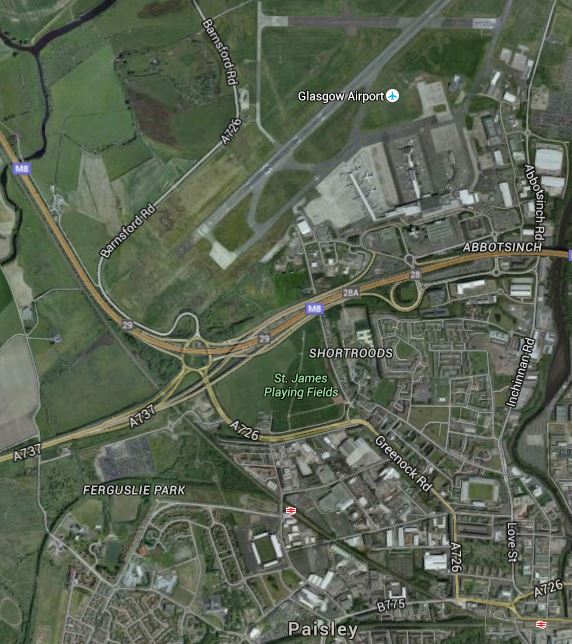
Glasgow Airport Tram-Train Link
Paisley Gilmour Street station is in the bottom right corner of the map and the Inverclyde Line runs past the Airport alongside the M8 Motorway, after passing through Paisley St. James station.
The article gives some interesting figures on the costs of the .link between Glasgow Central station and the Airport.
- A conventional rail link would cost £317million.
- A tram-train link would cost £144million
- A light rail rapid transit, which would need a change of vehicle at Paisley Gilmour Street would cost £102million.
These costs probably explain, why the Germans are building as many tram-train systems as they are!
Having seen tram-trains working in a number of German cities, I would choose a tram-train tomorrow.
These points should be noted.
- The tram-train trial between Sheffield and Rotherham should highlight the changes that would need to be made to existing stations, signalling and operation.
- The Class 399 tram-train, would probably be used. It is a standard German tram-train modified to run on our overhead line electrical voltage. Surprisingly, it is the Germans, who are non-standard.
- When running as trams, tram-trains have all of the tram’s agility to go round tight curves and sneak into cramped sites.
- When running as trains the performance of the Class 399 tram-trains is only marginally slower than the Class 314 trains, that current work the Inverclyde Line. So they would be able to mix it on the train line.
- Passengers will probably think that they’re on a train, that is perhaps a bit different.
- Liverpool are seriously thinking of using tram-trains to connect to Liverpool Airport.
The only unusual thing in the proposed Glasgow and Liverpool tram-train systems, is that tram-trains are running as trains for most of their routes, except for the branch into the airport.
Normally tram-trains run as trains outside of the City Centre and as trams inside it. But then both Liverpool and Glsasgow don’t have any other tram system.
If Manchester Victoria And Birmingham New Street Were The First Two Courses, Is Carlisle The Third?
Manchester Victoria and Birmingham New Street stations have one thing in common with the Eden Project – They all have roofs made of a plastic called ETFE.
According to this article on Network Rail’s web site, which is entitled £14.7m upgrade planned for Carlisle station, Network Rail are going to fit a third station with an ETFE roof. This is said.
Eight of the platforms will be rebuilt, and an updated roof will also help to make the station much brighter.
The work will significantly extend the life of the station’s roof structure, which dates back to 1847, as well as reducing the amount of maintenance it will need. The existing roof covering will be replaced with one made from ETFE (ethylene tetrafluoroethylene), the same material used for the roofs of the new Manchester Victoria and Birmingham New Street stations.
There’s also a computer visualisation of how Carlisle station will look.
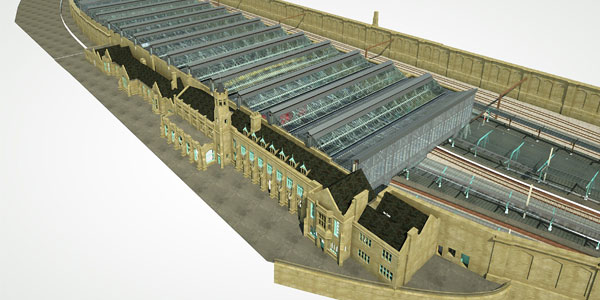
New Roof At Carlisle Station
This Google Map shows the station.
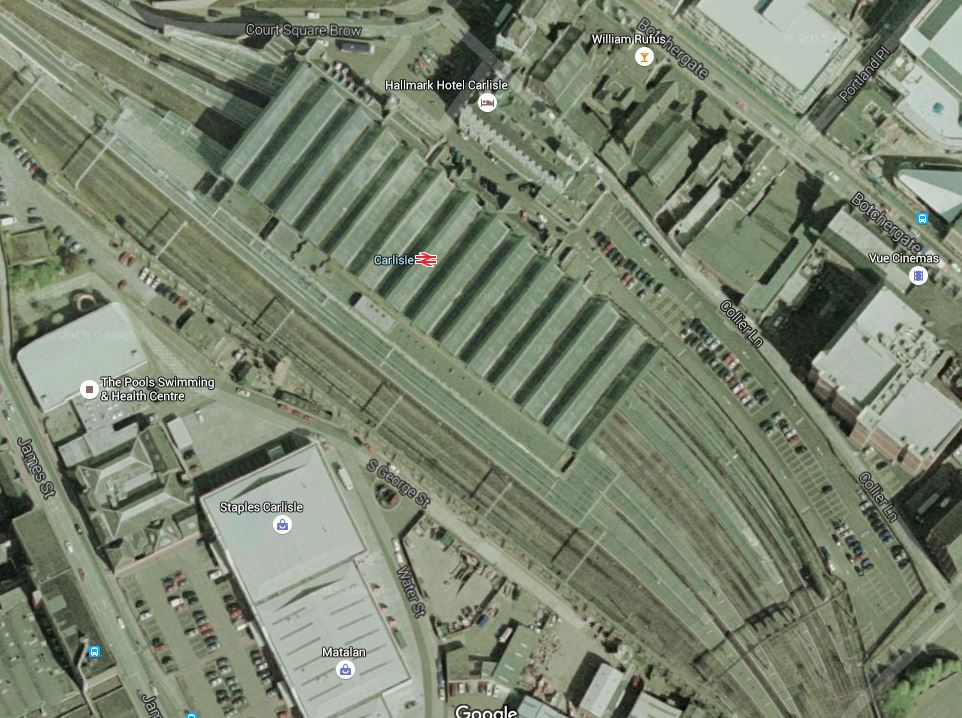
Carlisle Station
Note there are three through platforms, two bay platforms to the North and three to the South. I don’t think too many of the bay platforms are electrified.
I just wonder, if whilst they are rebuilding the platforms, they will electrify some of the bay platforms. Or at least do the preparation work!
This would enable IPEMUs to be able to be recharged, if they were serving routes out of Carlisle, like the Tyne Valley Line, Settle to Carlisle and possibly an extended Borders Railway.
Incidentally, I think that by the time Carlisle station is updated in 2019, IPEMUs or battery trains, would have enough range to reach Edinburgh. You can see the headlines in the Sun!
Investigating St. Johns Station
St. Johns station is a curious one, in that it is just two platforms on the slow lines, amongst a forest of lines.
This map shows the lines around St. Johns station to Lewisham, New Cross and New Cross Gate stations.
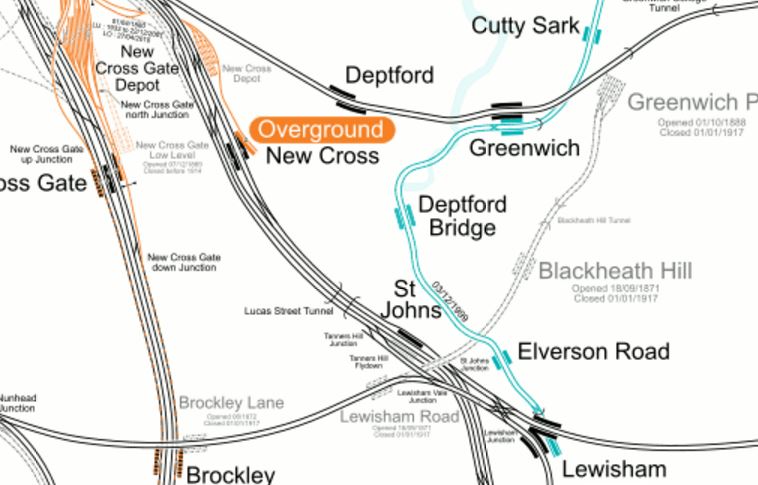
Lines Around St. Johns And Lewisham Stations
These are pictures I took of the station.


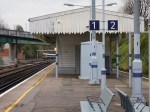


As the pictures show, it is a fairly basic station, although it does get over half a million passengers a year.
On the other hand, it does have Southbound services to Lewisham, Orpington, Hayes, Slade Green and a host of places all over South East London.
I believe that if the station were to be upgraded with step-free access to the street, a nice warm waiting room, a coffee stall and excellent information, then this station would become the preferred interchange for passengers on East London Line trains wanting to go to and from many places in South East London.
Changing At New Cross
If you get an East London Line Class 378 train and want to continue your journey South from New Cross station, you often just walk across the platform to catch your next train.
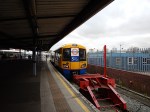
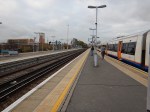
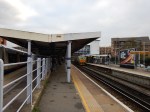
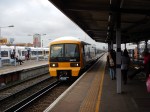
The pictures show how I changed at New Cross for St. John’s station.
There is no problem going South but coming North, you have to climb over the bridge from platforms A or B to get to platform D. The walk is step free, but modern station layouts would be designed, so that you walk across between trains or wait on the platform for a few minutes, until your train arrives.
In an ideal world Northbound East London Line services would start from Platform A, with Platform B being reserved for services to Cannon Street.
New Cross Gate station uses a layout with the East London Line trains calling at the outermost platforms.
This would not be possible at present with the trains terminating at New Cross in Platform D, as they have no means to get to Platform A, without reversing out and crossing the busy lines through the station.
But if the East London Line trains terminated South of New Cross, this would not be a problem.
The service frequency from New Cross to Dalston Junction would still be the same as now, but there would be differences.
- Passengers joining the railway at New Cross wanting to use the East London Line to go North would have to cross the step-free footbridge, just as passengers for Cannon Street do now.
- Usually, because the Northbound East London Line train is waiting, you can sit and wait in a warm train, rather than on a draughty platform.
- Passengers from St. John’s, Lewisham and other stations in the South might avoid at least one change of train, by using East London Line trains.
Remember too, that from 2019, Crossrail will run through Whitechapel, giving better access to the West End, Paddington. Heathrow and East London. Charing Cross and Cannon Street aren’t exactly connected well to Crossrail. This will surely see a lot of passengers going between New Cross and Whitechapel.
 The Anonymous Widower