One of North London’s Forgotten Lines Is Awakening
Four of the nearest stations to my house are Moorgate, Old Street, Essex Road and Highbury and Islington. which all lie in an arc on the Northern City Line to Finsbury Park and on to North London and Hertfordshire, where it terminates at Hertford North, Letchworth, Stevenage and Welwyn Garden City.
Traditionally, the line has always only run on a five day-a-week basis, with no service at weekends. As it serves Arsenal’s past and future stadia, I’ve always thought this was a bit short-sighted.
But then I’ve always felt that British Rail considered it was a railway, that they didn’t really want after they acquired it from London Underground following the Moorgate Tube Crash.
So when this month, when they decided to run a weekend service and the weekday service until 23:59, I did not notice any announcement. I use Highbury and Islington station several times a week and I certainly didn’t see a poster.
This is one of those things that should be filed under At Last! Especially, as the southern end of the line in a few years time will connect a large number of lines together.
- Moorgate – Northern, Metropolitan and District Lines and Crossrail (2019)
- Old Street – Northern Line
- Essex Road
- Highbury and Islington – East London, North London and Victoria Lines
- Drayton Park
- Finsbury Park – Piccadilly and Victoria Lines and Thameslink (2019)
If Crossrail 2 ever gets built, it will connect to this line too!
The forgotten nature of the Northern City Line is illustrated, by the elderly Class 313 trains on the line. There are currently forty-four three-car sets on the line, usually working as six car services, so giving effectively twenty-two trains.
But the days of the Class 313 are numbered as according to this article on Rail Magazine, the operator; Govia Thameslink Railway has just ordered twenty-five six car Class 700 trains from Siemens. This is said about the trains.
The new trains will be Class 700s, and will be a variant of the 1,140 vehicles currently being delivered by Siemens to GTR for Thameslink. They will run on routes from Moorgate and London King’s Cross to Welwyn, Hertford, Stevenage and Letchworth. They will be fixed length with full width inter-vehicle gangways, air-conditioning, real time information and power points.
Of all the lines in London that could benefit from a fleet of new trains, this must be one of those routes, where they will give the greatest improvement.
Especially, as for the operator, it is just more of the same trains, they will be using on Thameslink.
But will they be exactly the same?
This is said in the Wikipedia entry for Class 313 trains.
Since they were designed for use on Great Northern Suburban Inner Suburban services from Moorgate to Welwyn Garden City or Hertford North, Letchworth Garden City which included a section of ‘tube’ line built to take standard size trains between Drayton Park and Moorgate, they are built to a slightly smaller loading gauge than conventional trains. They are standard length and width, but the roof is lower, most noticeable due to the lack of a “well” for the Stone Faiveley AMBR pantograph on the centre coach. They have to comply with regulations for underground trains, such as having doors at each end of the train for evacuation onto the tracks, and when on 750 V DC supply the traction supply for each motor coach is separate, whereas on conventional 750 V DC trains each coach in a unit is linked by a 750 V bus line. Due to this, each motor coach has shoe gear on both bogies, whereas normally it would only be on the leading bogie. They are fitted with trip-cocks that are struck by a raised train-stop arm at red signals and will apply the brakes if the train passes one.
I suspect there will be some intensive work to make the Class 700 trains meet the regulations for underground trains.
To say some of the stations at the southern end of the route are tired and/or difficult for those who need step-free access, would be an understatement.
Moorgate is getting improved for Crossrail and Finsbury Park is getting a much-needed redevelopment. This will only increase the pressure to rebuild stations like Old Street, Essex Road, Highbury and Islington and Drayton Park.
As it goes further north, I do wonder if we’ll see new stations to serve future housing developments, especially on the Hertford Loop Line.
The other possibility of improving services from Moorgate is that the top speed of the new Class 700 trains is 100 mph, whereas the speed limit on the Hertford Loop is only 75 mph.
So will we see the extra three trains available used to move services off the crowded section of the East Coast Main Line over the Digswell Viaduct onto the Hertford Loop Line.
With some clever rescheduling, this might create a path or two on the East Coast Main Line.
The operator is not going to spend those millions on a new set of trains and not make them sweat!
I certainly think, that we’ll see good connectivity between trains on the Northern City and Hertford Loop Lines with Thameslink services to Peterborough and Cambridge.
It will be interesting to see their plans, when they are revealed.
My one worry is that all those new trains will tempt a lot of passengers out of the woodwork!
But one of London’s railways will not be forgotten for very long!
How’s The Overground To Enfield Town Doing?
In Transport for London Do The Sensible Thing, I said this.
Various news items on the Overground like this story in the Enfield Independent, have been reporting that the Class 315 and Class 317 Trains on the Lea Valley Lines are not very reliable. I’ve read somewhere that they are spending up to two million pounds to get them running better.
So I thought I had better go and check to see how the lines to Enfield were doing, by taking the train to Enfield Town from Hackney Downs and then walking to Enfield Chase to get a Class 313 train back home.
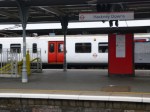
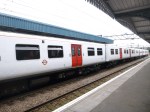
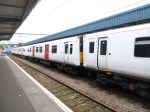
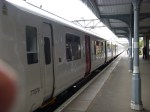
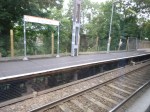
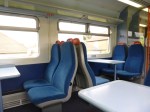
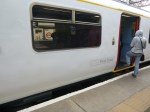
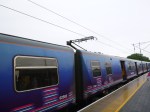
The pictures show the following.
1. An eight-car Class 315 train was working one of the last of the rush-hour services into Liverpool Street. So hopefully, London Overground have now got all services back up to their correct length.
2. Most trains I saw seemed to have a London Overground roundel on the side, even if they weren’t repainted.
3. I travelled out to Enfield Town in a very clean eight-car Class 317 train, that had been upgraded for the Stansted Express with tables, luggage racks and First Class. When was Enfield Town last served by a train so luxurious? In some ways it’s a waste, as surely there are other places, where as soon as the replacement Class 378 trains arrive, these old Stansted Expresses could be more gainfully employed.
Perhaps, they could serve Glasgow Airport? But then the Scots would complain, that they were getting London’s clapped-out second-hand trains. I noticed as I left that the train had had a full service in September last year. Old they may be, but they are far from scrapyard-ready! I suppose an old Mark 3-based train, is still a Mark 3-based train, with all the strength and ride quality that means.
4. In the meantime, this Class 317 train, is probably doing a good job in pacifying the natives of Enfield.
5. After my walk through Enfield Town centre, I got on a Class 313 train to get back to London. Now that is a clapped-out train and I wonder how many passengers for London from Enfield are thinking about changing their point of departure for London. If you commute and have a Freedom Pass, this is now unrestricted from Enfield Town, so this must have an effect on commuting pstterns.
6. I took the picture of the pantograph on the Class 313 train, as this is a special job, so that the trains can run in the restricted tunnels to Moorgate. It only needs to fold away very snuggly, as that section of line uses third rail for its electricity.
I will ask this question, about what I saw.
London Overground have put an option for 249 extra vehicles in the order for the Class 378 trains, as I reported in Have Transport for London Other Plans For The Overground?
So will some of these optional vehicles in the Class 378 order end up working the Great Northern lines into Moorgate and Kings Cross?
They have a lot going for them.
1. They are certified for working in tunnels, as on the East London Line, they run sixteen times each hour both ways through the Thames Tunnel.
2. There is a dual-voltage variant of the Class 378 train.
3. There would be the problem of designing a new pantograph well and certifying them for the Great Northern tunnel, but that is not as great a task as designing a whole new class of train.
It would probably be a special variant of the Class 378 train, but it hopefully, it would not be a difficult design to create.
We can do a little calculation on where the 249 extra vehicles might go.
Various documents show that by 2030, London Overground wants to be running six-car trains on the North and East London Lines. So if the existing fleet was all made six car, that would probably need 63 vehicles, as there are 57 trains on the system currently and another six are on order.
If we assume that Transport for London’s other target, the Dartford Lines, comes with some fairly new trains, this may or may not use up some of those options.
Taking the 63 off the 249 gives us 186 vehicles, which leaves 186, which can be 62 three-car trains or 46 four-car ones, with a few vehicles left over. Intriguingly, they could also be configured as 31 six-car trains.
So how many trains would be needed? At present the line is worked by 44 3-car trains. So if it was deemed that under London Overground, the service would be as now, there would be plenty of vehicles.
But as I pointed out, 186 vehicles gives us 31 six-car trains. Wikipedia states that the tunnels to Moorgate will accept trains of this length, so would it be a simple decision to make all the Great Northern trains six-car to turn the service into a higher-capacity, seven days a week, Metro service? As this would be a distinct variant, they might even be given a bit more performance to ease them along the East Coast Main Line to Hitchin. After all other members of the family to which a Class 378 belongs are 100 mph as opposed to 75 mph trains.
Running six-car walk-through trains into Morgate, rather than two three-car ones coupled together, gets rid of one of the restrictions of running in tunnels, which insists that passengers can walk through the train to get out in case of trouble.
So the more I look at this, the more I think, that Transport for London has an option on trains to work the Great Northern services.
As Transport for London have said, they might like to take over some of the inner Thameslink services, I suspect that the flies on the wall in meetings between Govia Thameslink Railway and Transport for London will have interesting tales to tell.
Never On Sunday!
The Northern City Line never normally works on Sunday, but it did today.
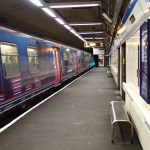
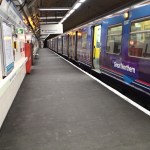
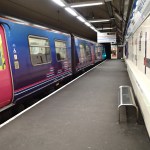
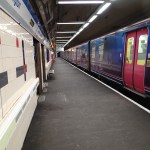
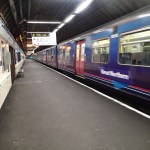
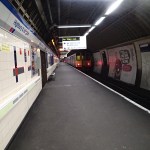

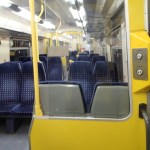
Perhaps it was because of yesterday’s troubles at Kings Cross, a decision was made to run the trains into Moorgate.
A Quiet Finsbury Park Station
As Finsbury Park station was quiet I took these pictures.

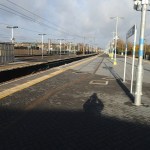
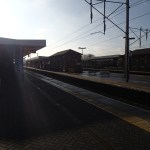
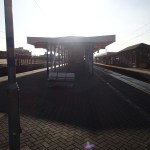
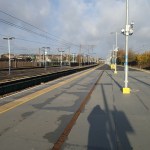
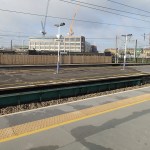
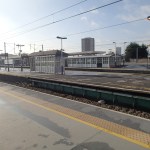


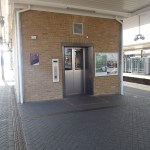
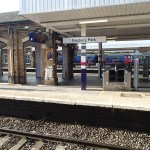

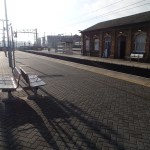
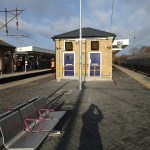
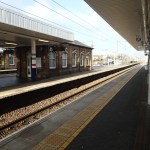
It’s certainly a lot better than it was just a few years ago.
After the full Thameslink service opens in 2018, the service pattern in Finsbury Park will be very different, as instead of terminating at Kings Cross, Cambridge and Peterborough trains will go through the tunnels to places in the south. So will some of these stop here?
Great Northern’s New Livery
This Great Northern Class 365 is all decked out in the new livery.
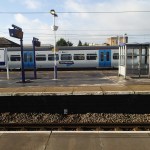
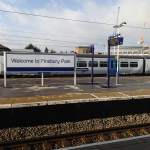
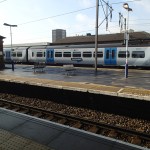
They are also being refurbished, as is described in this section in Wikipedia.
But then the Class 365 is a nice set of trains, even if theyare twenty years old. I’ve travelled in them many times up and down between Cambridge and London.
GTR Create A Crisis Out Of A Little Local Difficulty
My Plan was simple. I intended to take a train down the East London Line to South Norwood and from there walk across the platform to hop one stop to East Croydon. At East Croydon, the idea was then to get a Thameslink Class 319 to Luton and Bedford, taking pictures along the route.
I should have known there were problems at Dalston Junction, as staff didn’t know where trains were to be routed. In the end my West Croydon train, which had been prematurely turned at the station, was sent off to Crystal Palace.
I spent about fifteen minutes at New Cross Gate changing from my train to a following West Croydon one. It sped to South Norwood, where I waited to try to get some pictures of the passengers crossing between southbound Overground and Southern trains.
The wait was in vain and I didn’t get my pictures and in the end took a train to East Croydon to get Thameslink.
At East Croydon, chaos was in full flow, with trains arriving randomly in opposite directions on the same platforms, and after nearly an hour, I managed to squeeze onto an extremely crowded Bedford train.
Eventually, the crush in the train eased and I got to Luton and Bedford in a Class 319 train.
The problem had all been caused by a serious signal fault at Clapham Junction. These happen, but it was GTR‘s response to the problem that failed so badly.
When I was waiting at South Norwood, there were no staff on the southbound platform and no information about what was going on.
At East Croydon, information was again minimal, but it probably didn’t help that the station is in the middle of a rebuilding.
GTR must get their act together.
Reading between the lines in this section on East Croydon station from Wikipedia, it seems that GTR aren’t the only ones, where East Croydon station is concerned.
 The Anonymous Widower