The Marlow Branch
After my exploration yesterday of Twyford Station And The Henley Branch, I felt I had to explore one of the other branches today.
So I took the Great Western Railway to Maidenhead station and went up and down the Marlow Branch Line.

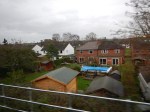



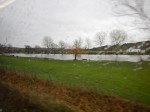
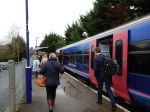
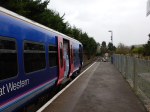
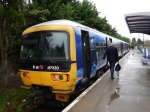
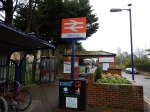





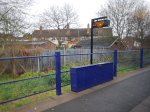


Unlike at Twyford, where you have several minutes to make the connection, at Maidenhead, I only had a couple, so pictures of Maidenhead station are a bit sparse in the gallery. However, I did take some others in Before Crossrail Maidenhead Station.
Much of what was said about the Henley Branch applies to the Maidenhead Branch.
- It is a short branch of just over seven miles with a change of direction in the middle at Bourne End station.
- An IPEMU would appear to be more than capable of providing a service on the line.
- At a quick look, it would appear that the platforms at Bourne End, Cookham, Furze Platt and Marlow stations could easily be made long enough for a four car train.
- The line has several level crossings and a couple of low bridges, that could cause problems with traditional electrification.
- Bourne End Railway Bridge is an historic bridge and I doubt that the heritage lobby would allow it to be electrified using overhead wires.
Operation
One almost unique quirk of the line is that the reversal of direction at Bourne End, where the driver has to walk to the other end of the train.
The Class 165 train is over twenty years old and was built before trains had modern control and wi-fi systems. Surely, a modern train could be driven from the rear, using CCTV for forward vision between Bourne End and Marlow.
Extending From Bourne End To High Wycombe
I think that it is true to say, that a lot of people would be very pleased if the branch line still continued past Bourne End and on to High Wycombe station.
This Google Map shows Bourne End station.
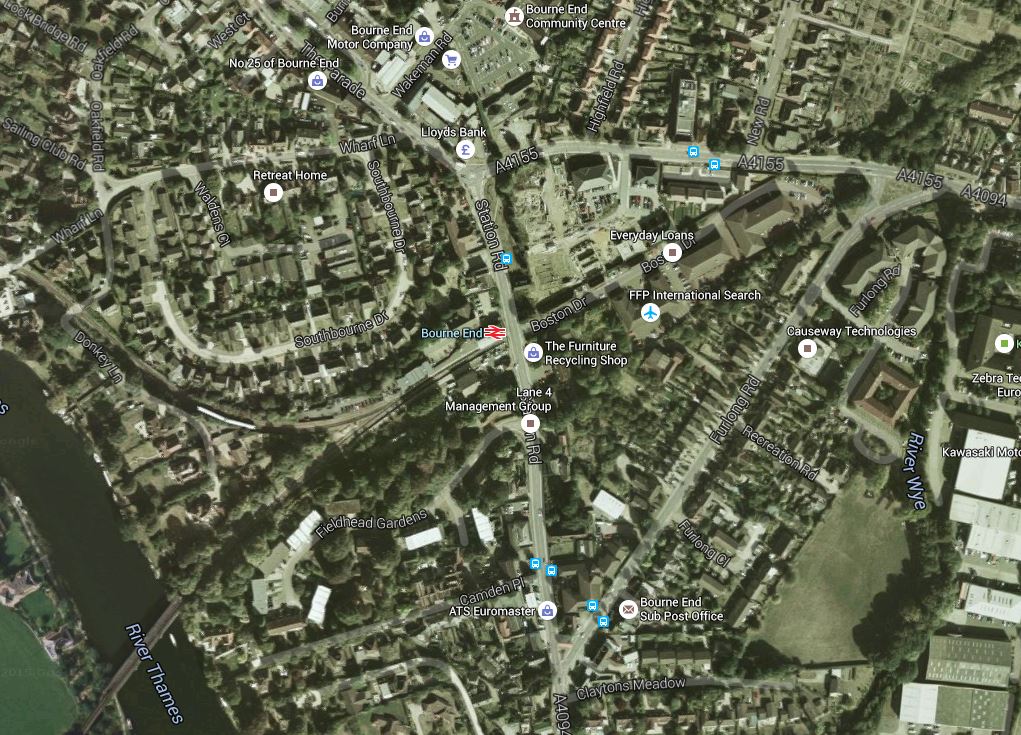
Bourne End Station
Note how the line from Maidenhead comes in from the South West and the line continues to Marlow along the river after the change of direction. The former line to High Wycombe is visible as a green scar going off to the North East.
I certainly think that the ambitious natures of Chiltern Railways, Great Western Railway and Crossrail/Transport for London will mean that this extension to effectively make High Wycombe one change away from Crossrail will be seriously looked at by the train companies.
Twyford Station And The Henley Branch
I went for lunch in Henley-on-Thames today taking the Great Western Railway to Twyford station for the Henley Branch Line to Henley-on-Thames station.
These pictures document the journey between my two train changes at Twyford station.
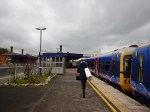
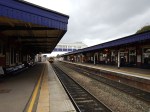
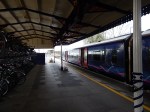
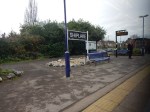
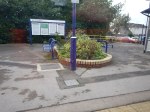
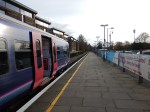
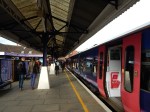
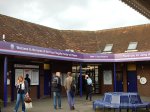
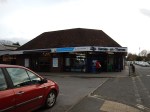



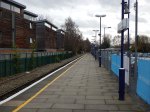
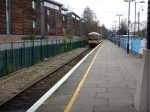
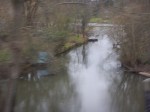
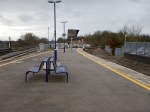
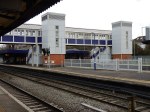


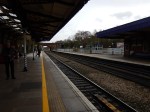
The branch is a typical single-track rural branch line that trundles its way through the countryside, over the River Thames to a single platform, that can take eight car trains.
It is currently served by a single two car Class 165 train, that goes up and down every fifty minutes or so all day, which is augmented by a couple of direct trains in the peak.
I feel that the Henley Branch Line could easily by worked by an IPEMU train. This could be either one of Class 387 trains ordered by Great Western Railway and converted to the technology or a new Aventra train.
Consider the following about the Henley Branch.
- It is only four and a half miles long.
- The speed limit of the line is fifty miles per hour.
- The bridge over the Thames has a lower speed limit and would probably be challenging to electrify.
- The two intermediate stations of Shiplake and Wargrave are built for eight car trains.
- There is at least one level crossing on the branch.
- The bay platform at Twyford station looks like it could take a five car train.
The Class 379 IPEMU test train with its sixty mile range could probably do six up-and-downs without a recharge. When an IPEMU train needed a recharge it would just pull into Platform 4 at Twyford station instead of the normal bay Platform 5, raise the pantograph and charge the batteries. Alternatively, Plstform 5 could have a short length of overhead wiring for recharging the battery.
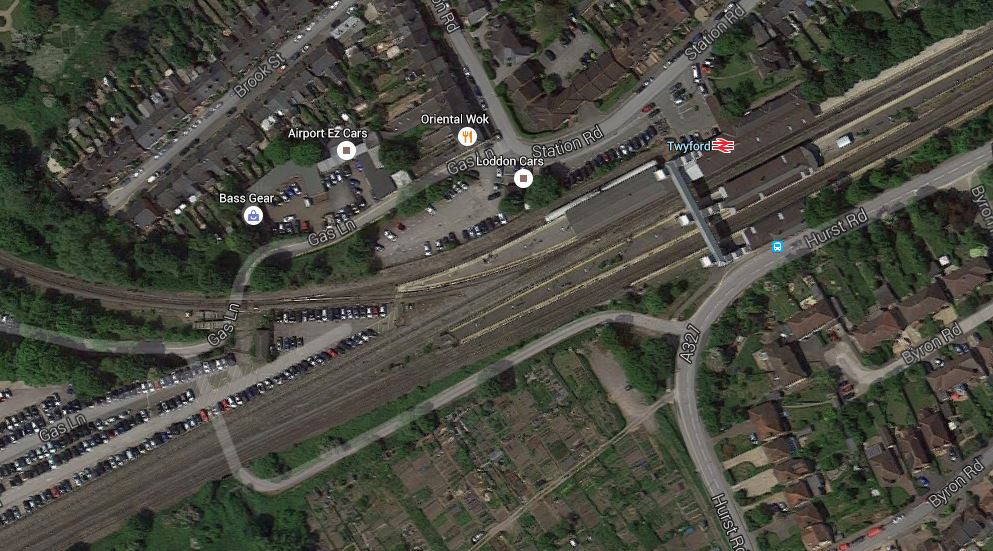
This Google Map shows Twyford station.
Twyford Station
Note the two car train in Platform 5 and the Henley Branch Line leading away to the north from the Great Western Main Line..
If Class 387 trains modified with IPEMU technology were to be used, Henley could receive four car electric trains as soon as the power was switched on as far as Twyford, with no major works on the Branch.
Two Class 387 trains could be coupled together to make an eight car train, that could also be run to and from Paddington during the peak and the Henley Regatta.
Why We Should Use Independently-Powered Electric Trains
I was looking for something else and found this article in the Henley Standard entitled Goring rail line work ‘will ruin countryside’. This is said.
THE electrification of the railway line through Goring will ruin the surrounding countryside, say residents.
Network Rail is installing overhead power cables as part of the scheme, which covers the route between Reading and Oxford and is expected to be finished next year.
Last week contractors began felling trees and putting up steel lattice gantries which will span the track at regular intervals to hold the wires in place.
You can argue that on a major line like the Great Western Main Line, we need robust overhead wire systems, as many of us have suffered serious delays on lines like the East Coast Main Line and the Great Eastern Main Line because of the flimsy overhead wire design.
But still the residents have a point and I think there must be a better design that mitigates the visual intrusion. Would Jasper Maskelyne and others skilled in the art of camouflage have ideas to assist Network Rail?
Network Rail can get it right, as is shown at the Grade 1 Listed Wharncliffe Viaduct, where the overhead wires are arranged to reduce the visual impact.
Are they usually as measured about where they place a gantry, as they have been on the viaduct?
Away from main lines, there will be lines like the Settle and Carlisle and the Hope Valley Line, where visual intrusion will be very important and activists will attempt to stop the installation.
It is for places like this where we must have independently-powered trains to service the route. There are two available technologies.
Electro-Diesel Trains
At the present time, there is only one electro-diesel train planned in this country and that is the Hitachi Class 800 train, which soon be seen on the Great Western Main Line and the East Coast Main Line.
They are a solution to the problem and can switch between propulsion modes at line speed, but they require diesel engines to be lugged around the country for where they are needed, so they may not be as efficient as a purely electric train.
There seems to be a few ideas for electro-diesel trains, but none appear to be comng to fruition.
Electric Trains With On-Board Energy Storage (IPEMU)
I rode the Class 379 train, that had been converted to act as a demonstrator for this technology.
It was impressive, as we trundled through the Essex countryside powered by energy stored in batteries, that had been charged from the overhead wires.
The fact that the technology works is all down to the physics of steel wheels on steel rails, which make train travel efficient in the first place.
As an electrical engineer, I know that this is technology, that can only get better.
- Electricity storage, whether based on batteries, flywheels, capacitors or some other method, will only get better.
- Trains will roll better through improvements in design.
- Energy harvesting from sources like regenerative braking will be more comprehensive.
- Secondary electrical systems on trains like air-conditioning, toilets and the provision of wi-fi will use less electricity.
- Automatic control systems will control the train tightly according to schedule, terrain and signals to minimise electricity use.
- Pantograph deployment will be automatic, when overhead wires are available.
But using the on-board storage to power the train on its route, is only one of the reasons it will be installed.
- If a train has on-board storage and regenerative braking, it will be more efficient.
- When the overhead line gets damaged or the power supply is cut, an electric train with on-board storage might still get through.
- Depots can have simplified electrification, which is safer for staff.
Bombardier must be impressed with the concept, as all Aventra trains will be wired so that on-board energy storage can be fitted.
Conclusion
Both technologies for independently powered trains are proven, but you wouldn’t want to use on-board energy storage over more than a limited distance, beyond which the diesel would be ideal.
By using independently powered trains, you can balance electrification cost, installation disruption and visual intrusion against the extra cost of a train with on-board storage or diesel engines.
Provided of course, the independently powered train can handle the route to the satisfaction of passengers and rail companies!
On the Great Western Main Line because of the distances involved and the reliability required, electric trains using overhead power on robust supports are probably the best method we have at present.
Although, Great Western Railway have been reported as saying they might use Class 387 trains with an IPEMU capability to destinations a few miles off the Great Western Main Line, like possibly Bedwyn and Oxford.
Great Western Railway Launches Lobster Class
Great Western Railway serves the best food on a British scheduled train, but this article on Rail News entitled Lobsters ‘take the train’ to London is not a piece of fun. This is an extract.
Live lobsters are now being transported by rail from Cornwall to top London restaurants.
Sending produce by rail will be faster than road, ensuring the lobsters are fresher when they arrive. It will also help to lower carbon emissions by reducing road freight.
Great Western Railways and InterCity RailFreight Ltd will be delivering the lobsters daily on the 1739 Penzance to London Paddington service. WEGO Carbon Neutral Couriers will then take them to their final destination.
It’s good to see innovative uses of resources.
Progress On The Great Western Main Line – 22nd October 2015
On my way out from Paddington to Greenford to see the new inclined lift, I took these pictures.
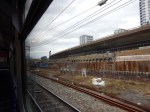
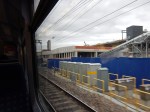
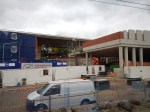
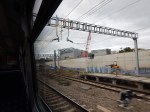




As reported in a lot of news media, progress doesn’t seem to be to fast.

