A Visit To Heathrow Terminal 5
The Heathrow Pod I talked about in An Innovative Scheme For A Rail Link To Glasgow Airport, just had to be seen, so when I found myself at West Drayton station and a 350 bus arrived with Heathrow Terminal 5 on the front, I just had to take it.
I got on the top deck and took these pictures, followed by others when I arrived at the Terminal.
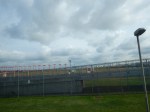



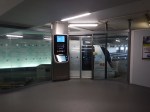
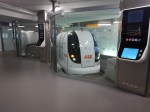



Many of these pictures of the system were taken from the Cafe Nero on the Departures Level of Terminal 5. This cafe is a good place to meet someone, as the views are good if you have to wait.
I got a good view of the Heathrow Pod, but because of all the steel-work in the way, getting a good photo was not easy.
A few points about the Heathrow Pod.
- It appears that both carriageways of the system are bi-directional.
- The developer’s web site is here.
- The official web site is here.
- The most interesting comment was from a member of British Airways ground staff, who said that her kids always want to use it.
- BAA has a stake in the company that makes them.
- What I saw is probably a restricted system designed to be as reliable as possible.
Here’s a video
Watching the video and reading about the pods, I suspect they are best described as self-driving cars, that run on a restricted network of roads, which are described as guideways.
But the most interesting snippet is this from the developer’s web site, about a proposal for a new PRT system at Heathrow.
In May 2013 Heathrow Airport Limited announced as part of its draft five year (2014-2019) master plan that it intended to use the PRT system to connect terminal 2 and terminal 3 to their respective business car parks. The proposal was not included in the final plan due to spending priority given to other capital projects and has been deferred.
There have been suggestions that they will extend the service throughout the airport and to nearby hotels using 400 pods.
I’ve read somewhere, that connecting to Kingston-on-Thames is in their sights.
This is perhaps not so fanciful as you think. Look at this Google Map of the Western end of Runway 09L at Heathrow Airport.
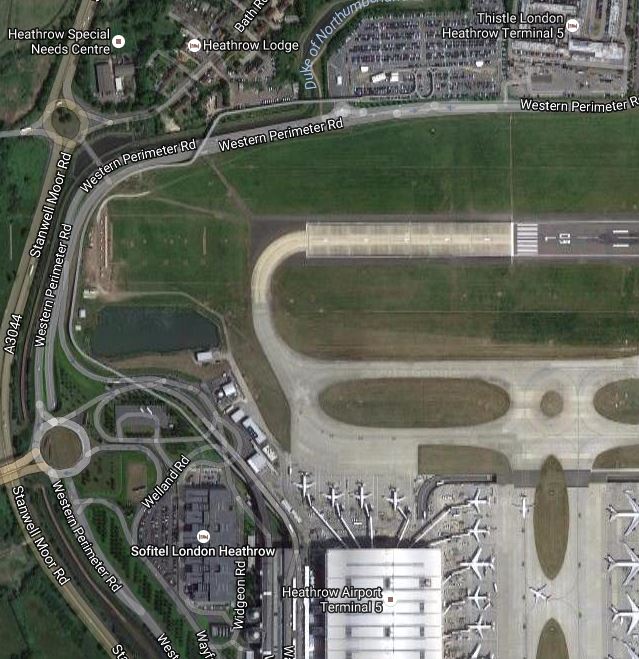
The Western End Of Runway 09L At Heathrow
If you can’t quite distinguish the Heathrow Pod, which is the narrow line snaking its way across in front of the runway, here’s an enlarged view of the Heathrow Pod on the Northern side of the runway.
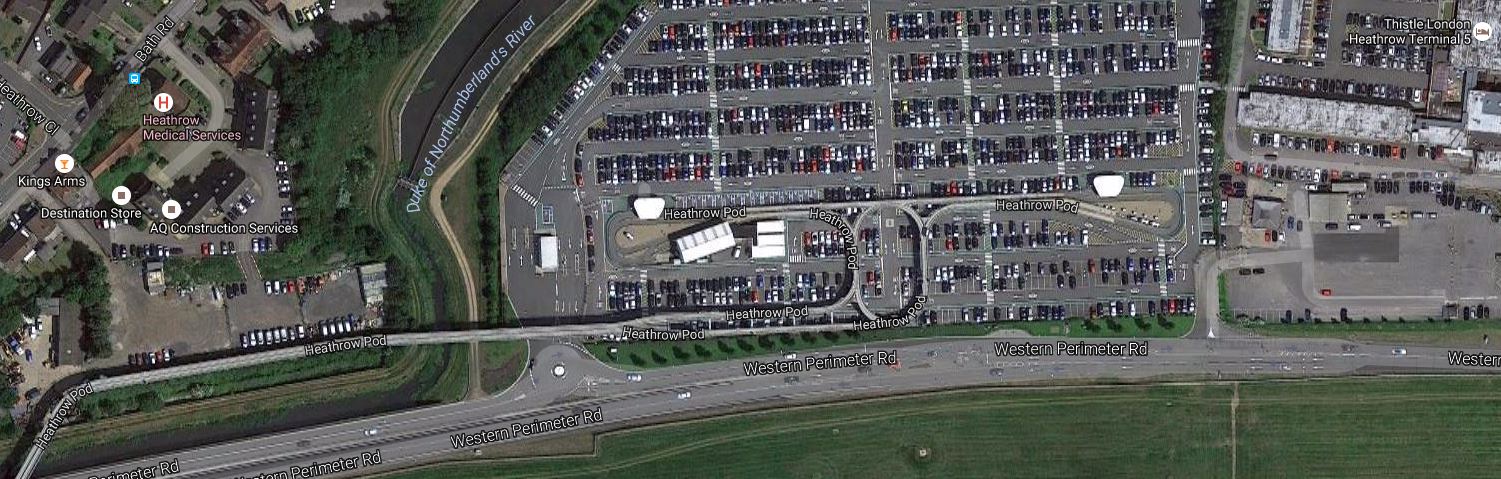
The Car Park End Of The Heathrow Pod
And here’s another on the Southern side.
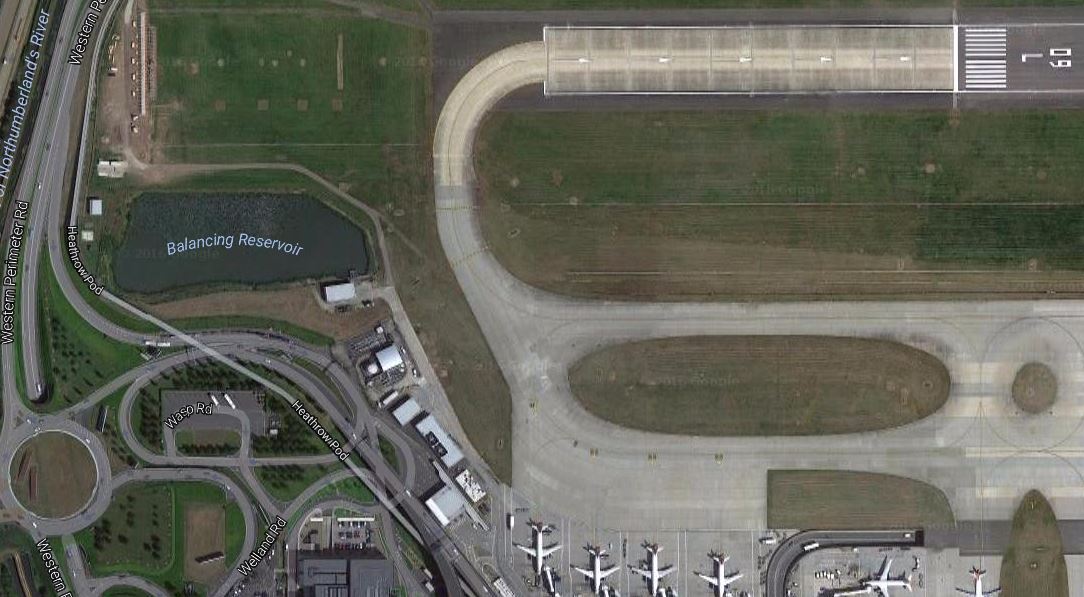
The Terminal 5 End Of The Heathrow Pod
The Expansion Of Heathrow Airport
Looking at these Google Maps and applying my devious mind to the Heathrow Pod, I am coming to some conclusions about the expansion of Heathrow Airport.
- Pollution caused by traffic is a big problem around Heathrow. By developing existing and future train services and an extensive Heathrow Pod system serving hotels and car parks, all cars, taxis and buses could be removed to a sensible distance from the Airport.
- In the Heathrow Hub proposal for expansion of the Airport, there is a 650 metre gap between the two portions of the Northern runway. This gap would allow the ILS for the Eastern runway to remain in place and so the approach to this runway would probably be identical to what it is now.
- I suspect the runway gap would also allow the Heathrow Pod to remain in its current place. But that would not be as tricky to move as the ILS. Or as safety-critical!
- The Heathrow Pod system has charisma in digger-buckets.
I feel that an expanded Heathrow Pod could just swing the government to back Heathrow Hub, rather than totally new runways at Heathrow or Gatwick.
The Ultimate Heathrow Pod System
After a drink, I’ve let my mind race ahead.
- Heathrow Pod stations could be placed in all hotels, car parks and train/bus stations ringing Heathrow, up to perhaps five or even ten miles away.
- Passengers who are flying out, could scan their boarding pass and passport in the pod.
- The pod would take you to the appropriate holding area for your flight.
- Or if you failed the checks to an appropriate area for further checking.
- Passengers who are flying in, would use the touch-screen terminal to tell their pod where to go.
- A quick scan of your parking ticket could take you to the station nearest to your car.
I’ve always been sceptical about driver-less cars, but these versions which are all identical running on a fixed and limited network of guide-ways could be another matter.
A Sad Footnote
The driving force behind the system would appear to be Martin Lowson.
Sadly he died in 2013.
An Innovative Scheme For A Rail Link To Glasgow Airport
This article on Renfrewshire 24 is entitled New Option Could See Glasgow Airport Rail Link Run From Relocated Glasgow St. James Station.
The new option, which is proposed by Junction 29 (Scotland) Ltd, would relocate Paisley St. James Street station nearer to the airport and it would be connected to the airport using a PRT system similar to that used at Terminal 5 at Heathrow.
This Google Map shows the area.
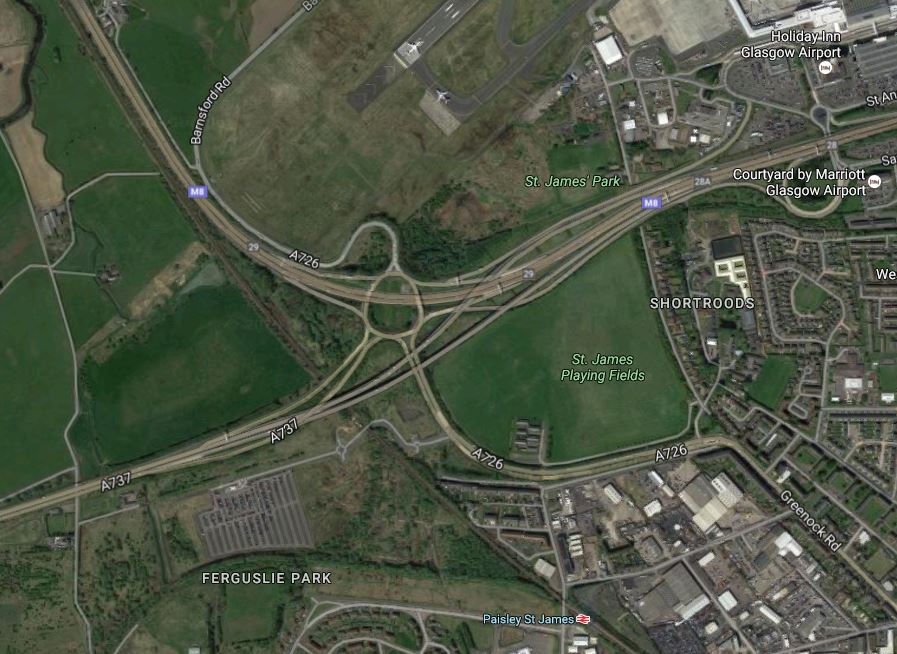
Note.
- Junction 29 of the M8 is the mass of spaghetti in the upper middle of the map, with the Inverclyde Line passing to the South-west of the junction.
- Paisley St. James station is towards the bottom of the map.
- Junction 29 (Scotland) Ltd. own the block of land to the West of the railway and the new station would be built in this area, where the PRT system would connect to the Airport.
I think it could be a feasible plan and these are my thoughts.
A Proven System
Wikipedia says this about the PRT System at Heathrow.
Construction of the guideway was completed in October 2008. The line is largely elevated, but includes a ground level section where the route passes under the approach to the airport’s northern runway. Following various trials, including some using airport staff as test passengers, the line opened to the public in May 2011 as a passenger trial. Subsequently it was made fully operational and the bus service between the business car park and Terminal 5 was discontinued. The pods use 50% less energy than a bus. They run 22 hours a day. Unlike all UK road and rail traffic, which drives on the left, the PRT system drives on the right. As of May 2013 the system passed the 600,000th passenger milestone.
The interesting thing, is that it runs under the runway approach, so it must have a fairly small footprint.
I actually think that using this system has other advantages.
- It could go on a roundabout route between the station and the Airport, serving car parks and other important places.
- It could serve the car parks, which are also proposed for the site.
- It could bring those with movement difficulties to the station for the Park-and-Ride to Paisley and Glasgow.
- It is very much a proven system.
- The tram-train alternative works in many places in the world, but the concept seems to cause Network Rail indegestion.
- The PRT System is independent of the railway.
But in my view the system’s biggest advantage is that it could have a serious wow factor for children of all ages.
Cost
The cost of the PRT option is quoted at £70-£80m, as opposed to £144m for the tram-train alternative.
Journey Times
Journey times to the airport will certainly be competitive, but I think the wow factor will encourage passengers to use it, whether they come by train or car to the station.
Why Would You Want To Close The Existing Station?
I would not close the existing Paisley St. James station for these reasons.
- It serves Paisley Town centre and St. Mirren Football Club.
- Closing it could be a hassle.
- Extra stations are never a bad thing.
- Modern trains stop and start again at a station very quickly.
- The new station could be called Glasgow Airport to avoid confusion.
But then there may be better reasons to close it.
Train Frequency
There needs to be at least four trains per hour (tph) to Paisley Gilmour Street and Glasgow.
If not more, as the frequency of the PRT system will annoy passengers waiting for the trains.
I also think that a turnback facility should be provided, so that a posh Airport shuttle train could work a 2 tph limited-stop service to Glasgow Central.
If Glasgow got its act together, the posh train could also serve Edinburgh.
Construction
It is stated in the Renfrewshire 24 article, that the new station and the PRT system could be built in twelve months alongside the existing network.
As all the land is owned by the Airport, Junction 29 and Network Rail, this must help, unless they find newts.
They could even lift a lot of the design of some of the other new stations like Kirkstall Forge.
Future Development
I’m sure Junction 29 (Scotland) Ltd. have got some good plans for the rest of their site.
Conclusion
Go for it! Glasgow has been procrastinating for far too long!
I think we’ll see a lot of systems like this around the world!
The system is described here in Wikipedia.
It’s British by the way and was developed in Cardiff and Bristol.
 The Anonymous Widower