Could Crossrail And Thameslink Serve Clapham Junction Station?
This may seem a silly question, but I believe it is a valid one for the following reasons.
Clapham Junction Is A Major Interchange
Wikipedia says this about Clapham Junction station.
Routes from London’s south and south-west termini, Victoria and Waterloo funnel through the station, making it the busiest in Europe by number of trains using it: between 100 and 180 per hour except for the five hours after midnight. The station is also the busiest UK station for interchanges between services.
It is also the tenth busiest station measured by passenger numbers in Great Britain.
Clapham Junction Is Step-Free
Clapham Junction station has both a bridge and a subway between the seventeen platforms.
The bridge is fully step-free with lifts to all platforms.
Clapham Junction Has A Wide Bridge
The bridge between platforms is not only step-free, but very wide.
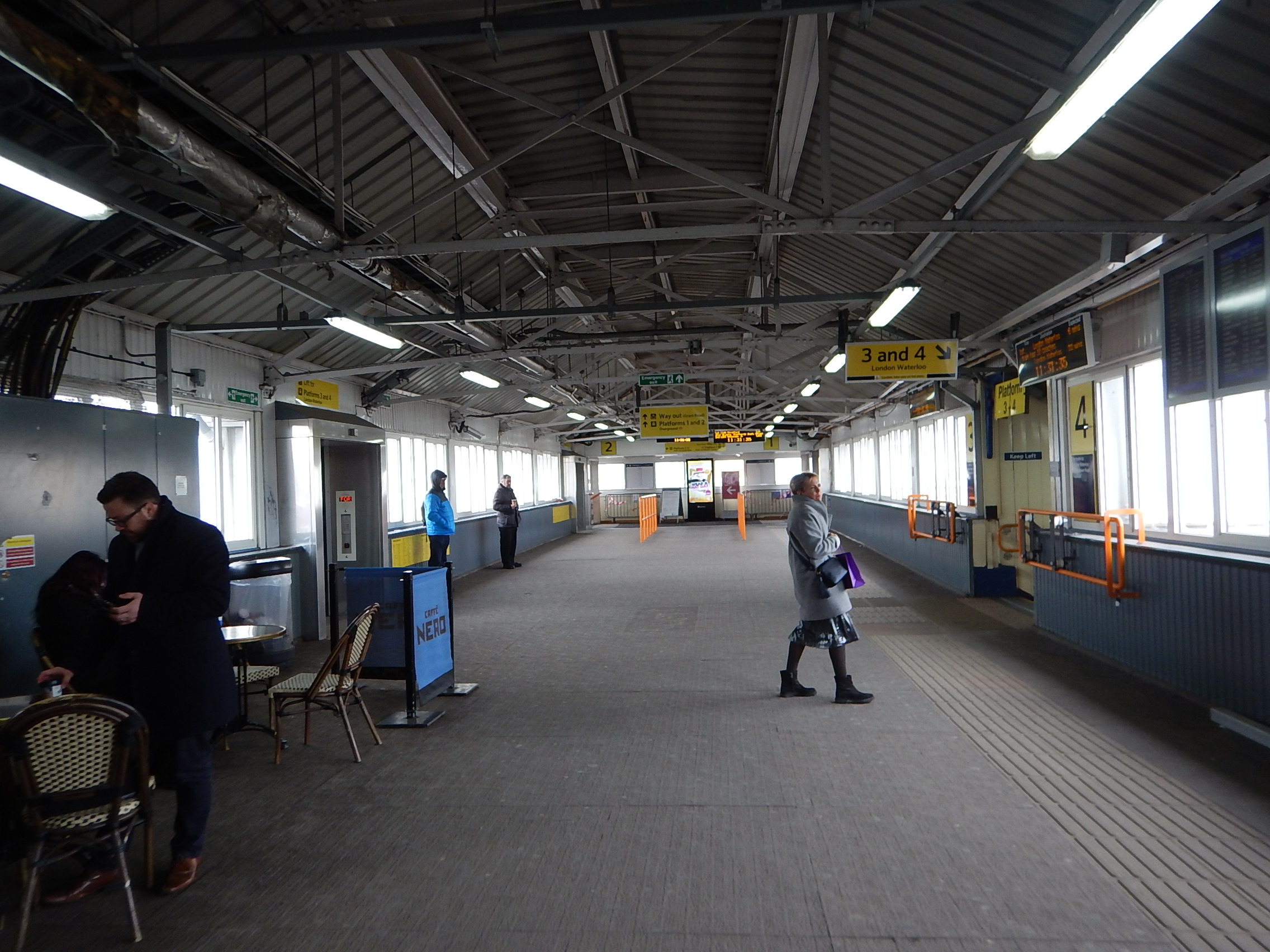
rchitects have copied this Victorian design at Leeds and Reading stations.
Clapham Junction Is Often A Convenient Place to Change Trains
When I go to Portsmouth or Southampton, I will often avoid Waterloo, by using the Overground between Dalston Junction and Clapham Junction stations.
It may be slower, but it is a very easy interchange, especially if I go step-free on the wide bridge.
Perhaps this explains why interchange passengers at Clapham Junction, are almost as many as those entering or leaving the rail network.
With some journeys like say Southampton to Wembley Stadium, changing at Clapham Junction is probably the most convenient.
Clapham Junction Links To The Overground
This interchange, is something I use a lot, as I have four trains per hour (tph) on the London Overground, from my nearest station at Dalston Junction.
As there are thirty-one stations on London’s circular railway, the interchange probably generates a lot of traffic.
Clapham Junction Seems To Be Well-Organised
If you want to go to say Gatwick, then generally the same platform will be used.
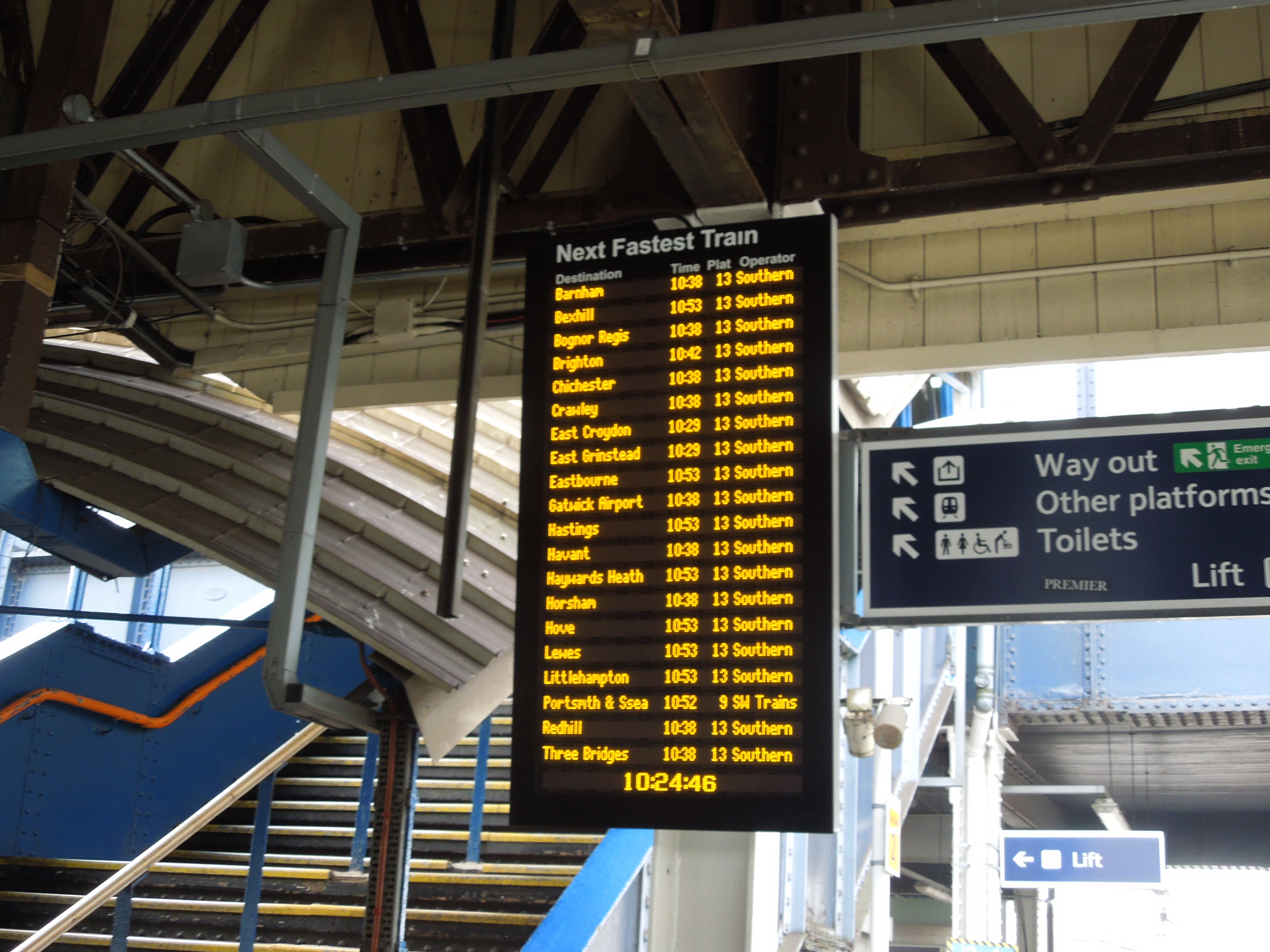
All Trains To Gatwick Go From 13
This can’t be said for many stations.
The station even has lists of stations and the platform to use.
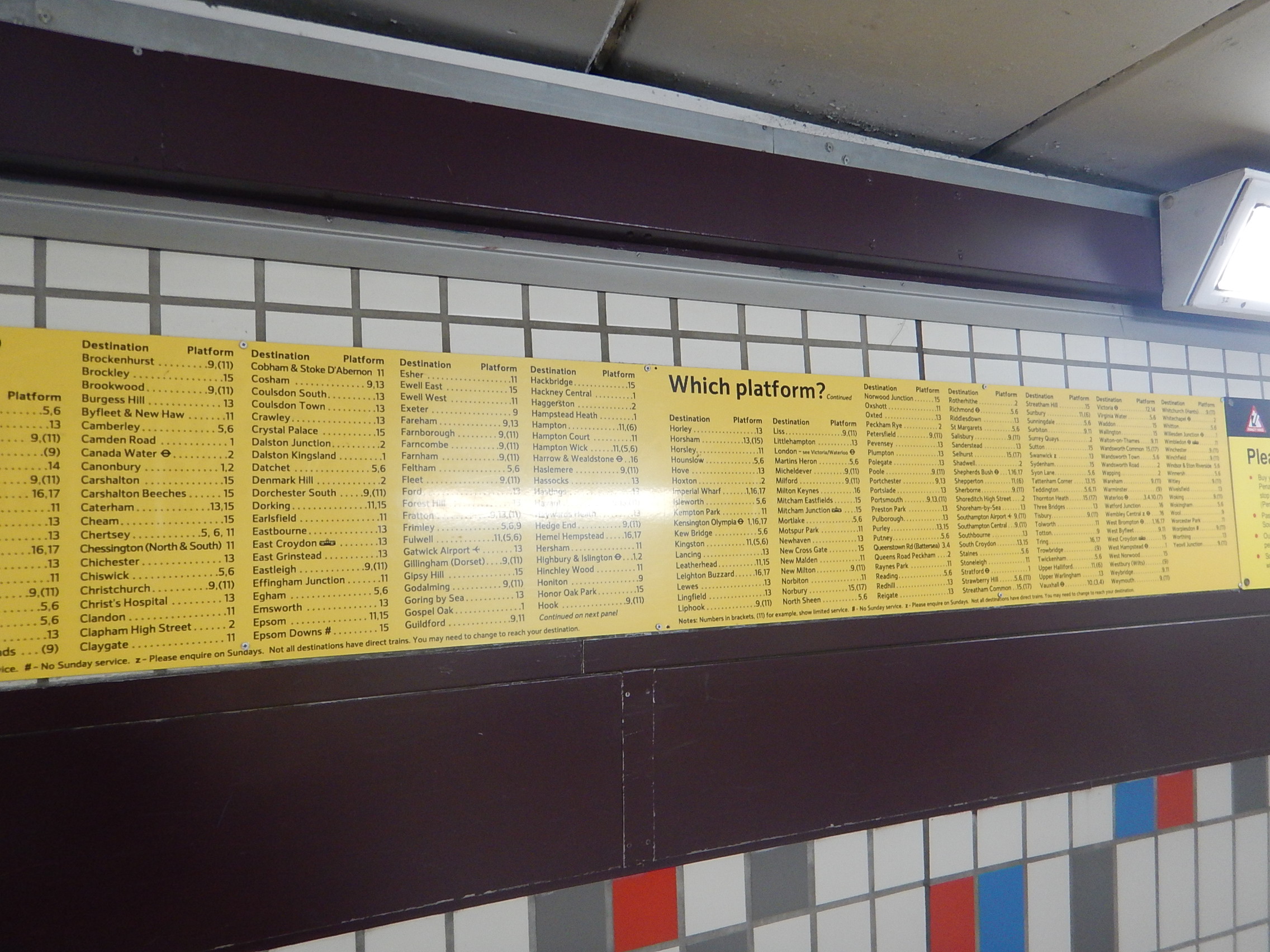
This would be impossible at most large stations!
But this is the busiest station in Europe by the number of trains using it!
The Victorians certainly got the design right!
Does this passenger-friendly design attract passengers?
Crossrail, Thameslink And Clapham Junction Station
Crossrail and Thameslink don’t call at Clapham Junction station.
But some services do directly link Crossrail and Thameslink to Clapham Junction station.
London Overground From Stratford To Clapham Junction Via Willesden Junction
This West London Line service has a frequency of four tph, which from some time this year will be raised to six tph or one train every ten minutes.
It will have the following interchanges in the future.
- Thameslink at West Hampstead
- Crossrail at Old Oak Common
It will also have interchanges with the Bakerloo, Central, District, Jubilee and Victoria Lines.
London Overground From Stratford To Clapham Junction Via Canada Water
This South London Line service has a frequency of four tph, which from some time this year will be raised to six tph.
It will have the following interchanges in the future.
- Thameslink at Denmark Hill and Peckham Rye
- Crossrail at Whitechapel
It will also have interchanges with the District, Docklands Light Railway, Hammersmith and City,Jubilee and Northern Lines.
Southern From East Croydon To Milton Keynes
This West London Line service has a frequency of one tph.
It will have the following interchanges in the future.
- Thameslink at East Croydon
- Crossrail at Old Oak Common
If Crossrail is extended along the West Coast Main Line, there will be additional interchange stations.
It will also have interchanges with the Bakerloo, Central, District and Northern Lines.
Southern From Clapham Junction To Brighton Main Line
There is a high-frequency service from Clapham Junction along the Brighton Main Line.
- 3 tph – Brighton
- 1 tph – Hastings
- 2 tph – Eastbourne
- 2 tph – Littlehampton
- 4 tph – Horsham
- 4 tph – Haywards Heath
- 4 tph – Three Bridges
- 6 tph – Gatwick Airport
- 12 tph – East Croydon
Most of these services terminate at Victoria.
The named stations, except for Hastings and Eastbourne, will also be served by Thameslink.
From the passenger point of view, those going to and from London from the Brighton Main Line and South Coast stations, have a choice of London terminus.
- Thameslink – London Bridge, Blackfriars, City Thameslink, Farringdon, St. Pancras and Thameslink’s Northern stations.
- Southern – Clapham Junction and ictoria.
The two separate routes have Central London fully covered.
Deficiencies Of The Current System
Suppose you want to travel from the extremities of Crossrail and Thameslink to say somewhere like Basingstoke, Bournemouth, Exeter, Portsmouth or Southampton, that is served by Waterloo and Clapham Junction in Central London.
- From Brighton and other stations on the South of Thameslink, there is a high-frequency Southern service.
- From Luton and other stations on the North of Thameslink, you will probably use the Jubilee Line between London Bridge and Waterloo.
- From Shenfield and other stations on the East of Crossrail, you will probably use the Jubilee Line between Bond Street and Waterloo.
- From Heathrow, Reading and other stations on the West of Crossrail, you will probably use the Bakerloo Line between Paddington and Waterloo.
All the Underground interchanges will be fully step-free with lifts and lots of escalators, but the connections could be simpler.
The Arrival Of Old Oak Common Station
The building of the new mega-hub station at Old Oak Common will tie together the following lines.
- Crossrail
- HS2
- North London Line
- West Coast Main Line
- West London Line
There is also the possibility of the West London Orbital Railway linking Old Oak Common to Hendon and West Hampstead Thameslink.
Old Oak Common and Clapham Junction stations will be two mega-hub stations, that for obvious reasons will need a high-frequency connection service.
Currently, that is planned to be the following services.
- 6 tph – London Overground from Stratford to Clapham Junction.
- 1 tph – Southern from Milton Keynes to East Croydon.
It is not enough, especially, if either connection at Old Oak Common and Clapham Junction is a long walk.
But there are easy ways to increase the numbers of connections.
Improve The Southern Service
In his report, Chris Gibb recommended that this Milton Keynes to East Croydon route be transferred to the London Overground. I wrote about this in Gibb Report – East Croydon – Milton Keynes Route Should Be Transferred To London Overground.
In my view Chris Gibb is right for the following reasons.
- All passenger services on the West London Line would then be run by London Overground.
- London Overground have a reputation for running a good train service.
- The Milton Keynes to East Croydon service could be integrated with the Watford DC Line, the North London Line and a possible West London Orbital Railway to produce an integrated frequent local service in an area of West London, that needs a greatly improved train service.
- Frequency between Old Oak Common and Clapham Junction could be raised to as high as ten or twelve tph.
- It would improve connections between Watford and the expanding Wembley Stadium complex with South London.
I doubt it would be an expensive and difficult project to move this service between operators.
Build The West London Orbital Railway And Extend It To Clapham Junction
In this article on Ian Visits, this is said about the service on the proposed West London Orbital line.
Phase 1: 4 trains per hour from West Hampstead to Hounslow, calling at West Hampstead, Cricklewood, Neasden, Harlesden, OOC, Acton Central, South Acton, Brentford, Syon Lane, Isleworth, Hounslow.
Phase 2: additional 4 trains per hour from Hendon to Kew Bridge, calling at Hendon, Brent Cross/Staples Corner, Neasden, Harlesden, OOC, Acton Central, South Acton, Kew Bridge.
The track is all in place and with a new bay platform at Hounslow, trains running on batteries could work Phase 1 with ease. The batteries would be charged South of Acton Central station.
Because of the importance of Clapham Junction as an interchange,, would it be a sensible idea to extend Phase 2 from Kew Bridge to Clapham Junction, by way of Chiswick, Barnes Bridge, Barnes, Putney and Wandsworth Town stations?
This may not be possible, as the route may not be able to accept four extra trains.
This map from carto.metro.free.fr shows the track layout around the two Overground platforms at Clapham Junction.

I also took these pictures of Platform 2.
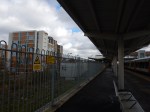
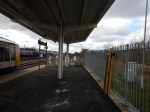
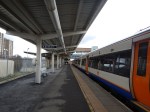
I suspect that a bay platform could be added, opposite to Platform 2.
- There would appear to be plenty of space.
- The platform would share the lift, facilities and staff with Platforms 1 and 2.
- It would make a good interchange, with simple connections to Platforms 1 and 2.
There could even be the possibility of making Platform 2 bi-directional so that a loop service from Hendon to Dalston Junction could be created, if that was considered the best solution.
One advantage of extending the Phase 2 Kew Bridge route, would be that it would give more electrified running to charge a battery train.
Luton/Bedford to Clapham Junction
If this route from Hendon to Clapham Junction via Old Oak Common and Kew Bridge can be successfully created, it establishes the important link between the Luton/Bedford branch of Thameslink and Clapham Junction.
Cambridge/Peterborough to Clapham Junction
There is no direct route, but probably the fastest is to dive into the Victoria Line at Finsbury Park and go to Vauxhall, from where it’s a single stop to Clapham Junction.
Just avoid changing to the Victoria Line at St. Pancras, unless you like long walks.
Crossrail to Clapham Junction
Three factors will determine how good using a double change at Old Oak Common and Clapham Junction to get between Crossrail and Clapham Junction will be.
- The frequency of trains between Old Oak Common and Clapham Junction.
- The quality of the interchange at Old Oak Common. As it will also involve HS2, I suspect it should be good.
- The quality of the interchange at Clapham Junction. It probably needs improvement, but it’s not bad for something designed by the Victorians.
It could be a very good link.
Could Thameslink Serve Clapham Junction Directly?
From the Brighton Main Line, there is a frequent service, but going North to Thameslink is not easy.
It could be possible to use the West London Orbital Railway to get to and from Hendon, but whether anything other than a local route is needed is open to doubt.
Could Crossrail Serve Clapham Junction Directly?
This Google Map shows the Old Oak Common area.
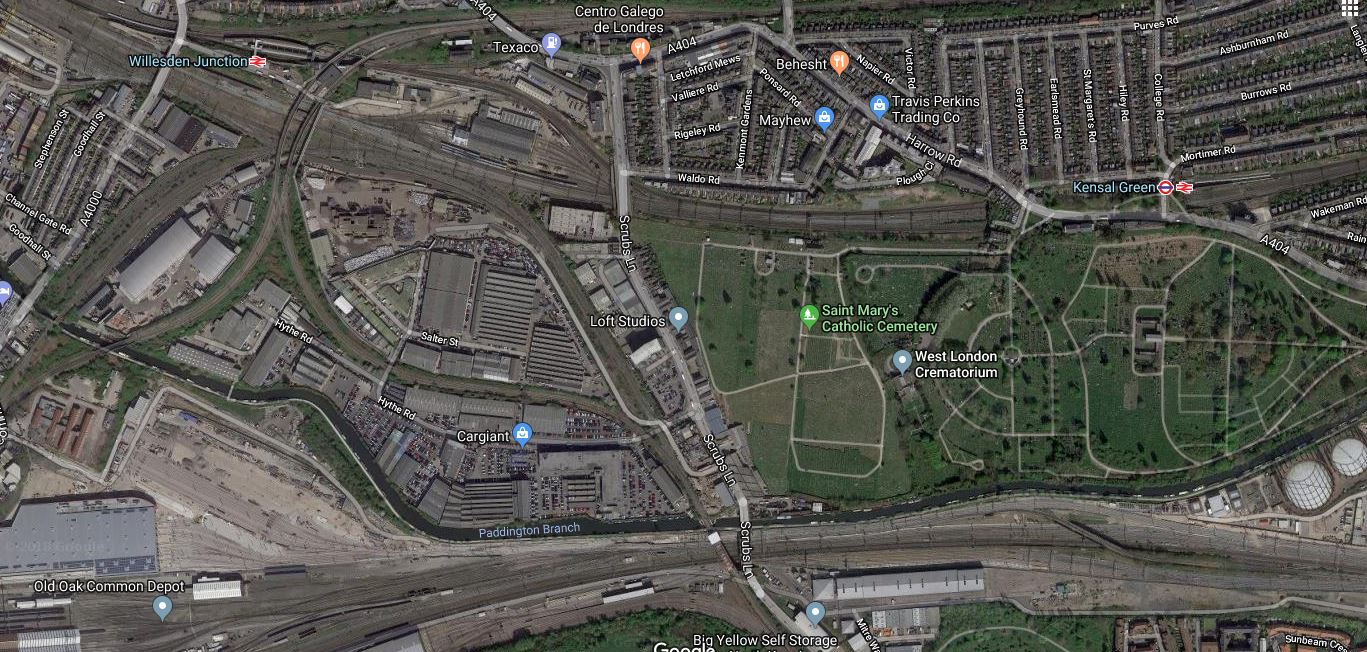
The railway running across the map to the North is the West Coast Main Line, whilst the Great Western Main Line goes across the bottom.
Looking at the map in detail, it might be possible to thread flyovers or dive-unders into the area to allow Crossrail trains to take the West London Line to the North or South from the East or West.
Consider
- There are certainly some large industrial sites that could be cleared.
- There are a couple of cemetries too.
- There are Central, Chiltern, Crossrail, Great Western Main Line, HS2, North London Line, West Coast Main Lines to connect together.
- A Heathrow to Gatwick Link could be threaded through.
It all depends on how much can be spent!
And Then There’s The Heathrow Southern Railway!
This is a bit different, as it’s a privately-funded railway that aims to sneak into Heathrow by following and hiding by the M25 and the use of the odd tunnel.
This map is a schematic of the proposed railway, which is caused the Heathrow Southern Railway.
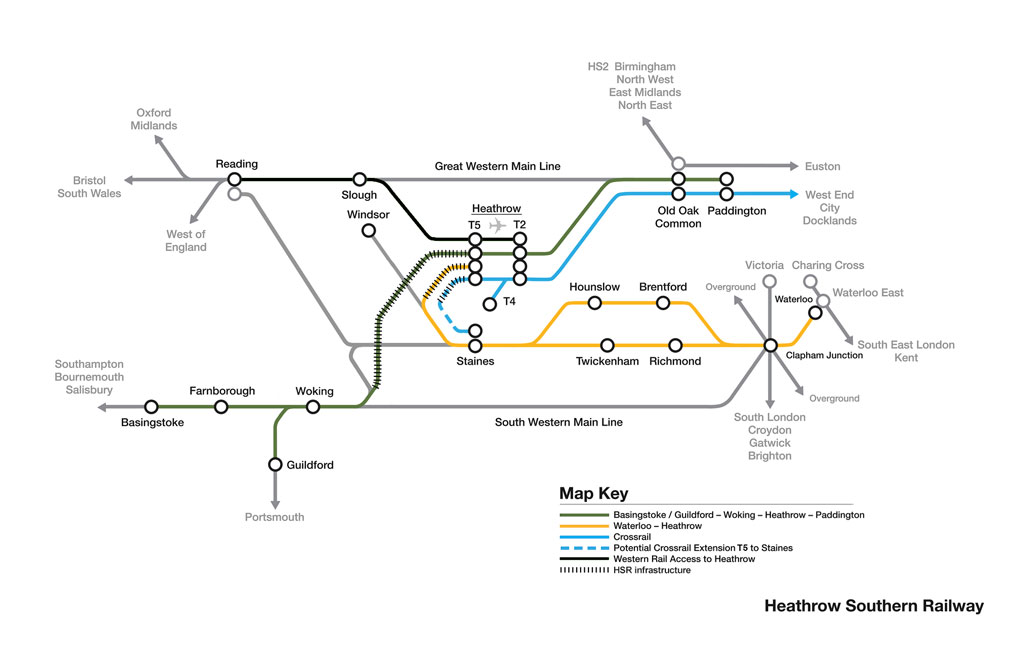
Note.
- The blue line is Crossrail.
- The yellow line is a direct link from Waterloo to Heathrow.
- The station in a six pointed star is Clapham Junction.
On the Heathrow Southern Railway web site there is a section called Service Opportunities.
It details two routes.
Heathrow – Staines – Clapham Junction – Waterloo
- Most track is existing.
- New track will run along the M25.
- Trains will be fully-integrated with South Western Railway.
- Four tph should be possible with planned capacity improvements.
- A bay platform will be added at Staines, within the current railway.
- Xrossrail could be extended from Terminal 5 to Staines.
Heathrow Southern Railway envisage that a lot of passengers from Staines will use Crossrail for London.
Basingstoke/Guildford – Woking – Heathrow – Paddington
The web site says this about the route.
An exciting additional benefit of Heathrow Southern Railway is the scope to introduce half-hourly services from Basingstoke and Guildford to Heathrow and Paddington. These trains would provide a 15-minute frequency from Woking, with stops at Farnborough Main (Basingstoke services), Woking, Terminal 5, Terminal 2 and 3 and Old Oak Common.
I like the ideas and the tone of the project.
Conclusion
With all the ideas in the West of London, I think that some very good things will happen to the railways in the area, whether Heathrow Airport builds another runway or not.
In
AECOM Invests In Heathrow Southern Railway Link
The title of this post is the same as that of an article in Global Rail News.
AECOM is one of the largest engineering consultancy and design companies, who in the UK have been involved in projects like Crossrail, London Gateway, London 2012, Sellafield and Titanic Belfast.
This is the last two paragraphs from the article.
David Barwell, chief executive, AECOM London, said: “We are delighted to announce our investment in Heathrow Southern Rail.
“As a long-term partner to Government AECOM is delighted to bring its development, engineering and delivery capability to resolve current and future infrastructure needs and to bring private sector funding to accelerate the delivery of critical public infrastructure.”
Designing projects like the Heathrow Southern Railway is a complex business and the involvement of AECOM in the project must be beneficial from a design and planning aspect.
When the project was announced in September 2016, I wrote Why I Like The Heathrow Southern Railway Proposal. As things have changed since, I have updated that report and I think I’m getting to like the project even more.
Why I Like The Heathrow Southern Railway Proposal
Rail Projects
For nearly twenty years I spent a lot of time talking to project managers and reading about the implementation of large projects and systems.
It has led me to various conclusions about large projects and what makes some succeed and others fail.
If you look at rail projects over the last few years, you get some very good examples of projects and some very bad ones too!
Look at how the following factors affect the outcome.
Size
In my view, size can be discounted, as it doesn’t seem to affect the outcome. There’s been good and bad projects of all sizes.
I think it’s just as likely to get a severe problem on a small project as a large one.
Stations
There has been the occasional station project delivered late, but in general stations have been on time and mostly on budget.
Some like Canary Wharf, Kings Cross, Manchester Victoria, Reading and St. Pancras aren’t small and a few existing ones have been rebuilt around a working station.
The project management has been good, but could it also be that building a station, with the exception of the tracks, is not much different to constructing any other complicated hi-tech modern building, like an office block, university building or a hospital?
Tunnels
In all the tunnels built in London over the last fifty years, there has only been a couple of problems with the actual tunnels during construction and since.
None were serious!
I think until proven otherwise, we seem to have tunneling under control.
Tracks, Chords, Bridges and Dive-Unders
Over the last few years, several major bottlenecks have been removed at places like Acton, Hitchin, Ipswich, Jane Croft, Norton Bridge and other places by creating lengths of new railway. Sometimes, they have even been electrified.
Network Rail and their contractors seem to have improved dramatically, since the dark days of Hatfield.
I’ve Started So I’ll Finish
I believe that the best way to give a project problems, is to get everybody all geared up to start work, only for management or politicians to have second thoughts.
Give The Public Bread And Circuses
We can’t rate Crossrail yet, but Thameslink has not been a very happy project.
A lot of Thameslink’s problems have been magnified by the way they have treated the public.
Crossrail on the other hand has been open, as to what is happening and hasn’t been slow to use things like archaeology to their advantage.
Large Projects Should Be A String Of Smaller Ones
In my view large projects should be a string of smaller projects, that can be done independently.
If you look at Crossrail, the largest project is the creation of the tunnels through London, which can be built without affecting the existing railway. When they are virtually complete, then the tracks are changed to connect the new and old railway.
In some ways it’s a bit like building a housing estate on a greenfield site, where you put in the roads and services first and then build all the houses.
With Crossrail, very few Londoners or travellers will have had their daily lives disrupted.
The smaller, but still large projects are now being built along the tunnels.
Crossrail has been well-designed around a project plan that allowed it to be built.
Thameslink on the other hand, is several big projects, all of which have the ability to cause major disruption.
- The creation of two new tracks from London Bridge to Charing Cross.
- The total rebuilding of London Bridge station.
- The Bermondsey dive-under to untangle the tracks.
- The project is also complicated by the introduction of the new Class 700 trains.
As these projects are all being done at the same time, it is a recipe for chaos and disruption.
Thameslink is very delayed from its original planned finish date and it has been started and stopped more times than a 73 bus on Oxford Street.
Electrification
Electrification is the fox in the chicken coop, especially when it is being added to existing lines.
Look at these schemes.
- Great Western Electrification
- North Western Electrification
- Edinburgh to Glasgow Improvement Program
You could even include the Gospel Oak to Barking Line Electrification, where things don’t seem to be going very fast on a smaller scheme.
Is it we’re just not any good at it, or is it that electrifying old infrastructure, with all the problems that brings, a very difficult job.
The Heathrow Southern Railway
It is outlined on this web site, which I suspect will become more informative. If you want to know more, buy the December 2016 Edition of Modern Railways.
This Google Map shows Heathrow Airport and the area to the South and South-West.
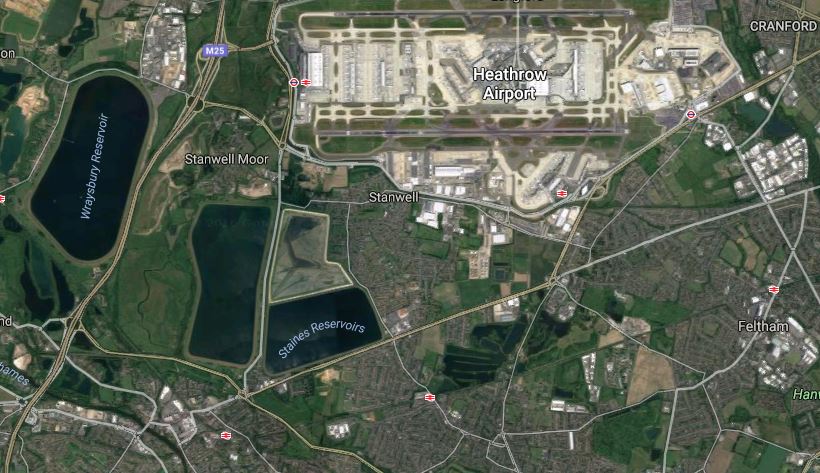
South And South-West Of Heathrow Airport
Note the A30 road going diagonally across the map South of the Airport.
South of this road is a row of three stations; Staines, Ashford and Feltham, which are all on the Waterloo to Reading Line. To the West of Stains, the Staines to Windsor and Eton Line branches away to the North via Wraysbury.
The proposal for the Heathrow Southern Railway envisages.
- A short tunnel into the existing Heathrow Terminal 5 station, which was designed to accept a line from the West
- A rail link alongside the M25 to a junction on the Staines to Windsor and Eton Line just West of the M25.
- A chord at the junction of the Staines to Windsor and Eton Line and the Reading to Waterloo Line to allow trains to go between the Airport and Reading.
- The rail link alongside the M25 would continue South and connect the Airport to Chertsey station on the Chertsey Branch Line. This would allow trains to run between the Airport and Woking.
This Google Map shows where the rail link would go between Terminal 5 and Staines.
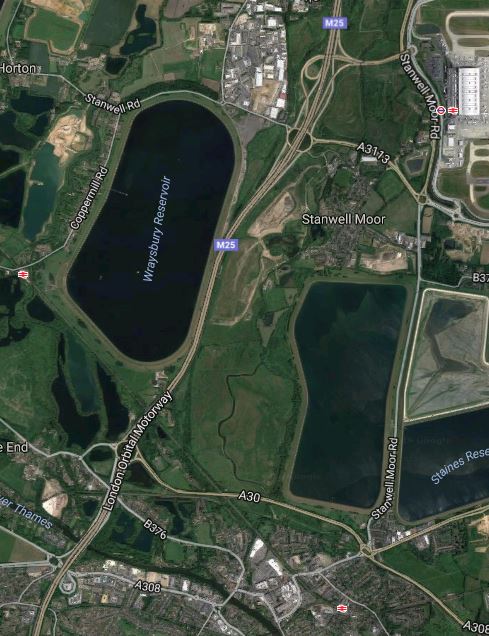
Terminal 5 To Staines
Staines is the station at the South of the map with Wraysbury at the West. \they are joined by the Staines and Windsor and Eton Line, will will have a connection to the Airport.
This Google Map shows Stainesstation and the rail lines in detail.
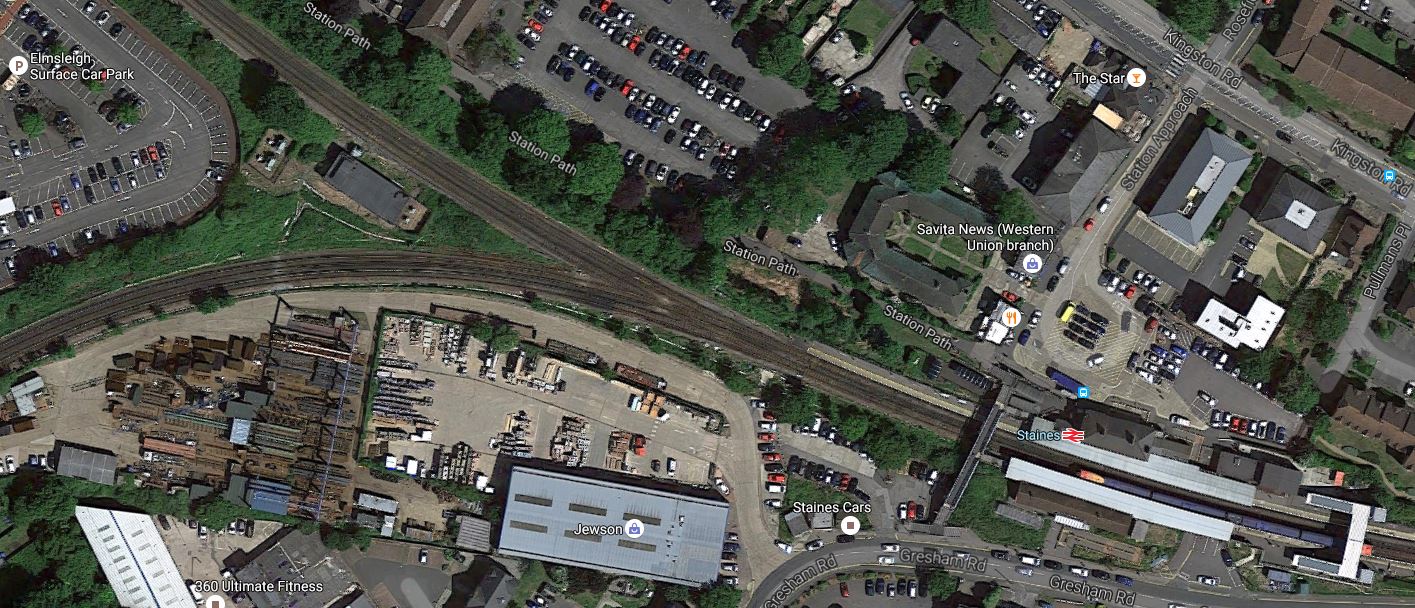
The line to the North West goes to Windsor, whilst the one to the West goes to Reading. The line to the East goes to Waterloo via Feltham, Twickenham and Clapham Junction.
It might be tight to create a chord between the Windsor and Reading Lines, but Heathrow Southern Railway believe there is room for a bay platform at Staines station. They also propose, that Staines could be another Crossrail destination.
This Google Map shows the route to connect the rail link to Chertsey station.
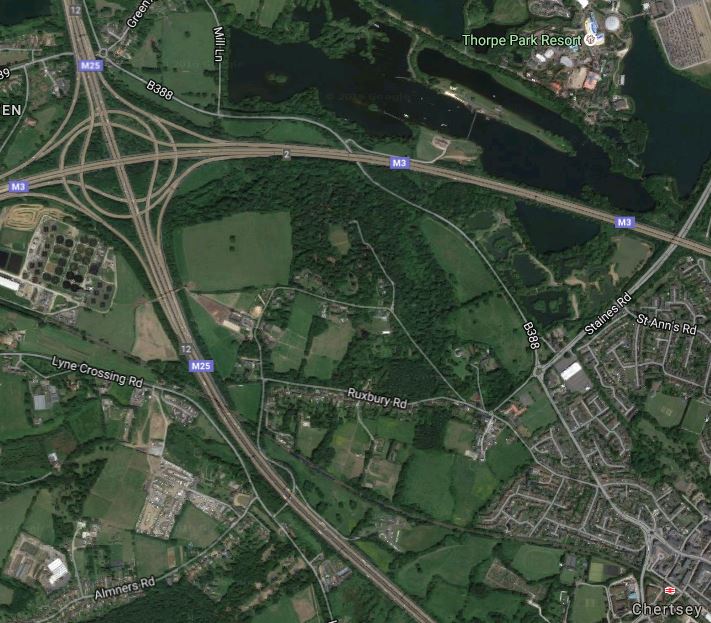
Chertsey Station And The M25
Chertsey station is in the South-East corner of the map, with Thorpe Park Resort in the North East corner.
The junction between the rail link from Terminal 5 and the Chertsey Branch, would probably be close to the motorway.
So why do I like this proposal?
The main work needed for the core of the railway is as follows.
- Create a rail tunnel into the existing station at Heathrow Terminal 5.
- Build a railway alongside the M25 to connect to existing rail lines to Waterloo, Stains and Woking.
- Update the railways and stations under Heathrow to allow trains to go from Old Oak Common through the Airport and out the other side.
Once the core is complete, a succession of smaller projects would connect the railway to longer distance services at Basingstoke, Clapham Junction, Old Oak Common, Reading and Waterloo stations.
There is a lot to like about the concept.
Construction
These points apply to the construction of the rail link.
- Much of the difficult construction work is probably inside the fence at Heathrow, creating the connection to Terminal 5 station.
- The problems of constructing on this route alongside the motorways, are probably well-known.
- The M25 could even be put in a tunnel, with the railway on top.
- The map in Modern Railways shows no tunnels except for the one to Terminal 5 and just three rail bridges.
- I doubt there would be much demolition of properties.
- Land take inside built-up areas would be minimal, with junctions outside of the towns and villages.
I feel that with good project management the railway could be built without disrupting existing rail services or road traffic.
Electrification
The route would be electrified with the following points applying.
- Heathrow Terminal 5 station is electrified at 25 KVAC overhead.
- Most of the lines South-West of Heathrow are electrified using 750 VDC third-rail.
- Modern trains like Crossrail’s Class 345 trains and Thameslink’s Class 700 trains can handle both systems.
- There is no electrification of existing railways.
- Electrification of any new railway could use third-rail, to be less visually intrusive.
I doubt there will be any problems with electrification.
Connectivity
The new link provides excellent connectivity to places like Basingstoke, Clapham Junction, Guildford, Paddington, Reading, Richmond, Waterloo, Windsor and Woking.
It also has excellent links to these services.
- Crossrail at Heathrow, Old Oak Common and Paddington.
- South Western Railway at Guildford, Waterloo and Woking.
- Chiltern and HS2 at Old Oak Common.
- Great Western Railway at Paddington and Reading.
The Heathrow Southern Railway is so much more than a link into Heathrow from the South and West.
South Western Railway
The new franchise for London and the South-West would appear to be ambitious and it has already decided to change its rather assorted suburban trains for a new fleet of Class 701 trains.
These new trains are from the same Aventra family as Crossrail’s Class 345 trains.
South Western Railway also has a common part-owner with Great Western Railway, which must mean that co-operation between the two operators is more likely, than a turf war about who runs services into Heathrow.
In some ways though, one of the biggest strengths of the Heathrow Southern Railway, is that it could take the pressure of the South West Main Line and allow some services to use Paddington instead of Waterloo as a terminus.
Heathrow’s Plans
Heathrow may get a third runway, but their plans do envisage a complete rebuilding of the airport into two main terminals; East and West, which would be served by all trains.
Whatever they do, one of Heathrow’s biggest problems is the pollution caused by the road traffic servicing the airport.
A comprehensive rail network stretching East and West of the airport, must surely help in reducing this pollution, by bringing more passengers, works and freight into the airport on electric trains.
Funding
Because of the possible returns on capital, I suspect that it would be very easy to finance privately.
Conclusion
It is definitely one of those projects, where by creating something a bit out of the ordinary, leads to lots of other worthwhile things.
 The Anonymous Widower