Those Canny Yorkshire Folk Seem To be Thinking About More Stations
Different parts of the country seem to have there own preferred ways of expanding their transport network.
Only London can probably afford large projects like Crossrail or Crossrail 2, but several cities like Manchester, Cardiff and Nottingham can make good cases for sensible projects that cost from say a hundred million pounds up to a billion. Projects in this category would include.
Croxley Rail Link to Watford – £230 million – Click for details
Midland Metro extension to New Street – £127 million – Click for details
North West Electrification – £422 million – Click for details
Nottingham Express Transit – Phase 2 – £570 million – Click for details
Valley Lines Electrification – £400 million – Click for details
The costs I have quoted are probably only indicative, as Network Rail have had their problems lately. But I just wanted to show that trains and trams don’t come cheap.
Underneath these large and medium sized projects, there are a large assortment that generally get chosen to suit the problems of an area. For example.
1. East Anglia got the Bacon Factory Curve at Ipswich to sort out delays to all traffic caused by the large number of freight trains going into and out of the Port of Felixstowe.
2. Lancashire got the Todmorden Curve to allow direct trains from Blackburn and Burnley to Manchester Victoria.
3.Warwickshire received funds to develop new stations at Coventry Arena, Bermuda Park and Kenilworth.
So as I said at the start of this post different areas of the country see their own priorities and attempt to get schemes funded.
Sheffield and Manchester for example might promote schemes based on their tram networks, and Leeds and Liverpool might want to expand their successful rail networks.
It is interesting to look at this page, which is a list of current projects on the West Yorkshire Metro.
Three new stations; Apperley Bridge, Kirkstall Forge and Low Moor are either under construction or could be so in the next year or so.
Improvements at major stations in the area are listed and there is even a project to identify places for new stations.
So as I said in the title of this post, it looks like West Yorkshire is hoping new and improved stations will be a successful, practical and affordable way of bringing more traffic to the network.
They do have a project on the possible introduction of tram-trains in the City. The web site just says this.
Development of a tram-train network for the Leeds city region would be through conversion of existing heavy rail routes and construction of some on-street alignments.
Further consideration will be given following the outcome of a trial in South Yorkshire.
How sensible!
Like many other cities and areas are probably doing, to wait for the trial between Sheffield and Rotherham to show if tram-trains are viable in the UK, is a very good idea.
If what I have seen in Germany is any indication of how the Vossloh tram-trains are introduced and perform, I suspect we’ll be seeing quite a few of their UK variant, the Class 399 tram-train.
Walking Cycle Superhighway Route 1 From My House To Liverpool University
As I did this in an hour, it wasn’t the University in Liverpool, but their London Campus in Finsbury Square to which I walked along Cycle Superhighway Route 1.
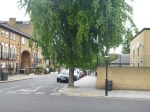
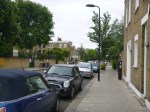

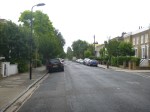
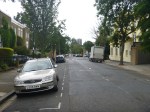


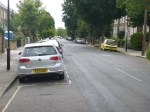

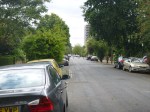
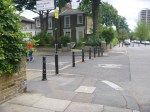
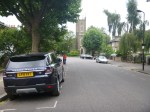
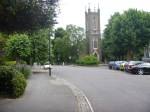


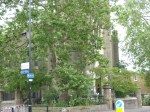

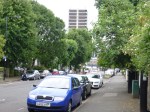

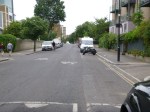


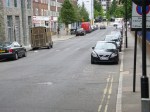

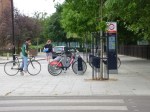


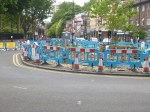


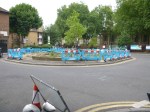


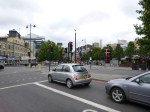
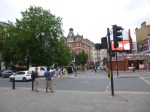
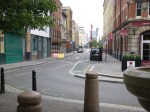
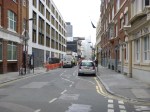
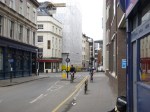

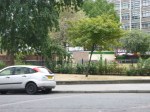

I joined the Sperhighway at the junction of Culford and Tottenham Roads about a hundred metres from my house.
Note that the pictures are generally in order going North to South, with some pictures taken looking back.
I think it is true to say that it is a pretty good cycling route, which from Dalston to the City is pretty flat, with very little cross traffic. I think that the major junctions will be light-controlled.
I do hope they put bike hire stations all along the route.
My First Pork Pie In Almost Twenty Years
It is just a couple of years short of twenty years since I was diagnosed as a coeliac and I have been gluten-free ever since.
Yesterday, I found some mini gluten free pork pies in Marks and Spencer.
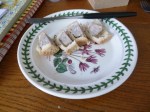



The two of the four I’ve eaten were small and perfectly formed. They didn’t taste half bad either.
Should London Allow All Doors Entry To Buses?
London is unique in the United Kingdom, in that nearly all of the buses have at least two doors.
The standard London buses have a front entrance and a middle exit, which gives the advantage of separating those getting on the bus and those getting off. In addition as the wheelchair ramp is under the middle door, loading and unloading wheelchair-bound passengers is a much less disruptive and much more efficient process.
Last football season in Reading, the bus had to be unloaded to get a wheelchair and its passenger on-board. It delayed the bus by about five minutes. Some fans were getting angry and started a chorus of “Why Are We Waiting”
In contrast in London, I saw an incident, where a passenger in a wheelchair needed to get on and the wheelchair space was full of babies in buggies. The ramp was put down, three buggies were immediately unloaded with no fuss, the wheelchair was pushed in and then two of the buggies were slotted in. The third was folded and carried on. It was all very civilised and in total contrast to the Reading incident. Effectively, the ramp and the pavement creates a very large lobby, which makes it easy for the wheelchair space to be rearranged. In my many trips on London buses, I’ve never seen a problem around the wheelchair bay.
But the biggest argument for a separate entrance and exit bus, was put to me by a bus driver and union rep, I met on a bus in Manchester. He said that because London buses separate entrance and exit, this pushed the low-life away from the driver and they don’t try and steal his money. London buses now don’t accept money and other drivers from places like Scotland and Liverpool have told me they want cashless buses as it cuts attacks on staff.
Additionally in London, we have the three-door Routemasters with an extra door at the rear. All doors have places to touch in with your contactless card, with one each side of the middle door.
Rarely do passengers get in at the two rear doors and not touch-in. If they do, they are often reminded by other passengers, with a knowing look.
Recently, I was at Kings Cross and two buses that get me near my house turned up at the same time; a two-door 476 and a three-door Routemaster running on route 73.
The 476 was in front and empty, but I took the 73, as I felt because it loads and unloads more quickly, it would get me home sooner.
It did! Perfectly illustrating the principle that more doors make a bus go faster.
There is probably an equal split of the type of the bus I can get home from the Angel and I feel that I’m not alone in choosing a New Routemaster if one is following a standard two-door bus. Baby buggy pushers also seem to wait, as it must be much easier to get in the middle door of a new Routemaster.
|As we are well-educated on how to use the buses here in Hackney, I wonder what would happen, if London’s two-door buses allowed entry through the middle door, by putting ticket readers at the door.
Having watched the behaviour of passengers on New Routemasters for quite a few years now, I think it would be worthwhile to try it as an experiment in certain areas of the capital.
We might find it increased the capacity and speed of London’s buses.
 The Anonymous Widower