The New Northampton Station
Surely, a town trying to sell itself as a town to both develop and build cutting-edge products, needs a modrn gateway to the world.
Over the last couple of years, Northampton station has been rebuilt and it is now a superb gateway to the town.
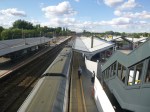
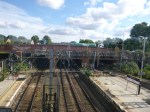


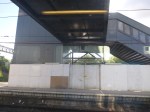
When the platforms and stairs have been finished, it’ll be one of the best medium-sized stations in the country.
Redditch Station
Redditch station is a small station, at the end of the mainly single-track Redditch Branch of the Cross-City Line in Birmingham.
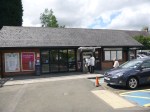
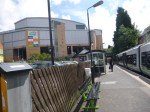

I had hoped to find a cafe close, but there was nothing obvious, so I got back on the Class 323 Train and returned to Birmingham.
Redditch doesn’t quite get the service of say West Croydon on the Overground of four five-car trains an hour, but it does get three three-car trains every hour, which is better than many places in the UK and the wider world.
I would think that service levels greater than this would need another platform and complete doubling of the branch to Barnt Green. This Google Map shows that there is little space for another platform.

Redditch Station
As the post about Bromsgrove station showed, the Cross-City Line is adding four much-needed platforms at Bromsrove, just a few miles away.
So could we be seeing three trains an hour to each destination?
But I just get the feeling that some four-car trains might be needed after one trip in the peak.
Alvechurch Station
The Redditch Branch of the Cross-City Line in Birmingham has recently been upgraded, with a major rebuild at Alvechurch station. Wikipedia says this about the upgrade.
The section of the Cross-City Line between Barnt Green and Redditch was single track. Network Rail planned to increase capacity by adding a passing loop and second platform at Alvechurch. This was also to include a footbridge and lifts to reach the new platform. This was to allow the service to be increased from two to three trains per hour.
These are a few pictures of the new station.

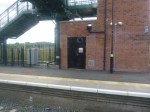
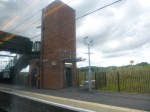
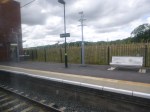
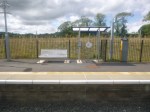
The improvements at Alvechurch very much show how one thing can lead to another.
But as I can testify, the result gives three trains an hour to Reddith and although I didn’t alight there a full step-free station at Alvechurch.
Bromsgrove Station
Bromsgrove station is unusual in that it is at the bottom of the historic Lickey Incline, which for in railway terms is a very steep hill. Wikipedia says this about the station.
Bromsgrove is only one of four stations in the UK which get annual usage of over half a million journeys with just an hourly service (Blackrod, Hartlepool and Inverurie being the other 3 stations).
So Network Rail are rebuilding the station and electrifying the Lickey Incline to add Bromsgrove to Birmingham’s Cross-City Line as described in this section in Wikipedia. These pictures show the current station and the works for the new one.
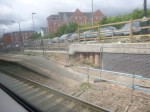
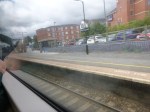
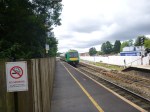
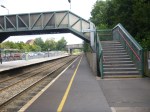
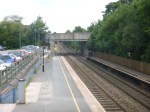
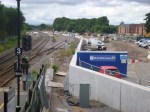
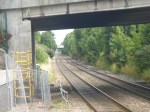
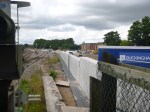
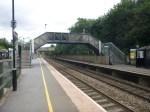
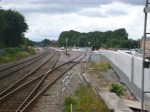
There will be four platforms and a large car-park, so obviously they are expecting an increase in passenger numbers. This Google Map shows the station and its relationship to the town.
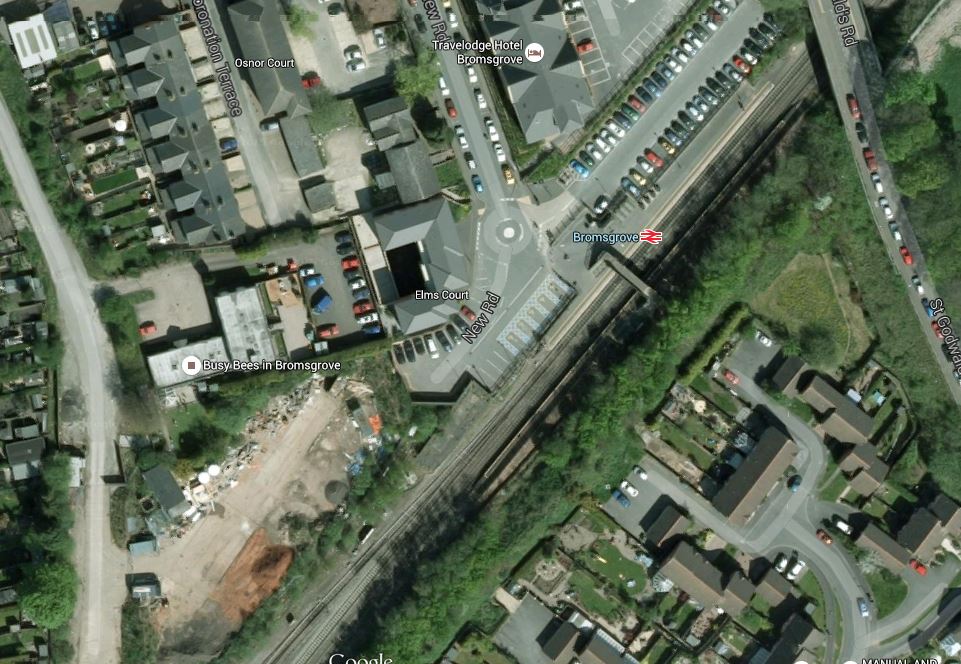
Bromsgrove Station
I can’t visit Bromsgrove station without commenting on the Lickey Incline, which I talked about in Up And Down The Lickey Incline. The views are pretty good as you look out over the Worcestershire countryside.
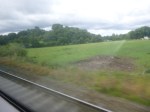
Going down, I felt that the train was very quiet, as the driver was relying on Newton’s friend, but going back to Birmingham, the underfloor diesel engines on my fully-loaded Class 172 train, were working very hard.
My train had taken the Lickey Incline from a standing start at Bromsgrove station, unlike the trains going straight through, which seemed to use the extra momentum of higher speed to climb the slope as easily as possible.
Sadly, I wasn’t treated to a show, as a banking engine pushed a heavy freight train up the hill.
Along The Cross-City Line
The Cross-City Line stretches across Birmingham between Lichfield Trent Valley and Redditch stations, calling in the city centre at New Street. There pictures are from Wednesday’s trip from Lichfield into the centre.


And these are some images from between New Street and Redditch.
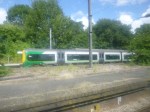


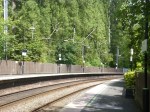
The line has the feel and in some cases look of the London Overground, except that a lot of the stations were obviously built using a kit of standard parts.
The Cross-City Line has an advantage that a lot of the London Overground would like – Space and platforms long enough for more than six carriages.
If I have a criticism of the Cross-City Line, it is that it doesn’t have enough stations in the city centre, with too much reliance on the busy New Street. As the line passes underneath Moor Street and through important areas east and west of the major station, surely a couple of extra stations would make the line much more customer-friendly. Especially, if it could link up better with the Midland Metro.
, The frequency is higher than the London Overground’s four trains an hour, which is becoming the accepted lower limit for a Metro service.
Camp Hill Line
There are aspirations to incorporate the Camp Hill Line into the system, to effectively give another East-West route, south of the city centre. With the West Midlands getting responsibility for transport in the next few years, this will happen. But if you look at Birmingham’s rail lines, history says, it might not be done in the obvious way, but in something much better.
According to Wikipedia, the Council is talking about a three trains per hour service between reopened platforms at Kings Norton and Moor Street.
Without doubt in Germany, this service would be operated by tram-trains, which on arriving at Moor Street would join the Midland Metro. This Google Map shows Moor Street station.
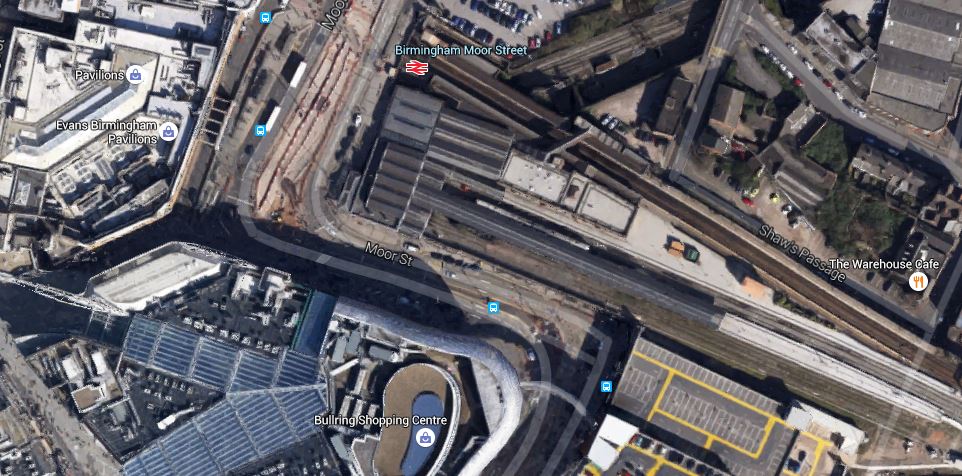
Could The Metro Squeeze Through Here?
It is a tight area, but then so it was at Snow Hill and they have got the Midland Metro through that concrete jungle.
Sutton Park Line
The Sutton Park Line is another aspiration of the authorities for opening as a passenger route between Rugeley and Water Orton. At its northern end, it will connect to the route between Rugeley and Walsall, which is currently being electrified and at the southern, it will connect to the route between New Street and Nuneaton.
The line also crosses the Cross-City Line at Sutton Coldfield. This map show the two-level crossing.
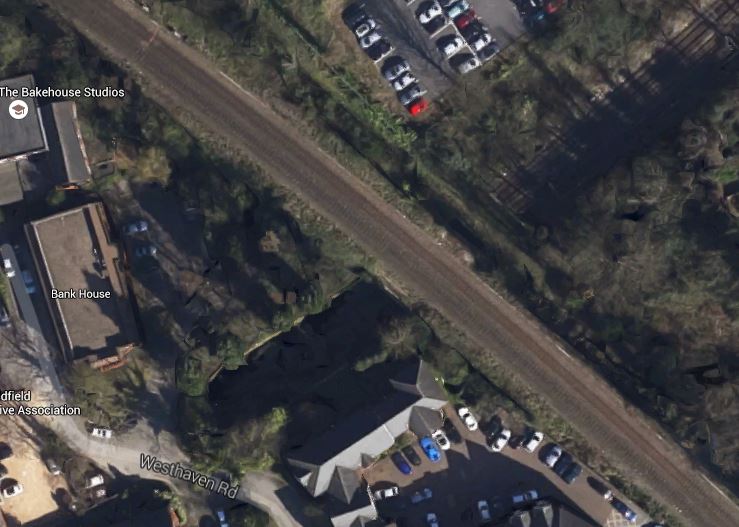
Sutton Park And Cross-City Lines
So is there scope for a new interchange station here. Only traffic statistics will know.
But above all the future for the Cross-City Line must be very bright, even if the direction of expansion has yet to be decided.
The Canals Of Birmingham
My Premier Inn was on the Canal Side and I took these pictures as I walked up back to the hotel after breakfast in Carluccio’s in Brindley Place.

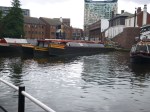
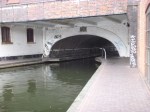
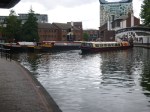
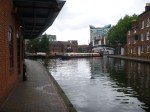
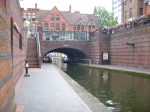
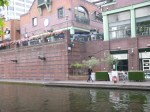

Unfortunately, there wasn’t a canal entrance to the hotel, but it wasn’t too far to get between the two. I suspect, they didn’t want to have to fish drunken guests out of the canal.
Canals are important to Birmingham, as this section in Wikipedia says. It says this.
However, Birmingham is at the hub of the country’s canal network. There are 35 miles (56 km) of canals within the city, of which most are navigable. Birmingham is often described as having more miles of canal than Venice. This is technically correct (Venice has 26 miles). However, Birmingham is far larger than Venice, so the latter has a far higher concentration of canals; and the type of waterway is very different. Counting water volume and taking into account depth measurements, Birmingham has more cubic meters of water pass through its canals than any other city in the world.
Birmingham is certainly trying to use the canals creatively, as the pictures show.
And according to this article in the Wolverhampton Express and Star, there are even otters in the canals, who see the ciy’s garden fish-ponds as a source of fresh fish!
Walking The Contours In Birmingham City Centre
I tend to walk the contours, when I walk. This means you tend to walk on the level and you often only have one stiff uphill section when you feel you can tackle it.
Birmingham is on a hill with the cathedral on the top. Now that I know the city better, if I’m walking across the city, I might walk towards the cathedral, as although some of the route will be uphill, as I’m probably going on my way from any of the three stations at Moor Street, New Street and Snow Hill and it will be downhill all the way from the cathedral. This is a Google Map of Birmingham city centre.
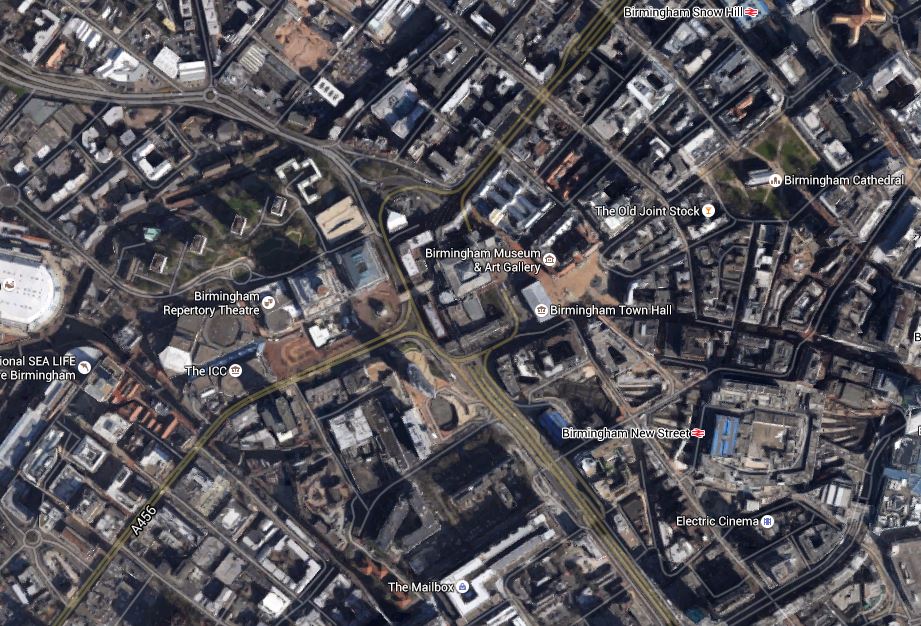
Birmingham City Centre
The canal behind the hotel runs South-Esterly from the Sea Life Centre.
My plan when I left the hotel in the morning was fairly simple. It was to walk down the hill and then walk across to New Street station, which is the other side of the dual-carriageway road, hoping that most of the route was flat. Once at the station, I would buy my West Midlands Day Ranger ticket and my paper and then walk up the hill to Carluccio’s for some breakfast. After breakfast, when the Museum opened, I would would go and see the Staffordshire hoard. I tok these pictures as I walked.

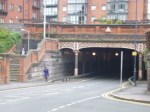
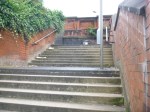

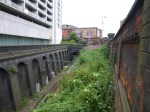

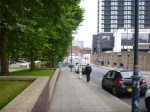
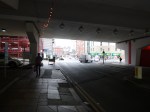
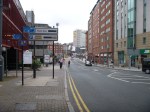
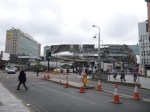

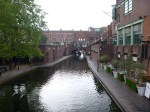
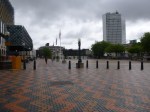

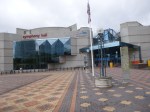


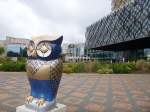


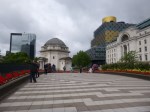
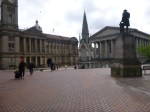

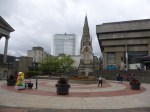
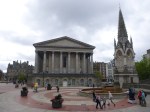





Very little of the walk was uphill. In fact some parts like through the ICC, were actually inside.
I think one of the troubles Birmingham has is that the road layout was determined in the 1960s, when the powers that be felt that everybody would have a car and would want to drive it into the city centre.
Now that the Midland Metro is coming and this will go from New Street Station, up to the Town Hall and then past Centenary Square and Brindley Place on its way to Five Ways, the priorities are all different. The tram route will give people two ways from New Street to get up the slight hill to the axis of the city running from Brindley Place through Centenary Square, past the Town Hall and the Museum to the Cathedral. Someone has thought out how the tram can benefit Birmingham city centre.
Incidentally, I do hope passengers don’t have to buy tickets on the tram by then, as they do now. I will celebrate with joy, when I enter a tram or bus, somewhere in the UK outside of London, by just tapping in with my contactless bank card.
It’s not paying my fare that I object to, it’s having to give over money and get a flimsy piece of paper in return. Drivers on the whole think cash in unsafe! For them! What’s wrong with tapping my bank card on a reader?
Incidentally, I think that the Cross-City Line crossed under my walk by my hotel. Why does it not have more stops in the city centre? The building that is the Nitenite hotel, should have been built over the railway with a station underneath. It certainly would be nowadays.
 The Anonymous Widower