The Steventon Bridge Problem On The Great Western Railway Electrification
Roger Ford in an article in the April 2016 Edition of Modern Railways, which is entitled GWEP Target Dates And Costs, discusses some of the problems of the electrification.
In one section he talks about the problems caused by the Grade II Listed Steventon Bridge.
This is a picture I took of the bridge from an InterCity 125
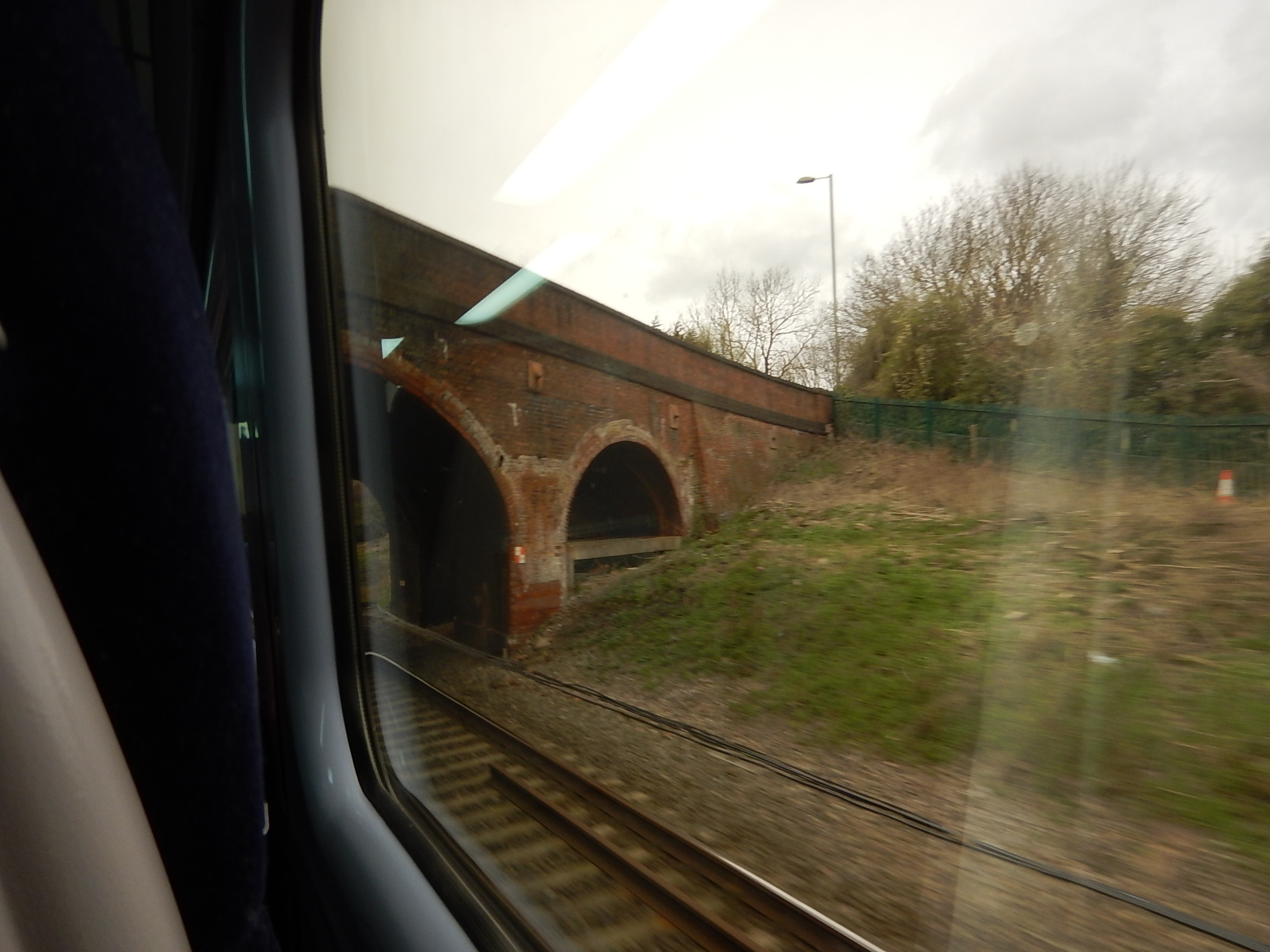
Steventon Bridge
Not the best, but it shows the design of the bridge.
This Google Map shows the Great Western Main Line, as it passes just to the south of the village of Steventon in Oxfordshire.
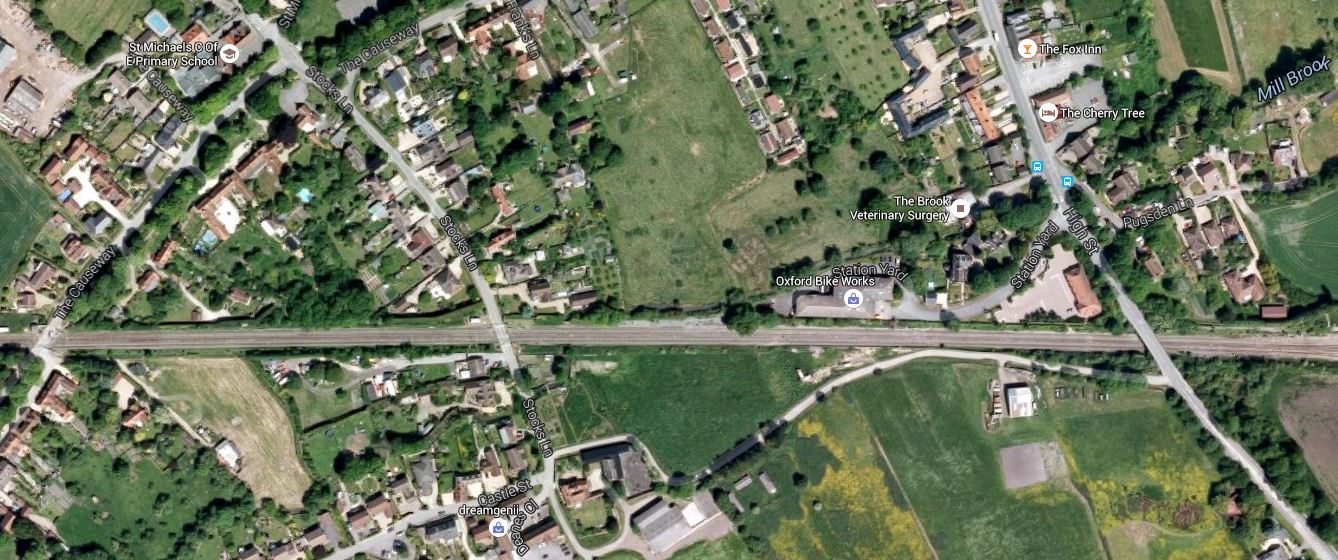
GWML Through Steventon
The bridge is on the Easternmost crossing of the railway, with the other two crossings being level crossings.
Roger explains the problem, which is about putting the overhead electric wires under the bridge.
The overhead wires have to be at maximum height over the level crossings and this means to get the wires under the bridge, they have to dip sharply. This means that excessive wear is caused to the contact wire.
It would appear from the article, that Network Rail are still searching for an acceptable solution.
At least it would appear that one of the level crossings is going to be closed, which could ease matters a shade.
But will the locals put up a fight as Mark Whitby has at the Ordsall Curve?
This article in the Oxford Mail is entitled Demolition of Steventon rail bridge on hold after MP intervention.
Some of the comments are priceless!
My view has a touch of the Philistine about it!
We have thousands of bridges like this and we don’t need to keep them all!
So perhaps we should save the best, but some that would cost too much to keep, should be replaced with modern bridges.
In the case of the Steventon Bridge, if the level crossings didn’t exist, it would appear that the tracks could be lowered under the bridge to give the required headroom.
As level crossings are one of the major causes of death on the railways, we shouldn’t stop until all are eliminated.
It would appear from this document, that one of the level crossings is going to be closed and a height limit of five metres placed on the other.
I think that the ultimate solution for this sort of problem will be technical.
In one of their documents about the use of batteries on trains, Network Rail or Bombardier talk about batteries being used to assist trains over deliberate gaps in overhead wires or third rail.
Third rail generally is not a problem and in the UK, it regularly changes sides and allows the momentum of the train to bridge any gap.
What is needed is a pantograph system, that can be raised to and lowered from the overhead wire with the train at full speed. I don’t know whether this is possible, but I suspect that every other country in the world would just demolish the bridge. I did find some research on the subject on the RSSB web site, which states that SNCF raise pantographs at 225 mph, Deutsche Bahn at 185 mph and Eurostar at 170 mph.
So it is possible!
As a trained Control Engineer, who spent a lot of time in the 1960s simulating dynamic systems, I believe that a system could be designed to lower and raise the pantograph before and after the difficult section.
I suspect that one of the problems here, is that the Class 800 trains that will work this line, were designed in Japan. But this section in Wikipedia about level crossings in Japan, would seem to indicate that the Japanese have a serious problem with level crossings.
 The Anonymous Widower