The West-Facing Bay Platforms At Reading Station
Reading station has three west-facing bay platforms, numbered 1, 2 and 3.
They are used as follows.
- Platforms 1 and 2 for local services to Basingstoke, Newbury and Bedwyn.
- Platform 3 for Cross Country reversing trains.
Whilst I was at Reading yesterday, a Cross Country train reversed in a higher numbered platform.
These are some pictures of the bay platforms.
The View From Above
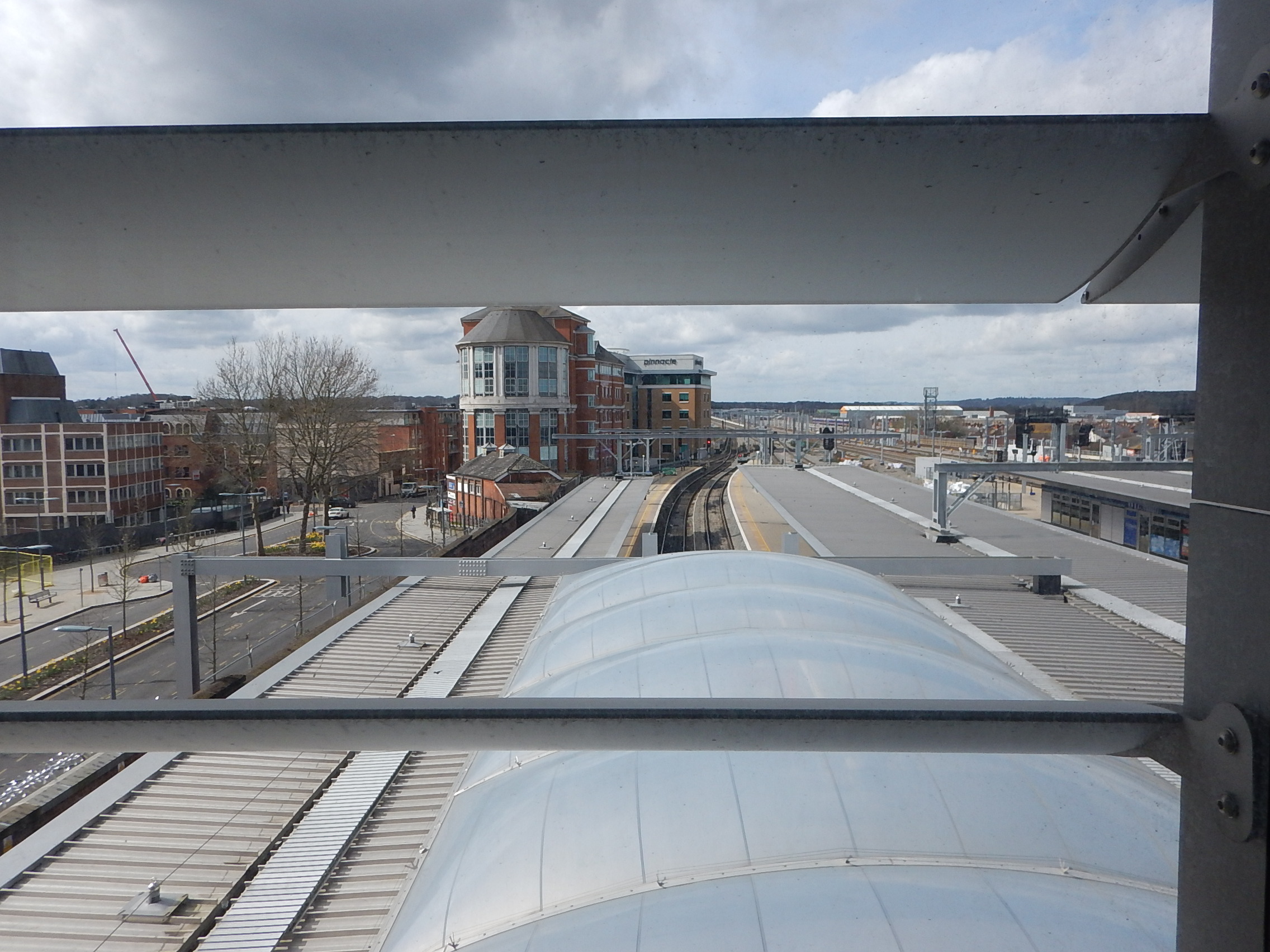
The Layout Of Bay Platforms 1, 2 and 3 At Reading Station
Note that the electrification gantries are in place across the three tracks.
The Platforms From Ground Level
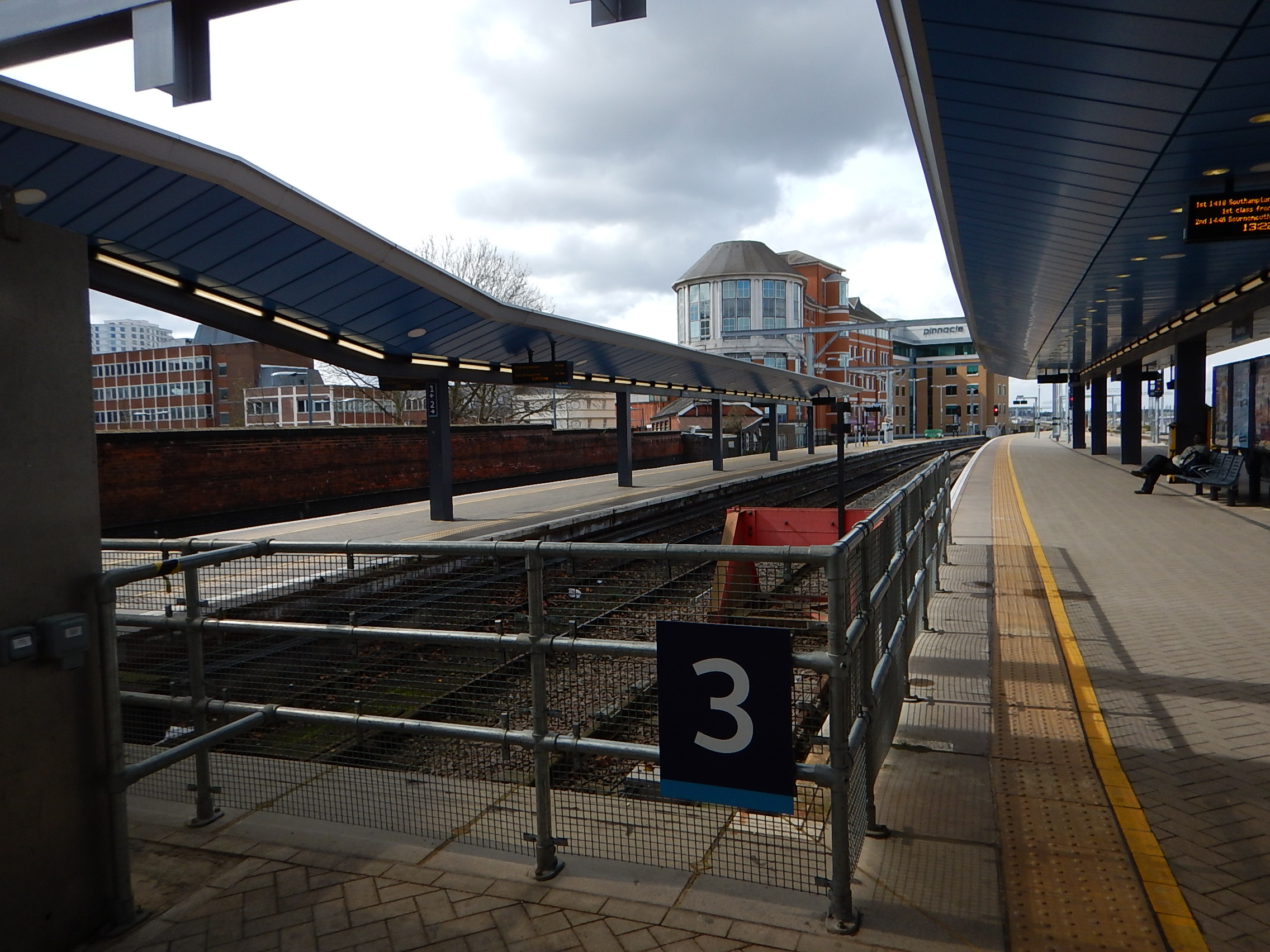
Platforms 1, 2 and 3 At Reading Station
Note how good the access is to the platforms. To the right of Platform 3, is platform 7, which is used for Down trains for the Berks and Hants route and for reversing Cross Country services.
So passengers arriving on a Cross Country train from say Manchester to Bournemouth or Newcastle to Southampton train on Platform 7 have these choices if they need to change trains.
- They could walk across from their train to a local service from platforms 1, 2 or 3.
- They could walk to the other end of the platform and get a local train from the east-facing platforms 4, 5 or 6.
- They could use lifts or escalators to cross the massive bridge to get a train on the Great Western Main Line to London or the West.
- They could also walk across to local services or in future, Crossrail to London.
And of course, they could walk out of the nearby station entrance and get a bus, taxi or their own transport.
Is there a station in the UK, where changing trains comes with so less hassle?
Ready For The Electrification
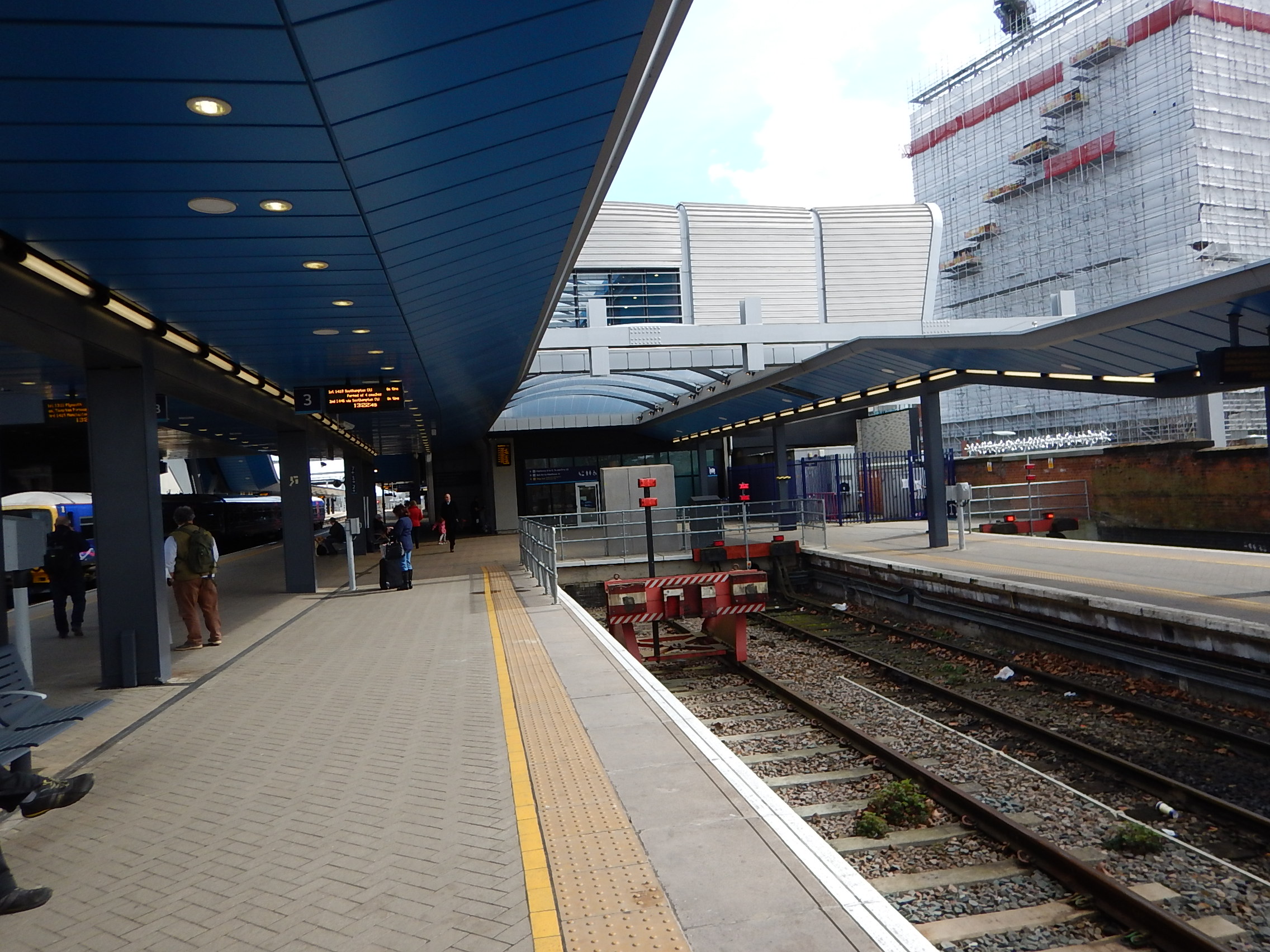
Looking Back At The Buffer End Of The Bay Platforms 1, 2 And 3 At Reading Station
Note that the gantries seem to have been designed into the station and are ready for the wires, with a nice secure steel plate to which to bolt them.
I can’t see the Heritage Taliban arguing about this design of catenery.
The Length Of The Platforms
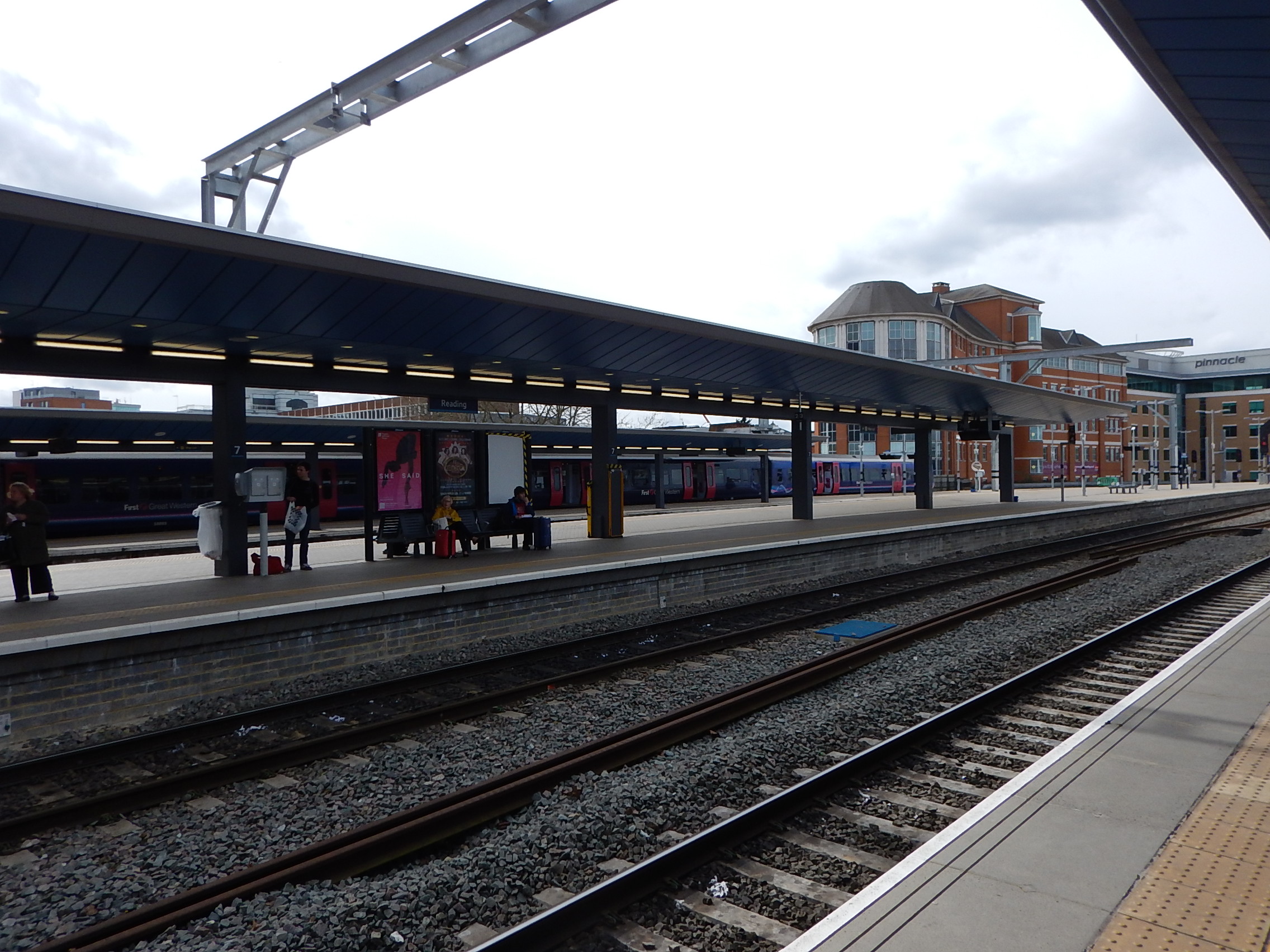
Platform Length Of The Bay Platforms 1, 2 And 3 At Reading Station
Note the three-car diesel multiple unit in the platform. I haven’t measured the platform, but I think they are long enough for a five car Class 800 train.
Future Use Of The Bay Platforms
At I said earlier the three platforms are used for local services to Basingstoke, Newbury and Bedwyn and reversing Cross Country trains., but there are two major purposes for which the bay platforms might be used.
The Test Track for Class 800 Trains
When the electric track between Didcot and Reading has been energised, it will be used as a test track for the new Class 800 trains. This article from the Witney Gazette gives more details.
The first three trains are due to be shipped to the UK early next year to begin an extensive test programme, which will include high-speed running on the line between Didcot and Reading once the installation of overhead electric power cables is completed later next year.
Roger Ford in the April 2016 Edition of Modern Railways said this.
Energisation for test running is now scheduled for September this year.
So will one of the bay platforms be used to reverse the train?
I’ve no idea! But the showman in me, would certainly do it, just for the publicity it would generate!
On a serious side, tests could also be performed on the train/platform/passenger interfaces.
Charging Platforms for IPEMUs
Great Western Railway would probably want to get their Class 387 trains into revenue service as soon as possible.
In the September 2015 edition of Modern Railways, there is an article entitled Class 387s Could Be Battery Powered. This is said.
Delivery as IPEMUs would allow EMUs to make use of as much wiring as is available (and batteries beyond) while electrification pushes ahead under the delayed scheme, and in the longer term would allow units to run on sections not yet authorised for electrification, such as Newbury to Bedwyn. The use of IPEMUs might also hasten the cascade of Class 16x units to the west of the franchise.
To run IPEMUs from Reading to Bedwyn or Basingstoke, would need them to be charged.
These bay platforms would be ideal for charging the trains and would mean that Basingstoke, Bedwyn and Newbury would get electric shuttles to Reading.
Conclusion
The team that designed Reading station, deserve a few gold stars.
No comments yet.
 The Anonymous Widower
Leave a comment