Football In The Fog
Surprisingly, the strongest team on the pitch; the fog, didn’t win this game.


The guy next to me was a teacher, whose duties included taking games, Never having been any good at ball games, I wouldn’t know, but he felt it was very difficult out there.
Strangely, Ipswich seemed to improve, when they substituted the blonde-harired Williams and two other lighter-skinned players, with three of a much darker hue in Bru, McGoldrick and Ward.
Perhaps, they were more difficult to pick out. After all, McGoldrick used his head to create one goal and score the other.
Passing The Ordsall Chord Site
The first set of pictures were taken on Friday between Deansgate and Salford Cresent stations show the current state of the bridge across the River Irwell.


I took these pictures were taken on the Saturday, as my train from Liverpool went between Eccles and Manchester Victoria stations and then from a second train from Manchester Victoria on its way to Wigan via Salford Central and Salford C resent stations.
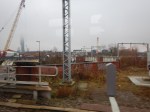
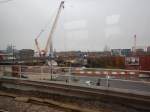


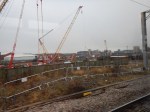
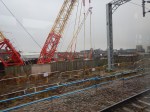

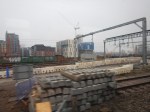
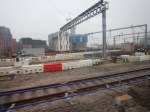

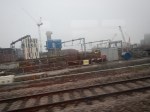
Note.
- The first train was the 11:20 from Liverpool Lime Street to Manchester Victoria.
- The second train was from Manchester Victoria to Wigan Wallgate.
- The biggest crane on the site has a capacity of 1,350 tinnes and is the largest mobile crane in the country.
I’ll be going back, when it all reopens to have a look.
Probably the best way to get the pictures is to go to Manchester on a sunny day, buy a Lancashire Day Ranger ticket and constatntly shuttle back and forwards across the various lines.
Bidston Station And The Borderlands Line
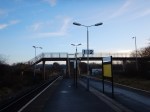
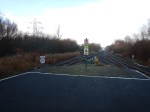
Whilst in Liverpool, I took the Wirral Line to Bidston station, where the Borderlands Line to Wrexham Central station connects to the Merseyrail third-rail network.
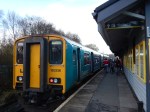


This Google Map shows the location of the station.
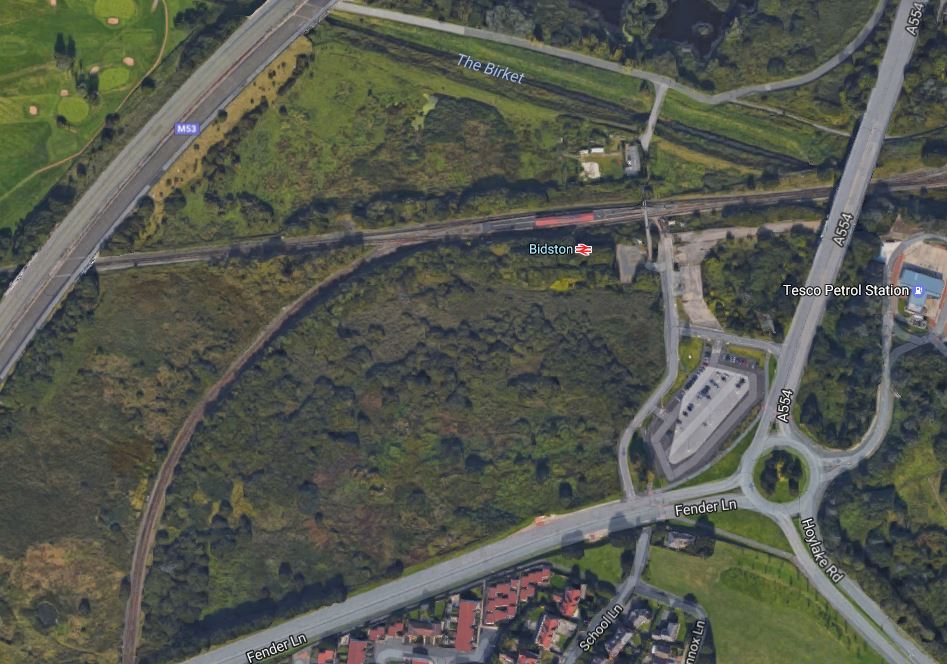
Bidston Station
Some things surprised me at Bidston station.
- The station had the feeling of a rural junction in deepest Lincolnshire or Devon, rather than one a few miles from the centre of one of the UK’s biggest cities.
- When the train arrived from Wrexham it was much busier than I expected.
- The junction between the two lines was laid out in lots of space.
- The state of the station, which considering its location was very good with a large waiting room.
I could also understand, why various bodies say that the Borderlans Line could be run by trains with an IPEMU capability or to put it simply – on-board energy storage or batteries. Wikipedia says this under Proposed Battery Trains for the line.
A trial of a converted Electrostar train using energy from overhead wires and batteries when on non-electrified sections of track was undertaken in January and February 2015 on the Mayflower line. The train can travel up to 60 miles on energy stored in the batteries also recharging the batteries via the overhead-wires when on electrified track, at stations and via brake regeneration. A month later in March 2015, the introduction of battery powered trains was proposed for the Borderlands line by Network Rail.
The document suggested that consideration had been given to electrification and to running services further into Birkenhead ceasing termination at Bidston for greater connectivity. However these options were expressed as offering low value for money. They proposed that using battery powered rolling stock precluding full electrification of the line, providing a cheaper method of increasing connectivity into the electrified Birkenhead and Liverpool sections of the Wirral line. From the document:
“In the longer term, potential deployment of rolling stock with the ability to operate on battery power for part of their journey may provide the ability in an affordable manner to improve the service offering between the Wrexham – Bidston route and Liverpool.
Trains could operate on batteries on unelectrified sections of the track and take power from an electric pick-up on the electrified sections. Adoption of these types of trains would preclude full line electrification.
My thoughts on this are as follows.
New Infrastructure
Obviously, I only looked at Bidston station, but it would appear that except for perhaps signalling and electrificastion changes, that the station could accept trains with an IPEMU-capability tomorrow.
For instance, there would need to be electrification for some distance down the Borderlands Line, so that a train arriving from that direction with low batteries, wou;dn’t get stalled, if another train had failed in the station.
I don’t know the answer, but as Merseyrail is an island of third-rail electrification, Merseyrail are probably capable of calling on competent third-rail experts, either in-house or from a regional contractor.
New Stations
Plans exist for new stations on the line.
Whether the line is fully-electrified or served by trains with an IPEMU-capability is irrelevant, with stations probably being designed to be suitable for either.
One suggestion is for a new station at Woodchurch close to Junction 3 of the M53.
This Google Map shows the motorway junction.
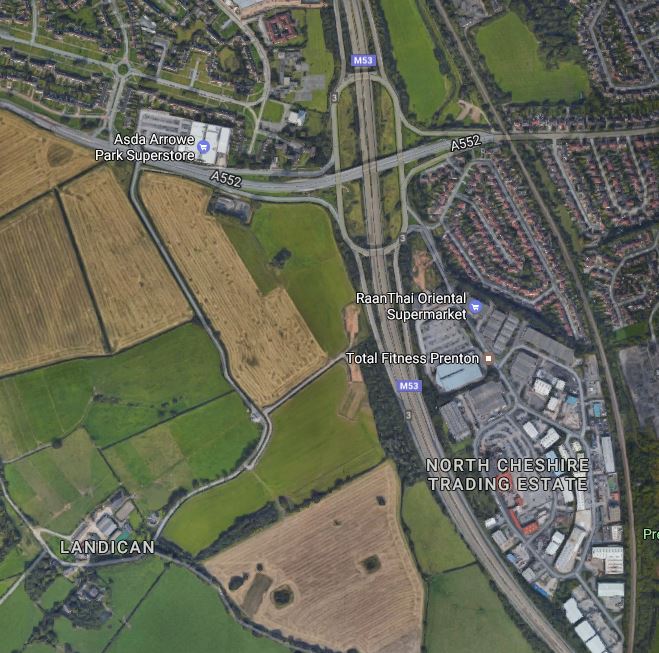
Junction 3 Of The M53
Note how, the Motorway and the Borderlands Line go either side of the North Cheshire Trading Estate.
There is also plans for a station at Deeside Industrial Park, which looks like it could have a railway line already.
Another possibility would be to improve Shotton station, so that it was a genuine interchange between the Borderlands Line and the North Wales Coast Line.
This Google Map shows the area.
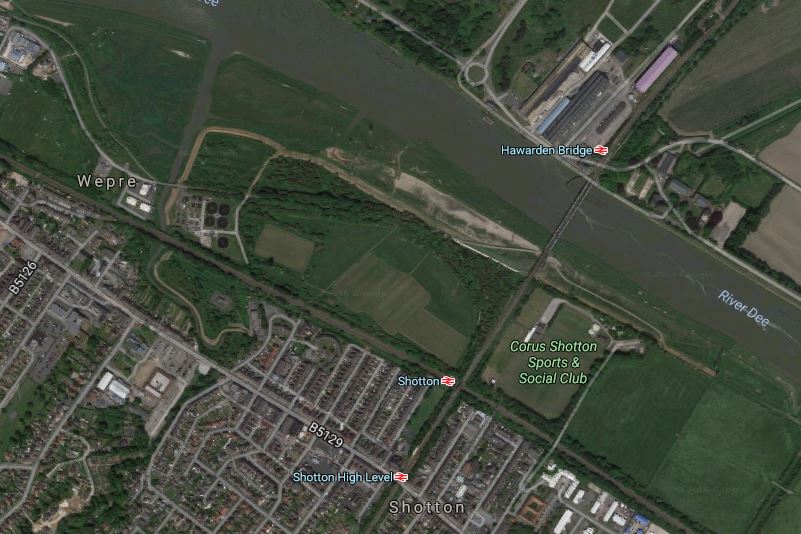
Shotton Stations
Note Hawarden Bridge station on the other side of the River Dee, which is also on the Borderlands Line.
Capacity In Liverpool On The Wirral Line
The single-track loop of the Wirral Line under Liverpool, that serves James Street, Moorfields, Lime Street, Central and James Street agin, is soon to be relaid with new track to go along with its recently-refurbished station, that can handle two three-car Class 508 trains, running as a six-car unit.
With modern signalling, it would probably have a limit of upwards of twenty trains per hour (tph), giving a train under the Mersey in both directions at least every three minutes.
Currently, the service on the Wirral Line includes.
- 4 tph to Chester
- 2 tph to Ellesmere Port
- 4 tph to New Brighton
- 4 tph to West Kirby
Capacity seems to be adjusted to that needed by running a mixture of three and six-car trains.
But there is undoubtedly spare capacity in Liverpool’s loop of stations.
And if more capacity is needed between Birkenhead and Liverpool, then running extra trains to new destinations on the West side of the Mersey is a simple way to increase it.
Wrexham would be an ideal destination, especially if at least two tph were provided on the route.
Freight Issues
There would appear to be a few freight trains, but none of a high frequency.
Wrexham to Liverpool Timings
Currently Wrexham Central to Bidston takes a couple of minutes over the hour. West Kirby trains, also take 34 minutes to go from Bidston round the loop under Liverpool
So this would probably mean that if you got the timings right, you could get from Wrexham Central to Liverpool Lime Street in about eighty minutes.
As Chester to Liverpool Central takes forty-one minutes, eighty minutes is rather slow between Wrexham and Liverpool.
So could electric trains do the route in under the hour?
If the line was fully electrified, judging on the Chester timings, that this is certainly the case.
Trains Needed Between Liverpool And Wrexham
As the round trip to and from Liverpool would probably take two hours, it would appear that two trains would be needed to provide an hourly service, with four trains nbeeded for 2 tph.
As there is a short platform at Wrexham Central station, trains would probably have a maximum length of three-cars.
IPEMU Range
Wrexham Central to Bidston stations, is about thirty miles, so based on Bombardier’s rumoured figures of sixty kilometres a charge, going out and back to Wrexham might be a bit on the long side.
So I wouldn’t be surprised to see the single-track line between Wrexham General and Wrexham Central stations given third-rail electrification, to make sure that trains with an IPEMU-capability can work the line.
If extra stations are added to the Borderlands Line and Shotton station is rebuilt as an interchange with North Wales, I could see that the extra cost of third-rail electrification to Shotton would have a high value.
As Shotton is only about twenty miles from Wrexham, it might be possible to bridge the gap between Shotton and Wrexham using onboard power.
Costs
This is said about electrification costs of the Borderlands Line in Wikipedia.
Network Rail’s conclusion was that full line electrification is only feasible if it could be delivered for less than £100,000 for each km per single track. The twin track line would be £200,000 per line km, giving a total figure of £8.7 million, which is far below the estimate of full line electrification of £66 million. Another consideration is whether a new pattern of service delivers significant net benefits.
The new Stadler trains being purchased for MerseyRail are costing £460 million for 52 trains, according to this article in the Railway Gazette, which works out at about nine million pounds a train.
So if two trains are needed to provide an hourly service to Wrexham, the cost of the extra trains will be significant.
The Railway Gazette article also says this about the trains.
At 99 tonnes, the EMUs will be lighter than the current 105 tonne trains, and energy consumption is expected to be 20% lower, including regenerative braking; options for energy storage are to be studied.
The 750 V DC third-rail EMUs will be capable of conversion to dual-voltage operation for use on 25 kV 50 Hz lines with a view to serving Skelmersdale, Warrington and Wrexham in the longer term.
So I suspect, it’s put up the money and take your choice.
Conclusion
It would certainly be possible to electrify the Borderlands Line either using third-rail or overhead and I’m certain that any prudent transport authority would go for an optimal solution, especially as extending to Wrexhan will need extra trains.
I could see an holistic solution being applied to the Boasderlands Line.
- At least two tph to Wrexham Central station.
- New stations at Beechwood, Deeside Industrial Park and Woodchurch.
- A rebuilt Shotton station.
- Partial third-rail electrification.
- Use of onboard energy storage to power trains on lines without electrification.
As it would be a project, where benefits were to both Merseyside and North Wales, funding would probably have several options.
Undergound Stations In Liverpool
I took these pictures so I would have a record of the underground stations, as they are at the present time.



They are all clean, modern stations, that can handle two Class 507/508 trains, working as a six-car.
The pictures give a good idea of the size of the tunnels, which are 4.70 metres in diameter.
Compare this to other underground railways.
- Crossrail – 6.20 metres.
- Victoria Line – 3.81 metres.
- Northern City Line – 4.90 metres.
- Waterloo and City Line – 3.89 metres.
I would think that like the Northern City Line in London, that they may have the problem that trains need to be specially built for the tunnels.
So would this rule out a train like an Aventra, which has been designed to work in the larger tunnels of Crossrail?
On Liverpool’s Northern Line
I took these pictures on Merseyrail’s Northern Line.


Note.
- Merseyrail have been updating the platforms and step-free access, but usually there is a small step up into the train.
- There are several stations with wide island platforms.
- Compared to the London Overground, there don’t appear to be many coffee stalls on the platforms. Transport for London encourages independent stalls.
- All platforms, that I saw, could handle two three-car Class 507/508 trains, working as a six-car train.
- The Northern Line has various branches and it seemed that the system has been designed to go down one branch and then do a quick change to go up another.
The only thing the line needs is new faster trains.
Currently, journey times are as follows.
- Southport- Hunts Cross – 64 minutes
- Kirkby – Hunts Cross – 44 minutes with a change.
- Ormskirk – Hunts Cross – 72 minutes with a change.
It strikes me,that if trains could get Southport to Hunts Cross in under an hour, this might have knock-on effects, as to the number of trains needed.
The Victoria Line in London has now simplified its diagrams, by removing a few bottlenecks and the outcome is increased frequencies on the line.
I suspect that Merseyrail engineers have been following the Victoria Line works with interest.
At present four trains per hour (tph) go to each of the Northern terminals, with 8 tph terminating at Liverpool Central station and four tph at Hunts Cross station.
Could Liverpool be seeing a Thameslink style service where perhaps twelve or perhaps more tph ran on the core route between Sandhills and Hunts Cross stations?
Twelve tph would need twenty four three-car trains if all round trips could be within an hour, with popular services perhaps run with six-car trains.
Modern trains with a lot of driven axles can do so many more round trips in a day.
 The Anonymous Widower