Every Great Football Team Has A Terry Dyson
The Tottenham Hotspur 1960-61 Double-winning footballer ; Terry Dyson has died and the club has published his obituary.
This is their sub-heading.
The Club is deeply saddened to learn of the passing of Terry Dyson, a key member of Bill Nicholson’s all-conquering team of the early 1960s. He was 91.
These two introductory paragraphs add some more detail.
Famously small in stature at 5 ft 3 ins, Terry was the man for the big occasion.
He scored in the FA Cup Final as we clinched the ‘double’ of league championship and FA Cup in 1961 and produced arguably his best display in the 1963 European Cup Winners’ Cup Final, when he scored twice as we beat Atletico Madrid 5-1 to become the first British side to claim a European trophy.
My father who used to take me to Spurs in those far-off days, was a great fan of Dyson. But my father was about the same size and had played non-league football before the Second World War.
Dyson was unique because of his height, his ability to score goals, when they were needed and because of his willingness to do all the fetching, carrying and helping the defence on the left of the team.
The other similar player, who found fame a few years later was England’s World Cup winner in 1966 ; Alan Ball
Spain v France – I’m Looking Forward To The Match, But Not The Inane Adverts!
I have just watched the most inane, irrelevant and time-wasting adverts on ITV before the 2026 World Cup semi-final between France and Spain.
They’ve even started up again.
I want to watch football not adverts.
- I do hope some clever geek is devising a TV, that automatically cuts out adverts, using Artificial Intelligence!
- I would even pay extra to watch an advert-free feed.
If the second option made more money for FIFA, we might see that.
Toyota To Enter Hydrogen-Powered Car In 2027 Dakar Rally
The title of this post, is the same as that of an article on autosport.
This is the sub-heading.
Toyota will field a fuel cell-powered prototype alongside its regular petrol-engined Hilux in the Dakar.
These two paragraphs add more details.
Toyota’s Gazoo Racing arm has announced plans to field a hydrogen-powered prototype in the 2027 Dakar Rally.
Christened the DKR GR FC Hilux, the car incorporates fuel cell technology into the pick-up that has become the benchmark in the World Rally-Raid Championship.
As someone, who worked in a hydrogen factory in the 1960s, I find this a very positive development for the use of hydrogen.
Searching For Jude Bellingham Station
A few years back, I wrote Southgate Expects, during Euro-2020, about the signage at Southgate station during the 2018 World Cup, which I described in Gareth Southgate Station.
So I wondered if anything would be done at Bellingham station in South London, after Jude Bellingham’s exploits in an England shirt, overnight on Sunday.
To get to Bellingham station, you take a train to Sevenoaks from Blackfriars station.
These pictures show views from one of the UK’s most unusual stations, which is on a bridge over the River Thames.



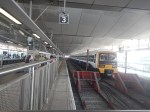
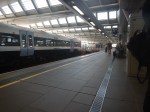



In the last three pictures, Bellingham is shown as Jude Bellingham on the train information display.
There Was Only One Lion Of Vienna, But Fifteen Lions Were Too Much For Mexico, The Crowd And The Officials
One of my earliest memories of football in the 1950s, is the exploits of England centre-forward Nat Lofthouse of Bolton Wanderers.
- I have vague memories of watching the 1953 Matthews Final on our first television, where Lofthouse was on the losing Bolton side.
- I don’t have any memory of the infamous game for England, that gave Lofthouse his nickname.
- But I do remember the controversial 1958 Cup Final between Bolton and Manchester United, which came three months after the Munich disaster. The final was controversial because Lofthouse barged the Manchester United goalkeeper; Harry Gregg into the net for the second goal, in their 2-0 win.
But football was a much tougher game in the 1950s.
The Lion Of Vienna
This except from Lofthouse’s Wikipedia entry, explains how he received his nickname.
On 25 May 1952, Lofthouse earned the title ‘Lion of Vienna’ after scoring his second goal in England’s 3–2 victory over Austria. In doing so he was elbowed in the face, tackled from behind, and finally brought down by the goalkeeper.
I’m afraid some of the tactics of the Mexicans needed more punishment than the officials gave them. And where did the officials conjure up eleven minutes of added time from?
Perhaps Trump had promised a nice holiday in one of his resorts, if they could not stand in the way of a Mexico-USA final, or at least ensure, that England didn’t progress to the quarter-finals.
After all FIFA rescinded a red card for USA’s star forward. Read about this surprising decision in this article on the BBC, which is entitled Red Card System In Disarray Over Trump, Fifa And Balogun Decision.
Thomas Tuchel On The Officials
This article on the Independent is entitled Thomas Tuchel Hits Out At Mexico v England Referee In Furious Rant: ‘Everything Went Against Us’.
Does BYD Stand For Bet On Your Destination?
Today I came back from Walthamstow Sainsbury’s to my home in Hackney, using two BYD electric buses on route W15, a diesel bus on route 488 and a Reliable Routemaster on Route 38.
Both the BYD electric buses stopped short of their final destination.
I also changed early to the 38, so I could have a Diet-Coke in a cafe that looked friendly.
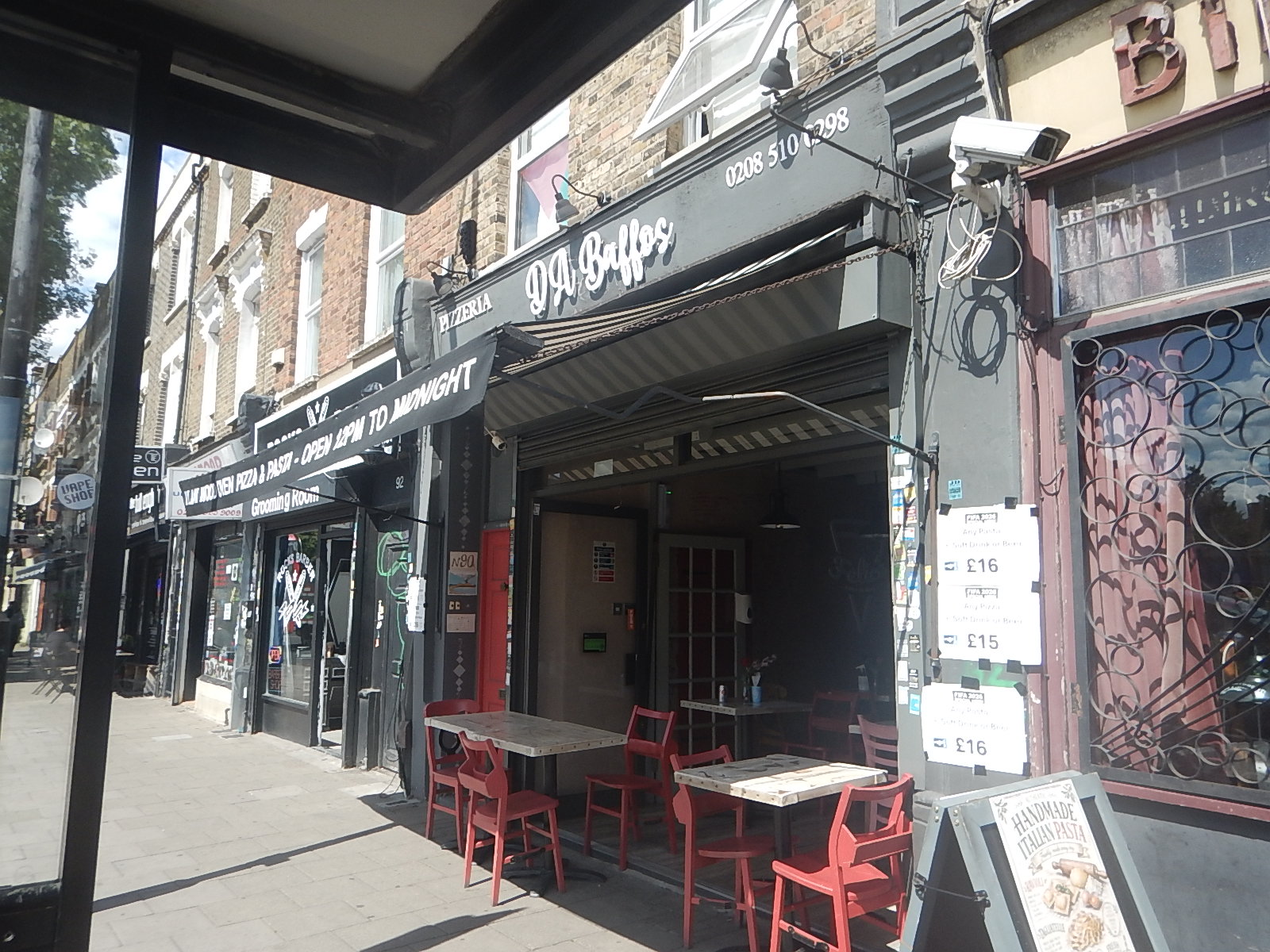
It was!
- As you can see, it was right by a bus stop, where luckily for me, 38 buses called.
- I have written a few posts about the horrid BYD electric buses on route 141, but London shouldn’t be made to suffer an inferior product.
- If Manchester and Leeds can have UK-built buses by Wrightbus, that are delivered as diesel and converted at an appropriate time to zero-carbon, why can’t London and the rest of the country?
London’s fleet of a thousand Routemasters, which were built by Wrightbus, a few years ago, seem to have found a new niche in the world of advertising and I wouldn’t be surprised to see an experimental fleet of zero-carbon Routemasters.
Here’s a few images of Routemaster paint schemes.


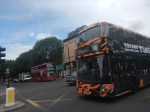

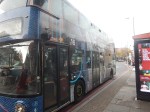
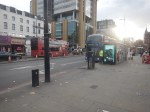




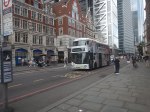
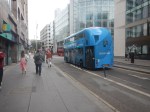
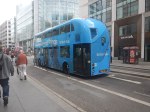
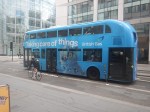
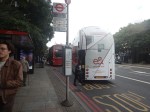


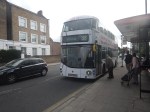

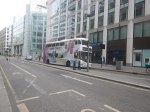


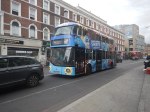
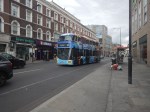
I like them. I wonder, if a bus has gone missing to have a special makeover, if England get to the latter stages of the World Cup?
SSE Energy Solutions Powers Ascot’s Shift To Electrification With One Of UK Sport’s Largest Rooftop Solar Projects
The title of this post, is the same as that of this press release from SSE.
The press release starts with these three bullet points.
- System expected to generate approx. 569,000 kWh of renewable electricity annually, reducing reliance on fossil fuel power
- Installation to supply around 9% of Ascot’s annual electricity needs
- Helps improve energy resilience and cost predictability through on-site generation
These first two paragraphs add more details.
Ascot Racecourse has taken a major step in electrifying its operations with the completion of a large rooftop solar installation, delivered in partnership with SSE Energy Solutions and Ortus Energy. The system, installed across the 480-metre Grandstand roof, includes more than 1,200 solar panels and has a total capacity of 608.04 kWp.
Once fully energised, the project is expected to generate approximately 569,000 kWh of renewable electricity each year. The electricity will be used on site to help power race days, including Royal Ascot, as well as more than 180 non-racing events hosted at the venue annually. By generating electricity at source, Ascot can reduce its reliance on grid electricity generated from fossil fuels and strengthen the resilience of its operations.
The installation will meet around 9% of Ascot’s total annual electricity demand.
I have a few thoughts.
The Scheme Is Delivered Via A Long-Term Power Purchase Agreement
This is the last paragraph of the press release.
Delivered via a long-term power purchase agreement (PPA), the project requires no upfront capital investment from Ascot. SSE Energy Solutions funds the installation, while Ortus Energy designs, installs and operates the system — enabling Ascot to access renewable electricity with long-term price visibility and reduced exposure to volatile fossil fuel markets.
It looks like King Charles III, who owns Ascot racecourse, hasn’t had to put any cash up front.
What Is The Capacity Of Ascot Racecourse?
Google AI said this.
Ascot Racecourse has a maximum race-day capacity of 70,000 guests, which was reduced from 80,000 to manage crowd density and improve the overall customer experience. The venue is divided into several enclosures, each with its own limit to maintain a comfortable environment during premier events like Royal Ascot.
It may be only the third largest horse racing venue in the UK, but it is probably larger than most sports stadiums.
Which Other Stadiums Have Or Plan To Have Solar Panels In The UK?
A quick use of Google AI found these.
- Hampshire Cricket Stadium
- London Stadium
- Principality Stadium
- Queen’s
I suspect this list could grow fairly quickly.
Could SSE Be Using Ascot Racecourse To Sell Solar Roofs?
Consider.
- Ascot racecourse is one of the most prestigious venues in the UK.
- Ascot racecourse has its own dedicated railway station.
- There are twenty-six race days per year.
- Both codes of horse-racing are featured.
- Some meetings are followed by live music.
- I suspect flying drones about the stands to show off the solar panels could be arranged.
- Catering should be top notch.
- Everything for a high-class sales-presentation should be available.
Ascot racecourse could be an ideal venue to sell large solar roofs to owners of sports stadia or other large buildings.
Carlos Queiroz Has An Excellent cv For Coaching A Good African Team In A North American World Cup
Carlos Queiroz is the head coach of Ghana in the 2026 World Cup.
I have just read his Wikipedia entry.
These are a few points.
- He was born in Mozambique.
- He is 73, which is older than I thought.
- He played professional football as a goalkeeper, which is unusual for a well-respected coach.
- He was a successful coach of young players and won the Youth World Cup twice with Portugal.
- He has coached at a top-level in the United States and Japan.
- Queiroz is a graduate of the University of Lisbon.
- He has managed the Portuguese National team.
- He authored the Q-Report, detailing plans to professionalize the development of footballers in the United States.
- He has coached Real Madrid
- He coached at Manchester United alongside Alex Ferguson.
- He has also coached the national teams of Columbia, Egypt and Iran.
I must admit with a cv like that, I’m surprised he hasn’t managed a Premier League team, that’s in serious trouble of relegation.
Toyota Hydrogen Cars At Le Mans
I gave the title of this post to Google AI and this is what I received.
Toyota is aggressively pushing hydrogen technology at the 24 Hours of Le Mans, moving beyond concepts to on-track public demonstrations of the TR LH2 Racing Prototype. Powered by a liquid-hydrogen combustion engine, the vehicle aims to showcase the viability of hydrogen as a near-zero emission fuel in endurance racing.
The TR LH2 Racing Prototype
The Vehicle: Built on the same chassis as Toyota’s TR010 HYBRID. It acts as a dedicated technology development platform to test hydrogen performance under extreme endurance conditions.
On-Track Debut: The prototype officially took to the track for demonstration laps at the 13.626km Circuit de la Sarthe during the 94th Le Mans 24 Hours.
The Drivers: The vehicle was driven in special dynamic sessions by former Le Mans winner Kazuki Nakajima.
The Competition: Toyota’s demos also featured other pioneering hydrogen machines, including the Alpine Alpenglow and the Ligier Bosch JS2 RH2.
Long-Term Vision & Infrastructure
Timeline: The ACO (Automobile Club de l’Ouest) is targeting the introduction of an official hydrogen class at Le Mans, with race entries potentially slated for upcoming endurance racing seasons.
Hydrogen Village: During the race week, Toyota highlighted the full hydrogen ecosystem.
Fans could explore the Hydrogen Village, which featured a functional TotalEnergies 700-bar liquid hydrogen refueling station.
Fuel Cell Support: Toyota’s commitment expanded to race operations, with official team staff and drivers utilizing hydrogen fuel cell buses and Toyota Hilux Fuel Cell prototypes during the event week.
Toyota seem serious about hydrogen.
FlixBus Launches New Coach Services For Luton DART Parkway
The title of this post, is the same as that of this article on Luton Today.
These paragraphs describe the service.
Coach brand FlixBus is announcing the launch of a new service between Norwich and Luton DART Parkway from 25 May.
Tickets between Norwich and Luton DART Parkway start at £8.99, while tickets between Thetford and Luton DART Parkway start at £8.49, and tickets between Cambridge and Luton DART Parkway start at £6.99.
Six daily departures each way will offer travellers a convenient, affordable link between East Anglia, Cambridgeshire and Luton airport, ahead of the busy summer season.
Could This Service Be Run By A Hydrogen-Powered Coach?
Luton and Norwich is around 160 km.
So six round trips would be under 2,000 km, which could be run, by two coaches having one fill-up per day.
The Coach Calls At The University Of East Anglia
This will be very convenient for some.
Should The Coach Stop At Newmarket?
Because of the horse racing industry, there are a lot of people travelling between Newmarket and the Dublin area, and the most convenient route is to fly between Luton and Dublin.
Conclusion
This service will be a winner.

