Network Rail To Rebuild Multi-Million-Pound Bridge Across M62 In Rochdale
The title of this post, is the same as that of this article on RAILUK.
These four paragraphs describe the work.
Network Rail is investing more than £20 million in rebuilding a major railway bridge that takes trains over the M62 in Castleton, near Rochdale.
Passengers and motorists are urged to check before they travel in September 2024 as rail and road closures are required to replace the 42-metre-long, 2,000 tonne bridge.
The work will ensure safe and reliable journeys for passengers and freight over this vital structure for years to come.
To complete the work, engineers need to dismantle the old bridge and take it away on the M62. The new bridge materials will be delivered by road and built on site.
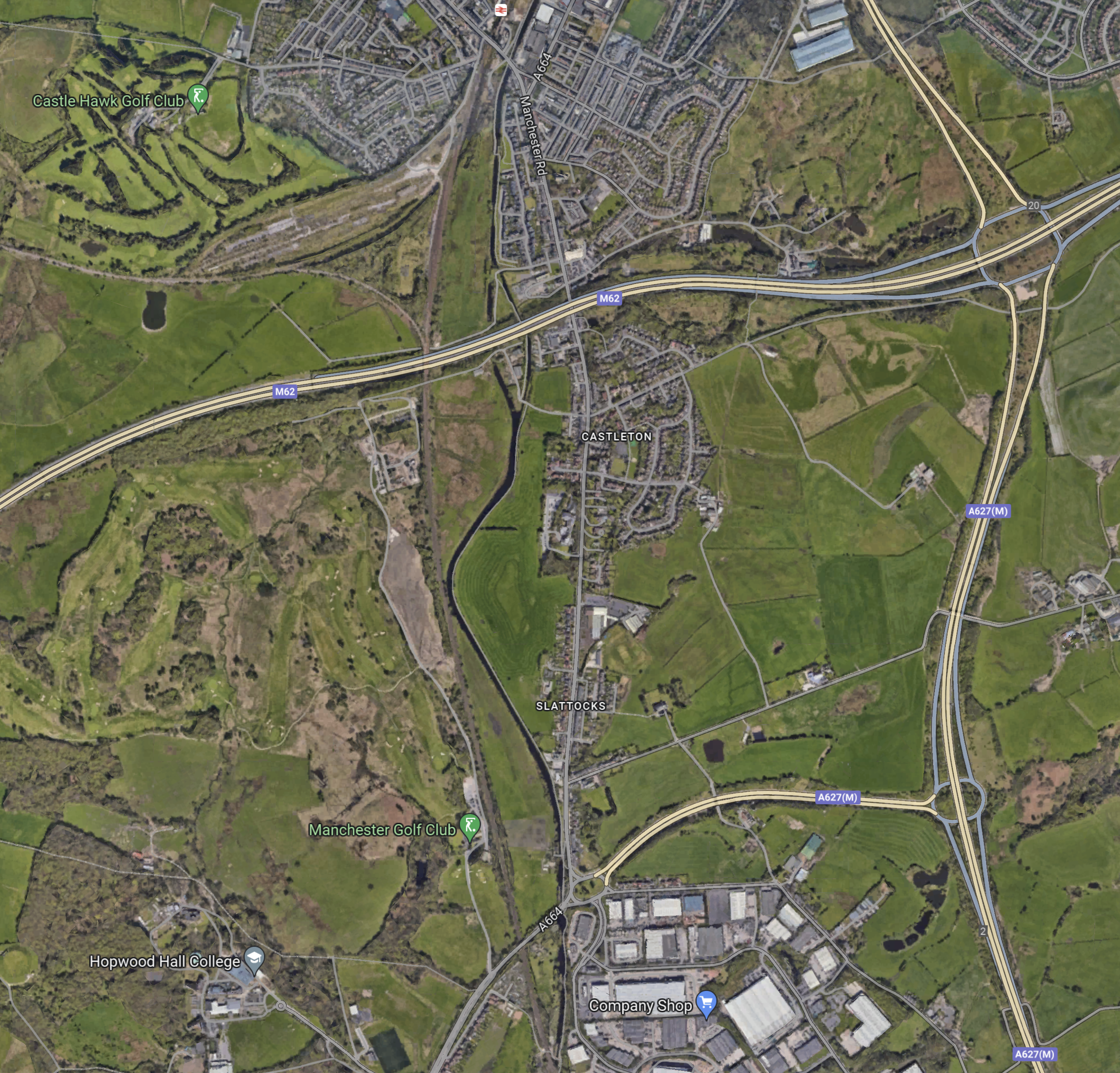
This Google Map shows the location of the bridge.
Note.
- Running East-West across the map is the M62, which is the TransPennine motorway with the big Junction 20 in the North-East corner.
- Junction 20 connects the M62 to the North-South A 627 (M).
- Meandering its way North-South up the middle of the map is the Rochdale Canal.
- Where the Canal leaves the map at its Northern edge, there is Castleton station on the Calder Valley Line, that is the picturesque route between Manchester in the West and Leeds and Bradford in the East.
- The Calder Valley Line runs North-South across the map to the West of the Rochdale Canal.
- The bridge to be replaced is where the Calder Valley Line passes over the motorway.
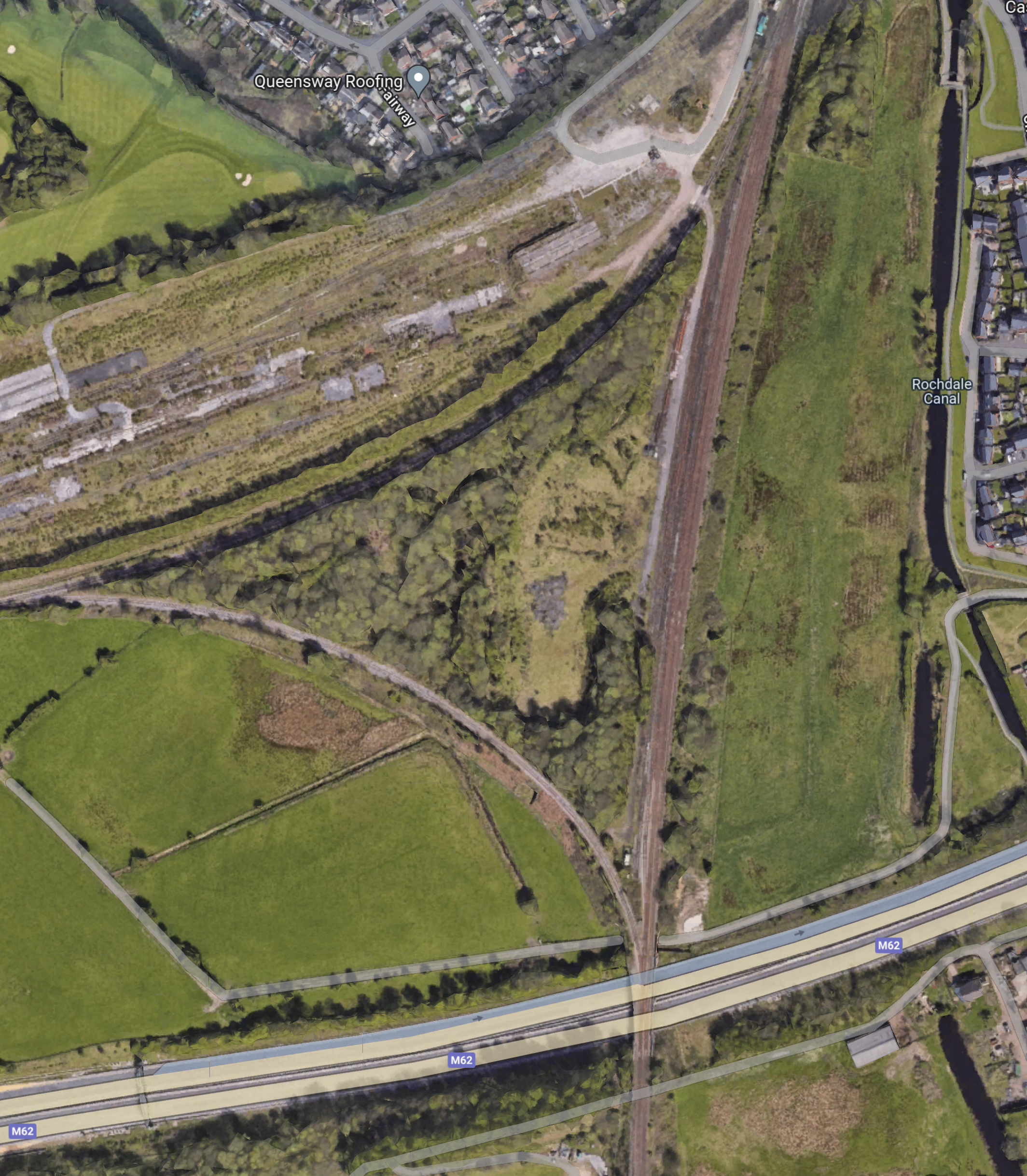
This Google Map shows a close up of the bridge.
Note.
- The Rochdale Canal running North-South at the Eastern edge of the map.
- The M62 running East-West across the bottom of the map.
- The Calder Valley Line runs North-South and passes over the motorway.
- To the North of the motorway, there is a large triangular junction, that connects the heritage East Lancashire Railway to the Calder Valley Line.
This Google Map shows a 3D image of the bridge from the East.
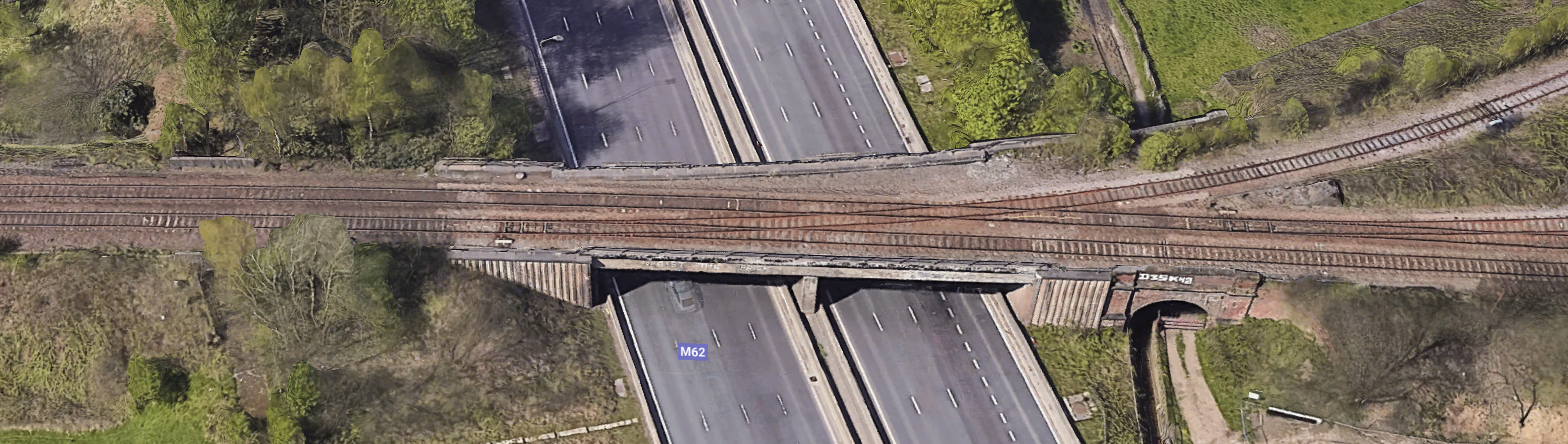
Ot looks to be a modern bridge, so when the M62 was built in the 1970s was some of these dodgy concretes used?
The RAILUK article does have these two paragraphs.
The bridge, known as Castleton bridge, carries 6% of the UK’s energy supply across the country, as freight trains carry material to and from Drax power station in Selby.
Olivia Boland, Network Rail sponsor, said: “The replacement of Castleton bridge is essential for the safe running of our railway, and crucial to the country’s economy as 6% of the UK’s energy supply relies on the bridge for transportation.
So is the £20 million being spent to in part make sure Drax keeps running?
Conclusion
This is going to cause traffic chaos.
 The Anonymous Widower
Umm questions need to be asked how a relatively modern bridge needs replacing already compared to many Victorian structures that don’t. Also wood pellets aren’t as heavy as coal!!
Comment by nickrl | March 23, 2024 |
I felt, as I wrote the post, that the bridge is one that has a serious concrete problem, as it looked rather young to replace. Unless there is a need to widen the motorway?
I was at Liverpool University in the 1960s and the University did well out of the M62, as the Veterinary Faculty had a couple of contracts to design fences to keep animals from the motorway. I know this, as I was in hall with a vet on the same corridor.
It seems strange that the Ministry of Transport could go to a lot of trouble to design a safe motorway and then build a poor bridge!
Comment by AnonW | March 23, 2024 |
You got me thinking about the design life of structures on Britain’s motorways, since whilst I was working for part of London Underground one of the LUL Standards required that all infrastructure had a design life of 120 years
The following link confirms that the UK’s strategic road network conforms to the same requirement.
https://www.newcivilengineer.com/latest/exclusive-86-structures-in-operation-on-strategic-road-network-past-120-year-design-life-18-12-2023/#:~:text=NCE%20can%20reveal%20that%2086,life%20standards%20of%20120%20years.
Comment by fammorris | March 24, 2024 |
You got me thinking about the design life of structures on Britain’s motorways, since whilst I was working for part of London Underground one of the LUL Standards required that all infrastructure had a design life of 120 years
The following link confirms that the UK’s strategic road network conforms to the same requirement.
https://www.newcivilengineer.com/latest/exclusive-86-structures-in-operation-on-strategic-road-network-past-120-year-design-life-18-12-2023/#:~:text=NCE%20can%20reveal%20that%2086,life%20standards%20of%20120%20years.
Comment by fammorris | March 24, 2024 |
You got me thinking about the design life of structures on Britain’s motorways, since whilst I was working for part of London Underground one of the LUL Standards required that all infrastructure had a design life of 120 years
The following link confirms that the UK’s strategic road network conforms to the same requirement.
https://www.newcivilengineer.com/latest/exclusive-86-structures-in-operation-on-strategic-road-network-past-120-year-design-life-18-12-2023/#:~:text=NCE%20can%20reveal%20that%2086,life%20standards%20of%20120%20years.
Comment by fammorris | March 24, 2024 |