RWE Plans Hydrogen-Ready Combined-Cycle Gas Turbine At Gersteinwerk In Werne
The title of this post, is the same as that of this press release from RWE.
These two bullet points act as sub-headings.
- Italian-Spanish consortium commissioned to plan 800-megawatt plant
- Investment decision to be made once H2 grid connection and regulatory framework are in place and economic viability has been established
These two paragraphs introduce the project.
RWE is planning to build hydrogen-ready gas-fired power plants at the company’s power plant sites in Germany to contribute to a successful coal phase-out by 2030. Following Weisweiler in the Rhenish mining area, the company is now pressing ahead with plans for such a plant at a possible second site in Werne in the southern Münsterland region. An H2-ready combined-cycle gas turbine (CCGT) power plant with a nominal capacity of around 800 megawatts may be built at the Gersteinwerk power plant.
Following intensive technical soundings, RWE has commissioned an Italian-Spanish consortium to plan the project. Work on the planning approval process is already underway.
These are my thoughts.
The current coal-fired power station at Gersteinwerk has a capacity of 2127 MW and was built in 1984.
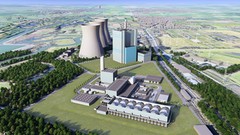
This is a visualisation of the two power stations.
Note.
- The new gas/hydrogen-fired power station is in the foreground.
- The coal-fired power station, with its three cooling towers is behind.
This Google Map shows the site.
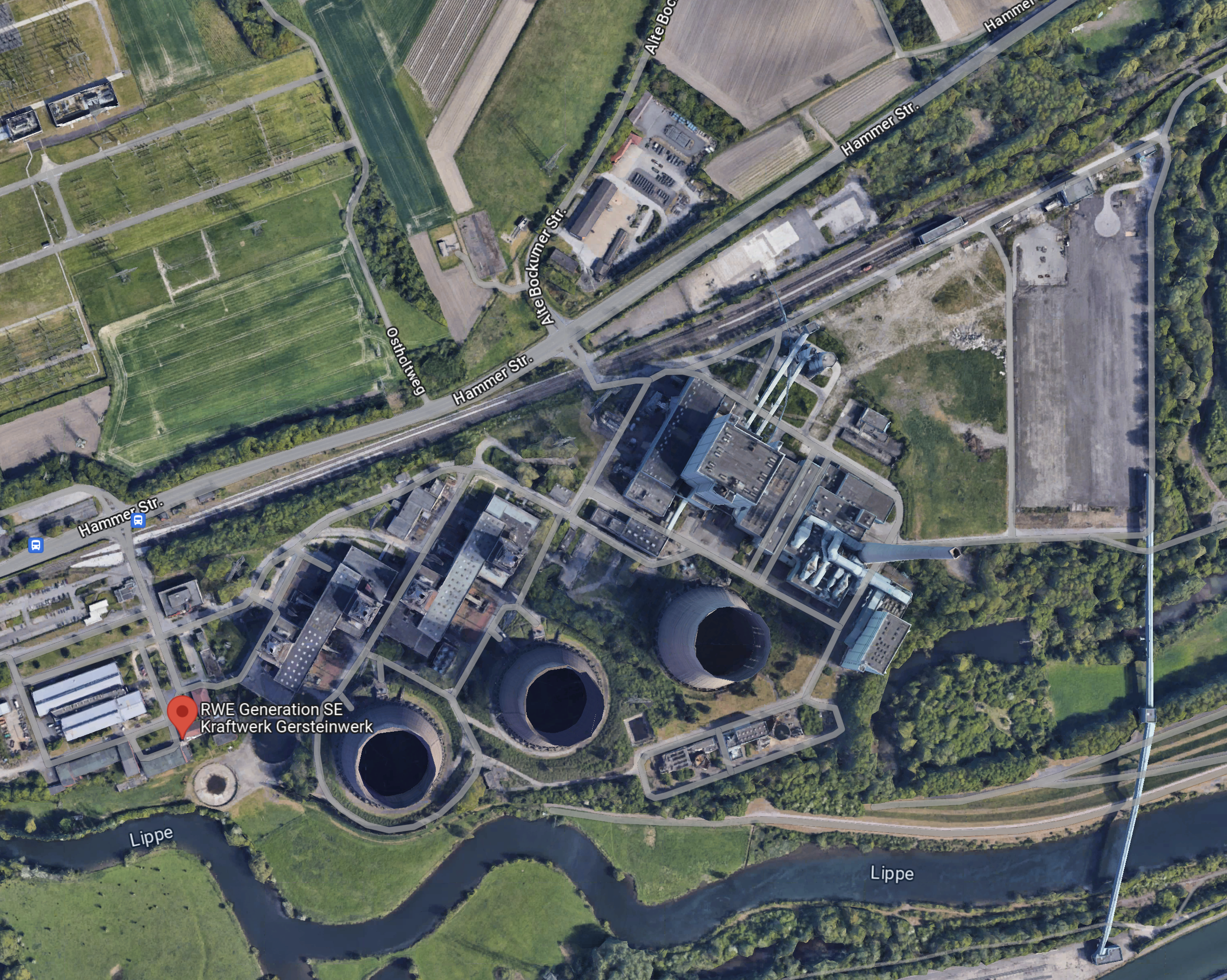
I suspect that due to the size of the original coal-fired power station, more than one hydrogen-fired power station will be needed.
Project Timeline
These paragraphs lay out the project timeline and the route to 100 % hydrogen operation.
Work on the planning process is already underway. This is the prerequisite for RWE to be able to start implementing the project as soon as an investment decision has been made.
According to current planning, the plant in Werne could start producing electricity by 2030.
At the time of commissioning, the plant should be able to use a fuel mix with at least 50 per cent hydrogen content, and it is intended to run it entirely on hydrogen at a later stage.
Germany is aiming for a coal phase-out by 2030.
The Scale Of German Power Decarbonisation
This article on Power Technology is entitled Germany To Invest €16bn In Hydrogen-Ready Gas-Fired Power Plants.
These are the first two paragraphs.
Germany’s Ministry for Economic Affairs and Climate Action (BMWK) has agreed to provide subsidies of €16bn for the construction of 10GW of hydrogen-ready gas-fired power plants.
The subsidy scheme has been significantly reduced since August 2023 when the proposal was first unveiled. A maximum of 23.8GW was anticipated at that time.
These power stations will need a lot of green hydrogen and I believe the most convenient place to source some of the hydrogen, will come from the windy waters of the UK’s North Sea.
RWE already have leases to build 7.2 GW of wind farms in UK waters.
No comments yet.
 The Anonymous Widower
Leave a comment