Faroes-Style Tunnels Could ‘Transform’ Fortunes For Shetland Isles
The title of this post, is the same as that of this article on the BBC.
This is the sub-heading.
The Faroese prime minister says Shetland could boost growth and revitalise island life by following his country in replacing ageing ferries with undersea tunnels.
These three paragraphs add more details.
Shetland Islands Council says it is pushing ahead with plans to build tunnels to four outlying isles in the archipelago including Unst, the most northerly place in the UK.
“I think we have learned in the Faroe Islands that investment in infrastructure is a good investment,” Aksel Johannesen told BBC News.
Shetland Islands Council says its multi-million pound project is likely to be funded by borrowing money and paying it back through tolls, potentially providing a new transport model for other Scottish islands.
This map shows the ferries in the Shetland Islands.
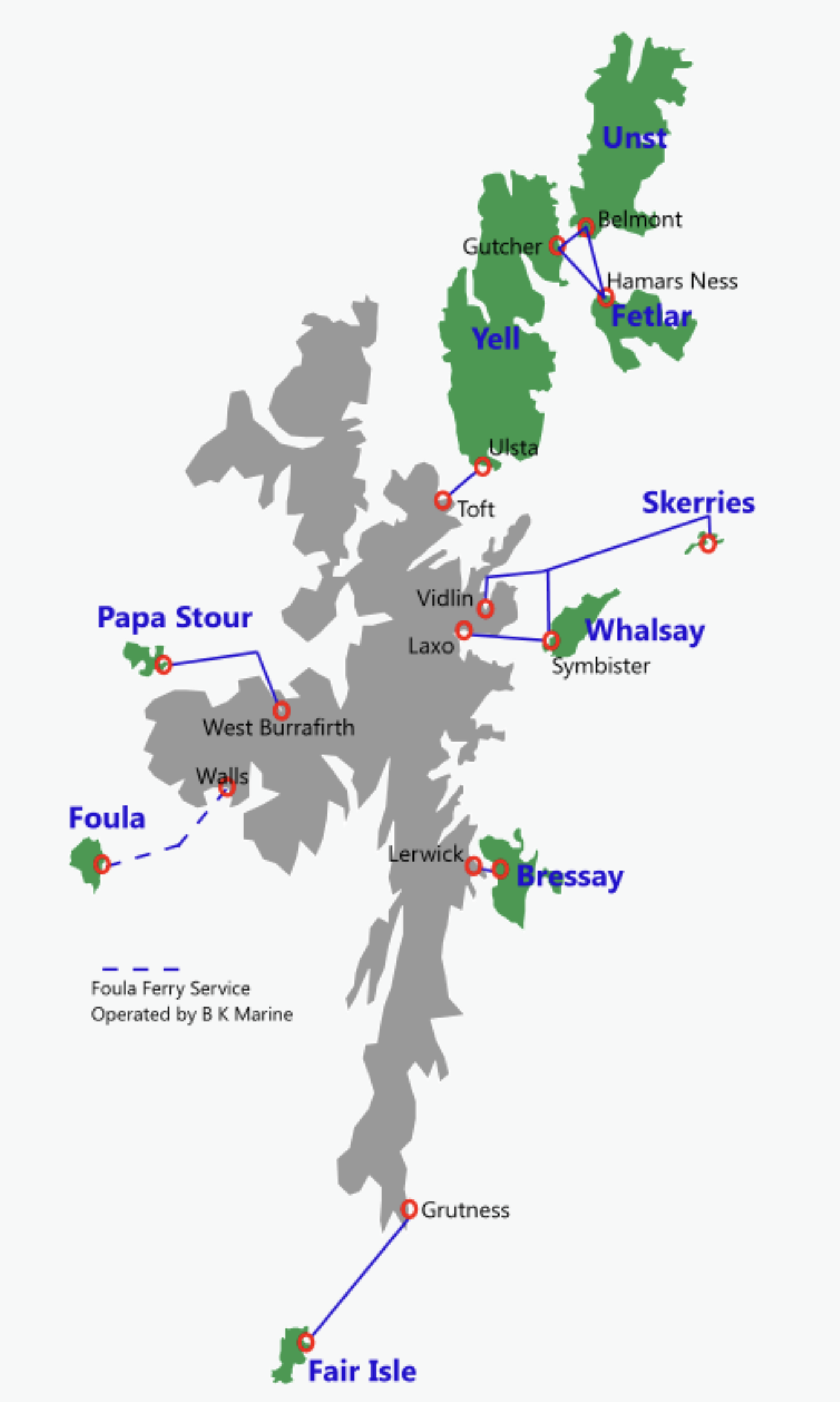
Looking at this map, I would suspect that not all ferries could be replaced by road tunnels.
But if a decision was made to replace ferries with tunnels, thorough cost-benefit analysis would probably show which would be the best value to do first.
These are my further thoughts.
The Faroes
This Google Map shows the Faroes.
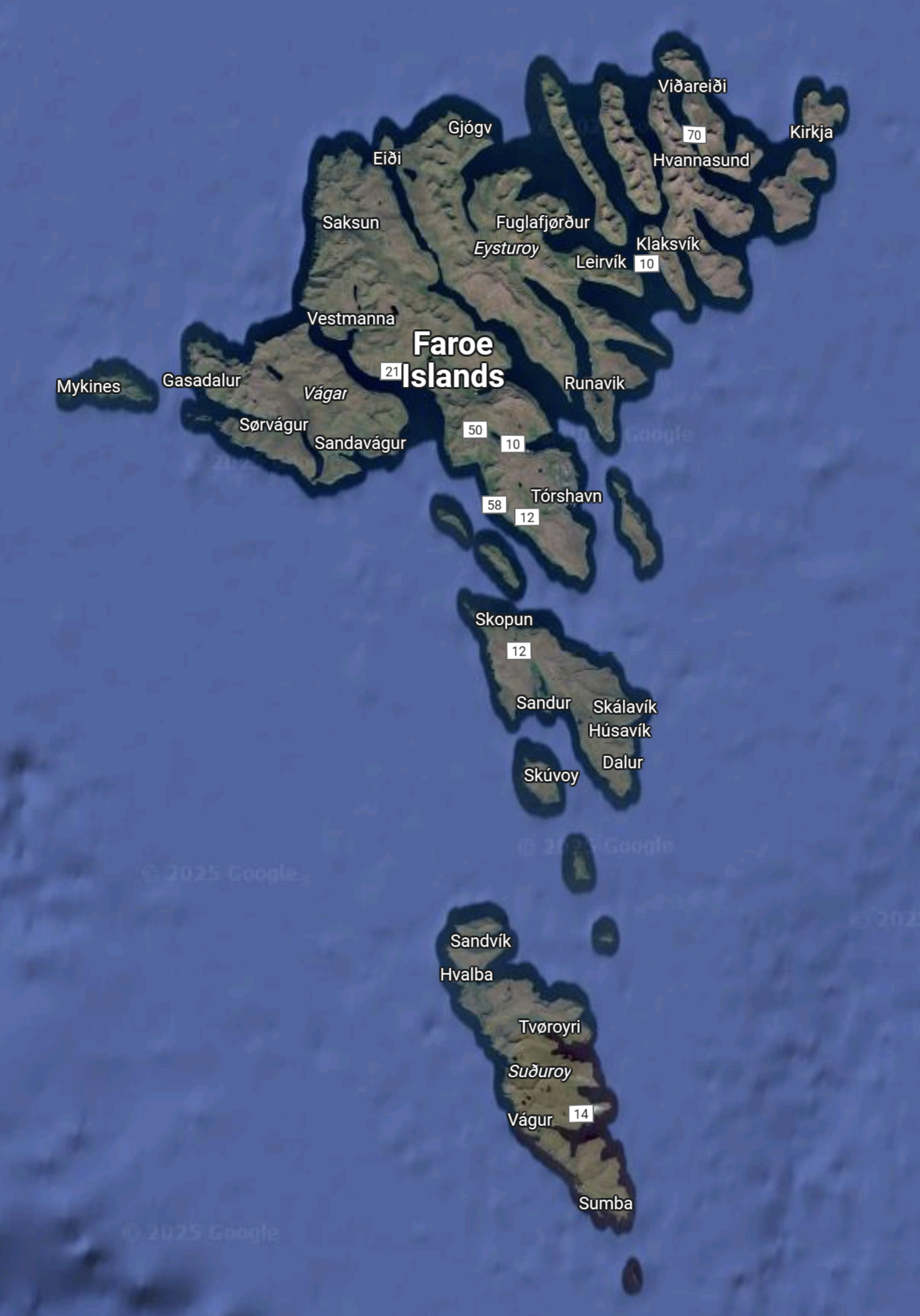
It appears that there may be more land in proportion on the Faroes.
Some Routes Would Not Be Suitable For Tunnels
I would suspect that Grutness and Fair Isle could fall into this category.
These paragraphs on the Shetland web site describe how to get to Fair Isle.
The ferry ‘Good Shepherd IV’ carries 12 passengers and takes 2.5 hours. It leaves from Grutness Pier at the southern tip of Shetland and once a fortnight (summer only) from Lerwick. Please note that this is not a car ferry. View the timetable on the Ferry Services website.
Most flights leave from Tingwall Airport, six miles west of Lerwick, and takes around 25 minutes. The flights operate three times a week and, from April to October, there is also weekly service from Sumburgh (April – Oct). View the timetable on the Airtask website.
Yachts can tie up at the North Haven, with a small nightly charge for use of the harbour.
The Wikipedia entry for the Good Shepherd IV gives more details of the thirty-one year old ferry and its replacement which is due next year, after being funded by the UK Government.
It seems to me that the correct course of action has been taken for the Fair Isle ferry.
Building The Tunnels
These paragraphs from the BBC article, describe how the Faroese tunnels were built and discuss how the same techniques could be used in Shetland.
“It’s about ambition,” says tunnel builder Andy Sloan, whose company worked on part of the Faroese tunnel project.
He adds the islands have led the world “in connecting an archipelago in the middle of the North Atlantic through blood, sweat and tears – and focus.
“They have delivered a remarkable piece of infrastructure,” says Mr Sloan, who is executive vice-president of engineering firm COWI.
It is now advising Shetland Islands Council on the technicalities and financing of tunnels.
The Faroese tunnels were constructed using a technique known as drill and blast – where holes are drilled in rock, explosives are dropped in, and the rubble is then cleared away – which Mr Sloan says could also be used in Scotland.
“Without doubt, Shetland can copy what has been achieved in these islands,” he adds.
I would add, that in recent years, we have successfully built many tunnels in the UK.
At the present time, we are building the 23 mile Woodsmith Mine Tunnel, through rock near Whitby.
This will surely be bigger than anything needed on Shetland.
 The Anonymous Widower