Wonga Moments All Over London
I don’t like Wonga and I don’t think I’m alone judging by the excellent press they are getting.
Now they are advertising on the sides of London buses.

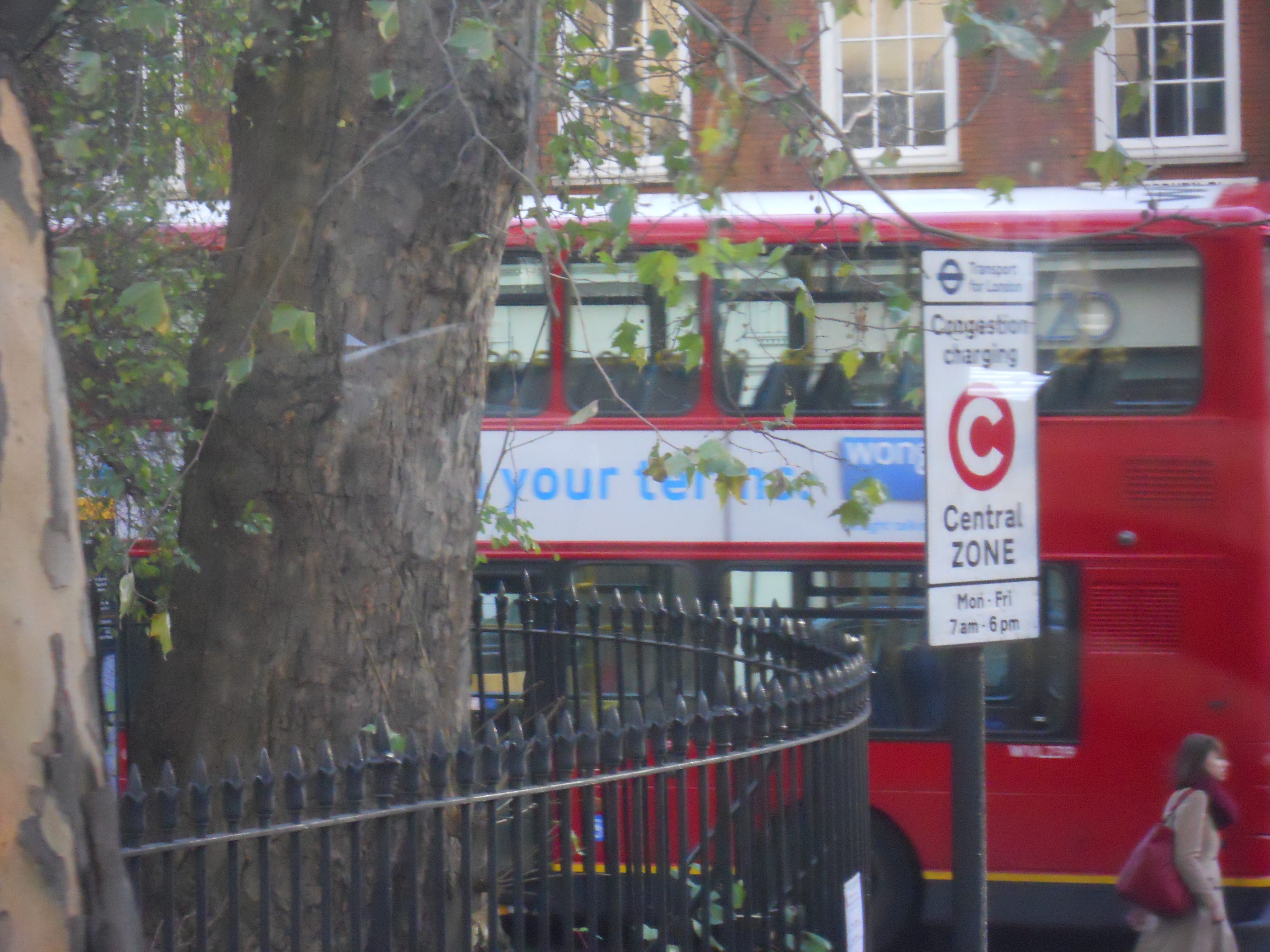
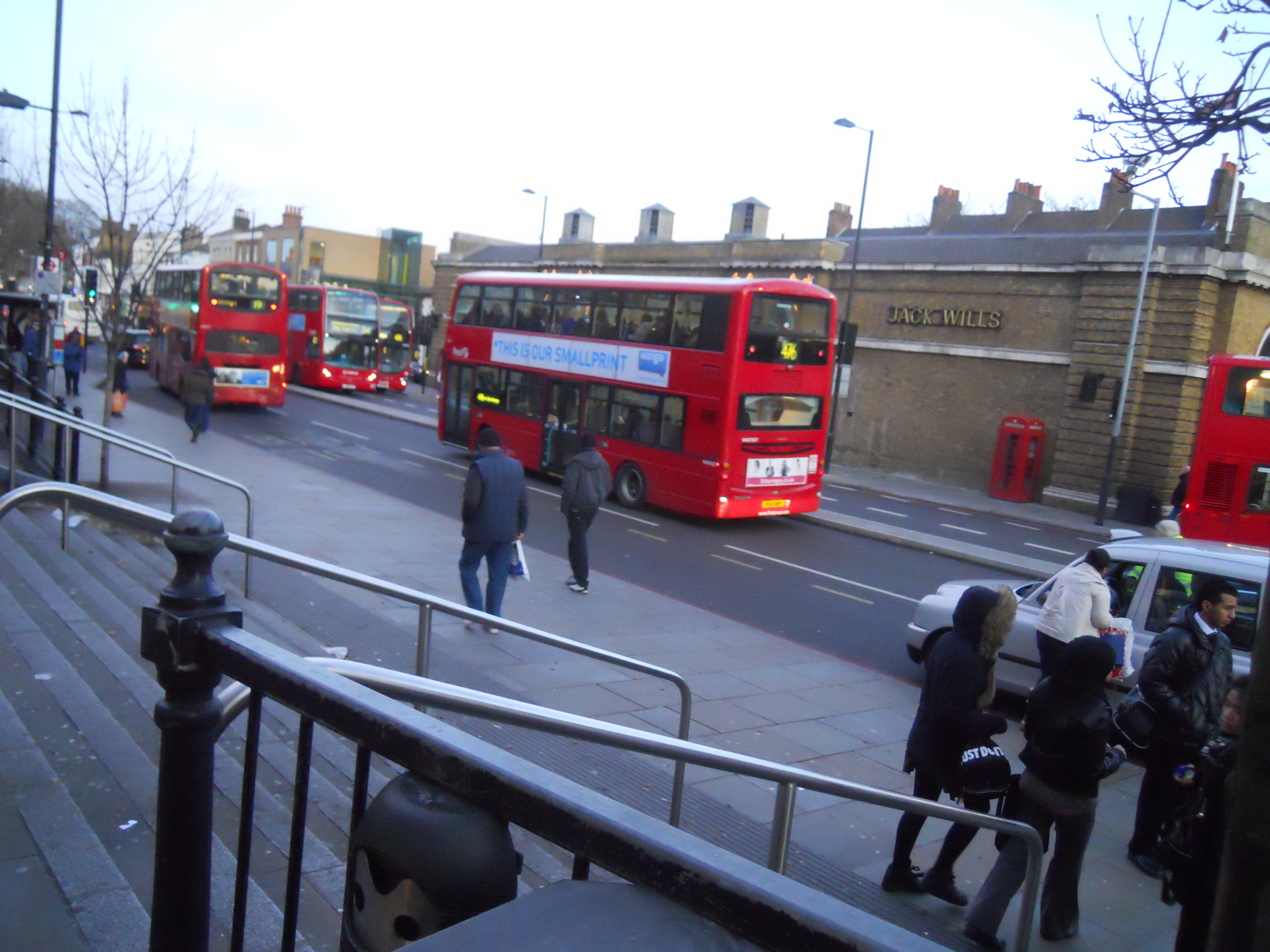

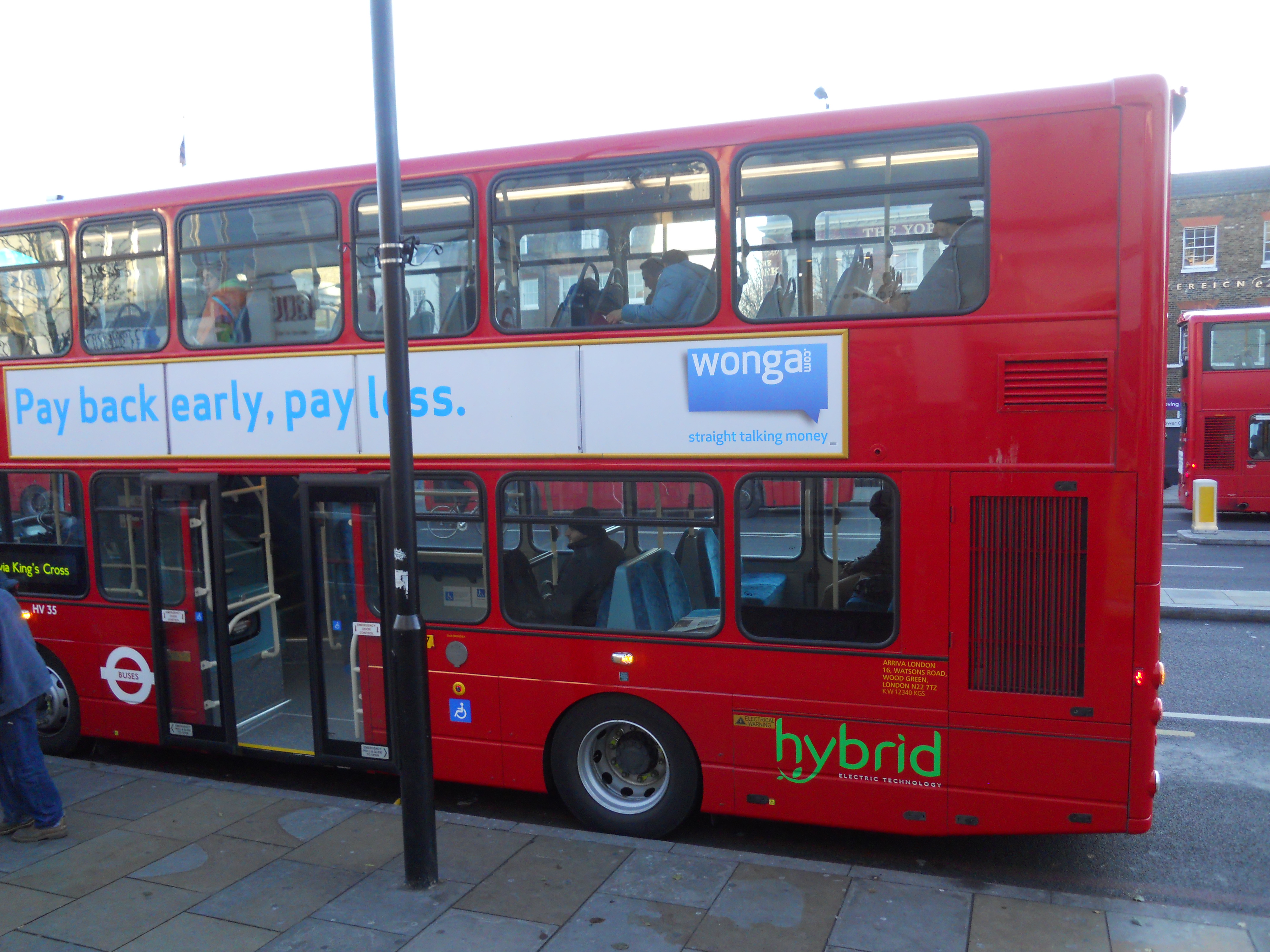
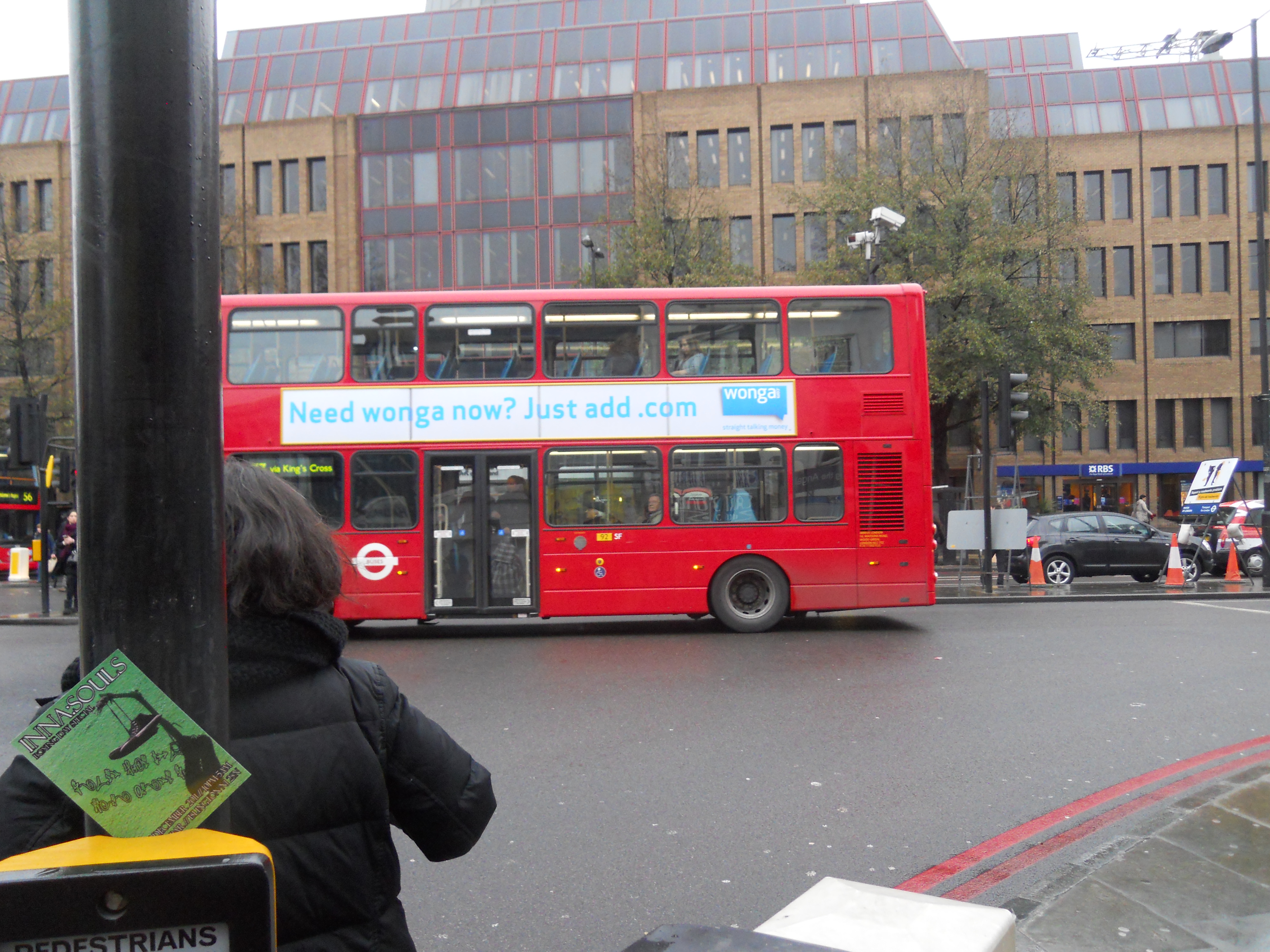
I hope that this advertising has the wrong effect from the company’s point of view. It may put the company’s name in the minds of possible punters, but if they don’t need a loan yet, it will also attract them to articles in the media, which is probably a good thing, as I’ve yet to see one that is the least bit positive towards Wonga!
Slogans I’ve seen so far include :-
THIS IS OUR SMALL PRINT
Pay back early, pay less.
How much? How Long? You decide.
Straight talking money.
Need wonga now? Just add .com
All seem to me to be rather too subtle for their target market.
Bankers Get Their Just Desserts
I like this story in The Times about how Bob Diamond has fired some of the jerks in Barclays. Remember that Mr. Diamond has dual British-American nationality so he obviously knows the British equivalent of jerk. I wonder if he called them all a wunch of bankers as he gave them their P45s.
I particularly liked this bit.
Mr Diamond referred to an infamous episode in 2002, when six Barclays bankers celebrating their bonuses spent £44,000 at the London restaurant Petrus, as “the no jerk rule personified”.
“That was embarrassing,” he said. “It was taking advantage — we have a responsibility to our colleagues and to have acted that way in a public place was inexcusable.”
The bankers consumed a 1982 Montrachet costing £1,400 and three bottles of Petrus Pomerol, the 1945 at £11,600, the 1946 at £9,400, and the 1947 at £12,300. There was also a dessert wine, costing £9,200. The restaurant threw in the food for free.
They may have got their food free, but did that include desserts. There’s more details of it here on the BBC.
Technology Means It Would Be Easier to Leave the Euro Than It Was To Join
When I wrote the piece about Michael Spencer’s thoughts on the drachma, I didn’t think the whole thing through. I didn’t think about all the new notes that would need to be printed and the conversion of cash machines.
But this article sets it all out. It also contains this interesting paragraph.
“It also rather depends on how individual institutions adapted their systems to the original change-over to the euro,” says Lewis. “My guess is that many organisations in Greece might simply have put a converter around their existing systems, rather as some UK companies did when we went decimal in 1971 – we discovered in the run-up to the year 2000 that at least one major insurance company’s accounts were still running in pounds, shillings and pence!”
So we were still using £sd in 2000. I’ll also admit that in some of the systems I’ve programmed, where we displayed data in Iranian dates or Korean currency, what went on underneath wasn’t pretty. But it worked!
So how did I find the article. A friend told me that De La Rue were printing drachma notes. So I used Google and found that Greece would probably use its own security printer.
Although the De La Rue share price was up by one percent today.
Michael Spencer’s Thoughts on the Drachma and Taxation
Michael Spencer is the CEO of ICAP and someone whose business judgement I respect. He’s also a man with strong Suffolk connections, which is always a plus point.
An article with the headline of “Spencer ready for return of drachma”, sums up his view on what to do, if or when Greece falls out of the euro.
He s also very forthright on what would happen if the financial transaction tax is imposed on the City.
After reading the article though, I suspect it will never be levied, as everybody has too much to lose. Except of course countries like Dubai, who’d laugh all the way to the bank, if it was implemented in substantial parts of the world.
One thing I like about Mr. Spencer, is that his company does its bit for charity. Here’s their page.
If you can get a copy of the article, read it!
If you look at ICAP’s major competitors, they are either in London or based in the United States. Not one is based on German or French soil. So if the European Union brought in a unilateral transaction zone and the UK didn’t levy it, they’d raise precisely zilch. Would banks like Deutsche Bank do their business in Frankfurt, when they could do it cheaper in New York? Of course they would!
A Farce With A Cash Machine
On the 18th of October, I tried to draw £50 out of cash machine inside the Nationwide branch at Upper Street in Islington. I tried twice and this was in front of the nose of someone senior in the branch, who watched everything I did, as I complained to him about the slowness of the machine. In the end I got fed up, so I went and did my shopping and then got the money a few minutes later.
When I checked my statement, the next day, not £50, but £150 had been withdrawn from my account. As I was in Leeds that day, I reported it in their branch there.
It is now the 25th and I still haven’t had my money returned. Yesterday, I was virtually accused of doing something wrong, by the person in the branch. So I stormed out, vowing to move my account. I probably won’t as all I need is a simple money transfer system to pay bills.
But it does seem to be taking a long time to sort out a problem, that happened under the nose of one of the branch’s senior employees! The last tine this happened to me it was at an ATM owned by Santander. The money was put back in my account by the next day.
The sum involved is not everything to me, but I am a widow and to some in my circumstances, that £100 would be very important.
Zopa in the Sunday Times
Zopa is featured in an article in the Sunday Times today called “Become a Lender and Earn 15 %”.
Two statements about Zopa stand-out.
Zopa has provided £160m-worth of unsecured loans to consumers since it was launched in 2005 and accounts for more than 2% of such new lending.
If that is true, then they have become a significant player in the personal lending market. I checked with Zopa and they told me that it’s between one and two percent and sometimes up to the higher limit.
And.
Zopa said its default rate is 0.9% against an average 5% to 7% for high street banks.
I would go along with that as my default rate has not been at all high. In fact it’s significantly less than 0.9%.
The Zopa Login
Adnmittedly, I know the people at Zopa well, but is there a financial site, that has such a simple, foolproof and I think secure, login. All you need to remember is your e-mail address and password and know the answers to a set of personal questions, whose answers, most people would know about themselves.
So what would happen if you someone broke my login? They might find out how much I had invested, but they wouldn’t be able to withdraw any money without first setting up a link to their bank account and then authorising the link. Not something that is easily done without leaving a trail of evidence. I suspect too, that alarms would ring at Zopa.
Everybody, who designs a secure login could do no better, than build on the excellent work Zopa has done.
Zopa and a Transaction Tax
One of the great things about Zopa is that the only tax you pay is income tax on any money you earn.
I hope that the EU’s proposed new transaction tax, doesn’t sneak in there somewhere. After all, politicians would love to find a way to tax us more, so how about 0.01% of every transaction going through the banking system? It would be a total loser, as even at a very low amount, the man on the Dalston Omnibus would object strongly to paying a tax on every time he received or paid-out money.
I suspect it won’t happen, but the Euro was badly set up and although it is a very good idea, you can’t really expect all countries to adopt a legal approach, when they see a clever loophole.
But Zopa does mean that you avoid stamp duty on an investment, which like the Stock Market, has a degree of risk.
Milliband To Pledge To End “Fast Buck” Culture
According to this report, Milliband is going to pledge to end the “fast buck” culture.
Ed Miliband will vow to end Britain’s “fast-buck” culture and ensure the “right people” are rewarded, in a speech to Labour’s annual conference.
The Labour leader will say later that the country needs “a new bargain based on a different set of values”.
Unfortunately, the get rich quick ideas have always been with us at all levels of society. As an example, the only shop I can see from my house is a betting shop. If I go down Dalston High Street, it is a sea of similar shops and pay-day loan companies. And look at the success of those legalised loan-sharks, Wonga.
In fact, it will be much easier to curb, the “fast buck” culture in the City, as many responsible people I know, steer well clear of the more dodgy practices that brought us some of the very high risk financial instruments, that took a lot of banks to their knees. It used to be in the city, that when you invested in Lloyds and similar companies, if it all went wrong you lost everything. Consequently, the risk management was a lot better, proving Dr. Johnson totally right about hanging.
Incidentally, I was urged to join Lloyds and didn’t! Why? Because it’s my money and I like to have some slight control over what happens to it.
Thinking after what I have just written about Lloyds, wouldn’t it have been better to have put the various bad banks like HBOS and Bank of Scotland into receivership, rather than use them to poison Lloyds TSB. After all, they were very much a victim of Milliband’s “fast buck” culture. But NuLabor made the mistake of saving them. And who was at the centre of that process?
The New Greek Bailout
Greece is the Pakistan of Europe.
It is corrupt, totally resistant to change and bankrupt in both a financial and moral sense. And as I pointed out earlier, they can’t even spell tax.
When a company goes bust, you put in administrators to see if they can sort out the mess.
Where are the administrators for Greece?
Let’s face it, I’m sure Disney could make a better job of running the Parthenon!
 The Anonymous Widower