Before Crossrail – Reading
A Magnificient Station In Most People’s Opinion – Rating 9/10
Reading ranks with some of the best stations in Europe and probably the wider world. There are pictures in this post entitled Is it Architecture, Engineering Or Art?, which show how spectacular the station is.
Wikipedia says this about adding Crossrail to the station.
Crossrail could also be accommodated at the new station with little work beyond electrification, as new sidings have been planned to the west of the station.
So it looks like adding Crossrail to Reading isn’t a difficult problem, if Wikipedia is correct.
Logically, I feel strongly that Crossrail should go to Reading, as Reading is a large city that has twice the population of the original terminus of Maidenhead.
Reading station also has fifteen platforms, and can probably be configured so that passengers arriving on Crossrail could walk across the platform to get their train to Wales and the West Country, with other passengers doing the reverse in the other direction.
If they do provide this sort of change at Reading, I might well go to and from the West by changing at Reading rather than Paddington, as it will be as easy to get to Reading as Paddington, if I take Crossrail from Whitechapel. But at Paddington, I’ll have to get from the Crossrail station deep under Paddington to the main line platforms.
If Reading does have a problem, about its integration into Crossrail, it’s that it’ll put the other terminals into the shade. By any scale Shenfield looks small and outdated against the beauty, size and passenger-friendliness of Reading.
Before Crossrail – Issues On The Shenfield Metro
Now that I’ve visited all of the stations on the Shenfield Metro, that will be taken over by Crossrail, I can list a few of the issues.
1. Disabled And Step Free Access
The stations generally suffer because when they were originally designed disabled people and those pushing prams and carrying heavy cases didn’t travel by trains.
Some like Stratford, Shenfield, Brentwood and Chadwell Heath are now fully accessible, but even they would have been designed differently in the last few years.
I’m not disabled, but I do have access problems in that I don’t bounce around like I used to. I would like to see more high quality handrails on stairs, such as you get at Stratford.
But if all the stations are upgraded to the level of Chadwell Heath, I suspect that most will find the access to the platforms acceptable.
2. Train Access
The current Class 315 trains don’t line up with the platforms well. But in a few years time, when the new Class 345 trains arrive, I suspect that the platform edges will be adjusted to be level with the trains.
One thing that will help in getting this level step-across access from platform to train, is that all of the station platforms between Stratford and Shenfield seem to be pretty straight.
3. Norwich In Ninety
This project has nothing directly to do with Crossrail directly.
But the Great Eastern Main Line is a busy rail route for travellers to Colchester, Ipswich, Norwich and all the other connected towns and cities.
So how should these trains interface with Crossrail?
If I want to go to Ipswich now, as I do regularly for the football, I usually take a bus followed by either a walk or an Underground train to get to Liverpool Street. My actual route usually depends on which bus arrives first and the weather.
But for me, after Crossrail opens, it might be easier to go to either Whitechapel or Farringdon and get Crossrail to either Stratford or Shenfield to pick up the train to Ipswich. It all depends on how the trains align with Crossrail.
This all shows how Crossrail might solve a few problems, but it will give passengers the problem of finding the quickest and most convenient route.
One thing though that the upgraded route will do, is substantially cut the time it takes to between East Anglia and Heathrow. Incidentally, for Gatwick, they’ll go via Cambridge, which will have a direct link.
4.Buses
One of the strengths of London’s public transport system is the buses, which move six million passengers every weekday.
But at none of the stations on the Shenfield Metro, except for Stratford, was there a proper bus interchange. I suspect too, that Stratford is the only station on that line where Transport for London plays a substantial part in the management of the station.
Perhaps the most interesting comparison is to compare Shenfield‘s bus arrangement with those at the much smaller Chingford, which has a sizeable and well-designed bus station, for half the passengers Shenfield handles.
If you read this document about Crossrail’s plans for Shenfield, you’ll see that they aren’t too happy about bus arrangements at the station and are proposing solutions.
5. Onward Travel Information
At most stations with the exception of Stratford, the onward travel information is poor and minimal and very much gives the impression it was designed in Norwich by Abellio Greater Anglia. It is certainly not to the standard you get in the average Underground or Overground station. At one station, luckily there was a bus stop outside with a shelter and spider and local walking maps.
All stations except for Brentwood and Shenfield have bus spider maps on-line.
Hopefully, this will all improve, when Crossrail takes over the management of the stations.
6. Freight
What surprised me at Forest Gate was that a freight train trundled through. I suppose once the line is fully open, then freight trains will get out of the way.
But it does go to show, that we should have sorted out the freight some years ago, before London Gateway was built.
Before Crossrail – The Overground And Lea Valley Platforms At Stratford
After yesterday’s exploration from the bridge across Stratford station, I just had to get down on and see it from the ground.
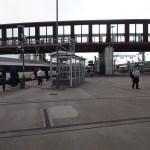
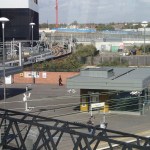
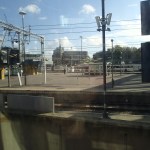
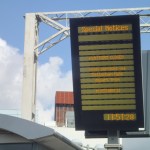
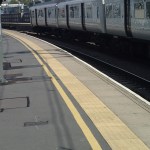
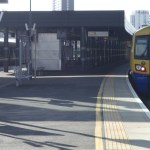
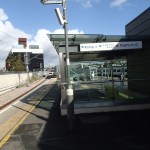
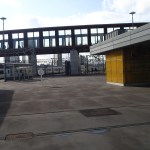
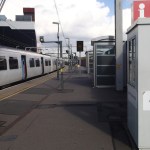

There are two Overground terminal platforms, numbered 1 and 2, at the Eastfield side of the station, with the two long Lea Valley Lines platforms, numbered 12 and 11, curving around them. A driver told me that the only trains that used the platform on the Overground side, 12, in normal circumstances, was the last arrival of the day and the first departure of the next morning. So it would appear that except when there are diversions or trouble, these platforms are seriously under-used.
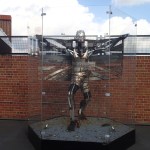
As the pictures show they are well-appointed and even have a piece of expensive art-work in the large triangular area between platforms 10 and 11, which could probably only be nicked by the use of one of those Russian very heavy lift helicopters.
Whilst I was there, a Norwich-bound train stopped at platform 10. I suspect there are very few transfer passengers between platform 10 and 11, although you might decide to use the walk-across if you were going from say Stansted Airport to East Anglia.
But it does seem to me, that there could be some more efficient way to provide the current services or perhaps to add some extra ones to the station.
Before Crossrail – The Overground At Stratford
Stratford is the terminus of the North London Line of the Overground. These pictures show the platforms that service the Overground and the Lea Valley Line services that terminate at Stratford.
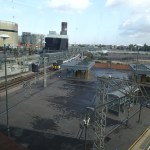
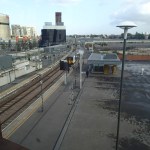
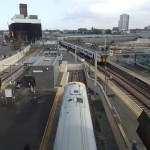
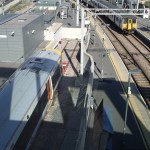
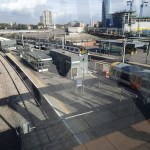
At least the two Overground platforms are long enough to take six car trains, but if services increase will there may be a need for one or more platforms for Overground services.
It would appear though, that the two Lea Valley Lines platforms, on one of which the Class 315 is waiting in the pictures, are not heavily used. And in addition, there is an immense triangular space, which I’m sure for which Network Rail et al. have big plans.
There is actually more potential in the area than appears obvious from these pictures.
Lea Bridge station and possibly the Hall Farm Curve are being reopened, which will link Stratford to Walthamstow and Chingford.
So will this mean services coming along the North London Line and going through Stratford to Chingford. My explorations at Chingford showed it to be a spacious well-connected station with three accessible platforms.
With an Overground spreading out fr0m Stratford, this would mean a lot of changing between the lines, as although they are a few platforms apart, there are lifts for those who need them.
There is going to be a lot of creative arithmetic in this area as London Overground find more and more ways to squeeze gallons out of pint pots.
Before Crossrail – Maryland
Another Station That Needs Imagination And Lifts – Rating 2/10
Maryland is another ruin, but it is not as bad as Manor Park and it doesn’t have any redeeming feature like Forest Gate‘s kiosk.
In fact one of the best things that could happen to the three stations, is that a driverless Class 66 ran away with a heavy cargo of something like aggregate and careered through all the stations demolishing them completely.

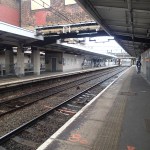

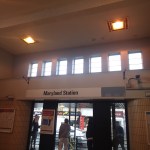

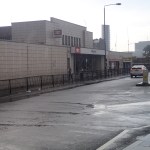


What worries me about this station is that somebody was paid to design it and another was paid to build it, probably at great expense.
But look at this page to see Crossrail’s ideas about transforming the station.
Before Crossrail – Forest Gate
Another Dreadful Station, But With A Lovely Kiosk! – Rating 3/10
Forest Gate is better than Manor Park, if only for the charming kiosk in front of the station.
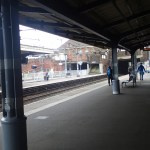



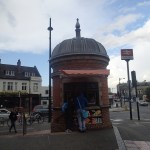

If I were a young architect, which I’m not on either counts, I would love the challenge of turning this sow’s ear into a silk purse.
Crossrtail have published some of their ideas for the station.
Before Crossrail – Manor Park
A Ruin With Serious Issues – Rating 1/10
Manor Park is very unusual architecturally. I do wonder if the Luftwaffe tried to demolish the station.
Perhaps the builders just ran out of money and couldn’t afford to put in windows.

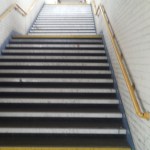


I can imagine the words of Crossrail’s architect, when he saw this station. According to Wikipedia, in their section on Future Development they say this.
The platforms will not be lengthened so selective door operation will be used instead, allowing the freight loop to remain in use. Due to the narrow platforms, and the layout of the station, fitting lifts for disabled access would be difficult and expensive, requiring the walkways to be rebuilt and closing the station for several months.
If there was a Carbuncle Cup For Ruins, then this station would be up there with the worst.
Perhaps though Crossrail’s architect is a supreme optimist.
Look at this artists’s impression of what is a proposal for the future on Crossrail’s web site.
Before Crossrail – Ilford
A Station That Needs Work – Rating 4/10
Ilford has a modernised entrance building, but some of the stairs are difficult.
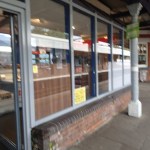
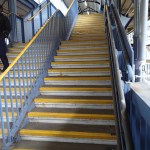


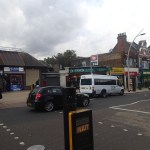


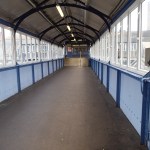
Money certainly needs to be spent on this station that serves quite an important town centre.
Before Crossrail – Seven Kings
This Could Be A Good Station – Rating 6/10
Seven Kings has the usually access problems, but some interesting brickwork.

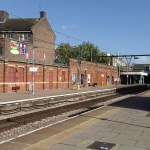
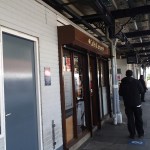
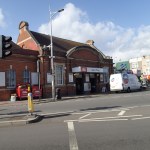
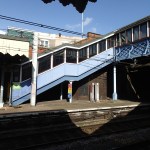


I’ll be looking forward to seeing this station with an upgraded bridge, lifts and a good cleaning of the brickwork.
Before Crossrail – Goodmayes
A Station With Bad Access And A Small Convenience Store – Rating 6/10
Goodmayes is a station I spot every time I pass through on the Way to Ipswich, due to the Tesco.
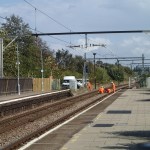
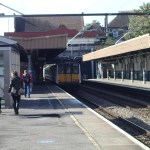
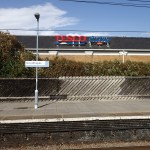
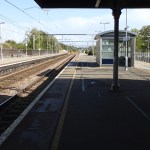


This station obviously needs the same treatment as Chadwell Heath, with new lifts.
 The Anonymous Widower