Can Class 230 Trains Work On Third Rail Electrified Lines?
London Underground’s D78 Stock used to share tracks between Gunnerbury and Richmond stations with London Overground’s Class 378 trains.
So the answer to my question used to be yes and I suspect that the Class 230 trains could be configured, so that they could still run on third-rail electrified lines.
Running A Service Using Class 230 Trains
Now that West Midlands Trains have ordered three Class 230 trains for the Marston Vale Line, I think we can see how operators could use the trains.
- The operator has enough trains to run the service, even if one train is out of service for routine maintenance or repair.
- The trains are stored overnight in a convenient siding or terminal station.
- The trains will be supported by probably a well-designed service vehicle and if needed a fuel bowser.
- The trains will be refurbished to a high standard, with wi-fi, power sockets and universal access toilets.
- Vivarail have talked about on-board drinks machines.
- Drivers and support staff would probably come from the local area.
You could even envisage a train with an onboard ticket machine.
Would A Third-Rail Ability Be Any Use?
Consider the following lines.
Bromley North Branch Line
The Bromley North Branch Line is a short branch line between Grove Park and Bromley North stations.
- Service is three trains per hour from Mondays to Saturdays.
- There is no service on Sundays.
- Bromley North station is Grade II Listed and has a ticket office.
- The branch is double-track and fully electrified with one intermediate station.
- The service is run by a two-car Class 466 train, which travels to the line each morning.
- The Class 230 train has a higher passenger-focused specification than the twenty-year-old Class 466 train.
I believe that one Class 230 train could run the existing service, but as Bromley North station has two platforms, that two trains could run a four trains per hour service.
I also believe that the Grade II Listed station could be released for sympathetic development, by doing the following.
- Improving the automatic ticketing facilities and perhaps putting ticket machines on the trains.
- Closing the ticket office.
- Putting staff on the platform to assist passengers who need help.
The station could become a transport hub with cafes and stops catering for the needs of train travellers and those using the many buses serving the station.
The South Eastern franchise is up for renewal in the next couple of years, and I think that those bidding will have ideas about what to do the the Bromley North Branch Line.
Lymington Branch Line
The Lymington branch line runs between Brockenhurst and Lymington Pier.
- Service is normally two trains per hour between Brockenhurst and Lymington Pier
- The branch is single track and fully electrified.
- The service is run by a Class 158, Class 159 or Class 450 train.
- Brockenhurdst has a comprehensive four trains per hour service between London/Southampton and Bournemouth.
I believe that one Class 230 trains could run the existing service. With the addition of a passing loop, two trains may be able to run a four trains per hour service.
Sheerness Line
The Sheerness Line runs from Sittingbourne station to Sheerness station across the Isle of Sheppey.
- Service is normally two trains per hour between Sittingbourne and Sheerness.
- There are extra services between Victoriia and Sheeness in the Peak.
- The branch is partly double-track and fully electrified with four intermediate stations.
- Sheerness station has two platforms.
- The shuttle service is run by a two-car Class 466 train.
- Sittingbourne has a comprehensive six trains per hour service to and from London, with extra peak hour services.
As with the Bromley North Branch Line, the Class 230 train has a higher passenger-focused specification than the current Class 466 train.
I believe that two Class 230 trains could run the existing service, but as Sheerness station has two platforms and the route is partly double-track, that an extra train or two, could see the service upgraded to three or even four trains per hour.
Conclusion
I suspect that we’ll see Class 230 trains considered for lines with third-rail electrification.
A Trip To Bromley
I like to explore and when I saw the Bromley North Branch on the Tube and Rail Map, I just had to visit.
One sub-theme that percolates through this post is that everything I wanted to buy seemed to be unavailable.
It started at the Co-op outside Dalston Junction station, where all copies of The Times had been sold.
I took a train to New Cross station, where the charming newsagent sold me my paper and I had a chat and a moan with a web designer called Ben about the lack of seats on platform C/D on the station to sit in the sun.
At least if it had started to rain, I wouldn’t have got wet!
From New Cross I took a train to Grove Park station.
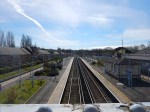
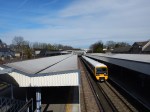
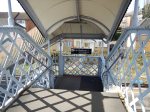
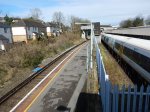
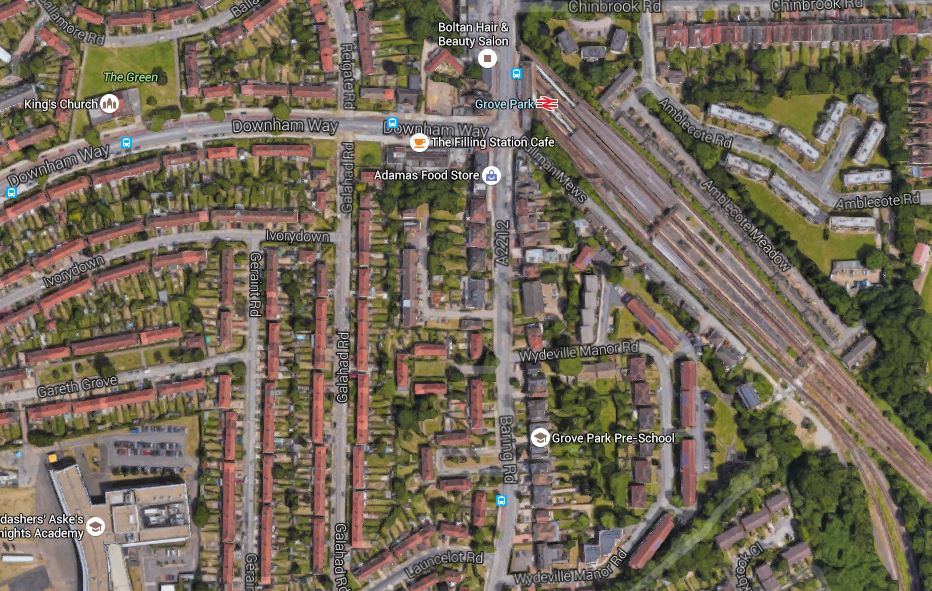
This Google Map also shows Grove Park station
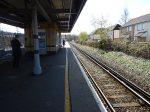
Grove Park Station
Note that Platform 1 is to the south side of the station and the Bromley North Branch Line goes out of the South East corner of the map
From Platform 1, I got a train to Bromley North station.
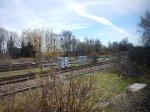
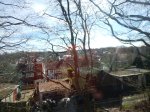
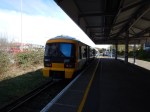
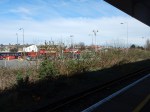
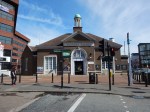
This Google Map shows the station.
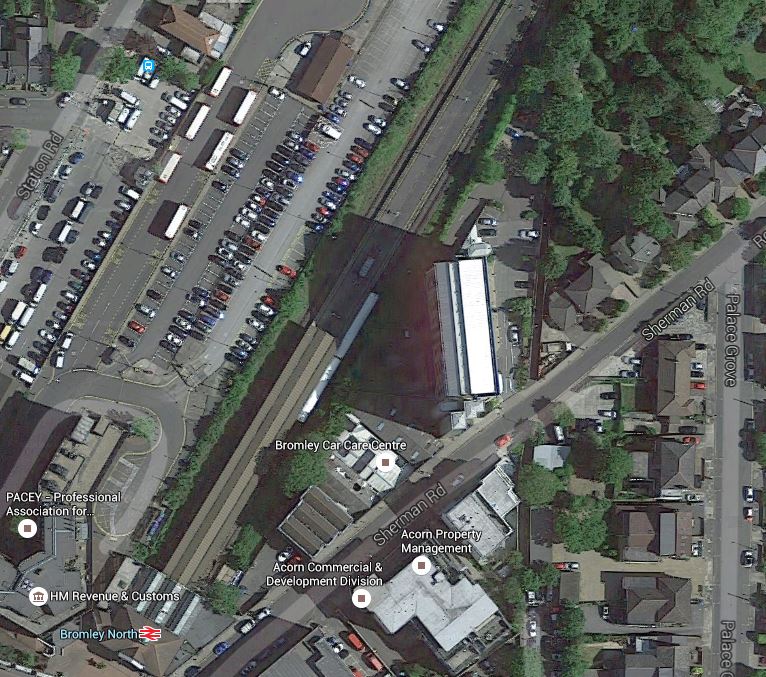
Bromley North Station
It would appear that there isn’t much space to extend the line from Bromley North station.
I then walked down to Bromley South station.


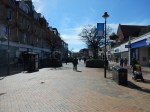
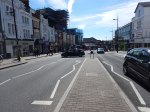
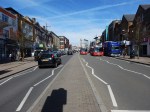
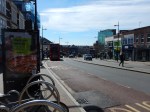
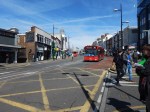
It was a fairly easy walk as it was generally downhill.
My ability to buy a drink was restricted though, as all tables in the sun were busy.
At Bromley South station, i took a train to Victoria.
In the Wikipedia entry for Bromley North station, there is a section called Future Proposals, where this is said.
Proposals have been put forward by Transport for London and the London Borough of Bromley for the Bromley North Line to be extended and connected to either the Docklands Light Railway via a link south of Lewisham, to the Tramlink system from Beckenham Junction, or to an extension of the Bakerloo line from Elephant and Castle. These schemes have not been taken beyond the proposal stage and recommendations are expected to be published around 2017.
Additionally, it has been suggested that the Bromley North Line could be connected to London Overground via an extended service from New Cross, although the problems of line capacity make this seem an unlikely solution.
This map from carto.metro.free.fr shows the lines in the area.

Lines Around Bromley
Grove Park station is beyond Sunbridge Park station.
This Google Map shows the two Bromley stations.
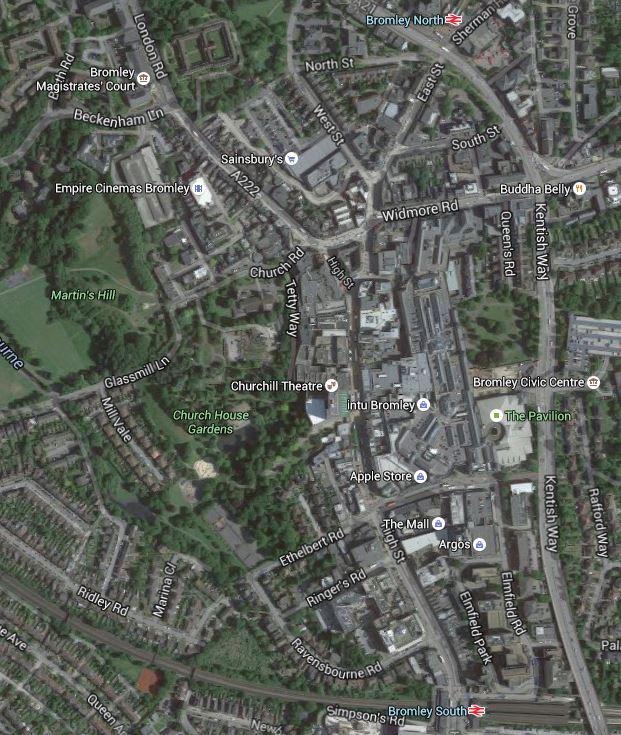
Bromley Stations
Note.
- Bromley North station is in the North and Bromley South station is in the South, as would be expected.
- The only surface routes between the two stations would be through the Town Centre along the High Street or along the A21.
- Building along both would probably be highly controversial and extremely difficult.
- Creating any connection between a tram or train to the lines through Bromley South station would need a lot of land and possibly some demolition.
So I think that it is unlikely that there will be any connection between the two stations, unless it is in a tunnel.
The Germans, who have had this sort of problem in cities like Kassel would probably do something like this.
- Use tram-trains starting in Platform 1 at Grove Park station, running as trains to Bromley North station.
- At Bromley North station, they would switch to tram operation, cross under the main road at the station and run towards the Town Centre.
- Alternatively, they could cross the main road under control of traffic lights, as is done in Nottingham.
- The trams would run to Bromley South station down the middle of the High Street.
As I believe there isn’t enough space for trams or tram-trains to join the railway to go to Beckenham Junction station, they would probably just go round a loop with a couple of stops to return to Bromley North station.
There is also the problem of building tram-trains that work on railways with third-rail electrification. I believe it is technically possible, but it could be complicated and have safety issues.
Quite frankly, I think it is unlikely any surface transport solution will be added to Bromley North station.
A much better and safer solution could be to use several small electric buses, that shuttled between the two stations through the Town Centre.
 The Anonymous Widower