How To Build A Step-Free Access Ramp For A Train
This new ramp or Harrington Hump, has been built on Platform 1 at Canonbury station.
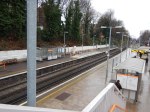

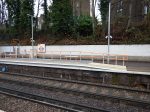
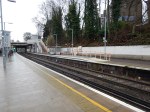
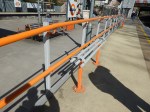
I didn’t use it, as I was going the other way.
It looks to be a very good design.
- Like all the best designs, it is simple.
- It is double-ended.
- It’s a gentle slope to ascend to train level, with no steps to trip on.
- It’s got seats to prop yourself on.
- It’s got a rail to hang on to.
- Those with poor eye-sight wouldn’t miss it and trip over.
- I suspect any sensible local builder could build one of these, from a kit of parts and instructions on a page of A4.
It looks to me like it is one of those classic engineering designs, that was developed using copious amounts of real ale, with everything written down on the back of fag-packets and used envelopes.
After my musings on dual-height platforms for the Bakerloo Line Extension, in How Will They Build The Bakerloo Line Extension?, I think that a modified version could handle the problems at stations on the Northern reaches of the Bakerloo Line, where 1972 Stock and Class 378 trains, share a platform.
The Platform For The Future
The June 2016 Edition of Modern Railways has a section about The Railway Industry Innovation Awards 2016.
One is labelled the Platform for the Future.
That probably sounds rather boring, but I’m a great believer in disruptive technology and using new and innovative methods to replace something that is rather dull, with something that is better, quicker to be installed and get working and more affordable.
This is said.
Abellio Greater Anglia and Dura have pioneered the use of a composite platform at Needham Market station in Suffolk, which was installed in just 36 hours.
This installation might be considered surprising as Needham Market station is a Grade II Listed building. So it can’t look like.
A monstrous carbuncle on the face of a much-loved and elegant friend.
But the product comes with these advantages.
- The design life is sixty years.
- A financial saving of 25% is reported.
- As the platforms are built in a factory, the quality should be tip-top.
- Other features like Harrington Humps could be built-in.
Hopefully, this would dissuade even the most determined member of the Heritage Taliban from objecting.
There’s more here on the Dura website. There’s also this video, of the platform being installed at Needham Market station.
This is a picture I took from a p[passing train.
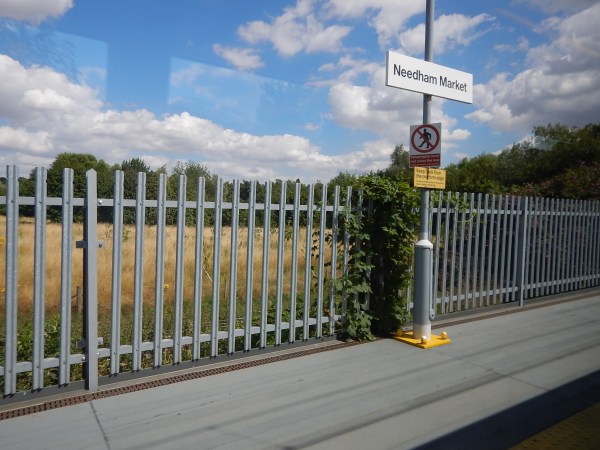
It looks good and who would think it was long-life hard-wearing plastic.
Only members of the Taliban tendency of the Green and Heritage lobbies would probably object!
I think that this product could find lots of applications, in traditional heavy rail, light rail and tramways. Certainly, it could be used to create some of the needed extensions to platforms on the Gospel Oak to Barking Line.
Look at these pictures taken at Harringay Green Lanes station.
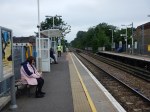
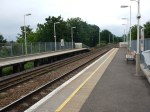

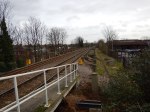
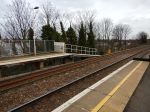
Would composite platforms make extending these platforms an easier process?
The company might also have the solution to the dual-height platforms, that some people feel are needed for tram-trains. The Germans certainly use stepped platforms so that different types of tram-trains have step-free access.
In fact, why restrict it to rail applications?
It could be used to provide a disabled viewing platform at somewhere like a horse racecourse or other sporting venue.
Or how about helping to create step-free bus stops, that I wrote about in One Of London’s Step-Free Bus Stops?
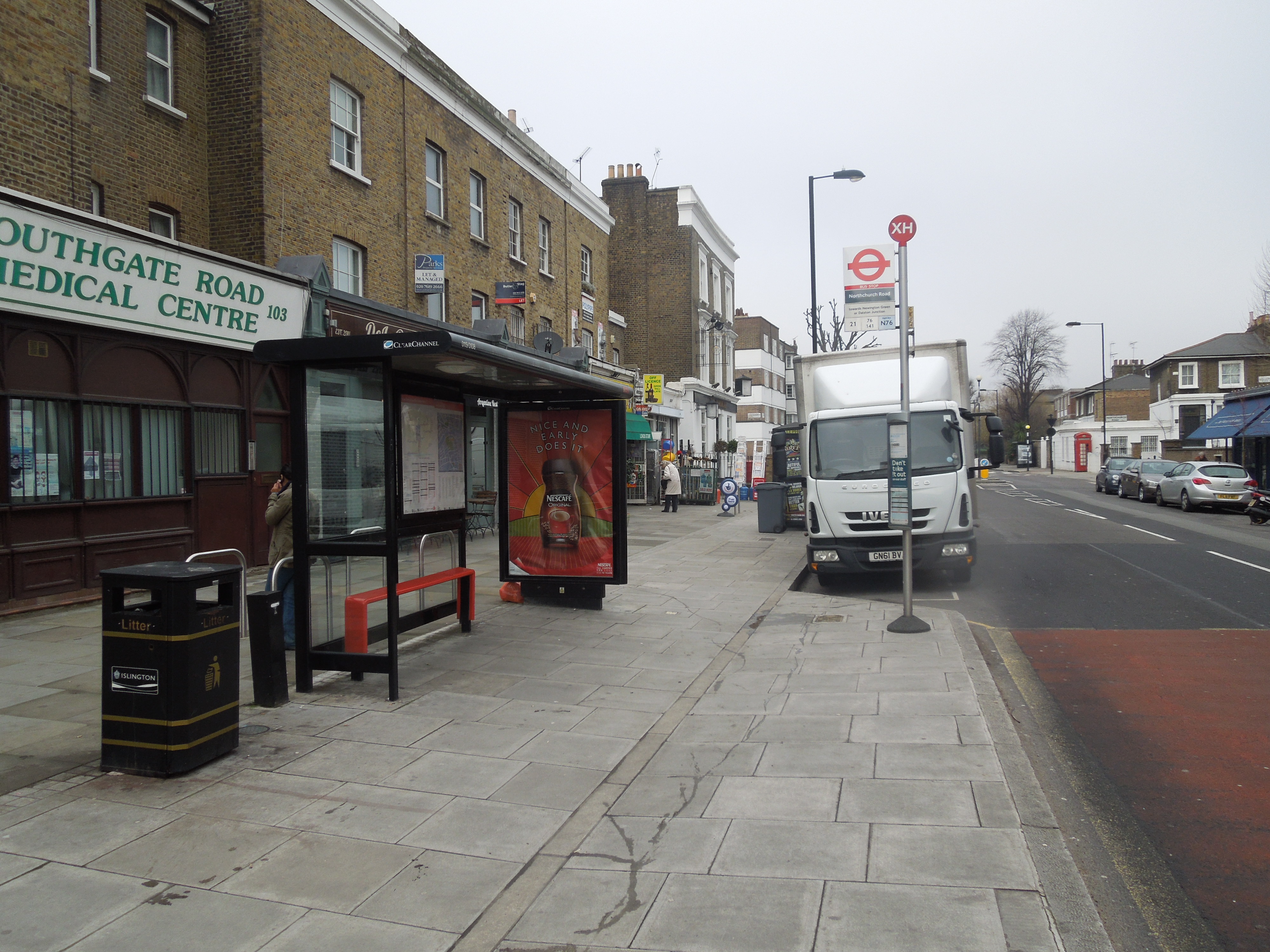
One Of London’s Step-Free Bus Stops
It’s certainly a very good innovation.
 The Anonymous Widower