DOE Announces 7 Awards To Cut Heliostat Costs
The title of this post, is the same as that of this article on Solar Paces.
I haven’t talked about heliostats much before and can only find these two posts; one about Australia and one about Spainspain
- ‘Unique’ Solar-Storage Solution Providers Plot 300MW / 3.6GWh Australia Project
- Spanish Govt Approves Energy Storage Strategy, Sees 20 GW In 2030
I feel it is good that the Americans are backing this technology.
These are a summary of the projects.
- SunRing: Advanced Manufacturing and Field Deployment: This project by Solar Dynamics LLC and partners will develop processes to maximize cost-competitiveness, performance, and reliability of Solar Dynamics’ existing SunRing heliostat design.
- HELIOCOMM: A Resilient Wireless Heliostats Communication System: This components-and-controls project by the University of New Mexico will model a resilient wireless communication system based on the principles of integrated access and backhaul (IAB) technology, entropy-based routing, dynamic spectrum management, and interference mitigation.
- An Educational Program on Concentrating Solar Power and Heliostats for Power Generation and Industrial Process: This project by Northeastern University will develop an educational program focused on concentrating solar power (CSP) and heliostats for power generation and industrial processes.
- Demonstration of a Heliostat Solar Field Wireless Control System: Solar Dynamics LLC, with partners Remcom and Vanteon Corporation, will carry out a project aimed at demonstrating the reliable operation of a wireless heliostat solar field control system using commercially available products and developing analytical tools to de-risk the large-scale deployment of the wireless technology to solar fields with tens of thousands of heliostats.
- Twisting Heliostats With Closed-Loop Tracking: This project will design, manufacture, and test a new type of heliostat and study its application for high-concentration CSP.
- Digital Twin and Industry 4.0 in Support of Heliostat Technology Advancement: The Tietronix project aims to leverage technologies from the Fourth Industrial Revolution (Industry 4.0) to enhance the CSP industry and achieve the cost reduction experienced by other industries that have already adopted such advancements.
- Robotic-Assisted Facet Installation (RA-FI): Sarcos Technology and Robotics Corp., in collaboration with Heliogen, will investigate the feasibility of a novel mobile robotic system capable of supporting the installation of mirror facets onto a heliostat.
Governments and institutions and individuals with money should support this sort of research and development.
‘Unique’ Solar-Storage Solution Providers Plot 300MW / 3.6GWh Australia Project
The title of this post, is the same as that of this article on Energy Storage News.
The first two paragraphs outline the system.
A 1,200 hectare site in South Australia has been secured by a developer hoping to use it to build a 300MW solar power site with 3.6GWh of energy storage, based on a novel technology solution.
Europe-headquartered renewables company Photon Energy is working to roll out the technology created by Australian company RayGen. It combines a kind of concentrating solar power (CSP) + solar photovoltaics (PV) hybrid that RayGen calls ‘PV Ultra’, paired to a long-duration energy storage tech dubbed ‘thermal hydro’.
Thermal hydro appears to be an interesting concept, which uses hot and cold water reservoirs to store energy. Electricity is retrieved using a Rankin cycle engine and the claimed roundtrip efficiency is seventy percent.
This power plant might seem to be very futuristic, but a 4MW solar with 3MW / 50MWh of energy storage project is already under construction and should go on-line in the middle of next year.
The developer; Photon Energy hopes to get the giga-plant ready-to-build by the end of 2023.
This concept could be a very useful one, where there is enough sun for concentrating solar power.
Spanish Govt Approves Energy Storage Strategy, Sees 20 GW In 2030
The title of this post, is the same as that of this article on Renewables Now!
This is the introductory paragraph.
The Spanish government on Tuesday approved the energy storage strategy, targeting some 20 GW of storage capacity in 2030 and reaching 30 GW by 2050 from today’s 8.3 GW.
How will Spain increase their storage capacity?
Pumped Storage Systems
Spain already has a couple of large pumped storage systems.
The La Muela II Pumped Storage Power Station
The La Muela II Pumped Storage power station is based on the Cortes-La Muela Reservoir
This Google Map shows the dam.
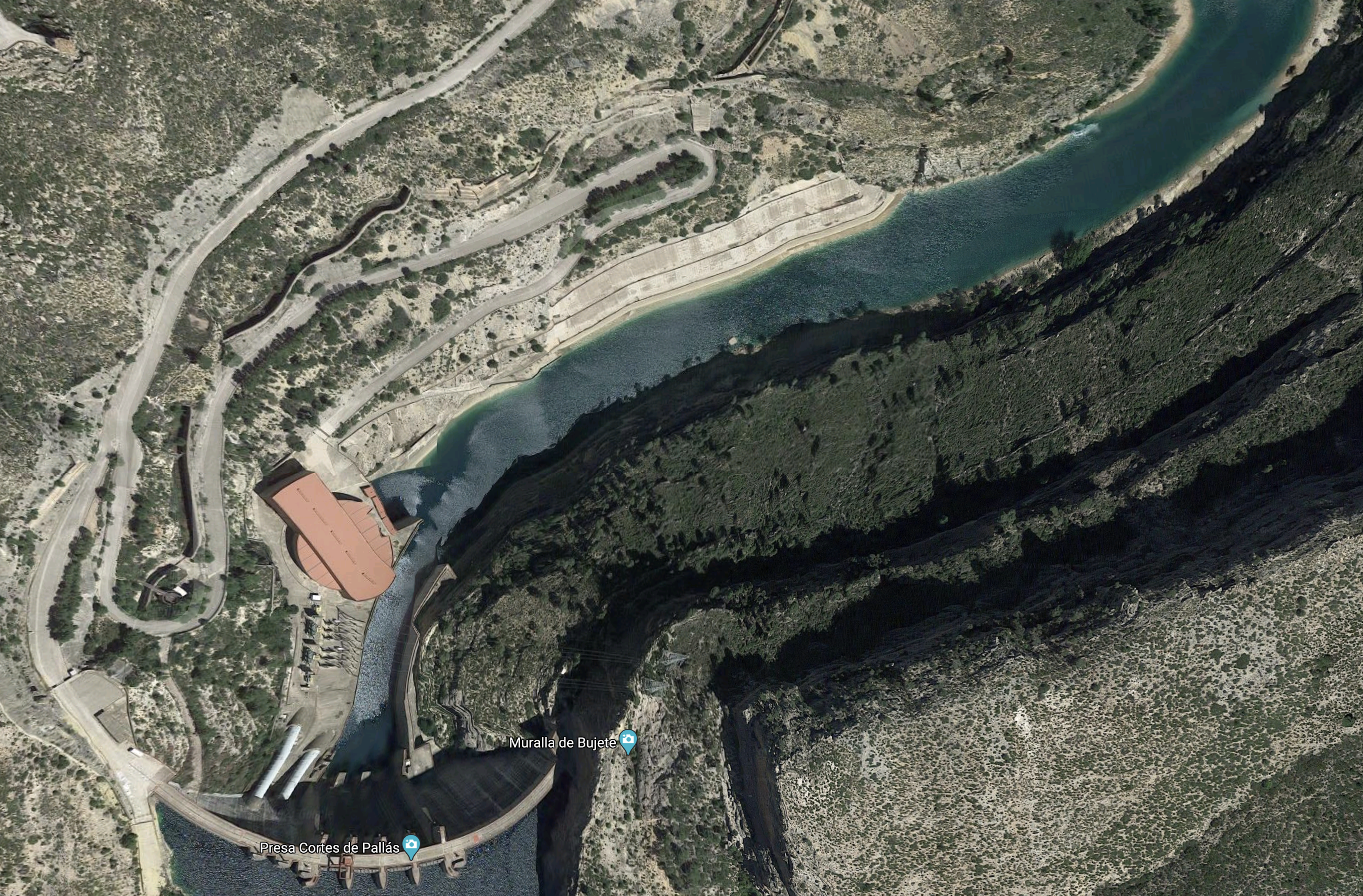
In terms of generating capacity, it is about the same size as Dinorwig power station in Snowdonia., which is the UK’s largest pumped storage power station.
The Aldeadávila Dam
The Aldeadávila Dam is a 1243 MW hydro-electric power station with a pumped storage addition on the River Douro between Spain and Portugal.
This Google Map shows the dam.
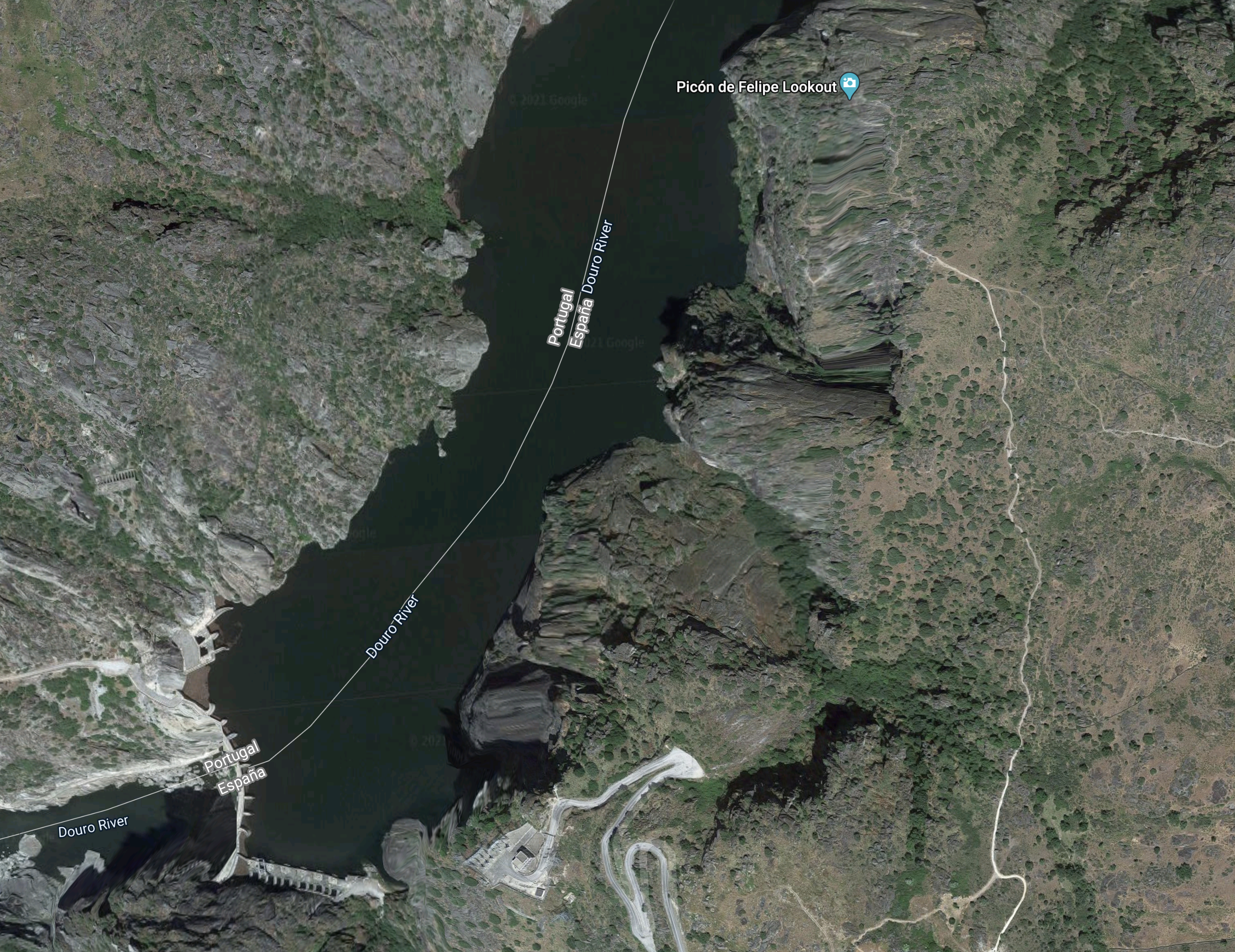
It certainly looks like a place to visit.
Both these pumped storage station seem to have been converted from earlier hydro-electric power stations.
I wouldn’t be surprised to learn, that the Spaniards, were going to increase their number of pumped storage power stations.
- Spain certainly has the mountains, with big rivers running through!
- Bolarque dam already uses pumped-storage techniques.
Are there any other existing hydro-electric power stations in Spain, that can be converted to pumped storage or be upgraded?
Concentrated Solar Power
Spain has around thirty concentrated solar power or CSP power stations, either in operation, under construction or planned.
Some also store electricity as heat.
Spain is not short of sun.
Spain is considered a world leader in this technology.
This Google Map shows the Andasol solar power station.
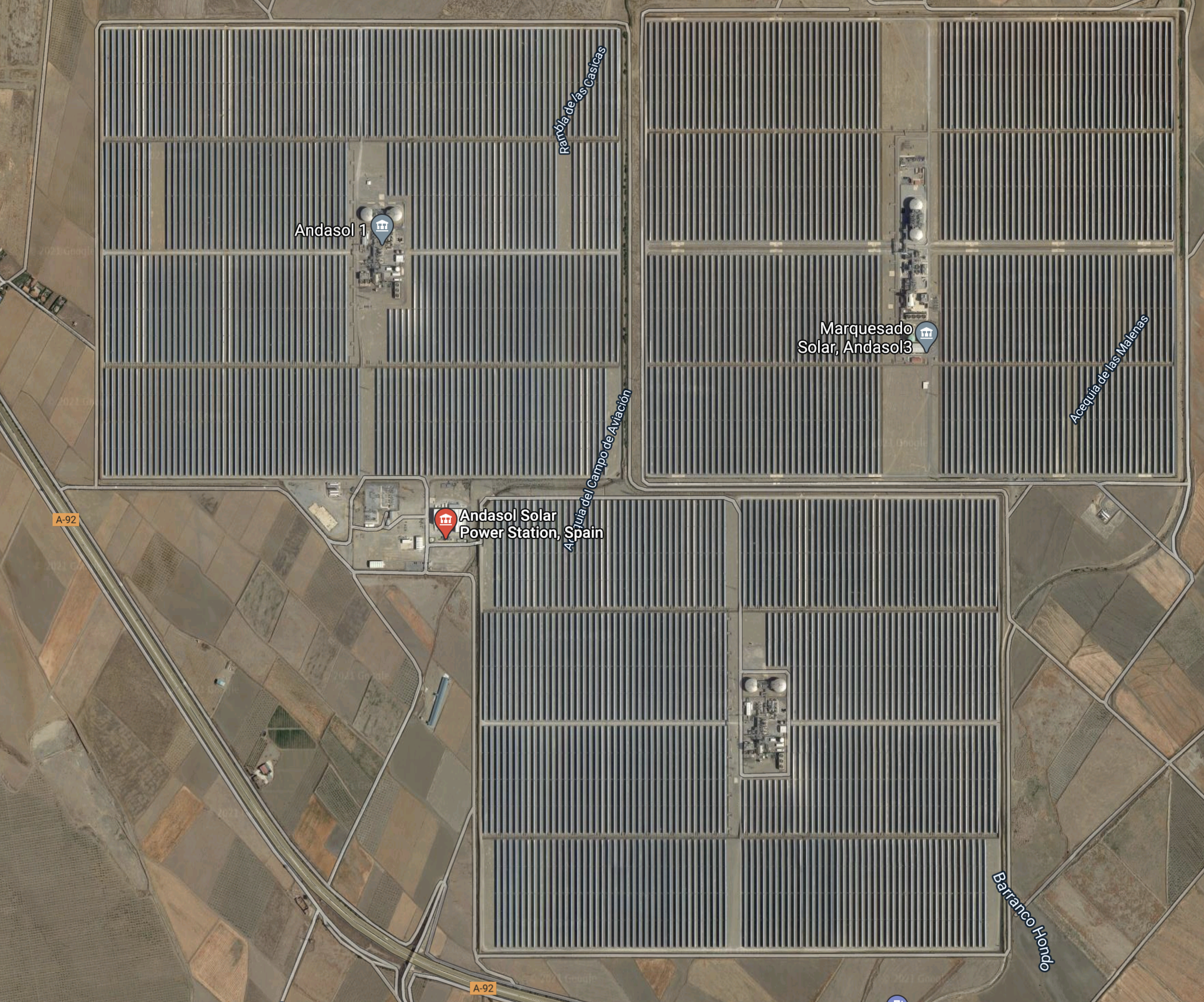
The specification includes.
- It uses technology called a parabolic trough.
- A nameplate capacity of 149.7 MW
- A capacity factor of 37.7 %
- Annual net output of 495 GWh
- a storage capacity of 1.123 GWh
- The energy storage is based on a mixture of potassium and sodium nitrates.
- The power station takes up an area of six square kilometres.
Will Spain build more of these CSP power stations or add energy storage to some of the existing stations?
Batteries
The article has this sentence.
the government wants to add large-scale batteries, behind-the-metre batteries — minimum 400 MW in 2030 — and make the most of the vehicle-to-grid technology, according to the document.
It should be noted that Spain has installed capacity of over 25 GW of wind power, according to this article on Wikipedia, which is entitled Wind Power In Spain.
These are some points from the article.
- Spain has a lot of indigenous wind turbine manufacture.
- The Spanish wind-power industry employs upwards of 60,000 people.
- A central control centre for Spanish wind power needs to be developed.
- There is little opposition to onshore wind, although perhaps somewhat surprisingly, there is some opposition to offshore wind.
After reading what Wikipedia had to say, it appears to me, that Spain needs a ;pt of batteries to support all these wind turbines.
The world’s second largest wind-turbine manufacturer is Siemens Gamesa, who are Spanish-based.
Siemens Gamesa have an innovation storage battery based on hot volcanic rock, which I wrote about in Siemens Gamesa Begins Operation Of Its Innovative Electrothermal Energy Storage System.
This gives a brief description of the pilot plant.
The heat storage facility, which was ceremonially opened today in Hamburg-Altenwerder, contains around 1,000 tonnes of volcanic rock as an energy storage medium. It is fed with electrical energy converted into hot air by means of a resistance heater and a blower that heats the rock to 750°C. When demand peaks, ETES uses a steam turbine for the re-electrification of the stored energy. The ETES pilot plant can thus store up to 130 MWh of thermal energy for a week. In addition, the storage capacity of the system remains constant throughout the charging cycles.
It was taken from this press release from Siemens Gamesa.
This page on the Siemens web site gives the nominal output of the system as 30 MW.
So it would need just over a dozen systems like these to perhaps be strategically-placed near large wind farms to meet Spain’s target of 400 MW of energy storage.
Highview Power’s liquid air systems would be another possibility, but I doubt, they’d perform as well in the heat of Spain, as a system based on hot rocks.
Conclusion
Spain’s plan seems achievable and could create a lot of employment.
It also seems to me, that their natural resources of mountains, big rivers and lots of sun are a great help.
 The Anonymous Widower