Before Overground – Chingford
A Terminus In A Meaningful Place – Rating 8/10
Chingford is a proper terminus, with three platforms and a well-equipped station surrounded by a bus station with upwards of half-a-dozen routes, cafes, shops and a real ale pub.
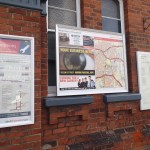


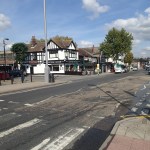
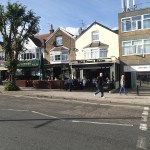

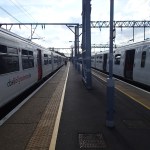
The station doesn’t appear to have any access issues and possibly more trains could be run to and from the station every hour.
Before Overground – Walthamstow Central
When the Victoria Line was built in the 1960s, the design budget seemed to run out. Several stations like Euston, Highbury and Islington, Brixton and Finsbury Park, show British rail infrastructure design of the time at its worst.
Wikipedia includes this in its section on the history of the Victoria Line.
It had been intended to build the line beyond Walthamstow Central to Wood Street (Walthamstow), where it would have surfaced to terminate next to the British Rail station. Proposals were also made to extend the line as far as South Woodford or Woodford, to provide interchange with the Central line. However, in a late decision in 1961 the line was cut back to Walthamstow (Hoe Street) station, renamed Walthamstow Central in 1968.
So does this late cutback, explain why Walthamstow Central is another station in this design disaster group?
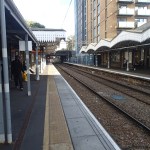
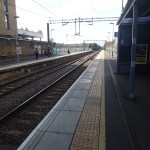
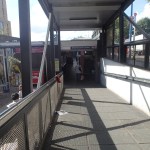

The station has the feel of something designed on the spur of the moment, with a simple subway underneath the Chingford branch to access the Victoria Line platforms. To get between the Chingford branch platforms and the entrance to the Underground station, you need to negotiate a tricky staircase. It’s almost as though London Underground designed the lower half and British Rail did the top.
A station designed today would probably incorporate escalators, lifts and wide straight staircases.
I can’t help thinking that the original plan of connecting the two lines at Wood Street was the correct one.
Wikipedia says this in its description of the station.
The underground station, like many stations on the Victoria line, was never completely finished. White ceiling panels were never fixed to the ceilings above the platforms; instead the steel tunnel segments were painted black and used to support the fixtures and fittings. This has had a detrimental effect on the lighting levels. There is a concrete stairway between the two escalators instead of a third escalator; this caused a hugely disruptive station closure for several weeks in 2004 when both escalators went out of service.
As Walthamstow is going through a building boom in the moment and traffic through the station will only increase, we must accept what’s done is done and we must find a way of correcting the mistakes of the past!
We can do two main things.
1. The interchange routes between the two lines at Walthamstow Central can be made easier by the addition of escalators and/or lifts.
2. We must provide alternative routes that take the pressure off Walthamstow Central. One simple idea would be to reinstate the Hall Farm Curve, which would allow trains to go a reopened Lea Bridge station and the major transport interchange at Stratford, with access to two Underground lines and the DLR.
As with many transport problems in London, I think that in 2018, London’s transport problems will change, with the arrival of the two biggest beasts of all; Crossrail and Thameslink.
1. Crossrail with its stations at Liverpool Street and Stratford will be fed directly by the Lea Valley Lines and pressure should be taken off the Victoria and Central Lines.
2. Thameslink calls at Finsbury Park, so will line be able to act as a bypass for those coming from Walthamstow and Chingford, who need to go to South London.
Hopefully all the changes will be for the better!
Before Overground – Theobalds Grove
A Simple Station With Poor Access – Rating 4/10
Theobalds Grove is typical of the poorer stations on the Lea Valley Lines. It has long staircases geared to the fit, rudimentary facilities and no redeeming features.

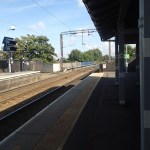
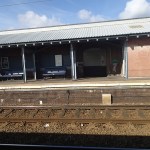
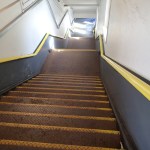
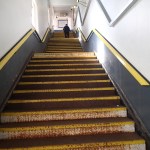
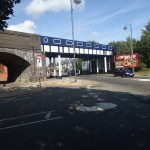
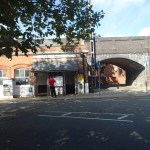
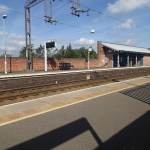
There does at least seem to be some cafes in the shops outside the station. But none had any of the quality you get in those around my local station; Dalston Junction.
Before Overground – Cheshunt
Cheshunt is the terminus of one of the branches of the Lea Valley Lines.
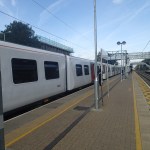
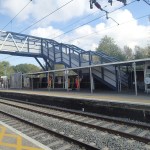
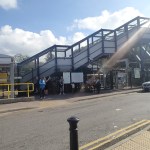
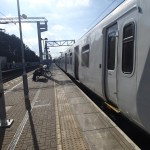
There is no severe access problems at this station, unless you’re changing from a train from the North to one of the local trains for say Hackney Downs. The timetable does seem to allow a generous fifteen minutes to catch the local train.
One thing that needs attention is the bus information and maps. I suppose we can’t really expect a company like Abellio Greater Anglia based in Norwich to know the intricacies of the buses in Hertfordshire. But will the information, after the takeover of the station by London Overground, be to London’s standard or that of Hertfordshire?
Before Overground – Turkey Street
A Convenient Station For The M25 – Rating 5/10
Turkey Street is not the best of stations, but many of its problems are mainly cosmetic. Except of course for the inevitable step-free access problems.


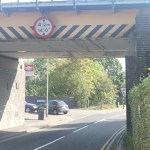


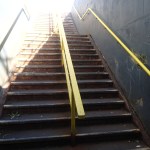

The station though does have the advantage that it is just south of the M25, about 300 metres off the A10.
On this part of the M25, which goes in a wide arc around, where I used to live at Cockfosters, the stations aren’t ideally placed to pick up or drop off a passenger. Turkey Street may be a place to drop a passenger, who’s going to the city, after which you continue around the M25.
London would certainly benefit from a decent Park and Ride station in this area!
Before Overground – Bush Hill Park
A Pleasant Tidy Station In The Suburbs – Rating 7/10
Bush Hill Park is one of the few stations, that is in reasonably good nick.
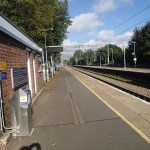
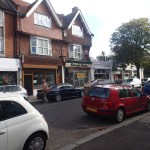

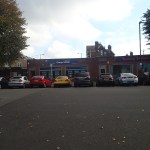
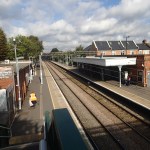

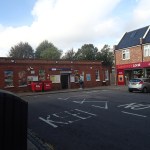
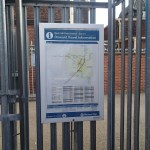
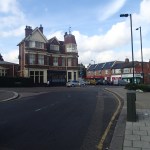
The station isn’t step-free, but if you can arrange that you always get on and off the train so you can walk out directly, you can avoid climbing over the footbridge. Network Rail says this about the station.
There is step-free access to each platform, but not between platforms.
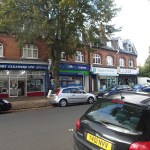
For a station in a residential area, it’s well surrounded by shops, with a good sprinkling of cafes and restaurants. There is even a pub, that could be reasonable.
So it could be one of those stations, where you go to have a meeting for business or pleasure.
Before Overground – Cafe Issues
The stations to be incorporated into the Overground from the Lea Valley Lines have a sprinkling of cafes, like this one at Hackney Downs.
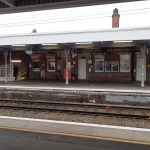


I got a nice cup of tea there, but on chatting with the owner, there are issues that London Overground need to sort out with these little cafes and other shops in the stations.
I also feel that in some of the smaller stations, the only decent small premises are the booking office, which was often closed. As it is Transport for London’s policy to do away with booking offices, perhaps some could be revamped as retail premises.
At Rectory Road, there was only one lonely guy sitting in the booking office. He should be on or watching the platforms, not hidden away!
Before Overground – A Lack Of Colour
To say some of the stations on the Lea Valley Lines are drab and colourless is an understatement.
Colourless it may be, but a station like Stoke Newington has some very interesting brick arches. Instead of just being filled with litter, perhaps some innovative ideas to brighten them up could be applied.
There are gardens in some stations, but they are generally drab and only enlivened by the odd patch of Japanese knotweed.
Perhaps a Highams Park solution can be applied, where local volunteers have created the gardens.
Before Overground – Integration Into Transport for London
One thing that Transport for London (TfL) manages better than any other transport authority I’ve used anywhere in the world, is the interface between the various modes of transport.
Turn up at most Underground or Overground stations or any bus stop and you’ll generally find two things; a bus spider map, showing where the buses in the area go and a good easy-to-read walking map for those who need, have or want to walk.
Today, I arrived at Rectory Road station for the first time and I couldn’t find the information I needed to get a bus to Hackney. Not really a problem, as I got back on the next train to Hackney Downs.
At present some of the stations have information levels more appropriate to a rural halt in the wilds of Norfolk.
So will we see better information on the Lea Valley Lines, when TfL is responsible for the stations?
Before Overground – Long Platforms And Eight-Coach Trains
When the London Overground was created in 2007, the Class 378 trains were delivered as just three car trains. Partly this was because, a lot of the platforms couldn’t handle longer trains. These trains and platforms have grown to accommodate the increase in traffic. The Class 378 trains are now going to five cars and in some documents Transport for London is talking about six cars in the future.
The Lea Valley Lines are generally worked by a mixture of four and eight car Class 315 and Class 317 trains and unlike the original Overground, the platforms are long.
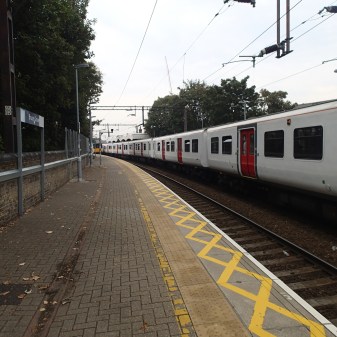
An 8-Car Class 315 At Bruce Grove
Wikipedia states this on the Overground’s future fleet.
TfL announced its Invitation To Tender for a total of 39 four-car EMUs in April 2014, with 30 required for the Cheshunt and Chingford routes, 8 for the Gospel Oak to Barking, and 1 for the Romford to Upminster.
So it looks like trains on the Lea Valley Lines will be 4-car, that at times will work in pairs as 8-car units, as they do now!
I don’t think London Overground will mind the two different lengths of trains, as on the Lea Valley Lines, there is no platform length issues and eight-car trains are easily created.
I suppose the only speculation left, is to see who wins the order for the new trains. I gave my fourpennyworth in this post. I still think that it would be better for London Overground to have a one class fleet. But who knows? I certainly don’t!
 The Anonymous Widower