The New Bromsgrove Station
This is the new Bromsgrove station, which opened this week.

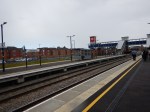
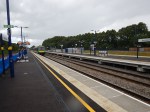
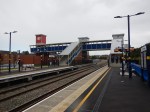


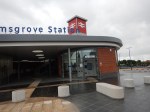

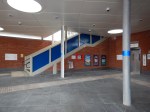
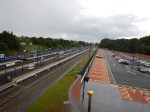
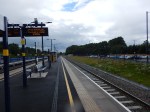
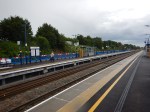
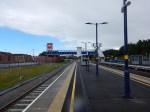

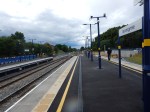
It is not what you’d call a spectacular station, but it certainly fulfils the objectives of the design.
- Act as a second Southern terminus for three trains per hour on Birmingham’s Cross-City Line.
- Be able to accept trains up to nine cars on the Cross-Country route from Gloucester, Worcester and Hereford through Birmingham and onto the East Midlands and Yorkshire.
- Provide a step-free interchange, between trains, buses, cars and cycles.
- Provide a Park-and-Ride station for Birmingham.
But as it has four platforms, will soon be electrified and have connections across the City, will it after the timetable has settled, become an important interchange that takes the pressure from Birmingham New Street? I think it will, as Reading does for Paddington, Stratford does for Liverpool Street and Clapham Junction, does for ictoria and Waterloo, in London.
It is also not finished and needs a shop and coffee stalls. In some ways it has a similar aura to the new Lea Bridge station in East London. Both stations shout that they are open for business, so please send us some trains and we’ll make the passengers happy.
It could turn out to be a masterstroke.
The electric trains on the line that will work the electrified service are Class 323 trains. There are forty-three, three-car units of which London Midland have twenty-six units, or just thirteen six-car trains, which is the train-length, the line obviously needs.
Will they get the other seventeen units from Northern, as that company gets new rolling stock, to create a fleet that could serve the line adequately?
They could also be looking at new trains. Something like four-car Class 710 trains, which are being built for similar urban routes on the London Overground, would be ideal. And in these Brexit times, they are built in Derby.
If Class 710 trains were to be used, they open up the intriguing possibility of fitting some or all of them with on-board energy storage.
This would enable the following routes.
- Bromsgrove to Worcester is only a dozen miles, and doesn’t include the notorious Lickey Incline, which will soon be electrified. So it would be possible to run a frequent Birmingham to Worcester service using onboard energy, which would also serve Droitwich Spa and the new Worcestershire Parkway station.
- The Camp Hill Line provides an alternative route across Birmingham City Centre. It is not electrified, but as it is short, it would be well within onboard energy storage range.
- On the other side of Birmingham, it is only about twenty-five miles or so from the electrified Cross-City Line to the electrified West Coast Main Line at Nuneaton.
So could we see a second Cross-City Line in Birmingham from Worcester to Nuneaton via Bromsgrove, Camp Hill, Water Orton and Coleshill Parkway?
It would need no new electrification and just appropriate track and station improvements.
A Ride From Nuneaton To Coventry In A London Midland Class 306 Train
I went to Nuneaton station and then took the Coventry to Nuneaton Line to see the new stations at Bermuda Park and Coventry Arena before changing at Coventry for Birmingham. I took these pictures from the train.
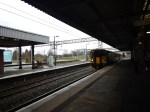
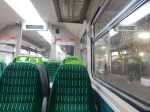

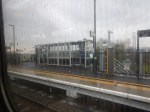
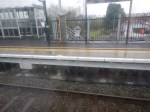
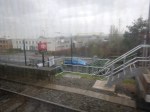
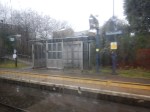

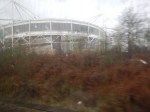
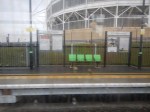
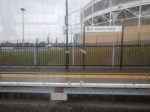
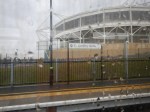

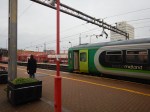
Both new stations have two similar platforms, so I only photographed one at each station.
All platforms seem to be able to take at least a three car train, but the Coventry-facing platform at Coventry Arena station can take six card to handle events. I also suspect that selective door opening on modern trains like Electrostars can allow longer trains to call.
The train was actually two Class 153 trains, which explains the Class 306 train.
The line may be electrified in future, as it is used by freight trains, but if Network Rail get their act together, I can see the passenger service on this line using IPEMUs. Especially, when Kenilworth station is reopened on the Coventry to Leamington Line.
Unless the two lines are electrified, freight would still be diesel-hauled. A Class 88 locomotive could be used, so that where there is electrification.freight trains could be electric-hauled. But they seem to be taking a long time to arrive!
Freight Through Nuneaton
Nuneaton is where freight trains between Felixstowe and the North West and the West of Scotland, join and leave the West Coast Main Line (WCML).
This Google Map shows the rail lines through Nuneaton station.

Freight Through Nuneaton
Note how the WCML runs diagonally North-West to South-East, though Nuneaton station.
Freight trains from Felixstowe arrive and turn North alongside the WCML before crossing the WCML on a flyover.
Trains can either go straight on to Birmingham and the West Midlands or turn North using the 2012-built single-track Nuneaton North Chord to proceed up the WCML.
This Google Map shows the flyover and the Nuneaton North Chord.

Nuneaton Flyover And North Chord
Trains from the West Midlands to Felixstowe take the flyover in the other direction, but trains from the WCML proceed through Nuneaton station and then turn off to Felixstowe.
This Google Map shows the WCML to the South of Nuneaton station, with the line to Coventry turning off to the West and the line to Felixstowe turning off to the East.

Lines South Of Nuneaton Station
As I came through the area today from North to South, I took these pictures.
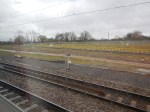



I didn’t take any south of the station, as I was sitting on the wrong side to show the line going East.
The Nuneaton North Chord was a one-mile chord and cost £25.6million, which in terms of railway projects isn’t a lot of money.
But it is one of a pattern of short railway lines that have been built or planned in recent years to unlock the potential of the UK’s railways.
- Bicester Chord was opened in 2015 as part of a £130million project to extend Chiltern services to Oxford.
- Hitchin Flyover was opened in 2013 at a cost of £47million.
- Ipswich Chord was opened in 2014 at a cost of £59million.
- North Doncaster Chord was opened in 2014 vat a cost of £45million.
- Tinsley Chord is being built to enable tram-trains to run between Sheffield and Rotherham at a cost of £2million.
- Todmorden Chord was opened in 2015 at a cost of £9million.
But iit is not all plain sailing, as the saga to create the Ordsall Chord in Manchester shows. Plans show it should be finished in December 2016 at a cost of £95million, but a determined local protester has stuck the development in the Courts with the local Councils, Network Rail, the train companies and the Government on the other side.
I do wonder how many of these short railway lines and chords can and should be built.
 The Anonymous Widower