A Real Hedge Fund
I like this story about how the village of Bratton Fleming in Devon recycles garden waste as compost.
Surely this is the way to go forward with recycling, as those that recycle get rewarded. I’ve believed for a long time, that bottle and can banks should be linked to community projects.
How Not To Win Friends and Influence People
If you read this blog regularly, you’ll know that I hate junk mail and have a sticker on my letter box to discourage people to not fill it up with unwanted paper.
But some people obviously can’t read.
Two were from a new grocery store down the road. As they don’t take my Times vouchers, I think it highly unlikely now, I’ll ever use them.
The other was from a gardener and judging by the number that were blowing around in the road, because he put them under car windscreen wipers, he wasn’t very popular either.
Rubbish Disposal a la Paddington Bear in Hackney
If I want to get rid of anything that might have a bit of value, I just put it outside my door beside the street, with a note saying something like “Please give this sofa a good home!”
It always disappears! Whoever takes it can take it to the dump, when they find out why I got rid of it.
Hackney’s Junk Mail Sticker
I had to contact waste disposal at Hackney Council and mentioned how much junk mail I got. I did this by e-mail on info.hackney.gov.uk.
They have sent me a sensible sticker which now adorns my letter box.
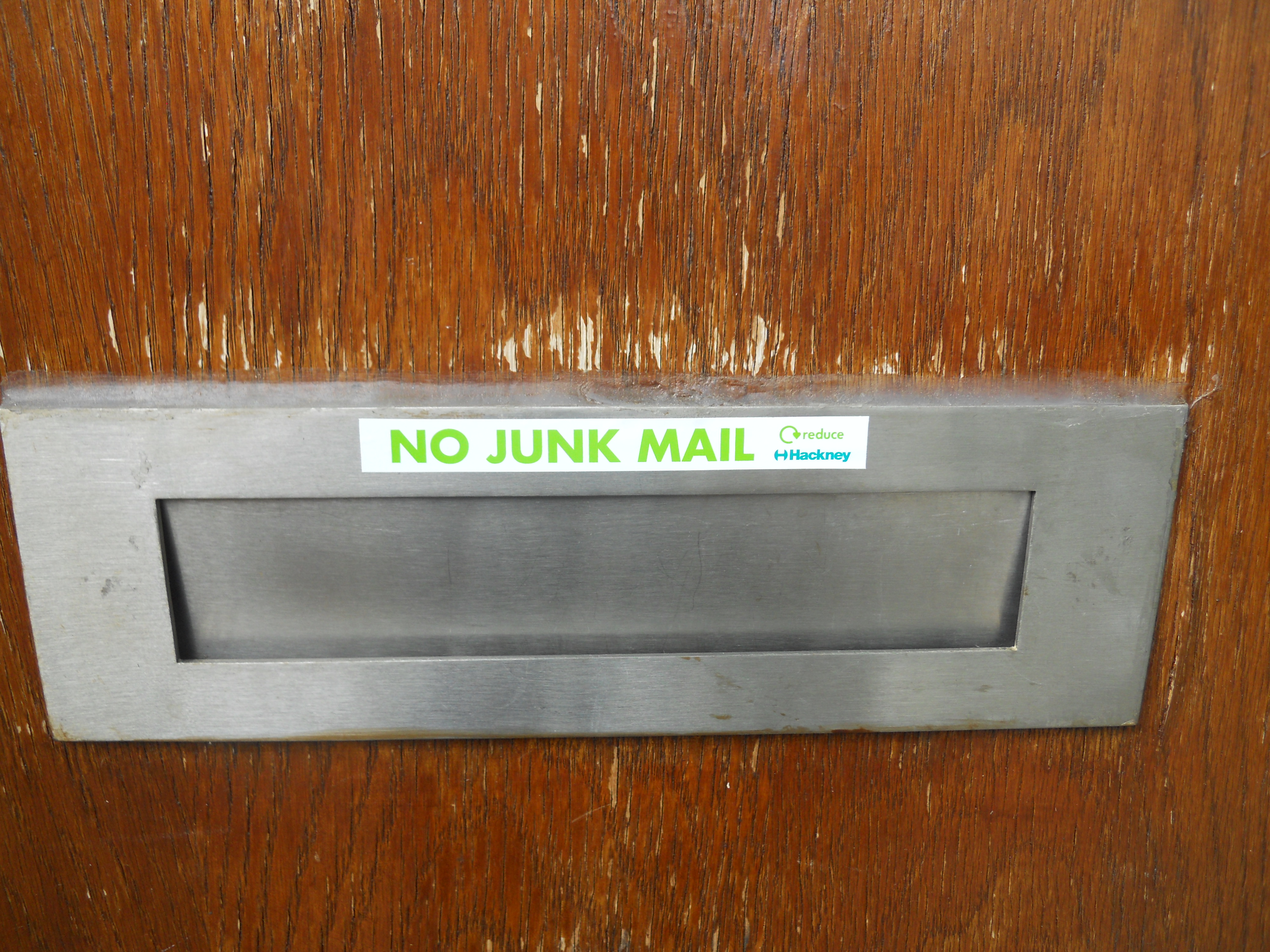
Hackney's Junk Mail Sticker
It will be interesting to see if it cuts the amount of unaddressed rubbish I get through the door.
They also sent me a form to stop the Royal Mail sending me any.
On the back of the form it states that Hackney households receive approximately 35 million pieces of unwanted mail each year. This weighs 900 tonnes and takes 6,000 trees to make.
Incidentally, according to the 2001 Census there are 86,042 households in Hackney. So on average each receive 407 pieces of unwanted junk mail each year or over one piece a day.
I was also pleased to see that Hackney Council used tonnes and not tons on the form.
The Waste Incinerator at Edmonton
Whilst I was in IKEA, I took this picture of the waste incinerator at Edmonton.
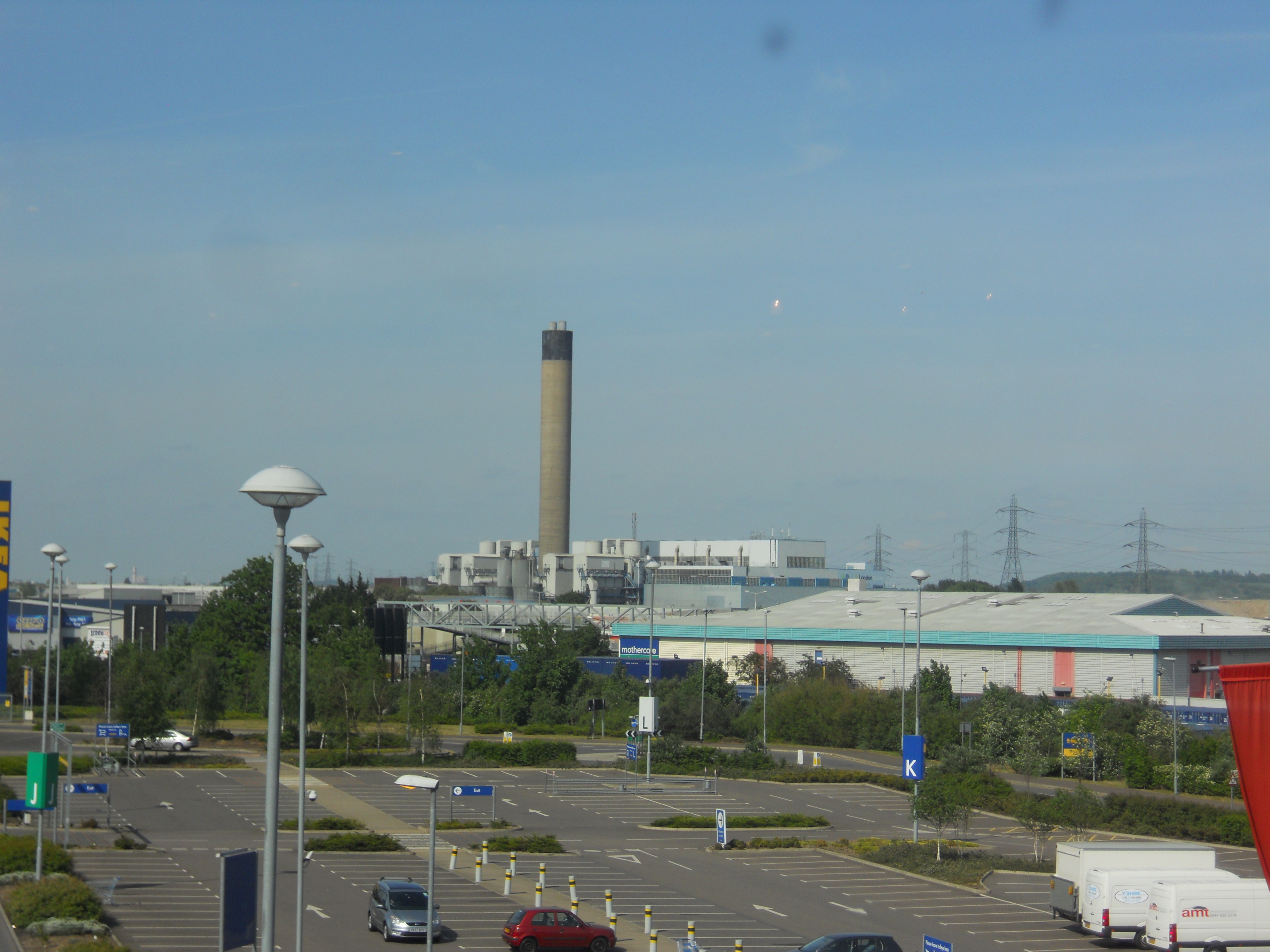
The Waste Incinerator at Edmonton
To some the incinerator is controversial and some such as Greenpeace want it shut down.
The solution to a lot of rubbish is recycling, but then the proportion recycled in London is lower than in many other parts of the country. It is probably easier to get people to sort their rubbish in larger sizes of dwelling, as they have more space for the various bins. So at the end of the day, there will be either a lot of waste for landfill or incineration. Hackney tries hard and the recyclers are a sensible bunch, but are all of the residents.
So whether people like it or not, there will always be a need for incineration.
Perhaps we should follow the Austrian solution.
Fridenreich Hundertwasser was a controversial Austrian artist and architect.
I remember seeing somewhere that he didn’t like incinerators, so Vienna asked him to see if he could do better. He came up with the waste powered heating system at Spittelau powered by waste.

District Heating System at Spittelau
It certainly looks better than Edmonton.
So perhaps we should get the best artists and architects to design incinerators and other buildings like power stations and sewage works so we can be proud of them. Isn’t that what Joseph Bazalgette did with Abbey Mills? Obviously, we must also get the technology right, so the only things that emerge from the plant is energy and clean air and water.
A properly designed plant would be so much better than the alternative of landfill.
The other technology we need is an automatic system that sorts rubbish into the various types of recyclables and what must be buried or burnt. But that will come in the next few years!
I’m also very much in favour of rewarding councils that recycle a high proportion of their waste. trucks are easily weighed on leaving and return from the depots, so it is easy to work out how much rubbish is recycled overall. You could even work it out on a round-by-round basis and reward the operatives and residents appropriately.
But I am against weighing individual bins, as that is unpopular on the one hand and could lead to all sorts of unsavoury practices on the other.
I do think though, that it might be possible to incentivise people to recycle bottles and akuminium cans, by paying a collective bounty to the area round the recycling points. I laid out my thoughts here.
A Nice Touch From Hackney Council
Today was recycling day and my box came back with my house number on it. It must have been the recycling crew.
It saves me buying some paint and a brush!
Good for them!
And Now Recycled Cardboard is a Health Danger!
According to this report on the BBC, the ink in recycled cardboard used in food packaging is a health risk. I have a feeling too, that Nick Higham’s report was actually filmed not far from me. It was certainly somewhere in Hackney.
Apparently, the problem is the mineral oils in the ink.
I know it was years ago, but my father had terrible dermatitis because according to the doctor of all the solvents in printing ink.
Whilst on the subject of paper, I find difficulty reading a newspaper, as I find turning the pages difficult. I thought it was because of the stroke and lack of feeling in my hands, but others, who are young and fit also have the problem. I’ve been told it’s down to the amount of recycled paper used these days.
Nine Recycling Bins
Newcastle-under-Lyme Council must take the award for the world’s most complicated and wasteful recycling system. Nine bins is just too much!
I now live in Hackney, where the system is fairly simple. On Monday they collect household waste and on Thursday the recyclables like paper, bottles and cans go out in green boxes. It works well, except that if I leave my green box outside on my front patio, it collects all sorts of non-recyclables, which I have to remove. Someone also puts an empty can of Stella in there too every night. I hope my doctor doesn’t see it, as he’ll think my gluten-free diet has slipped. The men actually sort the recyclables on the truck, which would seem to be inefficient, but it seems to work well.
In St. Edmundsbury, I had two bins; one for general waste and the other for dry recyclables. They were collected on alternate weeks. There is a great deal of opposition to fortnightly collection, but I never found it a problem.
Surely, we need a national system or perhaps two or three systems that councils would have to use. This would stop confusion and might mean that equipment for a particular scheme would be cheaper. It would also mean that lunatic nine-bin schemes were illegal.
I did try to find a national table of recycling performance on the web, but couldn’t. So if anybody can please tell me!
An Alternative Recycling System
Various organisations, like the Council for the Fossilisation of Rural England, think that all glass bottles should have a deposit that is returned, when you take the bottle back.
This is very old thinking as these days we can do much better!
I recycle all my glass and put it in one of those large cylindrical containers in one of the neighbouring villages, as we don’t have one in the village where I live. These are then craned away on to a truck to go to the central recycling centre, The system works well, except when the containers gets filled and the truck doesn’t empty them for a few days. Incidentally, most recycled glass round here ends up being used as road-stone and hardcore. This may seem a waste, but I think it is actually, the most energy efficient way of reusing the glass and it avoids the need for digging hole to extract gravel.
I got to think, that this system could easily be modifed to create an incentive to recycle.
Let’s take glass bottles, although it could easily work with things like newspapers, old clothes and rags, aluminium cans or plastic bottles.
You would create a Recycling Fund, that was either filled up by a levy on all glass bottles sold or directly by central government.
The recycling container would be stamped with an empty weight and every time it was collected, it would be weighed to ascertain how much glass had been recycled. I suspect that the crane on the truck could do this very simply and easily.
Councils would then have a map of which areas recycled the most bottles say, and this would then earn that area an appropriate proportion of the Recycling Fund, which could be spent how the area wanted. Perhaps, they might want a children’s playground to be refurbished, some public toilets re-opened or just some flower baskets.
What has been created is a virtuous circle. The more you recycle, the more you get for local projects. Areas that didn’t recycle wouldn’t get any special projects, but those that did would get a substantial environmental improvement.
I suspect that such a scheme would be affordable and non-bureaucratic to run. It could also be run initially without a bottle charge, so that people saw trhe benefits before they paid.
 The Anonymous Widower