£9.2m Electricity Research Project To Save 39,000 Tonnes Of C02 Gets Go-Ahead
The title of this post, is the same as that of this press release on National Grid.
These four paragraphs detail the project.
National Grid Electricity Transmission (NGET) has been successful in securing £8.12m of funding from Ofgem’s Network Innovation Competition (NIC) to research the uprating of overhead lines, with the remainder being funded by National Grid.
The RICA (Retro-Insulated Cross-Arms) research project will commence in early 2021 and aims to develop an innovative method for uprating overhead lines, allowing the voltage on 275kV overhead lines to be increased to 400kV. This potentially paves the way for uprating 400kV lines to 550kV in the future.
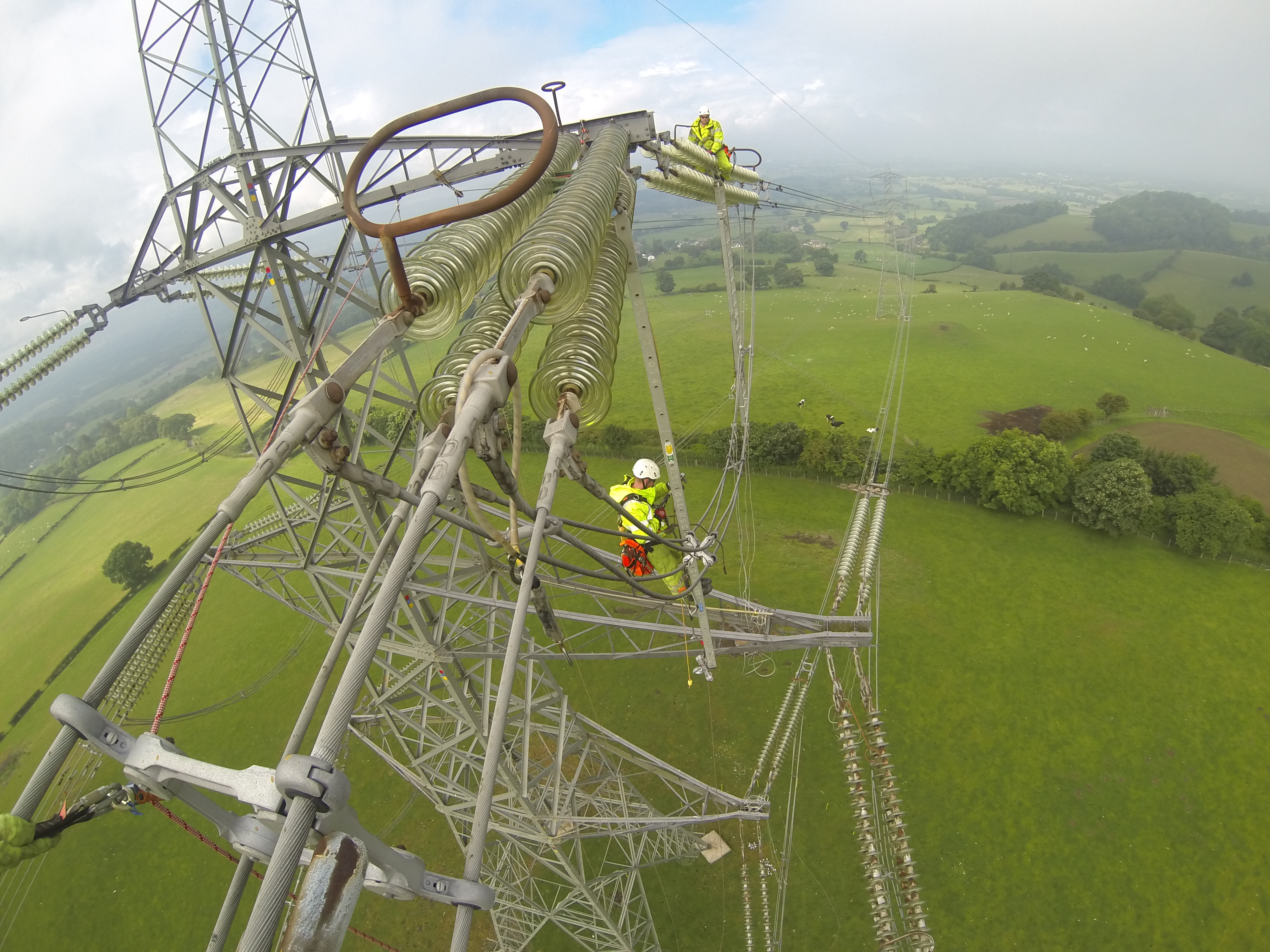
By removing the suspended insulators on these overhead lines and instead insulating the cross arms, the wires will be held higher and further apart, thereby enabling an increased voltage to be carried.
Uprating lines in this way could allow 45% more power to be carried on some existing routes and support significant reductions in UK CO2 emissions – 39,000 tonnes. This could deliver up to £286m of efficiencies to consumers and with future development, it could open the door to ultra-high voltage networks in the UK.
This is a National Grid picture of fitters installing the new system.
Note.
- Surely, if you can increase the capacity of an electricity line by 45 %, by using innovation and just changing the insulators, this would be much cheaper, than adding another high voltage line.
- It would also incur less legal costs and disruption, than a second line.
I like this idea and hopefully it will please the Nimbies.
More About RICA
This web page is the RICA web site.
This document gives a lot more information.
Conclusion
It appears to be a simple solution to increasing the capacity of the grid.
I’d like to see some recent results.
 The Anonymous Widower