Sixty Years On
I must have been about seven, when I went with my father to Earls Court to see the Printing Exhibition.
My father didn’t like deep tube lines, which I’d always put down to an experience during the Second World War.
So his route to Earls Court after parking his car outside his print works in Station Road, wasn’t to go the obvious one by Underground from Wood Green Tube station.
We walked up the hill to the train station that is now called Alexandra Palace station. In those days it was called Wood Green (Alexandra Park) and I still refer to it as Wood Green station, as the Underground one is Wood Green tube station.
From the station we took a local steam train, probably hauled by a Class N2 from the 1920s into Kings Cross. At Kings Cross it was onto a Metropolitan line train to Hammersmith and then it was back a couple of stops on the Piccadilly line to Barons Court for the exhibition.
A roundabout way compared to the way most would go. But it ewas an adventure for a seven-year-old, especially as you got to see lots of interesting machines at the exhibition.
I’d always though, as I said that something nasty in the war had put my father off the tube, but now I’m getting older, I find the older deep tube lines rather stuffy and usually plan my journeys to avoid them. As my father and I share several health problems like arthritis and catarrh, I now wonder if his avoidance of the deep lines, was because he didn’t like the atmosphere down there. You have to remember, that in the 1950s, smoking was allowed in the Underground, which certainly didn’t help matters.
Last night, I heard that Alexandra Palace was one of twenty-six stations that were going to get upgraded access. So I went to have a look.
What a change!


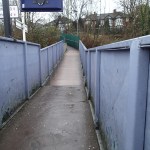




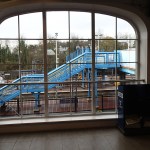
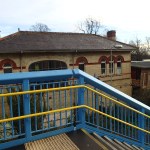


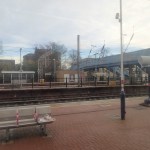
The pedestrian bridge across the lines will probably be fitted with lift towers and given a general upsprucing.
I particularly liked the architectural idea of the large window overlooking the tracks. There must be times when staff need to watch all platforms and this view sometimes must be better than sitting in the office watching screens.
In fact with its cafe and details, the station has the feel of a classy historic shopping arcade, all done with a modern feel. Whoever designed and rebuilt this station, has set a high bar for the hundreds of smaller stations all over the country.
So is it true to say that Crossrail 2 will be getting its first updated station in a few years and long before the new line is built?
Network Rail Publishes A List Of Stations To Be Given Updated Access
Network Rail has published a list of 26 stations, that it hopes to update by 2019.
I have visited some and I have added my thoughts.
Alexandra Palace – I know this station well and it has certainly improved in recent years. Lifts will probably be added to the existing footbridge.
Bexley – Lifts will probably be added to the existing subway.
Carshalton – Lifts will probably be added to the underbridge.
Crawley – I’ve been here once, but it was late after a football match and I can’t remember much.
Kilwinning – This station is also being developed.
Of the stations, fourteen are in London. I shall certainly visit them before and after they are upgraded.
Return From Stratford Parkway Station
Because I thought time was short, I decided to take a taxi to Stratford upon Avon Parkway station to come home.
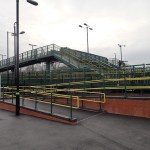
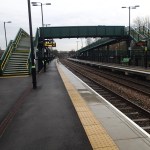
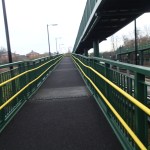
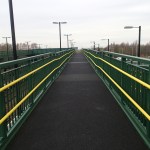

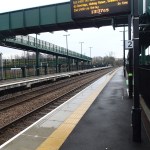
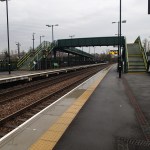
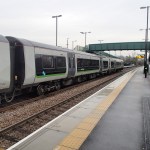
But somewhere I’d got the time wrong and had to wait an hour for my train, in a cold, unwelcoming station without a toilet. And then when I did get on the train, the main toilet was broken!
It is certainly a station that was built down to a cost, that would be unlikely to win any architectural awards.
There should be a rethink about how this station operates.
Before Overground – Mind The Gap
Some of the gaps between platform and train are more than passengers and probably Transport for London would like. Here’s two.
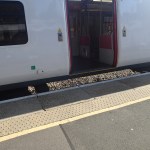
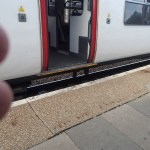
I would think it was fair to assume that nothing will be done about this gap problem until the promised new trains are delivered.
Before Overground – The Step-Free Access Problem
If you look at stations on the London Overground, where a million or so has been spent on installing lifts or ramps to give step-free access, it would seem that the station needs over a million passengers a year before it is updated.
Some of the stations without step-free access on the Lea Valley Lines, like Bethnal Green, Cambridge Heath and Southbury, have nowhere near a million passengers a year.
But then we don’t have before and after usage figures for stations like Camden Road and Hampstead Heath, where lifts have recently been installed. If say lifts and new and longer trains, do raise traffic substantially, it might make the installation of lifts more likely.
One of the problems with these lines is that in many stations the train lines are way above the street, so some of the simple ramps used at stations like Hackney Wick are not possible.
In some places, London Overground might not make the station step-free. Edmonton Green station will soon be step-free and as White Hart Lane is going to be rebuilt in all of the work to create a new ground for Tottenham Hotspur, would it be possible to improve the buses, which are already step-free to serve Silver Street and the North Middlesex Hospital.
It certainly is a complicated problem, with many people not wanting to be down the queue.
Is Step-Free Access Good For Tradesmen?
Occasionally, on the buses or the trains in London, you’ll come across a plasterer, decorator or carpenter going to his job of the day on public transport. The plasterer just had a yellow bucket with his tools in it and his mobile phone number on the side and the decorator had a fold-up pasting table with his details on the outside.
London now has a severe parking problem, so as we see more step-free stations will we be seeing more tradesmen, with innovative ways of transporting their tools?
But we’re certainly seeing larger and larger packages and cases being carried on public transport.
Up And Down On The East London Line
My memories if the East London Line don’t go back very far, as I probably only ever used the line once before I moved to Dalston in 2010. I think it must have been around 2000, when I was travelling from Brighton to my youngest son’s house in Bow. I changed trains at New Cross Gate to get to Whitechapel, from where I must have used the Metropolitan Line to Mile End, near to where he lived.
Comfortable and clean it wasn’t! The trains weren’t as bad as the travelling urinals of the North London Line, but the A Stock were forty years old and very tired.
I posted here about the step-free access improvements on the London Overground, so I thought I’d check them out.

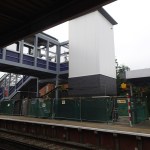
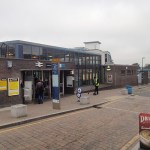

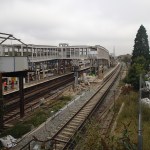

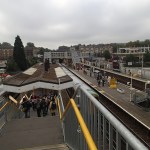
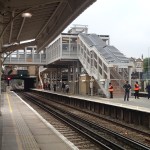
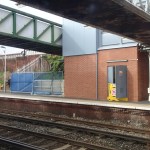
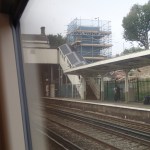
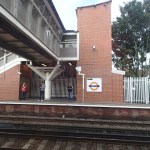
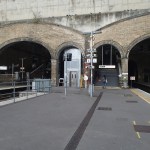
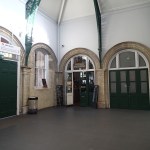

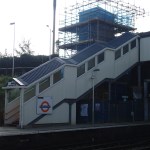

The pictures show my route from Dalston Junction to New Cross, from where I walked to New Cross Gate for a train to Crystal Palace. After a refreshment stop at the excellent Brown and Green cafe at the flagship southern terminus of the East London Line, I retraced my steps stopping to look at the improvements at Honor Oak Park and Brockley.
Of the stations south of Surrey Quays on the New Cross and Crystal Palace branches only Sydenham will not be substantially step-free by early next year. At Sydenham though it is effectively two stations, one for each direction, which means with planning, difficult stairs can be avoided.
Several excellent new cafes and coffee stalls, seem to be setting up in the stations.
The future is definitely looking up on the East London Line.
A good start has definitely been made on bringing some of the stations in South London into the twenty-first century.
More Step Free Access On The Overground
Looking at the London Overground map for 2026, there appear to be additional stations marked for step-free access.
Blackhorse Road – Plans are detailed here. They may be already completed!
Brockley – Improvements in the near future are detailed here.
Honor Oak Park – Improvements in the near future are detailed here.
New Cross – Improvements in the near future are detailed here.
New Cross Gate – This station would appear to be being rebuilt.
South Tottenham – Plans are detailed here in the Haringey Independent.
Watford Junction – I suspect that as everything seems to be happening at Watford Junction, full disabled access will be achieved by 2026.
Whitechapel – This will happen before 2020, as Crossrail will bring step free access between all lines here.
It does seem that all of these schemes seem to be following what appears to be Transport for London’s policy of improving the London Overground on a step-by-step basis as funding allows.
I suppose that with the Overground, putting in lifts and ramps is a lot easier, as the stations except for a few are totally above ground.
A Station For The Chattering Classes
A few years ago on the North London line, some of the stations were a tribute to the ingenuity of British Rail’s maintenance and their hard-working contractors, with poor lighting, dangerous stairways, pot-holed platforms with little shelter.
But look at these pictures I took of Hampstead Heath station today after the station’s reopening after a full makeover.
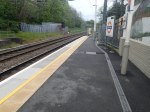
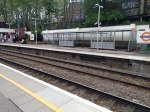
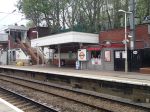
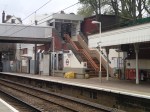
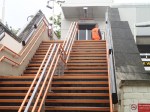
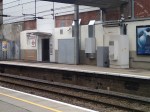

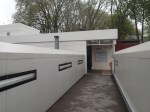

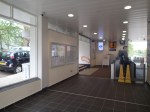
There is now a lift on each platform, lots of shelter, bike racks, a coffee stall, extra handrails on the stairs and perhaps most importantly extended platforms for the new 5-car Class 378 trains.
Some might questioning, this rebuilding of the station, but the passenger usage figures tell an interesting tale.
From just 334,000 passengers in 2004-2005 they had grown to 858,000 in 2008-2009, by which time the line had become part of the London Overground. The last figures quoted in the Wikipedia entry for the station is 2,718,000 for 2012-2013. So in just four years, passenger usage has more than tripled.
Where Is The Lift At Highbury And Islington Station?
I have been impressed with some of the lifts put in at stations like Camden Road and Hackney Central recently.
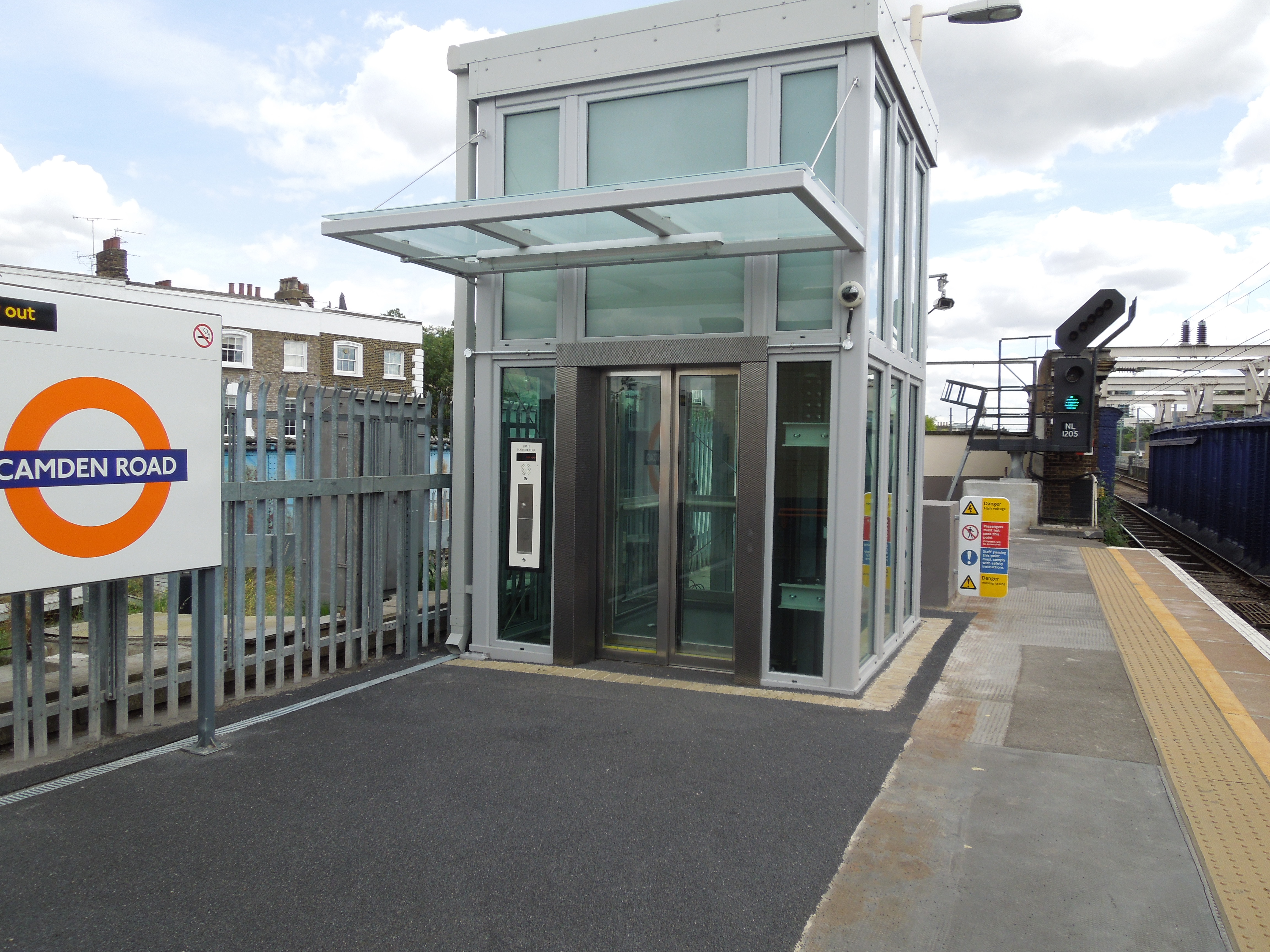
So I thought I’d have a look to see, if any stations, I use regularly were being updated with lifts or step-free access. Network Rail are managing the work across the rail network and the project is called Access for All.
I looked at all the stations to be upgraded and found an entry for Highbury and Islington. Click this link and then go down a bit.
The entry says that one lift is provided to the Great Northern and City line and that it was completed in Autumn 2010.
I’ve used the station extensively for the last few years and I’ve never found this mythical lift. To check, I asked the station staff tonight, when I came through the station on my way home. They’d not seen it and were a bit worried if someone turned up in a wheelchair looking for access to the deep lines.
As I said here, it is not the best station for step-free access, although that to the Overground is excellent. But the single lift mentioned on the Network Rail web site, would be a welcome addition.
 The Anonymous Widower