Was It A Mistake To Close The Palace Gates Line?
I must be one of the few people still alive, who regularly watched trains trundle up and down the Palace Gates Line between Palace Gates and Seven Sisters stations. I’ll admit that I didn’t see many trains, as I sat in my father’s office in Station Road Wood Green on a pile of ledgers in the early 1950s. Admittedly, most trains were just a single coach pushed or pulled by an ancient tank engine, but they kept this then five-year-old amused. Some psychologists might argue, it created my life-long fascination with trains.
But think what could be happening now to East Coast Main Line freight trains travelling to or from London Gateway or the Channel Tunnel, if the line hadn’t been closed and dismantled? The Palace Gates Line was linked to the Hertford Loop, so would it be that the line was used to get freight trains through North East London?
If nothing, it shows how those in charge of the railways in the 1960s were very bad at predicting what the railways would be like fifty years on.
But now Alexandra Palace is being proposed as one of the northern terminii of Crossrail 2, with the line being in tunnel from there to Seven Sisters and then on to my local stations at Dalston Junction and the Angel.
It would not probably be the most difficult of projects to add a junction at Seven Sisters, that allowed trains using the Crossrail 2 tunnel, to have access to the Gospel Oak to Barking line.
Such access would allow freight trains to travel under North East London. But I doubt that Transport for London would want freight trains running through their tunnels. But with platform edge doors, at any intermediate stations, would this still be the problem it is now? I wonder if anybody has put a tunnel under a city big enough to take freight trains and shared the line with the city’s local passenger trains or metro? I can’t find one in Wikipedia.
But if freight can’t use the Crossrail 2 tunnels, what about a third tunnel on the same alignment?
This is probably very fanciful, but we do need some way of getting freight through East London to the railway lines to the North. One alternative would be to make the M25 five or six lanes each way!
Closing the Palace Gates Line just removed an option and closing it today if it still existed, would probably not be contemplated.
Searching For The Dudding Hill Line – Neasden
After Cricklewood, I got a bus to Kilburn and then went on to Neasden to continue my search.
I actually caught sight of the Dudding Hill Line as I approached Neasden station and once I had exited the station onto Neasden Lane, it is not difficult to spot.
Searching For The Dudding Hill Line – Cricklewood Again
My trip to Cricklewood yesterday, was just an outdoor cold bath. But I got these pictures of the Dudding Hill Line this morning.
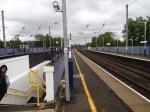
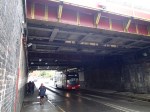
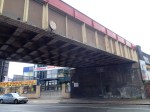
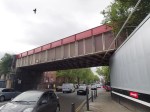
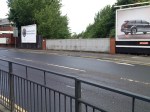
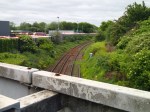
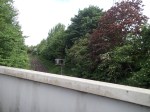
Note that I have included the pictures of the Midland Main Line at Cricklewood to show how wide the railway is, with seven tracks through the station.
It would appear that both the North and South curves to the Dudding Hill Line are double-tracked.
Searching For The Dudding Hill Line – Cricklewood
The Dudding Hill Line starts at a triangular junction at Cricklewood, where the line joins the Midland Main Line.
Unfortunately, due to the weather and the speed of the 32 bus I was travelling on, I didn’t a decent picture of the line, but I did get one of the junction on the Cricklewood bus map.
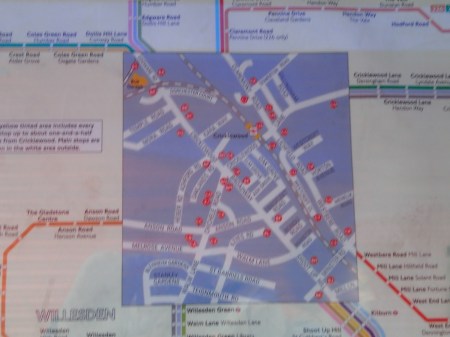
The Dudding Hill Line On A Bus Map
You can see the junction in the top left of the map.
The one thing that I did ascertain is that from North to West and vice-versa it is double-tracked, but the turn from South to West is single-tracked. So it is reasonable that trains can move in any direction, between any of the three tracks; north, south and west.
I shall have to go back to get some pictures.
Searching For The Dudding Hill Line – Craven Park
I took the Overground to Willesden and then I took an 18 bus to Craven Park.
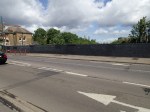
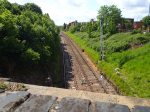
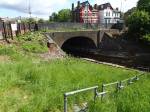
The bridge-cum-tunnel obviously has a low height, but it doesn’t look to be the worst to increase the headroom to allow container trains to use the Dudding Hill Line.
Searching For The Dudding Hill Line
This is an index of the various posts about searching for the Dudding Hill Line.
They will run from Cricklewood to Acton, for no logical reason, except that I’m a North Londoner, so I would choose from North to West.
Searching For The Dudding Hill Line – North Acton
After I’d walked down Victoria Road, I took a photograph of the North London line, where it crosses the Central line on a high bridge. I then took a bus to Acton Central station, from where I took a train back to Hackney. As I crossed the bridge I took another photo, followed by another as the Dudding Hill line broke off to the left, to cross Park Royal and the Grand Union Canal.

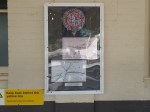
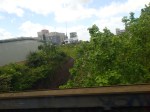

Again the last picture, gives the impression that it is well-maintained railway.
Note the picture of the maps at Acton Central station. They show what a tortuous web London’s railways were in the Victorian era. And I suspect, it’s not just London, that was covered by such an intricate pattern of lines.
Searching For The Dudding Hill Line – Victoria Road, Acton
After photographing the bridges over the canal, I retraced my step[s back to Old Oak Lane and followed it towards North Acton station.
The Dudding Hill Line crosses the road on a bridge.
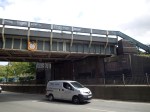
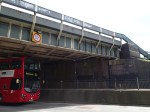
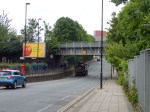
In fact one feature of the line is several nice bridges.
Searching For The Dudding Hill Line – Willesden And Park Royal
I took the Overground to Willesden Junction and walked down Old Oak Lane towards Acton.
According to the map, it appeared that the Dudding Hill Line crossed the Grand Union Canal somewhere to the west of the road. So I went for a look.
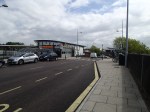
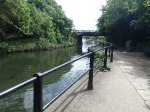

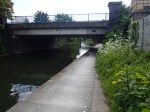
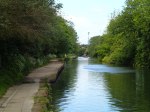
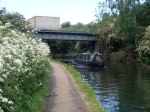
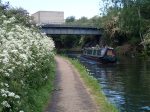
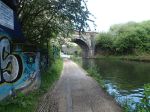
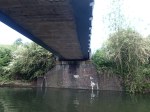
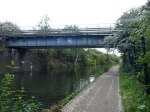

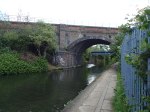
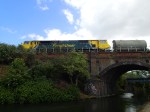
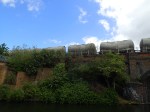
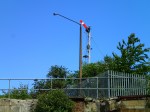
As the pictures show, I found the line where it crosses the canal on a massive brick bridge. The blue bridge beside it would appear to be curve enabling trains to come down the West Coast Main Line and turn south to Acton.
No Action At Lea Bridge Station
According to Wikipedia, Lea Bridge station will be reopened this year.
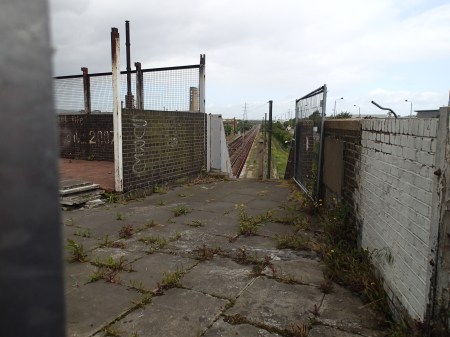
No Action At Lea Bridge Station
But does this picture say otherwise?
 The Anonymous Widower