Is This One Of The Most Valuable Sites For New Development In The UK?
I don’t question the engineering behind the Windsor Link Railway, but I do question whether the project is viable financially.
Property Development
Obviously, the key to financial viability is the property development opportunities that the building of the Windsor Link Railway will enable.
I don’t know much about property development, but from conversations with serious property developers over the last few years, I can say this.
- Some of the sums of money that can be involved are immense.
- Location is still as important as it ever was.
- Car parking can be reduced in developments above stations, which reduces construction costs.
An infrastructure investor from a large insurance company, also told me that developments with a new station and possibly a few new trains are easy to finance as a package.
Property Development At Windsor And Eton Riverside Station
Look at this Google Map of the Windsor and Eton Riverside station and the River Thames.
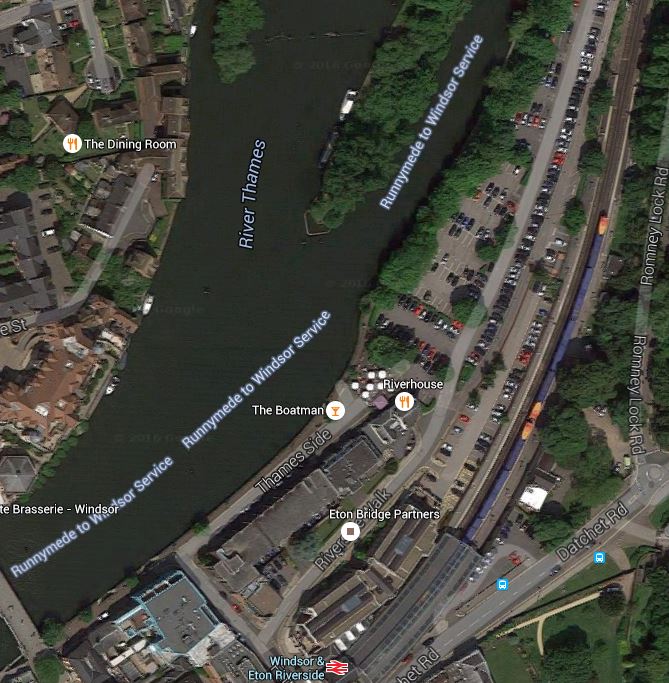
Windsor And Eton Riverside Station And The Thames
The railway and the adjacent car parks, use a surprisingly large amount of land, that would be released by the building of the Windsor Link Railway.
The Windsor Link Railway could be a single track tunnel, as the maximum frequency would only be four trains per hour in both directions, which would enter the tunnel around the end of the current platforms.
Obviously, all of the land where the current station and car parks would be available for development. There would just be a rail tunnel in the basement.
I also feel that done properly, this development with its superb location on the river, should be car-free.
If that is the case, then perhaps Windsor needs a station under this development?
As the development will be pretty grand and very desirable, I would design a station with the following characteristics.
- Single-platform able to accept twelve-car trains. We don’t want to build a restriction for the future.
- All trains could be IPEMUs running on batteries in the tunnel. Quiet, very green and no dangerous electrification.
- Platform-edge doors. They’re probably needed under EU safety legislation.
- Double-ended with one entrance in the development and another in Thames Street. If tourists can’t drive, they need to be in the centre.
I think with modern station design, that a single-platform station would be sufficient, although, it would probably restrict services to four trains per hour in each direction.
We’ve never built a combined up-market station and luxury development in this country yet, although there are quite a few stations like Dalston Junction with lots of dwellings on the top.
Windsor And Eton Riverside could be the place to start.
Property Development At Windsor And Eton Central Station
If the Riverside site could be properly developed, what about, where the Windsor Link Railway are proposing to put their proposed Windsor Royal station.
This is a Google Map of the area to the West of Windsor And Eton Central station.

Note how the area is dominated by coach and car parks. Visitors want to come to see the river and the castle, socialise a bit, have a drink and a meal, and perhaps buy some tatty souvenirs. They don’t want to look at car and coach parks.
In Connecting The Windsor Link Railway To The Slough To Windsor And Eton Line, I looked at the engineering and I don’t think building the rail connection is impossible.
It is my view, that you build the railway and the station in the best way for train operation and passenger convenience. The station would probably have the following characteristics.
It could be a traditional surface station or underground, with minimal buildings above the surface.
I prefer the underground station, as it has other advantages.
- There would be lots of entrances facing in all directions. Think fosteritos!
- It could have a single-platform or a double-platform/island layout, capable of handling twelve-car trains.
- Platform-edge doors.
- A single track would lead to Slough and also to the tunnel under Windsor.
In the hole for an underground station, it would also probably be a good idea to build an adequately-sized underground car and coach park.
But surely visitors need some form of decent Park-And-Ride using an uprated train service. Such a station is envisaged by the Windsor Link Railway at Chalvey Interchange, which is South of Slough close to the M4.
Once the new station and the railway is fully connected, there is a magnificent opportunity to create a world-class park and related development over the top, between the existing railway viaduct and the iconic Thames.
The redundant Central station and the unused part of the massive viaduct would be developed appropriately.
Let’s face it Windsor is rather a crap and tatty tourist dump at the present time. The Windsor Link Railway could give the town the opportunity to give the historic town and castle the environment and status, it needs and deserves.
The Trains
In The IPEMU And The Windsor Link Railway, I wrote how IPEMU trains could make the design and building of the Windsor Link Railway easier and more affordable.
I believe it is essential that the Windsor Link Railway is run using trains with an IPEMU capability.
I also believe that as I saw in Future-Proofing The Uckfield Branch, that all platforms including the bay platform at Slough station must be capable of accepting twelve-car trains.
I am assured that this is in the design.
The Central Tunnel
I would suspect that many people would feel that digging the central tunnel across Windsor will be an enormously expensive operation.
Construction companies put in cut-and-cover tunnels like this all over the world and especially in Germany. The last tunnel, I saw being built was the large Stadtbahn Tunnel in Karlsruhe right down the main street, which would take the German version of the Class 399 tram-train.
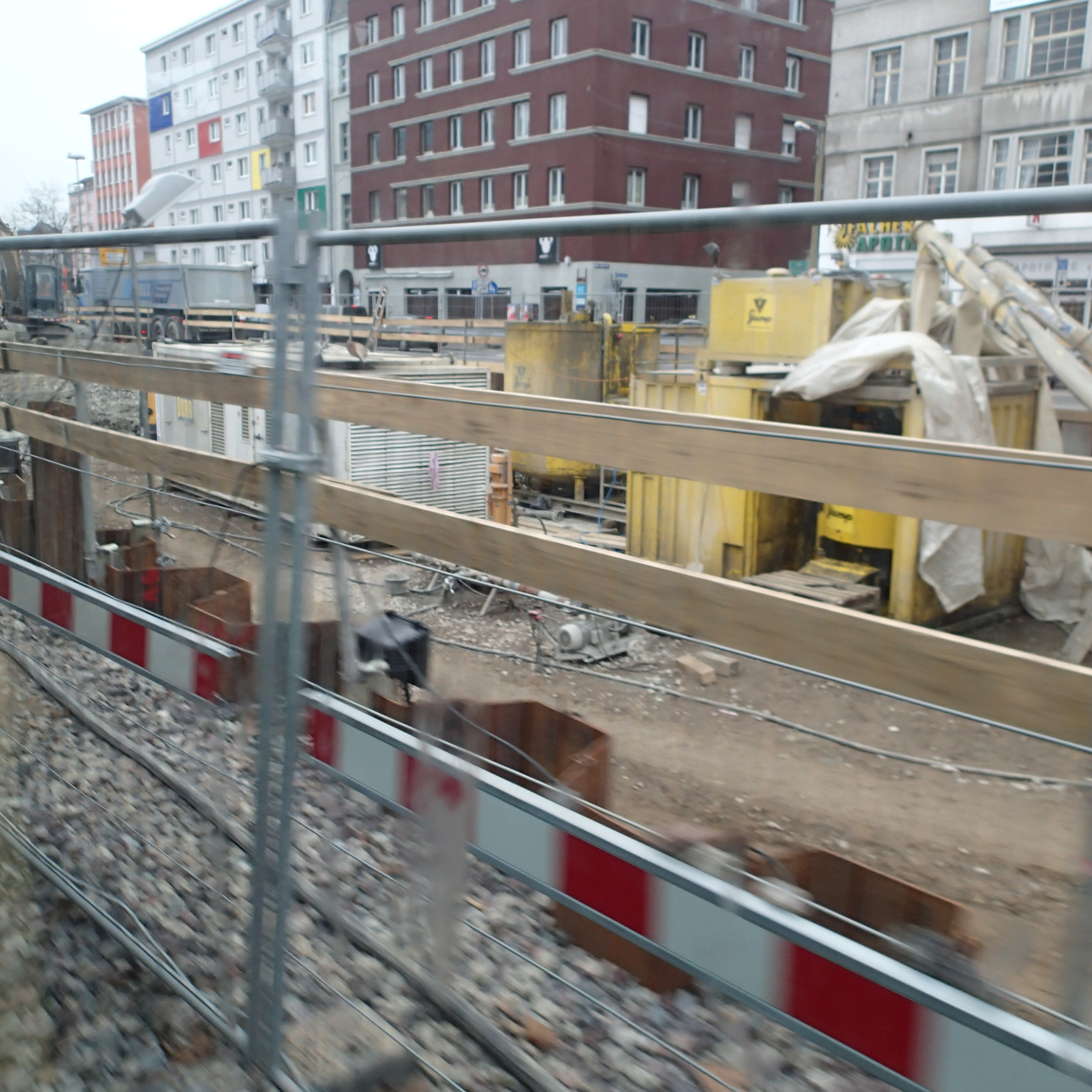
Whilst this tunnel is controversial and has its problems, it is much larger than that proposed through Windsor. The final cost estimate for Karlsruhe eas €588million for a double-track tunnel, which is 3.5km. long and has seven stops.
In the UK, the only similar tunnel is the Dalston Western Curve, where a new tunnel was dug along an existing alignment.
This article in the Londonist describes a visit to the tunnel before it opened.
Intriguingly, the Dalston tunnel was reportedly dug by a German sub-contractor, who specialise in getting trams in tight places.
We sometimes seem too conservative when we dig tunnels. I can’t think of a cut-and-cover tunnel built in the last twenty years in the UK? Not even one built to create an entrance to a car park!
In June last year I wrote Walking The Proposed Route Of The Windsor Link Railway. I felt afterwards that a single-track tunnel between the area of the Riverside station and a new Windsor Royal station to the North of the current Central station would be possible.
Since then, the IPEMU train has become a serious possibility and if trains on the Windsor Link Railway had this capability, then the tunnel could have these characteristics.
- Single-track tunnel.
- Built using cut-and-cover.
- No electrification.
- IPEMU trains only in the tunnel.
- Evacuation walkway like the DLR.
- No massive ventilation and evacuation shafts.
My project management knowledge tells me, that this is the sort of tunnel, that could be built without causing too much disruption to train services and road traffic, by getting all of the jobs in the right logical order.
Conclusion
The Windsor Link Railway, is a project that must be judged as a whole.
But do that and there is a lot of money to be made from property development, which would more than pay for the railway.
The IPEMU And The Windsor Link Railway
The IPEMU or to use its full name, an Independently Powered Electric Multiple Unit, is a form of Electric Multiple Unit, which has on-board electricity storage, so that it has a limited range on lines without electrification.
Bombardier have shown it is a serious concept, by allowing the general public to ride their prototype in passenger service between Manningtree and Harwich during six weeks in early 2015.

An Outwardly Normal Class 379 Train
Note the following about IPEMU trains.
- IPEMUs look and ride like the standard train to passengers, with everything passengers expect.
- On electrified lines, IPEMUs run and accelerate like the standard train.
- IPEMUs can run for up to fifty miles using electricity stored in the on-board energy storage.
- The on-board energy storage is charged when the train is running on electrified lines.
- The train can run on any line without electrification, where a modern diesel multiple unit of the same length or longer can run.
- IPEMUs use regenerative braking, so all energy generated from braking is stored and used to restart the train.
- IPEMUs can be 25 kVAC overhead, 750 VDC third-rail or dual-voltage.
- The on-board energy storage can be batteries, super-capacitors or Formula One-style KERS.
There were rumours in the September 2015 Edition of Modern Railways, that Great Western Railway was going to convert some of their Class 387 trains to IPEMU operation.
How would IPEMUs help in the creation of the Windsor Link Railway?
Click here for a map of the Windsor Link Railway!
I think it is sensible to assume that all trains running on the Windsor Link Railway could have an IPEMU capability and the ability to take power from both third-rail and overhead electrification.
In Phase 1, using IPEMUs would mean.
- Trains from London would run using the existing third-rail electrification and would fully charge the energy storage before Windsor.
- The linking tunnel would not have any electrification and would thus be safer.
- The linking tunnel would only need to be wide and high enough for safe operation of the trains.
- The linking tunnel could be single-track with a passing loop/island platform station, as the proposed maximum frequency is four trains per hour in each direction.
- The Slough to Windsor Line would not be electrified, so would be visually unchanged, with no ugly overhead wires.
- Trains would run through Windsor and on to Slough using the on-board energy storage.
Less than ten miles of a trip from London to Slough via Windsor and back, would be run on batteries.
In Phase 2, using IPEMUs would mean.
- No new lines would need to be electrified.
- The tunnels would not be electrified and just large enough for safe operation.
- Bridges would not need to support overhead electrification gantries.
- Trains would run betwen the main lines and Heathrow Airport using the on-board energy storage.
Only a few miles of each trip would be run on batteries.
Could IPEMUs Be Used On The Windsor Link Railway?
I quite like the concept of the Windsor Link Railway.
When I wrote Walking The Proposed Route Of The Windsor Link Railway, I was unsure about how they woud arrange the power supplies on the route.
Now that the concept of an IPEMU or independently-powered electrical multiple unit is better defined and probably nearer to delivery, I think that the train may have an application on the Windsor Link Railway.
In researching the branches of the Great Western, in Towards A Thames Valley Metro, I came to the conclusion, that Slough to Windsor should be worked by an IPEMU.
If the Windsor Link Railway is ever built, then the Windsor Tunnel doesn’t need to be electrified, as at five hundred metres, it is short enough for an IPEMU to get through on batteries.
The tunnel would be smaller and simpler.
Walking The Proposed Route Of The Windsor Link Railway
There is a proposal called the Windsor Link Railway to link the two railway lines running into Windsor end-to-end and put a new station in the Goswells area of the town. This is the schematic of the route through Windsor clipped from Wikipedia.
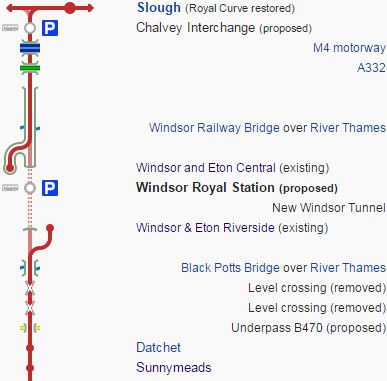
Windsor LinkRailway
Wikipedia also says this about Phase 1 of the project.
Phase 1 of the scheme would run from Slough to Staines, via Chalvey, Windsor, Datchet, Wraysbury and Sunnymeads.
A new all-in-one station in the Windsor Goswells (Windsor Royal) would replace the existing two nearby stations (Riverside and Central).
I took a train to Windsor & Eton Riverside station and then walked across the town vaguely following the route of the proposed cut-and-cover tunnel to Windsor & Eton Central station, where I got a train to Slough to change for London.
These pictures document the walk.










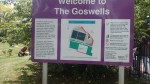
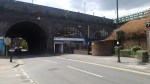


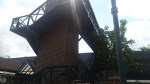


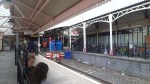

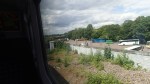

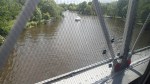

This is a Google Map of the area.
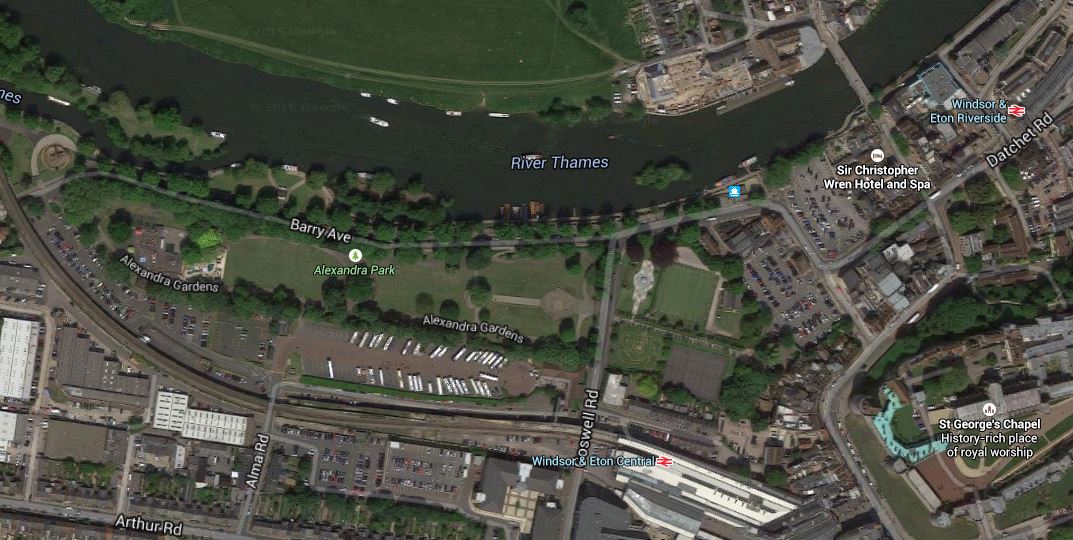
Windsor Stations
You can pick out the two stations, the coach and car parks and the tennis courts, with the Windsor and Slough Rail Line curving away to the North.
If you follow the proposed route from the Riverside station, it would be in a cut-and-cover tunnel passing in front of the Bel And The Dragon and probably through the car park and gardens to cross Goswell Road and then go through the coach and car park.
The building of the tunnel, looks like it would not require the demolition of any buildings, although it is likely that the gardens, the tennis courts and the bowling green would probably have to be relaid. The degree of difficulty of such a construction would probably be similar to that for the new tram/train tunnel being constructed in Karlsruhe, that I wrote about in this post. One of the important Crossrail projects, the Acton Dive Under would probably have used similar skills to those needed to construct the proposed tunnel under the streets of Windsor. Except that the Acton Dive Under is being built in a the middle of a busy four track railway and the Windsor Tunnel will be built in a busy town-centre road.
In everything written about the Windsor Link Railway, I can’t find any statement as whether the tunnel will be single or double track. When you bear in mind that the Windsor and Slough Rail Line is single track, I would not be surprised if the tunnel was also designed the same way, with perhaps a station with two platforms. The reason it’s not been stated, could be they’re keeping their options open.
I think that as the Windsor Tunnel will probably be not much more than five hundred metres in length and as it will only be used by electric trains, that it could be a simple design with a built in walkway like the Docklands Light Railway tunnels or the Canal Tunnels at Kings Cross. This would mean that large ventilation and evacuation shafts probably will not be needed. This would of course cut the cost of building the Windsor Tunnel.
Once at the viaduct, the track or tracks would have to climb onto the viaduct. The viaduct is surprisingly wide and is surrounded on both sides by car and coach parks, as is shown in this Google Map.
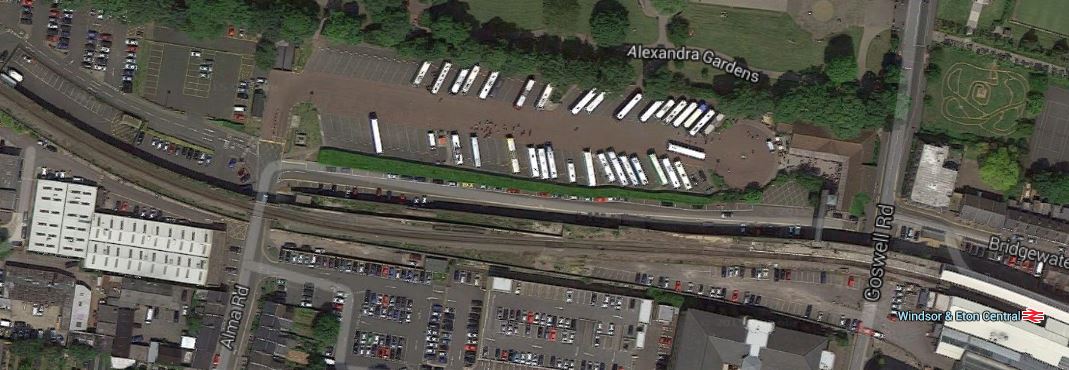
Windsor Viaduct And Car Parks
,I think that modifying the viaduct to connect the two lines would probably not be as difficult as the creation of the Bermondsey Dive Under, where space was at a premium and they wanted to thread a double up-and-down, between three other lines.
If you look at the schematic map of this line through Windsor, at the top of this page, you’ll see they have put a station called Windsor Royal in the middle of the Windsor Tunnel. And by it in the diagram is a big blue P, which probably signifies parking.
So will the proposed Windsor Royal station be either in on under the car and coach parks by the side of the viaduct?
As to its final design, that depends on the type and number of tracks and the skill of the architect and engineers.
One of the early things that must be decided, as it effects the design of Windsor Tunnel, Windsor Royal station and the line to Slough, is whether the line will be electrified to 25 kVAC overhead or 750VDC third rail, as Slough will soon be electrified to the former standard and Windsor and Eton Riverside is electrified to the latter. If the trains are going to go past Slough, perhaps to Reading or Oxford, and still run into Waterloo, the trains will have to be capable of handling both voltages, so something like the new Class 700 trains, that are being purchased for Thameslink, or something similar would fit the bill.
As the tunnel size required for a train using third-rail electrification is smaller, as you don’t have to accommodate the overhead wires, I would suspect that like on Thameslink, where the voltage changeover is at Farringdon station, that the pantograph will go up and down at Windsor Royal station.
As only one track is needed on the viaduct and it would obviously be easier and more affordable to only have one track leading to the viaduct, the line from Windsor Royal station to the viaduct will probably be single track, perhaps splitting just to the North of the station to allow a two platform station in between the tracks. After the Windsor Royal station, the tracks might combine again to allow a simple single-track tunnel to connect to the line for Datchet and beyond.
Wikipedia says that the two existing stations will be replaced by the new Windsor Royal, but the schematic at the top of this page, shows short spurs into the two existing stations. Is this a clue as to how the line will be built, whilst maintaining a train service that is essential to the lifeblood of Windsor and its residents, businesses and visitors?
I believe with good project management that virtually a full train service could be provided nearly all of the time, until a full connection is made through the Windsor Tunnel, at which point the existing stations can be closed.
I don’t know what those that are behind this project are thinking, but it has the air of a project that like all good projects has been designed in the garden or bar of a pub, whilst copious amounts of beer and other legal substances have been consumed.
A Circular Tour Round Richmond, Twickenham And Vauxhall
In my post entitled Where Next For The Overground?, I received a comment suggesting that some services on the North London Line be extended to Twickenham. The guy who commented said this.
Currently 4 Overground services per hour terminate/start at Richmond. Extending even 2 of these to Twickenham using the existing SWT railway network, also calling at St Margarets, would provide numerous benefits for local commuters and businesses.
The reasons he gave about better connectivity to less obvious places than Vauxhall and Waterloo, didn’t seem much different to the statements you get here in Hackney about getting anywhere not reached by the North and East London Lines or the 38 bus.
So I just had to go and take a look and take a few pictures, as I travelled from Richmond to Twickenham and then on to Vauxhall.





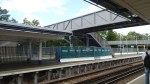
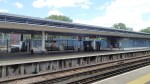




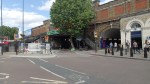
I could also have a pit-stop at the Carluccio’s opposite Richmond station.
Richmond
I know Richmond quite well having used it several times since I moved back to London, as it’s a good place to go for a walk by the river. And of course I do like the train ride across London on the North London Line, which is so much more pleasant than the District Line or the trains out of Waterloo. This Google Map image of the station shows the station’s main problem, which is also apparent in the photos.

Richmond Station
The station is just too busy, in terms of passengers inside the station, people walking up and down the pavement and the innumerable cars, taxis and buses in the road outside. I travelled to Richmond in a very full four-car Class 378 train from Highbury and Islington. As I got out, the crowds of people trying to get into the train, almost pushed me under it. Someone has done a very good job in selling Richmond to visitors. With the Overground now going to 5-car and possibly 6-car trains, the District Line going to the new larger S7 Stock and South West Trains going to a 10-car railway, coupled with increased frequencies, the overcrowding at Richmond station can only get worse.
Reading the history in Wikipedia, you feel a bit sad, that when the station was rebuilt in 1937, that Southern Railway didn’t have 20/20 foresight. But then, if you’d rebuilt this station in say 1980, you wouldn’t have correctly predicted the increase in passenger numbers everywhere on the UK Rail network.
Richmond station would appear to be one of the worst victims of overcrowding, I’ve seen recently, where there is no obvious resolution.
Platforms 1 and 2, which are the through platforms have eight 10-car trains an hour each way and the shear numbers of passengers these trains generate totally overwhelms the station. So for a start these platforms, which have a separate passage from the main entrance, needs to be rebuilt to modern standards with escalators and lifts. Looking at the overhead image of the station, there is actually plenty of space at the London end of the station by the Church Road bridge. Perhaps as people now increasingly use contactless ticketing, a simple bridge and exit could be made here to ease the overcrowding I saw.
The suggestion in the comment to my post, Where Next For The Overground, says that the following should be done.
Remodelling track between Kew & Richmond to allow Overground trains to access the Richmond currently used by South West trains,
That may sound easy, but it would mean a flat junction, where trains coming from Kew had to cross the busy main line to London. Putting in such a junction would probably mean the lines to and through Richmond had to be closed for a few months, so even if it is feasible in an engineering way, the disruption would be unacceptable to regular users of the line.
It adds to the case for doing some or all of these things.
1. Make the station fully step-free, with escalators and lifts.
2. Put a footbridge and an exit on the London end of the station. The exit may be problematical, as the bridge might be architecturally important. I forgot to take a photo. Could this bridge be the tail that is wagging the dog? If it has to be rebuilt, to solve the problems of Richmond station, then so be it.
3. It is a real pity that the rebuilding in 1937, didn’t put an entrance to Platforms 1 and 2 on the other side of Kew Road, as this would have helped. But they didn’t although the two platforms are being extended in that direction, to accept the 10-car trains. This Google Map shows how the trains pass under Kew Road.
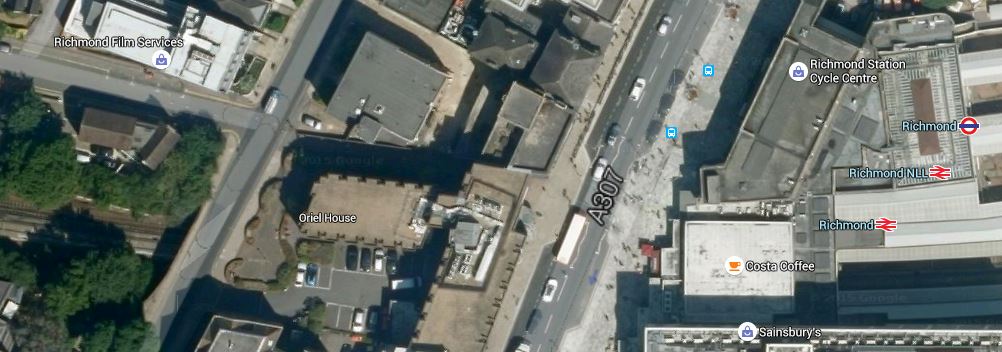
Richmond Station And Kew Road
4. At Liverpool Street a few weeks ago, they replaced a constricted gate line in the Underground station with a much wider one and this opened up the station considerably. It might be possible to do something of a similar nature at Richmond to free up the crush I experienced at the gate, which will only get worse.
If the passenger routes were freed up and especially, if a second footbridge was added, then passengers wanting to go to Twickenham from the North London and District Lines, would walk to the back of the train, go to the footbridge and walk across to Platform 1 to get any of the numerous trains. Remember that both the Class 378 trains and the S7 Stock are walk-through trains and many passengers now regularly position themselves for their destination.
In addition at Richmond something must be done to reduce the flow of people and vehicles in front of the station. For instance, there are more taxis at the station, than I’ve ever seen at a suburban station. But then it is an upmarket area, where only losers walk or use buses.
Waterloo To Reading via Richmond
There is another factor that will put pressure on Richmond in the future and that is the two trains an hour link to Reading. By the end of the decade Reading will have developed into one of the most important stations in the South East to the West of London. Richmond has good connections to a lot of South and South West London, so will passengers to and from the West change at Reading and go via Richmond. They probably wouldn’t now, but as the network develops and Crossrail doesn’t go anywhere near the South West of London, until Crossrail 2 is built, Richmond will get more overloaded, so some easy interchange between the lines at the station is essential.
Twickenham
Twickenham has two major problems.
It is obviously the station of choice for rugby at Twickenham and this Google Map shows that they are fairly, but not that close.
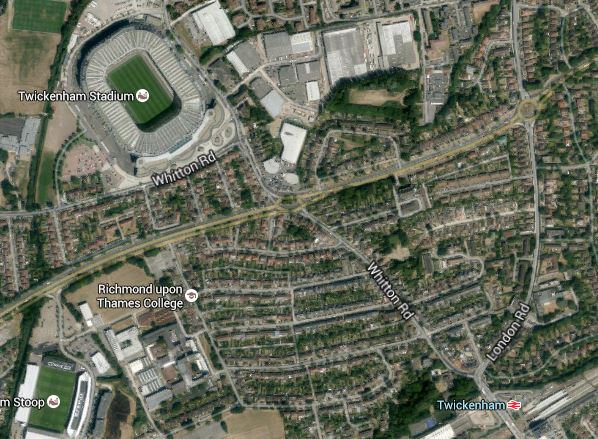
Twickenham Stadium And Station
If you read the history of the station in Wikipedia, you’ll see that the station is a bad sufferer of both wartime problems and advanced Topsy-syndrome, as is my local station at Highbury and Islington.
But even sorting the station for this year’s Rugby World Cup has been a planning obstacle race as this Future section in the Wikipedia entry says.
The RFU has petitioned the government to improve the station to be ready to handle the increased use during the 2015 Rugby World Cup. Network Rail has consented to a plan to improve the station and the rolling stock, but progress has stalled because of disagreement between the London Borough of Richmond upon Thames council and some local residents. A judicial review was carried out in December 2012 of the planning permissions that had been granted. These reviews are now complete and construction will start in 2014.
My pictures show, that Twickenham station appears to be being rebuilt. It doesn’t look to me that everything will be finished for the start of the tournament on September the 18th.
Waterloo To Reading Via Richmond And Twickenham
There is another factor that will put pressure on Richmond in the future and that is the two trains an hour link to Reading. By the end of the decade Reading will have developed into one of the most important stations in the South East to the West of London. Richmond has good connections to a lot of South and South West London, so will passengers to and from the West change at Reading and go via Richmond. They probably wouldn’t now, but as the network develops and Crossrail doesn’t go anywhere near the South West of London, until Crossrail 2 is built, Richmond will get more overloaded, so some easy interchange between the lines at the station is essential.
Heathrow
It is no secret that many parties would like to see rail links from the West and/or Waterloo into Heathrow, whether or not the airport is the chosen airport to be expanded in the South East.
We’ve had Heathrow Airtrack, Airtrack-Lite and now we’ve got the Windsor Link Railway, with perhaps only the last one still in existence.
The Windsor Link Railway is a very innovative project, which initially links the two rail lines to Windsor with a cut-and-cover tunnel and a new station called Windsor Royal.
The two current stations of Windsor & Eton Riverside and Windsor & Eton Central, would be closed and I doubt there would be any problems finding profitable uses for the sites. Since I wrote the original version of this post, I’ve been to Windsor and walked the route of the Windsor Link Railway through the town.
Further phases of the project would create a link into Heathrow, that would be accessible to both trains from the West and Waterloo.
Even if the link isn’t built in the form proposed by the Windsor Link Railway, there is a high chance that a link that connects both West and Waterloo is built.
I like this project, as I think it has some very big advantages.
1. Not many serious engineers would propose to build a tunnel in the middle of an historic town, up close to one of Her Majesty’s most iconic residences, unless they were absolutely sure that it would work. But look at this Google Map of Central Windsor and the two stations.
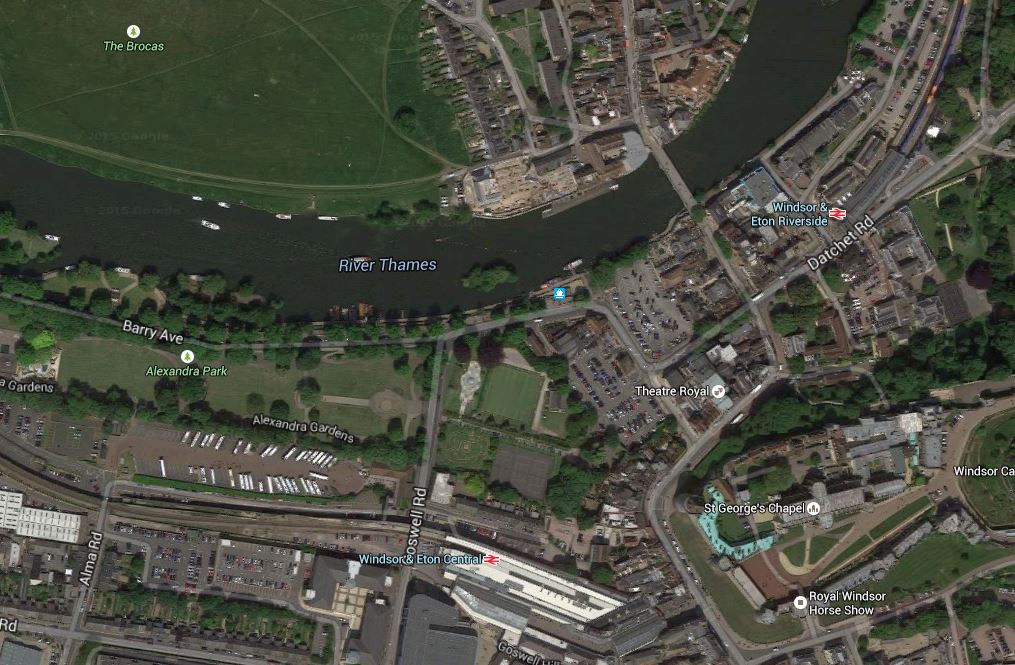
Central Windsor And Stations
For a start, it looks like the position and alignment of the two stations is in favour of their plan, to build a cut-and-cover tunnel between them, with the proposed Windsor Royal station perhaps, where what looks to be a coach park is located.
2. The space is sufficient to have a station big enough for the ten-car trains on the line.
3. The plan doesn’t say whether the tunnel will be single-track or double-track. Obviously, costs and space will decide the design.
4. There doesn’t appear to be many properties in the way of the tunnelling, as most of the route is either vehicle parks, public gardens or roads.
5. When fully realised the project connects both the West and Waterloo into Terminal 5 at Heathrow between Sunnymeads and Wraysbury stations. This Google Map shows the location of the stations in relation to Terminal 5.
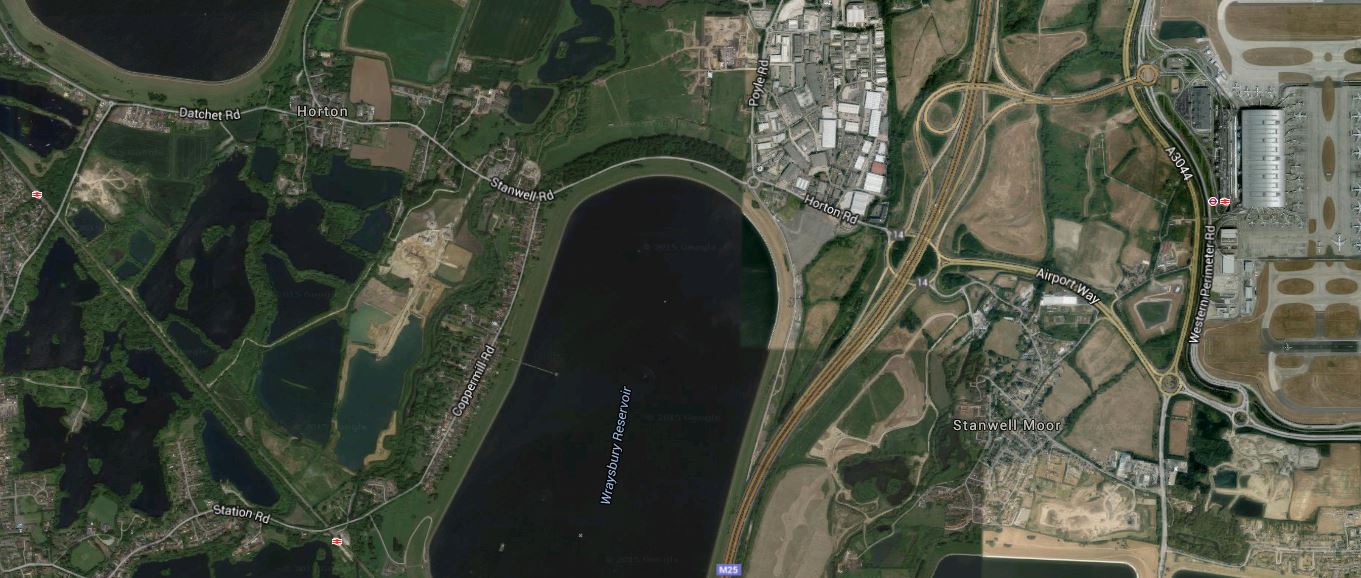
Into Terminal 5
The stations are on the line running to the North-West to the left of the reservoir.
6. Compared to other proposals, this scheme doesn’t need as much tunnelling to link up to the existing stations at Heathrow, being able to use a bridge over the M25.
7. In addition with a reinstated curve at Frimley, trains from Basingstoke and Ascot could have access to the airport. But that is just a couple of many places, who would find they are just a single change away from Heathrow.
Crossrail 2
If Twickenham Stadium and Heathrow are two elephants rampaging through the transport system of South West London, then Crossrail 2 is a third.
According to the current plan, Twickenham Station will be a terminus for Crossrail 2. The route to the proposed tunnel portal at Wimbledon, will be by way of these stations.
- Strawberry Hill
- Teddington
- Hampton Wick
- Kingston
- Norbiton
- New Malden
- Raynes Park
It follows quite a bit of the route of the Kingston Loop Line, which along with other lines in South West London will become part of Crpssrail 2.
If we look at Abbey Wood and Shenfield stations on Crossrail, Twickenham and the other termini of Crossrail 2, will probably need two platforms, which shouldn’t be a problem.
With my Project Management hat on, I think that any serious construction program for Crossrail 2 will see the suburban sections South of Wimbledon and North of Tottenham Hale brought up to Crossrail standard , before the serious work of the central tunnel. In my view not starting some of the update of the surface sections to Abbey Wood, Heathrow, Reading and Shenfield on Crossrail until the tunnelling was well underway, may have created problems. At least I’ve not seen any good reason for not starting at some of the stations, which are in desperate need of improvement, repair or full step-free access.
The question also has to be asked is what effect does the thoughts behind the Windsor Link Railway have on the layout of the Crossrail 2 branches South of Twickenham?
Surely, if Heathrow is a sensible terminal for Crossrail, then there are good reasons to think that it could be a sensible terminal for Crossrail 2. This would link Heathrow directly to St. Pancras International, Kings Cross, Euston, Victoria, Clapham Junction and Tottenham Hale for ongoing travel. Most London terminals and major interchange stations, like Clapham Junction, Old Oak Common and Stratford would be directly linked to Heathrow by either Crossrail or Crossrail 2. The other terminals that miss out are.
Cannon Street – Avoid by using Crossrail 2 to Victoria or Crossrail/Thameslink to London Bridge
Charing Cross – Avoid by using Crossrail 2 to Victoria or Crossrail/Thameslink to London Bridge
Fenchurch Street – Avoid by using Crossrail to Liverpool Street, Stratford or Shenfield and then another route.
London Bridge – Crossrail or Crossrail 2 to Farringdon then Thameslink.
Marylebone – Crossrail to Paddington and Bakerloo.
Waterloo – Avoid by using Clapham Junction or Crossrail to Paddington and Bakerloo.
It does seem to me that our Victorian railway planners didn’t future-proof their London terminals very well.
Vauxhall
I came home via Vauxhall station and the Victoria Line.
The interchange is being upgraded, with lifts in the rail station leading to the subway and improvements in the tube station.
When the upgrade is finished, it will make things a lot easier for those like me, who live near the Northern section of the Victoria Line, to get to places in South West London.
Using Waterloo is difficult, as we live on the wrong branch of the Northern Line, and all other lines that serve the station don’t go near Islington, Hackney, Harringey or Waltham Forest. The only easier way to get to Waterloo is to use the Waterloo and City Line, unless it’s the rush hour or the weekend.
Clapham Junction is a simple journey, but it takes forever on the Overground.
Conclusion
This line can be improved to be a more useful part of London’s rail infrastructure.
But it won’t really be sorted until Crossrail 2 is completed.
 The Anonymous Widower