Worcester – 11th June 2023
On Sunday, I took a train to Worcester Foregate Street station and then walked across the City Centre to the other station; Worcester Shrub Hill station.
I took these pictures of Worcester Foregate Street station.
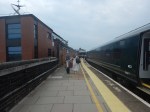
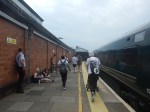
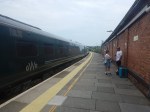
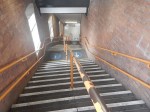

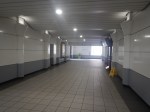
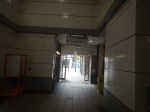
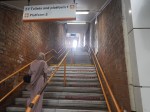
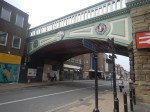

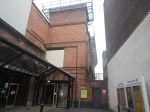
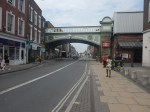
Note.
- There are no lifts.
- It had one of the worst set of stairs, I’d seen in a station.
- Wikipedia doesn’t list any improvements to the station in the future.
The station is an utter disgrace.
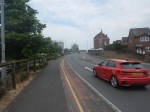
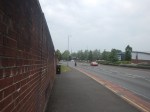
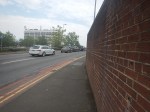
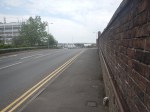
I took these pictures, as I walked between the two stations.
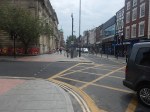

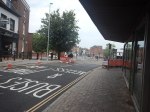
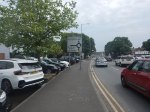

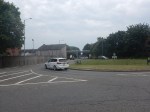


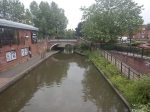
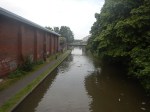

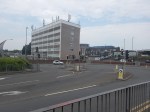
Note.
- It was not a particularly long walk.
- The last section was up a steep hill.
- There was virtually no signage.
- The roads were dominated by private cars.
- I didn’t see a sign to the cathedral or the bus station.
- There was even a crude handrail on the pavement to help people up the hill.
- The only good thing I saw was a defibrillator half-way up the hill, which was where you might need it.
No-one in their right mind would spend a few days in Worcester, unless they drove a car. In which case, it would probably be better to stay in a friendlier nearby town.
I took these pictures of Worcester Shrub Hill station.
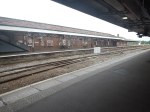
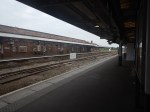
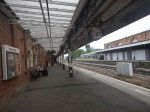
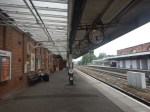
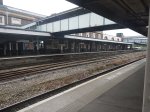
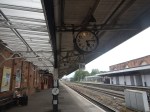
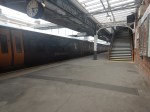
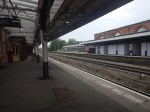


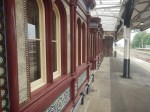

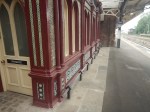

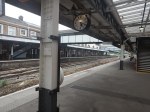
Note.
- There is no sign outside to indicate it’s a station.
- There are no lifts to get across the tracks.
- Both clocks are showing the wrong time.
- The station needs a deep clean.
- Wikipedia doesn’t list any improvements to the station in the future.
The only thing in good condition was the Victorian waiting room. But it was locked.
Conclusion
Worcester is not a town, I could recommend for anything.
It has two dreadful, disabled-unfriendly stations, no working signage or maps and is dominated by private cars.
I also would have liked some refreshment, as I walked across the City. I didn’t see anything I fancied, but that often happens when you’re coeliac.
Reading And Oxford – 10th June 2023
Yesterday, after breakfast on Moorgate, I went for an explore at the Western end of the Elizabeth Line.
My aim was to change at Reading for Oxford and then have a bit of an explore in the University City.
These are my observations and thoughts.
Changing Trains At Reading
There are two trains per hour between Liverpool Street and Reading station, but at the Moorgate end of Liverpool Street station, there is no way of buying a ticket, that would get me between Reading and Oxford. To make things more complicated, I needed to be quick with my change at Reading, as I only had a few minutes before the next Oxford train left Reading.
In the end I had to leave Reading station and walk across the concourse in front of the station.

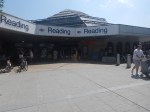


O then bought a ticket in a machine and then re-entered the station.
Great Western Railway can do better.
In Germany, there would be a ticket machine inside the barriers for those changing trains. But we never do that!
In the end, I missed my train and had to wait thirty minutes for a very crowded London Paddington to Oxford train.
Electrification At Oxford
This map from OpenRailwayMap shows the planned electrification at Oxford station.
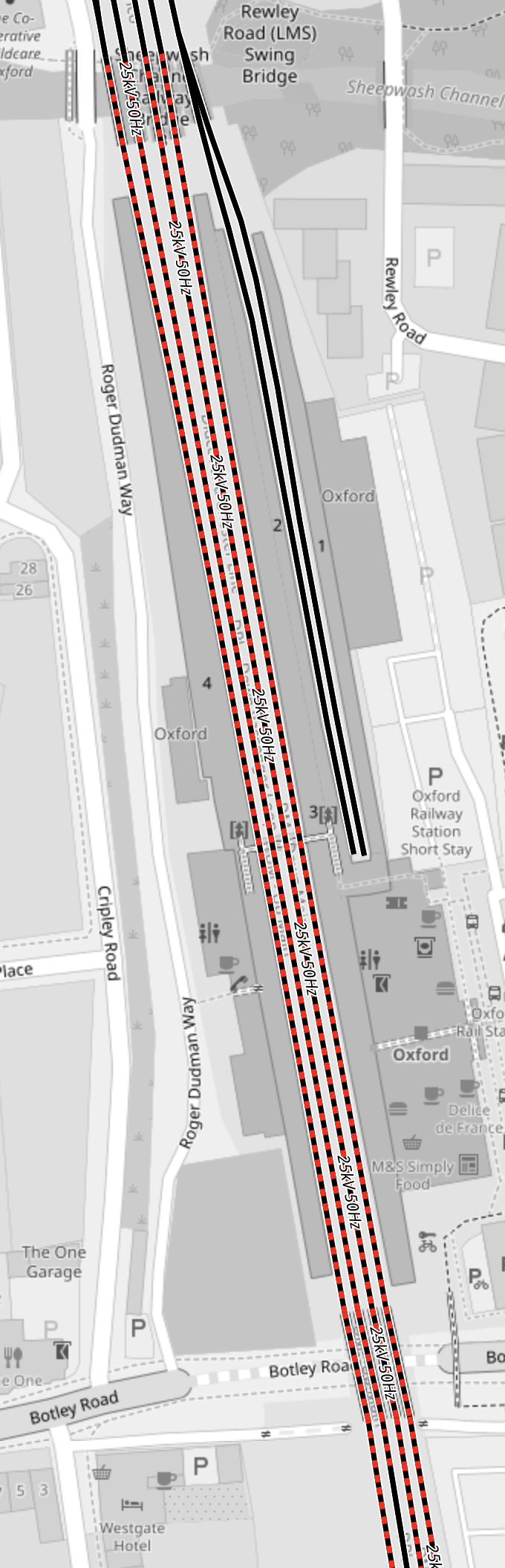
Note.
- The four through lines are shown in dotted red-and-black, which indicates, that they will be electrified with 25 KVAC overhead electrification.
- The proposed electrification continues all the way to Didcot Parkway station on the map.
- The two black tracks are the unelectrified platforms for Chiltern and East West Railway services.
But the proposed electrification stops just outside the station. Why?
Great Western Railway Services Beyond Oxford
Great Western Railway run an hourly service to Great Malvern, which according to Wikipedia terminates as follows.
- 4 trains per day continue to Hereford calling at Colwall and Ledbury.
- 1 train per day terminates at Worcester Shrub Hill.
- 4 trains per day terminate at Worcester Foregate Street.
So what are the distances of these stations from Oxford?
- Great Malvern – 65.6 miles
- Hereford – 86.3 miles
- Worcester Foregate Street – 57.6 miles
- Worcester Shrub Hill – 57.2 miles
I suspect that one version of the Hitachi Intercity Tri-Mode Battery Train, which is shown in the infographic below
could handle all these distances.

After the Oxford and Didcot Parkway electrification is complete, trains will arrive at Oxford station with a full battery.
But how would the batteries be recharged for the journey back to Oxford?
This map from OpenRailwayMap shows the tracks at Worcester.
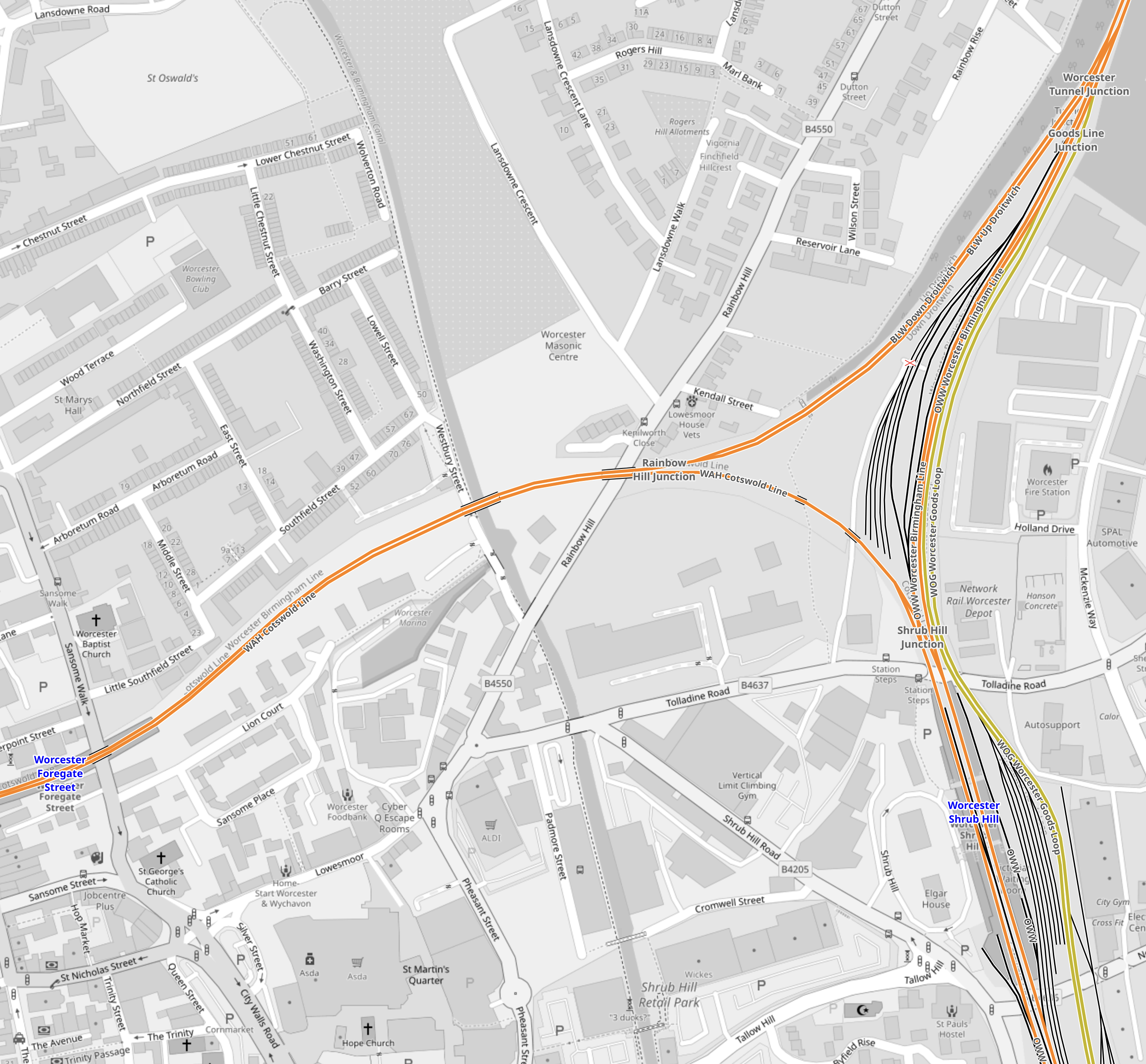
Note.
- Trains to and from Oxford, use the tracks in the South-East corner of the map.
- Trains to and from Birmingham, use the tracks in the North -East corner of the map.
- Trains to and from Great Malvern and Hereford, use the tracks in the South-West corner of the map.
I suspect that some selective electrification would be able to charge the trains.
Trains take around twenty minutes to go between Great Malvern and Worcester Shrub Hill via Worcester Foregate Street.
Electrifying this 8.5 mile section would surely enable the following.
- Trains to leave Worcester Shrub Hill for Oxford with a full battery.
- Trains to leave Great Malvern for Hereford with a full battery.
- As Hereford and Great Malvern are only 20.7 miles apart, I suspect a return trip without a recharge is possible.
- Trains terminating at Worcester Shrub Hill and Worcester Foregate Street to be fully recharged before travelling back to Oxford.
Other services to and from the Worcester stations could also be run by battery-electric trains.
As Worcester Shrub Hill and Oxford stations are only 57.2 miles and well within the capabilities of most battery-electric trains, there would be no need to electrify the route.
I may of course, be wrong about the length and position of the electrification at Worcester, but this could be just one of many solutions using partial electrification.
Does this explain the stopping of the proposed electrification at Oxford?
In addition, there must be marketing opportunities in running a battery-electric service to Hereford and Worcester.
The Bay Platforms At Oxford Station
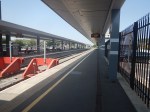
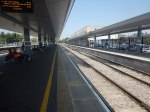
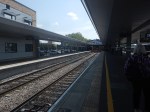
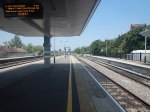
These pictures show the two North facing bay platforms 1 and 2 at Oxford station.
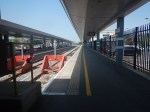

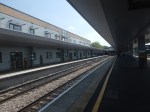
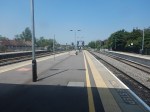
Note.
- The platforms are not electrified.
- They appear to be easily updated with electrification to be able to charge Chiltern and East West Railway trains.
- Marylebone is only 66.7 miles from Oxford.
- Milton Keynes Central is just over 40 miles from Oxford.
- Bedford is just under 60 miles from Oxford.
I suspect that services from Oxford to Bedford, Marylebone and Milton Keynes can all be run by battery-electric trains.
 The Anonymous Widower