Five-Car Trains Are Running On The North London Line
I took these pictures of a five-car Class 378 trains on the North London Line today.
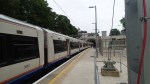
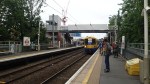
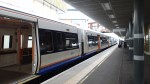
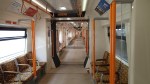
Although five-car trains seemed to be slow to appear, Bombardier seem to have got the cut and shut process working pretty fast now.
The Hackney Downs/Central Link Is Not Small
These pictures show the progress on the pedestrian link between Hackney Downs and Hackney Central stations.
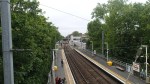
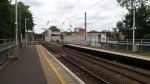
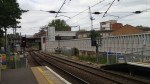
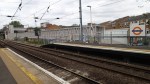
It certainly isn’t small, but once complete it will be a weatherproof way of getting between the two stations.
It should also be remembered that Hackney Downs station is not very step-free and I suspect that this walkway will only be the start of integrating these two stations to create a Hackney or Hackney Junction station. The new Tube Map for the end of May, shows the two stations connected.
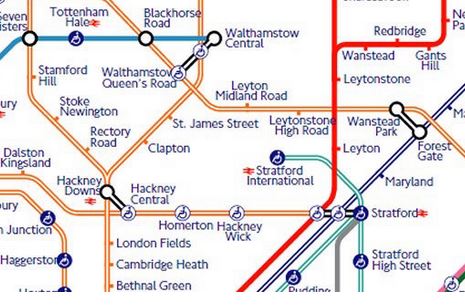
Hackney On The New Tube Map
I hope the ingenious individual who drew the new map, didn’t suffer too much mental anguish. Or did they go to Finchley Central station for divine inspiration?
The new link between Hackney Downs and Hackney Central stations, illustrates how far steel design and construction has improved, if you compare the pictures in this post with one taken in 1928 of the original link, which was demolished in 1944, when Hackney Central station was closed.
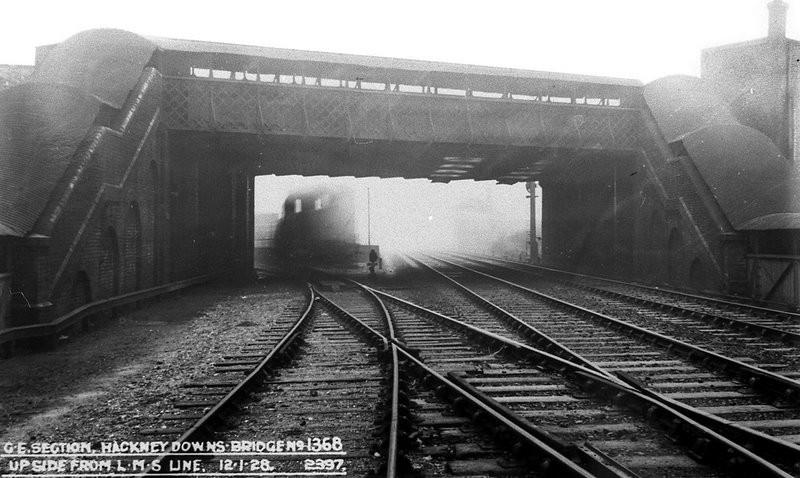
When I see terrible stations built in the last few years, like these in Kassel, with precipitous stairs and no lifts, I do wonder how architects and engineers manage to get it so bad. Perhaps they should fire the accountants and the politicians! After all, this bridge at Hackney from probably over a hundred years ago connects to both platforms at Hackney Central with a covered stairway and although it has no lifts, would probably have been considered state of the art in its time.
Thank You Transport for London
On the 31st May 2015, Transport for London take over the lines out of Liverpool Street to Enfield Town, Cheshunt, Chingford and Shenfield and two days ago they published this press release on their web site, which is entitled Passengers set to benefit as key commuter rail services transfer to TfL.
So what does that mean?
1. The services currently operate with National Rail pay as you go fares, which are generally higher than TfL fares. When services transfer, over 80 per cent of current rail journeys will reduce in price and TfL concessions will apply – giving customers substantial savings. The remaining 20 per cent of fares will remain unchanged.
2. All TfL concessions and discounts that currently apply to London Underground, the Docklands Light Railway, and London Overground will apply on the rail services transferring to TfL. I think that means I can travel free to Brentwood and Shenfield using my Freedom Pass.
3. There are a few other technical things that seem beneficial, like Brentwood being moved into Zone 9.
4. I suspect too, that the level of customer service will be better under TfL than Abellio Greater Anglia.
I can’t see any average passengers complaining about this package. Except perhaps those who commute on lines like c2c into London, where there are no fare reductions.
So it’s probably a big thank you to Transport for London.
Could Tram-Trains Be Used To Advantage North Of Manchester?
In A Plea For Help From Lancashire, I said this about creating a better service to Rossendale.
Perhaps one way to do create a service would be use Class 399 tram-trains to extend the Metrolink from Bury, if they are proven to work successfully between Sheffield and Rotherham in the next few years. After all, the first phase of the Manchester Metrolink to Bury was built by converting the old East Lancashire Railway,
I also said that I feel that the Germans and the French would use tram-trains in the area.
So how feasible would it be to extend the trams from Bury? This is a Google Earth image of the centre of Bury around the end of the Metrolink line from Manchester.
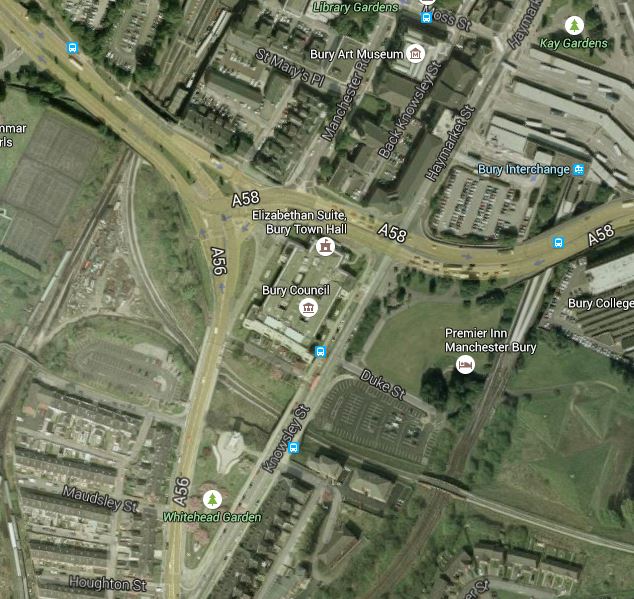
Bury Interchange
Note how the East Lancashire Railway from Bolton Street station passes under the A58 and turns east to continue to its next station at Heywood. The Metrolink stop is marked by the blue symbol labelled Bury Interchange and the tram line goes south passing under the A58 and the rail line.
I clipped this route diagram from the Wikipedia entry for the East Lancashire Line.
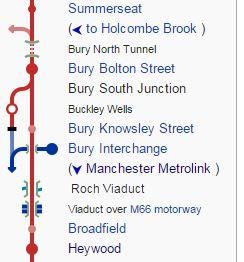
Bury Rail Lines
My untrained eye says that it wouldn’t be that difficult to have some tram-trains go via Bury South Junction and then up the East Lancashire Railway. A Buckley Wells Metrolink stop and Park and Ride has been proposed and the site is already owned by Transport for Greater Manchester. Although, I would suspect that the lines would run differently to those shown.
If Class 399 tram-trains or similar going up the East Lancashire Railway were to be proposed, it would certainly result in at least two additional stops in Bury at Buckley Wells and Bolton Street. The biggest problem would be to decide how far the trams would go. Originally the electric trains on the Bury Line as it then was, went to Rawtenstall station. Wikipedia says this.
The Association of Train Operating Companies have identified that the community of Rawtenstall on the East Lancashire Railway Heritage Railway could benefit from services connecting the station to the National Network.
So perhaps this could be a possibility.
One of the advantages of using tram-trains to add a commuter service to the East Lancashire Railway, is that it would reduce the need to find heavy rail platforms at Manchester Victoria. There may be a problem though in the capacity of the current Bury Line, which has a double tram every six minutes. But then a second crossing of the city centre is being built and there are proposals to add all sorts of extensions to the Metrolink network.
Tram-trains are remarkably flexible vehicles in that provided the loading gauge, platform height and track is correct, there is a power supply and signalling system they can use, they can go a vast number of places on the rail and tram network. As an example, here’s one of Karlsruhe’s tram-trains in a platform in the main station alongside a TGV.
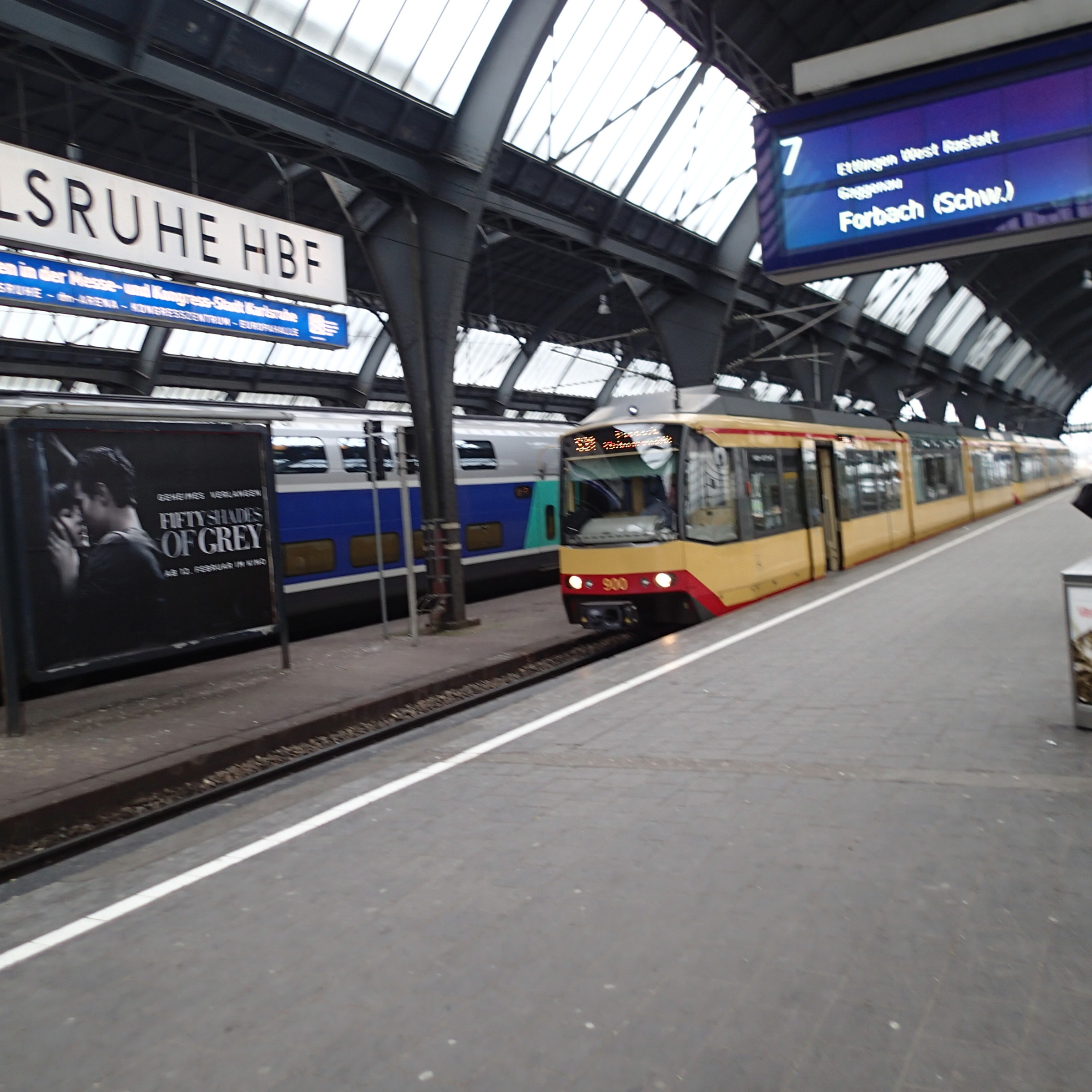
So the only thing that limits their use is the correct certification for a route and the training of the staff. Tram-trains also have the advantage that they can run at slowish tram speeds in city centres and at much faster speeds on rail lines designed for such.
In my view all this means that to expand the Metrolink outside of its current network, you need to get a tram-train that can run on the central network in the city centre and then gradually equip and certify all of the branches out of the city for the chosen tram-train.
It would be nice to think in my view, that we could come up with one specification for a tram-train, that could be used everywhere in the country.
To show how tram-trains could be used, I’ll use the example of the new service around the Todmorden Curve from Manchester Victoria to Burnley and Blackburn.
The Caldervale Line through Blackburn, Accrington and Burnley is going to be electrified in the next few years, so it would only be necessary to additionally electrify the line from Rochdale to the Todmorden Curve.
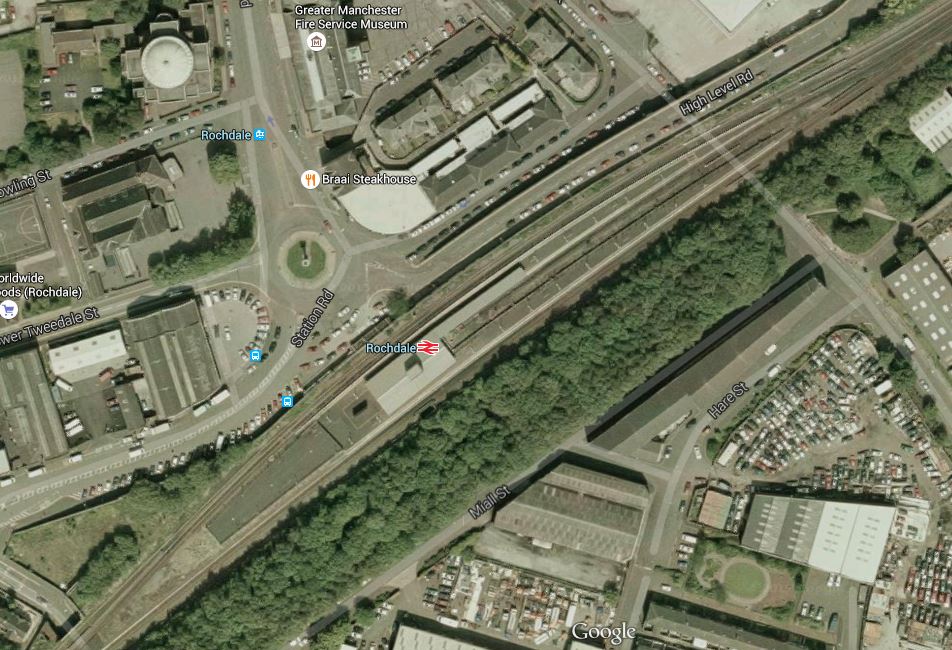
Rochdale where the train and tram lines are close together as this Google Earth image shows, gives two possibilities.
Rochdale Interchange
The tram-train could either go on the current route into Manchester Victoria, provided of course it was electrified or it could run to the city centre on the tram lines.
You pays your money and takes your choice depending on what optimises the network best for the passengers.
Peer-To-Peer Lending Is Different In The US
I like peer-to-peer lending and have quite a large sum invested. But after reading this article in the Financial Times, I’m pretty certain that if I lived in the United States, I wouldn’t touch peer-to-peer lending with a bargepole.
The reason is that in the United States, institutional investors get first pick of the borrowers and are developing software, so that the retail investors gets what’s left.
In the UK, the Peer-To-Peer Finance Association has moved to ban this practice and make all investors equal.
The day they give preference to institutions, my money will be withdrawn gradually as it becomes available.
I think we all have to remember that one of the causes of the Financial Crash of a few years ago was greedy bankers, who felt they were a class above the vast majority of people, who have made their money by sheer dint of hard work.
Whatever you do, read the article in the FT. It’s a cracker!
And also look at the Peer-To-Peer Finance Association web site!
Burnley And Ebbw Vale
You may wonder why I’m writing a piece about two towns in the United Kingdom, which are hundreds of miles apart.
Both towns have not been in the best of health lately, although employment has risen in Burnley between 2009 and 2013 by 7.1%, as against 0.6% across the North-West and 2.0% nationally, according to this article.
They are also towns with similar geographic and transport problems being in the hills with not the best transport links.
But last Sunday, both towns got improved rail links to their nearest big city.
Ebbw Vale Town station opened and trains now run direct to Cardiff every hour.
At Burnley, five hundred metres of new single track called the Todmorden Curve has enabled trains to run direct to Manchester Victoria every hour.
I have been monitoring news stories about both new pieces of infrastructure and these reports from local media are noteworthy and generally positive.
Ebbw Vale
First train pulls into new Ebbw Vale Town Station
Burnley
TODMORDEN CURVE: 500 metres of track has opened up new world
TODMORDEN CURVE: £12m spin-off for Burnley’s economy
The only article with a negative tone is this piece entitled Rossendale Scribbler: Forget the bus station, we should look to rail to improve our transport links, which has a touch of jealousy that the Todmorden Curve doesn’t help his travels.
It will be interesting to go back to Burnley and Ebbw Vale in a few months to see if the early green shoots of optimism have grown or withered.
A Must Read Article On The Tesla Powerwall
I have a Google Alert set for Tesla Powerwall and usually it just picks up pretty boring stuff, but this article from ecomento.com is better than most. It does state this.
The Tesla Powerwall won’t really make economic sense for most US customers until the price drops – considerably. The people who buy one now will help fund the research and development that needs to take place to drive battery prices down in the future.
So as with a lot of new technology, with my engineer’s hard hat on, I think it will be best to wait until the cost of solar panels, Powerwall-like devices and all the other electronics and control systems needed, have been proven to be reliable and have dropped in price.
My house here has a flat roof, which would be ideal for solar panels, so I’m watching the technology and will buy them, when the payback is less than five years.
Why five years? It’s the length of our fixed term parliament, so hopefully the financial conditions won’t be mucked up too much by a change of governmen.
 The Anonymous Widower