Is This Another Line For A Great Western Railway IPEMU?
Nothing much has happened since I wrote Rumours Of Battery Powered Trains, which said that a report had appeared in Modern Railways saying that Great Western Railway was looking at Class 387 IPEMUs.
But I did find this article on the Get Reading web site entitled Green Park Station may open without any trains stopping there.
Apparently, the problem is that diesel multiple units can’t accelerate fast enough to keep to the schedule with the stop at Reading Green Park station, but electric ones can.
As it appears the wires won’t go up in time for the station’s opening of 2018, then the trains won’t be electric.
Unless of course an IPEMU could stick to the schedule. It would certainly have a lot of power in the battery, as Reading to Basingstoke must be less than twenty miles and it’s electrified at both ends.
The line is a classic for use of IPEMU technology.
Crossrail 2 October 2015 – King’s Road Chelsea Station
The reason for my walk this morning, between Sloane Square and Imperial Wharf stations, was to look at Crossrail 2’s plans for King’s Road Chelsea station.
If the station is built it will sit between Victoria and Clapham Junction stations.
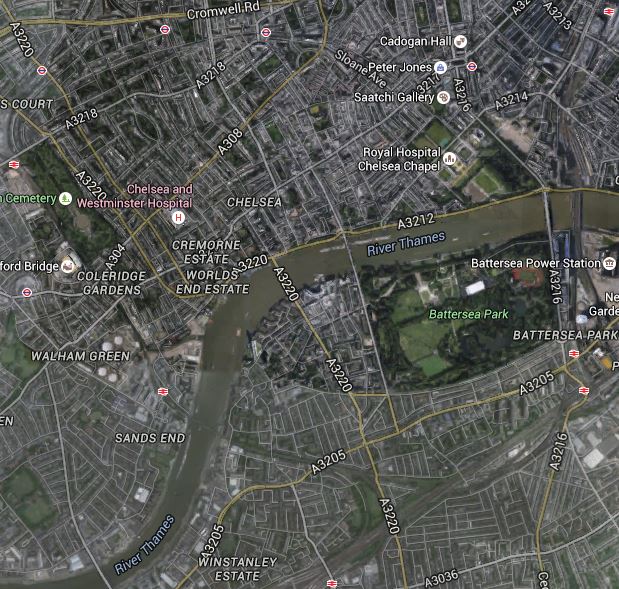
This Google Map shows the area.
Victoria To Clapham Junction
Victoria station is in the top right corner and Clapham Junction is at the bottom of the map.
So what do Crossrail 2 say about the need for a King’s Road Chelsea station in their document about the station. They say this.
A station in the Chelsea area has always been part of the Chelsea – Hackney line safeguarding since it was first proposed in 1989. A Crossrail 2 station in Chelsea would improve community access to rail based public transport in an area where current service levels are low in comparison to similar inner London locations. It would also improve connectivity to the Royal Brompton and Royal Marsden hospitals and provide access to the existing retail and commercial developments along King’s Road. Providing a Crossrail 2 station in Chelsea would also improve journey times for those travelling to or from King’s Road.
Chelsea currently suffers weekday congestion and delays on its main roads. By 2031 congestion on London’s roads is expected to increase by 60 per cent. Providing a Crossrail 2 station would encourage more people to use public transport, which would help to reduce traffic congestion in the area and improve air quality.
That is an answer that would persuade someone like me, who doesn’t drive and knows the arguments for buses and trains, but to the average selfish driver of a high-powered car or off-road vehicle, that is almost an insult.
The Google Map does show the enormous problem in working out the route of Crossrail 2.
Victoria and Clapham Junction stations are about four kilometres apart, so for safety and ventilation reasons any tunnel between the two stations will need an access shaft.
And what lies between the two stations? The River Thames!
I’m sure that part of the reason for a new station in the Chelsea area, is to provide the necessary shaft for the tunnels, as the only other alternative is somewhere in Battersea and that is probably too close to Clapham Junction.
This creates a wonderful irony for Chelsea. Suppose that Crossrail 2 decide that because of opposition, they are going to drop building a station in Chelsea.
They might still decide to build a shaft in perhaps a block of flats, in the same way they did on Moorgate with Moor House.
So Chelsea would have an unseen emergency access and ventilation shaft, but no station.
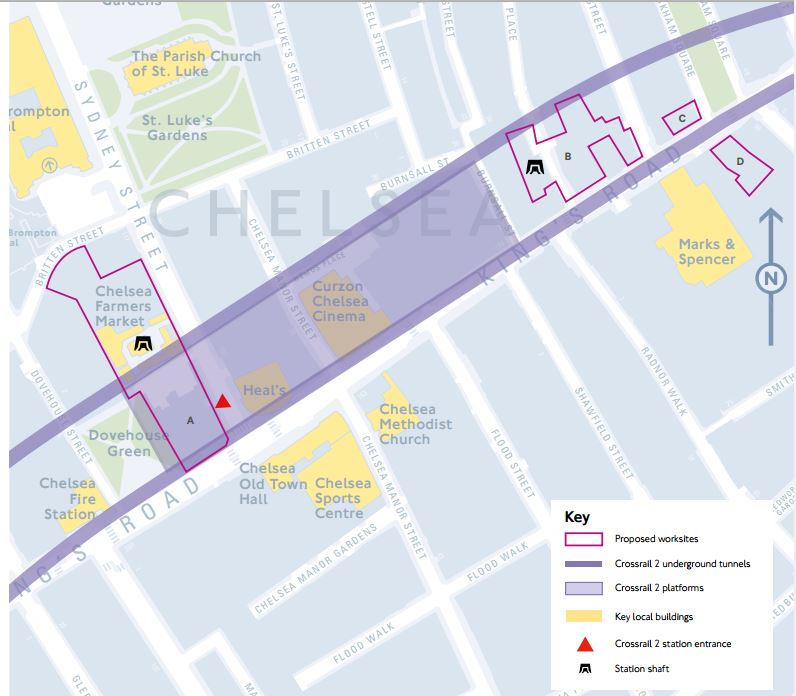
This map from the Crossrail 2 document shows the proposed station and its shafts, entrances and work-sites.
King’s Road Chelsea Station
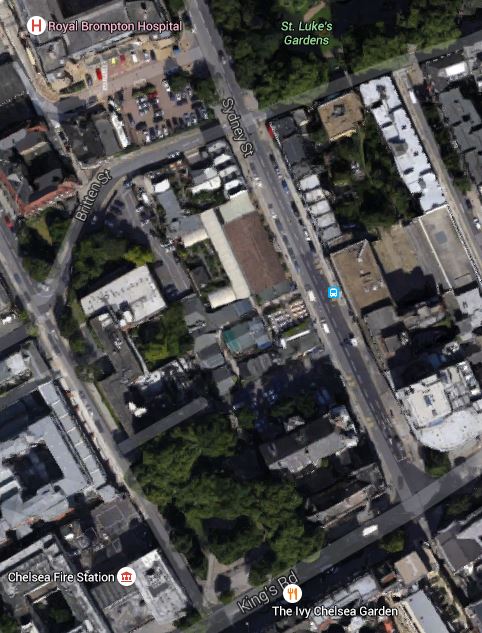
This Google Map shows the area of Site A in an enlarged format.
King’s Road Chelsea Station Site A
Site A is described like this by Crossrail 2.
Includes the Chelsea Garden Centre and Farmers Market. This would be the main worksite for construction of the station tunnels, station entrance, ticket hall and station shaft. Although the site boundary includes 250 King’s Road and 151 Sydney Street, these buildings would be retained.
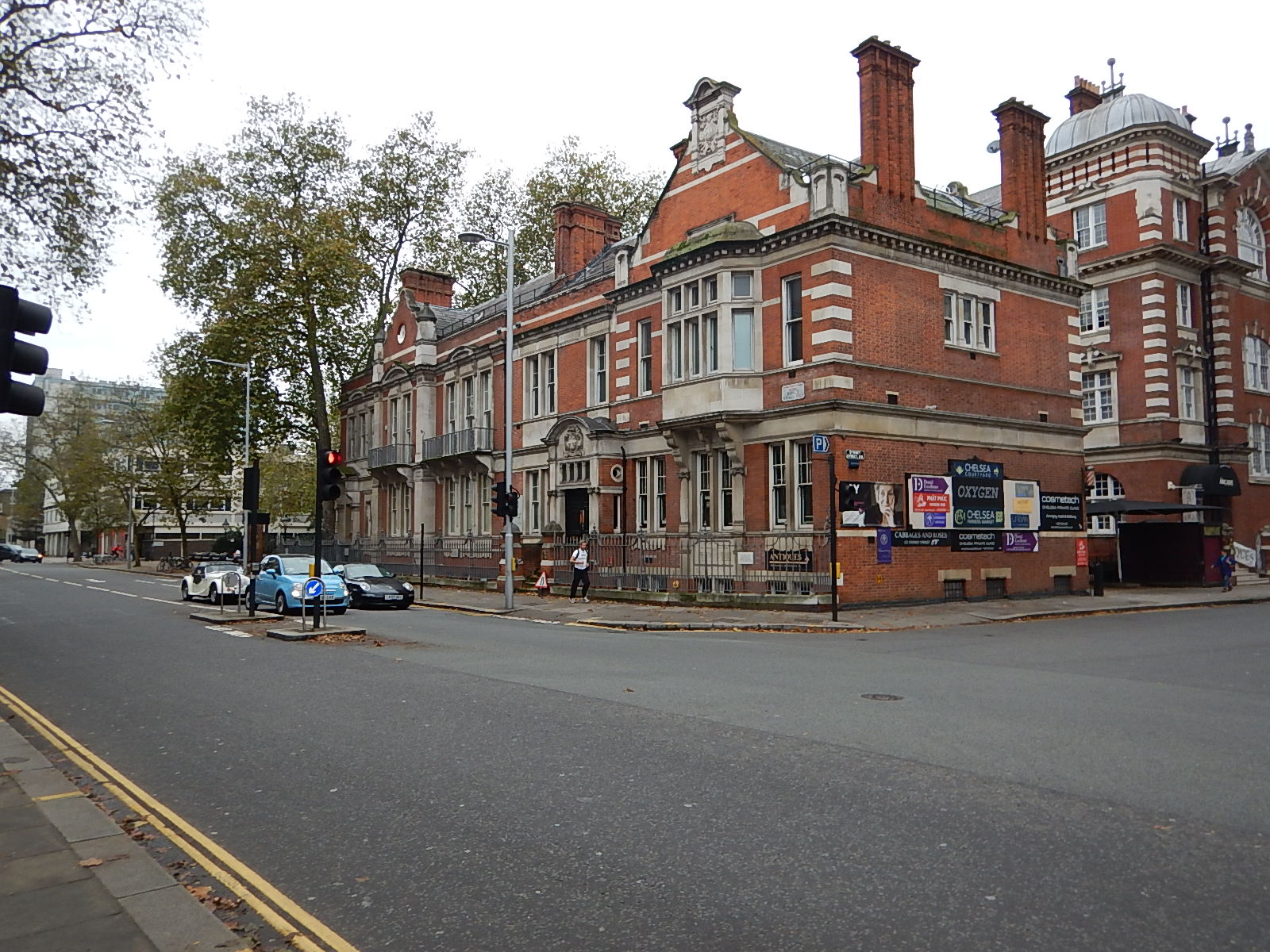
I would assume that the buildings to be retained are these on the corner.
This Google Map shows the area of Site B in an enlarged format.
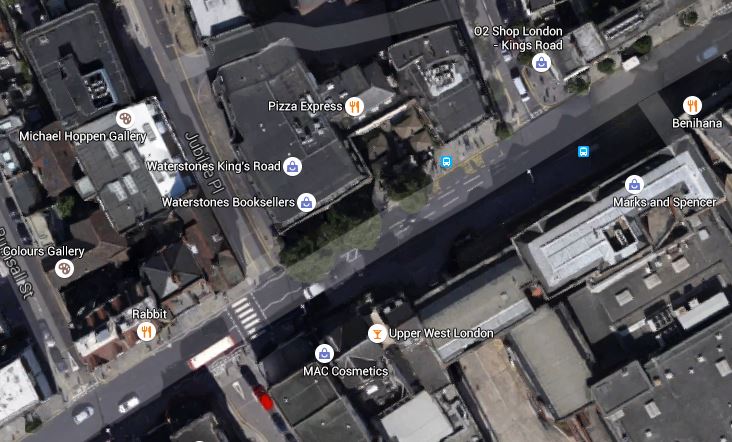
King’s Road Chelsea Station Site B
Site B is described like this by Crossrail 2.
Includes retail and office buildings adjacent to The Pheasantry and extends across Jubilee Place, which would be closed temporarily. This site would be used for construction of the eastern station shaft.
The Pheasntry, where Pizza Express has their restaurant is to the right of Waterstones and Ryman
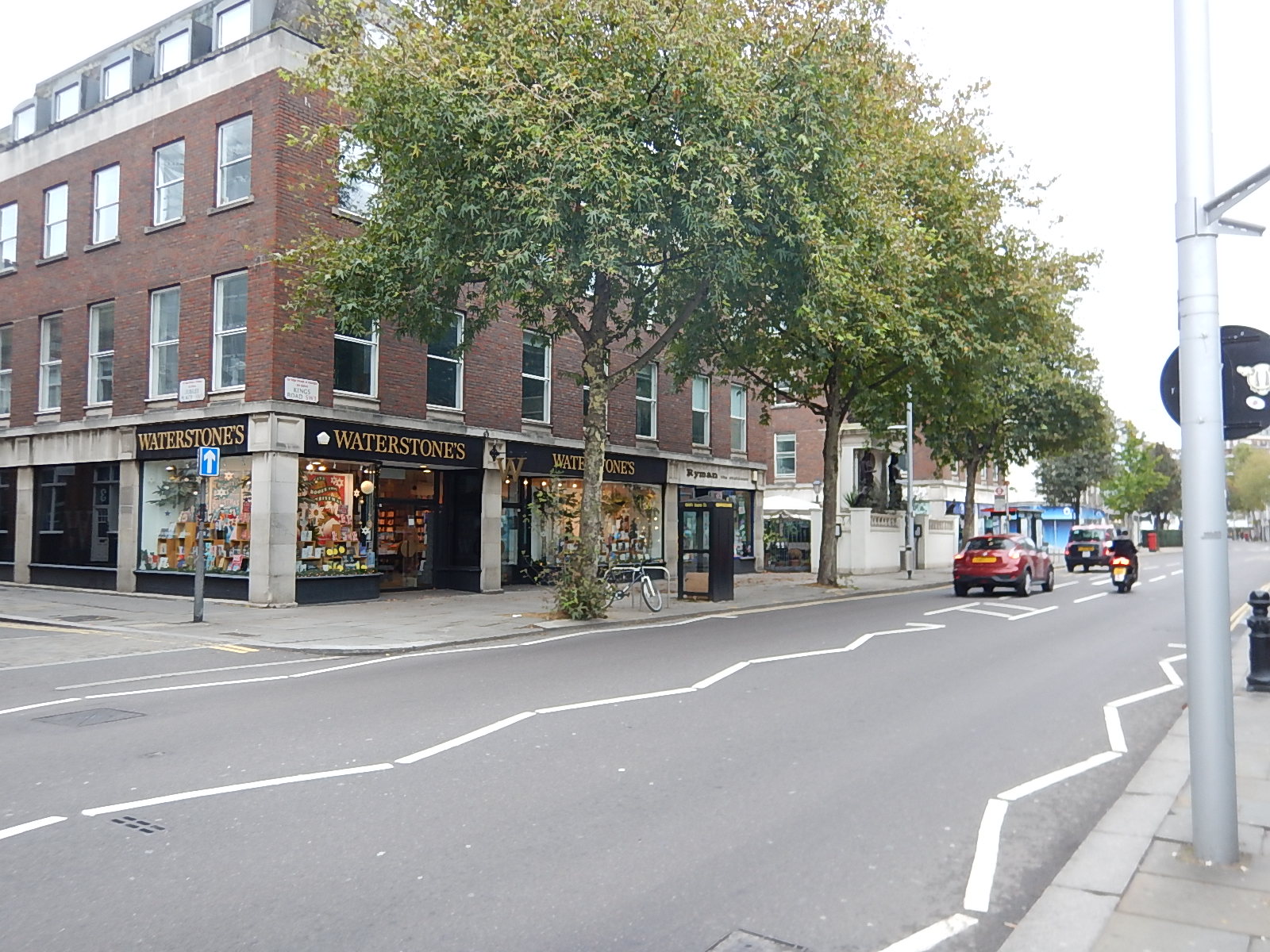
Jubilee Place is to the left of Waterstones and appears to be one-way away from the King’s Road.
This station design is not very ambitious, when you compare it to Balham or Dalston, in that it appears to be single as opposed to double-ended.
Is this because there is no interchange with other lines or because Crossrail 2 want to have to argue only one entrance with protestors?
What Will The New Buildings Be Like?
Obviously I don’t know, but I can make a few points.
- On both sites A and B, I suspect that both shafts and the station at Site A will be incorporated into buildings in keeping with the area.
- It looks from the proposed position of the station entrance, that if the building on the corner of Site A is to be retained as Crossrail 2 say, then it will double as the station.
Surely, this would be two briefs that would be welcomed by one of our world-class architects.
Conclusion
This is probably the most difficult station to build for Crossrail 2.
Not in terms of the actual engineering, but in the sensitive nature of the site and the local residents.
But as I said earlier, I have a feeling that if Crossrail 2 is built it will have to build something in the Chelsea area, due to London’s geography.
A Wall Of Flats At West Hampstead Station
I stopped off at West Hampstead station to see anything was happening on the new station.

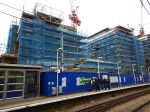
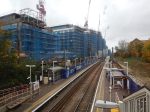

Nothing much yet!
This article on West Hampstead Life gives details of the new station.
I will reserve judgement on the flats until they’re finished. Especially, on a windy day!
A Walk Between Sloane Square And Imperial Wharf Stations
I waled between Sloane Square and Imperial Wharf stations, to get a feel of the area and formulate my views of whether the area needs a Crossrail 2 station and if it does, what form it will take.


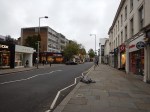
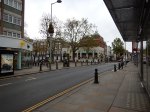

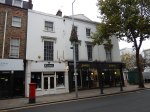
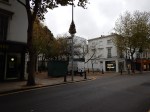

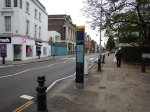
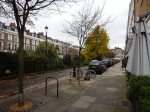


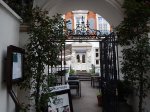


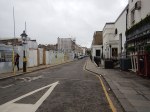
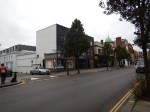


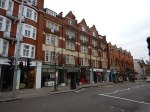
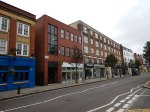

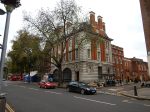
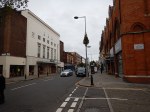
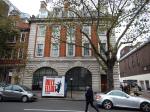

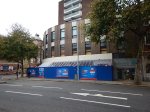
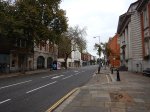
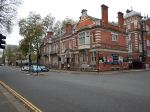



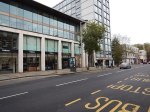
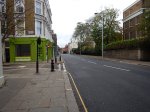
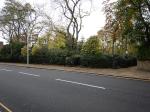

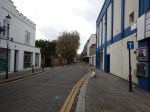

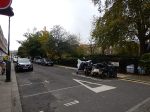


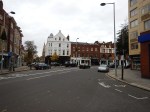

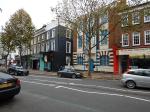
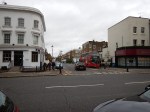
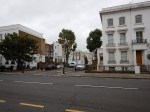
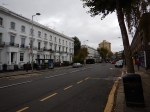

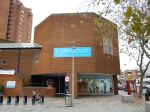
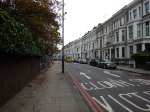
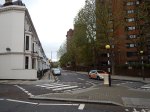

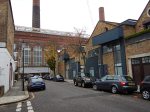
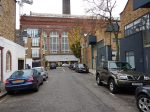

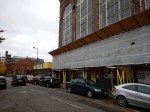

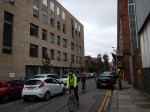


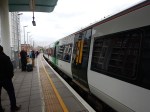
The walk and the area did raise a few interesting questions.
- Why is the Department Store in Sloane Square not called John Lewis? After all Jones Brothers, George Henry Lee and Robert Sayle have all taken the corporate name.
- Why at nine o’clock in the morning were expensive cars rushing about at well above the speed limit? This area needs a fully enforced twenty limit to make everybody safer.
- Why all the fuss about demolishing an empty Fire Station to use the site for a Crossrail 2 station? With an imaginative architect, it would enhance the buildings in that area of the King’s Road.
- Why would anybody want to live in the very attractive but expensive side streets? You’d effectively be a prisoner of the traffic for most of the week.
- Why are so many of the shops boring members of chains? I didn’t see many that I felt, I should return visit to perhaps buy something for my house.
- Why are there no signs to Imperial Wharf station?
- Why are there so few maps?
- Why do the artisan bakeries not have anything without gluten? The only places that do gluten-free I saw were Marks and Spencer, Waitrose and Starbucks. The Angel has those and several others!
I really think that the whole point of the opposition by some, to the building of a Crossrail 2 station on the King’s Road, is that they want to keep the area congested with traffic, so that visitors stay away!
After all. posh people in Chelsea, don’t want to allow plebs like me with a degree in a very non-artistic subject like Engineering to lower the tone of the area, by visiting!
 The Anonymous Widower