I Get Struck By The DOO Lurgy
The DOO (Driver Only Operation) Lurgy has generally been limited to Southern, Gatwick Express and ScotRail trains.
But today, when coming back from IKEA, I was unable to get a train on the Great Northern Route at Highbury and Islington to Essex Road, as the train was cancelled.
The station-man upstairs said it the DOO Lurgy and I walked off to catch a bus.
This row over DOO has gone on long enough and from what I wrote about in Design For Safety In A New Station, I would suspect that the solution I saw at Lea Bridge station, is as good as its going to get!
Design For Safety In A New Station
I took these pictures at the new Lea Bridge station
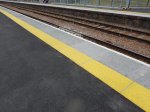

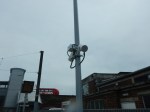
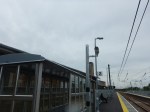


Note.
- There is a series of cameras, that display images of the complete train on the screens for the driver.
- Speakers and CCTV cameras are everywhere along the platforms.
- Very little seems to have been left to chance.
I doubt, even a driver, who was in the midst of some unfortunate personal emergency would miss anything untoward happening on the platform.
But even if they collapsed, it would be hoped that other safety systems on the train, would cut the power.
As a passenger and engineer, the setup of the platform, certainly reassured me.
Should we make sure, that the safety systems at all stations are as comprehensive as this?
Are You Annoyed By Noisy Trains At The Bottom Of Your Garden?
I have just found this document on the European Parliament web site, which is entitled Reducing Railway Noise Pollution.
It is a fascinating document and this is the abstract.
12 million EU inhabitants are affected by railway noise during the day and 9 million during the night. This study lists measures, funding and regulations to reduce it. The introduction of modern rolling stock will lower noise most significantly. In the short run, the replacement of cast iron by composite brake blocks on rail freight cars is most important. Developing a regulation scheme for a staged process towards low-noise rolling stock is the heart of a rail noise abatement strategy.
Many of us in the UK, would think that we suffer badly from the noise of trains, but it would appear that Germany and other Central European countries suffer badly from all freight trains passing through. The Rhine Valley which has over 400 freighs trains a day, suffers badly from noise.
So how can we reduce noise?
- As the abstract says new rolling stock is the best way to reduce noise and many of our trains have been replaced with new or refurbished ones in the last few years.
- The report says that most (approximately 75%) of UK freight wagons have disc brakes or composite brake blocks. So that is good.
- In my view one of things that gets most complaints is noisy and smelly diesel locomotives, like the dreaded Class 66 locomotives. They may be liked by the freight companies, but they are not favourites of drivers and those living by the railway. More friendly types of diesel locomotives like the Class 68 are starting to appear and it can’t be too soon.
- Surprisingly, with electric trains, pantograph noise is a problem. I’d hand that and any other aerodynamic problems over to the engineers in Formula One and aircraft design. I have read that Bombardier’s new Aventra will be very clean aeodynamically, which must make for a reduction in noise.
Let’s hope that these small improvements continue to reduce the noise by trains.
The report also says this about physical noise barriers.
Noise barriers are a visual intrusion, particularly since they are a target for graffiti; they have a high cost, and cause problems for track access. Their effectiveness depends on their absorption properties, their height, and the proximity of the barrier to the noise source and/or to the receiver.
I am not a fan, as they ruin my taking of photographs.
 The Anonymous Widower