EMR Set To Retain Liverpool – Nottingham Service
The title of this post is the same as that of this article on Railway Gazette.
This is the introductory paragraph.
The Department for Transport has confirmed to East Midlands Railway that, for the time being at least, it is no longer planning to transfer the Liverpool Lime Street – Nottingham service to TransPennine Express from the December 2021 timetable change.
My experience of the service is limited these days, but occasionally, I do use the Liverpool and Sheffield section of the service to get across the Pennines on trips North.
In January 2020, I had a horrendous trip on an overcrowded train composed of several one-car Class 153 trains, which I wrote about in Mule Trains Between Liverpool And Norwich.
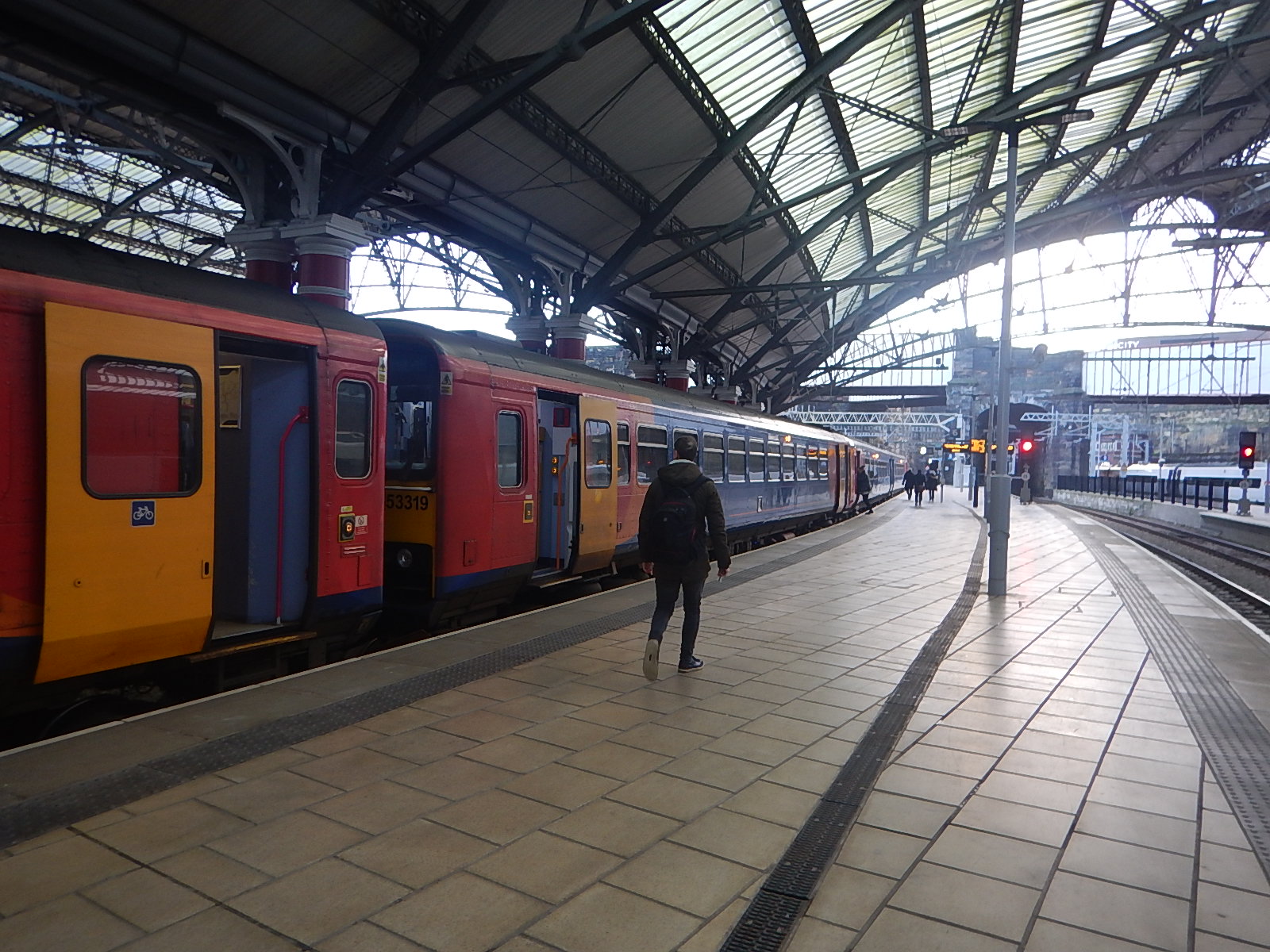
This is not the way to run a long distance service, which takes over five and a half hours.
The plan to improve the service involves splitting it into two from the December 2021 timetable change.
- Liverpool and Nottingham
- Derby and Norwich
It was thought that the Liverpool and Nottingham section would be going to TransPennine Express (TPE).
These points summarise the Railway Gazette article.
- TPE were training drivers and that has now stopped.
- EMR have told staff, they will be keeping both services.
- The service will still be split.
- EMR will not have enough trains to run the split service.
This paragraph sums up what could happen to run the service.
One option favoured by industry insiders would see EMR take on 15 Class 185 Desiro trainsets which are due to be released by TPE during 2021 as its fleet renewal programme concludes. These trains are maintained by Siemens at its conveniently located Ardwick depot in Manchester.
I see this splitting, as being a pragmatic solution to the problems of running a long service, with a very varied loading at various parts of the route.
- As one company runs both sections, the changeover can be arranged to be very passenger-friendly.
- EMR manage the possible change stations at Derby and Nottingham.
- Passengers can be given proper care in the changeover.
- Derby gets a direct connection to Peterborough, Cambridge and Norwich.
With my East Anglian hat on, I can see advantages in the split, as I regularly used to travel as far as Derby or Nottingham, when I lived in the East, but only once took the full service to Liverpool.
I have a few thoughts.
Capacity Between Liverpool And Nottingham
This section of the service is generally run by a pair of Class 158 trains, which have a capacity of around 140 each or 280 in total.
The Class 185 trains have three-cars and a capacity of 180 seats.
Currently, Liverpool and Nottingham takes just under two hours and forty minutes, which would make for a comfortable six-hour round trip. This would mean, that an hourly service between the two cities, will need a fleet of six trains.
Under Future in the Wikipedia entry for Class 185 trains, this is said.
Following the August 2020 decision not to transfer the Liverpool Lime Street to Nottingham route to TransPennine Express, East Midlands Railway could opt to take on the 15 trainsets due to be released from TPE to run this route.
Fifteen trains would be more than enough trains to run a pair on each hourly service and perhaps run some extra services.
Pairs of Class 185 trains between Liverpool and Nottingham would go a long way to solve capacity problems on this route.
Calling At Derby
The current service between Liverpool and Norwich doesn’t call at Derby, as it uses the Erewash Valley Line via Alfreton.
The proposed Eastern portion of the split service has been proposed to terminate at Derby, so passengers would change at Nottingham, if they wanted to travel to Sheffield, Manchester or Liverpool.
As East Midlands Railway, runs both services, they can optimise the service to serve and attract the most passengers.
Preparation For High Speed Two At East Midlands Hub Station
Eventually, the two halves of the Liverpool and Norwich service must surely call at the future East Midlands Hub station for High Speed Two, so future routes must fit in with the plans for High Speed Two.
But there’ll be plenty of time to get that right.
Interchange At Nottingham
I’m sure a quick and easy interchange can be performed at Nottingham.
In the simplest interchange, the two services could share a platform and passengers could just walk between the two trains on the level.
The following sequence could be used at Nottingham.
- The train from Derby to Norwich would arrive in the platform and stop at the Eastern end of the platform.
- The train from Liverpool to Nottingham would arrive in the platform and stop close behind it.
- Passengers on the train from Liverpool, who wanted to take the Norwich train, would simply walk a along the platform and board the train.
- The Norwich train would leave when ready.
- The train from Liverpool would stay where it had stopped and be prepared for the return trip to Liverpool.
- , The next train from Norwich to Derby would pull in behind the Liverpool train.
- Passengers on the train from Norwich, who wanted to take the Liverpool train, would simply walk a along the platform and board the train.
- The Liverpool train would leave when ready.
- Finally, the Norwich to Derby train would leave for Derby.
Only one platform would be needed at Nottingham station, that would need to be long enough to handle the two trains.
Between Norwich And Derby
This is the only section of the Liverpool and Norwich route with any electrification.
- Currently about thirty miles between Grantham and Peterborough are electrified.
- The lines around Ely and Norwich are also electrified.
I think that Ely and Peterborough will be electrified earlier than other lines.
- It would be part of an electrified freight route between Felixstowe and the East Coast Main Line.
- It would enable electric passenger trains between Cambridge and the North.
- It would mean the Ipswich and Peterborough services could be run by battery electric trains.
- It could be a useful electrified diversion route to London, during engineering works.
,This extra electrification, would also mean that Norwich and Derby would probably be within range of battery electric trains.
Stadler have stated that Greater Anglia’s Class 755 trains can be converted from bi-mode into battery electric trains.
So as Greater Anglia and East Midlands Railway are both Abellio companies, could we see battery electric operation on the around 150 miles between Norwich and Derby?
Conclusion
Splitting the Liverpool and Norwich service opens up a lot of possibilities to improve the service.
 The Anonymous Widower