The title of this post, is the same as that of this article on offshoreWIND.biz.
This is the sub-heading.
The first of the 23 caissons being built for Princess Elisabeth Island in Vlissingen, the Netherlands, is almost finished and will be immersed in the North Sea this summer. The artificial Belgian energy island is a world first.
Note.
- This web site is the web site of Belgium’s Princess Elisabeth energy island.
- This YouTube video describes the Princess Elisabeth island.
The video shows the importance of this project, that will have interconnectors to both the UK and Denmark, and connections to a large number of offshore wind farms.
These two paragraphs describe the roll-out of the caissons.
When the caissons are ready, a semi-submersible vessel will transport them further down the harbour, where they will be placed in the water and temporarily stored. They will then be moved to their final location in the North Sea this summer, weather permitting.
The caissons will form the outer walls of the energy island. The island itself will be created using approximately 2.3 million square metres of sand, extracted locally. The island will be finished in late 2026, when the electrical equipment can start to be installed. Contracts for this will be tendered this year.
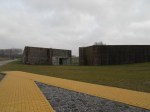
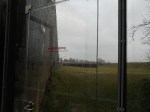
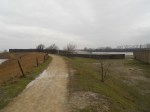
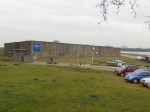
These pictures show four Pheonix Caissons from Mulberry Harbours that are used as a museum in The Netherlands.
Nothing is new! But at least the Belgians won’t have to tow their caissons across the Channel under enemy fire.
April 23, 2024
Posted by AnonW |
Energy | Belgium, Energy Island, Interconnectors, Princess Elisabeth Energy Island, Watersnoodmuseum |
Leave a comment
This web site is the web site of Belgium’s Princess Elisabeth energy island.
This YouTube video describes the Princess Elisabeth island.
From the video the following can be determined.
- The Princess Elisabeth island is 45 km. from the Belgian coast.
- An interconnector to the UK could come ashore at the site of the decommissioned Bradwell nuclear power station.
- An interconnector to Denmark could come ashore in Southern Jutland, just North of where the Viking Link connects to Denmark.
This map clipped from the video shows the location of Princess Elisabeth island.

Note.
- Belgium is shown in red.
- Istend is in the middle of the straight Belgian coast.
- The red dot between Belgium and the UK is Princess Elisabeth island.
- The interconnector to the UK could feasibly go to Bradwell.
- The interconnector to Denmark could go via a wind farm, which would explain the kink.
- Could the kink point be at the Dogger Bank, where there could be 20 GW of wind farms?
Has Belgium made a bid to dominate European energy distribution?
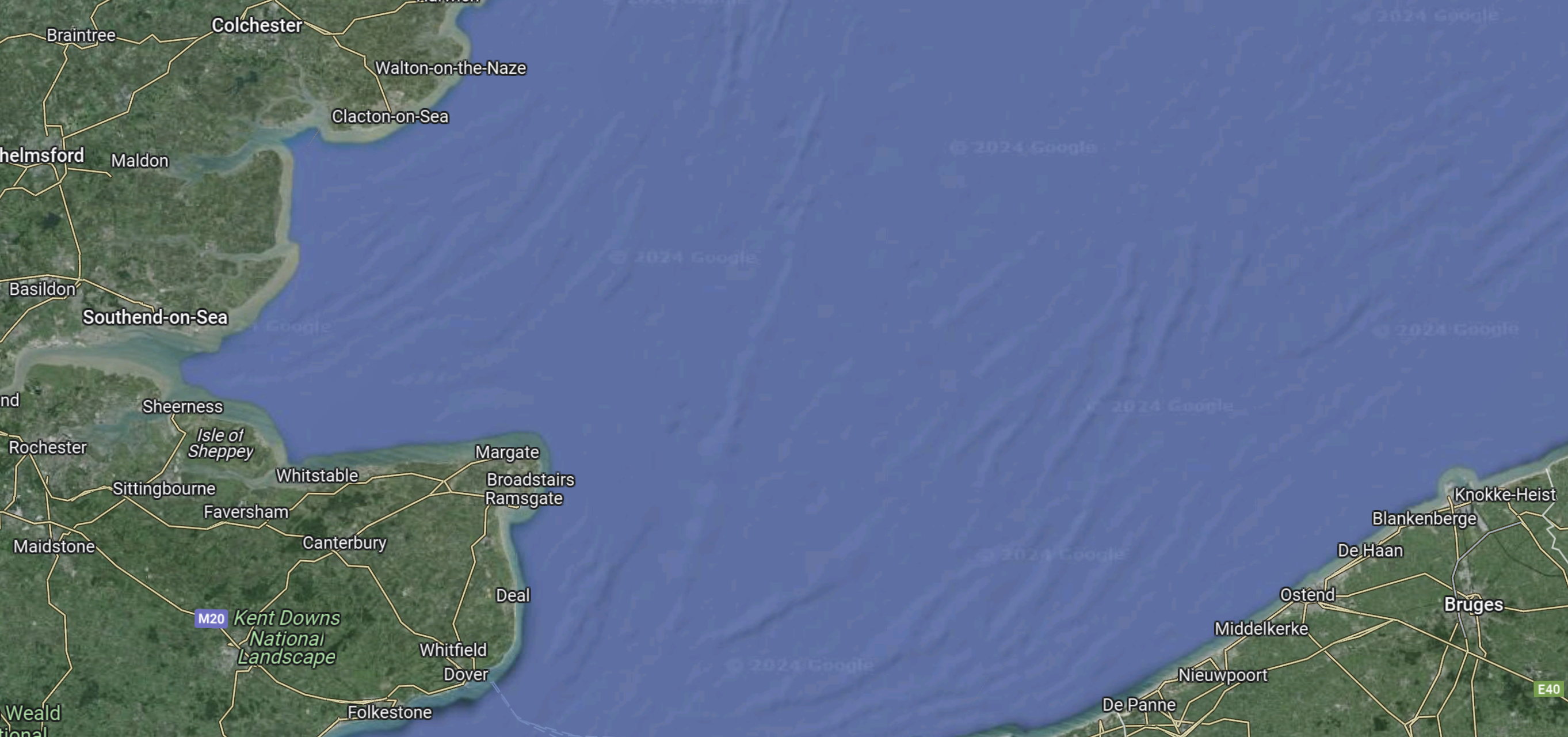
This Google Map shows the Belgian and English coast lines.

Note.
- Bradwell is on the coast to the North-East of Southend-on-Sea.
- As it used to be a nuclear power station site it still has an electricity connection to the grid.
- The Princess Elisabeth island is 45 km. from the Belgian coast at Ostend.
I estimate that a Bradwell and Princess Elisabeth island interconnector would be about 150 miles.
April 23, 2024
Posted by AnonW |
Energy | Belgium, Bradwell Nuclear Power Station, Denmark, Elia Group, Energy Island, Interconnectors, Offshore Wind Power, Princess Elisabeth Energy Island, Wind Power |
1 Comment
The title of this post, is the same as that of this article on Rail Engineer.
These two paragraphs introduce the article.
Sekisui manufactures synthetic wood baulks made from Fibre-reinforced Foamed Urethane (FFU). Network Rail engineers installed the first FFU baulks and sleepers as replacements for traditional hardwood on military canal bridges in Kent during 2014. The FFU product was first introduced on Japanese Railways in 1980 and early installations are still performing to specification. FFU is now widely used on railway infrastructure in 33 countries to support track on bridges, decking for level crossings, plain line sleepers, and switch and crossing (S&C) bearers.
Newark flat crossing is an example of a unique and large application of FFU technology on Network Rail infrastructure which required the development of the long FFU synthetic bearers forming a lattice track support 16 by 16 metres. Sekisui holds full Network Rail Product Acceptance Certification PA05/07176 for this project which became operational following complete track renewal in August 2019. The FFU was used to replace the traditional hardwood to support the track.
The article is a fascinating insight into the use of FFU.
Fabricated To Requirement
The article describes how the FFU technology was fabricated to create a replacement for all the timber in a factory in Nottingham.
This paragraph describes the advantages of FFU.
Key benefits over hardwood include longevity with over 50 years’ service life. FFU is form retentive, not prone to splitting or absorption of water, and does not rot or deteriorate in sunlight so it contributes significantly to ‘whole life cycle cost reduction’ by reducing track maintenance and renewal interventions. The product does not require maintenance inspectors to complete micro-drilling during service life and is fully recyclable.
This paragraph details a problem, that Network Rail were having with the maintenance.
Prior to the 2019 renewal, the supporting lattice that holds the cast crossings into position was made up from hardwood and typically required replacement every 15 years. The last renewal occurred in 2003. Network Rail found that procuring suitable hardwood timbers of 16 metres for a further renewal proved problematic.
This reminds me of the problems, Brunel’s successors had with his timber viaducts. They just couldn’t get the quality of timber he had been able to source.
It appears from the two pictures in the article, that FFU can be worked like hardwood.
Maintenance Comparison After Four Years
This paragraph introduces this section.
Over four years after the renewal of Newark Flat Crossing utilising FFU, Network Rail Track Maintenance Engineers (TME) in Doncaster report significant reduction in maintenance requirements.
These paragraphs compare four years of use of both systems.
2003-2007 hardwood timber renewal – track geometry deterioration, ride quality issues, splitting of timbers, failure of screws, several rail management interventions to cast crossings, including cracking of castings leading to early replacement of ironwork.
2019-2023 FFU renewal – stable track geometry with no ride quality issues reported, no screw failures, no deterioration in the FFU material, reduced rail management intervention and no cracking or premature replacement of cast crossings.It looks to me, that the FFU is a long-term cost saver.
This paragraph indicates the maintenance savings.
In terms of rail management, since the introduction of FFU, Network Rail’s TMEs have reduced the cyclical inspection and maintenance requirements from four-weekly to eight-weekly. There is now only minimal crossing nose profile grinding required and two small casting weld repairs have been done to date.
That looks like a fifty percent saving.
Other Uses Of FFU
In my 76 years, I’ve came across various uses of large timbers.
- At ICI in the late 1960s, some of the plants, I visited at Winnington, had been built from massive oak beams in the early 19th Century.
- With one plant, that ICI demolished, the oak beams were sold for a surprising amount of money.
- I’ve lived in two early 19th Century houses, that were built with oak beams.
- An architect designed a replacement barn for me, that was made of large timbers. Sadly, the new owners of the house demolished it and I don’t have any pictures.
For these reasons, I’m certain, that architects, builders and restorers can find all sorts of uses for FFU.
This is the product page.
Conclusion
This looks like a success story and the Rail Engineer article should be read in full.
It might give you very good ideas.
April 23, 2024
Posted by AnonW |
Transport/Travel | East Coast Main Line, ICI, Isambard Kingdom Brunel, Network Rail, Newark Crossing, Sekisui, Wood |
Leave a comment





 The Anonymous Widower