UK Solar Deployment Poised To Increase 50% YoY, Following Rapid Growth In The Second Half Of 2024
The title of this post, is the same as that of this article from Solar Power Portal.
This is the sub-heading.
Josh Cornes, analyst at Solar Media Market Research, looks at what 2025 might hold for the solar industry.
The first four paragraphs give some interesting statistics.
The UK is forecast to add between 3-3.5GWp-dc of capacity in 2025, just shy of the huge numbers seen in 2015 and huge growth on 2024.
The UK added around 2.3GWp-dc in 2024, exceeding original expectations with the help of a push in ground mounted projects toward the back end of the year. This equates to around 20% growth on the 1.9GW that was added in 2023.
Approximately 20% of the 2.3GW deployed in 2024 came from residential rooftop installations, continuing the boost in this sector, first highlighted by the near 200% year-on-year (YoY) increase from 2022 to 2023. Commercial rooftops also contributed 20% of installations in 2024 with a slight increase of 10% YoY.
Large-scale ground-mount installations in 2024 saw the largest growth, making up 60% of the annual capacity. This uptick has continued to be driven by projects with Contracts for Difference (CfD), with rounds AR4 and AR5, and even AR6, accounting for nearly 850MW of the 1.3GW added.
It is a well-written article, that should be read in full.
Summarising 2024
In 2024 solar installations broke down as follows.
- Ground-mounted -1.38 GW
- Residential rooftops – 0.46 GW
- Commercial rooftops – 0.46 GW
Which adds up to the total installed solar capacity of 2.3 GW.
3.5 GW of total solar is scheduled to be installed in 2025, which at that rate until the end of 2030 would add 21 GW of total solar power.
But the UK will get help from what I think is one of the best solar ideas, which surprisingly comes from The University of Swansea in Wales.
This Google Map shows the three large solar roof panels on Denmark Hill station in London.
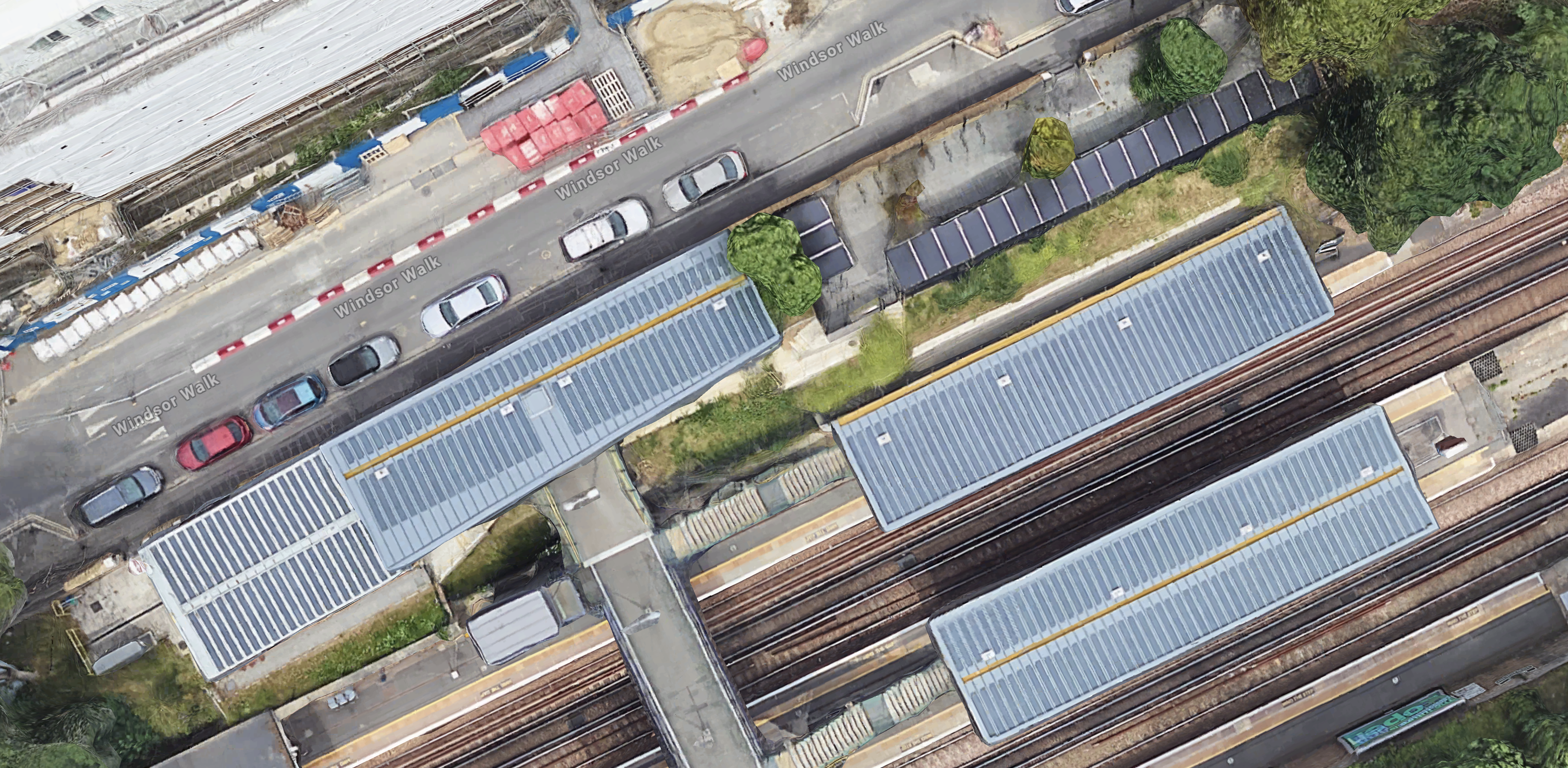
Note.
- The three large panels are flat.
- The panels are built on a steel substrate.
- Two provide shelter for three platforms.
- The third panel provides shelter for entering passengers.
These pictures show the panels from various angles.
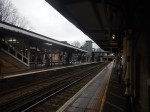
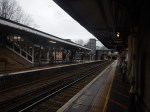
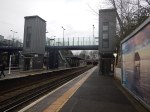

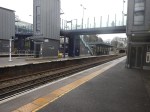



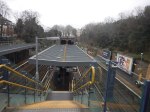
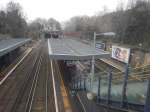
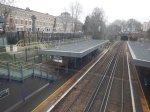



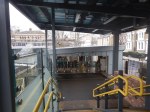
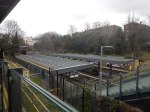
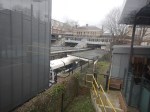


So often, a small improvement opens up a large opportunity.
This page on the Kalzip web site which is entitled Modernisation of Denmark Hill Station, gives more details of the station project.
Over the years, I put up a few steel-roofed buildings in my time and I helped design a few with a client in the 1970s, that could have benefited from solar panels like these.
 The Anonymous Widower
Trump won’t like it, he wants us to burn oil faster than ever!
Comment by Mauricereed | January 23, 2025 |
But then as I said, a lot of this solar could be structural-solar-on-steel from South Wales.
Have you been to Denmark Hill to have a look?
It’s certainly putting your product in the public eye!
Comment by AnonW | January 23, 2025 |
These are not standard solar panels. They’re thin-film PV made by BiPVCo, which, as you note, is a spin-off from Swansea uni from work they did with Tata Steel. So this is not a ‘small improvement’, but a different technology with a much lighter weight making them suitable for things like canopies where standard solar panels would be too heavy. The panels are also flexible – a bit like a roll of carpet you fix on your roof – and can make better use of ambient light, but they have a lower efficiency than standard PV.
I know of 2 other companies in this country which are active in this area: Polysolar, who integrate the PV into glass, used for example in the cycle park at Cambridge North station. I know they have a contract for further work with Network Rail, though I’m not sure where exactly. The other is Solivus, which doesn’t manufacture, but installs thin-film PV from other companies, for example, Heliatek in Dresden. Solivus recently completed an install on the hangars at Farnborough airport. [Disclosure: I have a small investment in both companies.]
I’ve not heard that BiPVCo have won any more contracts with NR, but railway station canopies are an obvious place to add thin-film.
Comment by Peter Robins | January 25, 2025 |
As an aside on new tech at stations, a trial was planned for installing a flywheel at London Rd Guildford to recover braking power from the track and store it in a flywheel (I didn’t even know you could do that). I’ve just done a search to find out what the status was, but could only find https://www.thepwi.org/wp-content/uploads/2023/09/2023-09-13_Insights-on-electrification-and-plant_Nigel-Wheeler.pdf which seems to be a presentation from someone at NR. This also mentions (p13) a similar trial at Weymouth with a battery (which would be more versatile). There’s some interesting stuff in this presentation, but it doesn’t tell me what the current status is.
Comment by Peter Robins | January 31, 2025 |
[…] also wrote UK Solar Deployment Poised To Increase 50% YoY, Following Rapid Growth In The Second Half Of 2024, just over a week ago, where I predicted a large growth in steel aolar panels on industrial and […]
Pingback by Will 2025 Be A Bumper Year For Solar? « The Anonymous Widower | January 28, 2025 |