Gwynt Glas Offshore Wind Project Strengthens Development And Welcomes New Partner, Sumitomo
The title of this post, is the same as that of this news item from Gwynt Glas.
These three initial paragraphs add some detail.
The Gwynt Glas offshore wind project has today announced a significant strengthening of its joint venture with Sumitomo Corporation joining as an equal partner alongside EDF power solutions UK and Ireland and ESB. Each partner now holds a 33.33% stake, while DP Energy continues to provide critical development support, leveraging its expertise in early stage project delivery and local engagement.
This strategic collaboration brings together three global leaders in renewable energy combining deep expertise in large scale development and delivery. The partnership positions Gwynt Glas to advance confidently through its next phases, reinforcing its role in delivering clean, homegrown energy for Wales and the UK while supporting energy security and economic growth.
Gwynt Glas is a proposed innovative floating offshore wind farm in the Celtic Sea. The up to 1.5 GW project continues to make strong progress and successfully submitted its Scoping Report to the Planning Inspectorate this summer.
Are Sumitomo Involved In Offshore Wind?
I asked Google AI, the question in the title of this section and received this answer.
Since making its first investment in a European offshore wind project in 2014, Sumitomo Corporation
has accumulated extensive expertise throughout the development, construction and operation phases of offshore wind projects.This marks Sumitomo Corporation’s first participation in a floating offshore wind project.
Are Sumitomo learning about floating offshore wind, by participating in a major project or are they up to something very innovative technically?
In Is Sumitomo Heavy Industries Highview Power Energy Storage System On Line At Hiroshima?, I talked about how Sumitomo’s engineers had taken Highview Power’s ideas for energy storage using liquid-air and downsized it to improve the efficiency of an LNG Terminal at Hiroshima, by adding a 4MW/20 MWh battery.
I just wonder, if some of the steel floats that will support the wind turbines, will also be used for liquid-air tanks as part of one of Highview Power’s batteries. As initially, there will be 66 turbines at Gwynt Glas, the battery could be a monster, but a very environmentally-friendly one!
The Role Of Train Stations In Driving Economic Growth
The title of this post, is the same as that of this article on Business Live.
This is the sub-heading.
This role of railway stations is set out in a recent report by Development Economics.
These two paragraphs add more detail.
We usually think of railways and railway stations as places to catch trains. And so they are. They provide us in parts of Wales with an alternative to the motor car particularly for longer journeys; and within the UK where air travel options are few.
This role of railway stations is set out in a recent report by Development Economics: Growing Places – Railway Stations: Engines of Economic Growth. It illustrates the impact of Great Western main line stations including Carmarthen, a medium size station in terms of passenger numbers handling nearly half-a-million entries and exits annually.
It sounds to me, that next time I go to South Wales, I should go and look at Carmarthen.
The report from Development Exconomics is also mentioned in this article on Rail Industry Connect, which is entitled Railway Stations Emerge As Engines Of Growth, But SMEs Must Move Quickly To Secure Their Place.
This is the sub-heading.
Railway stations across the UK are being recast as far more than transport hubs, with new analysis positioning them at the centre of economic growth, regeneration and investment. A recent report by Great Western Railway, Growing Places: Railway Stations – Engines of Economic Growth, sets out the scale of this shift and, crucially, what it means for the rail supply chain.
The initial paragraph adds some more detail.
For SMEs, the message is clear. The opportunity is substantial, but it is evolving. Value is no longer created solely through infrastructure delivery; it is increasingly tied to the wider economic ecosystems that stations enable.
Both articles are a must read.
Andy Burnham should read both!
ENGIE And La Caisse Select GE Vernova For The Next Phase Of The Modernization Of Dinorwig Pumped Storage Hydropower Plant In North Wales, UK
The title of this post is the same as this news item from Engie.
These are the three bullet points.
First Hydro Company – a 75:25 joint venture between ENGIE and La Caisse, has selected GE Vernova for the modernization/replanting of the first two units of the Dinorwig pumped storage hydropower plant in North Wales, UK.
GE Vernova is expected to replace two 315 Megawatt (MW) units to improve the plant’s reliability, availability and efficiency.
By the end of the decade, the two new units at Dinorwig will help ensure the continued delivery of the fast, flexible generation that plays a crucial role in supporting UK grid stability.
These three paragraphs add some more detail.
First Hydro Company (joint venture between ENGIE and La Caisse), and GE Vernova Inc. (NYSE: GEV), announce the next phase of the modernization/replanting of the Dinorwig pumped storage hydropower plant in North Wales, UK. Under the agreement, GE Vernova is expected to replace two pumped storage units as part of First Hydro’s long-term replanting programme at Dinorwig, to help extend the life of the plant for decades to come, while enhancing the plant’s reliability, availability and performance in support of UK grid stability.
Now over 40 years old, Dinorwig is Europe’s largest pumped storage hydropower plant and is renowned for its rapid response capability, delivering up to 1,320 MW of power within 12 seconds from standby, and up to 1,800 MW in under a minute. With such characteristics, this plant plays a vital role in grid resilience and frequency response, providing a capacity equivalent to power around one million homes in the UK.
As majority owner and operator of the plant through First Hydro Company, ENGIE is making a significant long-term investment to extend its operational life. The wider programme includes the replacement of key plant components across all six generating units, alongside significant infrastructure upgrades.
Note.
- According to the Wikipedia entry, Dinorwig power station has a storage capacity of around 9.1 GWh.
- It was commissioned in 1984.
- The plant was built by an Alfred McAlpine / Brand / Zschokke consortium.
As in 1984, Artemis was very busy, managing projects like this, I’d be very interested to know, if this was a project managed by Artemis.
Chance For Rail To Distribute Hydrogen And Use It As Alternative Power Supply
The title of this post, is the same as that of this article on Rail Magazine.
These are the first three paragraphs.
Hydrogen can have a future in logistics as well as being an alternative power source for traction.
Speaking at RAIL Live, Mark Downing, Head of Industrial Energy at Heavy Haul Rail, argued that rail was best suited for the transport of hydrogen.
“Energy has always moved by rail. You’ve got coal, you’ve got fuel, this is the next energy process that can be put onto rail at scale,” he said.
Mark Downing talks a lot of sense.
The article has a heading picture of a HydroFlex or Class 799 train,which is a hydrogen-hybrid train that can be powered by electrification or an onboard hydrogen fuel cell.
I’d certainly like to see a Class 799 train running services on an appropriate branch line. The article suggests the West of Wales, or the North of Scotland.
Charles Calvert, Chief Innovation Officer at Vanguard Sustainable Transport Solutions, gives this view. “I would love to see at least one of those routes get decarbonised by any other measure in the next five years.”
Google AI says this about the range of a HydroFlex train.
The HydroFLEX train, developed by Porterbrook and the University of Birmingham, has a potential range of over 300 miles on a single fill of hydrogen.
The long range would probably allow the refuelling point to be developed at a safe point on the route, where hydrogen could be delivered by rail.
The Birmingham International and Aberystwyth route could be a possible hydrogen route.
- It has a total length of 132.3 miles
- There is no electrification between Aberystwyth and Shrewsbury, which is a distance of 111.2 miles.
- As Aberystwyth station has the Vale of Rheidol steam railway, I suspect that Aberystwyth station would not be an ideal refuelling point.
- But Machynlleth Maintenance Depot could be, although it is 20.7 miles and 35 minutes from Aberystwyth.
- The Aberystwyth and Pwllheli services split and join at Machynlleth station, so could refuelling be combined with the split and join?
- Pwllheli and Machynlleth are 57.8 miles and 150 minutes apart.
The most promising of the English stations would be Birmingham International station, which is shown in this Google Map.
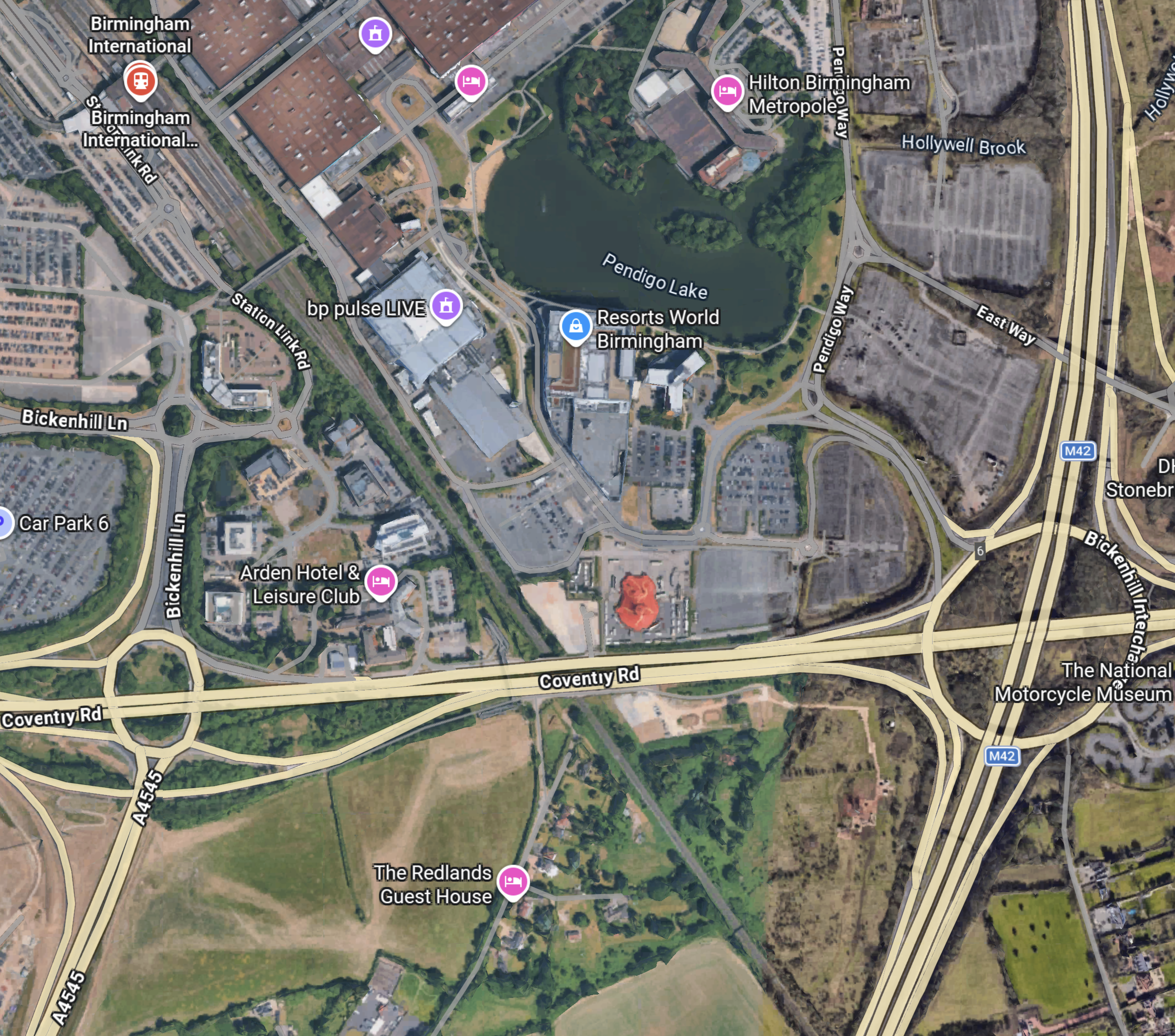
Note.
- Birmingham International station is in the North-West corner of the map.
- The electrified Rugby, Birmingham and Stafford Line runs diagonally through the map.
- In addition to their Aberystwyth/Pwllheli service, there is also a Llandudno Junction service that terminates at Birmingham International.
- I wonder, if there is space South of Coventry Road, to build a combined charging and hydrogen refuelling station, that could refuel all trains terminating at Birmingham International.
As the section without electrification is 111.2 miles on the Aberystwyth service, 148.3 miles on the Pwllheli service and 116.5 miles on the Llandudno Junction service , I suspect that these services could be too far for battery-electric trains, without charging at the Western end.
The Future Of Drax Power Station
This first paragraph from the Wikipedia entry for Drax power station gives a factual description of the power station.
Drax power station is a large biomass power station in Drax, North Yorkshire, England. It has a 2.6 GW capacity for biomass and had a 1.29 GW capacity for coal that was retired in 2021. Its name comes from the nearby village of Drax. It is situated on the River Ouse between Selby and Goole. Its generating capacity of 3,906 megawatts (MW), which includes the shut down coal units, is the highest of any power station in the United Kingdom, providing about 6% of the United Kingdom’s electricity supply.
This second extract from Wikipedia gives details of its current biomass contract and subsidy.
Drax’s subsidy scheme was scheduled to end in 2027, with Drax arguing for an extension to 2030. In February 2025, the UK government extended its operation from 2027 to 2031, but at a reduced 27% maximum load factor using 100% sustainable wood, so it would run “less than half as often as it currently does”, generally only at times of high electricity demand. Drax was given a contract for difference at £113/MWh in 2012 pounds, CPI inflation linked so about £155/MWh in 2025.
Note.
- Rishi Sunak’s Government extended the contract.
- It will now run on 100% sustainable wood, which includes sources like sawmill residues, forest thinnings and certain agricultural products.
- It has a similar type of contract to wind farms and energy storage.
I asked Google AI,”Does Drax Power Station Provide Grid Stability?, and received this answer.
Yes, Drax Power Station—along with its affiliated hydro assets—provides critical grid stability to the UK. As the UK’s power grid shifts toward intermittent renewables like wind and solar, Drax’s dispatchable generation and specialized system support services help maintain a secure electricity network.
The key stability services provided by the Drax portfolio include:
Inertia: Drax’s large spinning turbines and pumped hydro facilities provide vital inertia to the grid. This acts like a shock absorber, helping to control changes in frequency (maintaining 50Hz) and preventing power cuts.
Reactive Power: The facilities help manage voltage support and move power efficiently across different parts of the network.
Dispatchable Power: Unlike weather-dependent generation, Drax’s biomass and hydro plants can be ramped up or down on demand, providing firm capacity and flexible response to real-time grid needs.
Pumped Storage Support: Through its subsidiary Cruachan Power Station in Scotland, Drax operates a pumped hydro storage plant that actively balances supply and demand and holds specialized stability contracts with the National Grid Electricity System Operator (ESO).
So if you love or loathe the power station, it does a lot more than burn biomass to generate electricity.
Drax Power Station And Eastern Green Link Two
The Eastern Green Link Two web site is here.
This is the sub-heading
Eastern Green Link 2 (known as EGL2) is one of the most significant strategic energy infrastructure developments the UK has seen in recent years, connecting the north of Scotland to Yorkshire via the sea.
These two initial paragraphs gives more details.
EGL2 is a 505km electricity superhighway which will enable the transfer of power from Scotland to England (and vice versa) via a subsea cable. This two-gigawatt high voltage direct current (HVDC) cable is connecting Peterhead in Aberdeenshire and Drax in North Yorkshire and once operational, will carry enough electricity to power two million homes.
EGL2 will scale up the UK’s capacity to transport home-produced clean energy, predominantly from offshore wind, from where it is generated to where there is demand. By doing so it will increase the security, resilience, and stability of the UK’s transmission network.
EGL2 is the second of a planned seven interconnectors between Scotland and the South.
The first was the Western HVDC Link between Hunterston in Scotland and Flintshire Bridge in Wales, which became operational in 2013.
EGL2 will go between Peterhead in Scotland and Drax power station.
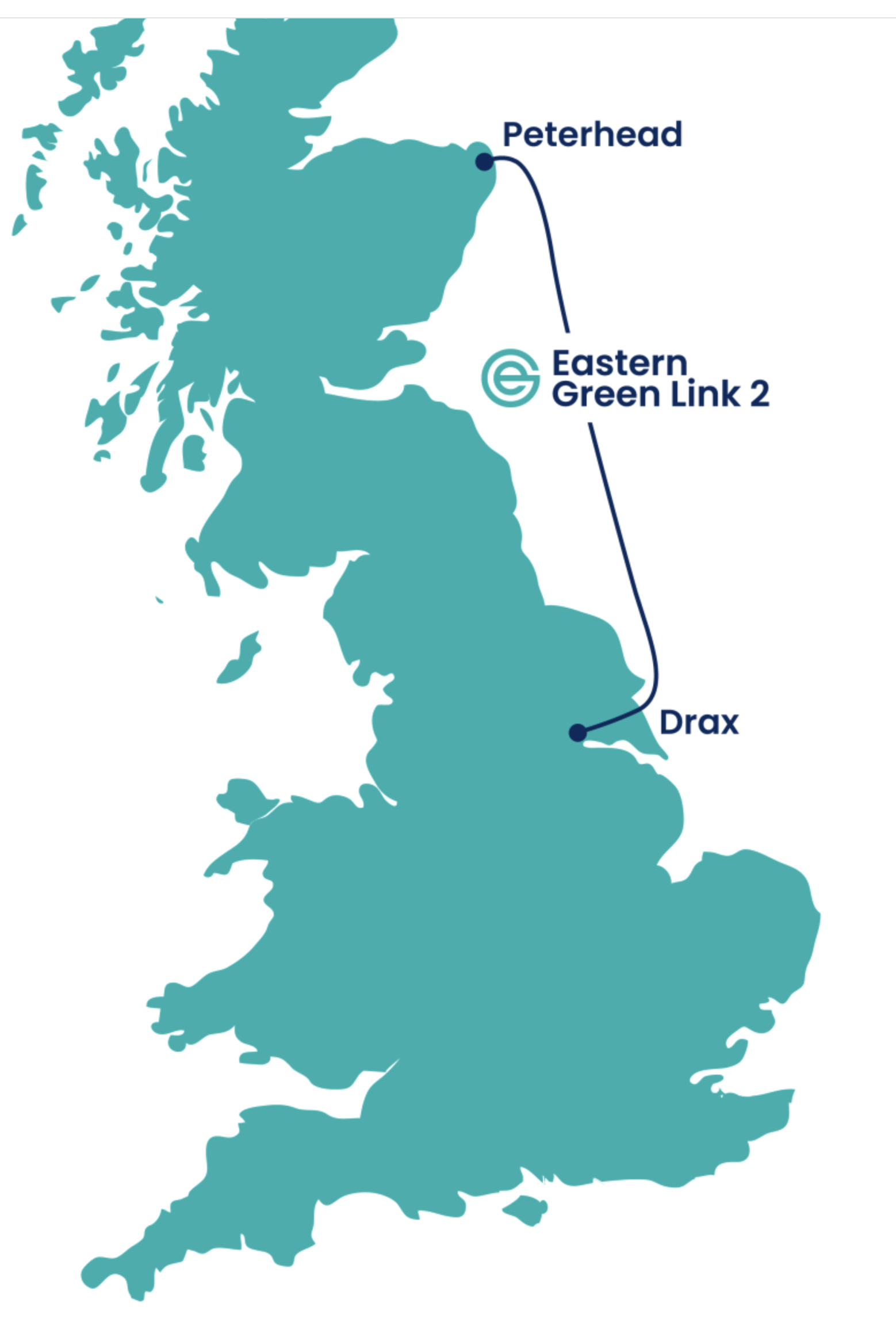
So electricity from Scotland will be able to replace up to two GW of the biomass, that Drax power station currently uses as fuel.
Drax And Solar Power
This Google Map shows Drax power station.

If Drax wanted to add solar power to the site, I’m sure it would be possible.
- There is plenty of space.
- There is a substantial connection to the electricity grid.
After the purchase of Bluefield Solar Income Fund, Drax probably are well-placed to develop as much solar-power as they need.
At Least 90 Dead In Chinese Coal Mine Explosion, State Media Reports
The title of this post, is the same as that as this article on the BBC.
This is the sub-heading.
At least 90 people have been killed in a coal mine blast in northern China, according to the country’s state media.
These two paragraphs add more detail.
The gas explosion happened at the Liushenyu Coal Mine, run by the Tongzhou Group, in Shanxi Province.
Hundreds of rescuers have been sent to the site. Footage from state media showed paramedics carrying stretchers at the site, with ambulances in the background. More than 100 people are said to have been taken to hospital, with rescue work at the site still under way.
It does seem that if you deep mine coal, you are going to get accidents. Does Opencast Coal Mining Have Less Accidents?
I asked Google AI, my question in the previous line and received this answer.
Yes, opencast (or open-pit) coal mining generally experiences significantly fewer fatal accidents than underground mining.
The primary reasons for this include better natural ventilation, better visibility, easier evacuation routes, and the absence of high-risk confined-space hazards like cave-ins, roof collapses, and toxic gas accumulations.
However, while fatal and catastrophic accidents are rarer, opencast mining introduces its own set of occupational risks:
Heavy Machinery Incidents: The use of massive excavators and haul trucks means that collisions, vehicle rollovers, and reversing accidents are leading causes of injuries.
Slope and Bench Failures: Unstable pit walls or overburden dumps can collapse, resulting in severe equipment damage and worker injuries.
Blasting Hazards: Routine use of explosives carries inherent risks, such as accidental detonation and flying rock (flyrock).
Environmental & Dust Exposure: Workers in open-cast mines can be heavily exposed to respirable silica and coal dust, which poses long-term respiratory health risks like pneumoconiosis.
It appears to me, that if you want to work in mining, you’re best option is probably to work for someone like JCB making mining equipment.
Conclusion
But then some countries put a lower value on human life than others.
I believe that what finished deep coal mining in the UK was the Aberfan Disaster in 1966, which is described in this Wikipedia entry. This is the first paragraph.
The Aberfan disaster (Welsh: Trychineb Aberfan) was the catastrophic collapse of a colliery spoil tip on 21 October 1966. The tip had been created on a mountain slope above the Welsh village of Aberfan, near Merthyr Tydfil, and overlaid a natural spring. Heavy rain led to a build-up of water within the tip which caused it to suddenly slide downhill as a slurry, killing 116 children and 28 adults as it engulfed Pantglas Junior School and a row of houses. The tip was the responsibility of the National Coal Board (NCB), and the subsequent inquiry placed the blame for the disaster on the organisation and nine named employees.
Let the Aberfan Disaster be a warning from the Welsh Valleys of the dangers of coal mining.
It is the sixieth anniversary of the Aberfan Disaster this year, so should an appropriate international ceremony be held to press home to the world, that coal mining is a disaster for the whole human race and all the other species we share our planet with.
Could HS2 Trains Continue To Wales?
The title of this post is the same as that of this article on New Civil Engineer.
This is the sub-heading.
North Wales business group Growth Track 360 has recently renewed its calls for electrification of the North Wales Main Line to accommodate HS2 trains.
These two paragraphs add some more detail.
The group is pushing for electrification of the North Wales Main Line to Crewe and Warrington, which would allow HS2 trains to run directly from London and Birmingham to Chester and beyond.
It has also commissioned a series of conceptual artworks to help the public visualise the proposed improvements. Produced by Nataliia Marchuk, a Ukrainian Fine Arts undergraduate at the University of Chester, the first shows an HS2 train passing Conwy Castle on an electrified North Wales Main Line.
The article dates from May 2022, so it is a bit old now, but transport in Wales is moving on.
On the Growth Track 360 web site, I found this mission statement.
Growth Track 360 has been launched to secure £1bn of rail improvements, which would transform the North Wales and Cheshire regional economy and deliver 70,000 new jobs over 20 years.
It’s being led by a cross-border alliance of business, political and public sector leaders.
If successful, it would lead to a massive boost to the North Wales, Cheshire and Wirral economies, linking them with the planned HS2 line between London and the North of England.
This OpenRailwayMap shows the railways in the area.
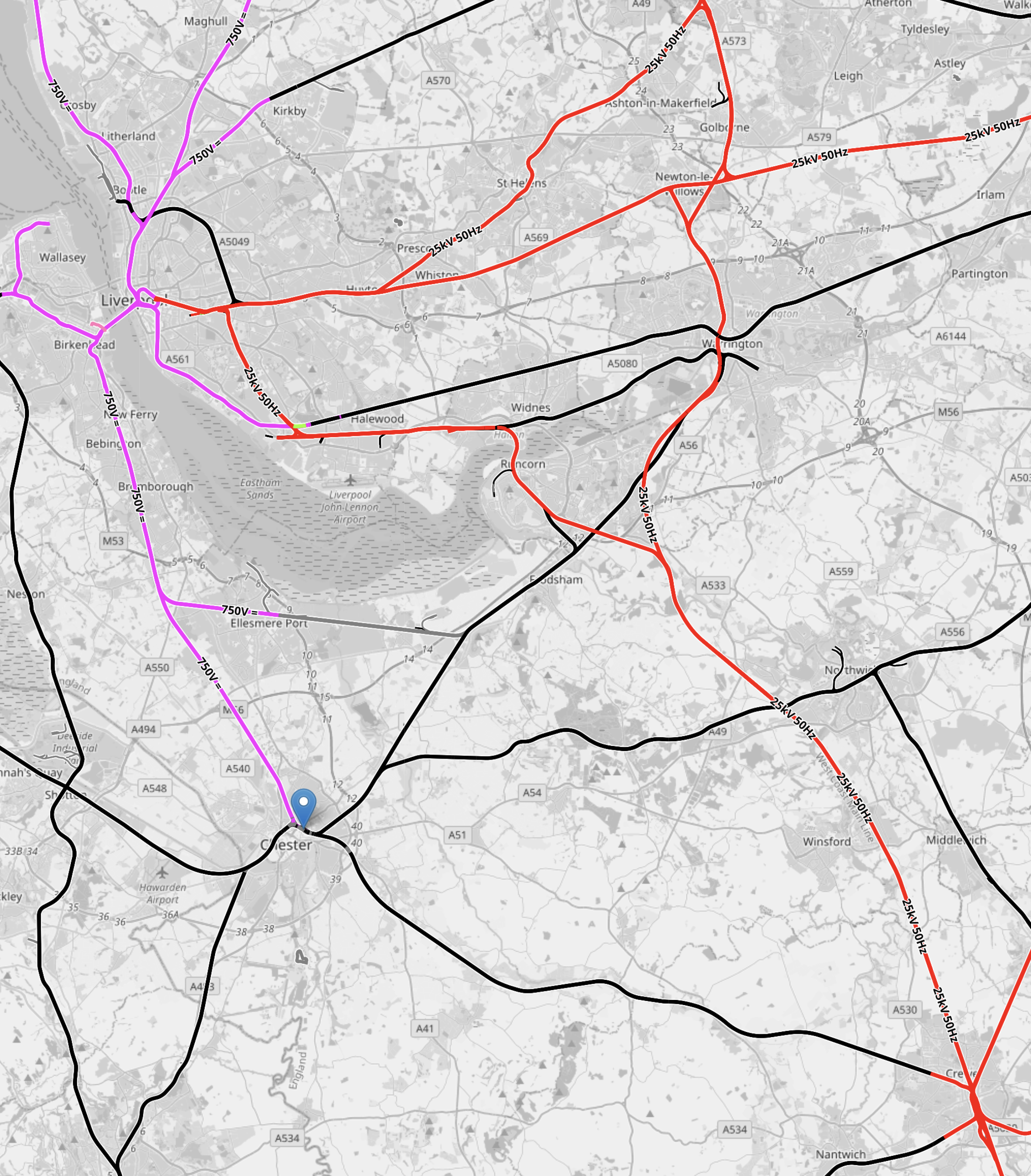
Note.
- The lilac tracks are Merseyrail’s third rail network.
- The lilac knot in the North-West corner of the map is the city of Liverpool.
- The red tracks are electrified with 25 KVAC overhead and connect Liverpool to Manchester in the East and Crewe in the South-East corner of the map.
- The black tracks are not electrified.
- The blue arrow marks the position of Chester.
- The lilac line going North from Chester is the Borderlands Line to Liverpool.
- Chester and Crewe are a distance of just over twenty-one miles.
Looking at the route on Google maps, I don’t think to electrify between Crewe and Chester will be the most difficult of projects.
The Advantage Of Electrifying Between Crewe and Chester
In How Far Will A Class 897 Train Travel Without Using The Electrification?, I showed that that these new tri-mode trains have a range of 120 miles.
In The Data Sheet For Hitachi Battery Electric Trains, I look at the data sheet, that Hitachi published in late 2023.
These were my conclusions about the data sheet.
These are my conclusions about Hitachi’s battery packs for Class 80x trains, which were written in November 2023.
- The battery pack has a capacity of 750 kWh.
- A five-car train needs three battery-packs to travel 100 miles.
- A nine-car train needs five battery-packs to travel 100 miles.
- The maximum range of a five-car train with three batteries is 117 miles.
- The maximum range of a nine-car train with five batteries is 121 miles.
As battery technology gets better, these distances will increase.
Hitachi have seen my figures.
They also told me, that they were in line with their figures, but new and better batteries would increase range.
It looks like Great British Railways will have at least two 125 mph, 120 mile range express trains away from the wires.
These are distances from Chester.
- Holyhead – 84.4 miles
- Bangor – 59.7 miles
- Llandudno Junction – 44.7 miles
It would appear that electrifying between Crewe and Chester will be an insurance policy to make sure, that battery-electric trains can serve Holyhead.
Electrifying between Crewe and Chester, will also ensure, that any battery-electric train leaves Chester with a full battery.
Are There Any Battery-Electric High Speed Trains?
I asked Google AI, this question and received this answer.
Yes, battery-electric high-speed and intercity trains are entering service, primarily in Europe. While many battery trains are designed for regional speeds, Hitachi Rail offers intercity battery trains capable of high speeds and over 70 km ranges. In 2026, the UK’s Great Western Railway (GWR) launched a record-breaking, fast-charging battery train with a 200-mile range.
Key Developments in Battery Trains:
Hitachi Rail Intercity Battery Trains: These trains can operate at intercity speeds, designed for both electrified and non-electrified routes, enhancing sustainability without sacrificing performance.
GWR Class 230 Battery Train: This UK-based, three-car train achieved a world record of over 200 miles on a single charge in 2025.
Rapid Charging Technology: The GWR train uses a 2,000kW fast charger, allowing it to recharge in just over three minutes while stopped at a station, making it suitable for extending electrical service without full, expensive track electrification.
Regional Battery Trains: Beyond the UK, Hitachi’s battery trains (Full battery, Hybrid, Tri-brid) are part of a broader shift in Europe toward lowering emissions. In Argentina, battery-electric units are also used for regional services, designed to operate with solar-powered charging.
These developments show a move towards using battery technology to reduce reliance on diesel trains on partially electrified lines.
How Long Will HS2 Take To Go Between London Euston And Holyhead?
Consider.
- Sources like the House of Commons Library give HS2 times of 56 minutes between London Euston snd Crewe.
- Avanti West Coast’s Class 805 trains take two hours and two minutes between Crewe and Holyhead.
I don’t think that a sub-three hour journey is unreasonable.
Is A Green Route Between London And Dublin Possible?
As we’re more likely to see a zero-carbon ferry, than a zero-carbon airliner. Yes!
Welsh Government Backs Marine Power Systems’ Floating Wind Tech With GBP 8 Million
The title of this post, is the same as that of this article on offshoreWIND.biz.
This is the sub-heading.
The Welsh government has invested GBP 8 million (approximately EUR 9.4 million) in Marine Power Systems (MPS) to support the commercialisation of its floating offshore wind technology.
These three paragraphs add more detail to the story.
According to the company, the funding will accelerate the deployment of its PelaFlex platform, a floating wind solution designed for deep-water sites where conventional fixed-bottom foundations are not viable.
Marine Power Systems said the investment will help move the technology from advanced development towards commercial-scale deployment and manufacturing. The company also plans to expand its industrial and assembly capabilities in the UK.
The PelaFlex platform has been designed to simplify fabrication, installation and long-term operations while enabling wind farms to be located further offshore where wind speeds are typically stronger and more consistent, MPS says.
The offshore wind industry in Wales seems to be gearing up for a big expansion.
Gwynt Glas is the collective name for the three 1.5 GW floating wind farms in the Western Approaches and in Gwynt Glas And South Wales Ports Combine Strength In Preparation For Multi-Billion Floating Wind Industry, I describe the initial agreement that started the Gwynt Glas project.
To my mind, Associated British Ports and the wind farm developers are making sure they can carpet the Western Approaches, with offshore wind farms.
In Ocean Winds Enters Lease Agreement With Crown Estate For 1.5 GW Celtic Sea Floating Wind Project, I talk in general about the progress of the first three 1.5 GW floating wind farms in Gwynt Glas and in particular about leasing of the third wind farm.
These two posts, indicate that the Port of Port Talbot is preparing itself to produce the floaters for floating wind turbines.
- BW Ideol, ABP To Explore Serial Production Of Floating Wind Foundations At Port Talbot
- Two Ports Advance To Next Stage Of UK Gov Funding For Floating Wind
It certainly appears, that South Wales will be able to build the heavyweight gubbins for floating offshore wind.
According to Was South Wales Once The World’s Largest Coal Exporter? it was, and in 1913, the region produced 57 million tons of coal, with more than half exported.
It does look like South Wales is going to repeat the economic success with offshore energy.
I’ve heard tales from elderly Welshmen talking of the coal ships in the docks of South Wales and will we be seeing gas tankers in the docks of South Wales?
Was South Wales Once The World’s Largest Coal Exporter?
I asked Google AI, the title of this post and received this answer.
Yes, South Wales was once the world’s largest coal-exporting region and home to the busiest coal-exporting ports in the world. During its peak in 1913, the South Wales coalfield supplied almost one-third of total global coal exports, with Cardiff and Barry leading the world as the top coal ports.
Key details regarding the coal boom in South Wales:
Peak Production: In 1913, the region produced 57 million tons of coal, with more than half exported.
Top Export Ports: In 1913, Barry was recognized as the world’s largest coal-exporting port, closely followed by Cardiff.
The “Coal Metropolis”: Cardiff became the world’s leading coal and shipping metropolis, with the Cardiff Coal Exchange setting the global price for steam coal.
Economic Impact: The boom drove massive population growth in the South Wales Valleys and created tremendous wealth for cities like Cardiff, Barry, and Newport.
Global Demand: Welsh coal was highly sought after for its high quality, fueling steamships, railways, and industries across the world, from Russia to South America.
By 1920, the industry employed over 270,000 miners, but it saw a steep decline thereafter due to economic depression, international competition, and the exhaustion of accessible reserves.
How Much Pumped Storage Hydro Will Be Operational In The UK By 2030?
Pumped Storage Hydro is the Bank of England-standard for energy storage.
I asked Google AI, the question in the title of this post and received this answer.
The UK currently has approximately 3 GW (roughly 26-28 GWh) of operational pumped storage hydro (PSH) capacity. By 2030, this capacity is expected to increase, driven by new projects in the pipeline that aim to meet a government goal of up to 8 GW of long-duration energy storage by that year.
Key Projects Expected Online by 2030-2031:
Coire Glas (SSE): A major project in Scotland with a planned capacity of 1.3 GW / 30 GWh, expected to be operational around 2030–31.
Cruachan Expansion (Drax): A 600MW plant in Scotland that has received approval, with construction expected to contribute to the 2030 goal.
Glenmuckloch: Projected to be operational by 2029. In
Other Developments:
Total Pipeline: Developers have identified up to 10 GW of potential projects in the Scottish Highlands and Wales, though not all will be operational by 2030.
Future Growth: The total installed capacity of PSH is expected to grow significantly, with one projection suggesting a rise from 26.7 GWh currently to over 122 GWh by 2034.
To support these projects, the UK government has confirmed a “cap and floor” investment framework to stimulate development of long-duration energy storage (LDES).
For a relatively small island we do seem to be an ideal place to develop pumped storage hydro!
The Coire Glas Pumped Storage Scheme
In The Coire Glas Pumped Storage Scheme, I give more details of this scheme.
The Glenmuckloch Pumped Storage Scheme
In The Glenmuckloch Pumped Storage Scheme, I give more details of this scheme, which is based on a disused open cast coal mine.
Addition Of Pumped Storage Hydro By 2030
This looks to be around 5 GW, but it is just a foretaste of the shape of things to come!

