Subsea Micropiles To Invest GBP 5 Million In Expanding Manufacturing, Offshore Ops At Scottish Port
The title of this post, is the same as that of this article on offshoreWIND.biz.
This is the sub-heading.
Subsea Micropiles is investing GBP 5 million (approximately EUR 6 million) over the next three years to expand its manufacturing and offshore operations at Montrose Port in Scotland, supported by GBP 1.45 million (approx. EUR 1.7 million) from Scottish Enterprise.
These three paragraphs add more details.
The company plans to expand its infrastructure and manufacturing capabilities at the port to support the production and maintenance of subsea technology for offshore survey and construction. The investment is expected to create around 80 jobs over the next three to five years.
Subsea Micropiles announced the investment on 28 September, during a visit to its Montrose facility by Scotland’s First Minister John Swinney and Scottish Enterprise’s Managing Director of Investment and International, Reuben Aitken.
As reported today, SSE also announced that it has selected Montrose Port as the O&M base for its 1.4 GW Berwick Bank B offshore wind farm.
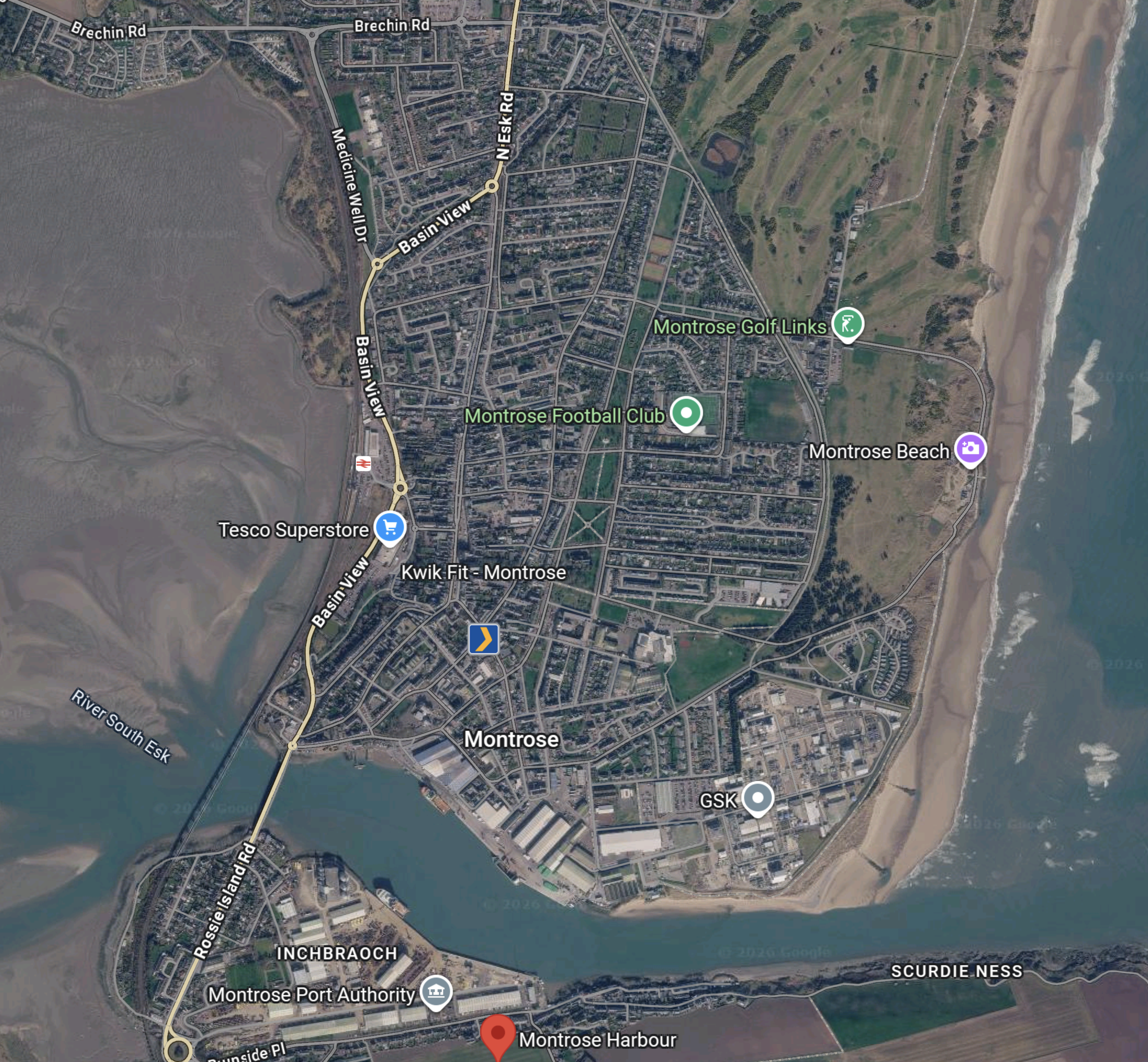
This Google Map shows the town of Montrose and its port at the South.
Note.
- Montrose station is on the West side of the town, on the main Edinburgh and Aberdeen railway.
- Montrose looks to have a major beach.
- Montrose Port is on both sides of the River South Esk.
- There looks to be plenty of space for Subsea Micropiles to build their micropiles.
Subsea Micropiles have a comprehensive web site.
They appear to have offices in Dublin and Aberdeen and say this about micropiles.
We are leading the adaption land-based micro piling technology to create superior marine foundation and anchor solutions.
Micropile has a Wikipedia entry.
Under The Railway At Oxford Station – 24th September 2026
I took these pictures as I walked under the railway using the new Botley Road underpass.



















Note.
- I walked to the far side and then back again.
- Where I walked, there was also a cycle track.
- It looks like, when the station upgrade is completed, it will be possible to access both sides of the station from the underpass.
I can see this underpass winning some awards.
Electric Open-Top Bus In Oxford – 24th September 2026
I hadn’t intended to write about these buses from Wrightbus today, but Oxford is a lot easier to get to than Glasgow, which also has these buses.
I took these pictures.












Note.
- They seem to run about every fifteen minutes from the station.
- I am rather surprised that only Glasgow, London and Oxford have battery-electric open-top buses.
- I thought more mayors had big egos!
This article on the BBC is entitled Oxford Sightseeing Fleet Gets Eight New Electric Buses, gives more details.
A Land Rover Defender Ambulance
This ambulance was parked outside the Red Cross in Moorfields, whilst I ate my breakfast in the LEON opposite.





Note.
- It was from the Lincolnshire Red Cross.
- It was a very professional conversion.
- Judging by the sign it appeared to be promoting the link between Jaguar Land Rover and the Red Cross.
As an occasional user of an ambulance, I have some views on the design of these vehicles.
Should Ambulances Be Hydrogen Powered?
I asked Google AI this question and received this answer.
Hydrogen power offers significant advantages for ambulances by combining long driving ranges with rapid refuelling times, making it a strong contender for emergency fleets.
The Case For Hydrogen Ambulances
Fast Refuelling: Hydrogen tanks can be refuelled in about five minutes, keeping vehicles ready for back-to-back emergency shifts without long charging downtimes.
Longer Range: Fuel cell and battery hybrid setups (like the ZERRO project) can travel up to 300 miles, which is vital for rural areas or long-distance hospital transfers.
Onboard Power: Hydrogen fuel cells can power heavy medical equipment without draining the main drive battery or requiring extra diesel generators.
The Challenges
Infrastructure Costs: Public hydrogen refuelling stations remain scarce, limiting where vehicles can operate and refuel.
Vehicle Costs: Building and buying hydrogen fuel cell systems is currently more expensive than standard battery-electric or diesel setups.
Electric Competitiveness: Standard battery-electric ambulances are already performing well in urban areas where depots allow for overnight recharging and shorter daily shifts.
Note.
- I have been a passenger in about four or five hydrogen fuel cell-powered buses. All were mouse-quiet with no vibration. This is surely important in an ambulance!
- I used to live next to a London paramedic sixty years ago and he said it was a stressful job. Would a calm environment help to relieve that stress?
- The onboard power capability is surely important and will get more important in the future.
- As more hydrogen-powered vehicles appear on the roads, hydrogen fuelling stations will be less scarce.
The long-range of a hydrogen-powered ambulance might mean that patients were taken to an appropriate hospital immediately.
How Does The Performance Of Electric-Powered And Hydrogen-Powered Ambulances Compare?
I asked Google AI this question and received this answer.
Electric-powered and hydrogen-powered ambulances compare across range, refueling time, energy efficiency, and onboard power capabilities:
Range and Operational Capacity
Electric Ambulances (BEV): Typically offer a range of around 70 to 120 miles on a single charge, which suits local response cars, patient transport, or shorter urban shifts.
Hydrogen-Electric Fuel Cell Ambulances (FCEV): Use hydrogen fuel cells as a range extender to charge onboard batteries, providing a significantly higher extended range of up to 300 miles, which is closer to traditional diesel vehicles for demanding shifts.
Refueling and Downtime
Electric Ambulances: Require time plugged into charging infrastructure to replenish batteries, which can take anywhere from tens of minutes on rapid chargers to hours depending on power limits, creating potential downtime during fleet rotations.
Hydrogen Ambulances: Can be refueled with compressed hydrogen in roughly 5 minutes, allowing for immediate back-to-back operational shifts without prolonged downtime.
Energy Efficiency and Onboard Power
Electric Ambulances: Feature high overall powertrain efficiency (converting over 85% of battery energy into motion) and lower moving-part maintenance costs, but heavy medical equipment loads draw heavily on the primary battery and can restrict operational range.
Hydrogen Ambulances: Offer onboard power off-take capabilities directly from the fuel cell system, enabling high-draw medical equipment to run continuously without draining the main drive energy or requiring a separate noisy generator. However, hydrogen systems have lower overall well-to-wheel thermodynamic efficiency and higher complexity.
Infrastructure and Deployment
Electric Ambulances: Benefit from a rapidly expanding public and depot charging grid, with several NHS trusts already successfully deploying electric response and transport vehicles.
Hydrogen Ambulances: Remain in early trial and prototype phases (such as projects via ULEMCo and HVS) because specialized hydrogen refueling stations are scarce and expensive to build.
I suspect that the nature of the terrain in an area, will also affect the type of power selected.
My Sister’s Burst Aorta
This is a personal observation.
- My sister lives near Colchester General Hospital.
- After her aorta burst, she dialled 999 and an ambulance was dispatched.
- The paramedics corrected assessed her problem and didn’t muck around.
- They decided to take her immediately to Papworth Hospital on the other side of East Anglia.
- The road between the two hospitals is dual-carriageway all the way and possibly with a Police escort, they made the trip in time.
- After several months in hospital, she returned home.
- My sister has now fully recovered.
I believe journeys like this, would be faster and more comfortable in a custom-designed high-performance hydrogen fuel-cell ambulance.
It should be noted that the East Anglian Ambulance Service has been known to station ambulances on the bridges over the dual-carriageways to shorten response times to road accidents.
Are Toyota HiLux Pickups Used As Ambulances?
I asked Google AI this question and received this answer.
Yes, Toyota Hilux pickups are used as ambulances, especially in remote, rural, or off-road environments where standard van-based ambulances cannot travel.
Common Configurations
Canopy / Rapid Response Style: The pickup bed is fitted with a secure, weatherproof canopy or Truckman top to carry a single stretcher and essential emergency gear.
Box-Type Modular Body: A fully enclosed, purpose-built medical compartment is mounted directly onto the Hilux chassis, offering a climate-controlled environment and space for advanced life support (ALS) equipment.
Where They Are Used
Off-Road & Disaster Zones: Mountain rescue teams, humanitarian groups, and military field operations rely on the Hilux’s 4×4 capability and high ground clearance.
Specialized Services: Organizations like wildlife hospitals use adapted Hilux trucks as animal ambulances to reach stranded or injured wildlife in rough terrain. International agencies like the UN and WHO also deploy them in regions lacking paved infrastructure.
I would expect that in designing the next generation Toyota HiLux, Toyota have improved on the design for ambulances.
Will A Hydrogen-Powered toyota HiLux Pickup Make A Useful Ambulance?
I asked Google AI this question and received this answer.
A hydrogen-powered Toyota HiLux pickup can make a useful off-road or specialized utility ambulance, but its practical application as a standard emergency vehicle faces major limits.
Advantages for Ambulance Use
Off-road access: The rugged ladder-frame chassis of the HiLux allows access to remote, rugged, or off-road terrain where standard vans or traditional ambulances cannot go.
Quick refueling: Hydrogen fuel cells refuel in about 3 to 5 minutes, offering much faster turnaround times than battery-electric vehicles.
Clean operation: The fuel cell produces zero tailpipe emissions, creating a quiet, exhaust-free environment suitable for patient transport.
Good payload and towing: It targets a towing capacity of around 5,500 pounds (2,500 kg), handling heavy medical gear better than lighter electric alternatives.
Limitations for Ambulance Use
Cabin space: A pickup truck bed and cab offer less enclosed, climate-controlled volume for patients and attending medical staff compared to standard box ambulances or large vans (like the Toyota Hiace).
Infrastructure gaps: Hydrogen fueling stations remain very rare outside select urban or regional pockets, restricting emergency range and operational zones.
Availability: Toyota is targeting production for the hydrogen HiLux by 2028, meaning the vehicle is not yet available for immediate fleet purchase.
I do think though, that it would be very suitable for some specialist operations.
Have Alstom Given Up On Their Euston And Wrexham Open Access Service?
I last wrote about this planned service in Direct London Trains ‘Could Start In 2026’.
But, as I wrote in Network Rail Objects To Wrexham To London Service, Network Rail had objected.
I asked Google AI, the question in the title of this post and received this reply.
No, Alstom has not given up on the Wrexham, Shropshire and Midlands Railway (WSMR) open-access project.
After the Office of Rail and Road (ORR) rejected their initial application in July 2025 due to capacity and congestion concerns on the network, WSMR resubmitted a revised bid in late November / December 2025.
Key Updates on the Resubmitted Bid
Reduced Services: The revised plan trimmed the proposed frequency from five daily return trips down to three guaranteed daily returns (with an option for a fourth).
Route Adjustments: The new application added a stop at Wellington (Shropshire) and sought to utilize newly available or spare capacity paths.
Timeline: A decision from the rail regulator (ORR) was anticipated in Spring 2026, with hopes for the service to launch towards the end of 2026.
The Route
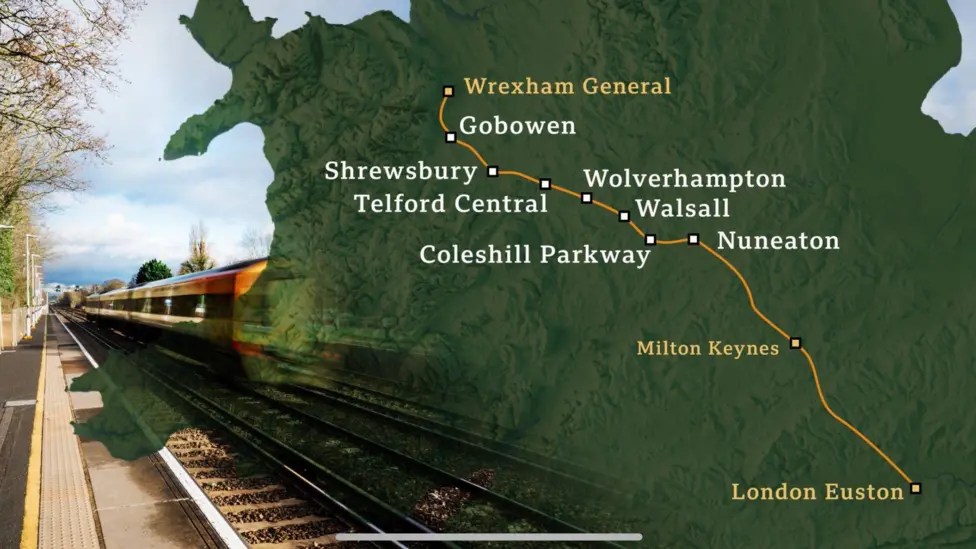
The map downloaded from a BBC article, which is entitled Direct London trains ‘Could Start In 2026’ shows the route.
Note.
- There are now ten intermediate stops.
- Wellington and Darlaston have been added between Wolverhampton and Shrewsbury.
- Euston and Wolverhampton is 124.9 miles and fully electrified.
- Wolverhampton and Wrexham General is 59.9 miles and is not electrified.
- The section of the route without electrification is 120 miles return, which could be too far for battery-electric trains.
But I believe that the battery-electric trains, that TransPennine Express have ordered from Alstom could handle the route with charging at Wrexham General station.
I have some further thoughts.
Hydrogen Is Now Not Proposed
In Direct London Trains ‘Could Start In 2026’, I felt that Alstom might use hydrogen trains.
But now that TransPennine Express have ordered Alstom battery-electric trains and the route could be ideal for them, it would seem sensible to use them.
Providing charging at Wrexham General station would probably be easier than providing hydrogen refuelling.
Could Euston and Wrexham General Be A Test Route For The Adessia Battery-Electric Train In The UK?
I asked Google AI and received this reply.
Yes, London Euston and Wrexham General could serve as an ideal test route for Alstom’s Adessia battery-electric train platform.
Route Characteristics and Viability
Electrified Section: The journey from London Euston to Wolverhampton covers roughly 124.9 miles on fully electrified lines.
Uncertified / Non-Electrified Section: The remaining 59.9 miles from Wolverhampton to Wrexham General lacks overhead electrification (via Shrewsbury).
Battery Range Demands: Operating this run requires a battery-electric range capability of roughly 60 miles in each direction beyond the wires, or a charging strategy implemented at Wrexham General station.
Proposed Operations: Wrexham Shropshire and Midlands Railway (WSMR) announced plans to work with Alstom to introduce a bi-mode battery-electric fleet from the Adessia family if their open-access operations are approved.
This is the first time, that I’ve seen linkage between Alstom’s open access operation and development of a bi-mode battery-electric fleet.
Will Wrexham Shropshire and Midlands Railway’s Adessia Trains Be 110 mph Trains?
This would make them compatible with the TransPennine Express trains.
But they will be sharing the West Coast Main Line with 125 mph Class 390, Class 805 and Class 807 trains.
I wonder, if for ease of operation, that the trains will be 125 mph units.
Tisbury Station – 26th August 2026
I took these pictures during my time at Tisbury station.














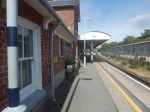




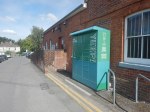






















Note
- The Flowers Were From The Bee Friendly Trust.
- The Station Has A London Rail Map.
- The Station Has A Parcel Pick-Up.
- The station is dark sky friendly. It is the only one in the UK.
It seems to have most things you need.
Nearly Three Million Teslas Recalled In China Over Hidden Door Handles
The title of this post is the same as that of this article on the BBC.
This is the sub-heading.
Minimalistic door handles became a signature feature of electric vehicles (EVs), but the controversial designs are now at the centre of China’s biggest car recall, affecting more than 4 million vehicles.
These three paragraphs add some more details.
The recall, which includes 2.98 million Chinese-made Teslas, follows safety concerns that the hidden door handles are difficult to locate and open in emergency situations.
Other brands affected by the recall include Chinese carmakers XPeng, Xiaomi and Geely.
The recalled vehicles will have a warning label stuck on the interior door and receive a software update to automatically lower the windows in a crash.
I remember reading a story in Flight International.
- An engineer, who worked in airliner interior design was in a Boeing 737 (?), that made a heavy landing.
- He was also sitting by the emergency exit.
- The emergency exit worked as it should and he was able to climb out on to the wing.
- He then helped other passengers get out the way he had.
Unfortunately, I don’t have the magazine any more. But he felt that it might result in better design.
The principles that aircraft designers work to would appear to be much higher than those of Tesla’s car designers.
I find the idea of a hidden door handle completely stupid.
WoT? Experimental Elongated Airbus Wings To Fly Next Year
The title of this post, is the same as that of this article on Future Flight.
I believe that this will improve efficiency.
On The Bonnie, Bonnie Banks o’ Loch Lomon’
I couldn’t resist using the first line of one of the most famous Scottish traditional songs, as the title of this post.
But a very significant power station project, is to be undertaken in the area.
These are the opening few sentences of the Wikipedia entry for the Loch Sloy Hydro-Electric Scheme.
The Loch Sloy Hydro-Electric Scheme is a hydro-electric facility situated between Loch Sloy and Inveruglas on the west bank of Loch Lomond in Scotland. It is also within the Arrochar Alps. The site was originally suggested as the location of a huge pumped-storage scheme in 1936 by Edward MacColl, but this was rejected as being uneconomic. After the North of Scotland Hydro-Electric Board was created in 1943, it became the first of their proposed schemes.
This Google Map shows Loch Lomond and Loch Sloy.
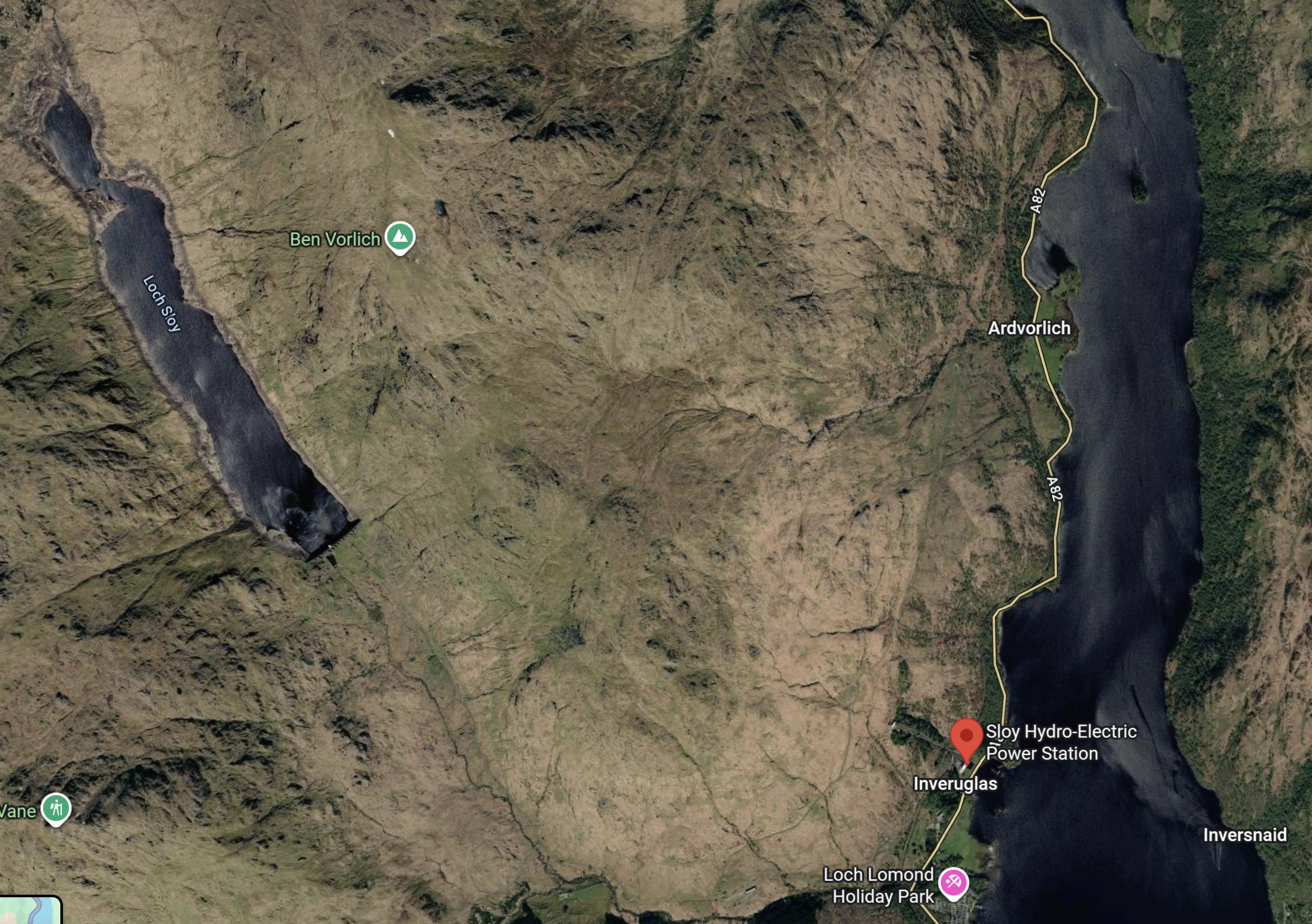
Note.
- Loch Sloy is in the North-West corner of the map.
- Loch Lomond is on the Eastern side of the map.
- The red arrow indicates the main buildings of the LochSloy Hydro-Electric Power Station.
- Loch Sloy is eight-hundred feet above Loch Lomond.
- The total generating capacity of the power station is 152.5 MW.
The facility is operated by Scottish and Southern Energy, and is normally in standby mode, ready to generate electricity to meet sudden peaks in demand. It can reach full capacity within 5 minutes from a standing start.
This second Google Map shows the power station to a larger scale.
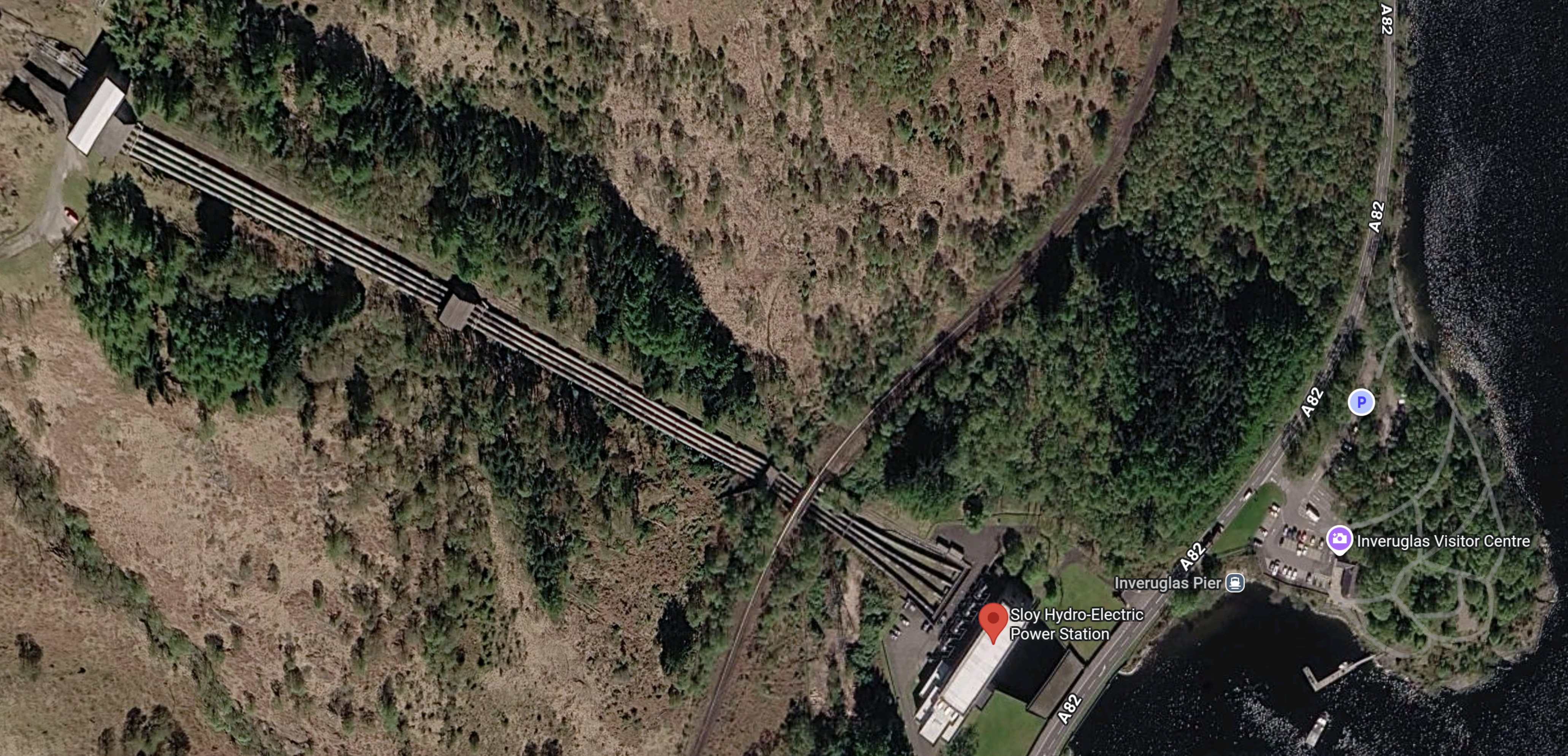
Note.
- Loch Sloy is to the North-West of the North-West corner of the map.
- Loch Lomond is on the Eastern side of the map.
- The red arrow indicates the main buildings of the Loch Sloy Hydro-Electric Power Station.
- The four pipes carry water from Loch Sloy to the actual power station.
- The single-track West Highland Line crosses over the four pipes at their South-Eastern end.
The design of Loch Sloy Hydro-Electric Power Station is typical of many hydro-electric stations all over the world.
This third map is an OpenRailwayMap of the area.
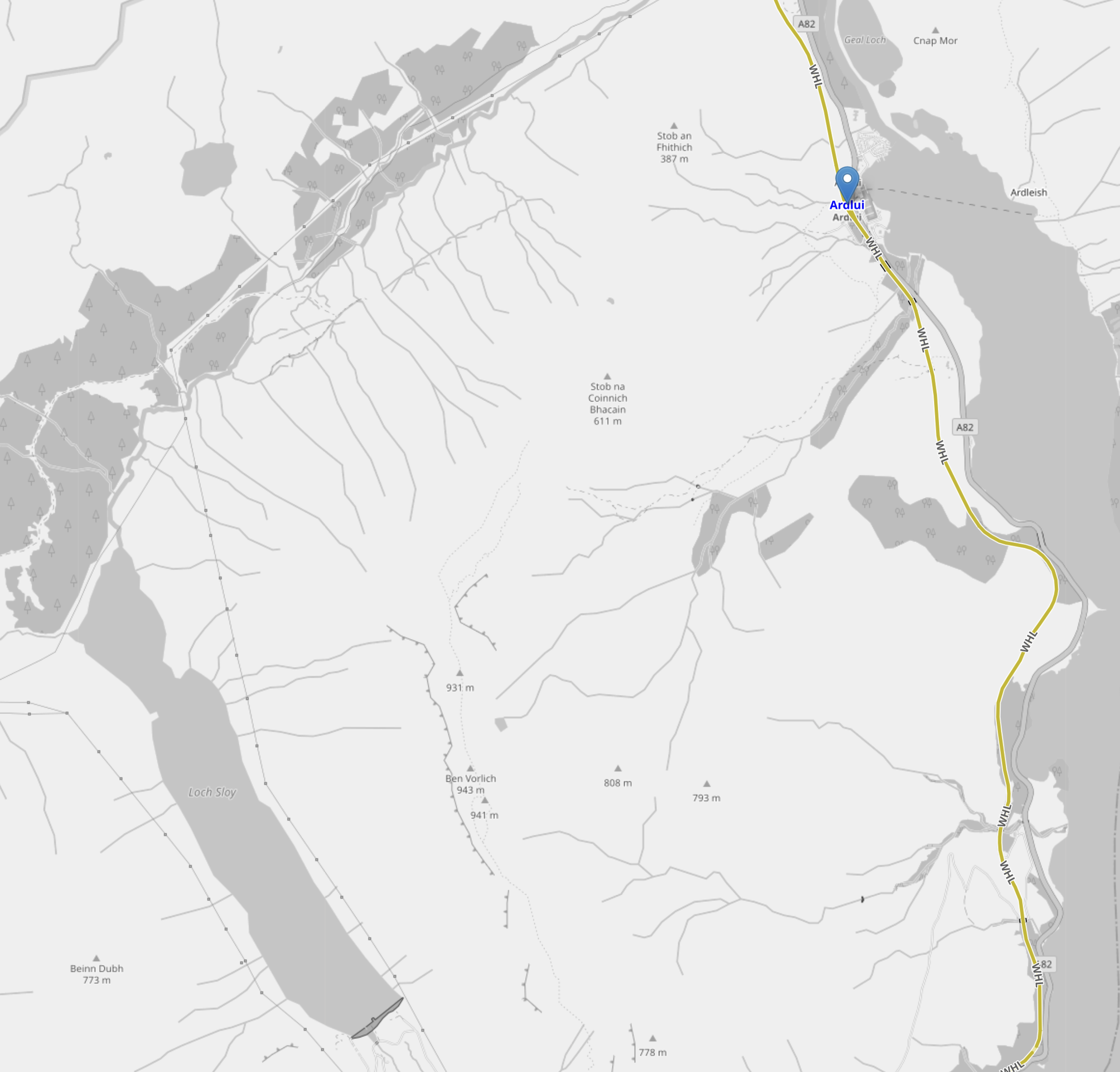
Note.
- Loch Sloy is on the Western side of the map.
- Loch Lomond is on the Eastern side of the map.
- The yellow track is the single-track West Highland Line between Glasgow and Mallaig via Fort William
- The blue arrow indicates Ardlui station.
The railway goes close to the power station.
A Platinum Celebration for Sloy Power Station!
The title of this section is the same as this must-read web page on the SSE web site, which dates from 2020.
Sloy Power Station Development Plans
This second must read web page on the SSE web site is entitled Sloy Power Station.
This is the sub-heading.
We’re Proposing To Convert Our Iconic 1950s Hydro Station To Pumped Storage Hydro
This is the introduction to the development.
In April 2025, we submitted a planning application to the Scottish Government to convert the iconic Sloy Power Station into a pumped storage hydro scheme.
Our proposals would bolster energy security and help provide the large-scale and flexible renewable energy back-up needed in a future UK net zero power system, helping meet the UK Government’s ambition of Clean Power by 2030.
If approved for delivery, the converted Sloy scheme would be capable of delivering up to 16GWh of long-duration electricity storage capacity.
It could provide firm, flexible renewable energy for up to 100 hours non-stop.
It appears that the upgraded power station will effectively become a 160 MW/16 GWh long duration energy store.
Currently, the UK’s largest pumped storage power station is the 1727 MW/9.1 GWh Electric Mountain in North Wales.
The updated Sloy power station will have less output, but more storage capacity, than Electric Mountain.
Should There Be A Railway Station At Loch Sloy Power Station?
Google AI gives this answer in reply to “Loch Sloy Railway Station”.
There was never a permanent public railway station called Loch Sloy, but temporary private platforms like Inveruglas railway station and Faslane Platform railway station served the area. These stops were built in 1945 by the London and North Eastern Railway (LNER) to haul materials and workers—including prisoners of war—for the construction of the Loch Sloy Hydro-Electric Scheme.
Note.
- Surely, similar reasons to those in 1945 could apply to the development of the power station. Materials and workers could be brought in by rail.
- Given, the power station’s historic significance, I believe that it could become a tourist attraction and/or education centre.It could be a stop for the Caledonian Sleeper.
I believe that as time passes, the power station’s historic significance will increase.
Are There Any Other Hydro Power Stations, That Can Be Upgraded To Pumped Storage Hydro?
Google AI can’t find anything at present.
UK Army Commissions 1.7GWh/year Solar Project At Larkhill Garrison
The title of this post, is the same as that of this article on the Solar Power Portal.
This is the sub-heading.
The installation spans 2.5 hectares and comprises more than 4,000 PV panels.
These three paragraphs give a few more details.
The project forms part of the Army’s Project Prometheus programme, which is deploying rooftop and ground-mounted solar PV systems across suitable sites on the Army estate. It was delivered by Aspire Defence Services on behalf of the Defence Infrastructure Organisation (DIO).
The Ministry of Defence is also partnered with Great British Energy to deploy solar across its sites.
The commissioning follows an expansion of solar capacity at Larkhill this year through the addition of the ground-mounted array and four rooftop PV installations.
Note.
- Larkhill has a Wikipedia entry.
- Larkhill is part of the Salisbury Plain Training Area, which also has a Wikipedia entry.
- The Salisbury Plain Training Area takes up 11 % of the County of Wiltshire and is as large as the Isle of Wight.
There certainly would appear to be plenty of space for 4,000 solar panels.
Does The Army’s Project Prometheus Programme Include Batteries?
I asked Google AI, the question in the title of this section and received this reply.
The British Army’s Project Prometheus primarily focuses on generating renewable energy through solar PV systems, though specific related net-zero initiatives on the defense estate incorporate separate energy storage components like batteries.
Project Prometheus Overview
Core focus: Deploying ground-mounted and rooftop solar photovoltaic (PV) arrays across the military estate.
Main goal: Increase green energy supply, cut carbon emissions, and reduce grid electricity dependency.
Integration with Energy Storage
Solar focus: Primary Project Prometheus installations route generated electricity directly to local military buildings or export surpluses back to the national grid.
Associated storage: While standalone solar arrays under Prometheus distribute power dynamically, separate broader sustainability and pilot schemes across the military net-zero portfolio—such as Project Taurus or thermal storage trials—run alongside it to evaluate localized battery storage capabilities.
Project Prometheus would appear to be a typical well-designed solar power programme.
Project Taurus
Project Taurus has been mentioned and Google AI gave me this overview.
Project Taurus in the UK Ministry of Defence refers to a sustainable energy initiative by the British Army to construct solar-powered carports featuring electric vehicle (EV) charging ports and battery storage, starting at Army Headquarters in Andover.
It looks to me, that Project Taurus could have applications outside the military.

