In Future Will North Africa Be Providing Renewable Energy To Europe?
I believe it is likely that mainland Europe will be getting a considerable amount of renewable energy from Iceland, Ireland, Norway and the UK, and the seas to the North of Europe.
But what about the potential of providing Europe with renewable energy from North Africa?
I asked Google AI, the question in the title of this post and received this answer.
Yes, in the future, North Africa is expected to supply renewable energy to Europe, with potential exports of up to 24 GW through subsea interconnectors. This will be driven by North Africa’s vast solar and wind resources, a strong push for renewable energy in the region, and European demand for clean power. Major projects are planned, but challenges like supply chain constraints and financing hurdles need to be addressed for these projects to be successful.
These are interconnectors I can find.
ELMED
The ELMED interconnector, also known as the Tunisia-Italy interconnector, is a planned 200 km, 600 MW high-voltage direct current submarine power cable between Italy and Tunisia.
This map shows the route of the ELMED interconnector between Tunisia and Italy.
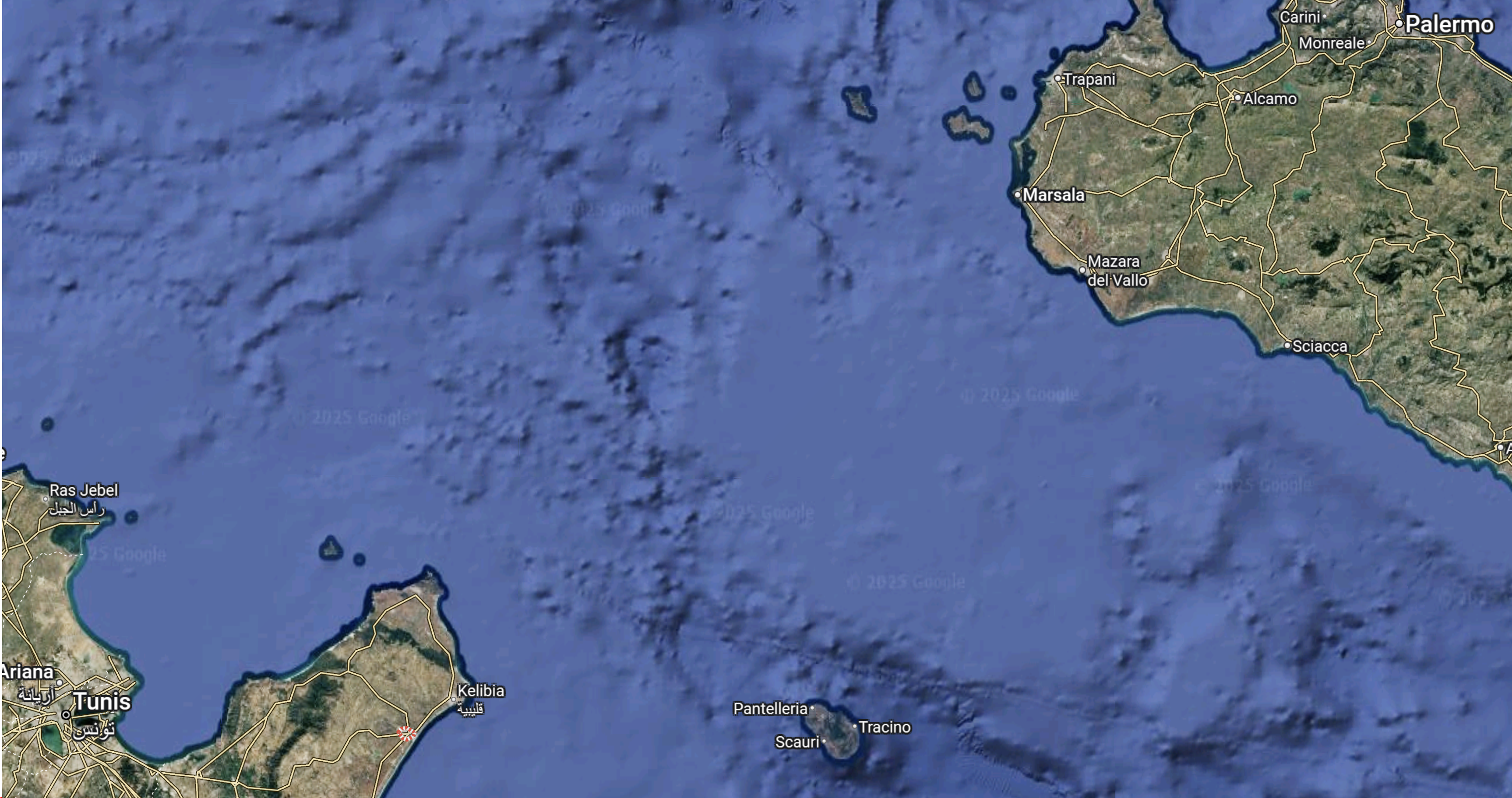
Note.
- Tunis in Tunisia, is in the South-Western corner of the map.
- East of Tunis on the coast is a red blob, which marks the town of Menzel Temime, where the interconnector will connect to a newly-built substation.
- Palermo in Sicily, is in the North-East corner of the map.
- West of Palermo on the North-West coast of Sicily is Trapani, where the interconnector will make landfall in Italy and connect to a substation at .
As with many things engineering designed by Italians, this seems to be an interconnector with a certain simplicity and style.
The Wikipedia entry for the ELMED interconnector gives these further details.
The total cost is budgeted at €850 million.
XLinks
XLinks is a project to build a 3.6 GW interconnector between Morocco and Devon, that appears to have been rejected by the current government.
XLinks shows what engineers think could be possible. More details are given in the Wikipedia entry for the project.
 The Anonymous Widower
The Morocco-Germany proposal is at https://www.sila-atlantik.com/en/ though Xlinks say they “continue to analyse alternative offtake routes” – a long-term PPA perhaps?
Comment by Peter Robins | February 27, 2026 |
I tend to think, that as National Grid and TenneT Germany are going ahead with GriffinLink, this is the less risky option. Especially, as there is the likelihood of development along the West coast of Ireland and Scotland.
Comment by AnonW | February 27, 2026 |
Different beasts for different purposes, I would say. With battery storage and reliable evening winds to supplement the ultra-reliable sunshine, Morocco can provide something akin to baseload power during the W European day and evening, so it’s more like a traditional power station. It’s not an interconnector, as the power only flows in one direction.
Links like LionLink and GriffinLink OTOH I’d see as all about flexibility, where power flows in either direction dependent on price – i.e. current state of demand vs supply.
There’s an interesting talk with Laurent Segalen, behind the proposed Canada-Ireland/GB interconnector, on the Cleaning Up podcast https://www.youtube.com/watch?v=fRETqbABCFA
Comment by Peter Robins | February 27, 2026 |