In Pursuit Of The Perfect Train Design
This is the title of an article in Rail Technology Magazine, in which Adrian Shooter, the chair of Vivarail discusses their Class 230 train, which is soon to go into trial service on the Coventry to Nuneaton Line.
The article is certainly worth reading.
How To Spend Five Million Pounds
Whtton station has recently been rebuilt. I was alerted to the completion by this article in Rail Technology Magazine, which is entitled £5m upgrades completed at Whitton station.
I took these pictures this morning.

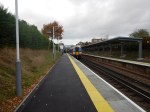

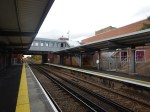
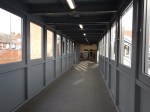
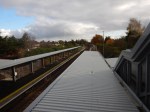
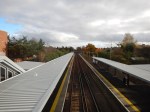
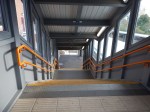

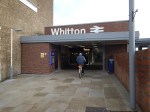

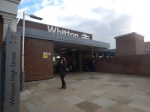
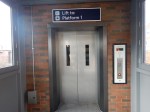
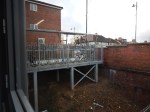

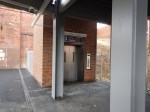
It is a no-frills design, which uses a lot of painted steel beams and classic brickwork.
I think it is true to say, that they’ve spent the money on what a station like this needs.
- Full length platforms
- Lifts
- Adequate platform cover.
- New cafe and booking office.
- More than one ticket machine.
- Bicycle parking.
- Seats
The one thing it needs, is a bit of colour!
But then, the station is in the London Borough of Richmond and flowers could be the solution. Before Overground – Highams Park, shows a station with a group of community gardeners.
Certainly, the grass needs to grow!
It’ll be interesting to see this station in a couple of years.
For more on how the station was designed and built, this page on the Innovare Systems web site.
This is said.
The station will rebuilt by Innovaré Systems using the i-SIP building system. The system uses structural insulated panels (SIPs), high performance building components which will complete the thermal watertight structure within one week, compared to the 8 weeks which would normally be required using traditional construction.
This off-site construction method will both simplify the works and provide a highly energy-efficient building for the public to use. The construction will be carried out during daytime hours to avoid unnecessary night time disturbance.
Looking at the impressive quality, I’ll think we’ll see more use of this system.
Feltham Station
I hadn’t intended to go to Feltham station, but whilst talking to a South West Trains driver, he suggested I go to look at the improvements there and the level crossing.
Location
This Google Map shows the station’s location to the South-East of the Airport.
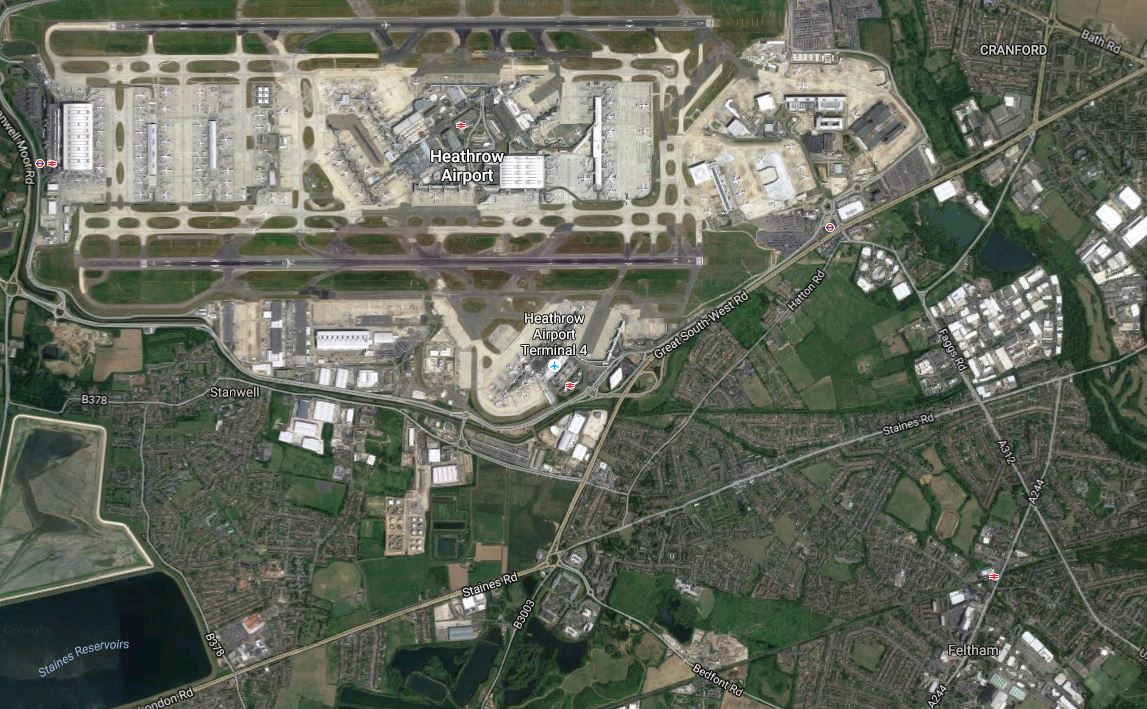
Heathrow Airport And Feltham Station
Feltham station is the station in the South East corner of the map.
A Modern Station
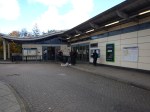
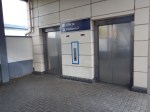
Feltham station is a modern station, as these pictures show.
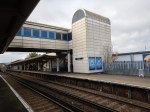
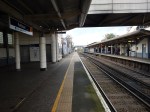
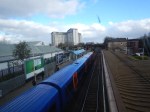
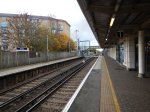



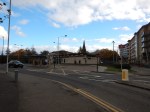


If it has one problem it is the level crossing at the Western end of the station.
Services
The station is well-connected with six trains per hour (tph) to and from Waterloo on weekdays and 5 tph on Sundays.
But there are a long list of stations, who have in excess of 2 tph connections to the station on weekdays and good connections on Sundays. The list includes.
- Clapham Junction
- Putney
- Reading
- Richmond
- Staines
- Twickenham
- Weybridge
- Windsor and Eton Riverside
It is an impressive level of connectivity to the buses that serve Heathrow’s terminals.
I was at Feltham station for about twenty minutes and saw several newish buses drive off towards Heathrow.
A railway called Heathrow Airtrack was proposed, but abandoned to link Waterloo to Heathrow, via Feltham.
It doesn’t seem to be mentioned much these days.
I just think, that because the services through Feltham are at a level of one train every ten minutes and because the line has several level crossings, that trying to squeeze an airport service into the mix, although probably not impossible, was difficult and would give rise to too many objections to fight off.
An Alternative Link
But Heathrow may have the solution in their hands and that would be to use an enlarged version of the Heathrow Pod system, that I wrote about in A Visit To Heathrow Terminal 5.
Or they could use some other charismatic system, that flew people at helicoptor-height over the route to and from Heathrow.
Several systems come to mind; cable-car, tram, monorail, a modern Schwebebahn or MAGLev.
The Schwebebahn in Wuppertal, was built over the River Wupper in the early Twentieth Century and it still running today. I wrote about it in The Wuppertal Schwebebahn. You wouldn’t build anything like this, but the construction of the Schwebebahn shows that you can put a lightweight railway over a river.
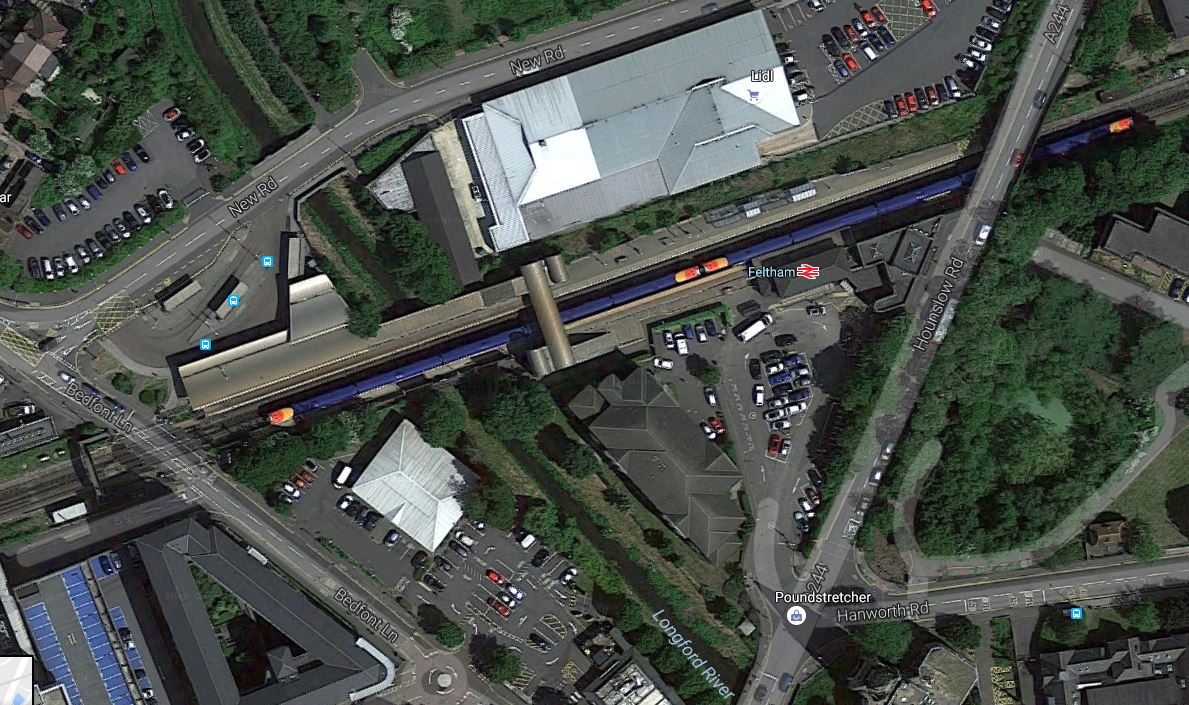
This Google Map shows Feltham station in greater detail.
Feltham Station And The Longford River
Note the Longford River, which passes under the station.
This Google Map shows Terminal 4 at Heathrow Airport.
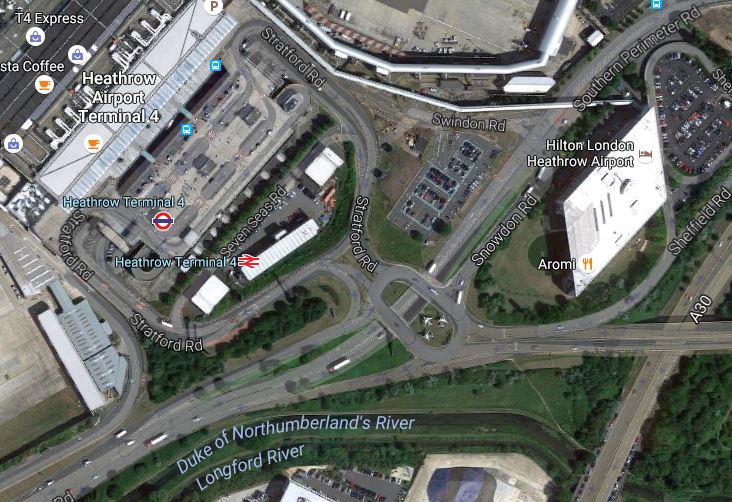
Heathrow Terminal 4 And The Longford River
Again note the Longford River.
So could some form of lightweight aerial railway be created to run at perhaps fifteen metres above the river and some of the roads in the area. This picture shows the Heathrow Pod that connects some car parks to Terminal 5.
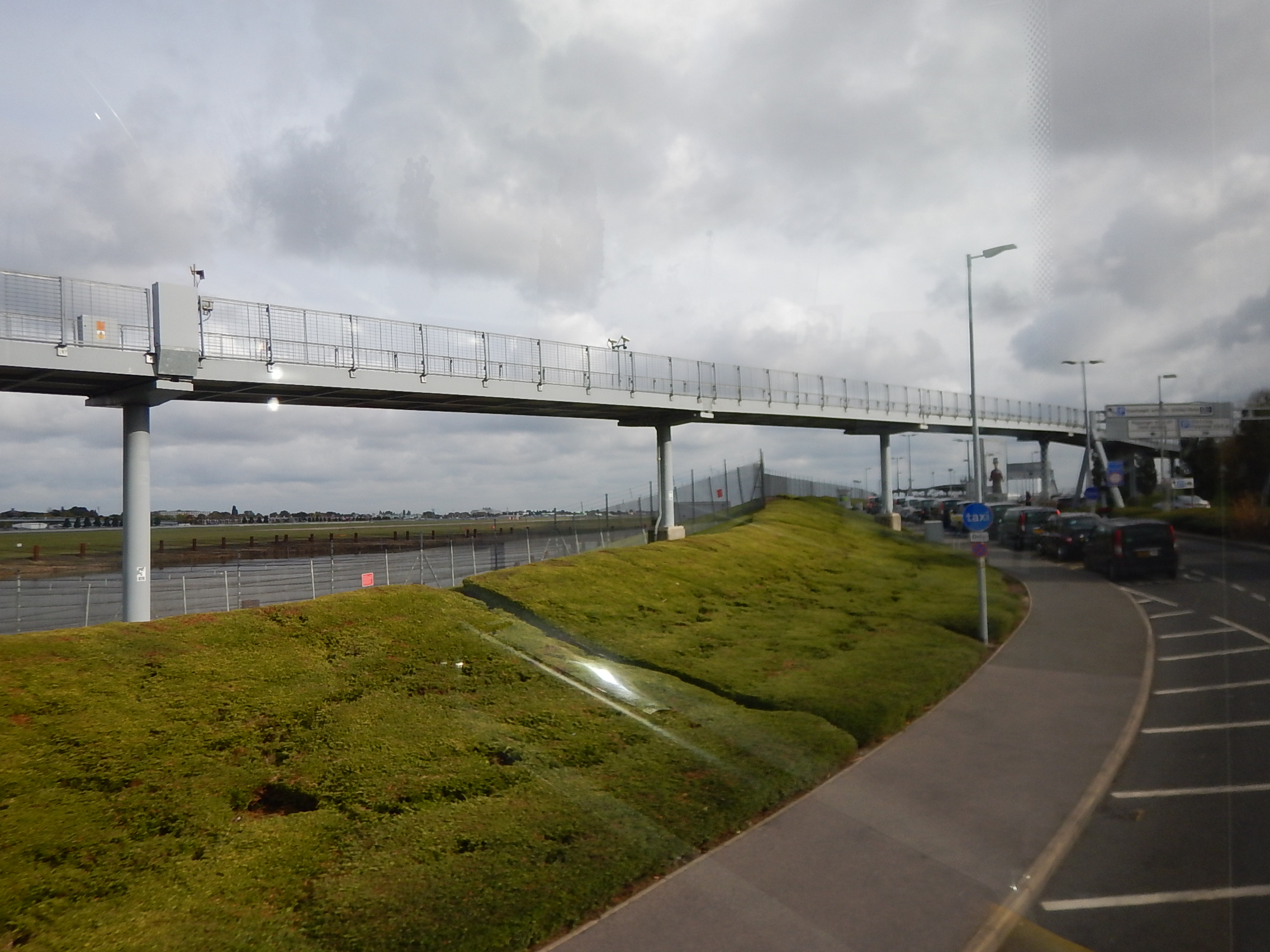
The Heathrow Pod Crosses To Terminal 5
The Terminal 5 system is described here in Wikipedia and is 3.9 km long. I estimate that Feltham to Terminal 4 would be about 6 km.
As Heathrow are thinking of using the Heathrow Pod system to go all the way to Kingston, I would suspect that Feltham would be in range.
My big worry would be, that the number of pods required to transfer passengers to and from Feltham might be too large for the system.
So I think that even if the Heathrow Pod system couldn’t be used for the link, within a few years, someone will devise a system that would create the ultimate airport link between Feltham and Heathrow Airport.
Heathrow Services Post Crossrail
To take some of the pictures for A Look At Stockley Junction, I took Heathrow Connect to the Airport..
My return ticket from Hayes and Harlington station, cost me £8.20 with a Senior Railcard, which must be one of the most expensive journeys per mile in the UK. Especially, as there are only two trains per hour (tph). Considering that I could have done the journey quicker yesterday, using a 140 bus, as the train was ten minutes late.
But it would be difficult to take the pictures I wanted from the bus.
Arriving at Heathrow, I thought that a hot chocolate would be in order, so I set off for Terminal 2.
Passenger friendly the journey is not, so as I wanted to get back, I returned to the station to catch the next train.
I did not see a single sign to Heathrow Connect, with this one being typical.
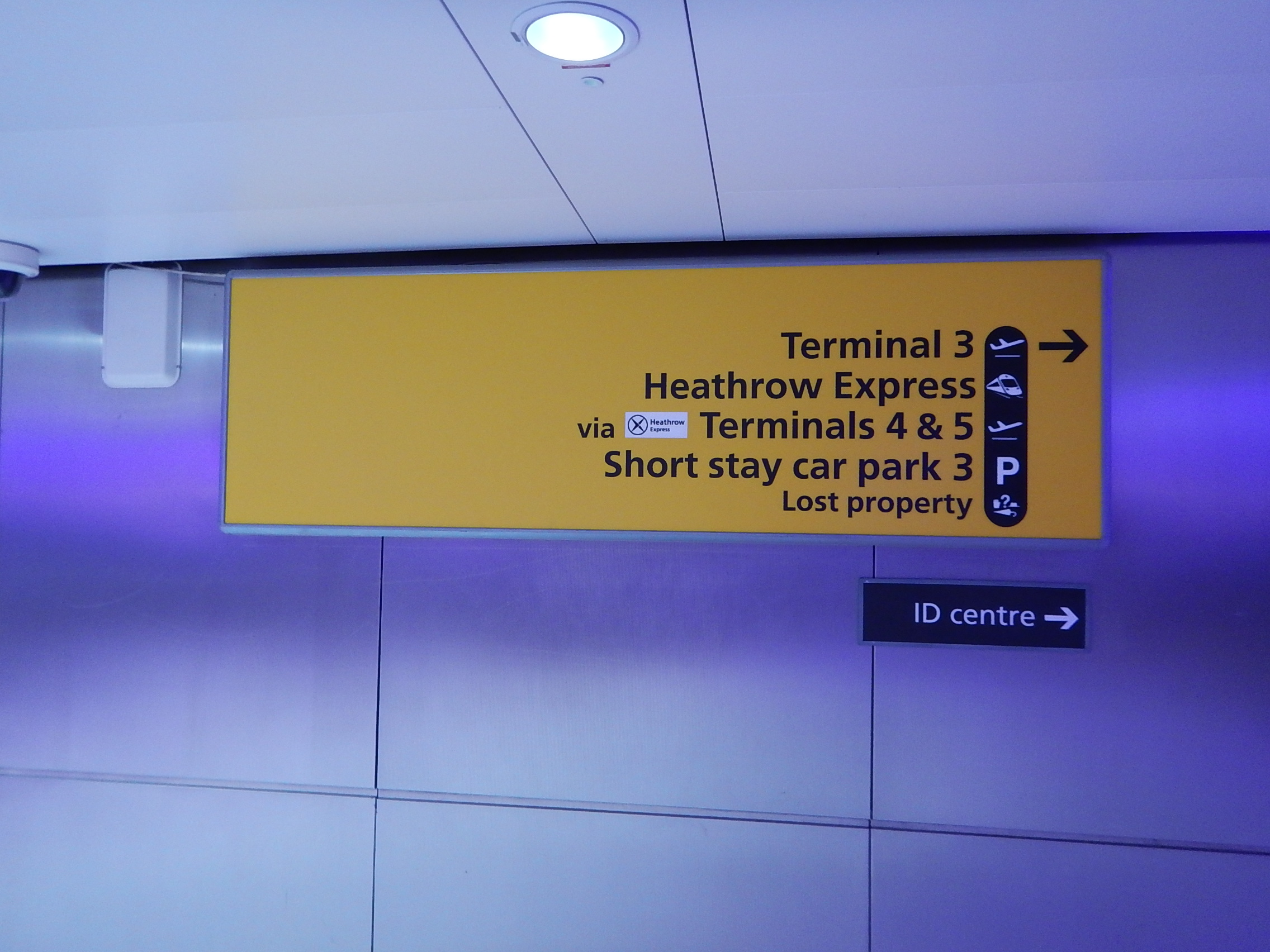
Where’s Heathrow Connect
I knew where to go, as I’d walked it.
Incidentally, it is easy enough to find the overpriced Heathrow Express, but how many passengers with a brain want to go to the disconnected Paddington?
Some like me might actually want to go to Hayes and Harlington or perhaps Maidenhead.
I didn’t ask, but I wonbder if the advice to go to Maidenhead, is to take Heathrow Express to Paddington and then get a train to Maidenhead. The Oracle (Nation Rail’s Journey Planner) recommends taking Heathrow Connect to Hayes and Harlington, but will all the staff.
Current Services To The Airport
There are four ways to get to Heathrow by public transport.
Heathrow Express – 4 tph to and from Paddington. – Overpriced
Heathrow Connect – 2 tph to and from a series of stations along the route to Paddington – Infrequent and overpriced.
Piccadilly Line – Slow, frequent, usually reliable and the most affordable.
Bus – For a lot of those living near the Airport, this is the preferred route.
This map from carto.metro.free.fr shows the layout of the rail and Underground lines.
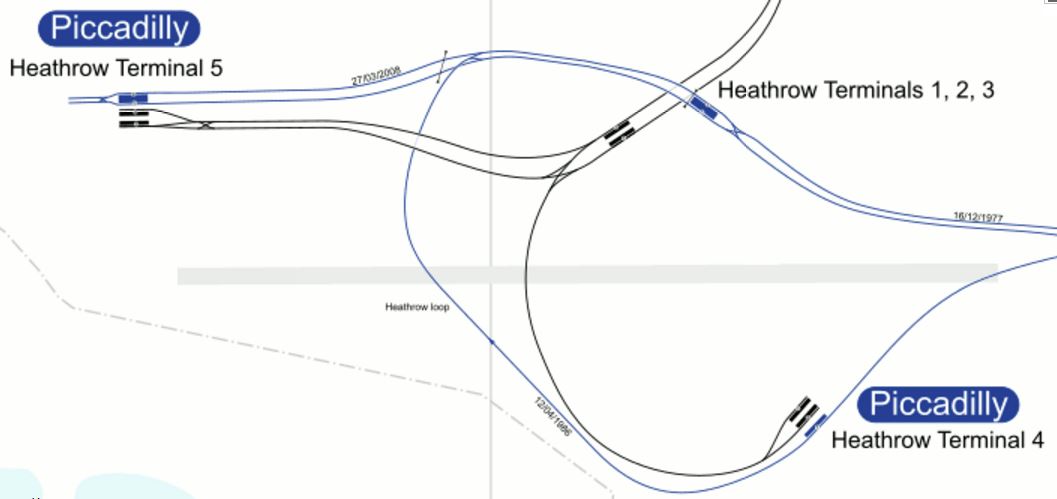
Rail And Underground Lines At Heathrow
Simple it isn’t!
But that is what you get if you dither over the next runway in the South-East for forty years.
Heathrow’s rail links are so very Topsy, unlike those at Birmingham, Edinburgh, Gatwick, London City, Luton, Manchester, Southend and Stansted.
Not all the others are perfect, but they’re getting better.
Crossrail
Crossrail will be the new wayto get to Heathrow and in some ways it is a replacement for Heathrow Connect. This is said under Future in the Wikipedia entry for Heathrow Connect.
From May 2018, Crossrail trains will replace all Heathrow Connect trains between London Paddington and Heathrow terminals 2, 3 and 4. Furthermore, as of December 2019 all services will run through the new tunnels at Paddington to central London destinations including Bond Street, Liverpool Street and Canary Wharf
So, it would appear that there will no substantial improvement until December 2019.
This is a detailed timetable, with particular reference to going between Heathrow and the City of London and Canary Wharf.
- May 2018 – Heathrow Connect will be taken over by Crossrail. We’ll certainly see better signage and service under Transport for London’s management.
- May 2018 – The Crossrail start schedule on Wikipedia, also shows that the shuttle between Heathrow Central (Terminals 1,2 and 3) and Terminal 4, will be transferred to Crossrail. Terminal 5 will be reached by using Heathrow Express from Heathrow Central.
- May 2018 – Heathrow Connect in the guise of Crossrail will be serving erminals 1,2, 3 and 4, but not Terminal 5. Will we be seeing new Class 345 trains and a higher frequency to Heathrow? I woulden’t be surprised if Heathrow Airport, try every trick to keep Crossrail out of the Airport, to protect the revenue on Heathrow Express.
- December 2018 – Crossrail services between Paddington and Abbey Wood will start, thus linking Paddington to the City of London and Canary Wharf. There will probably be a longish walk between the two parts of Crossrail at Pasddington, but the tunnel across London, will give Paddington the much need-connectivity, it’s needed since the Second World.
- May 2019 – Crossrail services between Paddington and Shenfield via Whitechapel will begin, thus meaning that many travellers East of Paddington, will use a single change there to get to and from Heathrow.
- December 2019 – The full Crossrail should open, meaning that there will be direct trains between Abbey Wood and Heathrow Terminal 4 calling at Canary Wharf, Liverpool St-Moorgate, Farringdon, Tottenham Court Road, Bond Street, Paddington, Heathrow Central and all the stations in between.
Trains into the Airport will be.
- 4 tph – Heathrow Express for Paddington, where many passengers will change to and from Crossrail.
- 4 tph – Crossrail to Abbey Wood.
One will be expensive and the other will be affordable and much more convenient, as it reaches the places passengers want to start or finish their journey.
It looks good, but there are a some questions to answer.
Is eight tph enough trains to and from the Airport?
If you compare Heathrow with Gatwick, Luton and Stansted, eight tph seems good.
However, I found this article in TravelWeekly, which is entitled Gatwick outlines plans for a train departure to London every three minutes.
It gives a very good summary of the train services that will run to Gatwick after Thameslink is completed.
- Four tph dedicated Gatwick Express trains to Victoria
- Six tph to Victoria – originating from East and West Coastway, Horsham/Littlehampton, and Three Bridges/Haywards Heath
- Four tph to Bedford via London Bridge – originating from Gatwick and Brighton
- Two tph to Cambridge via London Bridge – originating from Brighton
- Two tph to Peterborough via London Bridge – originating from Horsham
- Two tph to London Bridge – originating from Littlehampton/West Coastway, and Haywards Heath/Three Bridges.
That is a total of twenty trains to and from London and beyond and most of the South Coast from Southampton to Hastings.
How many better rail-connected airports are there anywhere in the world?
Luton and Stansted are also have aspirations to improve their rail links.
I think that passengers will press for increase in the frequency of services to the Airport and they’ll want more destinations.
After all Shenfield and Abbey Wood are planned to have 8 tph all day to and from Central London, with at least twice as many in the Peak.
How do passengers get to and from Iver, Langley, Maidenhead, Reading and all staions to the West of Hayes and Harlington?
A rail link into Terminal 5 from the West is planned, but something needs to be done before that is completed probably in the mid-2020s.
After December 2019, their will be four routes.
- Go to Paddington and use Heathrow Express – Expensive
- Go to Hayes and Harlington and take Crossrail into Heathrow Central – Requires two step-free changes of train.
- Take a coach from Reading.
- Go to Hayes and Harlington or West Drayton stations and use a local bus.
I can see something innovative being done at Hayes and Harlington station.
There is probably capacity between Heathrow Terminal 5 and Hayes and Harlington stations for a 4 tph shuttle in both directions, that would also solve the Terminal 5 connectivity problem.
Southall could even be an interesting alternative, as there is lots of space.
What Would Be My Solution?
I would use Hayes and Harlington station, as the interchange for Heathrow Airport.
In an ideal layout there would be three slow lines through Hayes and Harlington station, with two island platforms separating the lines. From the South, they would be.
- The Reading-bound (Up Slow) line.
- The Heathrow shuttle line, which would also be used by Crossrail trains going to and from Heathrow Terminal 4. This liine would be bi-directional.
- The London-bound (Down Slow) line.
Between the platforms would be two welcoming island platforms to give passengers a step-across interchange, between trains.
It would need a major rethink of the station.
But consider.
- Passengers from the West for Heathrow would just walk across the platform to get their train.
- Passengers for Heathrow Central could take any train.
- Passengers for Terminal 4 or Terminal 5 might need to wait a few minutes for an appropriate train.
- Crossrail passengers for Terminal 5, would change at Hayes and Harlington.
- Passengers from Heathrow for the West would just walk across the platform to get the train.
- No passenger would need to change platforms using the step-free bridge.
What is being provided at Hayes and Harlington station is very much a poor design.
Will the current Heathrow Connect service between Paddington and Heathrow Central and Terminal 4 be dropped?
I can’t see any point to it, after Crossrail has an all-stations service to the Airport from Paddington.
How do passengers get to and from Terminal 5?
I proposed the shuttle to do this, with passengers changing at either Hayes and Harlington or Heathrow Central stations, to a train going to either Terminal 4 or Terminal 5.
Will passengers be able to use contactless cards to the Airport?
I think if the decision was down to the Mayor, Transport for London or the people of London, Oyster and contactless bank cards would be a way of paying a fare to Heathrow, as it is to Gatwick.
Will passengers like me with Freedom Passes, be able to use Crossrail to Heathrow?
Boris said Yes and I suppose the current Mayor, Transport for London and card holders, will expect it to be possible, as it is on the Piccadilly Line.
Conclusion
The Heathrow spur of Crossrail has not been thought out too well!
A Look At Stockley Junction
Stockley Junction, is where trains leave and join the Great Western Main Line to go to and from Heathrow Airport.
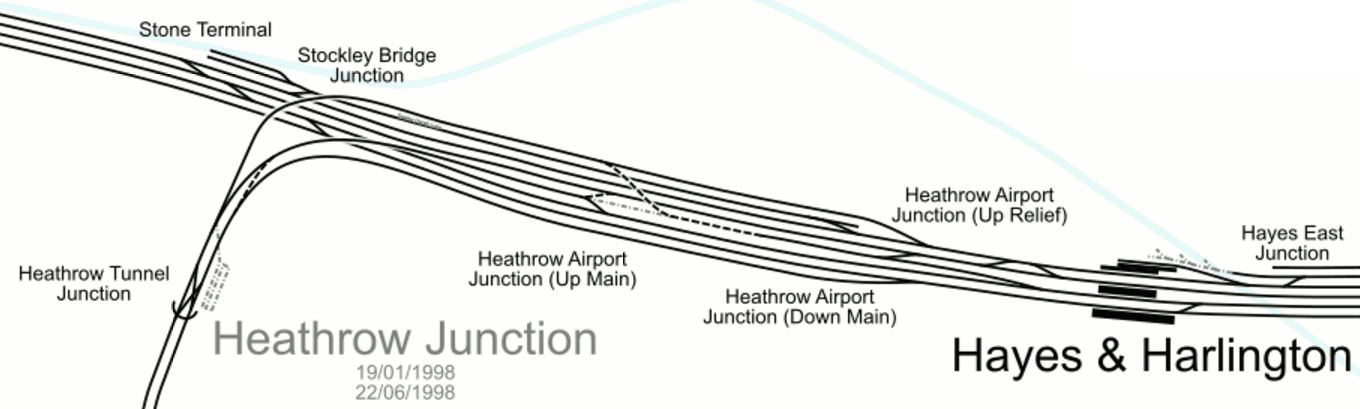
This map from carto.metro.free.fr shows the lines at the junction and to the nearby Hayes and Harlington station.
Stockley Junction And Hayes & Harlington Station
Note that in some places there are eight tracks across, with lots of crossings and points everywhere.
If you look at the lines through the station, starting from the South they are, with their platform numbers.
- Reading-bound Fast Line (Down Main) GWR – Heathrow Express
- London-bound Fast Line (Up Main) – GWR – Heathrow Express
- Reading-bound Slow Line (Down Relief) – Crossrail- GWR – Heathrow Connect
- London-bound Slow Line (Up Relief) – Crossrail – GWR – Heathrow Connect
- Bay Platform – Crossrail – GWR
Look at the map and note the following.
- The two Slow (Relief) lines go straight through the station and the junction.
- The two Fast (Main) lines go straight through the station and the junction.
- Trains on the Down Main like Heathrow Express to the Airport, take the Southernmost line and just turn left for the Airport.
- There are several new crossing and short lines, which in the map are shown dotted.
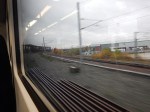
This set of pictures, were taken on a train going along the Down Slow line.
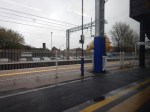
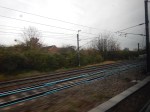
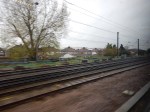

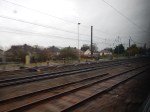

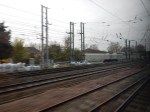

Note how as you get nearer to the junction, the number of tracks increases.
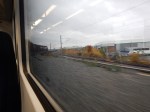
These pictures were taken from a Heathrow Connect train going through Stockley Junction towards the Airport.
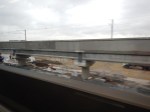
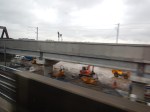
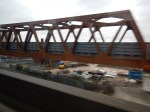
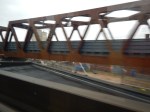

From the path the train took, I suspect that the track layout shown in the map has been largely created.
Note the line shown in these pictures, is the one used by trains running from the Airport to Paddington.
The final set of pictures, were taken as I returned from Heathrow on another Heathrow Connect train.
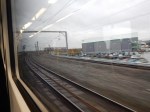
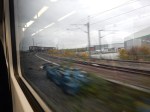




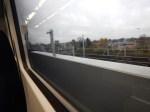
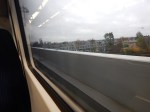
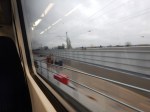
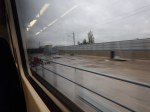

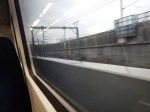
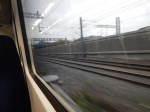

The train crossed over all the lines and descended into Hayes and Harlington station on the Northernmost line.
One Selfish Mercedes Driver Creates A Traffic Jam
It’s 08:30 on a Saturday morning, so what does this selfish Mercedes driver decide to do?
Create a traffic jam, whilst he goes and does his shopping opposite.

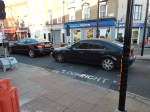
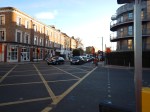


I suppose, if the driver had parked directly outside the shop on the other side of the road, they would have been parking at a bis stop in a bus lane, so they might have got a ticket.
Yesterday, outside Waitrose and Sainsbury’s in Islington, another Mercedes driver accelerated over the pedestrian crossing and sped away at a speed of at least sixty.
Why is it, when I see a case of bad driving, parking or using a mobile phone whilst driving, it is very likely to be a privately-owned and driven big Mercedes?
As an aside here, Transport for London are replacing the traffic lights at this junction. During the work, they have installed a set of temporary lights, which are some of the most professional, I’ve ever seen.
In fact they’re so clear and well setup, that walking around the junction has been a lot easier, since the work started.has been a lot easier. Traffic seems to be flowing well too!
I hope when the new lights are installed, that they work at least as well as the temporary lights!
Is This The Worst Bottleneck On The UK Rail Network?
This Google Map shows Norwich station and the various rail lines that serve it.
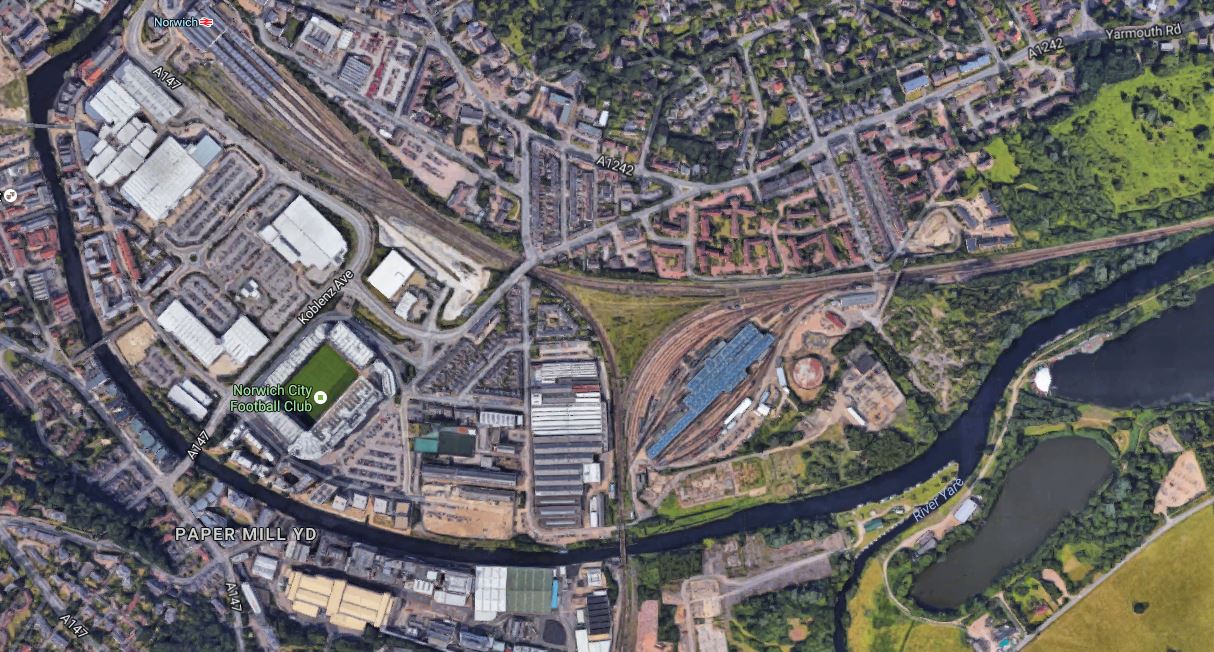
Norwich Station And Approach Lines
All the lines come into the station from the East and they split soon after leaving the station, with lines to Cromer, Lowestoft, Sheringham and Yarmouth taking the Eastern line, with trains to Ipswich and Cambridge taking the Southern line.
Between the two lines, lies Crown Point Traction and Rolling Stock Depot, which looks after much of Greater Anglia‘s rolling stock.
This Google Map shows the bridge at the South West corner of the depot, where the rail line to Ipswich and Cambridge, crosses the River Wensum.
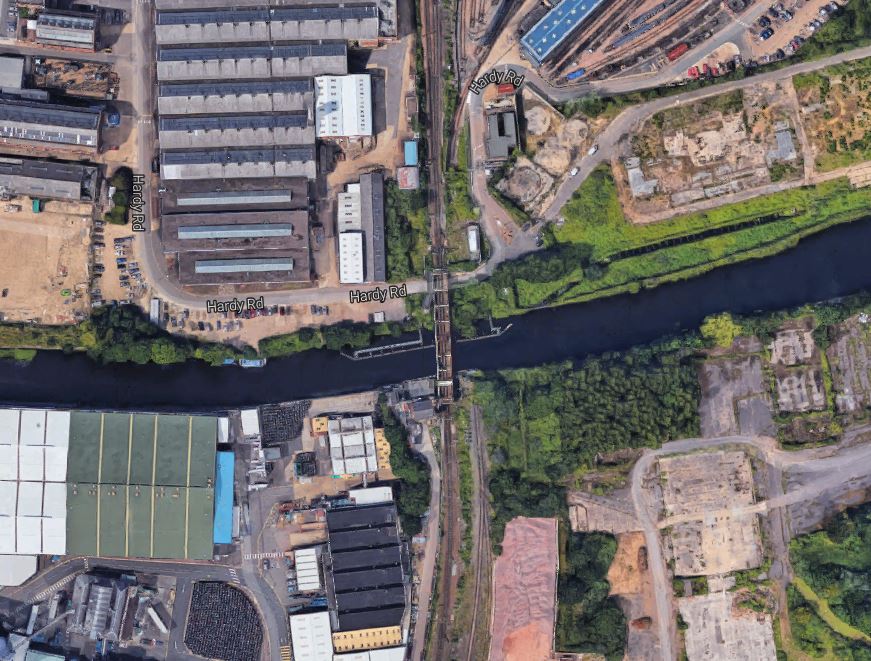
Trowse Bridge
Trowse Bridge is no ordinary bridge.
- It is a single track swing bridge.
- It was built in the 1980s, probably to a low cost design.
- It is electrified by overhead conductor rail, rather than overhead wire.
- It is mandated by an Act of Parliament to open for traffic on the river on demand.
- It is rather unreliable.
It must be a nightmare for both Greater Anglia and Network Rail.
I wonder if this bridge has had effects on projects that are happening in East Anglia.
The New Depot At Brantham
A new depot is being built by Greater Anglia at Brantham, just North of Manningtree station. There are obviously, good reasons for this, but could the access over the Trowse Bridge to Crown Point be a factor.
It would certainly be easier for bi-mode Flirts working Lowestoft-Ipswich and Colchester-Peterborough to be based at Brantham rather than Crown Point. Wikipedia says this.
Scheduled to open in 2018, it will be the home depot for Greater Anglia’s new fleet of Class 745 and Class 755 Stadler Flirts.
Greater Anglia would be a very unusual company, if they didn’t have an efficient plan for the stabling and maintenance of their new trains.
Direct Yarmouth To Lowestoft Trains Via A Reinstated Reedham Chord
There used to be a direct Yarmouth to Lowestoft Line, but now it is possible to use the Wherry Lines, with a reverse at Reedham station.
Network Rail are talking about reinstating the Reedham Chord to create a more direct route between East Anglia’s largest North-Eastern towns. This is said about the Reedham Chord in Direct Yarmouth Services in the Wikipedia entry for Lowestoft station.
In January 2015, a Network Rail study proposed the reintroduction of direct services between Lowestoft and Yarmouth by reinstating a spur at Reedham. Services could once again travel between two East Coast towns, with an estimated journey time of 33 minutes, via a reconstructed 34-chain (680 m) north-to-south arm of the former triangular junction at Reedham, which had been removed in c. 1880. The plans also involve relocating Reedham station nearer the junction, an idea which attracted criticism.
Could one of the reasons for looking at the the reinstatement of the Reedham Chord, be that it would allow diagrams for the trains working the branch lines to the East of Norwich and Ipswich to avoid the Trowse Bridge?
The Design Of The London To Norwich Trains
The current rakes of eight Mark 3 coaches hauled by Class 90 locomotives, that run the service between London to Norwich, only have one pantograph.
So does this mean there are operational problems with the train on the Trowse Bridge, as it does seem that the bridge owes a lot to Mr. Heath Robinson.
A long modern electric multiple unit, like say the Class 345 trains for Crossrail, often has two pantographs. This should be more reliable, if one should fail.
Consider.
- The Class 745 trains, which have been ordered to replace current trains, will be somewhere around two hundred metres long.
- These trains are Stadler Flirts, which in some cases have two pantographs.
- Trowse bridge is less than thirty metres long.
- The other passenger trains that will use bridge, will be bi-mode like the Class 755 trains or diesel.
- On modern trains, pantograph control is automatic and fast.
- Electrification gaps are common on third-rail systems.
Would two pantographs, allow the Class 745 trains to bridge an electrification gap on the bridge.
Suppose, the electrification was removed from the Trowse Bridge!
Would this and other improvements make it possible to simplify the bridge and improve reliability?
|Electric trains could use the following procedure to cross the bridge.
- Trains could approach the bridge with the front pantograph lowered., drawing power from the rear one.
- The train would cross the bridge and when the front pantograph was under the overhead wire on the other side, it would automatically raise and connect, lowering the rear pantograph appropriately.
Bi-mode trains would just use their diesel engines, swapping between modes automatically.
The Replacement Of The Bridge
Eventually, the bridge will have to be replaced, but surely a bridge without electrification would be easier to design and build. It could even be double-track to improve capacity into and out of Norwich.
I suspect that the long-term solution would be a double-track lifting bridge, similar to the Kingsferry Bridge in Kent. This was built in 1960 at a cost of £1.2million, which is £19.3million in today’s money.
When it is completed the Western Gateway Infrastructure Scheme, will incorporate a similar lifting bridge which will carry a road and the Manchester Metrolink over the Manchester Ship Canal.
Both these schemes also incorporate roads, so the Trowse Bridge will be simpler.
I think there could be scope for an engineer or architect to design something special for this crossing.
The Affordable Alternative
It has to be said, that perhaps the most affordable solution would be to build a stylish fixed link, probably with a double-track railway and foot and cycle bridges.
As to the boat users, all boats that need to go under the bridge regularly would be modified so their masts could be lowered at no cost to their owners.
Other bribes could be given to occassional users.
The Power Of Three!
I went to Ipswich for the football yesterday with a friend.
We travelled both ways in one of Greater Anglia’s refurbished rakes of Mark 3 coaches.
My friend doesn’t travel by long distance train that often and remarked both ways, that the ride was exceptionally smooth!
The design of Terry Miller and his team has worn well in the forty years they have been in service.
We might think of railway coaches as rather mundane everyday objects, but this design will outlive us all!
Crossrail 2 ‘Cannot Go Ahead’ Without Four-Tracking Of West Anglia Line
This is the title of an article in Rail Technology Magazine.
This is the first paragraph.
MPs for constituencies along the West Anglia line called for the route to be four-tracked in order to accommodate new rolling stock and Crossrail 2 at a Westminster Hall debate yesterday.
I know the West Anglia Main Line very well, as for perhaps fifteen years, I used to travel on it, regularly to get between Cambridge and London.
The Problems Of The West Anglia Main Line
Summarising its shortcomings, I would include.
- Trains are too slow.
- Capacity on the line is too small.
- There are lots of level crossings, which cause problems.
- With the development of the port at London Gateway, there could be pressure to put more freight trains on this line, to go to and from the North.
- Services from London, should be better integrated with Peterborough and Norwich services.
- Ipswich and Bury St. Edmunds to Stansted Airport, is not easy by train.
This Infrastructure section in Wikipedia describes the West Anglia Main Line.
The line was initially 5 ft (1,524 mm) gauge, but between 5 September and 7 October 1844 it was converted to 1,435 mm (4 ft 8 1⁄2 in) standard gauge.
In 2013 the line was double track for most of its length, with small sections of single track on the Stansted branch and at Ware and quadruple track between Hackney Downs and Liverpool Street. The line is electrified at 25 kV AC and has a loading gauge of W8 except for the Stansted branch, which is W6.
The line is very much inferior to the Great Eastern Main Line.
The New Greater Anglia Franchise
The new Greater Anglia Franchise, will go a long way to sorting points 5 and 6, by introducing hourly services on the following routes.
- Norwich to Stansred Airport via Ely, Cambridge North and Cambridge stations.
- Colchester to Peterborough via Ipswich, Bury St. Edmunds, and Ely.
With improved services from London to Stansted, this will help sort out a lot of the problems on the line.
But these changes will only put more pressure on capacity on the West Anglia Main Line.
Freight
The West Anglia Main Line doesn’t carry large numbers of freight trains, but there could be pressure to increase freight on the line in the future.
Once the Gospel Oak to Barking Line is electrified, there will be another electrified route from London Gateway to Peteborough.
It might be decided to reinstate the rail line from March to Spalding and the Great Northern Great Eastern Joint Line, to take freight away from the East Coast Main Line.
If thiese routes get to be used for freight, it will put extra pressure for more capacity on the West Anglia Main Line.
More Capacity On The West Anglia Main Line
With demand for more capacity on the West Anglia Main Line, I think it is inevitable that the line will be improved.
This Future Developments section in Wikipedia, outlines what might happen.
If Stansted Airport’s expansion is authorised it is planned that the line will see many further changes. Long term proposals include four-tracking between Coppermill Junction and Broxbourne junction; an additional tunnel and platform edge on the Stansted Airport branch; one additional train per hour serving Stansted and up to six further trains per hour at peak times, including four into Stratford as a terminus. More stations, such as Broxbourne, will also have platform extensions to accommodate 12-car trains.
It seems likely that two tracks will be built alongside the line to Cheshunt as part of Crossrail 2. Intermediate stations from Tottenham Hale will transfer to Crossrail 2 releasing capacity on the main line for additional trains
Stansted Airport have certainly been a forceful advocate of four-tracking the West Anglia Main Line.
Four-tracking of the twelve or so miles between Coppermill and Broxbourne Junctions would allow the following.
- The possibility of at least 100 mph running on the fast lines.
- Separation of slow and fast services.
- Stansted and Cambridge Express services, that would be worthy of the name.
- The possibility of more freight trains.
Four-tracking would certainly do the following.
- Get the line ready to connect to Crossrail 2.
- Probably make all stations between Tottenham Hale and Broxbourne step-free.
- Add the station at Meridian Water to the line.
- Improve the freight gauge from W8 to W10, where needed.
I suspect that four-tracking will also remove some of the notorious level crossings on the line.
I have this feeling that the four-tracking of this line could be one of those projects, where the existing infrastructure works normally, whilst the new tracks are built alongside.
Fast Services To Stansted, Cambridge And Norwich
South of Broxbourne station, fast services to and from Cambridge, only stop at Cheshunt and Tottenham Hale.
Given that the Flirts, that will be running Cambridge and Stansted services in a few years will be 125 mph trains, would it be worth it to save a few minutes building the new fast lines to allow running at this speed?
But should the four-track section of railway stop at Broxbourne Junction?
Between Broxbourne and Bishops Strtford, the West Anglia Main Line, has wide margins and I think that there are possibilities of extending the four-track section further North, perhaps even to Bishops Stortford station.
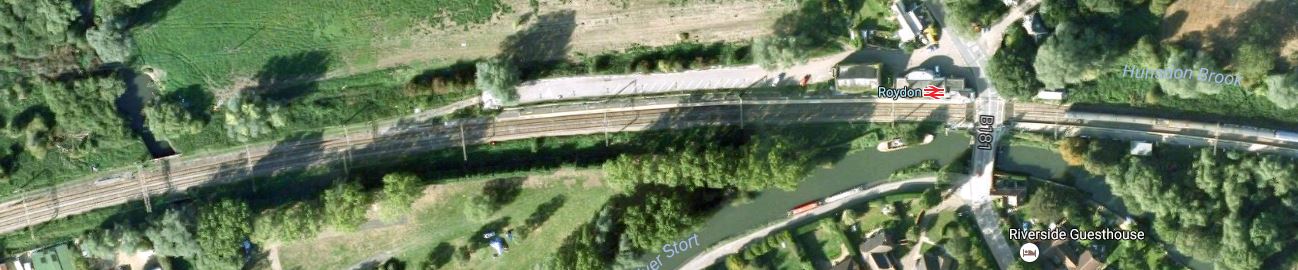
As an example, this Google Map shows Roydon station.
Roydon Station
The biggest problem at Roydon is the level crossing, but on a quick look, it would appear that four-tracking would be possible.
From my memories of driving past and going through Bishops Stortford station, I thought this station would be a major problem to four-tracking.
But look at this Google Map of the station.

Bishops Stortford Station
It would appear that space is not the premium I expected.
I think it would be possible to expand the station, to take advantage of two slow and two fast lines South of the station.
Surely, the fast lines, even if a good proportion of trains stopped at the station could accommodate twelve or more trains per hour (tph) to Stansted Airport, Cambridge and the North.
North of Bishops Stortford, all of the trains would be modern trains with the following characteristics.
- The ability to cruise at 100 mph or more.
- The ability to stop and start extremely fast.
So I suspect, that if the current infrastructure was improved, consistent 100 mph running would be possible to Cambridge.
Cambridge could be a problem with all the work going on.
- The expansion of the existing Cambridge station
- The building of the new Cambridge North station
- The reorganisation of services to cope with the new Greater Anglia franchise.
- The arrival of the East West Rail Link in the mid-2020s.
But I suspect Network Rail and Greater Anglia are working together on the solutions, to raise speeds all the way to Ely.
North of Ely, the Breckland Line has a lower speed limit of 75-90 mph, but if it were to be upgraded for 100 mph running, this would mean that the new Norwich to Stansted service via Cambridge using bi-mode Flirt trains, would be considerably faster, than the ten minutes short of two hours now possible with a change at Cambridge.
One thing, that I suspect will happen is that the following services will arrive and leave in a convenient pattern at Cambridge.
- Cambridge to/from Ipswich
- Stansted Airport to/from Norwich
- Cambridge to/from Kings Lynn
- Kings Cross to/from Cambridge
- Liverpool Street to/from Cambridge
- Peterborough to/from Cambridge
- Thameslink to/from Cambridge
Cambridge will become an increasingly busy interchange.
As an example, I think we could see a Norwich to Kings Cross time of under two hours, with a change at Cambridge. Perhaps not ninety minutes, but with an upgraded Breckland Line running 100 mph plus bi-mode Flirts, it wouldn’t be far off.
Coppermill Junction
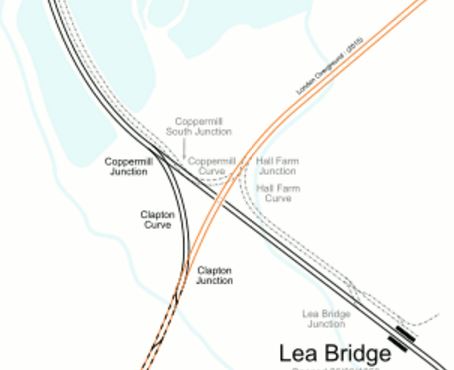
Four-tracking is proposed to start at Coppermill Junction, just South of Tottenham Hale station.
This map from carto.metro.free.fr shows Coppermill Junction.
Coppermill Junction
Note.
- The tunnels for Crossrail 2 will emerge to the North-West of this junction.
- Rail access to the Crossrail 2 worksite would be a necessity.
- I talked about plans to reinstate the Coppermill and Hall Farm Curves in Rumours Of Curves In Walthamstow.
- The only inhabitants of the area are probably foxes, great crested newts and other sundry wildlife.
Surely, the creation of an upgraded track layout at Coppermill Junction, that allows Crossrail 2 to be built without disrupting services on the West Anglia Main Line and the Chingford Branch is important.
The reinstated Hall Farm Curve would also allow Chingford Branch services to run to Stratford for Crossrail and alternative Underground services.
The work to this junction, further emphasises that four-tracking of the West Anglia Main Line must be done before Crossrail 2 is built.
Crossrail 2
Politics, public relations and good project management all probably say, that when Crossrail 2 gets the go-ahead, four-tracking of the West Anglia Main Line, should be done first.
In a related and parallel project, the branch lines in South West London, should also be upgraded as early as possible to bring visible benefits.
- Longer platforms at stations where needed.
- Step-free access at all stations.
- Sorting of level crossings and bottle-necks.
These improvements are needed, even if Crossrail 2 is not built.
If I have a criticism of the current Crossrail and Thameslink projects, it is that they are big-bang projects, where nothing appears to have happened except disruption for years and then it will all come together in a great splurge in 2018-2019.
With Crossrail 2, there is possibly a chance to build the line, so that the benefits come in a steady stream.
An Understated Headline
This article on Business Insider is entitled A rail link between Oxford and Cambridge could help create a massive tech hub in the UK.
Could is not the word I’d use!
This page on the Government web site, contains a summary of the report, on which the article is based.
This is the second paragraph of the report.
The Commission’s central finding is that a lack of sufficient and suitable housing presents a fundamental risk to the success of this area. Without a joined-up plan for housing, jobs and infrastructure across the corridor, it will be left behind its international competitors. By providing the foundations for such a strategy, new east-west transport links present a once in a generation opportunity to secure the area’s future success.
As housing is so important to any development, this is crucial. The interim report makes a series of recommendations. This is the first.
- Government should go ahead with East West Rail’s initial phase, a new link cutting journey times by more than half on the route from Oxford to Bedford and Milton Keynes, ensuring it is delivered before 2024; and it should invest in developing as soon as possible detailed plans for both the next phase of East West Rail (which would complete the link to Cambridge) and for a new Oxford-Cambridge Expressway.
So why is the Government farting about?
I blame the following.
- The route via Bedford, contains lots of great-crested newts, in all the disused brick works.
- The name; East West Rail Link, doesn’t have North in it.
- Oxford doesn’t want a railway, that might encourage more visitors who would interfere with academic life.
- The Sir Humphries of this world went to one of two universities; Oxford or Cambridge. They believe the two academic cities shouldn’t be connected and certainly not via Milton Keynes.
- Addenbrooke’s hospital has objected, as it will bring lots of patients from the route to their world-class facilities.
- It doesn’t go near Islington for the Labour Party or Edinburgh for the SNP.
- Democracy
The Chinese would have built it last week or possibly yesterday, as it calls at Bicester Village!
 The Anonymous Widower