Ravenglass Station And The Ratty Arms
My choice of Ravenglass station for a pit-stop was a good one, as I was able to get a simple baked potato well-filled with tuna mayonnaise at the Ratty Arms.
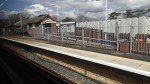


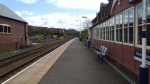


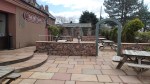
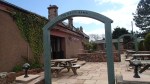


The one problem was that there was no train information or mobile signal at the station. But in the end it didn’t matter as the train arrived at the appointed time on the time-table.
To get a better feel of Ravenglass station and the area it serves, this is the Google Earth image of the area.

Ravenglass Station
Note how the Cumbrian Coast Line crosses the River Esk on a viaduct and the Ravenglass amd Eskdale Railway, which has a terminus at the station, curves away up the valley.
From Barrow-in-Furness To Ravenglass
After a brief walk around the town I returned to Barrow-in-Furness station and swapped my smart Class 185 train and headed north to Carlisle on the Cumbrian Coast Line in a more basic Class 156 train.








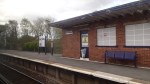
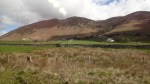





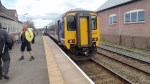
I was hungry so as there was another train an hour behind, I got off at Ravenglass station to search out some lunch.
From Preston To Barrow-In-Furness
I took a morning train direct to Barrow-in-Furness.


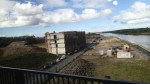































It was certainly easier, than the journey one of C’s Liverpool University friends; Liz Cox, used to take between Barrow and Liverpool in the mid-sixties, where she had to change several times, from one terrible diesel multiple unit to another.
Barrow-in-Furness seemed to be a town with little to recommend it. I couldn’t find a decent cafe on my walk around the town and the only thing I saw of note was a marvellous cliché-free statue of Emlyn Hughes, who was born in the town.
Acton Dive-Under
On my way to West Drayton yesterday, I went past the site of the Acton Dive Under, where a short tunnel is being built so that freight trains can get into and out of Acton Yard. This Google Earth image shows the area.
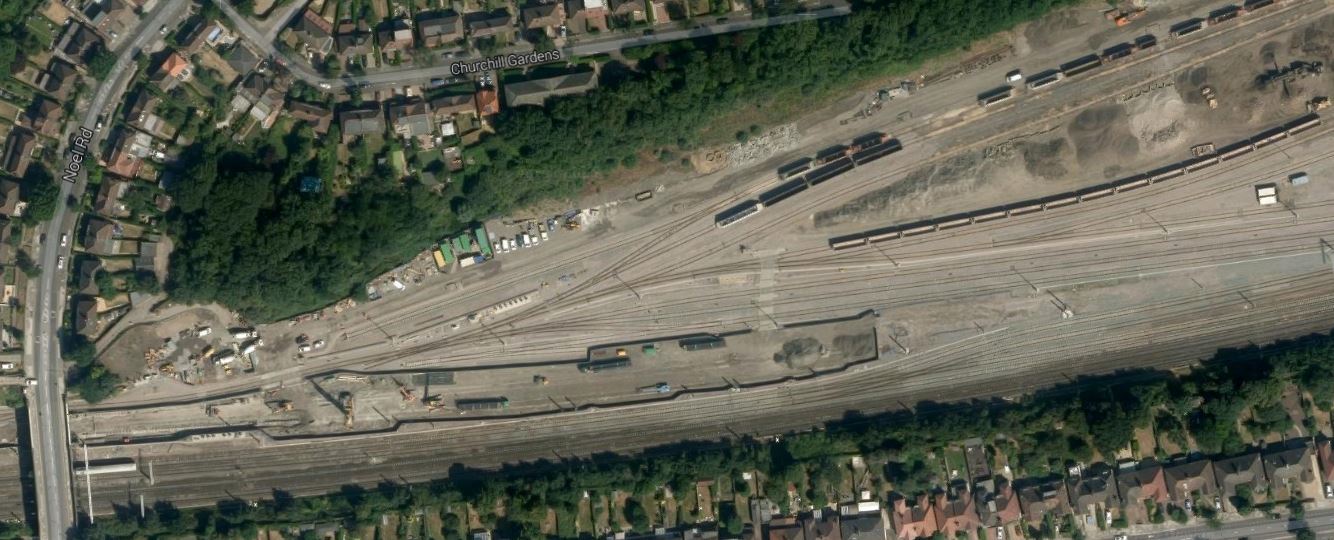
Acton Dive Under
I think that the fenced off area by the bridge over the Great Western Main Line is the work site for the dive under.
This page on the Volkerrail web site gives full details. This links to an excellent pictorial brochure about this project. This page in the brochure shows the track layouts.
I took a few pictures yesterday as the train sped through.


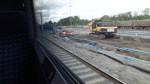
But I didn’t see much! Today, I went to the bridge on Noel Road and poked my camera over the wall.
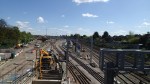
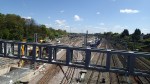
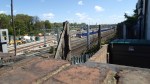

You can see the short tunnel in some of the pictures and it would be interesting to return with a camera on a stick or a very tall photographer.
I got there on a northbound 440 bus to Lynton Road, which is close to the bridge. Afterwards, I walked to West Acton station to get a Central Line back to London.
What didn’t help either was the fact that the 440 bus is a single-decker.
West Drayton Station – 27th April 2015
These pictures show the progress at West Drayton station.
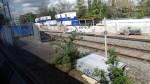
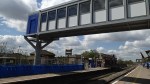
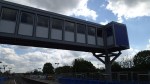


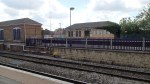

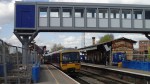
Unlike at New Cross Gate, the bridge was built off-site and then lifted into position. This page on the Crossrail web site has a picture of the lift.
This is a Google Earth image of the area round West Drayton station.

West Drayton Station
Note the Grand Junction Canal, which will surely end up as a water-feature at the station.
This page on the Crossrail web site describes how the final station will look.
In the Google Earh image you will notice there are five platform faces, numbered 1 to 5 up the image. 1 and 2 face the two fast lines and 3 and 4 the slow ones. Platform 5 is not used at present and is anyway blocked by the reconstruction of the station. Will it be used in the future?
Stockley Flyover – 27th April 2015
The Stockley Flyover is now being fitted out with rails and overhead lines. This image from Ceequal shows a visualisation of how the flyover will look.

Stockley Flyover Visualisation
And this is a Google Earth image of the junction.
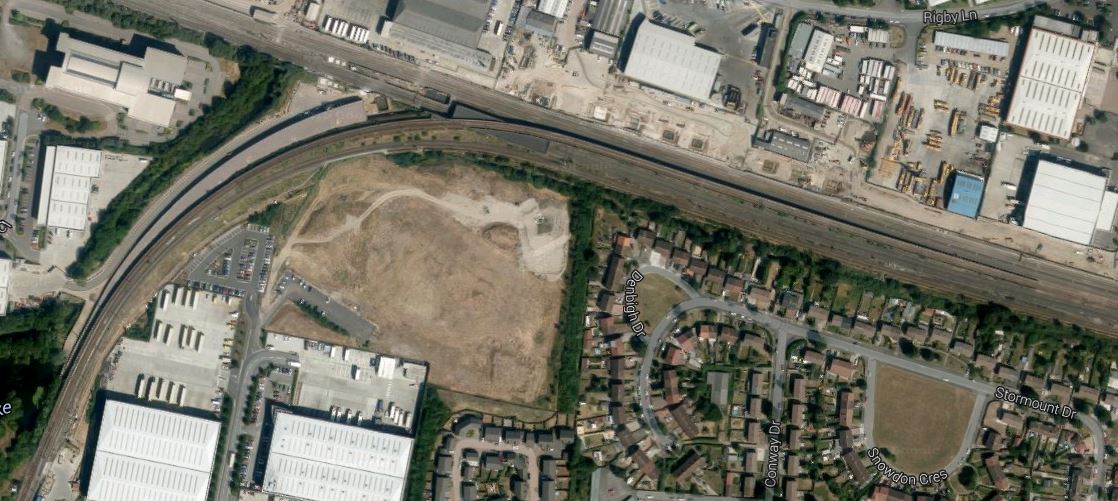
Stockley Flyover
And these are some photographs I took from trains going to and from West Drayton.

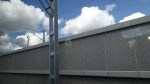
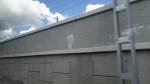
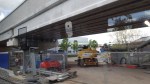

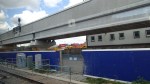

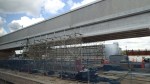
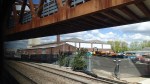
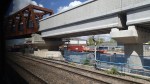
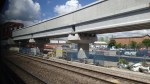

It’s certainly starting to look like a real railway from below.
Jubilee Line Vent Shaft At Durand’s Wharf
The pictures show the ventilation and access shaft at Durand’s Wharf for the Jubilee Line.









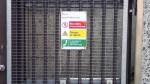
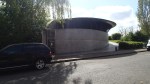

It is certainly a much more subtle and smaller design than the shafts for the Channel Tunnel Rail Link.
This Google Earth image shows that it fits well into the small park.
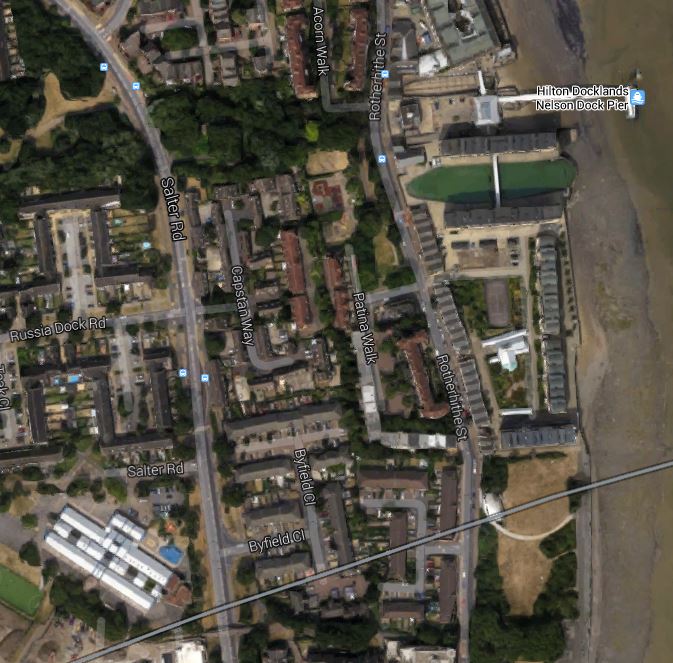
Durand’s Whaft Vent Shaft
It’s just by the silver line, which marks the Jubilee Line.
Would A Tram-Tube Be Feasible?
I have seen tram-trains at work in Karlruhe, Kassel and Mulhouse and they work well as they travel on the tram-tracks in the city centre and the train tracks as they travel outside and to the next major town. We’re soon to introduce Class 399 tram-trains between Sheffield and Rotherham as an experiment and after what I’ve seen in Europe, I don’t believe that the trial will be a substantial failure because of the concept.
When I looked at Crossrail 2 at Wimbledon, I said I had a bonkers idea. If we can have tram-trains, then why can’t we have tram-tubes?
Dimensional restrictions would apply and I suspect it would only be possible with the larger size of tube train. But the cross-section of the modern S7/8 stock is not that different to your average tram, although they are longer. Although, I’ve seen some substantial tram-trains in Europe, with at least four coaches.
What gave me the thought was the problem of the Tramlink platforms at Wimbledon would be solved if they could run up the District Line to another terminus.
It is probably infeasible at Wimbledon for various reasons, but once the tram-train technology is proven in a UK environment, I can’t see why the concept might not work in the right way in the right place on the sub-surface lines of the London Underground. One possibility would be to create a branch line shuttle. Such a concept could have been used at Barking Riverside, but they have decided to extend the Gospel Oak to Barking Line instead.
I do think it will be wrong to underestimate the devious minds of those engineers trying to squeeze the last drop out of London’s transport infrastructure.
Crossrail 2 At Wimbledon
After my trip to Wimbledon, I just had to look at how the Crossrail 2 will affect the area.
Depending on what you read, the tunnel portal could be to the London side of Wimbledon station or the country side.
I always thought it was going to be south-west of Wimbledon station, but the latest route map on the Crossrail 2 web site shows it on the London side and I do remember reading somewhere that it had been moved.
I think there may be advantages to this position of the portal.
1. There may be more space in which to work on the London side, as there is a lot of land used by the railway and industrial units.
2. The tunnel is probably a kilometre shorter and this may have the knock-on effect of needing less ventilation and access shafts.
3. Wimbledon station will still be on the surface. It will need extensive remodeling, but there will be no need for platforms in tunnels.
4. Wimbledon station could easily be rebuilt with the two hundred and fify metre long platforms needed for Crossrail 2.
5. Integrating the Crossrail 2 lines into the busy lines of the South Western Main Line, may well be an easier construction job on the London side, that causes a lot less disruption to an already overloaded route into London. South West Trains would do anything to avoid the line being shut for a long time.
6. Constructing the portal on the London side, may well cause less inconvenience to a smaller number of local residents.
For these reasons, I’ll look at the London side portal position and how it might affect those that live and work in the area.
This is a clip of the area of a possible London-side tunnel portal from Crossrail 2’s map from Wimbledon to Chelsea.
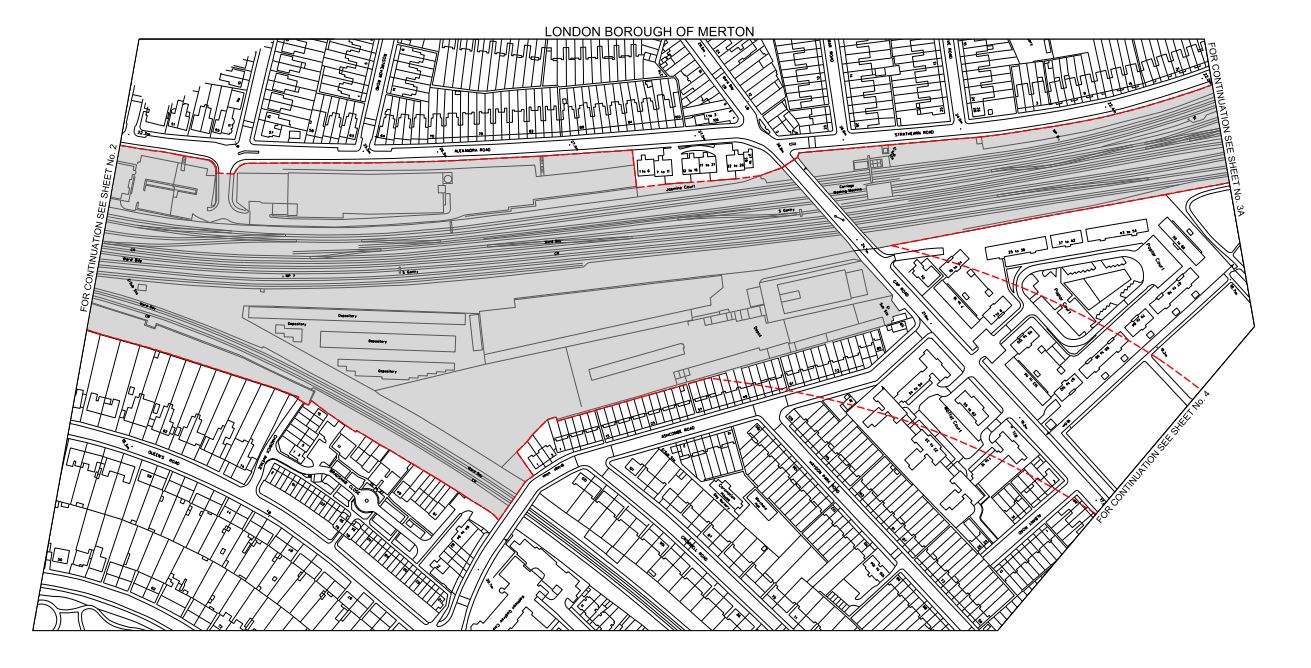
Crossrail 2 Wimbledon Poral Area
The area is mainly a collection of train sidings and depots and lots of industrial units, as this Google Earth image shows.
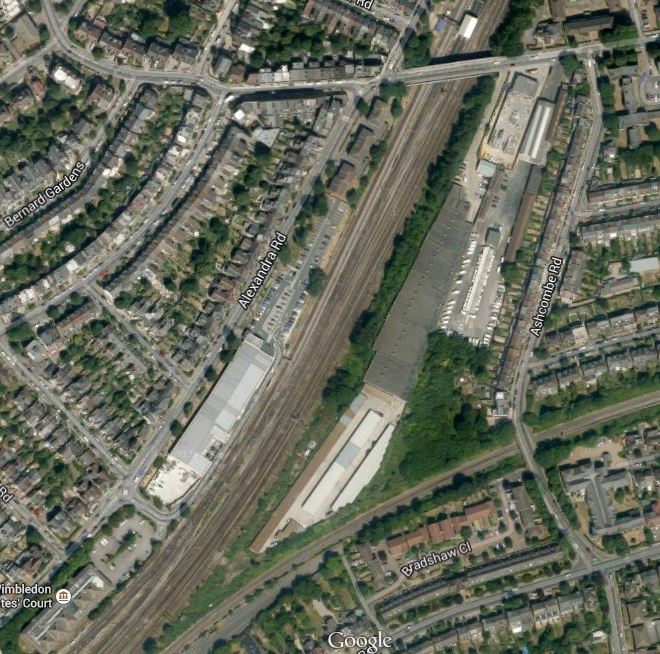
Crossrail 2 Wimbledon Area Now
Unfortunately, the two maps are at a different orientation.
My feelings are that the two tracks will be served by a single island platform at Wimbledon station, which would obviously need a rebuild. This Google Earth image shows the station.

Wimbledon Station
Note the shopping centre to the south-east, with the Tramlink approaching from the south to a terminus squeezed in tight.
Wimbledon station is not a modern station by any means with several problems.
1. Access to the platforms is up and down steep steps.
2. There seems to be no logic to which platform you catch your train, except that the Underground platforms are together on one side of the station.
3. Tramlink needs at least an extra platform. At the moment the Tramlink stop at Wimbledon, must be one of the pokiest and passenger-unfriendly tram stops in the world, as it seems to have been modelled on the Black Hole of Calcutta. The improvements to Tramlink at Wimbledon are shown on this page of the TfL web site, but there is no design for the new Tramlink stop.
4. Changing between Tramlink, South West Trains services and the Underground involves going up one set of stairs and then down another.
5. London is moving away from manned ticket offices and the whole layout of stations is changing dramatically.
I’m no architect, but I know a good modern station layout like say Reading when I see it.
I think at Wimbledon, you could build a deck over all the lines and access the various services using escalators and lifts, as at Reading. All of the customer services and the shops and kiosks would be on the deck and passengers would just walk into the station at the deck level straight off the street. As at Reading and other new stations, passengers would tend to wait above rather than on the platforms.
The platforms would extend both sides of the bridge, so that Tramlink could have its own well-lit two-platform station tucked under the road outside the station or the car park opposite. One small point is that when I traced TfL possible GOBlin extension, it needed to reverse at Wimbledon. One or more bay platforms could be tucked in on the country-side of the station, if they were needed.
The French, Germans and a lot of other nations would handle the problem of Tramlink differently. They would probably run it across the station perpendicular to the train tracks, either on-street on in a tunnel. But we don’t like the first and the second would be expensive. It would only work well, if the Tramlink was going to be extended to somewhere north-west of Wimbledon station.
I would though investigate a solution for Tramlink, similar to the platform layout used by the Overground at Clapham Junction, where the two services meet head on and passengers just walk up the platform to change trains. The problem is that Tramlink would need to cross the train lines as the tram and Underground lines are on different sides of the station. This would need a flyover or extensive on-street running for the trams, but I believe that it would be good to have both together in their own part of the station. At worst getting Tramlink from its awful location, would give passengers a better experience and release half a platform for train services.
Whilst I was writing this, I had an idea worthy of getting myself certified. And that is the tram-tube! It’s so bonkers, it needs a separate article, which I wrote later.
So that is my thoughts on Crossrail 2 at Wimbledon!
I believe that it can be put through a rebuilt station, with very little disruption.
I also don’t think it will disrupt much on the northern side or Wimbledon village side of the lines,
The dreadful station needs a complete rebuild anyway.
If the station design is done well, I think that everything else will fall into place.
Dalston To Wimbledon And Back
Yesterday evening, I went to Wimbledon to have a drink with a friend. It’s not a difficult journey, but I was going out in the rush hour and Victorian railway planners didn’t really expect anybody to travel from the very poor East London to the affluent South-West.
They only built two cross-river rail links east of London Bridge and one of these was a re-use of some leftover infrastructure in the shape of the Thames Tunnel. It’s got better in recent years, with the re-opening of an extended East London Line, through the Thames Tunnel and new lines in the shape of the Jubilee Line and the Docklands Light Railway to Lewisham, but if you live in Dalston and want to go south-west regularly, you’re living in the wrong part of the city.
If I’ve got plenty of time to get to Wimbledon, I have three slow routes I can take.
1. Walk to Canonbury station and take a North London Line train to West Brompton, where I change onto the District Line to Wimbledon.
2. Walk to Dalston Junction station and take an East London Line train to Clapham Junction, where I change to a train for Wimbledon.
3. Take a 76 bus to Waterloo and then get a train to Wimbledon.
The first two routes are best used at a non-busy time, where perhaps you’ve got a paper to read and the third can be very slow, if the traffic is heavy.
Because of Crossrail work and diverted buses, taking a bus to Bank for the Drain to Waterloo is not the serious proposition it should be.
To further complicate matters, the Transport for London Journey Planner, says walk to Dalston Junction and take a train to Canada Water, from where you get the Jubilee Line to Waterloo,
In the end, I took a 141 bus to Bank and struggled to Waterloo through a very crowded Drain.
Coming back, it was after eleven, so I had to wait ten minutes for a train to Waterloo, where I decided to come home via Canada Water and the East London Line. This is a good route coming home, as it means two stops on any bus, drops me just round the corner from my house.
If Crossrail 2 ever gets built, this journey will become much easier, as between Dalston Junction or the Gateway to the North-East and Wimbledon or the Gateway to the South-West, there will be only seven intermediate stations; Angel, Kings Cross/St. Pancras/Euston, Tottenham Court Road, Victoria, Chelsea Kings Road, Clapham Junction and Tooting Broadway.
So using my mother’s Ready Reckoner, Dalston to Wimbledon will take just sixteen minutes.
I’m certainly backing Crossrail 2!
 The Anonymous Widower