New Trains For The Docklands Light Railway And The Tyne And Wear Metro
Transport for London and Nexus (The Tyne And Wear Passenger Transport Executive) are both asking for bids for new trains on the Docklands Light Railway and the Tyne and Wear Metro respectively.
Both systems are standard gauge light railways, but how do they compare to each other and to other trains running or soon to run in the UK?
Width and Height Of Cars
This table shows the width and height of various trains, that are currently in use on the UK network.
- Class 994 train (Tyne and Wear Metro) – 2.65 x 3.45 metres
- Docklands Light Railway – 2.65 x 3.51 metres
- Class 399 tram-train – 2.65 x 3.60 metres
- Class 319 train (1980s electric train) – 2.82 x 3.58 metres
- Class 508 train (Merseyrail) – 2.82 x 3.58 metres
- S Stock (London Underground) – 2.82 metres width
- Electrostar – 2.80 x 3.78 metres
- Class 345 train (Crossrail) – 2.78 metres width
Note.
- What surprised me was how similar the width and height of these vehicles are.
- The Class 345 train uses clever design to make the train as wide as possible inside.
Wikipedia says this about how Bombardier Electrostars were designed and built.
The Clubman/Turbostar/Electrostar platform is a modular design, which share the same basic design, bodyshell and core structure, and is optimised for speedy manufacture and easy maintenance. It consists of an underframe, which is created by seam-welding a number of aluminium alloy extrusions, upon which bodyside panels are mounted followed by a single piece roof, again made from extruded sections. The car ends (cabs) are made from glass-reinforced plastic and steel, and are huck-bolted onto the main car bodies. Underframe components are collected in ‘rafts’, which are bolted into slots on the underframe extrusion. The mostly aluminium alloy body gives light weight to help acceleration and energy efficiency.
From what I’ve seen in the media about the manufacture of Bombardier’s new Aventra, the manufacturing methods are similar but improved.
I would suspect that most modern trains are made in a similar way, with extensive use of lightweight aluminium extrusions for sides and roof.
Bombardier’s method of making the cabs of glass-reinforced plastic and steel, must also give the flexibility required to create an appropriate cab for different classes of trains. Currently, there are Aventras on other, that feature cabs without and with a gangway.
I suspect that Bombardier’s design team for the Aventra made sure that the design of the body could be adapted to produce a replacement train for the Tyne and Wear Metro or the Docklands Light Railway. After all, they built most of the current cars for the DLR!
This all leads me to the conclusion, that production of the bodies for the new vehicles for both routes will not be a problem. And not just for Bombardier! Stadler seem to have downsized a Flirt for Merseyrail.
Using an existing design, must also mean that equipment like seats, air-conditioning, doors and other fitments, just have to resized if needed.
Design Of The Cars
Bombardier have shown with the Aventra, that they can make cars in different lengths for different versions of the train. The Class 710 trains for the London Overground are being built as twenty metre long trains, whereas other variants have longer cars.
All Aventras ordered so far, appear to be walk-through between articulated cars.
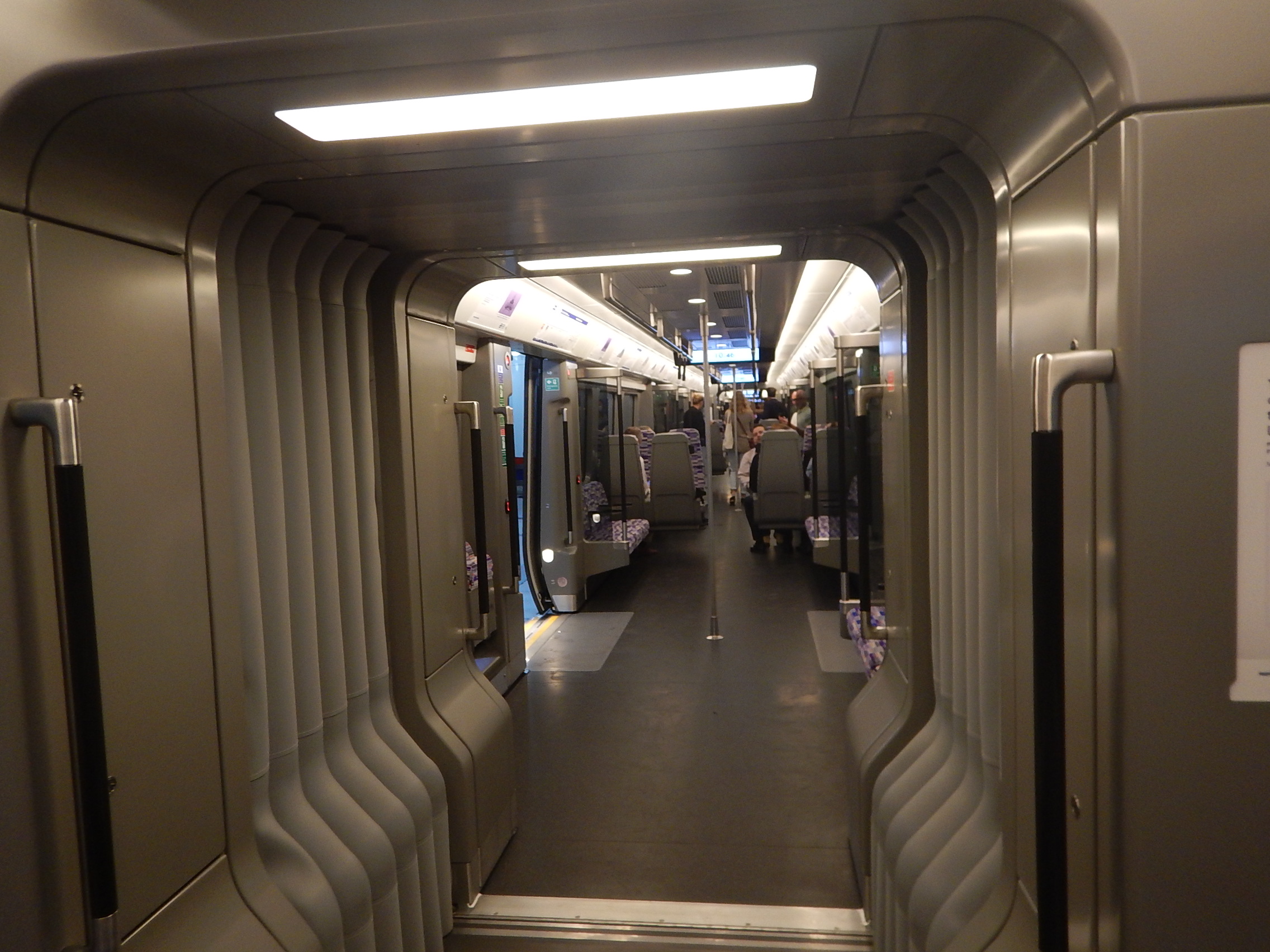
The picture shows the inside of one of Crossrail’s Class 345 trains.
So what can we ascertain about the design the new fleets for the Docklands Light Railway and the Tyne and Wear Metro?
Docklands Light Railway
Under Future Stock in the Wikipedia entry for the Docklands Light Railway Rolling Stock, this is said.
TfL is seeking to order 43, 87-metre-long (285 ft) trains, 33 of which will replace the 70 B90/92 trains currently in use, which are the oldest on the DLR. The remaining 10 would support capacity increases in the Royal Docks area. DLR services presently operate with two or three trains coupled together, but the new fleet will be fixed formation units with walk-through carriages equivalent to the length of three current trains. The aim is to issue an invitation to tender for the new fleet later this year, with contract award planned for summer 2018.
Note.
- The trains will be walk-through.
- The new train length quoted of 87 metres, doesn’t fit the length of three current trains, but it is close to the length of three current cars, so I suspect that is what is meant.
- In the early 2010s, the whole Docklands Light Railway was upgraded for three-car trains.
- The trains need the ability to handle tight curves.
It does appear that Bombardier and the other manufacturers could design a train for the Docklands Light Railway by adapting their current design.
Consider.
- To handle the tight curves, it would probably be a walk-through train with several articulated sections.
- The current trains running as a three-car unit are 84 metres long.
- Each of the current cars is 28 metres long.
- Each of the current cars is articulated in the middle. Thus a three-car train has six sections.
- The current cars have four double doors on either side. Thus a three-car train has twelve doors.
- The new trains will be 87 metres long.
It should be noted that Edinburgh has a similar problem of tight curves and gradients like the Docklands Light Railway. The city’s Urbos 3 trams are just forty metres long, but have seven articulated sections, with six doors on either side.
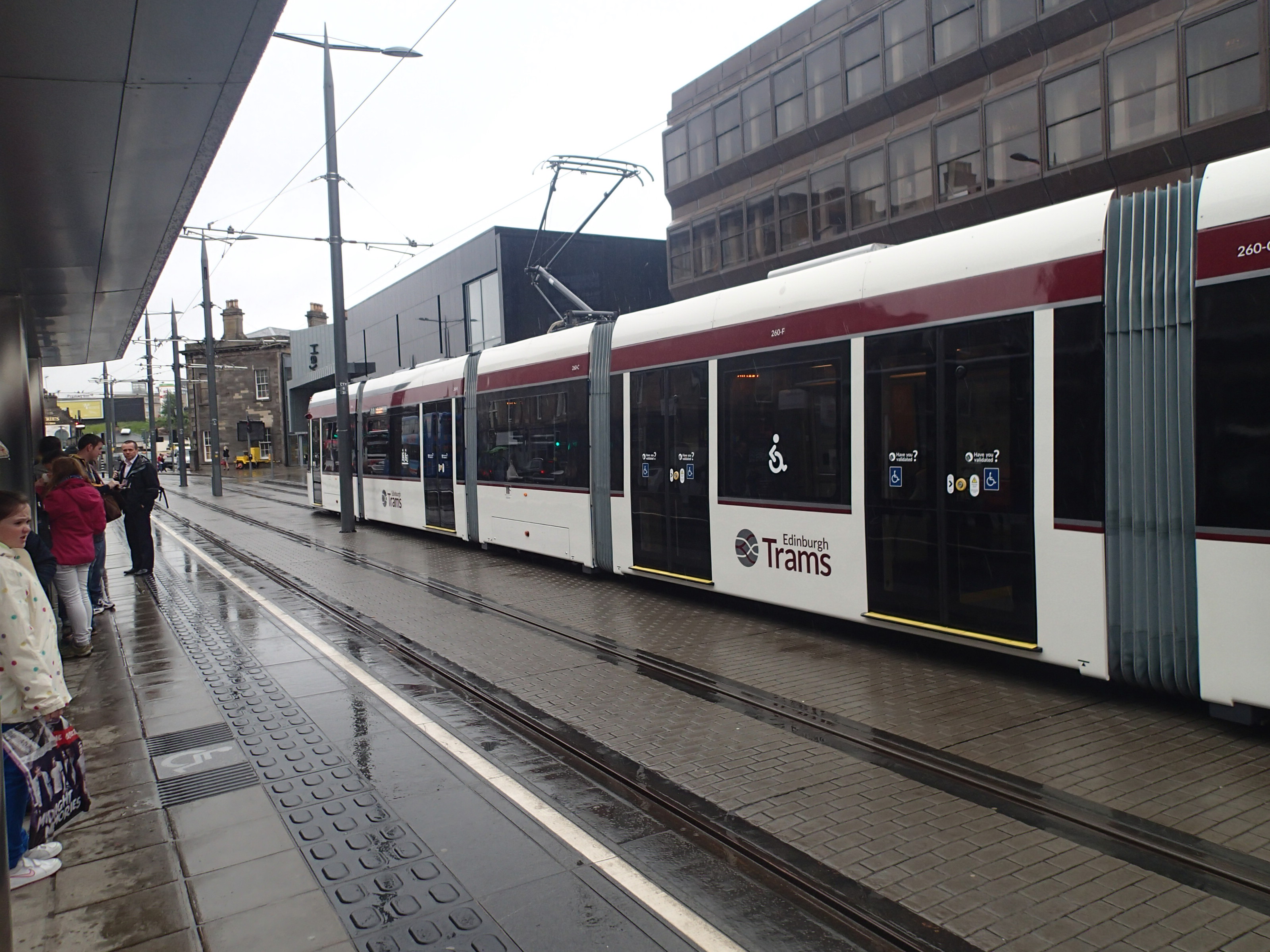
Note the short sections, which show what is possible in an articulated rail vehicle.
I suspect the following.
- As the current trains have six sections, this would be a starting point for a new design.
- Four or five sections would be a more affordable design.
- There will be an optimum number of sections to handle the curves and gradients.
- Does an articulated walk-through design need quite as many doors as current trains?
It looks like a good cost-effective design is possible.
Tyne And Wear Metro
Under Proposed New Fleet in the Wikipedia entry for Tyne and Wear Metro Rolling Stock this is said.
In November 2017, the Chancellor Philip Hammond announced that the government would provide £337 million towards the new fleet. The proposed new fleet would consist of 84 trains to replace the existing 90 train fleet, as Nexus believe that the improved reliability of the newer trains would allow them to operate the same service levels with fewer trains. These are proposed to have longitudinal seating instead of the 2+2 bench seating arrangement of the present fleet, and a full width drivers cab instead of the small driving booth of the existing trains. The proposed new fleet is planned to have dual voltage capability, able to operate on the Metro’s existing 1.5 kV DC electrification system and also the 25 kV AC used on the national rail network, to allow greater flexibility. Battery technology is also being considered.
Note.
- A dual-voltage capability will be required.
- Battery capability would be ideal for short movements and regenerative braking.
- In my view longitudinal seating needs a walk-though capability.
- Currently, trains are two-car units and generally work in pairs.
- Trains can work in formations of three and four units, but the ability is not used.
If trains generally work in pairs would it be more affordable to have four-car trains?
- Could they be adapted from proven lightweight main line rolling stock, by perhaps giving the trains a smaller cross-section?
- They would only have two instead of four cabs.
- They could be articulated, walk-through trains.
- Class 399 tram-trains have shown dual voltage through one pantograph is possible.
Using a certified main line train, that had been made smaller would surely mean that certification would be easier.
I believe, that a section of the Tyne and Wear Metro works using tram-train principles under the Karlsruhe model, which allows the current trains to share tracks with other rail services.
So the new trains would make it possible for the Metro to be expanded onto main line railways. If they were electrified using 25 KVAC. Freight lines, which might see a reopened passenger service, could be electrified using the current Metro 1,500 VDC system.
It strikes me thyat by getting the design of the rolling stock right, a lot of possibilities could open up for the Tyne and Wear Metro.
Weight And Dimensions Of A Class 345 Train
If you look at the Wikipedia entry for a Class 345 train, dimensions and weight are rather sketchy.
- Train length is given as 205 metres.
- Train width is given as 2780 milli-metres, with a note saying a citation is needed.
- Train weight is given as less than 350 tonnes.
These would be for a full nine-car train.
This picture shows the identification plate on the end of an MS1 car in the current seven-car train.

These figures can be read.
- MS1 car weight is given as 36.47 tonnes
- MS1 car length is given as 22.50 metres
- MS1 car with is given as 2.78 metres.
- MS1 car seats are given as 52
- Train maximum speed is given as 90 mph
- Train weight is given as 255.46 tonnes.
- Train length is given as 159.74 metres.
- Train width is given as 2.78 metres.
- Train seats are given as 350.
Note.
- It’s all clearly there in white-on-black.
- The Wikipedia figure for car width is correct.
- The Wikipedia figure for maximum speed is correct.
- I was also able to read the plate on a PMS car, which gave a weight of 37.12 tonnes.
So can I deduce the figures for a full nine-car train, which have two extra cars.
I did find this snippet on the Internet which gives the formation of the nine-car trains.
When operating as nine-car trains, the Class 345 trains will have two Driving Motor Standard Opens (DMSO), two Pantograph Motor Standard Opens (PMSO), four Motor Standard Opens (MSO) and one Trailer Standard Open (TSO). They will be formed as DMSO+PMSO+MSO+MSO+TSO+MSO+MSO+PMSO+DMSO.
The snippet has a date of August 13th, 2016, so it could be out of date.
But is compares well with the current seven-car trains which appear to have a formation something like.
- Driver-motor car
- Pantograph car
- Motor car
- Trailer car
- Motor car
- Pantograph car
- Driver-motor car
So to convert from a seven to a nine-car train two motor cars are added.
Nine-Car Train Length
This would appear to be 159.74 + 22.50 +22.50 = 204.74 metres.
That would agree with Wikipedia’s figure of 205 metres.
Nine-Car Train Weight
This would appear to be 255.46 +36.47 + 36.47 = 328.40 tonnes.
That would agree with Wikipedia’s figure of less than 350 tonnes.
Details Of The Driver Motor Car
Once I have these details, I’ll have everything I need.
Underneath A Class 345 Train
I was at Shenfield station on Friday waiting for a train to Rayleigh.
Opposite was a Class 345 train waiting to return to London.
As the lighting was just right, I took a few pictures.
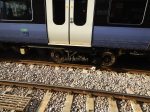
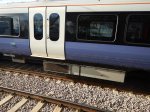
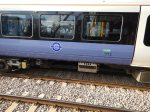
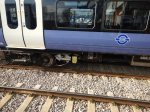
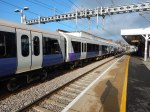
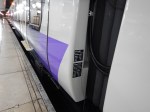
There’s some complicated gear underneath.
Unwanted Image Messages On My Mobile Phone
I have started getting unwanted messages from Google and an American company called Peel Remote on my phone. I seem to get at least two every hour.
If they don’t stop, my mobile phone usage will go to emergency only and I’ll switch it on once a week or so!
I am allergic to two things; gluten and advertising!
I also have started getting a TV remote for my Samsung television on the phone. That is really wierd as the TV hasn’t been unpacked from its box and all my other televisions are old Sonys.
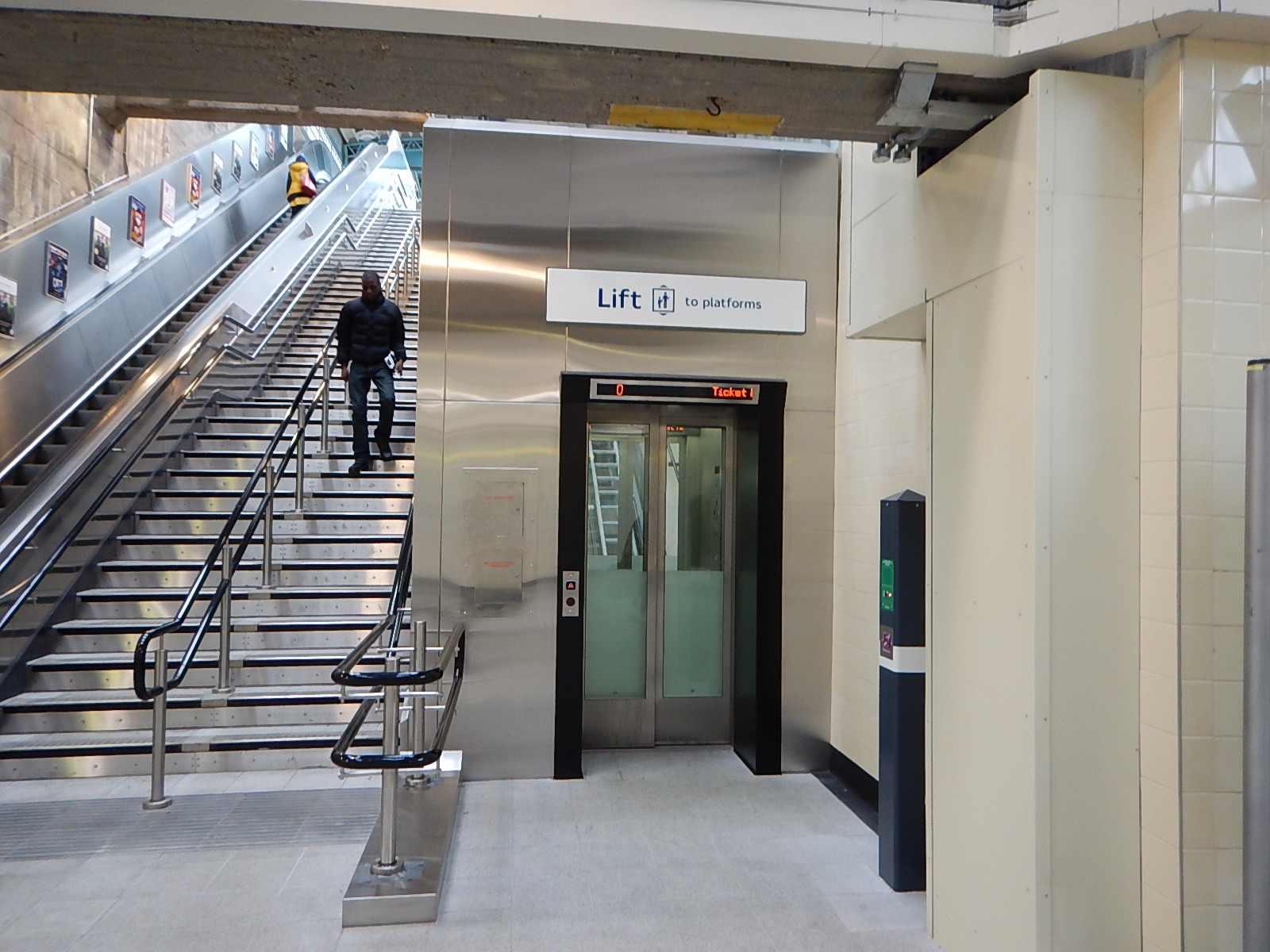
Bromley-by-Bow Station To Be Made Step-Free
Bromley-by-Bow station is to be made step-free.
I took these pictures this morning.
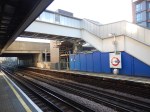
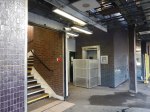
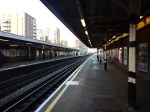
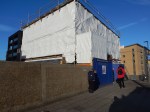
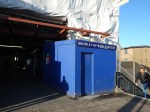
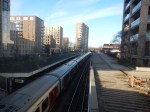
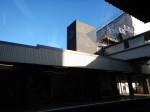
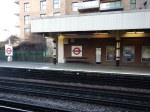
Work appears to be well underway.
This page on Hawkins Brown website gives comprehensive details of the project.
They are the architects for the project.
Stations On The West Ruislip Branch Of The Central Line To Be Made Step-Free
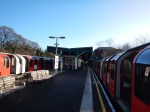
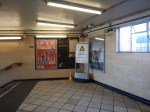
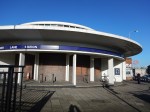
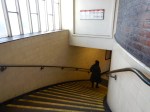
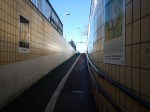
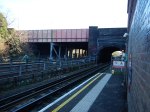
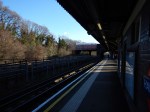
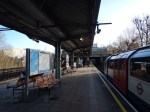
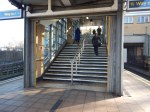
Hanger Lane and Northolt stations are going to be made step-free.
I took these pictures on the 25th January 2018
Hanger Lane
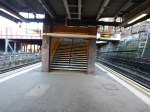
Northolt

Summary
No work has started!
These two stations are similar in design, as are most stations from between Perivale and Ruislip Gardens.
- Each has a single island platform.
- Steep stairs come down in the middle of the platform.
- A single lift would make the stations step-free from ticket hall to platforms.
- Hanger Lane would need an extra lift from street to ticket hall.
Only Greenford, which has a junction with the Greenford Branch and is elevated, is built to different design.
Greenford Station’s Inclined Lift
At Greenford, an inclined lift has been used, as I wrote in The Inclined Lift In An Improved Greenford Station.
This picture was taken at Greenford station.
Could this be fitted alongside a rebuilt staircase on these Central Line stations?
- The lift and stairs would be sized to fit across the platform.
- A bigger hole in the ticket hall would be needed.
- Access under the stairs would not be needed for passengers.
- An inclined lift installation might be more popular with the Heritage Lobby.
It could even be possible to keep the station open during the rebuilding work.
This article on Transport For All is entitled London’s First Incline Lift. This is a paragraph.
Research by Ealing Council shows that installing incline lifts are a cost effective solution for making inaccessible stations step-free. TfL initially estimated a cost of £10m to install a traditional vertical lift at Greenford station. The incline lift makes a huge saving as it only costs £2.2m with a proposed £200,000 contribution from Ealing Council.
That is a 78% cost saving.
I can’t find any complaints on the Internet about the installation at Greenford.
What Are Transport for London’s Plans?
Transport for London have stated that their aim is to eventually have all Underground stations with full step-free access.
I have this feeling that Hanger Lane and Northolt were added to the list for these reasons.
- The success of the inclined lift at Greenford station.
- Studies have shown that inclined lifts could be used at these stations.
- The affordability of inclined lifts.
- Local residents have used Greenford’s lift and want one!
- Ruislip Gardens, South Ruislip and Perivale stations could be made step-free in the same way.
Transport for London could be going for a traditional solution! But I doubt it!
Burnt Oak Station To Be Made Step Free
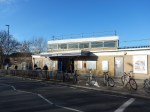
These pictures show Burnt Oak station.


I’d never been to Burnt Oak station before.
Because of the layout of the station with an island platform, that has a double staircase with space in between, I suspect this could be one of the easier stations to be made step-free.
What Are Transport for London’s Plans?
Transport for London have stated that their aim is to eventually have all Underground stations with full step-free access.
Searching the Internet, I found there is this page on the Brent Council web site, which gives details of the Burnt Oak and Colindale Regeneration Programme.
As 12,500 houses will be built under this programme, it is not surprising that Transport for London are improving Burnt Oak station.
Cockfosters Station To Be Made Step Free
These pictures show Cockfosters station.


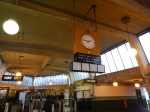




As a child, I used to go to the barbers in Cockfosters station to get my hair cut. I suppose, I went by myself from the time I joined Minchenden Grammar School at eleven. But I could have gone earlier, as it wasn’t that far from where we lived.
The barbers is not there anymore!
The station hasn’t changed much underground, although there’s now a cafe and there are barriers to check the tickets.
As to step-free access, there will need to be a lift on both sides of Cockfosters Road, as stairs are impossible, exzcept for the fully able-bodied.
There will certainly be more difficult stations to make step-free.
Once passengers are down in the station, it is a completely level walk, push or drag to the trains.
What Are Transport for London’s Plans?
Transport for London have stated that their aim is to eventually have all Underground stations with full step-free access.
But Cockfosters station may attract a large number of visitors with bikes, buggies and wheelchairs.
- The station is on the London Outer Orbital Path.
- Trent Park is nearby.
- Cockfosters is at the end of the Piccadilly Line. So is it a stations, where passengers are dropped for Central London, Kings Cross and Heathrow?
Christ Church, Cockfosters is nearby, where C and myself got married. Possibly more importantly,the UK Memorial Service for Elivis Presley was held in the church, as this page recalls.
One thing that appears to be better at Cockfosters station from my childhood are the buses.
- There are more bus routes calling at the station.
- All the buses now have wheelchair spaces and access ramps.
- Bus information is better.
So will we see the bus routes from Cockfosters station further developed to serve new housing developments?
Stealing With Pride: Testing Automotive Industry Tech On Swiss Trams
The title of this post, is the same as this article on Global Rail News. This is first two paragraphs.
Swiss public transport operator Baselland Transport (BLT) is testing Bosch Rail Transport’s light rail collision-warning system in collaboration with Stadler.
Should the tests prove successful, BLT plans to equip its entire fleet of Tango trams with the technology – which is already established in the automotive industry.
In my working life, I often stole ideas and especially methods from other industries and obscurer mathematical papers.
This use of an automotive system on a tram is a good way of the application of proven technology in another area.
Study Concludes There Is Demand For A Light Rail System In Bath
The title of this post is the same as that of this article in Global Rail News.
This is the first two paragraphs.
Plans to bring a light rail system to the historic city of Bath, UK, have taken a step closer after it received backing from a preliminary study.
The study was produced by consultants Atkins and followed suggestions from the public to look at the potential for a new tram system, according to Bath and North East Somerset council.
Consider.
- Atkins are one of best consultants in the world, with lots of experience.
- Many Continental cities, the size of Bath have a tram network
- Darmstadt with a population twice that of Bath has nine tram lines.
- Tram systems in historic towns and cities can be built without catenary, using batteries for motive power.
- Smaller lightweight tram systems are being developed.
So I’m not surprised that, it was recommended that Bath get a tram network.
But if Bath can develop a viable tram network, then surely any town or city with the right set of problems and needs should be looking at trams.
My list of possible cities and large towns, where trams could start by connecting the the railway station to the main town centre would include.
- Cambridge
- Colchester
- Coventry
- Huddersfield
- Ipswich
- Leicester
- Middlesbrough
- Norwich
- Wigan
There must be loads more.
 The Anonymous Widower