Jobs, Homes And The Economy: Bakerloo Line Upgrade And Extension To Be Transformational For London
The title of this post, is the same as that of this article on Rail Technology Magazine.
This is the sub-heading.
The government has been urged to use the upcoming spring budget to commit to upgrading and extending the Bakerloo line after a new impact assessment found its effects could be transformational.
These three paragraphs introduce the article.
The impact assessment – commissioned by Central London Forward, a partnership of 12 central London boroughs – finds that such a move would boost the economy, unlock new homes, create new jobs, and more.
The upgrade would centre around new trains and signalling, while the extension would take the terminus to Lewisham in the first phase, and eventually to Hayes – adding 14 new stations.
The impact assessment concludes that the extension and upgrade of the Bakerloo line would create 9,700 jobs, 190,000 square metres of commercial floorspace, as well as generate £1.5bn of GVA.
The article is a must-read and eloquently puts the case for the Bakerloo Line Extension.
I have a few thoughts.
A Loop At Brixton For The Victoria Line
This has been proposed and the Wikipedia entry for the Victoria Line has this paragraph.
Proposals have been made to extend the line one stop southwards from Brixton to Herne Hill, a significant interchange in south London providing access to Kent, Blackfriars, London Bridge and Sutton. The latter station would be on a large reversing loop with a single platform removing a critical capacity restriction eliminating the need for trains to reverse at Brixton and provide a more obvious route for passengers who look for the nearest tube station before any other transport options.
I like this idea.
- It will make it easier to run the full frequency of 33 trains per hour (tph) between Brixton and Walthamstow Central stations.
- Loops at Heathrow and Liverpool seem to work very well.
- A single-platform with platform-edge doors has a high level of safety.
- Only one tunnel boring machine (TBM) would be needed.
- Large lifts could be used between the surface and the platform.
- It is a more affordable option.
But perhaps most importantly, I am sure, the loop could be built whilst other services at Brixton and Herne Hill were running almost without disruption, as services did at Kennington, whilst the Battersea Extension of the Northern Line was built.
A Loop At Elephant And Castle For The Bakerloo Line
I have spent forty years involved in project management, writing software for project managers and generally listening to some of the thoughts and experiences of some of the best engineers from all over the world.
One common thread, which is best illustrated by how the size of lift possible increased in the North Sea in the 1970s, is that as time has progressed machines have got bigger and more capable, and the techniques of using them has improved immeasurably.
The Crossrail tunnel boring machines (TBM) make those used on the Jubilee Line extension or the Channel Tunnel look like toys. But not only are the TBMs bigger and faster, they have all the precision and control to go through the eye of the smallest needle.
If we look at the proposals for the Bakerloo Line Extension, there have been several differing ideas. Some envisage going under Camberwell and in others the trains terminate on the Hayes line.
Transport for London (TfL), obviously know the traffic patterns, but do we really want to take the chance of say connecting the Hayes line to the Bakerloo and then finding that it’s not the best solution?
What we should do is augment the services in the area, by providing a good alternative transport route, that links to some of the traditional rail lines to give even more flexibility. We certainly shouldn’t repeat the grave mistake that was made at Brixton in the 1960s by not connecting the Victoria line to the surface rail lines.
This is Transport for London’s indicative map of the extension.

I have reason to believe that the Northern Line Extension may be being built as an extension to the Kennington Loop.
So could we design the Bakerloo Line Extension as a loop starting and finishing at Elephant and Castle calling at important stations?
A possible route could be.
- Elephant and Castle – Interchange with Northern Line and National Rail including Thameslink
- Old Kent Road 1 – Proposed on Map
- Old Kent Road 2 – Proposed on Map
- New Cross Gate – Interchange with London Overground and National Rail
- Lewisham – Interchange with Docklands Light Railway and National Rail including Hayes Line
- Catford Bridge – Interchange with Catford station and National Rail including Hayes Line and Thameslink
- Peckham Rye – Interchange with London Overground and National Rail
- Camberwell – Interchange with National Rail including Thameslink
- Elephant and Castle
The advantages of this simple design are.
- The tunnel would be excavated in one pass by a single TBM.
- The line could be deep under any existing infrastructure.
- Most stations would be simple one-platform affairs, with perhaps only large lifts and emergency stairs, to give unrivalled step-free access for all from the street to the train. Surely lifts exist, that are large and fast enough to dispense with escalators.
- For safety, passenger convenience and flows, and other reasons, the stations could have two entrances, at opposite ends of the platform.
- The simple station entrances would be much easier to position on the surface, as they wouldn’t need to be much bigger than the area demanded by the lifts.
- A single loop would only need half the number of platform edge doors.
- At stations like New Cross Gate, Lewisham, Catford and Peckham Rye the lifts would surface within the confines of the existing surface stations.
- The route has interchanges with the Brighton Main Line, East London Line, Hayes Link, Thameslink and other services, so this would give lots of travel possibilities.
- Trains do not need a terminal platform, as they just keep going on back to Elephant and Castle.
- The loop would be operationally very simple, with no points to go wrong. TfL have aspirations to run twenty-seven trains per hour on the Bakerloo and a simple reversing loop , which would mean the driver didn’t have to change ends, must certainly help this. It would probably be a lot more difficult to get this capacity at the northern end of the line,where Harrow and Wealdstone doesn’t have the required capacity and the only possibility for a reversing loop would be north of Stonebridge Park.
- Elephant and Castle would need little or no modification. Although it would be nice to have lifts to the Bakerloo Line.
- Somewhere over two billion pounds has been quoted for the extension. A single loop with simple stations must be more affordable.
The main disadvantage is that the loop is only one-way.
But making even part of the loop two-way would create all the operational difficulties of scheduling the trains. It would probably be better, less costly and easier to make the trains go round the loop faster and more frequently.
But if a passenger went round the loop the wrong way and changed direction at Elephant and Castle that would probably only take a dozen minutes or so.
Alternatively, I’m sure some New Routemasters would step up to the plate and provide service in the other direction between the stations.
Future Rolling Stock For The Bakerloo Line
This has a section in the Wikipedia entry for the Bakerloo Line, where this is said.
In the mid 2010s, TfL began a process of ordering new rolling stock to replace trains on the Piccadilly, Central, Bakerloo and Waterloo & City lines. A feasibility study into the new trains showed that new generation trains and re-signalling could increase capacity on the Bakerloo line by 25%, with 27 trains per hour.
In June 2018, the Siemens Mobility Inspiro design was selected.[ These trains would have an open gangway design, wider doorways, air conditioning and the ability to run automatically with a new signalling system.[35] TfL could only afford to order Piccadilly line trains at a cost of £1.5bn. However, the contract with Siemens includes an option for 40 trains for the Bakerloo line in the future. This would take place after the delivery of the Piccadilly line trains in the late 2020s.
A loop from Elephant and Castle with a train every 2¼ minutes, is not going to be short of passengers.
The Catford Interchange
Catford and Catford Bridge stations are not far apart.
In An Opportunity At Catford, I talked about what could be done to create a full step-free interchange, which could be connected to the Bakerloo Line loop underneath.
Would It Be Possible For The Bakerloo And Watford DC Lines To Use The Same Trains?
I answered this question in a post with the same name and this was my conclusion.
A common fleet used by the Bakerloo and Watford DC Line would appear to give advantages and it has been done successfully before.
But what the Bakerloo Line, the Watford DC Line, the Abbey Line and the Bakerloo Line Extension need is a good dose of holistic design.
The current trains on the Watford DC Line would be moved to the London Overground. They could be ideal for the future West London Orbital Railway.
Would There Be Advantages In Creating The West London Orbital Railway And Extending The Bakerloo Line As One Project?
Consider.
- The two lines will have an interchange station at Harlesden, which will need to be rebuilt.
- The current trains on the Watford DC Line could be cascaded to the West London Orbital Railway.
- As new trains are delivered to the Piccadilly Line, some of the current trains could be cascaded to the Bakerloo Line.
- Major work for the Bakerloo Link Extension includes a new tunnel, updated signalling and at least seven underground stations.
- Major work for the West London Orbital probably includes track refurbishment, new signalling and updated stations.
I believe that with good project management, that if these two lines were to be created together, this would be advantageous.
Conclusion
I have only outlined how the two projects might be done together.
But I am absolutely certain, that someone with full knowledge of both projects could build the two at a very affordable cost.
An Improved Station For Brixton
In the June 2016 Edition of Modern Railways, there was an article entitled Turning South London Orange.
One of the proposals in the article is to create an improved station at Brixton, by reopening disused platforms on the Northernmost tracks at the station.
Brixton station was designed by Topsy.and could probably be summed up by my post; Changing Trains At Brixton.
This is a Google Map of the station.

Lines Through Brixton Station
Note.
- The Northernmost lines don’t have platforms.
- The Overground uses the Southernmost lines, which also don’t have platforms and soar high above everything else.
Centre for London’s proposal envisages platforms being added to the two Northern platforms and using them for the Overground.
This map from carto.metro.free.fr shows the lines between Wandsworth Road and Brixton stations.

WandsworthRoad, Clapham High Street And Brixton Stations
This map shows all the junctions between the lines, which probably means that running Overground trains on the Northern pair of tracks is probably possible.
If the only platforms where trains stop are the low-level ones in Brixton station, surely, it would be be much easier to link them to the Victoria Line.
These are some pictures of the station.
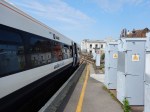
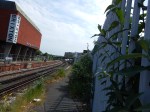

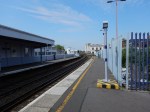
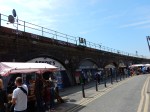
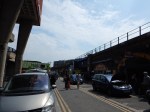

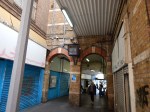
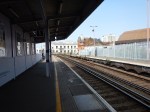
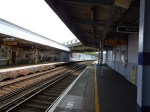

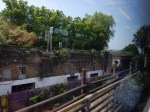
If it was being sold by legendary Estate Agent Roy Brooks, he would describe it as a building with potential.
The four low-level platforms are on solid Victorian railway arches and I suspect that a 3-D rendition of the station, would show it was possible to tunnel from the arches into the Victoria Line platforms, to give an escalator and lift connection.
It wasn’t done in the 1960s, when the Victoria Line was built or when the Overground was created, as in both cases, money was short and no-one believed that the two lines would be as successful as they are now!
But the more I look at the pictures and the maps, Centre for London’s idea of running the Overground on the Northern pair of tracks looks more feasible.
The related proposal of creating a tunnel under Brixton to remove the fast trains between Victoria and Kent, also helps, as it removes the fast trains from passing through Brixton station.
An Improved South London Line Is Proposed
In the June 2016 Edition of Modern Railways in an article entitled Turning South London Orange.
One of the proposals is to create an improved South London Line from Victoria and Clapham Junction via Brixton and Denmark Hill to Peckham Rye.
This map from carto.metro.free.fr shows the lines from Battersea to Peckham.
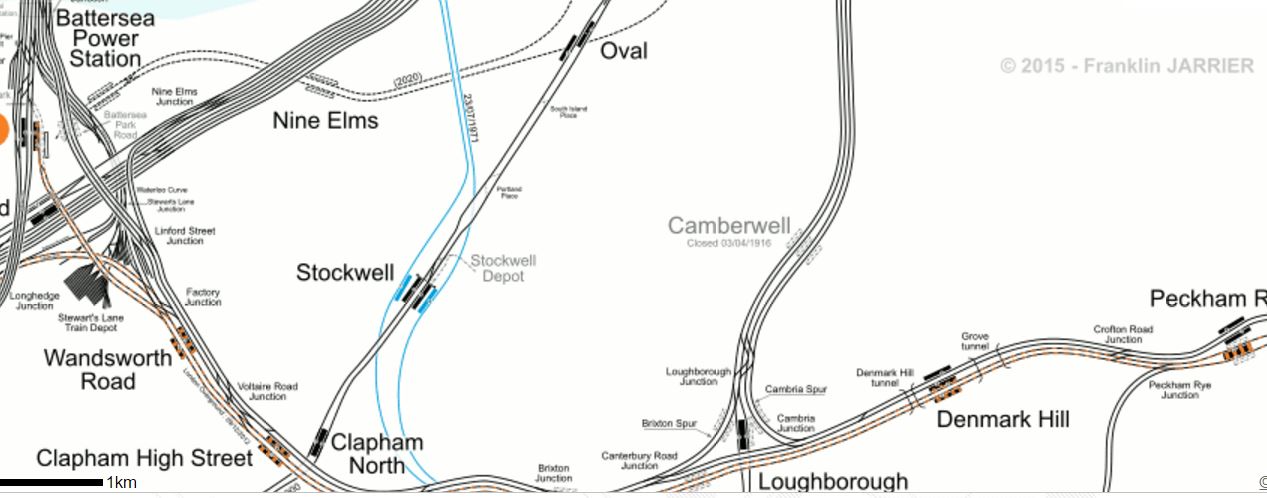
An Improved South London Line
You have to remember that when the current South London Line was created, there was criticism from various groups.
- Some objected to the loss of a direct service to Victoria.
- Some felt the line should call at Brixton.
- Some felt there should be an interchange at Loughborough Junction station.
Hopefully, the proposal for an improved South London Line will address some of these issues.
Between Wandsworth Road and Peckham Rye stations, the line is effectively two pairs of tracks, with the Overground using the Southern pair.
The Northern pair of tracks that are currently used by the Southeastern lines into Victoria only have platforms at Denmark Hill and Peckham Rye.
The Centre for London is proposing a redesign of the South London Line that could include.
- New Platforms at Wandsworth Road, Clapham High Street and Brixton.
- I would assume that the new Battersea station is part of the proposal, as this would connect the line to the Northern Line.
- Renaming of Clapham High Street to Clapham North to indicate its close relationship with the Underground station.
- Perhaps even putting the Overground on the Northern pair of tracks, as this would simplify the rebuild of Brixton station.
- An increase in frequency on both pairs of lines to six trains per hour.
I think as a start it is a good plan, but I do feel that something much better could emerge to improve the connectivity across South and South East London.
There are some questions that need to be answered.
- Where would the trains go past Peckham Rye?
- What would be the frequency of the Victoria to Orpington service?
- Would the restoration of a shuttle between London Bridge and v’ictoria be a good idea?
- Could Victoria be a terminus for the London Overground?
- Should the South London Line be connected to Thameslink at Loughborough Junction?
I suspect a lot of the answers are in the passenger statistics.
Changing Trains At Brixton
These pictures are a record of changing from Brixton tube station on the Victoria Line to Brixton station for a train to Herne Hill.
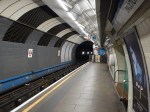








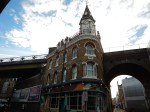
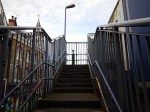
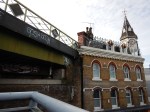


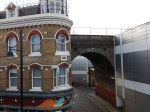
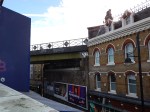
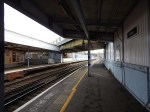


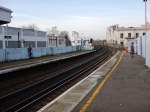




Note the following.
- The Underground station is step-free, but the rail station definitely isn’t!
- Platform 1 at Brixton station for Victoria is only accessible with difficulty.
- Platform 2 is by internal staircase with artwork.
- The platforms have two bronze figures on the platforms. I’d like to see more of the bronzes in store in our galleries exhibitied on stations. You certainly couldn’t nick them from Brixton station.
The Underground station is one of the best, but the rail station is best described as unusual.
This Google Map shows the two stations.

Brixton Station
Simple it isn’t!
How complicated and expensive a new station would be depends on how many connections, you want passengers to have.
Building an Overground station in the sky would be expensive, as height always costs money.
But putting decent stairs and lifts into the existing Brixton station would be routine compared to linking to the Overground.
The only way to connect all three lines would be to rebuild the Argos building as a triple dcker station with lifts and escalators.
But it would be horrendously expensive, even if there were some shops and a lot of flats on the top of everything.
But the bulding would be well connected!
I think that the best that can be hoped for is lifts and decent stairs in the main line station.
Could The Various Lines At Brixton Be Connected?
In their Transport Infrastructure Plan for 2050, Transport for London are proposing a Brixton High Level station.
As they have also proposed interchanges at also Brockley and Penge in the plan, I suspect they have found expertise and equipment to create multi-level stations, where lines cross, in an affordable manner.
The problem at Brixton is best explained in this Google Map.
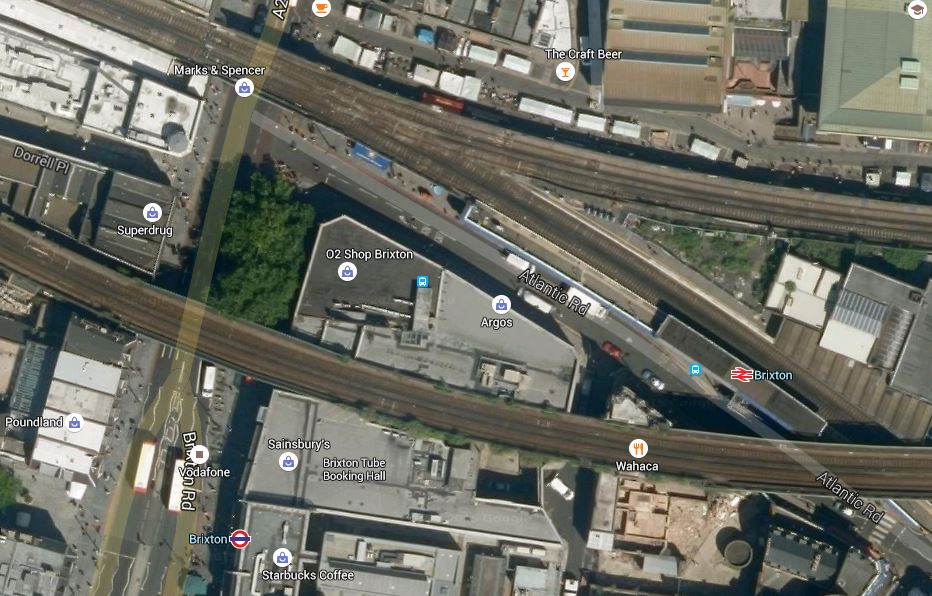
Brixston Station
The line across the middle of the map carries Overground services to and from the terminus at Clapham Junction, whereas the two merged lines go off roughly north-westerly towards Victoria. The southerly of the branches goes south towards Herne Hill, whilst the northernly branch going towards Loughborough Junction. This schematic from Wikipedia may explain it better.

Lines Through Brixton
The Overground, Thameslink and the Victoria Line are shown in orange, pink and blue respectively.
The only conclusion that is worth saying is that it’s all very complicated. The big advantage that they now have compared to a few years ago, is that much better 3D design software is available.
In TfL’s plan a rough estimate of £25million is given for each of these interchange stations. Some will cost less and some will cost more.
I think Brixton will not be one of the more affordable stations, although it could be one with a high return.
There are various options for connections at Brixton and TfL will probably limit the interchanges to the ones that are most used.
For instance, would there be much point in linking the Victoria Line to the services between Victoria and Orpington, as they both serve Victoria?
Also, as after this summer, the big constraint on frequency on the Victoria Line will be the reversing of trains at Brixton. Under Future Projects for the Victoria Line, Wikipedia says this.
For many years there have been proposals to extend the line one stop southwards from Brixton to Herne Hill. Herne Hill station would be on a large reversing loop with one platform. This would remove a critical capacity restriction by eliminating the need for trains to reverse at Brixton. The Mayor of London’s 2020 Vision, published in 2013, proposed extending the Victoria line “out beyond Brixton” by 2030.
I would suspect this will be done in the near future, as it both increases Victoria Line capacity and it gives an alternative link between the Victoria Line and services between Victoria and Orpington.
Brixton Underground station has recently been refurbished and is pretty-much step-free from the street.
So it would appear that substantial improvement at Brixton could be achieved by creating a High Level station linking the various lines together and perhaps using an iconic lift tower to the ground.
Brixton needs an iconic creation to go with the vibrancy of the area, that doesn’t destroy everything. This could be the High Level station. Having seen the way that the walkway was threaded through at Hackney, I think there are at least one set of engineers and architects up to the challenge.
Brixton doesn’t need a boring station, but one that is exciting, bold and supremely practical for passengers and staff.
A Radical Idea For The Bakerloo Line Extension
I have spent forty years involved in project management, writing software for project managers and generally listening to some of the thoughts and experiences of some of the best engineers from all over the world.
One common thread, which is best illustrated by how the size of lift possible increased in the North Sea in the 1970s, is that as time has progressed machines have got bigger and more capable, and the techniques of using them has improved immeasurably.
The Crossrail tunnel boring machines (TBM) make those used on the Jubilee Line extension or the Channel Tunnel look like toys. But not only are the TBMs bigger and faster, they have all the precision and control to go through the eye of the smallest needle.
If we look at the proposals for the Bakerloo Line Extension, there have been several differing ideas. Some envisage going under Camberwell and in others the trains terminate on the Hayes line.
Transport for London (TfL), obviously know the traffic patterns, but do we really want to take the chance of say connecting the Hayes line to the Bakerloo and then finding that it’s not the best solution?
What we should do is augment the services in the area, by providing a good alternative transport mode, that links to some of the traditional rail lines to give even more flexibility. We certainly shouldn’t repeat the grave mistake that was made at Brixton in the 1960s by not connecting the Victoria line to the surface rail lines.
This is Transport for London’s indicative map of the extension.
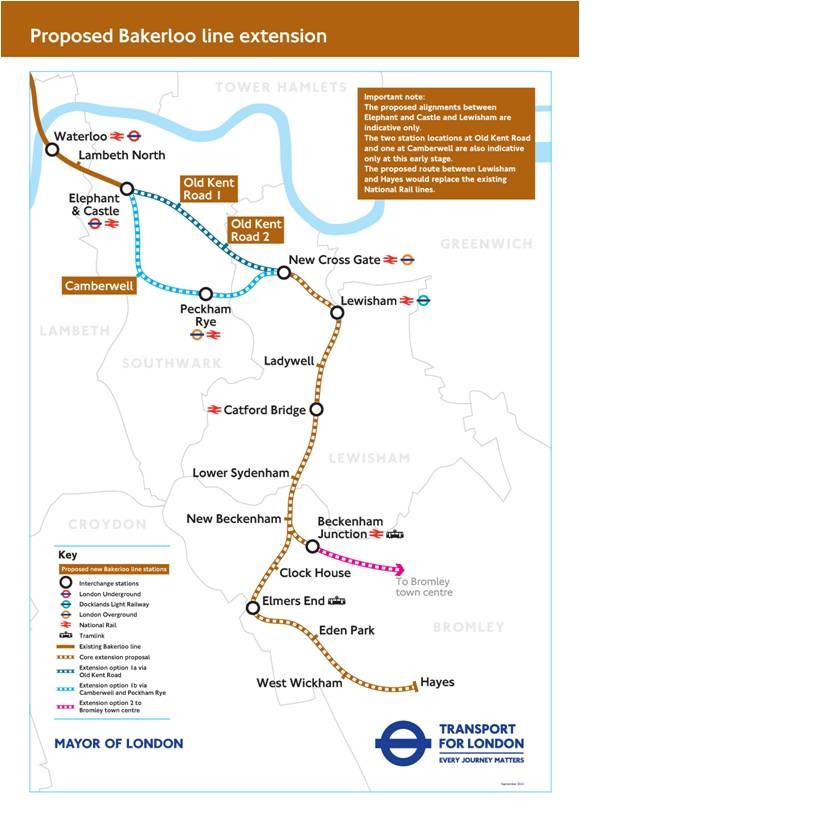
Bakerloo Line Extension Map
I have reason to believe that the Northern Line Extension may be being built as an extension to the Kennington Loop.
So could we design the Bakerloo Line Extension as a loop starting and finishing at Elephant and Castle calling at important stations?
A possible route could be.
- Elephant and Castle – Interchange with Northern Line and National Rail including Thameslink
- Old Kent Road 1 – Proposed on Map
- Old Kent Road 2 – Proposed on Map
- New Cross Gate – Interchange with London Overground and National Rail
- Lewisham – Interchange with Docklands Light Railway and National Rail including Hayes Line
- Catford Bridge – Interchange with Catford station and National Rail including Hayes Line and Thameslink
- Peckham Rye – Interchange with London Overground and National Rail
- Camberwell – Interchange with National Rail including Thameslink
- Elephant and Castle
The advantages of this simple design are.
- The tunnel would be excavated in one pass by a single TBM.
- The line could be deep under any existing infrastructure.
- Most stations would be simple one-platform affairs, with perhaps only large lifts and emergency stairs, to give unrivalled step-free access for all from the street to the train. Surely lifts exist, that are large and fast enough to dispense with escalators.
- For safety, passenger convenience and flows, and other reasons, the stations could have two entrances, at opposite ends of the platform.
- The simple station entrances would be much easier to position on the surface, as they wouldn’t need to be much bigger than the area demanded by the lifts.
- A single loop would only need half the number of platform edge doors.
- At stations like New Cross Gate, Lewisham, Catford and Peckham Rye the lifts would surface within the confines of the existing surface stations.
- The route has interchanges with the Brighton Main Line, East London Line, Hayes Link, Thameslink and other services, so this would give lots of travel possibilities.
- Trains do not need a terminal platform, as they just keep going on back to Elephant and Castle.
- The loop would be operationally very simple, with no points to go wrong. TfL have aspirations to run twenty-seven trains per hour on the Bakerloo and a simple reversing loop , which would mean the driver didn’t have to change ends, must certainly help this. It would probably be a lot more difficult to get this capacity at the northern end of the line,where Harrow and Wealdstone doesn’t have the required capacity and the only possibility for a reversing loop would be north of Stonebridge Park.
- Elephant and Castle would need little or no modification. Although it would be nice to have lifts to the Bakerloo Line.
- Somewhere over two billion pounds has been quoted for the extension. A single loop with simple stations must be more affordable.
The main disadvantage is that the loop is only one-way.
But making even part of the loop two-way would create all the operational difficulties of scheduling the trains. It would probably be better, less costly and easier to make the trains go round the loop faster and more frequently.
But if a passenger went round the loop the wrong way and changed direction at Elephant and Castle that would probably only take a dozen minutes or so.
Alternatively, I’m sure some New Routemasters would step up to the plate and provide service in the other direction between the stations.
 The Anonymous Widower