What Should We Do With Old Coal-Fired Power Station Sites?
As I indicated in The Beginning Of A New Era, the way we generate electricity is changing.
Wikipedia has a list of all the active coal-fired power stations in the UK. The section starts like this.
There are currently 9 active coal fired power stations operating in the United Kingdom which have a total generating capacity of 14.4GW. In 2016 three power stations closed at Rugeley, Ferrybridge and Longannet. In November 2015 it was announced by the UK Government that all coal fired power stations would be closed by 2025.
So what should we do with the sites?
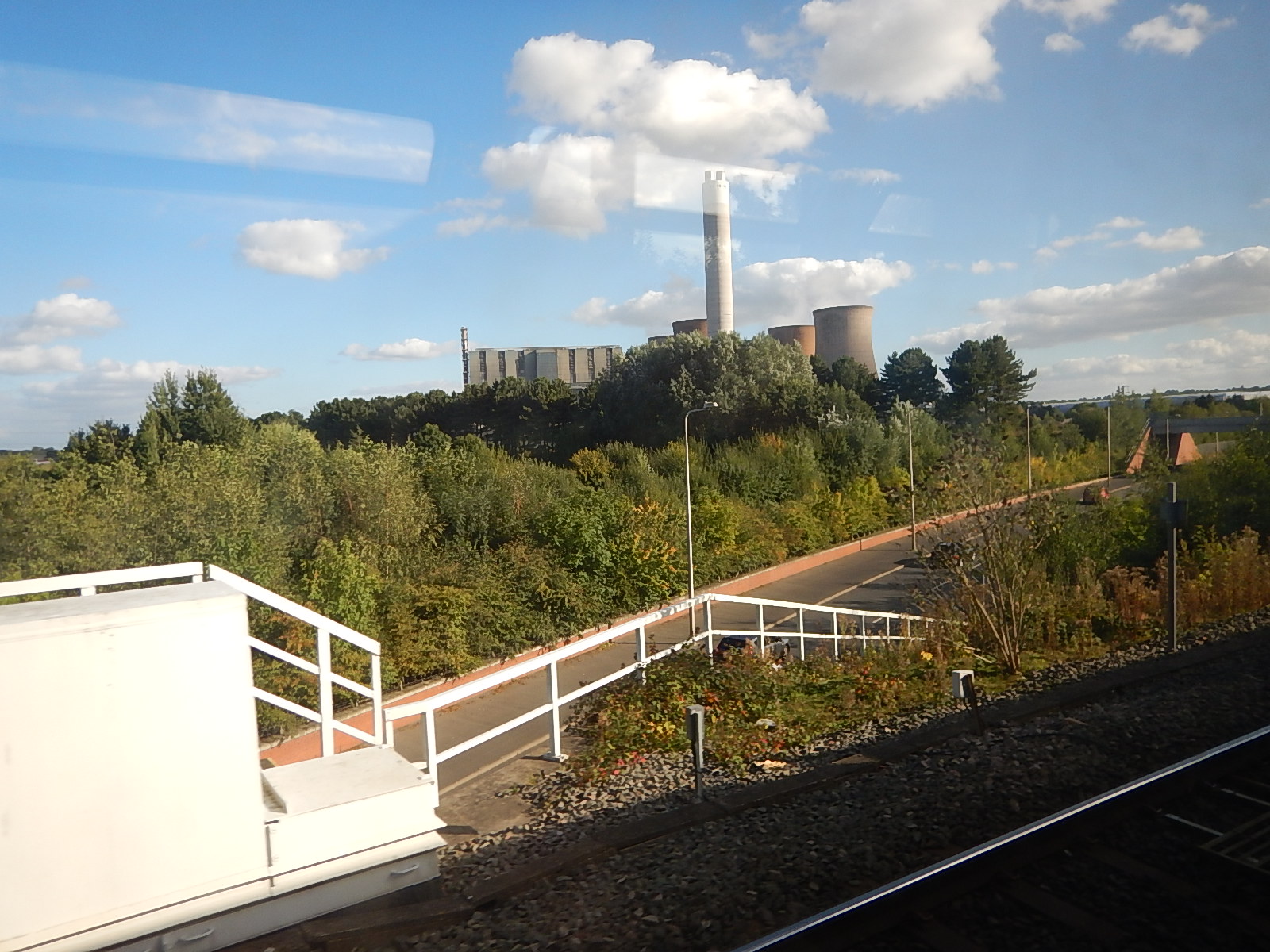
This picture shows the power station site at Eugeley
This is a Google Map of the area.
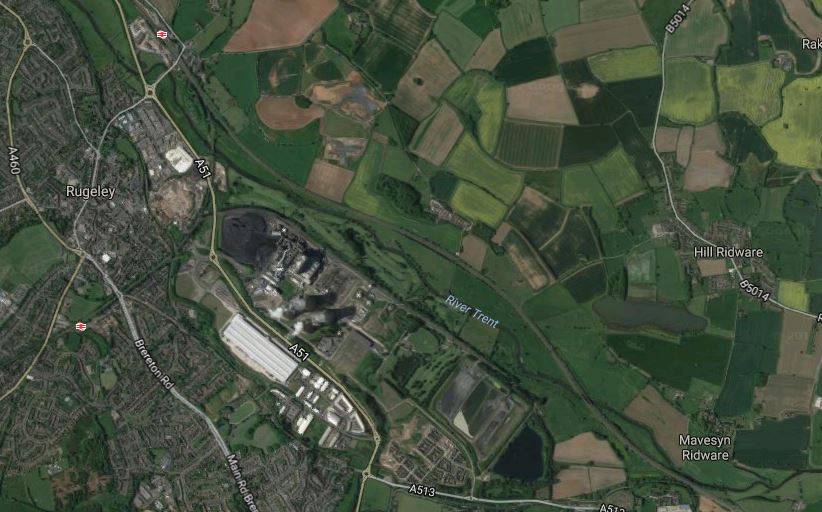
The two stations shown on the map are Rugeley Trent Valley, which is on the the Trent Valley section of the West Coast Main Line and Rugeley Town, which is on the Chase Line.
Many of these large coal-fired power station sites sites are rail connected, so that the coal could be brought in efficiently.
In the June 2017 Edition of Modern Railways there is an article entitled Freight, Not All Doom And Gloom, which makes this plea.
Old coal-fired power stations and Ministry of Fefence sites with ready-made rail links, could make ideal distribution parks, if they are in the right part of the country.
The author is so right, when they say elsewhere in the article, that these rail links must be kept.
Even, if a site was given over to housing, developers will say, that a good rail link to a development, improves their profits.
The article is an interesting read about moving goods by rail and contains a few surprises.
- Moving coal and steel is well down, but to a certain extend, these bulk loads have been replaced by the moving of aggregates.
- The article states forty percent of the materials used in London buildings, are now brought in by rail.
- The supermarket groups and in particular Asda and Tesco are increasingly using rail for long-distance transport.
- Short term Treasury policy sometimes works against long term aims of moving freight from the roads and cutting carbon emissions.
- Quality 1980s passenger stock with wide doors might make excellent parcels carriers.
The last one is an interesting point, as HSTs have only got narrow doors, whereas pallets could be fork-lifted through the wide doors of something like a Class 319 or Class 321 train.
I discuss the small parcel train in detail in The Go-Anywhere Express Parcels And Pallet Carrier.
The Class 319 Flex Train And A Railbaar
When I wrote Could There Be A Battery-Powered Class 319 Flex Train?, not much information had been published on the Railbaar, but a Railbaar could be another tool to use with a Class 319 Flex train.
This is a paragraph from the advance copy I have of Porterbrook’s brochure for the Class 319 Flex train.
By way of an example, Porterbrook determined that the most arduous route would be Manchester Piccadilly to Buxton, which has a steep gradient and multiple stops along its 25 mile route (8 miles of which is electrified). This analysis was included to give confidence that the Class 319 Flex would be comparable to existing Diesel Multiple Unit (DMU) technology across a range of different routes, stopping patterns and gradients.
Elsewhere in the brochure, they say this.
A large battery option was shown to be heavy, would require a lot of space and have long recharge times.
On the other hand, they have stated that batteries could be used to augment diesel power.
Challenging Rail Lines Up Steep Gradients in the UK
Lines like the Buxton Line are not unusual in the UK. The following challenging.
- Bromsgrove to Barnt Green up the infamous Lickey Incline – non-stop
- Bolton to Blackburn up the Ribble Valley Line – 4 intermediate stops
- Blackburn to Clitheroe up the Ribble Valley Line – 3 intermediate stops
- Rose Grove to Colne up the East Lancashire Line – 5 intermediate stops
- Exeter St. Davids to Barnstaple up the Tarka Line – 10 intermediate stops
- Plymouth to Gunnislake up the Tamar Valley Line – 7 intermediate stops
- Cardiff Central to Aberdate up the Aberdare Branch of the Methyr Line – 13 intermediate stops
- Cardiff Central to Ebbw Vale Town up the Ebbw Valley Railway – 5 intermediate stops
- Cardiff Central to Merthyr Tydfil up the Merthyr Line – 13 intermediate stops
- Cardiff Central to Rhymney up the Rhymney Line – 16 intermediate stops
- Cardiff Central to Treherbert up the Rhondda Line – 16 intermediate stops
Our Victorian engineers never let a steep gradient get in the way of where they wanted to build a railway.
Could These Lines Be Electrified?
Only the Lickey Incline (1) is currently being electrified. This is a description of the incline from Wikipedia.
The Lickey Incline, south of Birmingham, is the steepest sustained main-line railway incline in Great Britain. The climb is a gradient of 1 in 37.7 (2.65% or 26.5‰ or 1.52°) for a continuous distance of two miles (3.2 km)
Youtube has a great deal of modern and historic video of the Lickey Incline. Some recent footage shows freight trains climbing the incline with the assistance of a banking engine at the rear.
I doubt if the two lines in Devon (5 and 6) will ever be electrified, The Campaign for the Protection of Rural England will never allow overhead wiring gantries to despoil the landscape along the routes, some of which is in a National Park.
If the Class 319 Flex train does a good job with the three Lancashire Lines around Blackburn (2,3 and 4), the decision to electrify will be pushed a decade or more into the future. I could certainly see, Bombardier, Stadler and perhaps a couple of other companies building a train based on the experience with a Class 319 Flex train, as a replacement.
Politicians will decide whether the Cardiff Valley Lines (7 to 11) are electrified, but I have a feeling that someone somewhere will have a better alternative to full traditional electrification.
The Cardiff Valley Lines
Consider these facts about the rail service on the Cardiff Valley Lines
- The lines are a vital lifeline to those that live in the South Wales Valleys.
- The area is not without its attraction, for those who like to be in the hills.
- Traffic on the lines varies throughout the day.
- Traffic up the Valleys is highest in the evening commuting Peak and after a big sporting event in Cardiff.
- Four-car trains are needed on the route.
- The current diesel trains are elderly and unreliable.
- There are plans to open new lines and stations and extend some of the existing lines further to the North.
But above all jobs and business and housing developments are needed in the Valleys.
An improved rail service could benefit a large number of people and interests.
The Class 319 Flex Train
The Class 319 Flex train started operational service thirty years ago as a 100 mph express commuter train running on the Thameslink route from Bedford to Brighton.
It may be a comparatively old train, but it has the following characteristics.
- It is based on the legendary Mark 3 coach, as used on the InterCity 125.
- It is four-cars.
- It is a dual-voltage train.
- Two rail-proven MAN diesels and an ABB alternator provide electric power away from electrification.
- It is a 100 mph train on an electrified main line.
- It has a speed of around 90 mph on diesel power.
- Drivers have told me, that the brakes are superb.
- It has a good reputation for reliability.
- It meets all the current disabled regulations.
But about all, like all Mark 3-based stock, it scrubs up well to any desired standard. In What Train Is This?, I showed the interior of a refurburbished thirty-year-old Class 150 train. Unrefurbished examples are typical of the stock that work the challenging lines.
Use Of A Railbaar With A Class 319 Flex Train
Porterbrook have said that the train’s electrical layout with a DC busbar connecting all xars, lends itself to adding a battery, which could be charged using the diesel power.
A typical layout of the Class 319 Flex train could be as follows.
- DTOC – A driving car with a diesel engine/alternator set underneath.
- PMOS – A motor car with a pantograph.
- TOSL – A trailer car with a toilet.
- DTOS – A driving car with a diesel engine/alternator set underneath.
I suspect that the battery would go under the TOSL.
The connection points for a Railbaar would be on the uncluttered roof of this car.
Railbaar would be a good add-on for a Class 319 Flex train, working an extension or branch line from an electrified line.
Possible Class 319 Flex Train Problems
The Class 319 train has two possible problems; the body is made of steel and the braking is not regenerative.
Despite being steel, their weight at 140 tonnes is lighter than many aluminium bodied trains, but they don’t have all the equipment like air-conditioning.
On the other hand, a similar train to a Class 319, survived the Oxshott Incident, where a 24-tonne cement mixer truck fell off a bridge onto the roof of the train.
Some Class 321 trains, which are similar to the Class 319 train, have been rebuilt with regenerative braking, so if that becomes a necessity for the Class 319 Flex train, I suspect an engineering solution is possible. Especially, as there is over a hundred Class 321 trains, which will be coming off-lease soon.
The Class 319 Flex Train And The Cardiff Valley Lines
There are eighty-six Class 319 trains, so there would be no problems finding a donor train to convert into a trial train for the Cardiff Valley Lines, if the Class 319 Flex train performs successfully on the Buxton Line.
- On the Buxton Line, trains climb 150 metres in 15 kilometres from the electrified station at Hazel Grove to Buxton.
- On the Merthyr Line, trains climb 168 metres in about 30 kilometres from Cardiff to Merthyr Tydfil.
So it looks like Buxton is steeper, but the Merthyr Line is longer.
I suspect that a Class 319 Flex train will go into service on a trial basis in South Wales, to test performance and customer reaction.
If nothing, it will help define the specification for the trains that can work the Cardiff Valley Lines.
Energy Needed To Raise A Train To Merthyr Tydfil
I will make these assumptions.
- Merthyr Tydfil has an altitude of 179 metres.
- Cardiff Central station has an altitude of 11 metres.
- The train must be raised 168 metres
- A Class 319 train has a weight of 140 tonnes.
- A Class 319 train has a seated capacity of 319.
- A suitable battery would weigh about 2 tonnes.
Raising an empty four-car train similar to a Class 319 train, from Cardiff Central to Merthyr Tydfil will require 23,856,000 Kg-m or 65 KwH of energy.
Assuming a full load of 319 passengers at 80 Kg a time and that adds another 4,287,360 Kg-m or 12 KwH of energy.
My calculations are very rough.
The passengers get out at the top, so they are not energy that will be regenerated on the way down.
An Electrification Scheme For The Cardiff Valley Lines
The Cardiff Valley Lines were built with the main purpose of bringing coal from the valleys to the port of Cardiff for distribution and export by ship.
Now passengers are much more important, with commuting , leisure and tourism prominent.
Coming down is never a problem and a battery electric train with good brakes could handle a full load of passengers with few problems.
Going up is the problem, as the evening peak or a big rugby match in Cardiff can result in a full train having to be hauled up the valleys.
Similar problems are encountered on all the lines in my list to a certain extent, but without seeing the figures, I suspect the Cardiff Valley Lines are some of the most challenging.
Porterbrook have said, that they are not against using batteries on a Class 319 Flex train as a boost on difficult climbs.
So I think that a Class 319 Flex train fitted with an appropriate-sized battery could be a starting point.
But there is one big problem with a Class 319 Flex train. The Class 319 trains do not have regenerative braking, which could be used to charge the batteries on the way down from the valleys.
However, the very similar Class 321 train is being fitted with regenerative braking, so a possible Class 321 Flex train could charge the batteries on the way down.
When the train arrived in Cardiff, it could attach to a Railbaar to make sure that when it left to climb up into the valleys, the batteries were fully charged.
I think that in all these ramblings, there will be a solution, where all the various technologies come together in a bespoke solution.
- Four-car train.
- Electric drive.
- 25 KVAC overhead to work electrified routes on the South Wales Main Line, at 100 mph.
- Onboard rail-proven diesel engines and alternators, which would be used accordingly and probably automatically!
- Two diesel power units would be used, so that one failure wouldn’t leave a stranded train.
- Batteries with a capacity of around 100 KwH
- Powerful regenerative braking
- Railbaars in Cardiff and other low-altitude terminal stations, could be used if diesel charging can’t be used.
- Well-driven trains to an energy efficient timetable.
Obviously, any electrification of the Cardiff ends of the routes would be welcome and less diesel-power would be needed.
Conclusions
Railbaar would be a good add-on for a Class 319 Flex train, working an extension or branch line from an electrified line.
A Class 319 Flex train with a battery and regenerative braking could be very useful on challenging routes like the Cardiff Valley Lines.
With these applications, strategically placed Railbaars could add to the resilience and efficiency of the system.
The bespoke solution, that I have outlined, is very close to the specification of a Class 319 Flex train with a battery and regenerative braking.
I can’t wait to ride a Class 319 Flex train on a proving run to Merthyr Tydfil.
So Where Will Greater Anglia’s Old Trains Go?
The title of this post is the title of this article in the East Anglian Daily Times.
It is a good question to ask, as when all Greater Anglia‘s new trains have arrived in 2020 or so, there will be a lot of trains needing good homes.
The article comes to these conclusions.
- Class 90 Locomotives – Freight operators.
- Mark 3 Coaches – Some heritage operators, but mainly scrap.
- Class 153 trains – Might survive a few years with another operator, before being scrapped.
- Class 156 trains – Might survive a few years with another operator, before being scrapped.
- Class 170 trains – These should have a long term future with other operators.
- Class 317 trains – Least likely to find a new use.
- Class 321 trains – Likely to go to other operators.
- Class 360 trains – Likely to go to other operators.
I don’t disagree greatly, but I do feel that because of the continued fast growth of the UK rail network, that other outcomes could happen.
Mark 3 Coaches
Passengers like the Mark 3 coach and Chiltern Railways have shown that the coaches can be refurbished to a very high standard, that meets all current and future regulations.
I feel that at least some coaches will get the Chiltern treatment, as there are routes, where they could work economically, between a locomotive and a driving van trailer (DVT). The key to this could be that Greater Anglia will release sixteen DVTs in good condition.
Class 321 Trains
Greater Anglia has over a hundred of these four-car trains and thirty of these will have been upgraded under the Renatus project.
If the Class 319 Flex train is a success, could we see some of these trains given the same treatment as I talked about in Could There Be A Class 321 Flex Train?
If the Class 321 Flex train were to possess the same hill-climbing ability that is proposed for the Class 319 Flex train, then there could be a whole fleet of trains suitable to work the Valley Lines from Cardiff, without any further electrification.
It will come down to a political decision, as to whether to electrify the Valley Lines and use new rolling stock or appropriately refurbished cascaded Class 321 trains.
Could There Be A Class 321 Flex Train?
I took these pictures of a Class 321 train at Ipswich station.
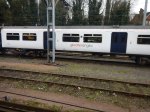
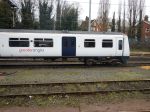
Like the Class 319 train currently being updated to a bi-mode Class 319 Flex train, I wonder if the same bi-mode upgrade could be applied to a Class 321 train.
Look at this picture of a Class 319 train.
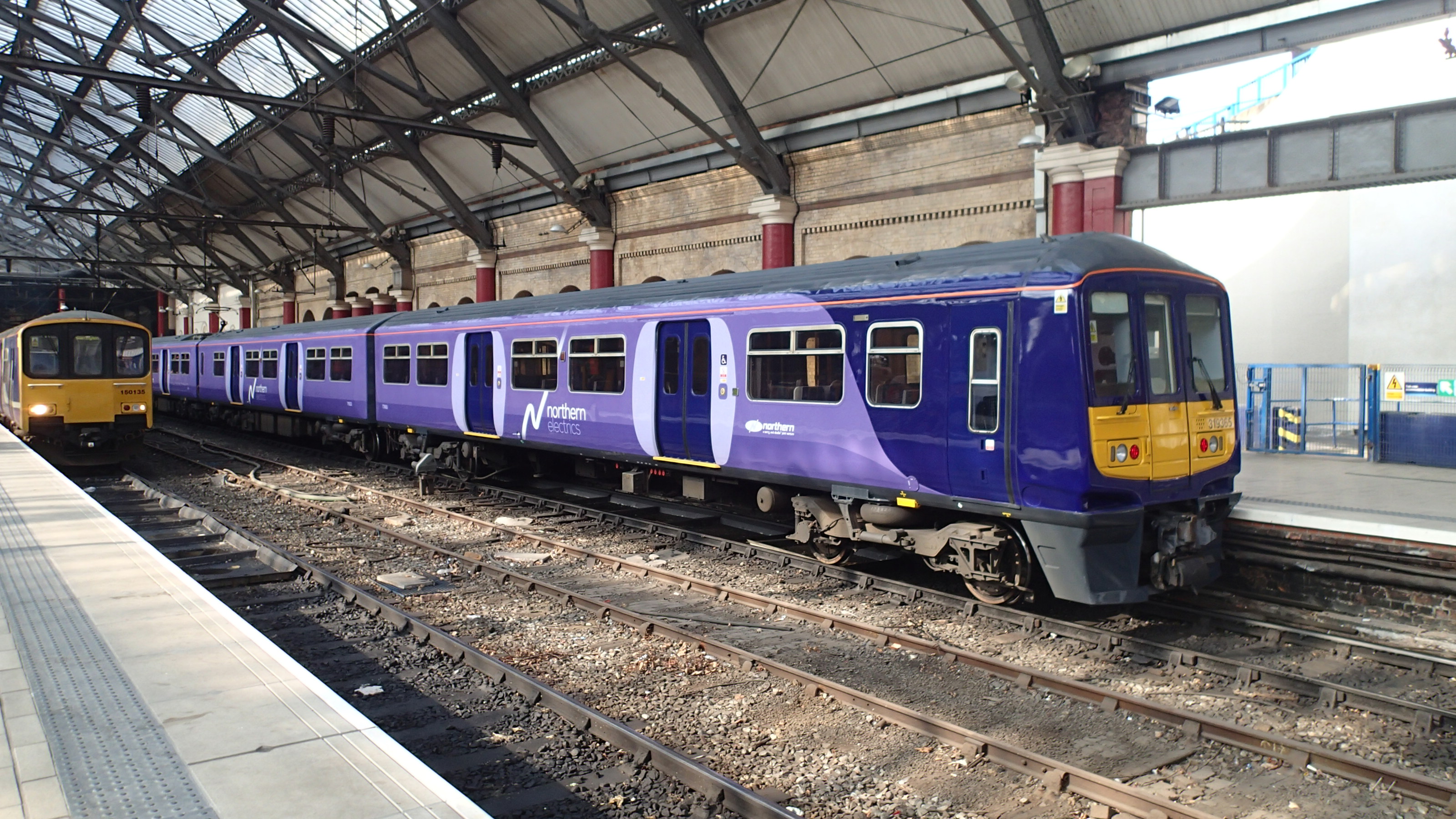
A Class 319 At Lime Street
Both trains do seem to have generous space underneath.
Consider.
- Both trains are 100 mph four-car trains based on Mark 3 coaches.
- Ten Class 321 trains are being given the Renatus treatment by Eversholt Leasing for Greater Anglia with air-conditioning and new interiors.
- The Class 321s were built after the Class 319s.
- The Class 321s are 25 KVAC overhead operation only.
- There are 117 Class 321 trains.
- As the two trains were launched within a year of each other, they can’t be that different under the skin.
It should also be remembers that train companies have a lot of experience about running both type of train.
Porterbrook Versus Eversholt
Could we be seeing a strong commercial battle, where the two leasing companies; Porterbrook and Eversholt, fight it out to sell the best four-car bi-mode train to the train operating companies?
This could only be of benefit to train companies and passengers.
The Electrical System Of a Possible Class 321 Flex
The only problem, I can envisage is that as I wrote in The Electrical System Of A Class 319 Flex, the DC electrical bus of the Class 319 train makes the design of the Class 319 Flex train easy. If the Class 321 Train doesn’t have a similar layout, then it might be more difficult to create a Class 321 Flex!
On the other hand Vossloh Keipe have received a contract to upgrade the traction systems of thirty Class 321 trains to give them.
- AC traction motors and the associated control systems.
- Regenerative braking.
This work is fully described onb this page of the Vossloh Keipe web site.
Probably, with a suitable alternator from ABB and some quality electrical engineering, I would think that a Class 321 Flex could be created.
Conclusions
Each train will have their own big advantages.
- The Class 319 Flex train will work third rail routes.
- The Class 321 Flex train will have regenerative braking on electrified routes.
But in the end, if two bi-mode fleets can be created, there will probably be a lot of conviviality in hostelries in Derby and York, where the probably long-retired engineers, who designed the Mark 3 coach and its various derivative multiple units, will be laughing loudly into their beer.
Modern Trains From Old
In the February 2017 Edition of Modern Railways, there are several articles about the updating of old trains to a modern standard.
- Class 321 trains being given a Renatus treatment.
- Class 319 trains being converted into a bi-mode Class 319 Flex.
- Class 220, 221 and 222 trains being converted to bi-modes.
There was also an article about the revival of locomotive hauled trains called Long Live The Loco!
The Class 321 Renatus
Note the following about the Class 321 trains.
- There are a total of 117 of the four-car trains.
- ,The trains have a 100 mph capability.
- Many of them are in need of a refurbishment after nearly thirty years in service.
So train leasing company; Eversholt, has come up with a plan to create thirty Class 321 Renatus for Greater Anglia as a stop-gap until their new Aventras arrive in a couple of years time.
The updated trains will feature.
- New air-conditioning and heating systems
- New, safer seating throughout
- Larger vestibules for improved boarding and alighting
- Wi-Fi enabled for passengers and operator
- Improved space allocation for buggies, bicycles and luggage
- Passenger power sockets throughout
- New, energy efficient lighting
- One PRM compliant toilet and a second controlled emission toilet on each unit
- Complete renewal and remodelling of all interior surfaces
The trains will also be given an updated traction package, which is described on this page on the Vossloh Kiepe web site.
This is said.
In 2013, Eversholt Rail and Vossloh Kiepe embarked on the pre-series project to demonstrate modern AC traction on a Class 321 unit. The key objectives were to reduce journey time for passengers, improve reliability and maintainability, and reduce the total cost of operation through a combination of reduced energy consumption and regenerative braking.
The prototype certainly looks good in the pictures.
Eversholt is stated as believing that if the market likes these trains, then other operators could be interested and other trains might be converted.
The Class 319 Flex
I like this concept and I wrote about the Class 319 Flex in Porterbrook Launch A Tri-Mode Train.
I felt one of the first routes would to be to Windermere and Modern Railways says the same.
Northern are quoted as saying, that after the concept is proven, the trains will be made available to a wide range of operators.
Consider.
- There are 86 of the four-car units.
- They are 100 mph trains.
- They are Mark 3-based, so ride well.
- They can work on 750 VDC or 25 KVAC electrification.
- With diesel alternators, they can go virtually anywhere.
If the trains are a success, I think we’ll be very surprised as to the routes they work.
I also think that Porterbrook could keep a small fleet ready for immediate lease for the purposes, like the following.
- Proving the economics of new routes.
- Blockade busting.
- Extra capacity for special events.
- Replacement capacity after train problems or accidents.
I suspect Porterbrook have got lots of ideas. Some of which could be quite wacky!
Bi-Modus Operandi
This is the title of an article by Ian Walmsley in the magazine, who makes the case for adding an extra coach with a pantograph to the Class 220, 221 and 222 and effectively creating a bi-mode train.
The idea is not new and I wrote about it in The Part-Time Electric Train, after a long editorial comment in Modern Railways in 2010.
If anything, the case for convcersion is even better now, as quality high-speed bi-mode trains are desperately needed.
As the article suggests, they could sort out some of the other problems with the trains.
There are quite a few suitable trains.
- Class 220 trains – 34 trains of four cars.
- Class 221 trains – 43 trains of a mix of four and five cars.
- Class 222 trains – 27 trains of a mix of four, five and seven cars.
All are 125 mph trains.
The Vivarail Class 230 Train
The magazine also has an extensive report on the fire in a Class 230 train.
The report says that the definitive report will be published before the end of January, but on reading the detailed report of the damage, I think it will be some months before the rebuilt train is ready to roll.
In a post entitled Class 230 And Class 319 Flex Fight It Out, I came to this conclusion.
Vivarail will have a struggle to sell large numbers of trains, against a larger, faster, more capable train of proven reliability.
I stand by what I said.
Long Live The Loco!
This article describes the various uses of locomotive-hauled passenger trains on the UK rail network.
The title could be read another way, as it talks about the following locomotives.
- Class 37 locomotive – Built 1960-65
- Class 47 locomotive – Built 1962-68
- Class 68 locomotive – Built 2013-present
- Class 73 locomotive – Built 1962-67
- Class 90 locomotive – Built 1987-90
- Class 91 locomotive – Built 1988-91
- Class 92 locomotive – Built 1993-96
Some could not be considered modern, but they perform.
The article goes on to detail how TransPennine Express will use their new Mark 5A carriages.
- Wikipedia says each set will be composed of 1 first class car, 2 Standard class cars, 1 brake standard class car and a standard class driving trailer.
- Sets will be able to be lengthened if required.
- The trains will be worked push-pull between a Class 68 locomotive and a driving trailer.
- The coaches will have a 125 mph design speed for future-proofing reasons.
It is also said, that a Class 88 locomotive is not powerful enough under diesel power to operate on the TransPennine route.
So the article speculates, that there may be a place for a bi-mode locomotive with full diesel capability, given the success of the Hitachi bi-mode concept.
The article finishes by saying that as Chiltern and TransPennine have shown that push-pull operation is viable, could the concept become more widespread?
 The Anonymous Widower